How to integrate Linear MCP with Claude Code

Connect Claude Code to Linear MCP. Create a new bug for team mobile, add a comment to issue lin-123, and more using natural language, with authentication handled for you.

Linear logoLinear
Oauth2Api Key

Linear is a modern issue tracking and project planning tool for fast-moving teams. It helps streamline workflows, organize projects, and boost productivity.

47 Tools12 Triggers

Introduction

Manage your Linear directly from Claude Code with zero worries about OAuth hassles, API-breaking issues, or reliability and security concerns.

You can do this in two different ways:

  1. Via Composio Connect - Direct and easiest approach
  2. Via Composio SDK - Programmatic approach with more control

Also integrate Linear with

Why use Composio?

  • Only one MCP URL to connect multiple apps with Claude Code with zero auth hassles.
  • Programmatic tool calling allows LLMs to write its code in a remote workbench to handle complex tool chaining. Reduces to-and-fro with LLMs for frequent tool calling.
  • Handling Large tool responses out of LLM context to minimize context rot.
  • Dynamic just-in-time access to 20,000 tools across 1700+ other Apps for cross-app workflows. It loads the tools you need, so LLMs aren't overwhelmed by tools you don't need.

Connecting Linear to Claude Code using Composio

1. Add the Composio MCP to Claude

Terminal

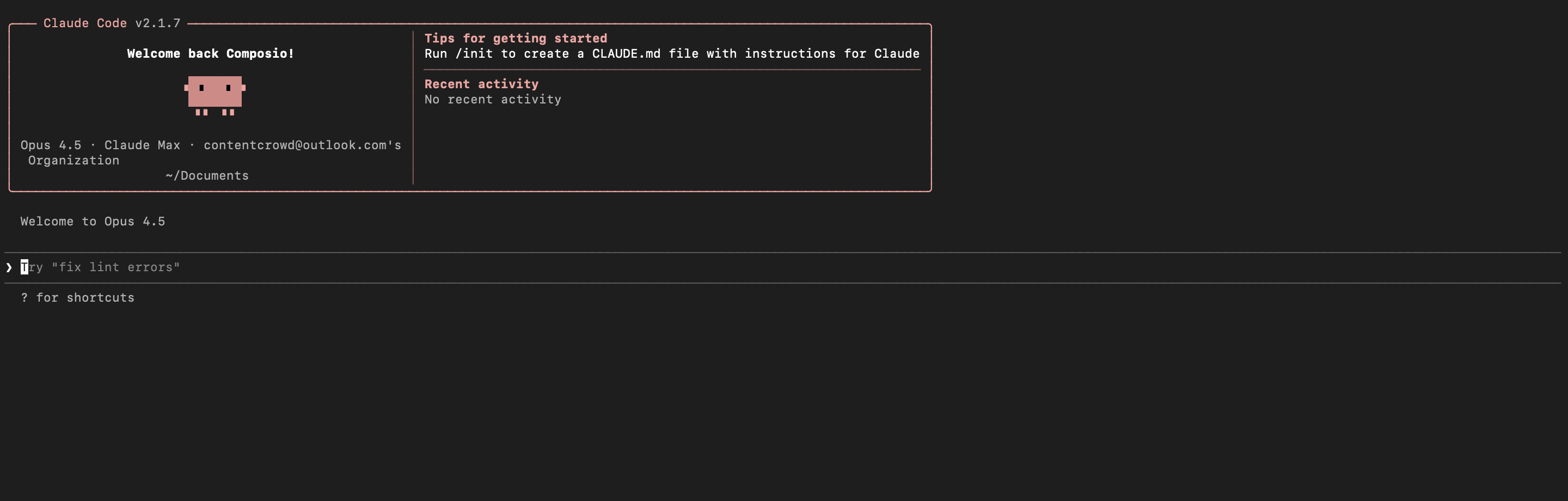
2. Start Claude Code

bash
claude

3. Open your MCP list

bash
/mcp

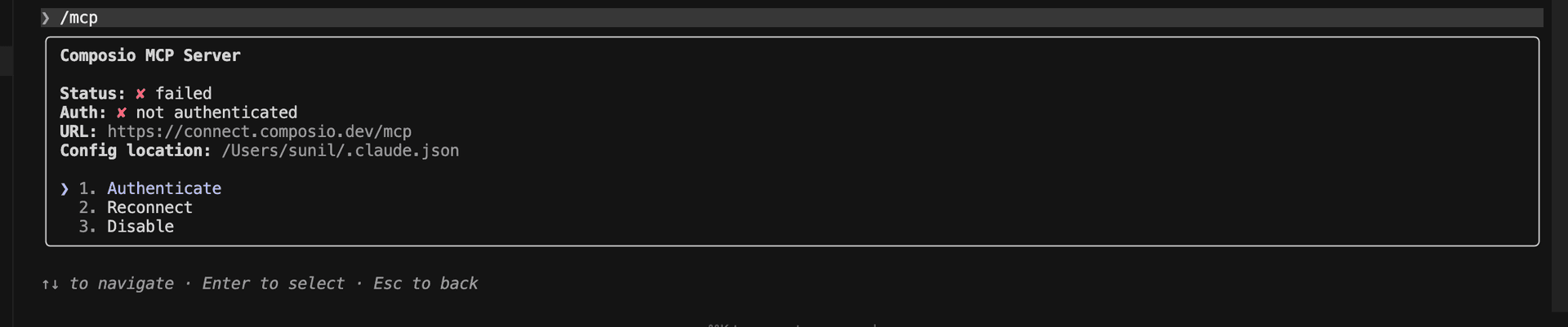
4. Select Composio and click on Authenticate

Select Composio and click Authenticate

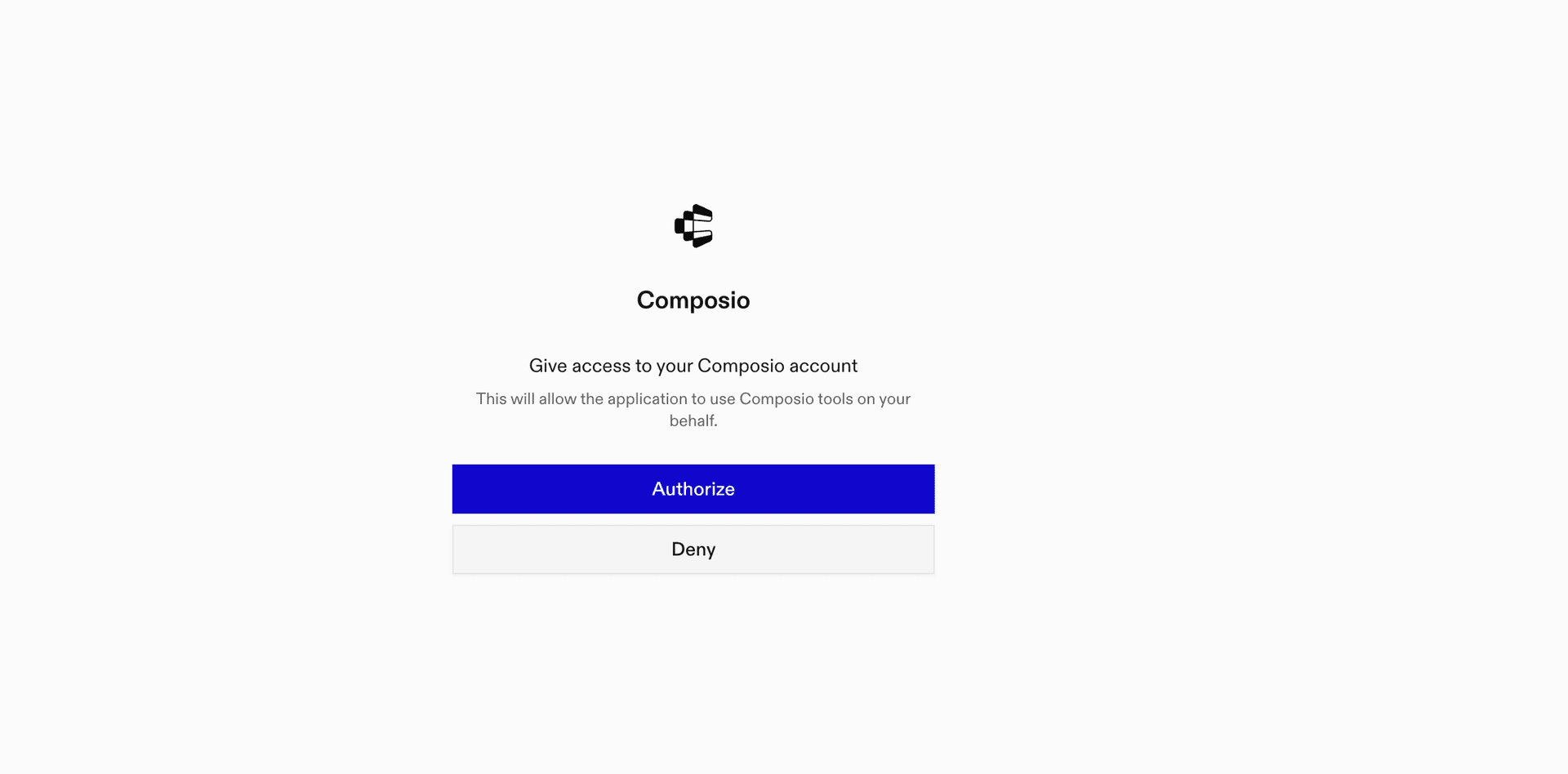
5. This will redirect you to the Composio OAuth page. Complete the flow by authorizing Composio and you're all set.

Composio OAuth authorization page
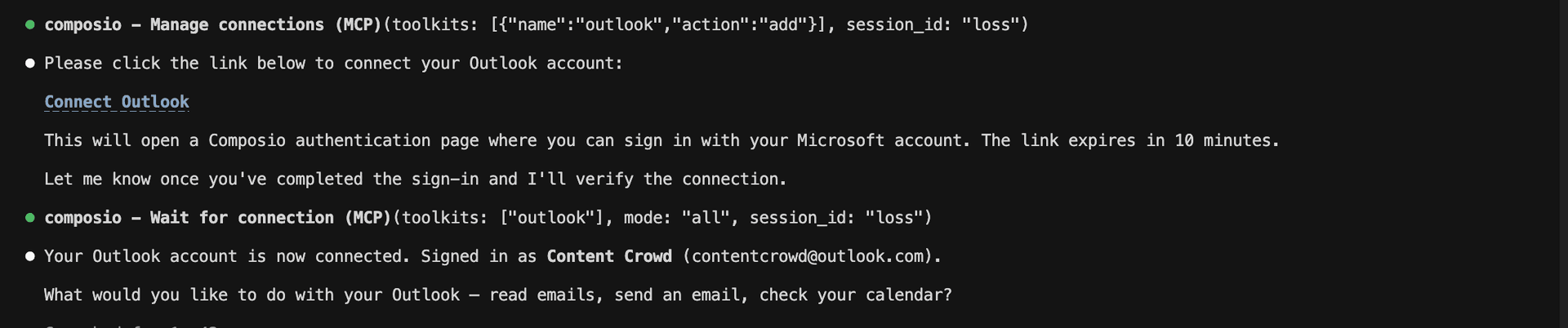
Composio authorization complete
Ask Claude to connect to your account and authenticate via the link

What is the Linear MCP server, and what's possible with it?

The Linear MCP server is an implementation of the Model Context Protocol that connects your AI agent and assistants like Claude, Cursor, etc directly to your Linear account. It provides structured and secure access to your issues, projects, milestones, updates, comments, and teams, so your agent can search and update issues, manage projects, create milestones, publish project updates, and configure teams on your behalf.

  • Issue search and updates: Have your agent find issues by keywords, update their details, and remove labels that no longer apply.
  • Project planning: Let the agent create projects, adjust existing projects, and associate new projects with the right teams.
  • Milestone management: Direct your agent to create project milestones with clear names and optional target dates.
  • Project status updates: Instruct your agent to list, publish, and revise project updates so stakeholders stay informed.
  • Team and conversation management: Have your agent create or update teams, review workspace comments, and remove reactions from comments.

Connecting Linear via Composio SDK

Composio SDK is the underlying technology that powers these integrations. It provides a universal gateway with full programmatic control. You can programmatically generate an MCP URL with the app you need (here Linear) for even more tool search precision. It's secure and reliable.

How the Composio SDK works

The Composio SDK follows a three-phase workflow:

  1. Discovery: Searches for tools matching your task and returns relevant toolkits with their details.
  2. Authentication: Checks for active connections. If missing, creates an auth config and returns a connection URL via Auth Link.
  3. Execution: Executes the action using the authenticated connection.

Step-by-step Guide

Step by step10 STEPS
1

Prerequisites

Before starting, make sure you have:
  • Claude Pro, Max, or API billing enabled Anthropic account
  • Composio API Key
  • A Linear account
  • Basic knowledge of Python or TypeScript
2

Install Claude Code

bash
# macOS, Linux, WSL
curl -fsSL https://claude.ai/install.sh | bash

# Windows PowerShell
irm https://claude.ai/install.ps1 | iex

# Windows CMD
curl -fsSL https://claude.ai/install.cmd -o install.cmd && install.cmd && del install.cmd

To install Claude Code, use one of the following methods based on your operating system:

3

Set up Claude Code

bash
cd your-project-folder
claude

Open a terminal, go to your project folder, and start Claude Code:

  • Claude Code will open in your terminal
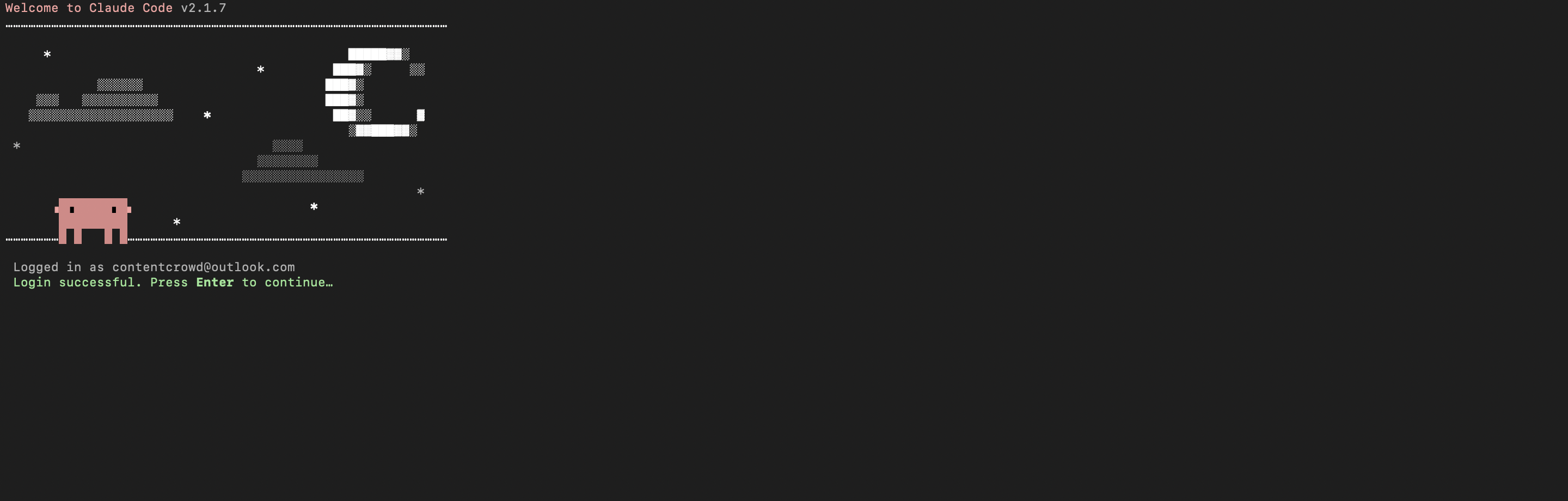
  • Follow the prompts to sign in with your Anthropic account
  • Complete the authentication flow
  • Once authenticated, you can start using Claude Code
Claude Code initial setup showing sign-in prompt
Claude Code terminal after successful login
4

Set up environment variables

bash
COMPOSIO_API_KEY=your_composio_api_key_here
USER_ID=your_user_id_here

Create a .env file in your project root with the following variables:

  • COMPOSIO_API_KEY authenticates with Composio (get it from Composio dashboard)
  • USER_ID identifies the user for session management (use any unique identifier)
5

Install Composio library

npm install @composio/core dotenv

Install the Composio TypeScript library to create MCP sessions.

  • @composio/core provides the core Composio functionality
  • dotenv loads environment variables from your .env file
6

Generate Composio MCP URL

import 'dotenv/config';
import { Composio } from '@composio/core';

const { COMPOSIO_API_KEY, USER_ID } = process.env;

if (!COMPOSIO_API_KEY || !USER_ID) {
  throw new Error('COMPOSIO_API_KEY and USER_ID required in .env');
}

const composioClient = new Composio({ apiKey: COMPOSIO_API_KEY });

const composioSession = await composioClient.create(USER_ID, {
  toolkits: ['linear'],
});

const composioMcpUrl = composioSession?.mcp.url;

console.log(`MCP URL: ${composioMcpUrl}`);
console.log(`\nUse this command to add to Claude Code:`);
console.log(`claude mcp add --transport http linear-composio "${composioMcpUrl}" --headers "X-API-Key:${COMPOSIO_API_KEY}"`);

Create a script to generate a Composio MCP URL for Linear. This URL will be used to connect Claude Code to Linear.

What's happening

  • We import the Composio client and load environment variables
  • Create a Composio instance with your API key
  • Call create() to create a Tool Router session for Linear
  • The returned mcp.url is the MCP server URL that Claude Code will use
  • The script prints this URL so you can copy it
7

Run the script and copy the MCP URL

node --loader ts-node/esm generate_mcp_url.ts
# or if using tsx
tsx generate_mcp_url.ts

Run your TypeScript script to generate the MCP URL.

  • The script connects to Composio and creates a Tool Router session
  • It prints the MCP URL and the exact command you need to run
  • Copy the entire claude mcp add command from the output
8

Add Linear MCP to Claude Code

bash
claude mcp add --transport http linear-composio "YOUR_MCP_URL_HERE" --headers "X-API-Key:YOUR_COMPOSIO_API_KEY"

# Then restart Claude Code
exit
claude

In your terminal, add the MCP server using the command from the previous step. The command format is:

  • claude mcp add registers a new MCP server with Claude Code
  • --transport http specifies that this is an HTTP-based MCP server
  • The server name (linear-composio) is how you'll reference it
  • The URL points to your Composio Tool Router session
  • --headers includes your Composio API key for authentication

After running the command, close the current Claude Code session and start a new one for the changes to take effect.

9

Verify the installation

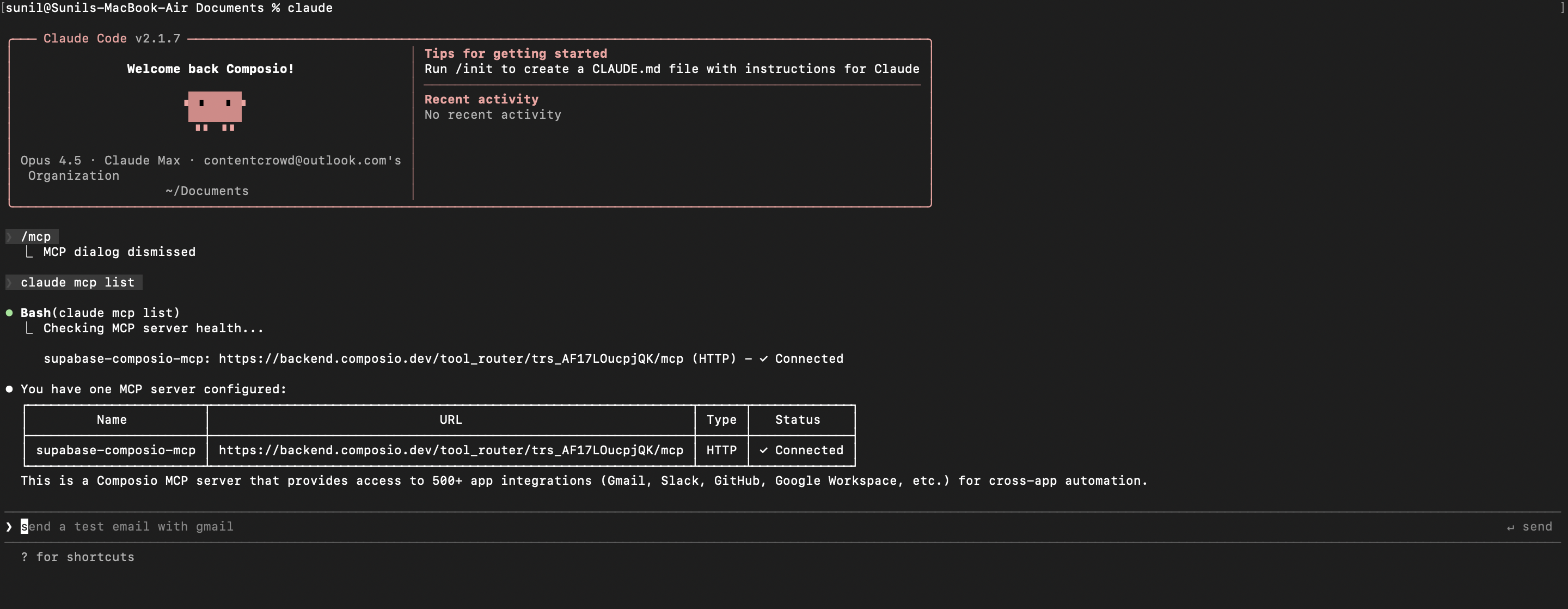
bash
claude mcp list

Check that your Linear MCP server is properly configured.

  • This command lists all MCP servers registered with Claude Code
  • You should see your linear-composio entry in the list
  • This confirms that Claude Code can now access Linear tools

If everything is wired up, you should see your linear-composio entry listed:

Claude Code MCP list showing the toolkit MCP server
10

Authenticate Linear

The first time you try to use Linear tools, you'll be prompted to authenticate.

  • Claude Code will detect that you need to authenticate with Linear
  • It will show you an authentication link
  • Open the link in your browser (or copy/paste it)
  • Complete the Linear authorization flow
  • Return to the terminal and start using Linear through Claude Code

Once authenticated, you can ask Claude Code to perform Linear operations in natural language. For example:

  • "Create a new bug for team Mobile"
  • "Add a comment to issue LIN-123"
  • "List all cycles for the Design team"

Complete Code

Here's the complete code to get you started with Linear and Claude Code:

import 'dotenv/config';
import { Composio } from '@composio/core';

const { COMPOSIO_API_KEY, USER_ID } = process.env;

if (!COMPOSIO_API_KEY || !USER_ID) {
  throw new Error('COMPOSIO_API_KEY and USER_ID required in .env');
}

const composioClient = new Composio({ apiKey: COMPOSIO_API_KEY });

const composioSession = await composioClient.create(USER_ID, {
  toolkits: ['linear'],
});

const composioMcpUrl = composioSession?.mcp.url;

console.log(`MCP URL: ${composioMcpUrl}`);
console.log(`\nUse this command to add to Claude Code:`);
console.log(`claude mcp add --transport http linear-composio "${composioMcpUrl}" --headers "X-API-Key:${COMPOSIO_API_KEY}"`);

Conclusion

You've successfully integrated Linear with Claude Code using Composio's MCP server. Now you can interact with Linear directly from your terminal using natural language commands.

Key features of this setup:

  • Terminal-native experience without switching contexts
  • Natural language commands for Linear operations
  • Secure authentication through Composio's managed MCP
  • Tool Router for dynamic tool discovery and execution

Next steps:

  • Try asking Claude Code to perform various Linear operations
  • Add more toolkits to your Tool Router session for multi-app workflows
  • Integrate this setup into your development workflow for increased productivity

You can extend this by adding more toolkits, implementing custom workflows, or building automation scripts that leverage Claude Code's capabilities.

TOOLS & TRIGGERS

Supported Tools and Triggers

Every Linear action and event your agent gets out of the box.

Archive issue

Archives an existing Linear issue by its UUID or shorthand identifier, removing it from active views while preserving its data for future reference.

Archive Project

Archives an existing Linear project by its UUID, removing it from active views.

Archive Project Update

Archives a project update in Linear, hiding it from the default view while preserving its data.

Create attachment

Creates a new attachment and associates it with a specific, existing Linear issue.

Add reaction to comment

Tool to add a reaction to an existing Linear comment.

Create a comment

Creates a new comment on a specified Linear issue.

Create linear issue

Creates an issue in a specified Linear team with a title and optional project, description, assignee, state, priority, cycle, due date, and other properties.

Create issue relation

Create a relationship between two Linear issues using the issueRelationCreate mutation.

Create a label

Creates a label for a specified Linear team, or returns an existing exact-name match found in the team's initial label results.

Create Project

Creates a new Linear project with specified name and team associations.

Create Project Milestone

Tool to create a project milestone in Linear with a name and optional target date and sort order.

Create Project Update

Tool to create a project status update post for a Linear project.

Create Team

Creates a new team in Linear with the specified name and key.

Delete issue

Archives an existing Linear issue by its ID, which is Linear's standard way of deleting issues; the operation is idempotent.

Download issue files

Downloads a Linear Attachment record or a private upload embedded in issue/comment Markdown; `file_name` must include the correct extension.

Get a comment

Retrieves a single Linear comment by its unique ID.

Get current user

Gets the currently authenticated Linear user's ID, name, email, and other profile information.

Get cycles by team ID

Lists cycles for a specified Linear team ID, including progress, creation and end times, and history.

Get create issue default params

Fetches a Linear team's default issue estimate and state, useful for pre-filling new issue forms.

Get Linear issue

Retrieves a Linear issue by UUID or shorthand identifier, including its details, parent, cycle, attachments, comments and subscribers.

Get Linear project

Retrieves a single Linear project by its unique identifier.

Get Project Update

Retrieves a specific project update by its unique identifier.

List comments

Lists comments from Linear workspace accessible to the authenticated user.

List issue drafts

Lists the connected user's issue drafts for review or editing.

List issues by team ID

Tool to list all issues for a specific Linear team, scoped by team ID.

Get all cycles

Lists cycles across the Linear account without filters, including team IDs and scheduled end times.

List Linear issues

Lists non-archived Linear issues with optional project and assignee filters, returning a paginated issues array and page_info.

Get labels

Retrieves paginated Linear issue labels for a specified team or across the workspace.

List linear projects

Retrieves all projects from the Linear account.

List Linear states

Retrieves all workflow states for a specified team in Linear, representing the stages an issue progresses through in that team's workflow.

Get teams

Lists visible Linear teams with their members and project IDs, with pagination for teams but not nested members or projects.

List Linear users

Lists workspace users with IDs, names, emails, and active status.

List project updates

Retrieves all project updates from the Linear workspace.

Remove label from Linear issue

Removes a specified label from a Linear issue using the issue and label IDs, and returns the updated issue and labels.

Remove reaction from comment

Tool to remove a reaction on a comment.

Resolve comment

Marks a Linear comment as resolved.

Run Query or Mutation

Execute a Linear GraphQL query or mutation to retrieve or change accessible data.

Search Linear issues

Searches Linear issues by full-text query, with pagination and an option to include archived issues.

Unarchive Project Update

Unarchive a previously archived project update in Linear.

Unresolve a comment

Unresolves a previously resolved Linear comment, marking it as requiring attention again.

Update issue

Updates an existing Linear issue by ID, requiring at least one field to modify; supplied fields overwrite existing values and labels replace the label set.

Update a comment

Tool to update an existing Linear comment's body text.

Update Project

Tool to update an existing Linear project.

Update Project Update

Tool to update an existing Linear project update post.

Update Team

Updates an existing Linear team's settings, including its name, key, cycle settings, and workflow state configuration.

Validate credential

Validates the Linear API credentials by checking if the authentication token can successfully query the current user.

Who Am I

Return the identity (name, email) of the connected Linear account.

FAQ

Frequently asked questions

Start with Linear.It takes 30 seconds.

Managed auth, hosted MCP servers, and every Linear tool your agent needs.Free to start.

Start building