MuleSoft is the platform that most enterprises benchmark other integration tools against. It has been a Gartner Magic Quadrant Leader for iPaaS twelve times; Salesforce paid $6.5 billion for it in 2018, and the API-led approach it popularised is now how most large organisations think about connecting systems. Anypoint Exchange gives you a reusable asset library, DataWeave is the most capable transformation language in this category, and Runtime Fabric runs workloads on-premises.
MuleSoft’s 2026 pitch now combines agent governance, usage-based pricing, and Salesforce platform economics. The important points:
Agent Fabric adds governance for AI agents: MuleSoft says AI Gateway manages costs, usage, security, and compliance across agents, MCP servers, and LLMs; Salesforce’s architecture docs describe Agent Registry as a centralised catalogue for AI agents and tools; and MuleSoft says MCP Bridge exposes existing enterprise APIs as agent-ready MCP tools.
Pricing moved toward usage metrics: MuleSoft says new Anypoint integration packages became available to new customers worldwide on March 1, 2024, and its usage docs list Mule flows, Mule messages, and data throughput as pricing metrics for some packages.
AI and automation add licensing considerations: MuleSoft’s pricing FAQ states that MuleSoft for Agentforce features span Anypoint and Salesforce licensing, and that the MuleSoft Agentforce, Einstein, and AI Chain connectors are available at no additional cost through Anypoint Exchange.
Forecasting is harder: The old vCore model was mostly capacity-led; the current packaging can involve flows, messages, data throughput, automation, and Salesforce-side Agentforce usage, so buyers need to model both breadth and usage before signing.
Total cost can exceed the subscription: Public sources do not verify the exact $55,150 median claim, so treat it cautiously. Third-party pricing research instead shows MuleSoft contracts commonly landing in the tens of thousands to six figures, while premium connectors, implementation, and MuleSoft-specialist developers can push total cost much higher.
Salesforce ownership matters: Salesforce acquired MuleSoft in 2018 for about $6.5 billion and completed its roughly $8 billion Informatica acquisition on November 18, 2025, so two major integration vendors now share one owner.
Below are eight MuleSoft competitors worth considering. I checked pricing in July 2026, but double-check each vendor’s latest rates before you buy: enterprise pricing often stays behind a sales call, and the meter can change quickly depending on flows, messages, tasks, connections, API calls, or gateway services.
How I compared these tools
MuleSoft sells two things that people replace separately. One is an integration platform for connecting applications and moving data. The other is full lifecycle API management for organisations that treat APIs as products. Plenty of teams run both, but most are leaving because of one, and mixing those readers together is why so many comparison articles feel useless. The list below covers both jobs and says clearly which one each tool is for.
For each tool, I checked the same six things:
How it meters you, which is the argument that starts most of these searches. Per flow, per call, per task, per connection, per gateway service, or a flat entitlement. Any tool that repeats MuleSoft’s breadth-based metering gets called out for it, including ones I rate highly.
Whether prices are published, and what buyers pay when they are not. Where a vendor hides its rate card, I have used aggregated contract data or third-party analysis and said which.
License and hosting: proprietary, open source, cloud only, hybrid, on-premise, or self-hosted.
The AI and MCP story, since Agent Fabric is MuleSoft’s 2026 pitch and a replacement has to answer it.
Which MuleSoft job does it cover: integration, API management, or both?
Who the tool suits, and how much of MuleSoft it can take over without anyone pretending.
What MuleSoft costs, and why the bill is hard to forecast
MuleSoft has a pricing page, but it does not publish package prices. You can start a 30-day Anypoint Platform trial without a credit card or installation; after that, you need Salesforce or MuleSoft sales for a quote.
For new customers, MuleSoft’s current integration packages centre on Integration Starter and Integration Advanced, with API Management sold as its own solution. Starter and Advanced are measured by the Mule Flow and Mule Message capacity you need: Mule Flows capture the breadth of your integration deployment, while Mule Messages capture usage intensity. MuleSoft’s usage docs also list data throughput as a pricing metric for some packages. Some older estates may still run on legacy vCore-based contracts such as Gold, Platinum, or Titanium.
The costs that surprise people are usually outside the headline package:
Premium connectors for SAP, Oracle, and similar enterprise systems require separate licensing; third-party estimates put some of these add-ons around $10,000 to $15,000 per year.
Automation Credits are used across MuleSoft low-code products, including Integration Tasks, RPA Bot Minutes, API calls made by RPA automations, and Flow Orchestration Runs.
Anypoint MQ bills by API request, not by message, and even a request that polls an empty queue still counts.
Implementation, training, and MuleSoft specialist developers can push the first-year total cost well above the subscription; third-party TCO estimates often put year-one cost at two to three times the base subscription.
Agent Fabric adds additional capabilities for evaluation, including Agent Registry, Agent Scanners, and AI Gateway, but buyers should confirm exactly how those components are packaged and metered in their contract.
Before you shop for a replacement, pull 12 months of Anypoint Monitoring and usage data. If you are paying for capacity you rarely use, the cheapest alternative to MuleSoft may be a right-sized MuleSoft renewal.
MuleSoft alternatives and competitors compared at a glance
Tool | What it replaces | How it meters you | Public pricing | AI and MCP | Best for |
|---|---|---|---|---|---|
MuleSoft | Integration and full lifecycle API management | Mule Flows and Messages, plus automation and Agentforce credits | No, negotiated | Agent Fabric: AI Gateway, Registry, MCP Bridge | API led programs inside Salesforce heavy estates |
Boomi | Integration, EDI, API management, master data | Per connection plus per message | Partly, $99 a month pay as you go | AgentStudio, Meta Hub, broadened MCP | Broader connectivity and a faster first integration |
Workato | Integration and business-facing automation | Task volume, unlimited recipes and connections | No, sales-led | Agent Studio genies on Claude, MCP across 1,400+ apps | Moving build work out of the integration team |
Azure Integration Services | Integration and API management | Per action, per call, or reserved capacity by tier | Yes, published rates | Azure AI and Foundry services alongside | Microsoft estates with an existing Azure commitment |
Jitterbit | Integration, API management, EDI, app building | Connection-based tiering plus annual quote | No, custom quotes, annual only | AskJB, prebuilt agents, EDI and API assistants | EDI and rollouts that finish on schedule |
Apigee | Full lifecycle API management only | Per API call plus environment fees per region | Partly, pay-as-you-go rates published | Gemini assisted development on Google Cloud | API programs, monetisation, and developer portals |
Kong | API gateway and AI gateway only | Free self-hosted, or per gateway service plus requests | Partly open source free, Konnect consumption | AI Gateway governing LLM, MCP, and A2A traffic | Platform teams who want a gateway they control |
WSO2 | Full lifecycle API management, open source | Free under Apache 2.0, paid subscription for support | No published subscription rates | Multi-gateway federation and MCP-ready portals | Open source API management without a migration |
Composio | App integrations optimised for AI agents | Per tool call | Yes, free tier and from $29 a month | Managed auth, MCP gateway, tool router | Giving agents you wrote access to applications |
1. MuleSoft vs Boomi: The Broader Connector Library
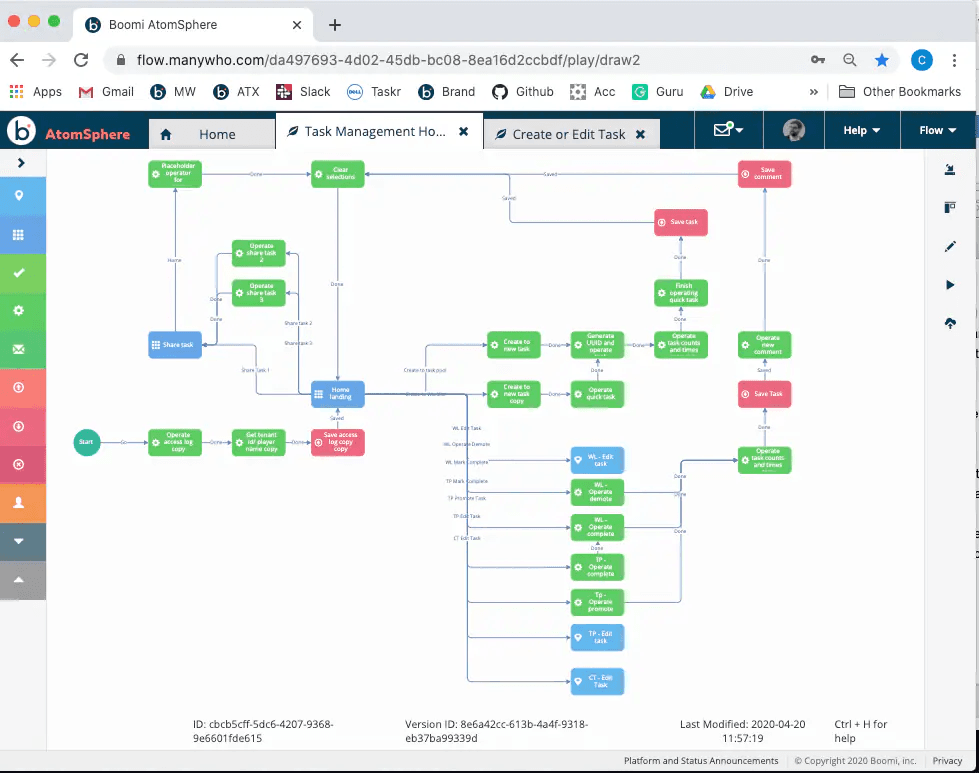
More people compare MuleSoft with Boomi than with any other platform, and the two platforms have opposite reputations. MuleSoft is the deeper API platform. Boomi is the faster one to get an integration up and running.
Boomi connects more than 1,000 applications and runs in the cloud, on-premises, or behind your firewall, and holds FedRAMP, HIPAA, and ISO 27001 certifications. It has matched MuleSoft’s Gartner record with twelve consecutive Leader placements of its own and was placed highest for ability to execute in March 2026. Its agent layer is comparable to Agent Fabric: Agentstudio manages the agent lifecycle, with more than 75,000 agents now in production across its base; Meta Hub grounds them in master data; and MCP support enables external agents to reach enterprise systems under governance. Two things it has that MuleSoft does not are native EDI and master data management, both of which should be considered if your estate involves trading partners or a golden record.
Boomi publishes a starting price. There is a pay-as-you-go plan at $99 per month plus $0.05 per Boomi Message, with a 30-day trial and self-serve credit card billing. Subscription tiers are still quoted, and Boomi meters per connection, where a connection joins two endpoints and runs an estimated $5,000 to $18,000 a year at enterprise tiers. That is breadth-based metering, the same as Mule Flows. Boomi is usually the cheaper platform and offers faster implementation, but it doesn’t mean you avoid paying more as you connect more.
Pros
More than 1,000 connectors plus native EDI and master data management, neither of which MuleSoft includes
A published $99 a month entry point and a 30-day trial, against MuleSoft’s quote-only model
Independent of Salesforce, with cloud, on-premises, and behind-the-firewall runtimes and a mature agent stack in AgentStudio
Cons
Meters per connection, so like Mule Flows, your bill still grows with the breadth of your estate
Enterprise contracts remain quoted and typically start near $15,000 to $20,000 a year before overages and services
Weaker than MuleSoft on API governance, reusable asset management, and transformation depth
Read more: Boomi Alternatives and Competitors: 8 Tools Compared for 2026
Watch
2. MuleSoft vs Workato: Automation Business Teams Can Build
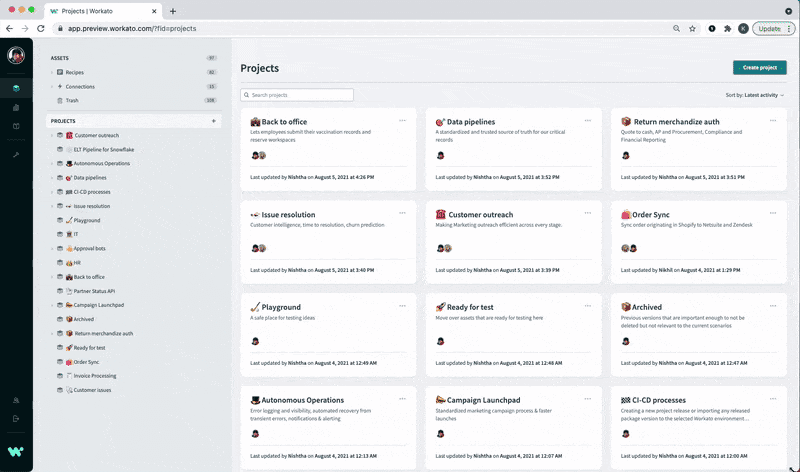
Workato sells automations as recipes, connects more than 1,200 applications, and includes unlimited recipes, connections, and collaborators on every tier, so you are billed on task volume rather than on how many integrations you deploy. Unlike Mule Flows, adding another system to Workato does not automatically add a line to your contract. The build experience targets technically minded business people rather than integration engineers. This is how teams shorten the queue without abandoning governance. Workato’s agent work is credible, with Agent Studio building agents it calls “genies” that run on Anthropic Claude by default, Workato GO as the chat surface, and an enterprise MCP server exposing more than 1,400 applications as governed tools for Claude, ChatGPT, and Cursor. Gartner has named it a Leader for 8 years, and it holds a 4.7 on G2.
Workato does not publish pricing and requires a minimum term of 1 year. It builds quotes from a platform edition fee plus task usage, with entry deals near $10,000 a year, a median around $65,000, and mid-market deployments from $50,000 to $130,000. Premium connectors for SAP and Oracle are billed separately. It is also not an API platform: if you bought MuleSoft to run an API program with a developer portal and reusable assets, Workato does not replace that.
Pros
Unlimited recipes, connections, and collaborators on every tier, so deploying more integrations does not directly raise your license
More than 1,200 connectors and a builder that business teams can use without an integration specialist
Strong agentic layer: Agent Studio genies on Claude, Workato GO, and an enterprise MCP server across 1,400+ applications
Cons
No public pricing, a one-year minimum, and a median contract near $65,000 that often exceeds what a mid-sized MuleSoft deal costs
Not a full lifecycle API management platform, so it replaces the integration half of MuleSoft only
Premium connectors for SAP and Oracle cost extra, and task metering still charges your busiest workflows
Read more: 8 Best Workato Alternatives to Evaluate in 2026
Watch
3. MuleSoft vs Azure Integration Services: The Licensing You Already Own
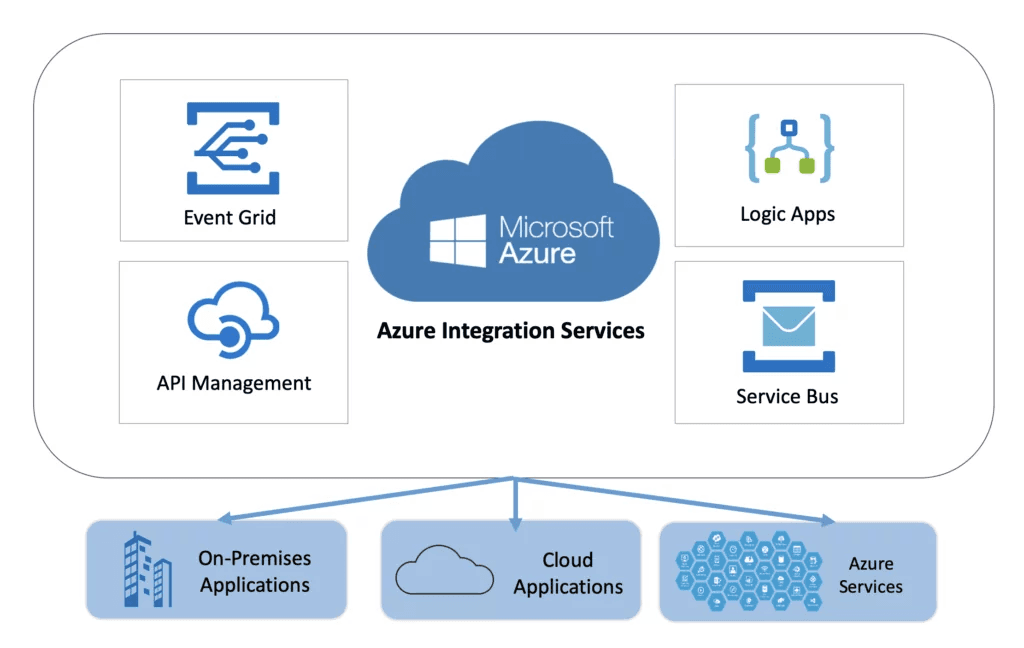
This is the comparison people run most often after Boomi. If your organisation is already deep into Microsoft licensing, the integration platform you are shopping for is already part of the suite.
Azure Integration Services is not a single product but a set of services: Logic Apps for workflow orchestration, API Management for APIs, Service Bus and Event Grid for messaging and events, and Data Factory for pipelines. Together they cover most of what Anypoint Platform does.
Microsoft publishes rates unlike MuleSoft. API Management runs from a consumption tier at roughly $3.50 per million calls with the first million free, through Developer at about $48 a month with no SLA, Basic v2 near $210, and Standard v2 near $734, up to Premium at roughly $3,000 per unit per month for multi-region active configurations, VNET injection, and self-hosted gateways. Logic Apps split into a consumption model billed per trigger and action, and a standard model billed on reserved capacity, whether you use it or not.
API Management consumption draws down against an Azure consumption commitment, so if your company has already committed spend to Microsoft, integration workloads can come out of money that is otherwise sitting there. Set that against a fresh $55,150 line item for MuleSoft, and the comparison is not close for a Microsoft-heavy organisation.
Azure Integrated Services is a toolkit, not a finished platform. You assemble Logic Apps, API Management, Service Bus, and Data Factory yourself, and you own the architectural decisions MuleSoft would have made for you. There is no equivalent to Anypoint Exchange as a reusable asset catalogue; DataWeave has no real counterpart, and connector depth outside the Microsoft ecosystem is thinner. Right-sizing is a genuine skill here, too, since licensing specialists routinely find customers on Premium for workloads that fit Standard v2 at a quarter of the run rate.
Pros
Published prices across every tier, from pay-per-call Consumption up to Premium, with no sales cycle required to see them
API Management spend can draw down an existing Azure consumption commitment, which changes the economics for Microsoft estates
Covers integration, API management, messaging, events, and pipelines, with native depth across Microsoft 365, Dynamics, and Fabric
Cons
A toolkit rather than a platform: you assemble and architect the pieces that MuleSoft ships pre-assembled
No reusable asset catalogue comparable to Anypoint Exchange and no equivalent to DataWeave for complex transformation
Easy to overspend by choosing the wrong tier, and connector coverage outside the Microsoft world is thinner than MuleSoft’s
Watch
4. MuleSoft vs Jitterbit: Rollouts That Finish, and Real EDI
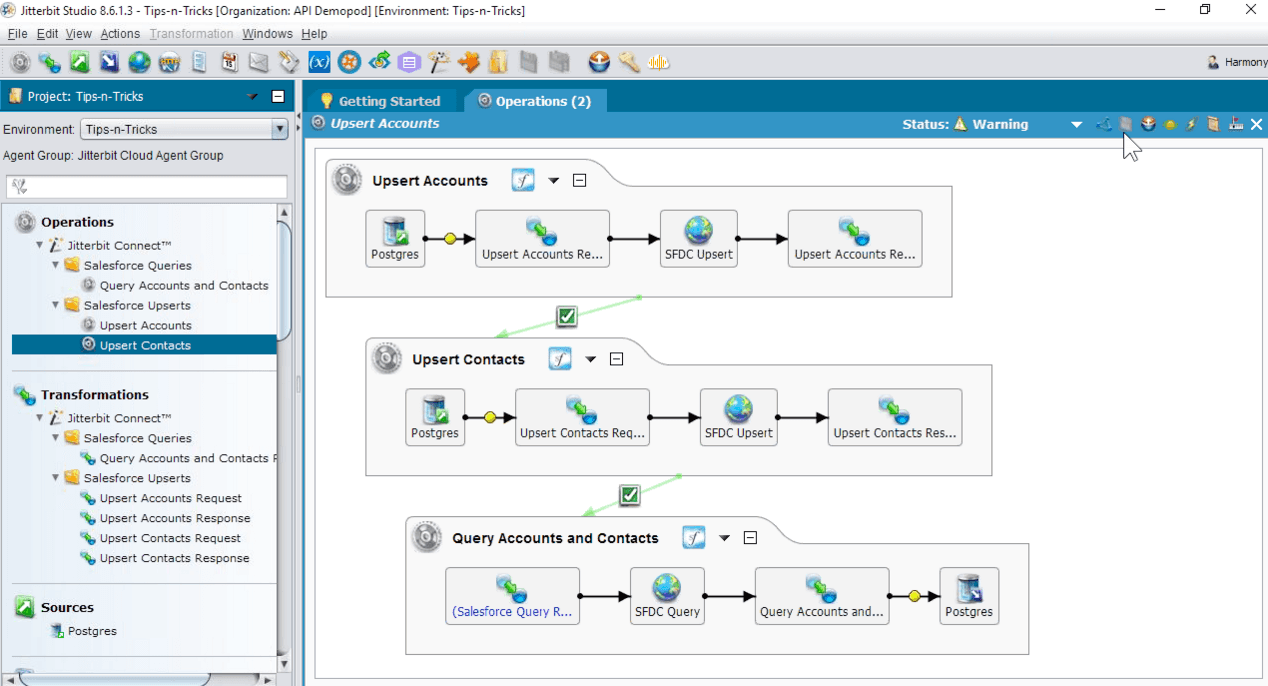
Six to eight months is the typical MuleSoft implementation. For a mid-market company, that timeline can be an inconvenience. A MuleSoft customer, in a case study, described a four-month integration that took a year and a half.
Jitterbit has built its position on the opposite outcome. In G2’s Spring 2026 Enterprise Implementation Index for iPaaS, it ranked first, its fourth consecutive quarter beating category averages on measures like ease of setup, time to go live, and adoption. Its bundles include 60 hours of professional services and a prebuilt agent. The Harmony platform covers iPaaS, API Manager, App Builder, and EDI under a single license, with deployment across cloud, hybrid, and on-premises private agents. The EDI capabilities, X12, EDIFACT, and XCBL, are supported across a network of more than 1,000 trading partners, which MuleSoft does not offer natively. AI runs across the stack via AskJB, building pipelines from natural language, prebuilt agents for HR, sales, and knowledge work, and separate assistants for API and EDI tasks. App Builder was acquired in March 2026 as part of the PrimeApps acquisition.
Jitterbit prices on connection-based tiering plus a custom annual quote; it does not publish pricing and offers no monthly option. Premium connectors, API management, EDI, and extra private agents are all billed separately, and contract data puts moderate deployments of 5 to 15 integrations at $30,000 to $80,000 a year. Reviewers also flag a dated Cloud Studio interface and limited change data capture. Gartner lists it as a visionary for 2026.
Pros
Ranked first in G2’s Spring 2026 Enterprise Implementation Index for iPaaS, four quarters running, on setup speed and adoption
Native EDI with X12, EDIFACT, and XCBL across 1,000+ trading partners, which MuleSoft does not provide out of the box
One license covering integration, API management, EDI, and app building, with 60 hours of services included in bundles
Cons
Connection-based tiering with custom annual quotes and no monthly billing, so pricing stays opaque
Premium connectors, API management, EDI, and additional private agents are all charged separately
A dated Cloud Studio interface and limited change data capture, with moderate deployments at $30,000 to $80,000 a year
Watch
5. MuleSoft vs Apigee: API Management Without the Integration Engine
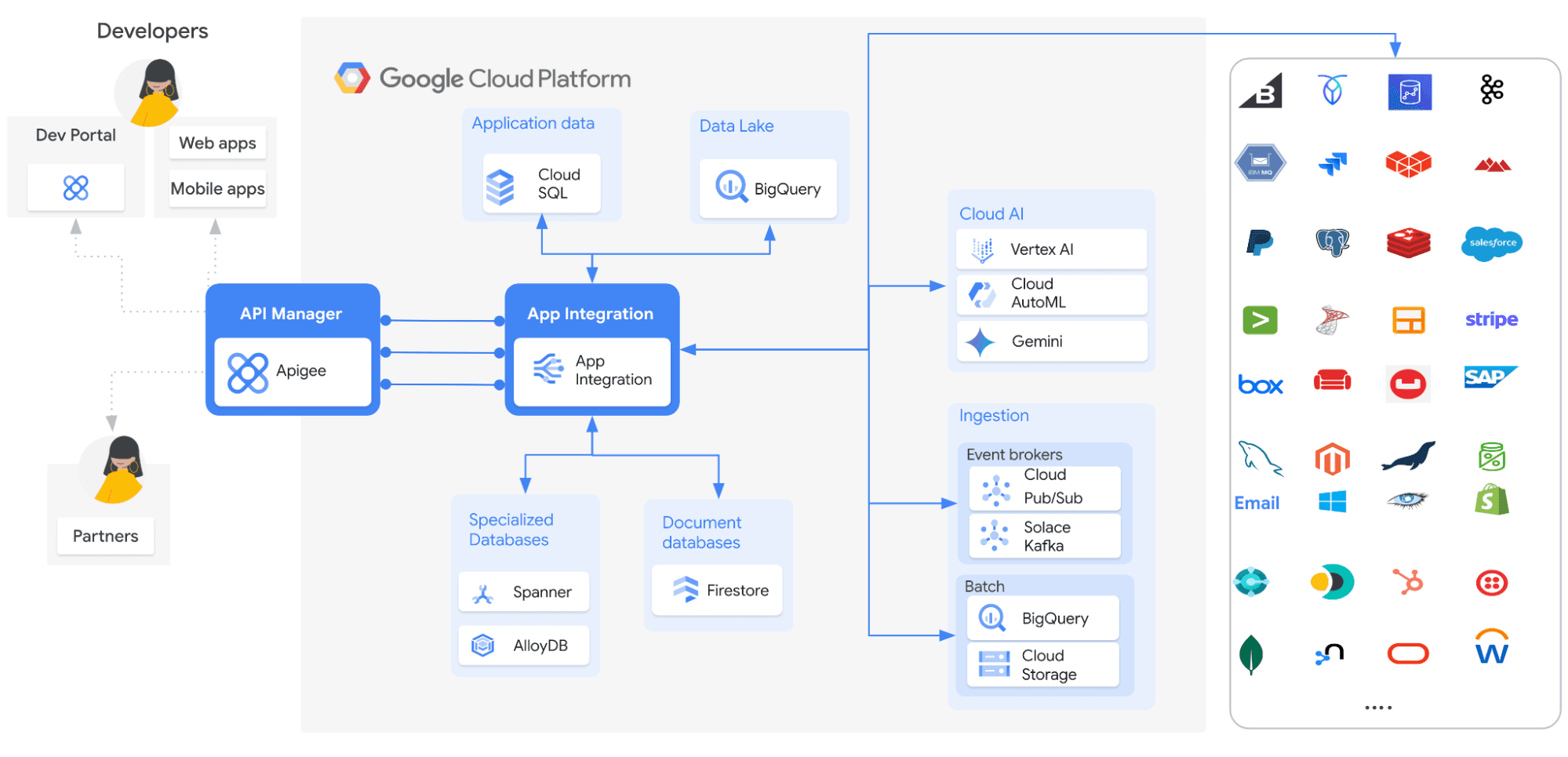
Apigee replaces one half of MuleSoft. If you use Anypoint to move data between SAP and Salesforce on a schedule, Apigee will not do that job, because it has no integration engine, no connector library, and nothing resembling DataWeave. What it does is manage APIs.
Google acquired Apigee in 2016 and has been a Magic Quadrant Leader in full lifecycle API management since 2018. The current product is Apigee X, which runs natively on Google Cloud and integrates with Cloud Armour for web application firewall protection, Cloud IAM for access control, CMEK for encryption keys, and VPC Service Controls. You can deploy proxies across 24 Google Cloud regions with caching at more than 100 locations.
Pricing is unusually legible, at least at the entry level. Google publishes pay-as-you-go rates: standard API proxy calls at $20 per million, dropping to $16 per million between 50 million and 500 million calls and $13 per million above that, with extensible proxies at $100 per million. Environment fees start around $365 a month per region at the entry level and reach roughly $3,431 a month per region at the top tier, with 20, 50, and 100 proxy deployments included as you move up the three environment types. Add-ons are separate: API Analytics at $20 per million analytics calls and Advanced API Security at $350 per million calls, both restricted to the higher tiers. The three subscription tiers are quote-only, and large enterprises typically land between $2,000 and $25,000 a month. There is a 60-day free trial.
Apigee Edge reached end of life in March 2025. And Google Cloud API Gateway is an entirely separate Envoy-based service that runs at no cost up to 2 million calls per month. If your APIs are an implementation detail, that one is the better fit, and the cost difference is enormous.
Pros
Best-in-class full-lifecycle API management with developer portals, monetisation, and advanced analytics, from a Magic Quadrant Leader since 2018
Published pay-as-you-go rates, a 60-day free evaluation, and deployment across 24 Google Cloud regions with caching at 100+ locations
Native Google Cloud security through Cloud Armour, IAM, CMEK, and VPC Service Controls, with cloud, hybrid, and on-premise options
Cons
Replaces only the API management half of MuleSoft, with no integration engine, connector library, or transformation language
Environment fees, analytics, and security add-ons stack on top of per-call pricing, and subscription tiers are quote-only
Priced well above commodity gateways, and Apigee Edge reached end of life in March 2025 so older guidance no longer applies
Watch
6. MuleSoft vs Kong: The Gateway You Run Yourself
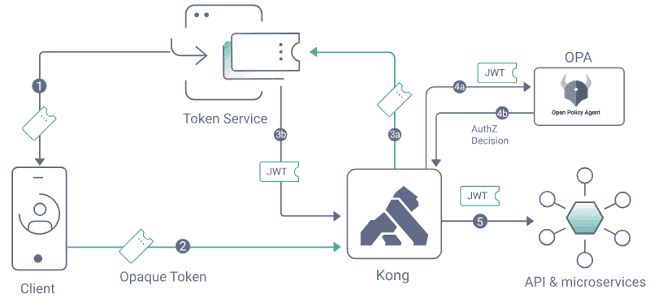
Kong Gateway is free, open source, and self-hosted, built on an NGINX engine that handles more than 50,000 transactions per second per node. Mercedes-Benz and Australia Post run it. For a platform engineering team working with Kubernetes first, it gives you a gateway you fully control, configured through an API, a web UI, or declarative config in your CI/CD pipeline. The AI work is current rather than aspirational: Kong AI Gateway governs LLM traffic, MCP calls, and agent-to-agent communication through the same policy layer as your regular APIs, which is a close analogue to what Agent Fabric does inside Anypoint.
Kong is a component, not a platform. You bring your own integration layer, observability stack, and developer portal customisation. Nothing here replaces Anypoint Studio, DataWeave, or the connector library. Teams that succeed with Kong have the engineers to run infrastructure; teams that do not end up paying elsewhere for the same outcome.
Konnect Plus bills per gateway service, and third-party analysis puts that at roughly $105 per service per month plus about $34 per million requests, where every API endpoint and every LLM model you route counts as its own service. That is breadth-based metering again, structurally the same as Mule Flows. Developer portals carry published API caps with per-API charges beyond them; SSO and audit logging sit behind enterprise, and self-hosted Kong Enterprise starts around $30,000 to $50,000 a year for small deployments. Aggregated contract data puts typical mid-market and enterprise Kong spend at $40,000 to $250,000 per year, and even the free edition has a real total cost once infrastructure and staff are factored in.
Pros
A fully open-source, self-hosted gateway with no license cost and very high throughput on an NGINX engine
Kong AI Gateway governs LLM, MCP, and agent-to-agent traffic through the same policy layer as your APIs
Full control over deployment across any cloud, Kubernetes, or hybrid setup, configured declaratively through CI/CD
Cons
A gateway, not a platform: no integration engine, no connector library, and no equivalent to Anypoint Studio or DataWeave
Konnect Plus meters per gateway service, so the breadth-based billing you left MuleSoft over reappears in the managed tier
SSO, audit logs, and advanced governance are Enterprise only, and self-hosted Enterprise starts near $30,000 to $50,000 a year
Watch
7. MuleSoft vs WSO2: Apache 2.0 API Management, Without a Migration
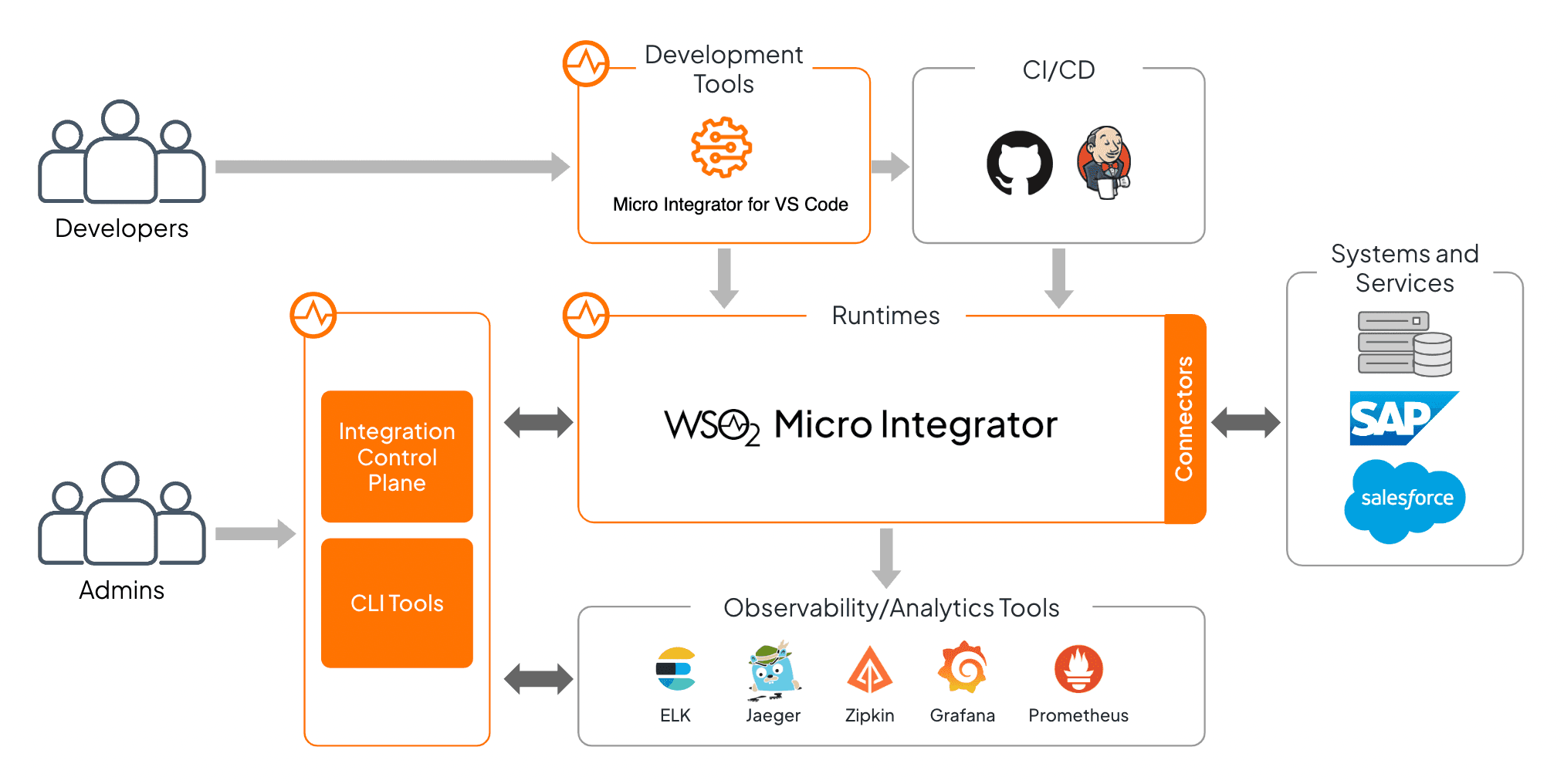
WSO2 API Manager is fully open source under Apache 2.0 with no feature paywall. It has no community edition. You get full lifecycle API management, design tooling, a Java-based gateway, a developer portal, and an OAuth2 key manager, covering REST, SOAP, GraphQL, WebSockets, WebHooks, and streaming APIs, self-hosted in the cloud, on-premises, or in a hybrid environment. What you pay for is a subscription that buys support and security updates, not features.
The most interesting development is more recent. In March 2026, WSO2 launched an API platform built around multi-gateway federation. The platform discovers and governs APIs running on Kong, Amazon API Gateway, and Azure API Management without requiring migration, providing a single developer portal where humans and agents can find the organisation’s entire portfolio of APIs and MCP servers, regardless of where each is hosted. Monetisation and analytics come through Moesif, which WSO2 acquired in 2025, and support prepaid, pay-as-you-go, and outcome-based models.
The Java and JVM stack is more heavyweight to operate than lightweight Go- or Envoy-based gateways, and reviewers consistently describe a steep learning curve, with documentation that exists but examples are thin. Running it in production without a subscription means no vendor security updates and no 24-hour support, which most enterprises will not accept, and subscription rates are not published. The managed option is a separate product called Choreo rather than a hosted version of the same thing. And, like Apigee and Kong, this is API management only: your integration workloads need to live elsewhere.
Pros
Fully open source under Apache 2.0 with no feature paywall, covering the full API lifecycle across REST, SOAP, GraphQL, and streaming
Multi-gateway federation governs APIs already running on Kong, Amazon API Gateway, and Azure API Management without migrating them
One developer portal exposing APIs and MCP servers to both humans and agents, with monetization through Moesif
Cons
API management only, so integration workloads still need a separate platform
A heavyweight Java and JVM stack with a steep learning curve, and production use without a paid subscription means no vendor security updates or 24-hour support
Subscription pricing is not published, and the managed offering is a separate product in Choreo
Watch
8. MuleSoft vs Composio: Tools For Agents You Build Yourself
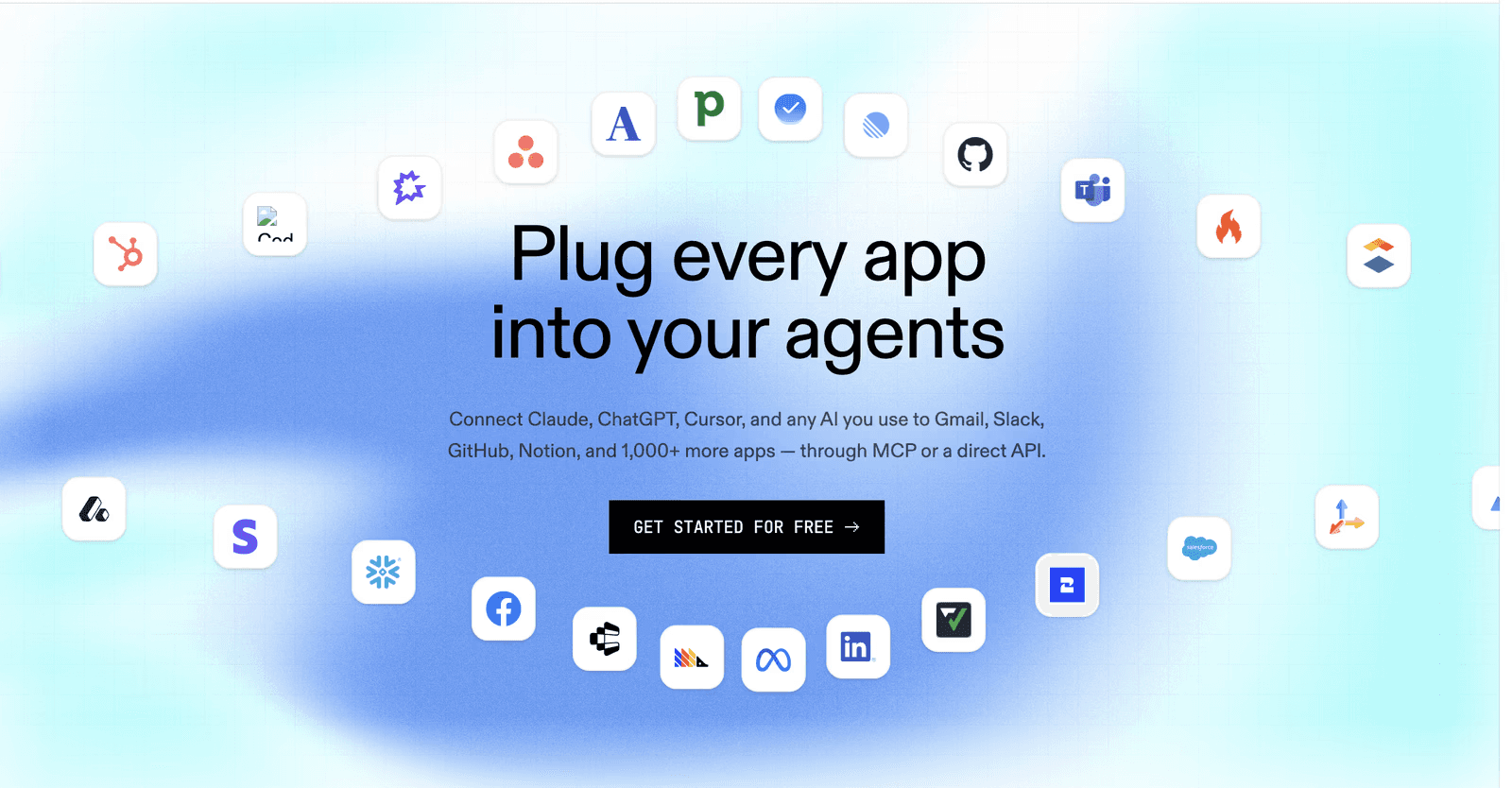
If your engineers are building agents in Python or TypeScript, MuleSoft’s governance layer is often the wrong starting point. Agents choose tools at runtime; they do not always follow a fixed integration map designed in advance. Composio sits closer to that workflow: it gives agents authenticated access to 1,000+ apps (Slack, Workday, Salesforce, Gong), handles managed auth, and keeps your team from maintaining another set of OAuth refresh flows.
Its stack is built for developers: Python and TypeScript SDKs, a CLI, a managed MCP Gateway, and a tool router that exposes only the tools an agent needs for a task, keeping the model’s context window cleaner. It is framework- and harness-agnostic, which means it works with LangChain, Claude Agents SDK, the OpenAI Agents SDK, the Vercel AI SDK, and harnesses like Claude Code, Codex, OpenCode, etc.
Composio publishes pricing and usage counts in tool calls: 20,000 free per month, $29 for 200,000, $229 for 2,000,000, and an enterprise tier with VPC or on-premises deployment. It is SOC 2 Type 2 and ISO certified.
Composio is neither an iPaaS nor an API gateway. Composio is not a full MuleSoft replacement. It gives agents access to your applications through managed auth, SDKs, triggers, direct APIs, and an MCP Gateway, but it does not replace MuleSoft’s iPaaS runtime or full API management layer. If you need scheduled enterprise integrations, API lifecycle governance, and developer portals, choose one of the integration or API management platforms above. If your engineers are building agents in code and need secure access to apps and actions, Composio is the most relevant layer.
Pros
Built for AI agents with authenticated access to 1,000+ applications and managed authentication maintained for you
SDKs, a CLI, a managed MCP gateway, and a tool router that keeps model context small
Public per-tool call pricing with a real free tier, plus VPC and on-premises options and SOC 2 Type II
Cons
It’s not a like-for-like replacement for MuleSoft for integrations.
Aimed at developers building in code or over MCP, not at teams working in a visual canvas
You still design, host, and maintain the agent itself.
Watch
Other MuleSoft competitors worth knowing
Use Informatica if your MuleSoft estate is mostly data rather than applications, covering integration, catalogue, governance, quality, and master data through IDMC with the CLAIRE AI engine. Note that Salesforce completed its roughly $8 billion acquisition in November 2025, so it and MuleSoft now share an owner. It bills in processing units that expire unused, and premium connectors and implementation push it to the most expensive option.
For SnapLogic, SLIM, its Intelligent Moderniser, is purpose-built to migrate legacy integration workloads, and the company claims up to an 80 per cent reduction in modernisation cost and time. It also markets unlimited data movement within each package, so transaction volume does not drive the bill.
Celigo is the mid-market answer on total cost, billing on endpoints and flows with no per-task or volume charges and no overage fees. Aggregated data puts its median buyer at $14,706 per year, compared with MuleSoft’s $55,150.
Tray.ai is the most AI-native enterprise alternative, offering Merlin Agent Builder and a governed MCP Agent Gateway, though it is sales-led and has no public pricing.
AWS API Gateway and Google Cloud API Gateway are the commodity options when your APIs are an implementation. Both run at a fraction of Apigee or MuleSoft rates.
Tyk and Gravitee are other credible independent API management platforms, both with open-source roots.
IBM webMethods, TIBCO, and Talend, now part of Qlik, are the alternatives when you are replacing legacy middleware rather than a cloud platform.
Zapier, Make, and n8n sit far below MuleSoft in governance and scale, but if a chunk of your estate is really cloud-to-cloud record-moving, they will handle that part for a rounding error. n8n in particular is free to self-host with unlimited executions.
If what you need is integrations embedded inside your own software product for your customers to configure, none of the above is built for it. Prismatic, Paragon, and Cyclr are, and Composio Connect covers the case where the embedded piece is an AI agent.
How to Pick an Alternative to MuleSoft
Your main reason for leaving MuleSoft | Narrow it down | Start with |
|---|---|---|
The bill grows every time you deploy another integration | You want broader connectors and a published entry price | Boomi ($99 a month pay as you go) |
The bill grows every time you deploy another integration | Your company is already committed to Microsoft | Azure Integration Services (published rates, commitment drawdown) |
Every request queues behind the integration team | You want business teams building with governance | Workato (unlimited recipes and connections) |
The implementation is taking too long | You need EDI and trading partners as well | Jitterbit (ranked first for implementation) |
You only ever needed the API management half | APIs are a product with external consumers | Apigee (portal, monetisation, analytics) |
You only ever needed the API management half | You want open source and full control | Kong (free self-hosted) or WSO2 (Apache 2.0) |
You cannot face migrating hundreds of proxies | Govern what you have, where it already runs | WSO2 (multi-gateway federation) |
You are building AI agents in code | The agent is yours; it just needs app access | Composio (managed auth, MCP gateway) |
Frequently asked questions
What is MuleSoft used for?
MuleSoft connects applications, data, and devices across cloud and on-premise systems using an API-led approach, where each integration is built as a reusable API rather than a point-to-point link. The Anypoint Platform covers API design and management, application integration, ETL, B2B integration, and event-driven architecture in one product, and since the 2018 Salesforce acquisition, it has also served as the main integration engine for Salesforce estates.
How much does MuleSoft cost?
MuleSoft publishes no list prices. New customers buy Integration Starter, Integration Advanced, or the API Management Solution, billed based on Mule Flow and Mule Message capacity, with Automation Credits and Agentforce Flex Credits metered separately. Benchmark data puts the median contract at $55,150 a year across 74 verified deals, with the first-year total cost commonly two to three times the subscription once implementation is counted. Premium connectors for systems like SAP and Oracle are estimated at $10,000 to $15,000 each annually. Negotiated rates routinely land 20 to 35 percent below list.
What is the best MuleSoft alternative?
It depends on which half of MuleSoft you are replacing. For integration, Boomi offers broader connectors and a published entry price; Azure Integration Services suits Microsoft estates; Workato moves build work to business teams; and Jitterbit delivers EDI and faster implementations. For API management, Apigee is the strongest platform, Kong the open-source gateway, and WSO2 the Apache 2.0 full-lifecycle option. Composio is the layer you use when building agents.
MuleSoft vs Boomi: Which should I choose?
Choose MuleSoft if APIs are a product for you, you need Anypoint Exchange and DataWeave, and Salesforce sits at the centre of your estate. Choose Boomi for broader out-of-the-box connectivity, native EDI and master data management, faster time to a first working integration, and a published $99 a month starting point. Both meter breadth: MuleSoft through Mule Flows and Boomi through connections, so neither fully escapes a bill that grows as you integrate more.
MuleSoft vs Workato: Which is better?
Workato is easier for business teams to build on and includes unlimited recipes, connections, and collaborators on every tier, so deploying more integrations does not directly increase your license the way Mule Flows does. MuleSoft is far stronger on API management, reusable assets, and complex transformation. Workato is also not cheap: entry deals start near $10,000 a year with a median around $65,000, and it publishes no prices.
MuleSoft vs Azure Integration Services: Which should I pick?
If your organization already runs on Microsoft and has an Azure consumption commitment, Azure is usually the better economic answer, because prices are published across every tier and API Management spend can draw down the commitment you have already made. MuleSoft wins on being a finished platform: Anypoint Exchange as a reusable asset catalog, DataWeave for transformation, and broader connector coverage outside the Microsoft ecosystem. Azure is a toolkit you assemble from Logic Apps, API Management, Service Bus, and Data Factory.
MuleSoft vs Apigee: what is the difference?
Apigee is full-lifecycle API management only. It secures, publishes, analyzes, and monetizes APIs, but it has no integration engine, no connector library, and no transformation language, so it cannot move data between systems on a schedule the way MuleSoft does. MuleSoft covers both jobs in one platform. If your API program is the valuable part and your integration needs are light, Apigee plus a lighter integration tool is often cheaper and better than Anypoint. Note also that Apigee Edge reached end of life in March 2025, and all current deployments run on Apigee X.
Is there an open source MuleSoft alternative?
For API management, yes. WSO2 API Manager is fully open source under Apache 2.0 with no feature paywall, and Kong Gateway is free and open source to self-host. Tyk and Gravitee are further options with open source roots. For integration, n8n is free to self-host with unlimited executions under a fair code license, though it is nowhere near MuleSoft on governance, compliance, or connector depth. No single open source project replaces all of Anypoint Platform.
Is MuleSoft the same as Salesforce?
MuleSoft is owned by Salesforce, which acquired it in 2018 for around $6.5 billion, but it remains a separate product with its own licensing. Anypoint Platform runs independently of Salesforce clouds and connects any systems you like. The overlap shows up in Agentforce integration, in bundled negotiations, and in the fact that Salesforce also bought Informatica in November 2025, so two major names on most integration shortlists now share one owner.
What are the alternatives to MuleSoft ESB?
Mule ESB is the legacy enterprise service bus that Anypoint Platform grew out of, and teams modernizing off it usually pick one of three routes: a cloud iPaaS such as Boomi, Workato, or Jitterbit; a cloud-native toolkit such as Azure Integration Services; or an open-source API and integration stack built on WSO2 or Kong. SnapLogic is worth a look specifically here, since SLIM is built to automate legacy migration work.
Which MuleSoft alternative is best for AI agents and MCP?
For agents your engineers write in code, Composio provides authenticated access to more than 1,000 applications through SDKs and a managed MCP gateway, freeing up to 20,000 tool calls a month. Among the platforms, Workato runs an enterprise MCP server across 1,400-plus applications; Boomi pairs Agentstudio with broadened MCP support; Kong AI Gateway governs LLM, MCP, and agent-to-agent traffic; and WSO2 exposes APIs and MCP servers through one federated portal.

 Get started