How to integrate Canva MCP with ChatGPT

Trusted by teams atAWSGleanZoomAirtable

30 min · no commitment · see it on your stack

Canva logo
ChatGPT logo
divider

How to integrate Canva MCP with ChatGPT

ChatGPT is one of the most popular AI tools today, with capabilities ranging from deep research and image generation to writing, coding, and everyday productivity.

In this guide, I will explain the easiest and most secure way to connect your Canva account to ChatGPT via Composio Connect, so it can summarize unread updates from this morning, create draft replies to urgent messages, fetch contact details for recent senders, and more without ever putting your account credentials at risk.

Also integrate Canva with

Why use Composio over default connectors?

  • Apps with read and write access. Default connectors mostly can read your data. Composio's Canva integration lets ChatGPT take actions like creating drafts, sending updates, labeling records, and more.
  • 1,000+ SaaS toolkits out of the box. Composio gives you instant access to a vast catalog of pre-built connectors, from Gmail and Slack to Notion, Linear, and Salesforce.
  • One MCP server for every app. Connect any of your applications on demand through a single endpoint, rather than juggling a separate server for each app.
  • Smart, context-aware tool loading. Unlike traditional MCP servers that dump every available tool into the LLM context window, Composio searches for and loads only the tools relevant to the task at hand.
  • Cross-app automation. Chain actions across multiple apps in a single run - fetch a thread, summarize it in Notion, and post highlights to Slack without leaving the conversation.

Prerequisites

  • A ChatGPT account with Plus subscription or higher (Business, Enterprise, Edu, or Pro). We will use ChatGPT Web.
  • Access to the Canva workspace you want to connect.
  • Composio MCP.

Note: Composio connects through OAuth. You will be asked to sign in and approve specific permissions. Review the permission screen carefully if you are using a work account.

Step-by-step: Connect Canva to ChatGPT

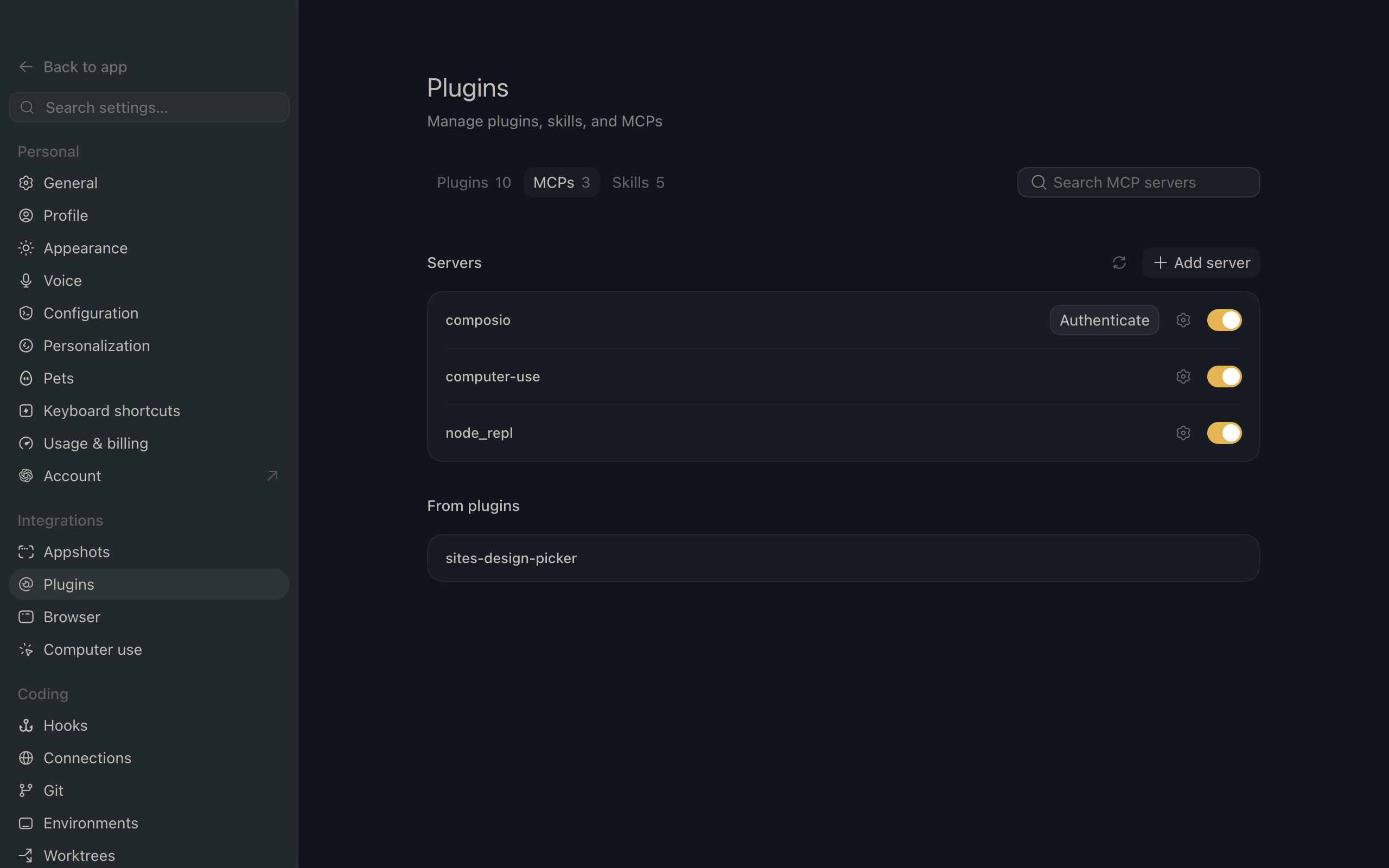
1. Enable Developer Mode

In ChatGPT, go to Settings > Apps > Advanced settings and turn on Developer Mode.

ChatGPT settings showing Developer Mode toggle

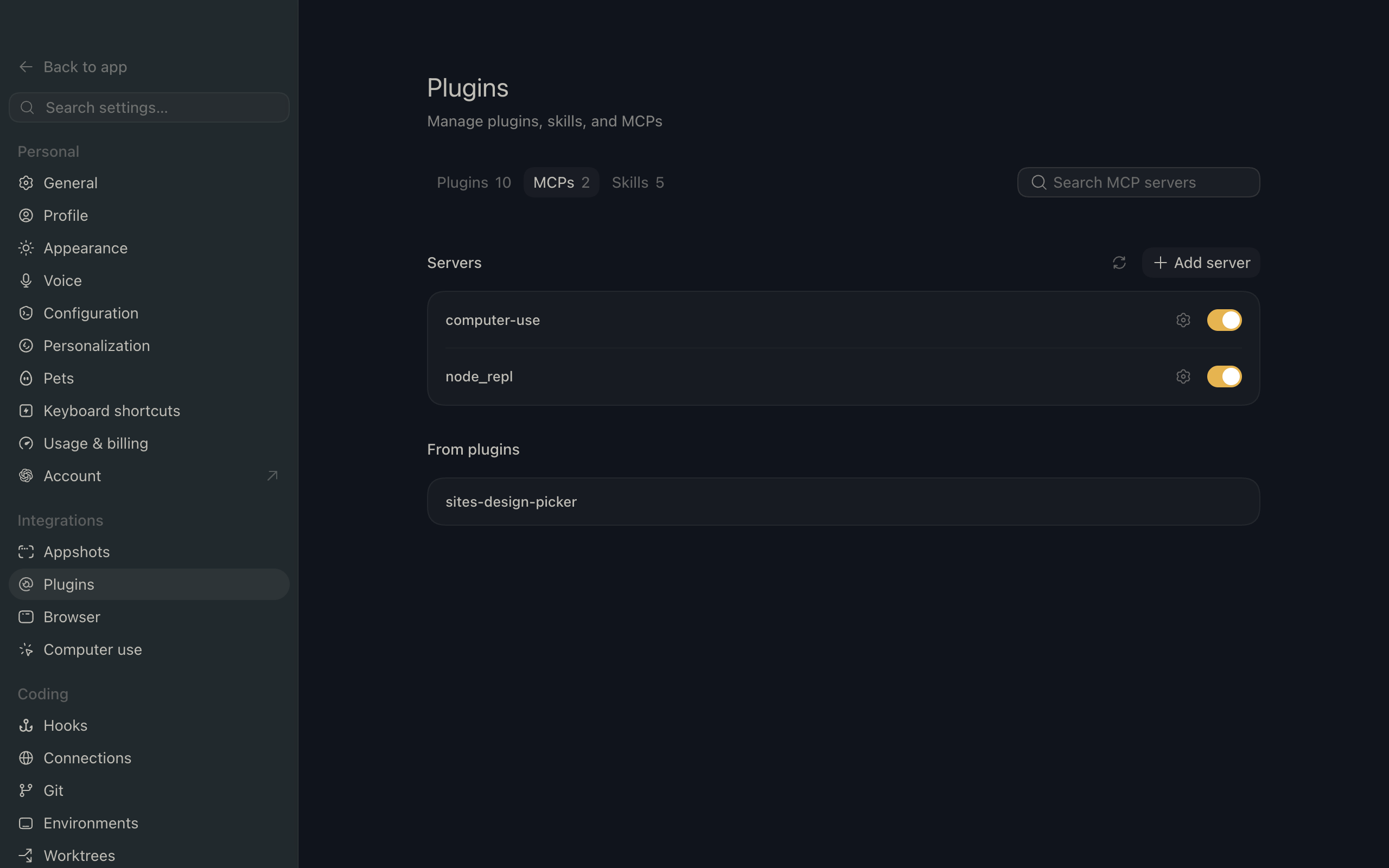
2. Add the MCP server

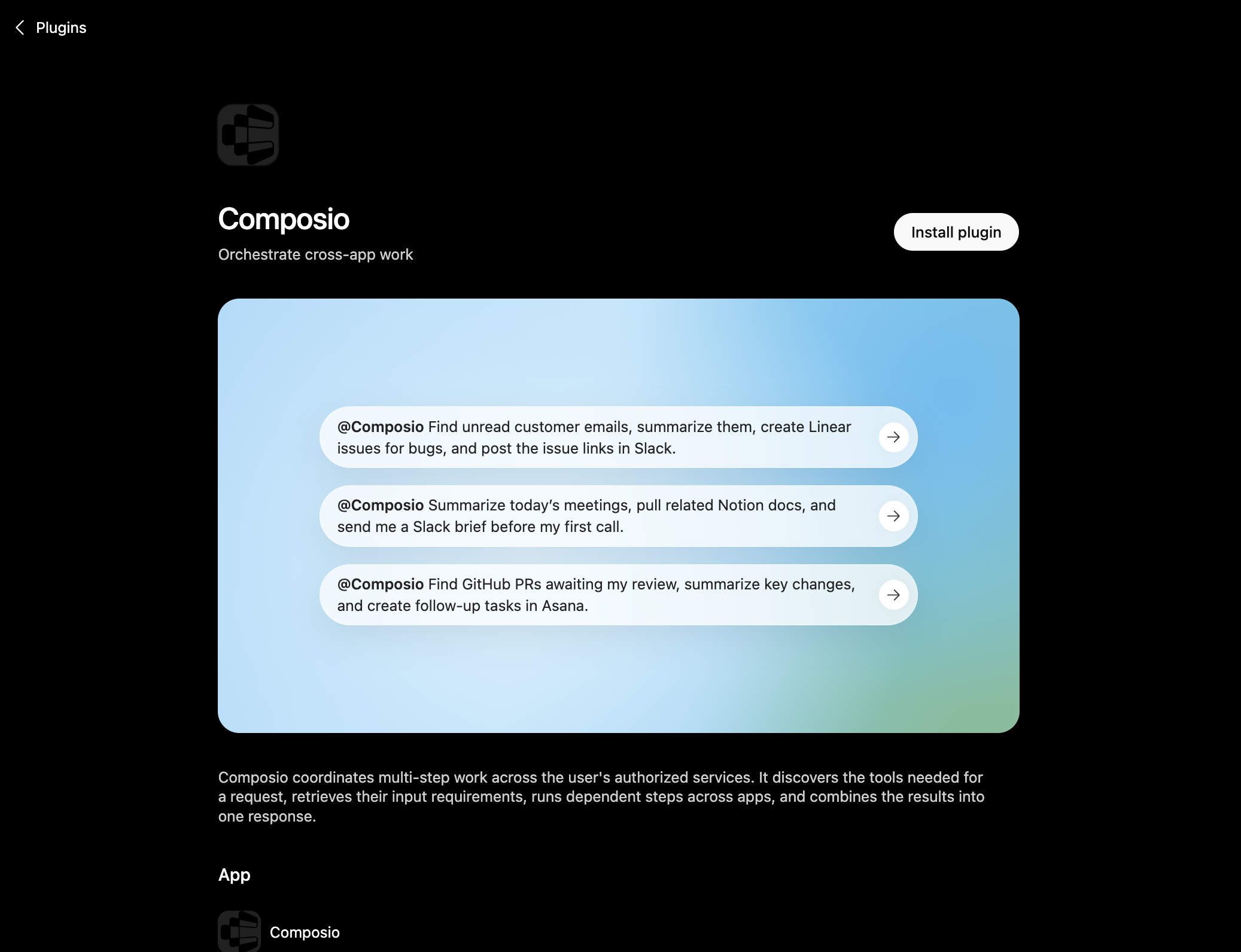
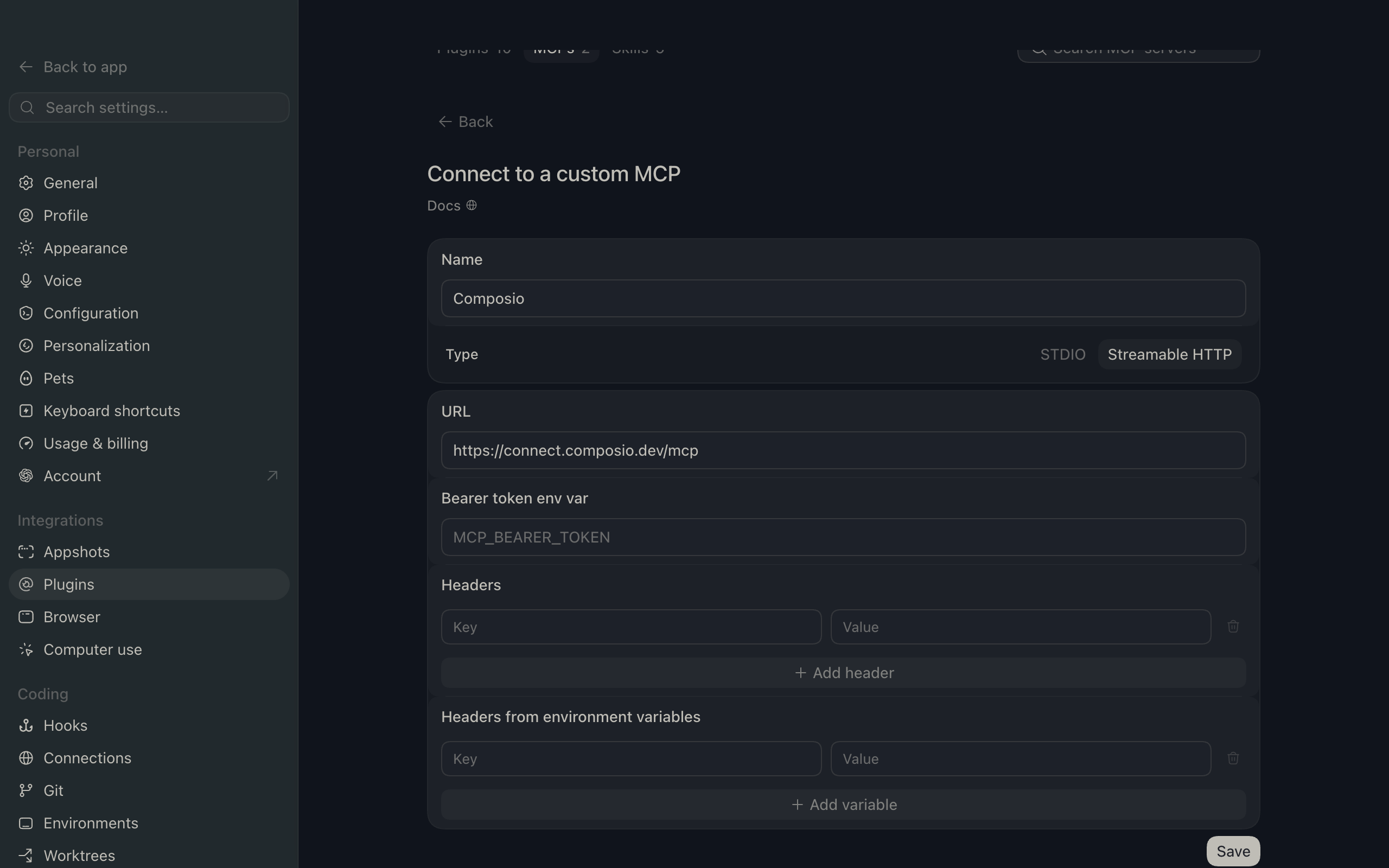
Click Create app, then paste the Composio MCP server URL:

bash
https://connect.composio.dev/mcp
ChatGPT create app flow with Composio MCP URL

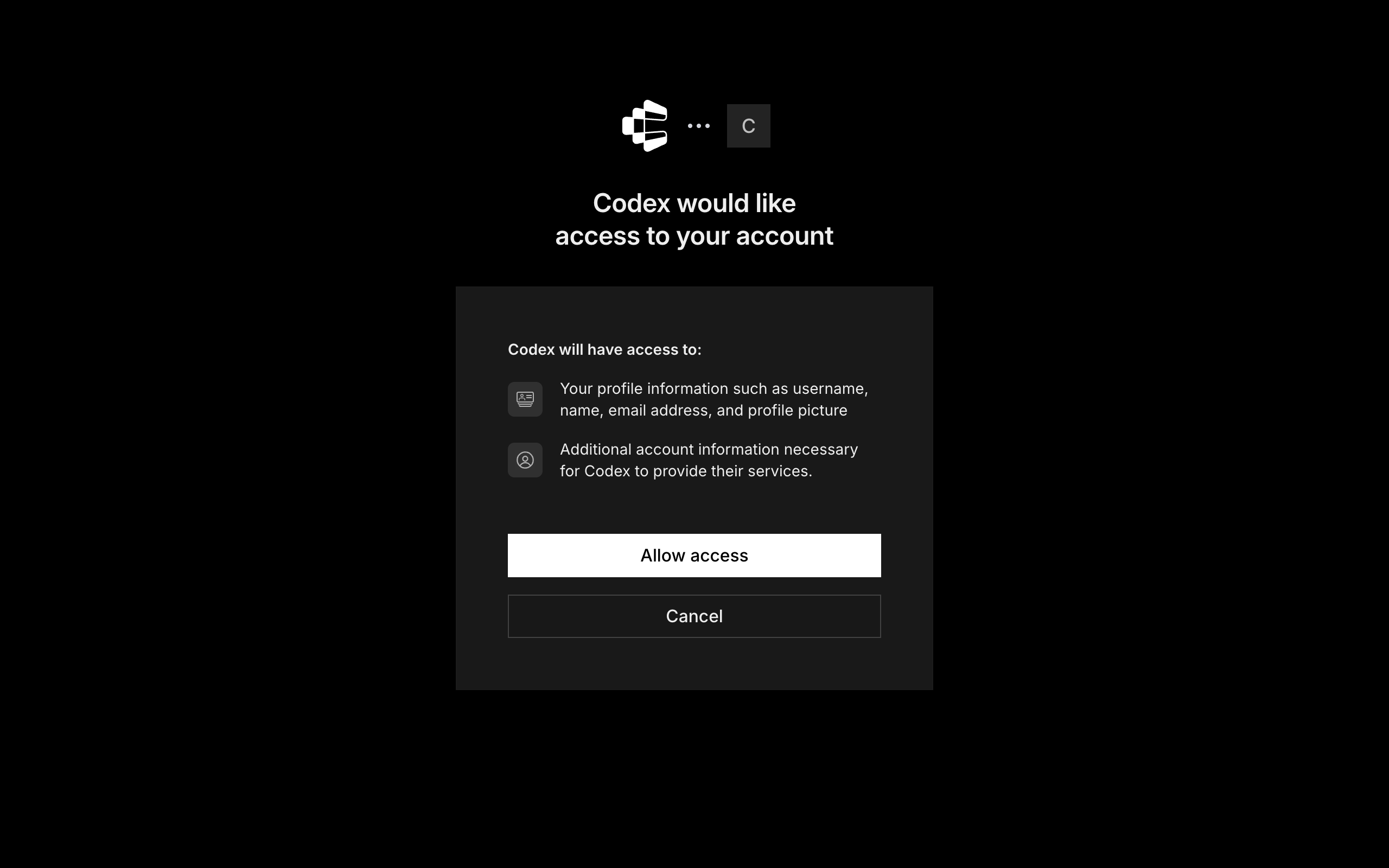
3. Authorize in your browser

A browser window will open automatically. Sign in to authorize ChatGPT to access your Composio account.

Composio authorization screen for ChatGPT MCP setup

4. Start using Composio

Composio tools are now available in ChatGPT chats and Deep Research. In every new chat, click the + icon at the bottom, click More, and select Composio to enable tools for that conversation.

What you can do after connecting Canva

  • Create a new Instagram post design
  • List your brand templates for social use
  • Start a folder for this project’s assets
  • Reply to comments on a shared design

Security + privacy notes (important)

  • Use least-privilege access: Only grant permissions you actually need.
  • Review OAuth permissions before approving: Make sure requested scopes match what you expect Composio and ChatGPT to do.
  • Keep write actions human-reviewed: For actions like sending messages, creating labels, or editing drafts, keep manual confirmation enabled.
  • Be careful with sensitive data: Avoid using this setup with highly sensitive information unless allowed by your personal, company, or client policies.

Supported Tools & Triggers

Tools
Access user specific brand templates listThis year, brand template ids will change; integrations storing them must update within 6 months.
Create canva design with optional assetCreate a new canva design using a preset or custom dimensions, and add an asset with `asset id` from a user's project using relevant apis.
Create comment reply in designThis preview api allows replying to comments within a design on canva, with a limit of 100 replies per comment.
Create design comment in preview apiThis api is in preview and may change without notice; integrations using it won't pass review.
Create user or sub folderThis api creates a folder in a canva user's projects at the top level or within another folder, returning the new folder's id and additional details upon success.
Delete asset by idYou can delete an asset by specifying its `assetid`.
Exchange oauth 2 0 access or refresh tokenThe oauth 2.
Fetch asset upload job statusSummarize asset upload outcome by repeatedly calling the endpoint until a 'success' or 'failed' status is received after using the create asset upload job api.
Fetch canva connect signing public keysThe api for verifying canva webhooks, 'connect/keys,' is in preview, meaning unstable, not for public integrations, and provides a rotating jwk for signature verification to prevent replay attacks.
Fetch current user detailsReturns the user id, team id, and display name of the user account associated with the provided access token.
Fetch design metadata and access informationGets the metadata for a design.
Get design export job resultGet the outcome of a canva design export job; if done, receive download links for the design’s pages.
Initiate canva design autofill jobUpcoming brand template id updates require migration within 6 months.
Initiates canva design export jobCanva's new job feature exports designs in multiple formats using a design id, with provided download links.
List design pages with paginationPreview api for canva: subject to unannounced changes and not for public integrations.
List folder items by type with sortingLists the items in a folder, including each item's `type`.
List User DesignsProvides a summary of canva user designs, includes search filtering, and allows showing both self-created and shared designs with sorting options.
Move item to specified folderTransfers an item to a different folder by specifying both the destination folder's id and the item's id.
Remove folder and move contents to trashDeletes a folder by moving the user's content to trash and reassigning other users' content to their top-level projects.
Retrieve app public key setReturns the json web key set (public keys) of an app.
Retrieve a specific design commentThis preview api is subject to unannounced changes and can't be used in public integrations.
Retrieve asset metadata by idYou can retrieve the metadata of an asset by specifying its `assetid`.
Retrieve brand template dataset definitionCanva's brand template ids will change later this year, including a 6-month integration migration.
Retrieve canva enterprise brand template metadataUpcoming update will change brand template ids; integrations must migrate within 6 months.
Retrieve design autofill job statusApi users with canva enterprise membership can retrieve design autofill job results, potentially requiring multiple requests until a `success` or `failed` status is received.
Retrieve design import job statusGets the status and results of design import jobs created using the [create design import job api](https://www.
Retrieve folder details by idGets the name and other details of a folder using a folder's `folderid`.
RetrieveuserprofiledataCurrently, this returns the display name of the user account associated with the provided access token.
Revoke oauth tokensRevoke a refresh token to end its lineage and user consent, requiring re-authentication.
Update asset s name and tags by idYou can update the name and tags of an asset by specifying its `assetid`.
Update folder details by idUpdates a folder's details using its `folderid`.
Validate oauth token propertiesCheck an access token's validity and properties via introspection, requiring authentication.

How to build Canva MCP Agent with another framework

FAQ

What are the differences in Tool Router MCP and Canva MCP?

With a standalone Canva MCP server, the agents and LLMs can only access a fixed set of Canva tools tied to that server. However, with the Composio Tool Router, agents can dynamically load tools from Canva and many other apps based on the task at hand, all through a single MCP endpoint.

Can I use Tool Router MCP with ChatGPT?

Yes, you can. ChatGPT fully supports MCP integration. You get structured tool calling, message history handling, and model orchestration while Tool Router takes care of discovering and serving the right Canva tools.

Can I manage the permissions and scopes for Canva while using Tool Router?

Yes, absolutely. You can configure which Canva scopes and actions are allowed when connecting your account to Composio. You can also bring your own OAuth credentials or API configuration so you keep full control over what the agent can do.

How safe is my data with Composio Tool Router?

All sensitive data such as tokens, keys, and configuration is fully encrypted at rest and in transit. Composio is SOC 2 Type 2 compliant and follows strict security practices so your Canva data and credentials are handled as safely as possible.

Used by agents from

Context
Letta
glean
HubSpot
Agent.ai
Altera
DataStax
Entelligence
Rolai
Context
Letta
glean
HubSpot
Agent.ai
Altera
DataStax
Entelligence
Rolai
Context
Letta
glean
HubSpot
Agent.ai
Altera
DataStax
Entelligence
Rolai

Never worry about agent reliability

We handle tool reliability, observability, and security so you never have to second-guess an agent action.