In summary:
Tray.ai is a capable enterprise iPaaS, but opaque pricing and a steep cost curve push many teams to look elsewhere. Workato and Boomi fit enterprises that want governance (Boomi with public pricing), Make and Zapier keep the visual builder at a fraction of the cost, n8n is the open-source, self-hosted pick, Pipedream suits engineers who prefer code, and Prismatic targets SaaS companies shipping embedded integrations. If your workloads are AI agents (Claude Code, Codex) rather than classic workflows, Composio is the tool layer built for agents and MCP.
Tray.io, now known as Tray.ai, is a leading integration platform. It connects more than 700 apps, gives you a low-code canvas called Tray Build and a headless mode that plugs straight into AI IDEs like Claude Code and Codex, and layers on the AI story.
Tray.ai offers Merlin Agent Builder for no-code agents and an Agent Gateway that turns your workflows and connectors into governed MCP tools. Gartner lists it as a Visionary in the iPaaS Magic Quadrant and named it a Pioneer for no-code agent builders this year. Customers rate it 91 per cent on Gartner Peer Insights.
Those same customers will also tell you what it is like to live with. One reviewer put it plainly: build times and cost control limited how quickly they could grow on the platform.
Tray is good, and Tray is a sales cycle, a task meter, and a bill you cannot forecast. Merlin is sold separately on top of your plan. The embedded bundle, the piece that lets a SaaS company ship integrations inside its own product, sits behind the Enterprise package. Document processing is billed per page. Every action an agent takes counts as a task, so the more agentic you get, the faster the meter spins.
How I compared these tools
In curating this list, I had to consider the various reasons users might want an alternative to Tray.ai. Some want a smaller bill. Some want an engine they can read the source of. Some are a SaaS company that bought Tray for the embedded bundle and now wants out.
For each tool, I checked the same six things:
Whether it publishes prices, and what those prices mean once volume grows. Tray’s opaque quote is the single most common reason people leave, so any tool that also hides its pricing gets called out for it here, including the ones I like.
The pricing model itself, task-based or operation-based or credit-based or per execution, because that decides whether one chatty workflow eats your budget.
License and hosting: open-source, self-hosted, on-premises, or cloud-only.
The AI and MCP story, since Merlin agents and a governed MCP gateway are Tray’s whole pitch, and a replacement has to answer that.
Connector coverage against Tray’s 700 plus, and whether the specific apps you need are in there.
Who the tool is really for, and how cleanly it takes over the job you were using Tray for.
What Tray.io costs, and why nobody can tell you
Tray.io pricing works on one simple principle: you are not allowed to see it.
Tray publishes three plan names and zero numbers. Pro covers a single use case with up to three workspaces. The Team plan supports up to 20 workspaces and includes collaboration, version control, and optional add-ons such as enhanced audit logging and HIPAA support.
Enterprise gives you unlimited workspaces, regional hosting, log streaming, and on-premises connectivity. What any of it costs depends on your task volume and which features you take, and the only way to find out is to book the call.
Third-party estimates put custom quotes somewhere north of $7,000 a year. That is the floor, and the floor is not the interesting part.
The interesting part is what sits outside the plan:
Merlin Agent Builder, the AI agent product that is why many AI-native teams look at Tray, is an add-on at an extra cost on every tier.
The embedded bundle, for SaaS companies putting integrations inside their own product, requires Enterprise.
Document processing is priced per page.
Agents run workflows, and each action within a workflow counts as a task, so your agents and your integrations share the same meter.
None of that makes Tray a bad platform. It makes it unforecastable, which is a different and more irritating problem. If you can absorb a five-figure annual commitment and need governed enterprise orchestration with real agents on top, then Tray is a good fit for you.
If you cannot, or if the job you are doing is narrower than the contract you are being sold, keep reading.
Top Tray.io alternatives compared at a glance
Tool | Type and hosting | Pricing model | Public pricing | AI and MCP | Best for |
|---|---|---|---|---|---|
Enterprise iPaaS, cloud and on-premises | Plan plus task usage plus add-ons | No, sales-led | Merlin Agent Builder, Agent Gateway for MCP | Governed enterprise orchestration with AI agents | |
Workato | Enterprise iPaaS, cloud and on-premises | Edition fee plus task usage | No, sales led | Agent Studio genies, enterprise MCP across 1,400+ apps | The most mature enterprise peer, at a higher price |
Make | Visual automation, cloud only | Per operation | Yes, free tier and from about $9 a month | Make AI Agents, Maia, MCP | The cheapest way to keep a visual builder |
Zapier | Visual automation, cloud only | Per task | Yes, free tier and from $19.99 a month | Copilot, Agents, MCP on every account | The most apps and the fastest setup |
n8n | Open source automation, self-host or cloud | Per execution | Yes, free self-host, cloud from $24 a month | AI Agent and LangChain nodes, MCP, vector stores | Engineering-led teams that want control and near-zero cost |
Boomi | Enterprise iPaaS, cloud, on-premises, behind firewall | Pay as you go or enterprise contract | Partly, from $99 a month | AgentStudio, Agent Control Tower, Boomi Connect, MCP | Governed enterprise automation you can start today |
Pipedream | Developer iPaaS, cloud only | Per compute credit | Yes, free tier and from about $29 a month | Mature hosted MCP with 10,000+ tools | Engineers who want code, not a canvas |
Prismatic | Embedded iPaaS, cloud | Custom, three plans | No, sales-led | AI Copilot for the workflow builder, MCP dev server | Replacing Tray Embedded inside your own SaaS product |
Composio | Agent tool layer, cloud or VPC | Per tool call | Yes, free tier and from $29 a month | Managed auth, MCP gateway, tool router | Giving an AI agent you built real access to apps |
1. Tray.ai vs Workato: More Connector; More Control
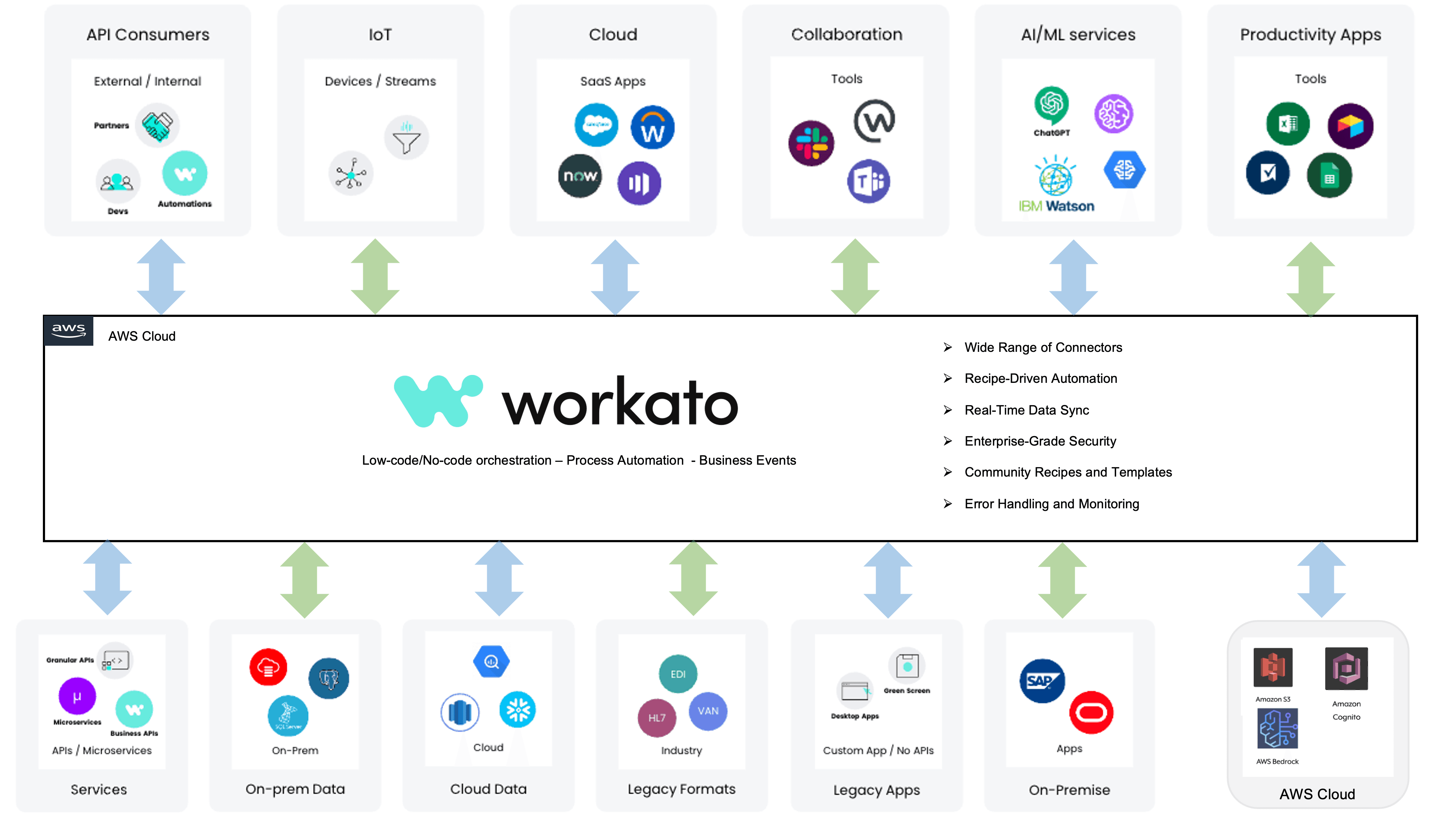
More people put Tray next to Workato than to any other item on this list, and that’s quite valid.
Both are enterprise iPaaS platforms sold through a sales team to companies with real governance requirements. Workato is the bigger of the two: more than 1,200 connectors against Tray’s 700-plus, unlimited recipes, connections, and collaborators on every tier, and eight consecutive years as a Gartner Leader with a 4.7 rating on G2.
Its AI work is serious too. Agent Studio builds agents it calls genies, which run on Anthropic Claude by default. Workato GO is the chat surface. Its enterprise MCP server exposes more than 1,400 apps as governed tools to Claude, ChatGPT, and Cursor, which is the same shape as Tray’s Agent Gateway and a bit broader in reach.
But if you are leaving Tray because you are sick of not knowing the price, Workato is not your escape. It has the same disease and a worse case of it: no public pricing, a platform edition fee plus task usage, a one-year minimum, entry deals around $10,000 per year, a median customer near $65,000, and mid-market deployments ranging from $50,000 to $130,000. Premium connectors for SAP and Oracle cost extra. Workato is the right move when you are leaving Tray because of its capabilities, maturity, or connector coverage. It is the wrong move to leave to escape the quote.
Pros
The most mature enterprise peer, with 1,200+ connectors and unlimited recipes, connections, and collaborators on every tier
A deep agentic layer: Agent Studio genies running on Claude, an enterprise MCP server covering 1,400+ apps, and Recipe IQ
Eight straight years as a Gartner Leader, and a 4.7 on G2
Cons
No public pricing, a sales cycle, and a one-year minimum, so you are swapping one opaque quote for another
Usually more expensive than Tray: entry around $10,000 a year, median near $65,000, mid-market $50,000 to $130,000
Premium connectors for systems like SAP and Oracle are billed separately
Related: Workato Alternatives in 2026
Watch
2. Tray.ai vs Make: the cheapest way to keep a visual builder
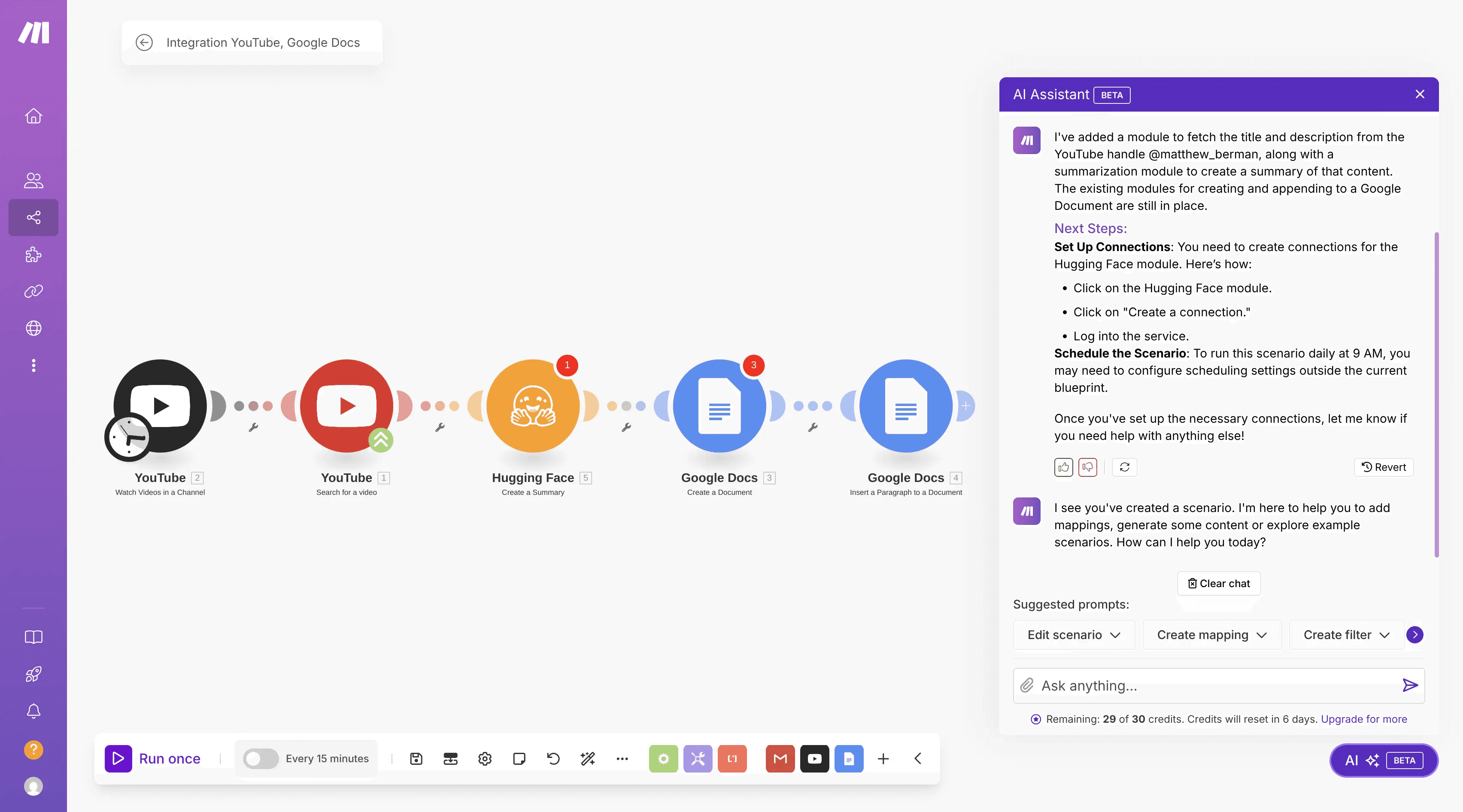
For this comparison, pricing is what seals the deal. Tray’s entry quote reportedly starts somewhere around $7,000 a year. Make’s Core plan is about $9 a month, billed annually at $108, and it includes 10,000 operations. There is a free tier with 1,000 operations per month if you want to test the thing immediately without any sales calls.
Make, formerly Integromat and now part of Celonis, connects more than 3,000 apps through a visual canvas. It has kept pace with AI better than most of the cheap tools: Make AI agents that react to changing conditions instead of following a fixed path, a Maia assistant that builds scenarios from a plain description, MCP support, and native connections to OpenAI, Anthropic, and Google.
While the pricing is a sought-after alternative, there is no on-premise story on Make. Governance is thinner than Tray’s; support on the lower tiers is forums and email, and operations counting gets hard to forecast as scenarios grow, with AI modules burning operations faster than plain ones. For a regulated enterprise running hundreds of governed integrations, Tray still wins. For a department or a mid-market team that got quoted enterprise money for a job that was never enterprise-sized, Make does most of it for a rounding error.
Pros
Published prices, a free tier, and a bill that is a small fraction of any enterprise iPaaS quote
More than 3,000 apps, plus Make AI Agents, the Maia assistant, and MCP support
You can sign up and ship something today without a sales call
Cons
Cloud only, with no on-premises connectivity and lighter governance than Tray
Operation counting is hard to forecast as scenarios get complex, and AI modules consume more of them
Support on the cheaper plans is thin
Related: Make.com alternatives for AI automation
Watch
3. Tray.ai vs Zapier: More Connectors, Less The Cost
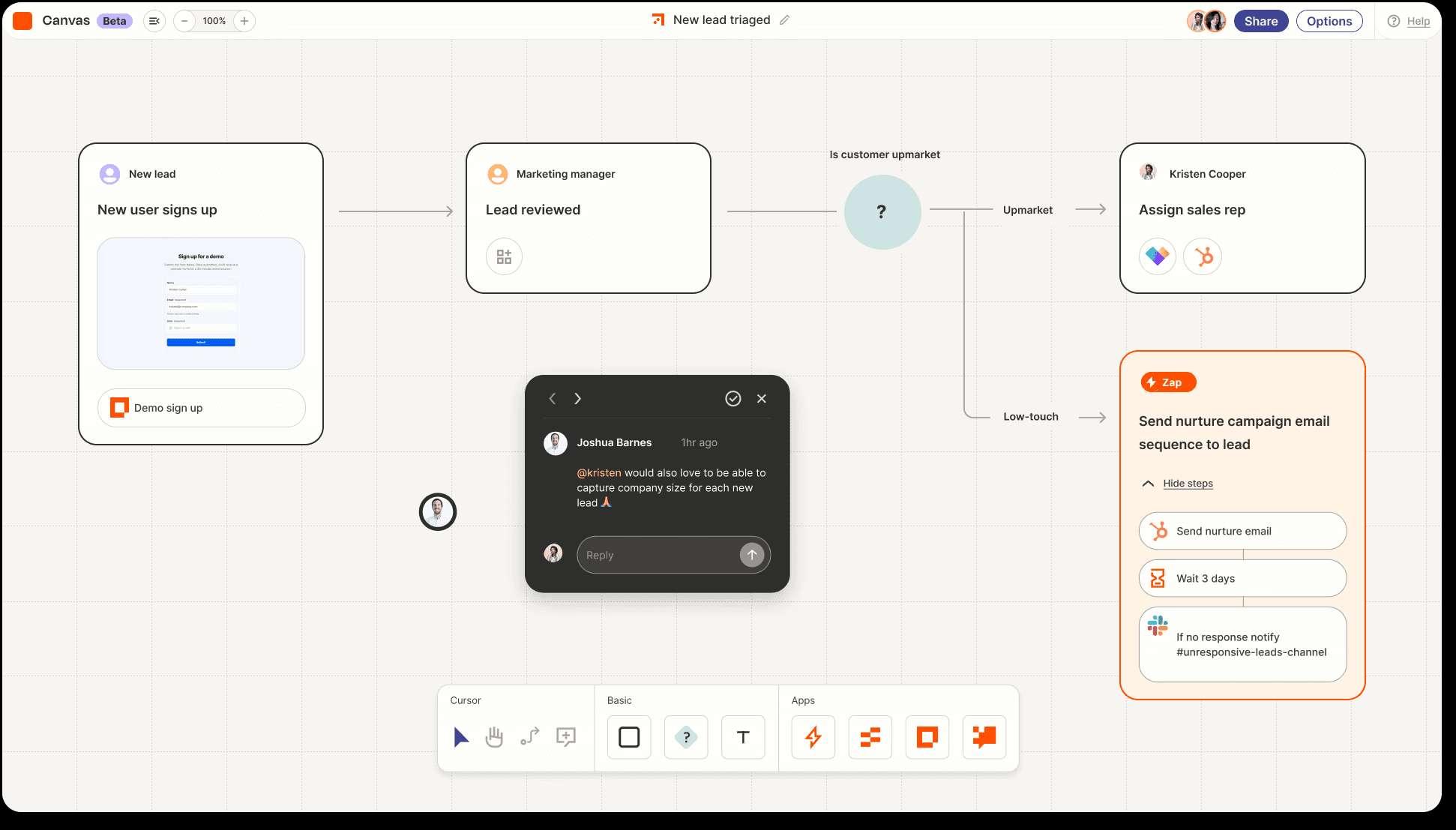
Tray connects 700-plus apps. Zapier connects to more than 9,000 apps, more than any other automation tool. If your automation is really a set of app-to-app handoffs, and if the niche CRM your sales team insists on only ships one integration, it is usually a Zapier one.
Pricing is public and small: a free plan with 100 tasks a month; Professional from $19.99 a month billed annually for 750 tasks; Team at $69 a month for 2,000 tasks; and a custom Enterprise tier. On the AI side, Copilot drafts Zaps from a prompt; Zapier Agents run as a separate product; and Zapier MCP is available on every account, including free, with one MCP tool call costing two tasks.
But Zapier bills per task, where a task is one action that runs, so a five-step Zap that fires 150 times a month consumes your entire 750-task allowance. At volume, Make and n8n cost several times less for the same work. Governance and orchestration are nowhere near Tray’s, and there is no self-hosting. Zapier’s own comparison page happily points out that Tray gets expensive fast, which you should discount for the obvious reason, and which is also true.
Pros
The widest app coverage anywhere at more than 9,000, with published prices and a free tier
The fastest path from idea to working automation, plus Copilot, Agents, and MCP on every account
Niche and long tail apps ship Zapier integrations first, and sometimes only
Cons
Per task pricing climbs steeply with multi-step workflows, and each MCP tool call costs two tasks
Governance and orchestration are far lighter than Tray’s, with no self-hosting
The free plan is a trial in disguise, capped at two-step Zaps and 15-minute polling
Related: Best Zapier Alternatives in 2026
Watch
4. Tray.ai vs n8n: open source, self-hosted, huge community support
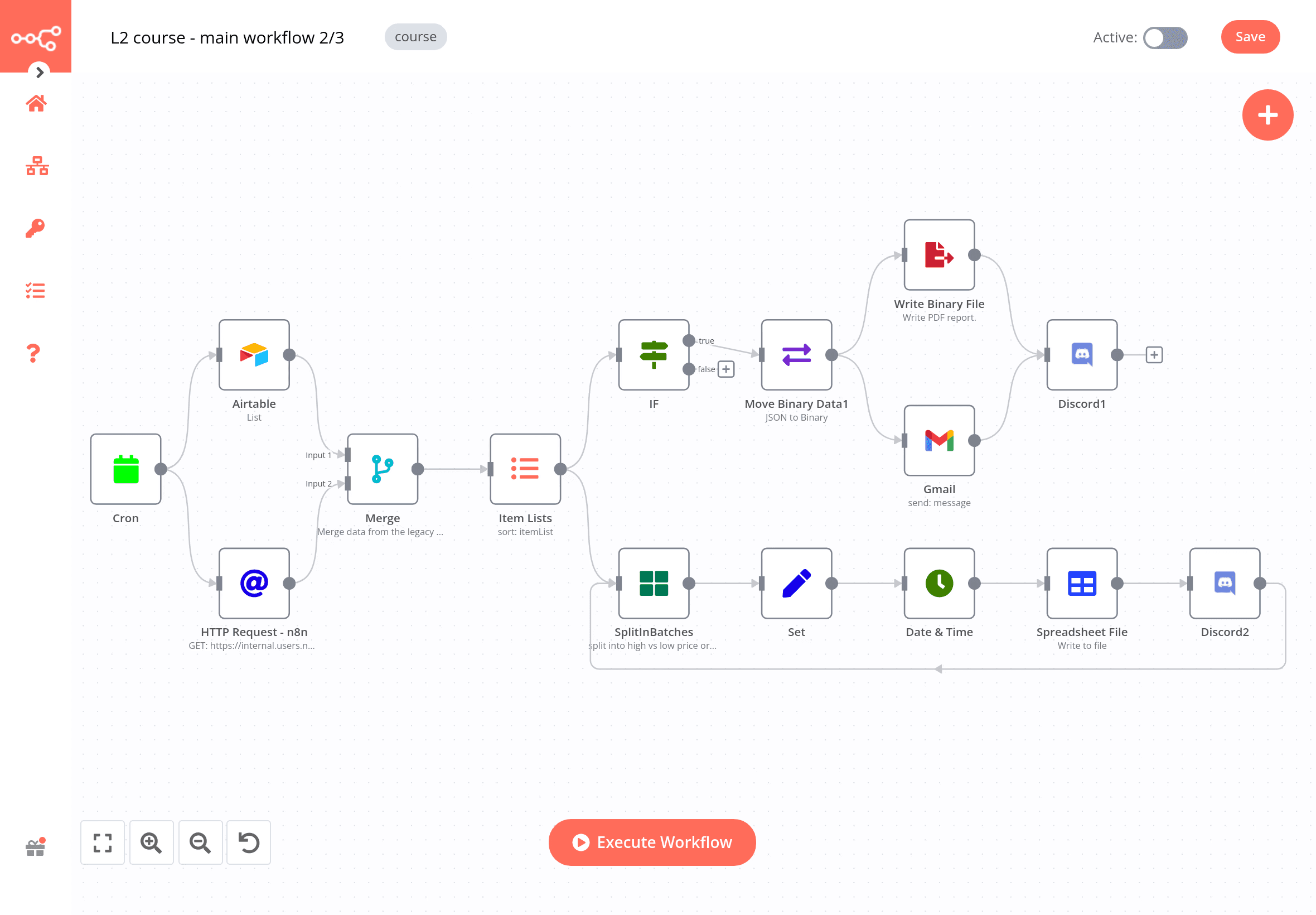
If you have engineers, this is the one to look at first. The n8n Community Edition is fair code and free to self-host with unlimited executions. Put it on a server you already pay for, and the marginal cost of your automation platform is the server. That is where it stands against a five-figure Tray contract.
The paid cloud is available too, at $24/month for Starter and $60/month for Pro, with a 14-day trial and no free cloud tier. n8n also bills by execution rather than by step, so a workflow with 30 nodes counts as 1 execution, not 30. If you have watched a task meter spin on a complex Tray workflow, you will understand why that matters.
On AI, it is stronger than its price suggests: native AI Agent nodes built on LangChain, MCP support, vector store nodes, and real JavaScript and Python whenever the canvas gets in your way. The honest cost is operational. You run it, patch it, scale it, and own the pager. Governance is improving but is not Tray’s. The Fair Code license also restricts reselling n8n or offering it as a hosted service, which matters if that was your plan.
Pros
Free to self-host with unlimited executions, so your automation bill becomes a server bill
Execution based pricing that does not punish long multi-step workflows
Deep AI building blocks: AI Agent and LangChain nodes, MCP, vector stores, plus JavaScript and Python
Cons
Self-hosting means you own the uptime, the upgrades, and the pager
Fair code, not fully open source: you cannot resell it or offer it as a hosted service
400-plus integrations is well short of Tray’s 700-plus, and governance is lighter
Related: Best n8n Alternatives in 2026
Watch
5. Tray.ai vs Boomi: Enterprise iPaaS With Real Public Pricing
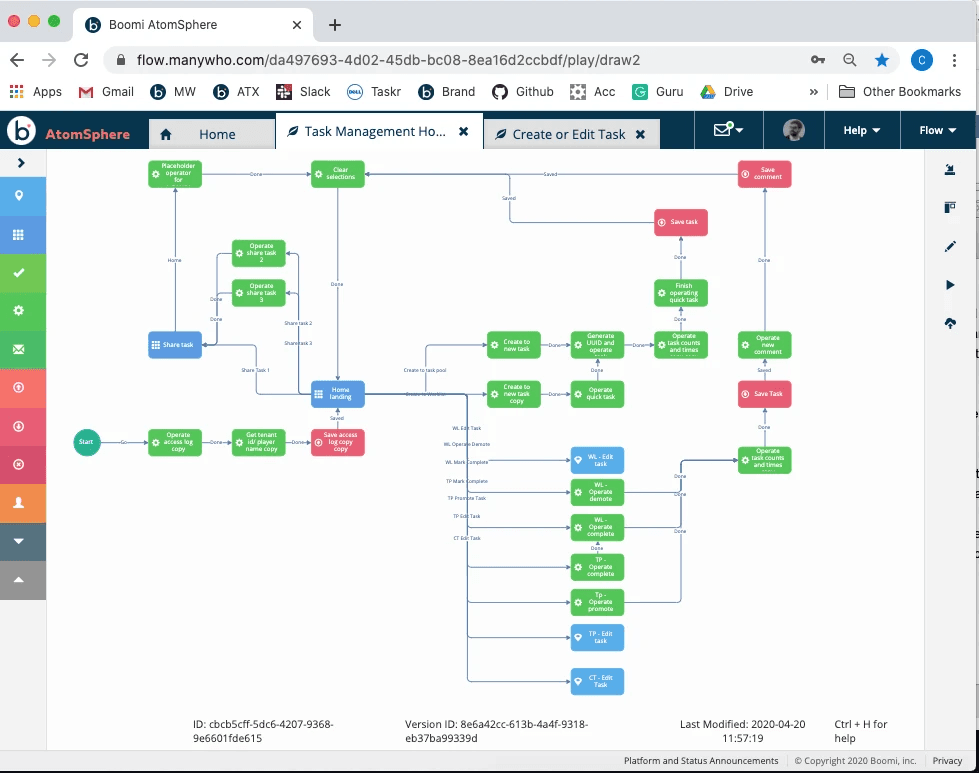
Boomi has been doing this since before iPaaS was a popular acronym. It has spent the last two years going hard at agentic AI. It connects more than 1,000 enterprise apps, runs in the cloud, on-premises, or behind your firewall, and carries the compliance stack that decides enterprise deals: FedRAMP, HIPAA, ISO 27001.
Its AI layer maps almost one-to-one to Tray’s, making the comparison easy. Boomi AgentStudio gives you a no-code Agent Designer, an Agent Control Tower for monitoring with a kill switch when an agent misbehaves, and an Agent Step for MCP. Boomi Connect hands agents from Claude, Gemini, Copilot, and ChatGPT governed access to your apps, which is the same job Tray’s Agent Gateway does. Gartner named Boomi a pioneer for no-code agent builders in June 2026 and has had it as an iPaaS leader for years.
Then there is the thing nobody else in this tier does. Boomi publishes a price. There is a pay-as-you-go plan at $99 per month plus $0.05 per message, so you can start today on a card without a procurement cycle. Enterprise contracts still land in the $50,000 to $ 190,000-a-year range and still involve sales, so this is not exactly an escape from big software. But if half your frustration with Tray is that you cannot even begin without a meeting, Boomi is the enterprise platform that lets you begin.
Pros
A transparent $99 a month entry point, which no other enterprise iPaaS on this list offers
Deep governance, on-premises and behind-the-firewall runtimes, and FedRAMP, HIPAA, and ISO 27001
An agent story that matches Tray’s feature for feature: Agentstudio, an Agent Control Tower with a kill switch, Boomi Connect, and MCP
Cons
Enterprise contracts still run from $50,000 to $190,000 a year and still need a sales cycle
Per connection and per message costs stack up quietly at scale
More platform than a small team will ever use
Related: Best Boomi Alternatives
Watch
6. Tray.ai vs Pipedream: Automation For Engineers
Some people did not leave Tray over the price. They left because they are engineers, and every time they open a drag-and-drop builder, they feel like they are being asked to write code in mittens.
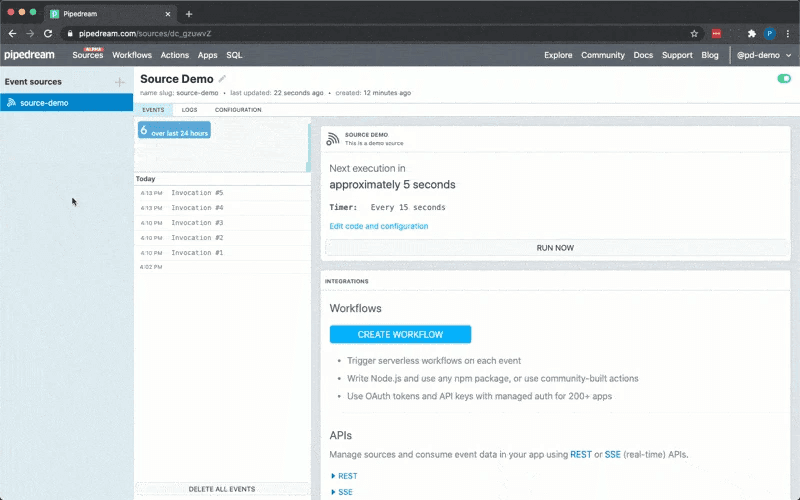
Pipedream was built for them. A workflow is a trigger and an ordered list of steps, and any step can be a Node.js, Python, Go, or Bash snippet sitting right next to one of roughly 3,000 connectors. For the billing model, Pipedream charges for compute, not tasks. One credit buys 30 seconds of compute, so a twenty-step workflow that finishes quickly costs the same as a two-step one. Anyone who has watched Tray’s task counter climb through a long recipe will understand the value in this.
It is cheap to start, and the pricing is on the website: 100 credits per day and three active workflows on the free tier, then roughly $29 per month for Basic and $79 per month for Advanced. It also runs one of the more mature hosted MCP servers in production, exposing more than 10,000 tools across 3,000 apps, with managed authentication, and is free for personal use. What it will not do is self-host, so data residency work belongs on n8n or an enterprise platform, and it has nothing resembling Tray’s governance suite.
Pros
Code-first, with real Node.js, Python, Go, and Bash steps besides about 3,000 connectors
Compute-based billing in credits rather than per task, so long workflows stop being punished
A mature hosted MCP server with 10,000+ tools and managed auth, plus a usable free tier
Cons
No self-hosting, so data-residency-sensitive workloads need to live somewhere else
Governance and compliance are nowhere near an enterprise iPaaS
Aimed squarely at developers, so your operations team will not be shipping on it
Related: Best Piedream Alternatives in 2026
Watch
7. Tray.ai vs Prismatic: The Tray.ai Alternative For SaaS Companies
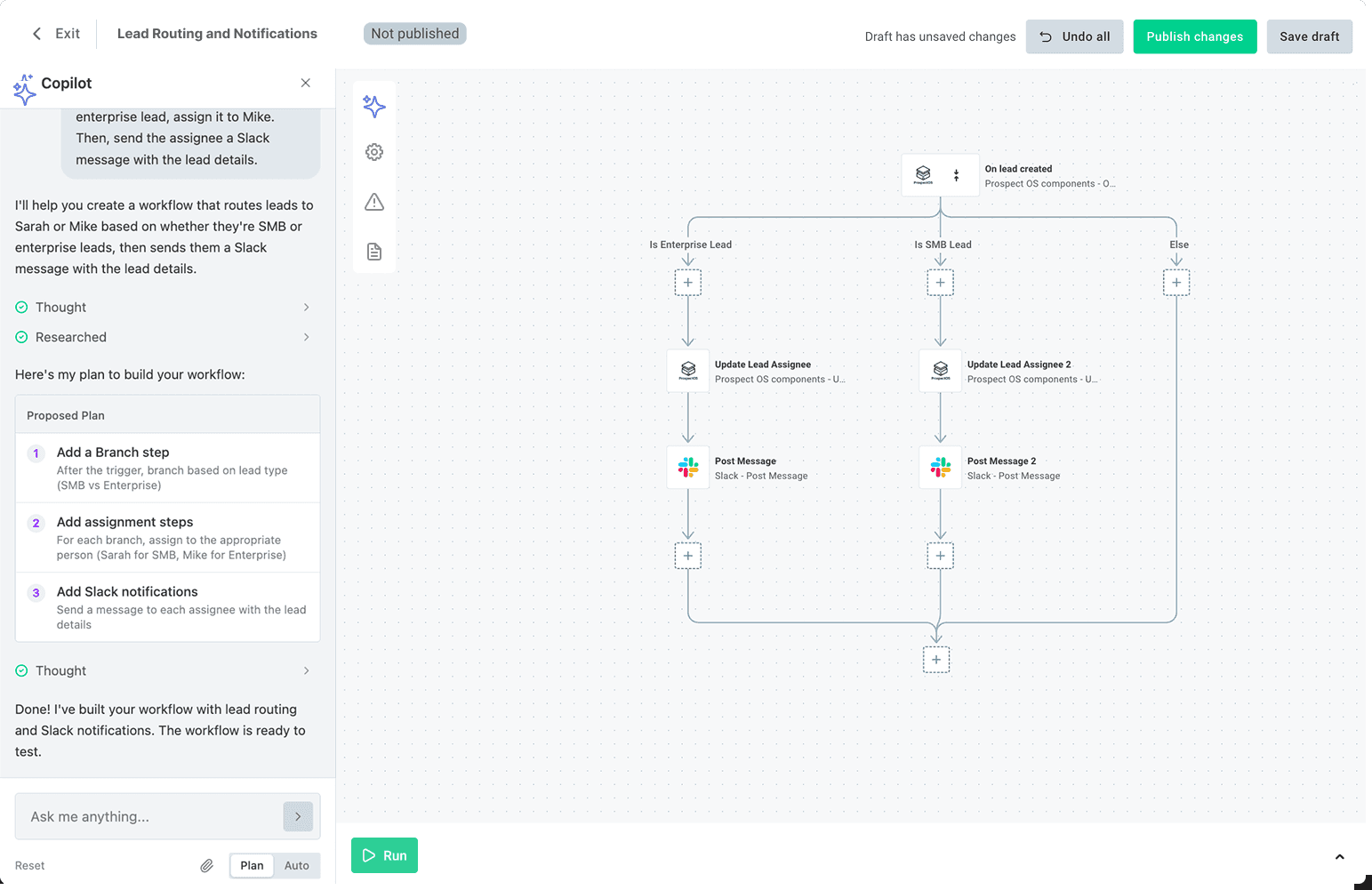
This section is more useful to you if you are a SaaS company. A good chunk of the people searching for a Tray alternative are not automating their own back office at all. They bought Tray for the embedded bundle so their own customers could connect their own apps from inside their product and then discovered that the embedded piece requires the enterprise package. Prismatic is the tool built for exactly that job and nothing else.
Purpose-built for B2B software companies since 2019, it runs on a build-once, deploy-to-many model: you build an integration as a template, then deploy isolated instances of it per customer, each with its own credentials and configuration.
Your customers get an embedded, white-labelled marketplace and configuration wizards within your product, so they can self-serve without emailing your support team. Prismatic absorbs the parts that break at scale, which is to say authentication, monitoring, deployment, security, and tenant isolation. Developers build in TypeScript in their own IDE with Git and CI/CD; non-developers use the low-code designer, and as of April 2026, an AI Copilot for the embedded workflow builder is generally available, alongside Prismatic Skills and an MCP dev server. Karbon, one of its customers, went from 30 to 75 integrations without adding headcount.
Keep in mind that, first, Prismatic has the same pricing habit you are trying to escape: three plans named Scale, Enterprise, and Custom, all of them behind a contact form. Second, there is an argument online that Prismatic’s code-native and visual builders do not fully interoperate, so a workflow built in the visual editor cannot be maintained in code.
Pros
Purpose-built for embedded, so it replaces the exact Tray capability that sits behind Enterprise
Build once, deploy to many, with isolated per-customer instances, plus a white-labelled marketplace your customers self-serve from
Both code native TypeScript and a low-code designer, with an AI Copilot GA since April 2026 and an MCP dev server
Cons
No public pricing on any of its three plans, which is the same problem you are running from
Only useful if you sell software: it does not automate your internal operations
A competitor claims the visual and code native paths do not fully interoperate, so test that before committing
Watch
8. Tray.ai vs Composio: The tool layer for agent

Composio might not strictly be an iPaaS, but if the reason you are looking for a Tray.ai alternative is that you are building an AI agent in code, or wiring one through MCP, then a visual canvas is the wrong abstraction entirely, because your agent decides at runtime which tool to call rather than following a path you drew in advance. Merlin is a canvas.
Composio is the layer underneath the agent you are writing yourself. It gives that agent authenticated access to more than 1,000 apps with managed authentication, so you will never have to hand-roll another OAuth token refresh.
The pieces are developer-shaped: Python and TypeScript SDKs, a CLI, a managed MCP gateway, and a tool router that scopes the right tools to each task so the model’s context window stays small. It works with LangChain, CrewAI, the OpenAI Agents SDK, the Vercel AI SDK, and Anthropic, and it is SOC 2 Type II certified. Pricing is public and listed in tool calls: 20,000 free tool calls per month, $29 for 200,000, $229 for 2,000,000, and an Enterprise tier with VPC or on-premises deployment. Composio Connect covers the embedded case, which makes it worth a look if you came to Tray for the embedded bundle and are embedding an AI agent rather than a static integration.
Pros
Built for agents, with authenticated access to 1,000+ apps and managed auth you never have to maintain
SDKs, a CLI, a managed MCP gateway, and a tool router that keeps the model’s context small
Public per tool call pricing with a free tier, plus VPC and on-premises options and an embedded path
Cons
Not an iPaaS: it will not run your scheduled syncs or replace Tray’s orchestration
For developers building agents in code or over MCP, not for an operations team on a canvas
You still design, host, and babysit the agent itself. Though if you use Codex, Claude Code, or something similar, it won’t be an issue.
Watch
Other iPaaS Alternatives to Tray.ai
A few more, depending on which corner you are stuck in.
Celigo is a strong mid-market iPaaS, especially around NetSuite and e-commerce, and it bills by connected apps and flows rather than task volume with no overage fees, which makes budgets behave.
MuleSoft, now part of Salesforce, is the heavyweight for API-led integration and the most expensive in this entire space.
SnapLogic and Jitterbit round out the enterprise field. Tines shows up in many Tray comparisons and is worth a look if your automation is mostly for security operations.
Gumloop suits teams whose work is mostly reasoning over messy inputs rather than moving records between systems.
Activepieces is the MIT-licensed option if n8n’s fair code license is the sticking point.
On the embedded side, the field beyond Prismatic includes Paragon, Cyclr, Albato Embedded, and Pandium. If all you need is to read and write standard objects across a category, a unified API tool like Merge may be a simpler answer than any embedded iPaaS.
How to pick
Start from the reason you got here, because it determines everything.
Your main reason for leaving Tray.io | Narrow it down | Start with |
|---|---|---|
The quote came back too high | You want a visual builder with prices on the website | Make (cheapest per operation) or Zapier (most apps) |
The quote came back too high | You have engineers and want control | n8n (open source, self host) or Pipedream (pay for compute) |
You still need an enterprise iPaaS | You want the closest peer and more connectors | Workato (the comparison everyone runs) |
You still need an enterprise iPaaS | You want governance and an entry price you can read | Boomi ($99 a month to start) |
You bought Tray for the embedded bundle | You ship integrations inside your own SaaS product | Prismatic (purpose built embedded iPaaS) |
Your real work is AI agents | You are building the agent in code or over MCP | Composio (agent tool layer) |
One last thing, and it is the thing most of these comparison posts will not tell you.
Half the teams I see agonising over this decision are trying to replace a platform they only ever used about fifteen per cent of. Before you migrate anything, go and count the workflows you are really running. The answer changes the shortlist more than any feature table will.
Frequently asked questions
Is Tray.io the same as Tray.ai?
Yes. Tray.io rebranded to Tray.ai, and the product is now sold as the Tray AI Orchestration Platform. Most people still search for and say Tray.io, and older documentation, review sites, and comparison pages still use the old name, so you will see both. It is one company and one platform.
How much does Tray.io cost?
Tray does not publish prices. It sells three plans, Pro, Team, and Enterprise, priced on your task volume and which features you take, and every deal goes through sales. Third-party estimates put custom quotes above $7,000 per year, and several items are billed on top: Merlin Agent Builder is an add-on at an extra cost on every tier, the embedded bundle requires Enterprise, and document processing is charged per page.
What is the best Tray.io alternative?
There is no single best one, because they solve different problems. Workato is the closest enterprise peer, Boomi matches Tray’s agent story with a transparent starting price, Make and Zapier are the cheap and transparent options for lighter work, n8n and Pipedream suit technical teams, Prismatic replaces Tray’s embedded bundle, and Composio is the right layer if you are building AI agents in code.
What is a cheaper alternative to Tray.io?
Nearly all of them. Make starts at about $9 a month, Zapier at $19.99, Pipedream at about $29, and n8n costs nothing beyond a server if you self-host it. Boomi is the cheapest way into a full enterprise iPaaS at $99 a month plus $0.05 per message. Set any of those against a Tray quote that starts north of $7,000 a year and the maths makes itself.
Is there an open source Tray.io alternative?
n8n is the closest, with a fair code Community Edition you can self-host for free with unlimited executions, plus native AI Agent nodes and MCP support. Fair code is not the same as fully open source, since it restricts reselling or hosting n8n as a service. If you want a permissive license instead, Activepieces is MIT, and Windmill is AGPLv3; both are self-hosted.
Tray.io vs Workato: which should I pick?
They are the two closest platforms in this comparison, and both are sales-led with no public pricing. Workato is the larger and more established: more than 1,200 connectors to Tray’s 700-plus, eight years as a Gartner Leader, and an enterprise MCP server spanning 1,400+ apps. It is also usually more expensive, with entry-level deals around $10,000 a year and a median closer to $65,000. Pick Workato for maturity, connector coverage, and scale. Pick Tray if you prefer its AI native design, its headless mode for AI IDEs, or the quote it gave you.
What is the best Tray.io Embedded alternative?
Prismatic is the closest like-for-like: an embedded iPaaS purpose-built for B2B SaaS, with build-once, deploy-to-many instances per customer, a white-labelled marketplace, and both native and low-code building. Paragon, Cyclr, Albato Embedded, and Pandium are the other names to shortlist. If your integrations only need standard objects in a single category, a unified API such as Merge may be simpler and cheaper than any of the others.
What is the best Tray.io alternative for AI agents and MCP?
For building agents in code, Composio provides them with authenticated access to more than 1,000 apps via SDKs and a managed MCP gateway, with a free tier of 20,000 tool calls per month. Among the platforms, Boomi is the closest match to Tray’s governed agent story with AgentStudio and Boomi Connect; Workato runs an enterprise MCP server covering 1,400+ apps; Pipedream hosts a mature MCP server with more than 10,000 tools; and both Make and n8n support MCP with a native AI agent node. If all you need is to read and write standard objects across a category, a unified API tool like Merge may be a simpler answer than any embedded iPaaS.

 Get started