How to integrate Postalytics MCP with Codex

Connect Codex to Postalytics MCP. Create a new direct mail campaign, sync contacts from hubspot to postalytics, and more using natural language, with authentication handled for you.

Postalytics logoPostalytics
Api Key

Postalytics is cloud-based direct mail automation software for marketing teams. It streamlines campaign creation, tracking, and CRM integration with digital-like automation.

24 Tools

Introduction

Codex is one of the most popular coding harnesses out there. And MCP makes the experience even better. With the Postalytics MCP integration, Codex can create direct mail campaigns, add contacts, manage suppression lists, create templates, and list drip campaigns and flows, all without leaving the terminal or the app, whichever you prefer.

For exact tool slugs and parameter tables, see the tool catalog in the Composio docs.

Also integrate Postalytics with

Why use Composio?

Apart from a managed and hosted MCP server, you will get:

  • CodeAct: A dedicated workbench that allows GPT to write its code to handle complex tool chaining. Reduces to-and-fro with LLMs for frequent tool calling.
  • Large tool responses: Handle them to minimise context rot.
  • Dynamic just-in-time access to 20,000 tools across 1700+ other Apps for cross-app workflows. It loads the tools you need, so GPTs aren't overwhelmed by tools you don't need.

How to install Postalytics MCP in Codex

Run the setup command

Run this command in your terminal to add the Composio MCP server to Codex.

Terminal

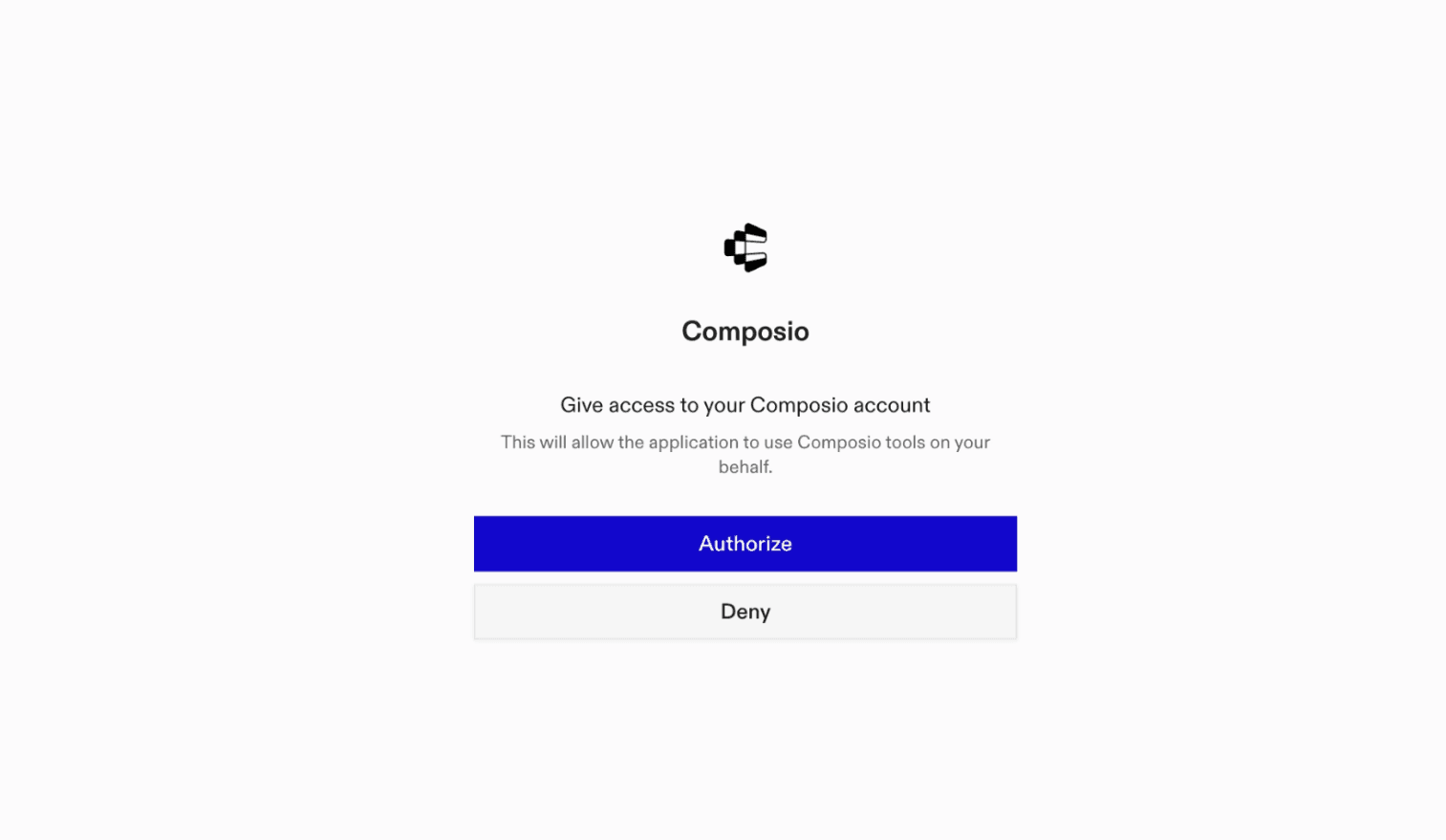
It will initiate the authentication in a browser window, authorize Codex to access your Composio account.

Composio authentication page

(Optional) Authenticate with OAuth

To authenticate manually, run the login command to open a browser window and authorize Codex to access your Composio account.

bash
codex mcp login composio

Verify the connection

Run codex mcp list to confirm Composio appears as a registered MCP server.

bash
codex mcp list

Codex App

Codex App follows the same approach as VS Code.

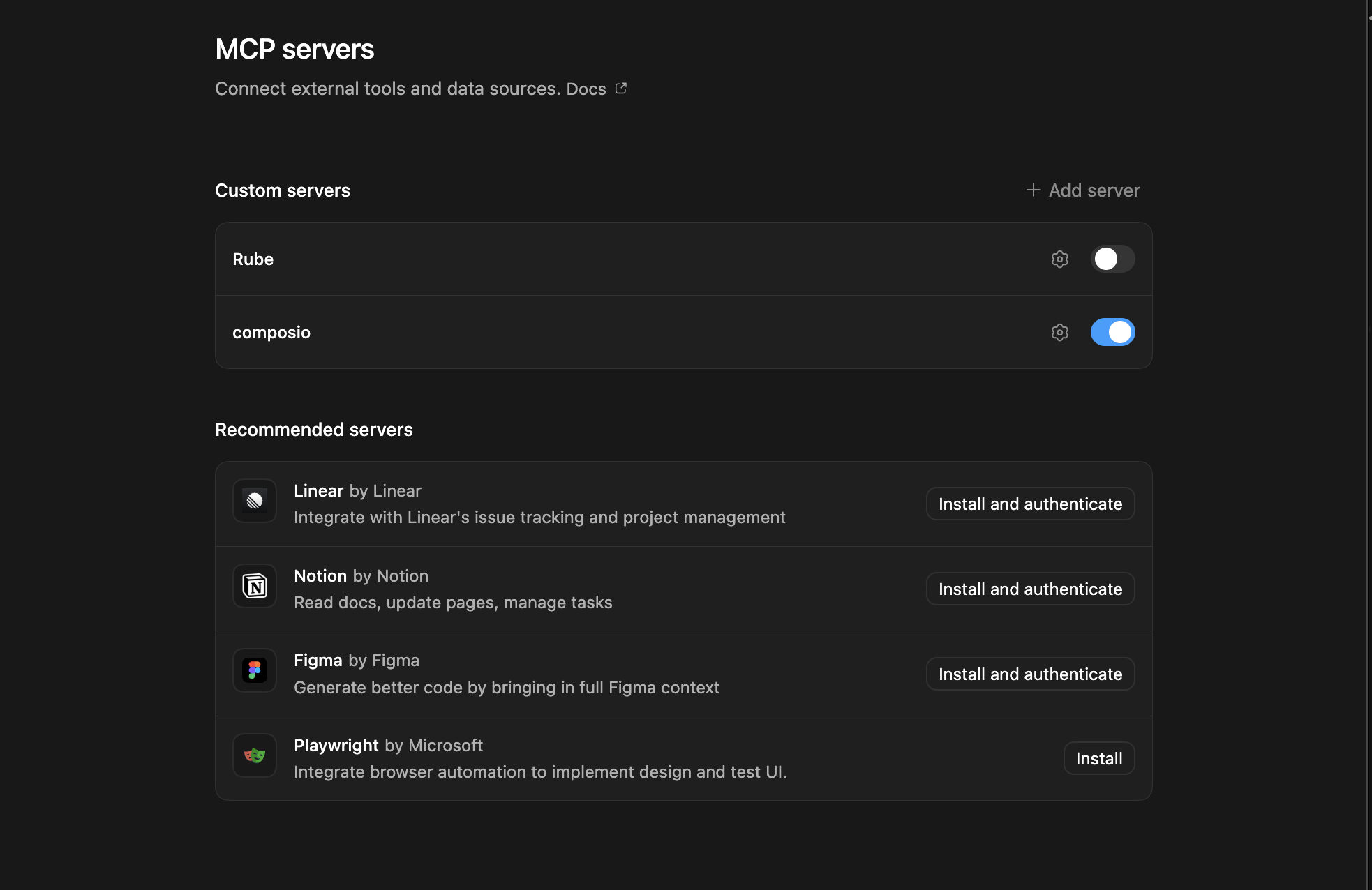
  1. Click ⚙️ on the bottom left → MCP Servers → + Add servers → Streamable HTTP:
  2. Fill the header and Key fields with { "x-consumer-api-key" = "ck_*******" }.
  3. The Key is the Composio API key, that you can find on dashboard.composio.dev
  4. Click on Authenticate and authorize Codex to your Composio account and you're all set.
Codex App MCP setup
  1. Restart and verify if it's there in .codex/config.toml
bash
[mcp_servers.composio]
url = "https://connect.composio.dev/mcp"
http_headers = { "x-consumer-api-key" = "ck_*******" }

Try it

Ask Codex for a Postalytics task. The first time, Composio asks you to connect your Postalytics account.

For example, ask it to:

  • "Create a new direct mail campaign"
  • "Sync contacts from HubSpot to Postalytics"
  • "Track delivery status for recent campaigns"

What is the Postalytics MCP server, and what's possible with it?

The Postalytics MCP server is an implementation of the Model Context Protocol that connects your AI agent and assistants like Claude, Cursor, etc directly to your Postalytics account. It provides structured and secure access to your direct mail campaigns, contacts, templates, suppression data, and account information, so your agent can create campaigns, manage contacts, build templates, organize suppression contacts, and review campaign resources on your behalf.

  • Direct mail campaign management: Have your agent create new direct mail campaigns or delete campaigns you no longer need.
  • Contact list operations: Let the agent find your contact lists, review their contacts, and add new recipients with their mailing information.
  • Mail template creation: Direct your agent to create postcard or letter templates using your full HTML content.
  • Suppression management: Instruct your agent to create, review, or delete suppression lists and add, edit, or remove the contacts within them.
  • Campaign workflow connections: Have your agent review drip campaigns and flows or create webhooks for Postalytics campaign event notifications.

Conclusion

You've successfully integrated Postalytics with Codex using Composio's MCP server. Now you can interact with Postalytics directly from your terminal, VS Code, or the Codex App using natural language commands.

Key benefits of this setup:

  • Seamless integration across CLI, VS Code, and standalone app
  • Natural language commands for Postalytics operations
  • Managed authentication through Composio
  • Access to 20,000+ tools across 1700+ apps for cross-app workflows
  • CodeAct workbench for complex tool chaining

Next steps:

  • Try asking Codex to perform various Postalytics operations
  • Explore cross-app workflows by connecting more toolkits
  • Build automation scripts that leverage Codex's AI capabilities
TOOLS

Supported Tools

Every Postalytics action and event your agent gets out of the box.

Add Account

Create a new Postalytics sub-account associated with the requester as parent.

Add Contact

Tool to add a contact to a specified contact list with their information.

Create New Campaign

Tool to create a new direct mail campaign in Postalytics.

Create Suppression List

Tool to create a new suppression list that can be used in campaigns to suppress contacts from being sent mail.

Create Suppression List Contact

Tool to create a new suppression contact on a specified suppression list.

Create Template

Create a mail template for postcards, letters, or bifolds using HTML, with optional front and back image URLs.

Create Webhook

Tool to create a new webhook to receive campaign event notifications from Postalytics.

Delete Account

Tool to delete a Postalytics account and all associated campaigns, templates, and lists.

Delete Campaign

Tool to delete a campaign from the system.

Delete Suppression List

Tool to delete a specified suppression list.

Delete Suppression List Contact

Tool to delete a specific contact from a suppression list.

Get All Contact Lists

Tool to retrieve all contact lists for an account.

Get All Contacts on a List

Retrieve contacts from a specified contact list with optional start offset and limit pagination.

Get All Drip Campaigns

List triggered drip campaigns for the authenticated Postalytics account, including their names and endpoint IDs.

Get All Flows

Tool to retrieve all flows for the requester's account.

Get All Webhooks

Tool to retrieve all webhooks configured for the authenticated account.

Get Integrations

Retrieve Connect integrations configured for the authenticated account, including CRM or data source connections.

Get My Account

Tool to retrieve basic account information for the authenticated user.

Get Suppression List

Tool to get the details of a suppression list based on the id supplied.

Get Suppression List Contact

Tool to retrieve a specific contact from a suppression list.

Get Suppression List Contacts

Retrieve contacts on a specified suppression list, with an optional offset for paging.

Get Suppression Lists

Tool to retrieve all suppression lists for the authenticated user.

Update Account

Tool to update an existing account in the Postalytics system.

Update Suppression List Contact

Tool to update a suppression contact on the specified suppression list.

FAQ

Frequently asked questions

Start with Postalytics.It takes 30 seconds.

Managed auth, hosted MCP servers, and every Postalytics tool your agent needs.Free to start.

Start building