How to integrate AfterShip MCP with Hermes

Connect Hermes to AfterShip MCP. Check shipment status by tracking number, detect courier for an unknown shipment, and more using natural language, with authentication handled for you.

AfterShip logoAfterShip
Api Key

AfterShip is an ecommerce shipping platform for tracking shipments, detecting couriers, and predicting delivery dates. It helps teams keep customers informed and manage deliveries across carriers.

17 Tools

Introduction

Hermes is a 24/7 autonomous agent that lives on your computer or server — it remembers what it learns and evolves as your usage grows.

This guide explains the easiest and most robust way to connect your AfterShip account to Hermes. You can do this through either Composio Connect CLI or Composio Connect MCP. For personal use we recommend the CLI, but you won't go wrong with MCP either.

For exact tool slugs and parameter tables, see the tool catalog in the Composio docs.

Also integrate AfterShip with

What is Composio Connect?

Composio Connect is a consumer offering that lets anyone plug 1,700+ applications directly into their agent harness — including Hermes. It can:

  • Search and load tools from relevant toolkits on-demand, reducing context usage.
  • Chain multiple tools to accomplish complex workflows via a remote workbench, without excessive back-and-forth with the LLM.
  • Manage app authentication end-to-end with zero manual overhead.

Integrating AfterShip with Hermes

Using Composio Connect CLI

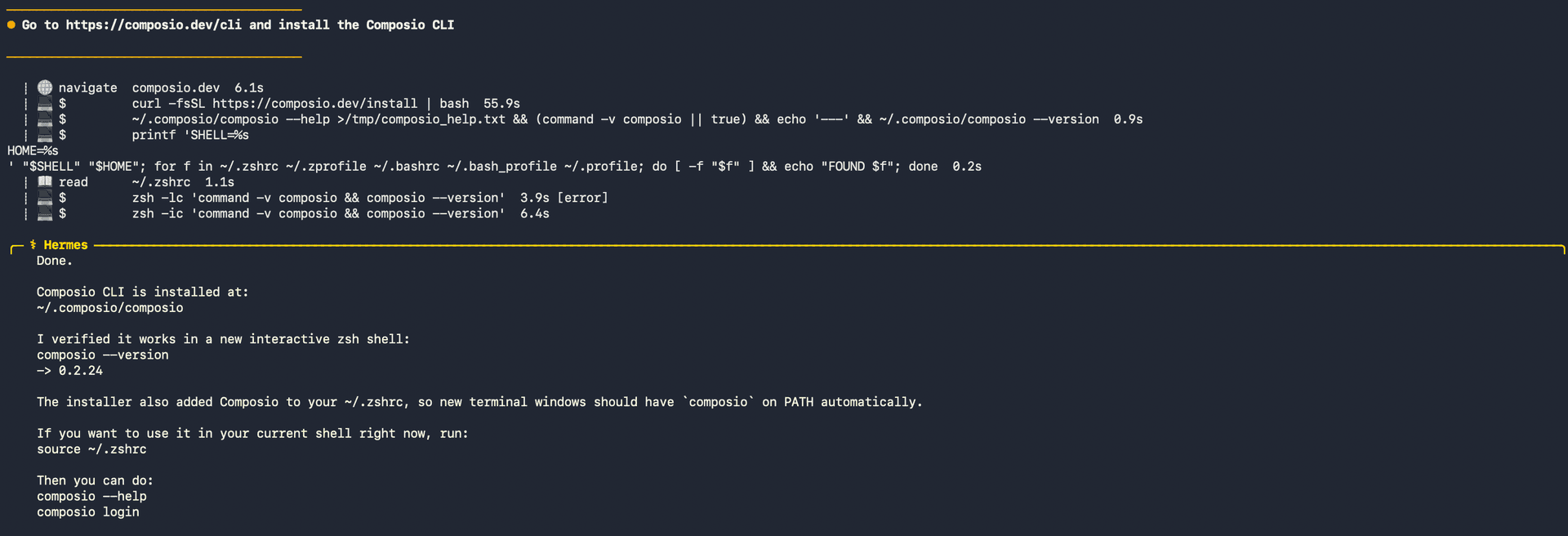
1. Install the Composio CLI

Run the install script directly, or paste https://composio.dev/hermes into your Hermes chat box to have it installed for you.

bash
curl -fsSL https://composio.dev/install | bash
Hermes authenticating with Composio

2. Authenticate

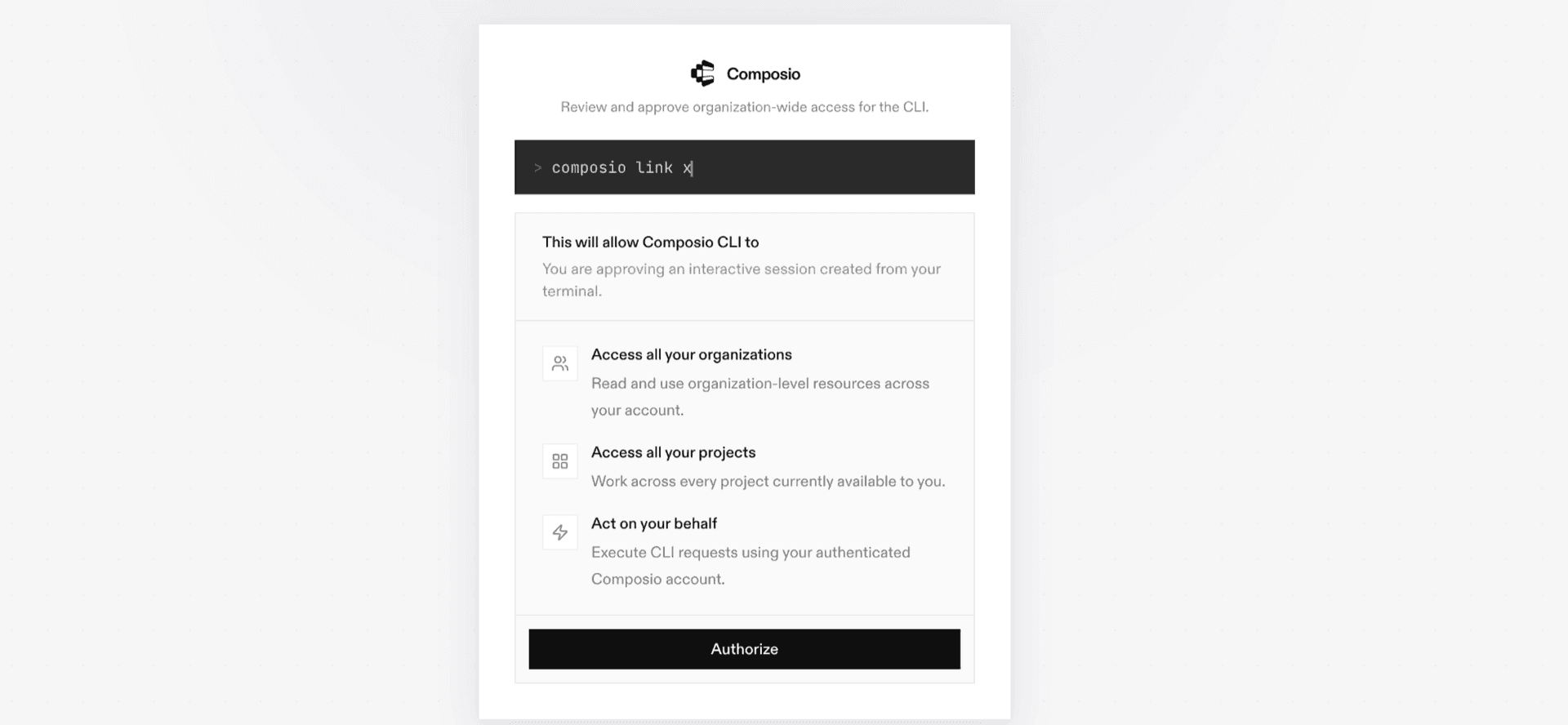
Once the CLI is installed, ask Hermes to authenticate with Composio.

3. Connect to AfterShip

Ask your agent to connect to AfterShip, or simply request any AfterShip-related task. Hermes will prompt you to authenticate and authorize access.

4. Done. You're all set with a new AfterShip connection.


Using Composio Connect MCP

1. Get your MCP URL and API Key

Go to dashboard.composio.dev and copy your Connect MCP URL and API key.

Copy MCP URL and API key from Composio dashboard

2. Open the Hermes config file

bash
nano ~/.hermes/config.yaml

3. Add the Composio Connect MCP server

bash
mcp_servers:
  composio:
    url: "https://connect.composio.dev/mcp"
    headers:
      x-consumer-api-key: "YOUR_COMPOSIO_API_KEY"
    connect_timeout: 60
    timeout: 180

Save with Ctrl + O, Enter, then exit with Ctrl + X.

4. Restart your Hermes agent

Once restarted, ask your agent to connect to AfterShip or request any AfterShip-related task. It will prompt you to authenticate and authorize access.

5. Done!

What is the AfterShip MCP server, and what's possible with it?

The AfterShip MCP server is an implementation of the Model Context Protocol that connects your AI agent and assistants like Claude, Cursor, etc directly to your AfterShip account. It provides structured and secure access to shipment tracking, courier connections, courier detection, and delivery date predictions, so your agent can create and manage trackings, identify carriers, monitor shipment progress, and estimate delivery dates on your behalf.

  • Shipment tracking management: Have your agent create, view, update, delete, and retrack shipment tracking records, including order, customer, route, and delivery details.
  • Courier detection and connections: Let the agent identify likely couriers for a tracking number, review available courier services, and manage connected courier accounts.
  • Delivery date predictions: Direct your agent to predict estimated delivery dates for planned shipments, including several shipments at once before tracking numbers exist.
  • Tracking status updates: Instruct your agent to list shipments using delivery status and shipment details, then mark tracking records as delivered, lost, or returned to sender.
  • Courier account maintenance: Have your agent add, review, update, or remove courier connections when carrier credentials or shipping providers change.

Way Forward

With AfterShip connected, Hermes can now act on your behalf whenever it detects a relevant task or you ask it to.

From here, you can extend Hermes further:

  • Connect more apps: Calendar, Slack, Notion, Linear, and hundreds of others are available through the same Composio Connect setup. Each new integration compounds what Hermes can do for you.
  • Build workflows across tools: Once multiple apps are connected, Hermes can chain actions together — turn an email into a calendar invite, a Slack message into a Linear ticket, or a meeting note into a follow-up draft.
  • Let it learn your patterns: The more you use Hermes, the better it gets at anticipating how you'd handle recurring tasks. Give it feedback on drafts and decisions, and it will adapt.

If you run into trouble or want to share what you've built, join the community or check out the Docs for deeper configuration options.

TOOLS

Supported Tools

Every AfterShip action and event your agent gets out of the box.

Create Courier Connection

Connect one courier account using the courier-specific credential fields advertised by courier metadata.

Create Tracking

Create one shipment tracking record from a tracking number and optional courier, order, route, customer, and delivery metadata.

Create Trackings Batch

Sequentially create 1-20 tracking records through AfterShip's single-record create endpoint.

Delete Courier Connection

Permanently remove one courier account connection by an ID obtained from list or create.

Delete Tracking

Permanently delete one tracking record by its AfterShip tracking ID.

Detect Courier

Return couriers that may handle a tracking number, using optional courier and shipment hints to narrow detection.

Get Courier Connection

Return one courier account connection by an ID obtained from list or create.

Get Tracking

Return one tracking record by its AfterShip tracking ID, with optional field selection and checkpoint translation.

List Courier Connections

Return one cursor-controlled page of courier account connections, optionally filtered by courier slug.

List Couriers

Return courier metadata, optionally limited to account-activated couriers or selected courier slugs, including required tracking and credential field definitions.

List Trackings

Return one cursor-controlled page of shipment trackings, optionally filtered by identifiers, courier, status, dates, route, or shipment metadata.

Mark Tracking Completed

Mark a tracking as delivered, lost, or returned to sender.

Predict Estimated Delivery Date

Predict an estimated delivery date before a tracking number exists.

Predict Estimated Delivery Dates Batch

Predict estimated delivery dates atomically for one to five planned shipments.

Retrack Tracking

Restart automatic updates for an expired tracking.

Update Courier Connection

Replace carrier-specific credentials on an existing courier account connection.

Update Tracking

Update editable order, courier, route, customer, and delivery metadata on an existing tracking record.

FAQ

Frequently asked questions

Start with AfterShip.It takes 30 seconds.

Managed auth, hosted MCP servers, and every AfterShip tool your agent needs.Free to start.

Start building