How to connect AfterShip with ChatGPT

Connect ChatGPT to AfterShip MCP. Check shipment status by tracking number, detect courier for an unknown shipment, and more using natural language, with authentication handled for you.

AfterShip logoAfterShip
Api Key

AfterShip is an ecommerce shipping platform for tracking shipments, detecting couriers, and predicting delivery dates. It helps teams keep customers informed and manage deliveries across carriers.

17 Tools

How to connect AfterShip MCP with ChatGPT

ChatGPT can take action across your apps and files, stay with a project for hours, and turn a goal into finished materials like sheets, slides, and docs, not just answers.

In this guide, I will explain the easiest and most secure way to connect your AfterShip account to ChatGPT via Composio Connect, so it can track shipments, detect couriers, predict delivery dates, and monitor delivery issues through natural language commands without ever putting your account credentials at risk.

For exact tool slugs and parameter tables, see the tool catalog in the Composio docs.

Also integrate AfterShip with

Why use Composio over default connectors?

  • Apps with read and write access. Default connectors mostly can read your data. Composio's AfterShip integration lets ChatGPT take actions like creating drafts, sending updates, labeling records, and more.
  • 1,700+ SaaS toolkits out of the box. Composio gives you instant access to a vast catalog of pre-built connectors, from Gmail and Slack to Notion, Linear, and Salesforce.
  • One MCP server for every app. Connect any of your applications on demand through a single endpoint, rather than juggling a separate server for each app.
  • Smart, context-aware tool loading. Unlike traditional MCP servers that dump every available tool into the LLM context window, Composio searches for and loads only the tools relevant to the task at hand.
  • Cross-app automation. Chain actions across multiple apps in a single run - fetch a thread, summarize it in Notion, and post highlights to Slack without leaving the conversation.

Prerequisites

Note: Composio connects through OAuth. You will be asked to sign in and approve specific permissions. Review the permission screen carefully if you are using a work account.

Step-by-step: Connect AfterShip to ChatGPT

1. Install the Composio plugin

Click the button. ChatGPT opens the Composio plugin page. Click Install plugin.

Install in ChatGPT
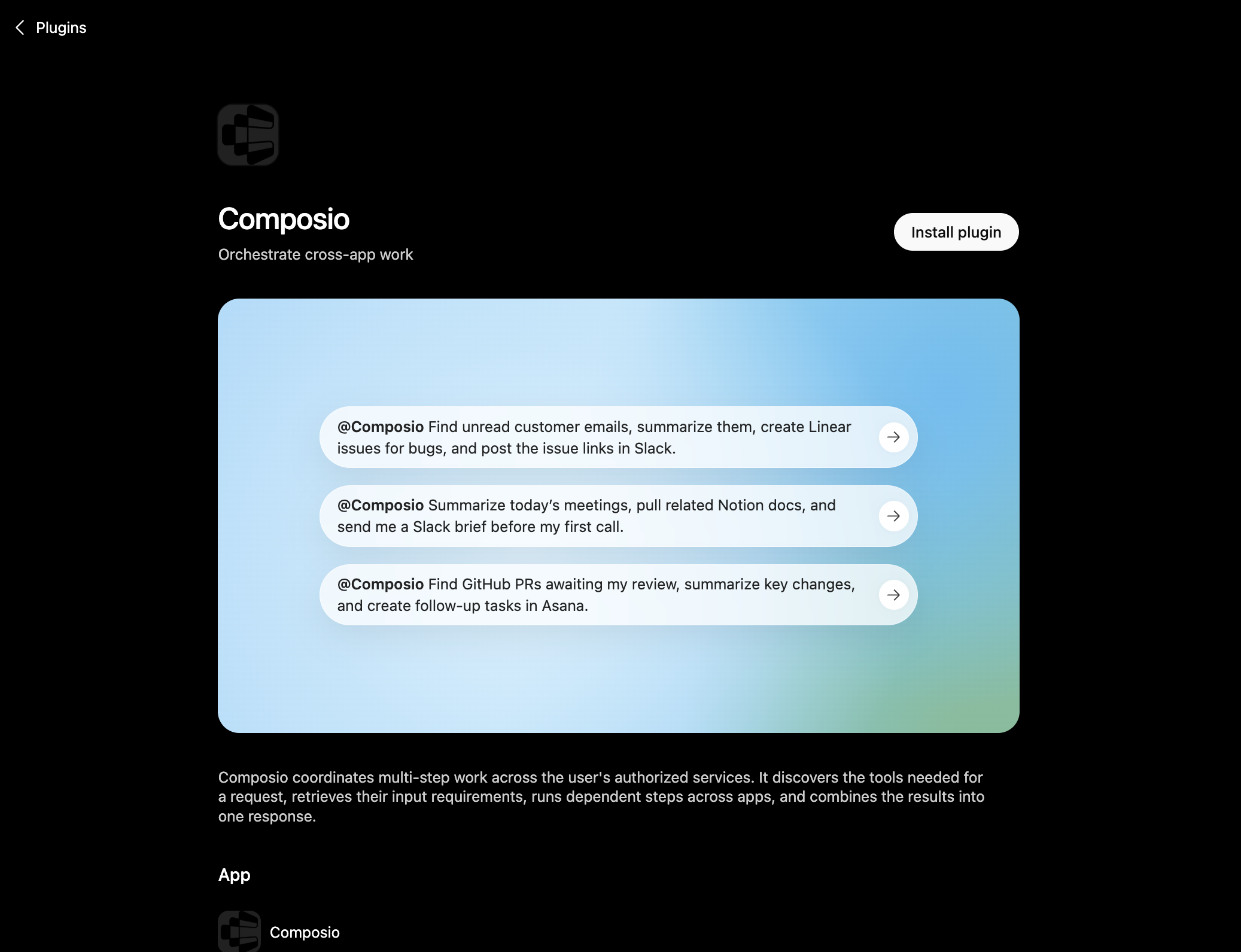
Composio plugin page in ChatGPT with the Install plugin button

You can also find it inside ChatGPT: go to Settings, open Plugins, search the marketplace for Composio, and click Install plugin.

2. Authenticate

After you install, ChatGPT asks you to authenticate with Composio. Log in and click Allow access to authorize ChatGPT to use your Composio account.
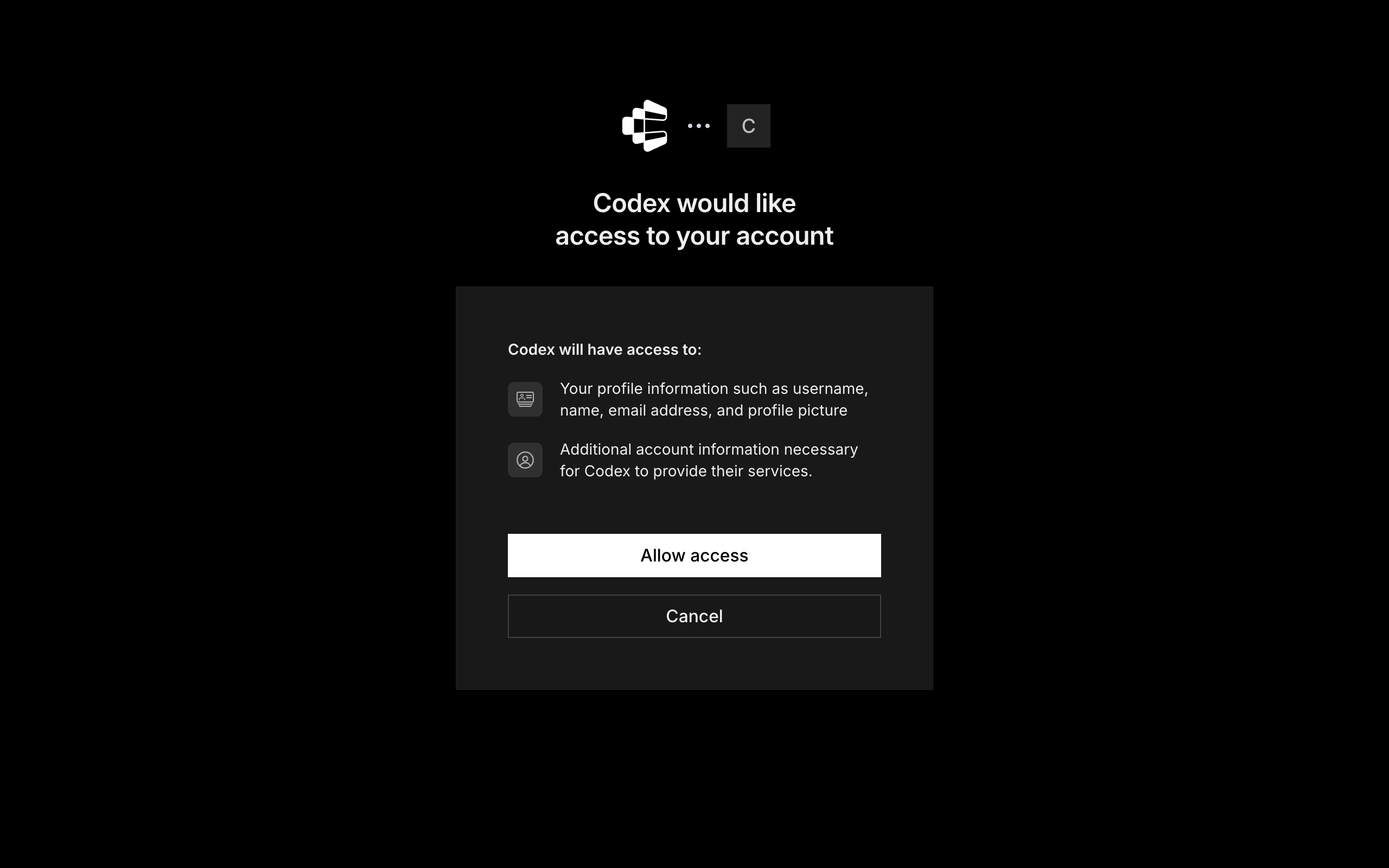
Composio login and Allow access screen for ChatGPT

3. Start using Composio

That is it. Composio tools are now available in ChatGPT. Type @Composio followed by your request, for example @Composio find unread AfterShip messages and summarize them, and it will run the actions you authorize. On first use it asks you to authorize AfterShip.

Option 2: Add Composio as an MCP server

If you cannot use the plugin marketplace, add Composio as a custom MCP server instead.

1. Open the MCP settings

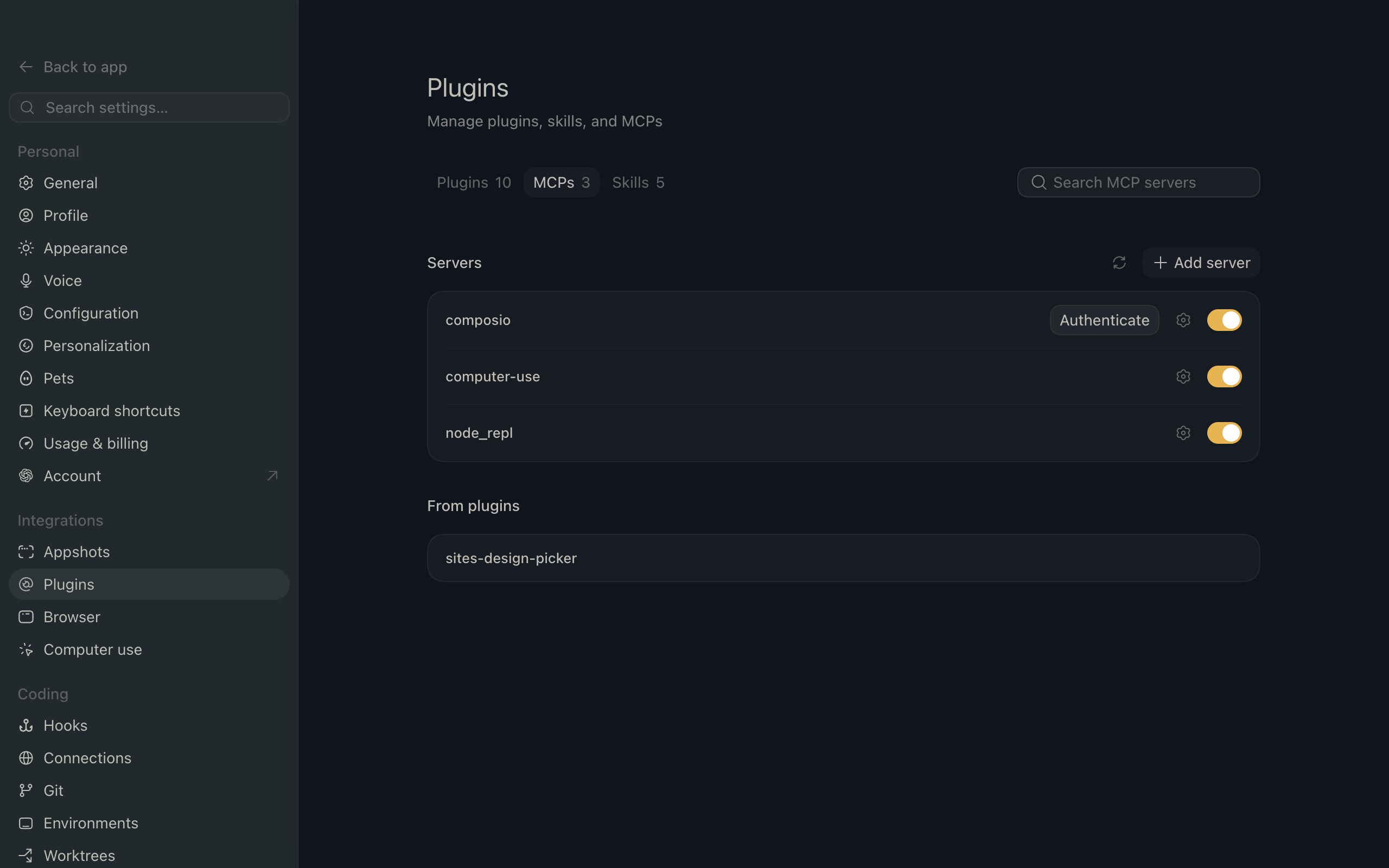
In ChatGPT, go to Settings and open the Plugins section. Inside the Plugins page, click the MCP tab.
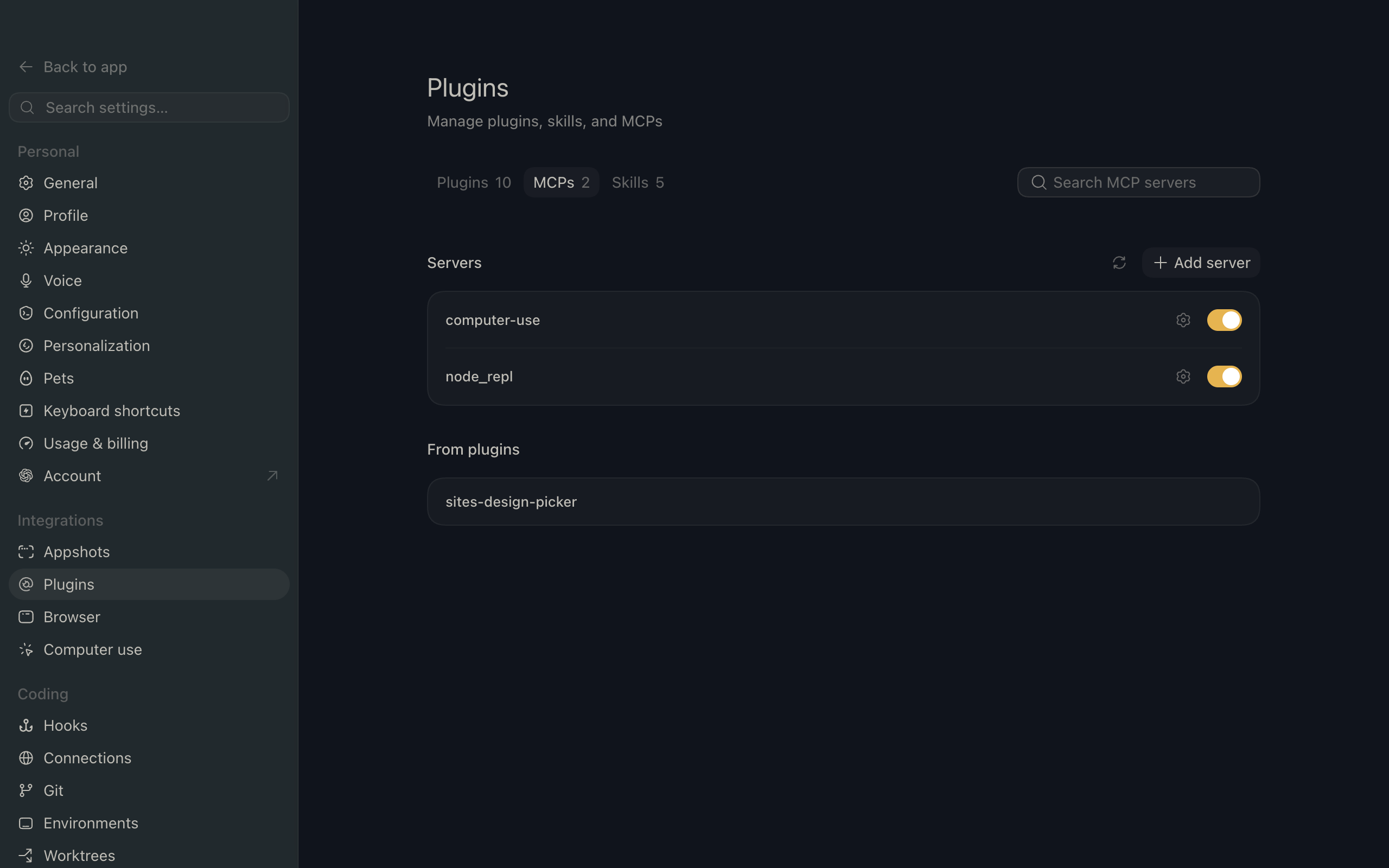
ChatGPT settings showing the Plugins page with the MCP tab selected

2. Add the server

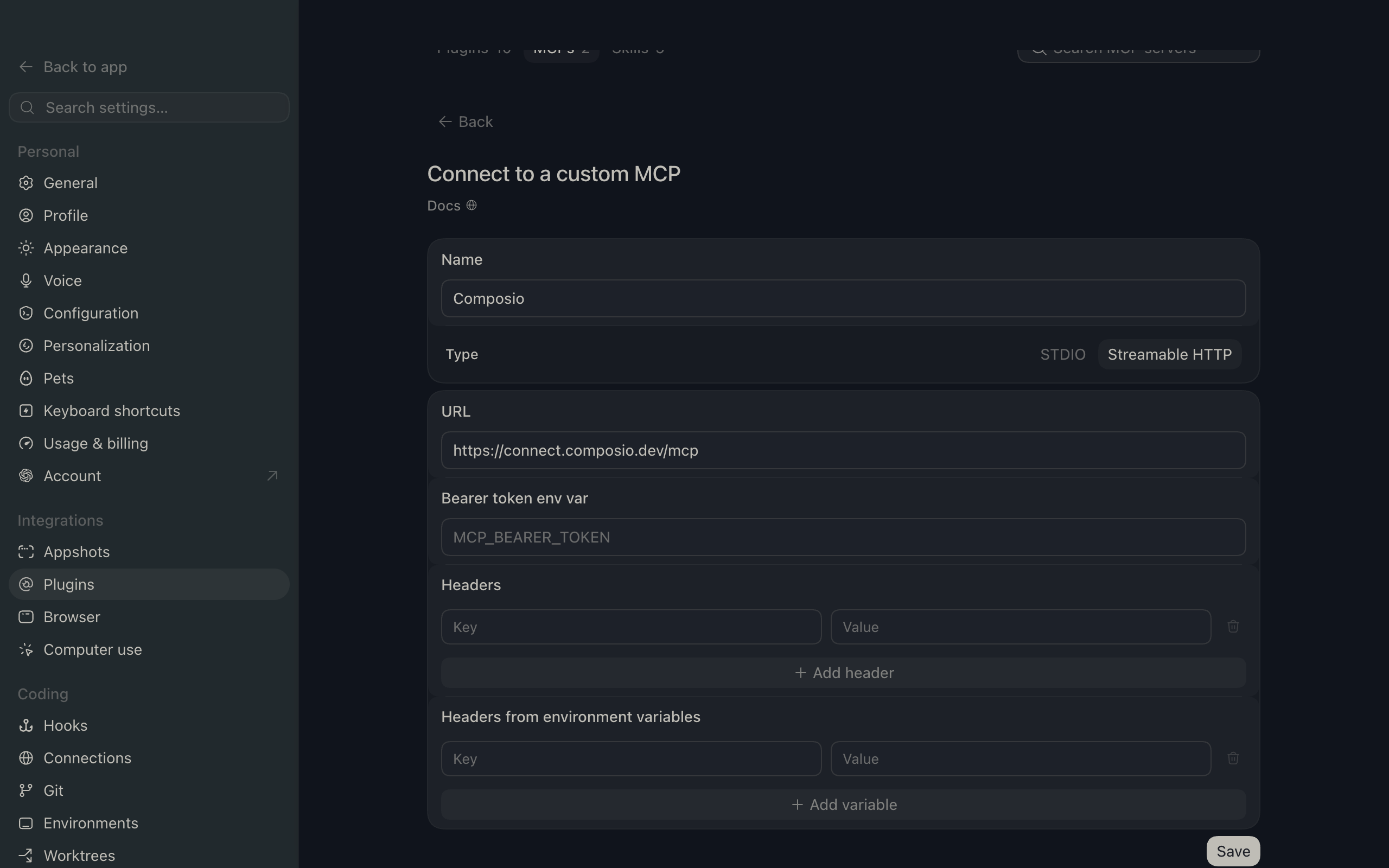
Click Add server. In the Name field enter Composio, for Type select Streamable HTTP, and in the URL field paste the Composio MCP server URL:

bash
https://connect.composio.dev/mcp
ChatGPT Add server dialog with the name Composio, type Streamable HTTP, and the Composio MCP URL

Then click Save. The Composio server now appears in your MCP plugins list.

ChatGPT Plugins page showing the Composio MCP server added to the list

3. Authenticate

Click Authenticate on the Composio entry, log in via Composio, and click Allow access. Composio tools are then available in ChatGPT the same way as with the plugin.

What you can do after connecting AfterShip

  • Check shipment status by tracking number
  • Detect courier for an unknown shipment
  • List delayed deliveries needing customer updates

Security + privacy notes (important)

  • Use least-privilege access: Only grant permissions you actually need.
  • Review OAuth permissions before approving: Make sure requested scopes match what you expect Composio and ChatGPT to do.
  • Keep write actions human-reviewed: For actions like sending messages, creating labels, or editing drafts, keep manual confirmation enabled.
  • Be careful with sensitive data: Avoid using this setup with highly sensitive information unless allowed by your personal, company, or client policies.
TOOLS

Supported Tools

Every AfterShip action and event your agent gets out of the box.

Create Courier Connection

Connect one courier account using the courier-specific credential fields advertised by courier metadata.

Create Tracking

Create one shipment tracking record from a tracking number and optional courier, order, route, customer, and delivery metadata.

Create Trackings Batch

Sequentially create 1-20 tracking records through AfterShip's single-record create endpoint.

Delete Courier Connection

Permanently remove one courier account connection by an ID obtained from list or create.

Delete Tracking

Permanently delete one tracking record by its AfterShip tracking ID.

Detect Courier

Return couriers that may handle a tracking number, using optional courier and shipment hints to narrow detection.

Get Courier Connection

Return one courier account connection by an ID obtained from list or create.

Get Tracking

Return one tracking record by its AfterShip tracking ID, with optional field selection and checkpoint translation.

List Courier Connections

Return one cursor-controlled page of courier account connections, optionally filtered by courier slug.

List Couriers

Return courier metadata, optionally limited to account-activated couriers or selected courier slugs, including required tracking and credential field definitions.

List Trackings

Return one cursor-controlled page of shipment trackings, optionally filtered by identifiers, courier, status, dates, route, or shipment metadata.

Mark Tracking Completed

Mark a tracking as delivered, lost, or returned to sender.

Predict Estimated Delivery Date

Predict an estimated delivery date before a tracking number exists.

Predict Estimated Delivery Dates Batch

Predict estimated delivery dates atomically for one to five planned shipments.

Retrack Tracking

Restart automatic updates for an expired tracking.

Update Courier Connection

Replace carrier-specific credentials on an existing courier account connection.

Update Tracking

Update editable order, courier, route, customer, and delivery metadata on an existing tracking record.

FAQ

Frequently asked questions

Start with AfterShip.It takes 30 seconds.

Managed auth, hosted MCP servers, and every AfterShip tool your agent needs.Free to start.

Start building