How to connect AfterShip to Claude

Connect Claude Web, Desktop and Cowork to AfterShip MCP. Check shipment status by tracking number, detect courier for an unknown shipment, and more using natural language, with authentication handled for you.

AfterShip logoAfterShip
Api Key

AfterShip is an ecommerce shipping platform for tracking shipments, detecting couriers, and predicting delivery dates. It helps teams keep customers informed and manage deliveries across carriers.

17 Tools

Introduction

Claude is Anthropic's AI assistant, available on the web, in the desktop app, and on mobile. Cowork is its agent for knowledge work, and it runs on all of those surfaces too. Connected to your apps, Claude can work with your files and services to accomplish complex tasks on your behalf.

This guide walks you through the easiest and most secure way to connect your AfterShip account to Claude via Composio Connect, enabling it to check shipment status by tracking number, detect courier for an unknown shipment, list delayed deliveries needing customer updates, and more such actions on your behalf without compromising your account security.

Setup is the same on Claude Web, Desktop, and Cowork, and you only need to do it once. The connector is tied to your account, so it's available in all three.

For exact tool slugs and parameter tables, see the tool catalog in the Composio docs.

Also integrate AfterShip with

Connecting AfterShip to Claude Web, Desktop, and Cowork

Two ways to add the Composio connector. Pick whichever you prefer.

1. Add with one click

Click the button. Claude opens with the Composio connector filled in. Click Add, then go to step 2.

Add to Claude

Add manually

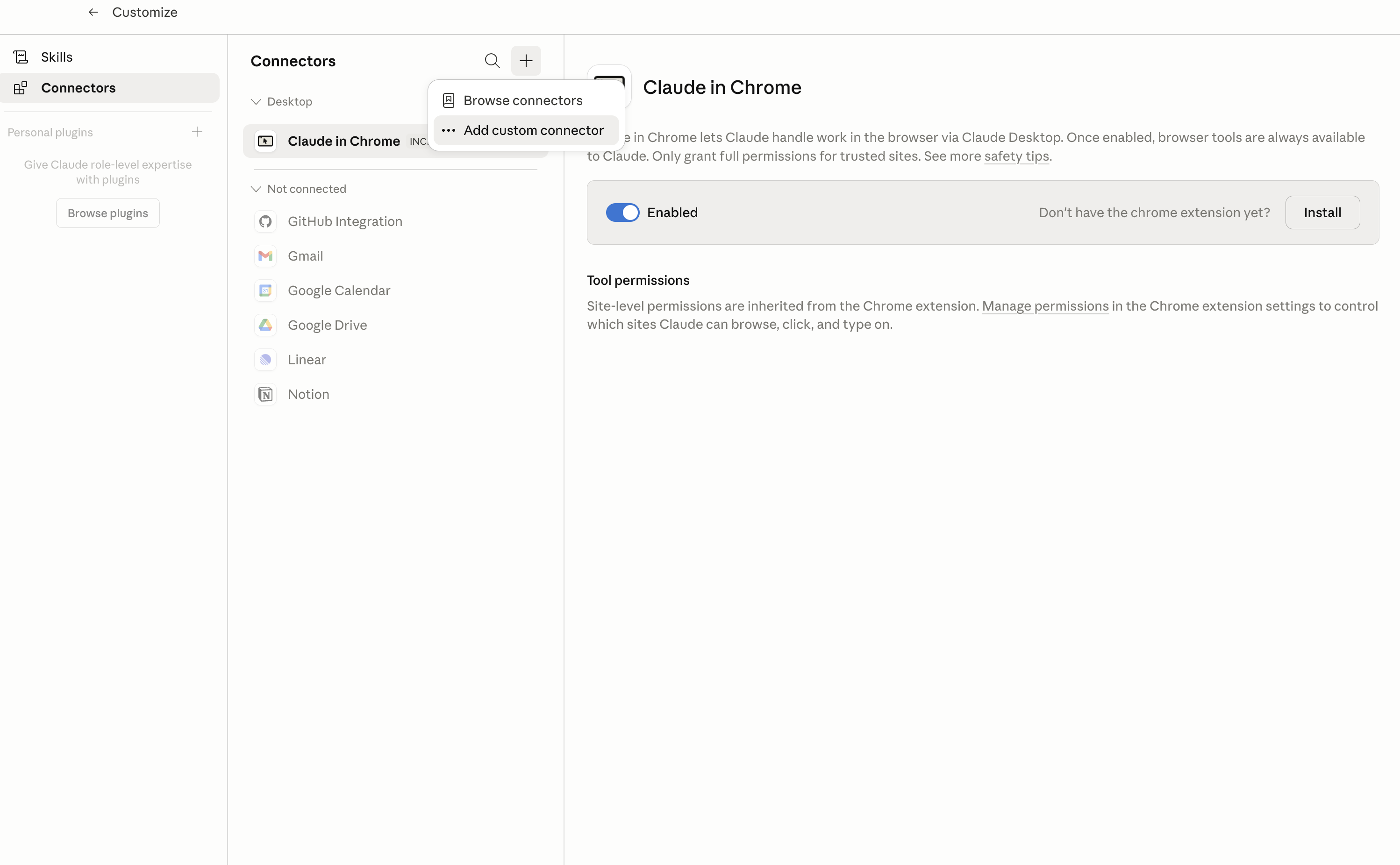
In Claude Desktop, click Customize in the left sidebar, then select Connectors and click the + icon at the top.

Claude Desktop connectors screen with Add custom connector selected

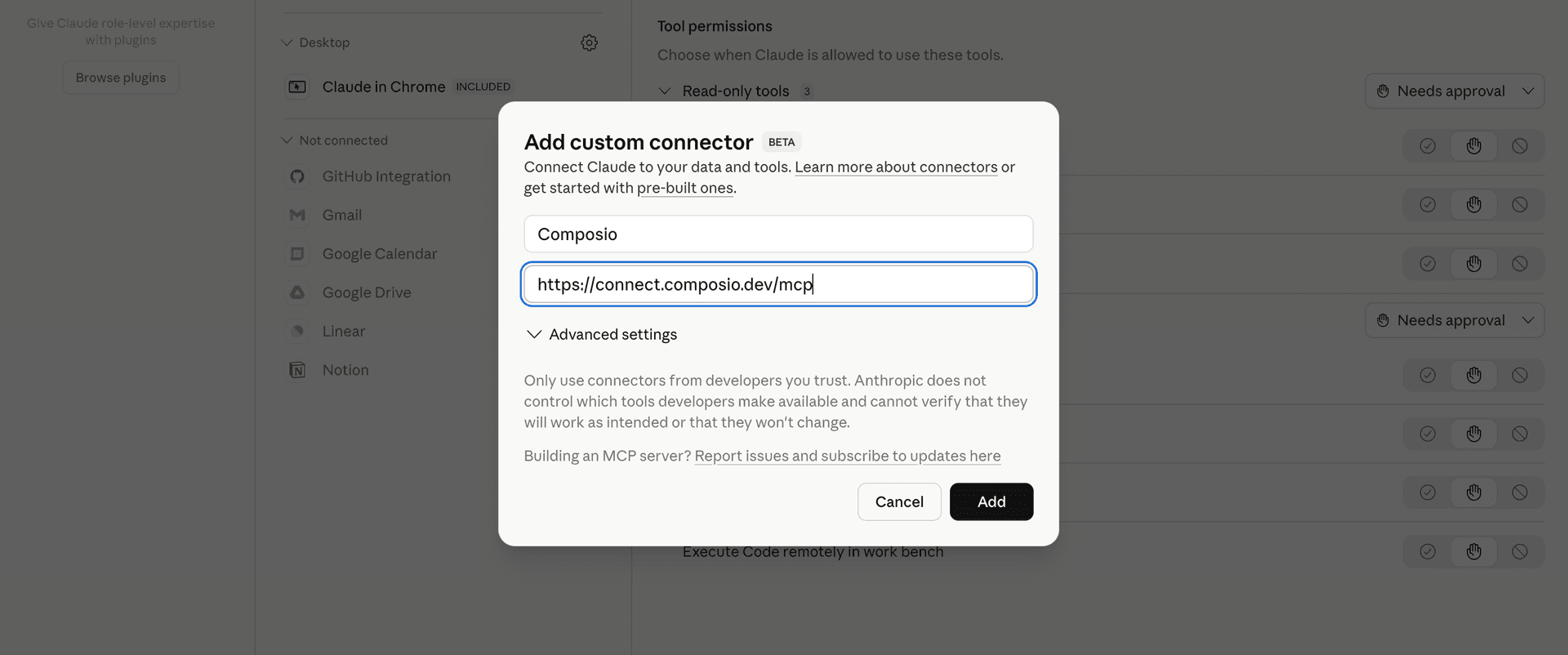
Click Add custom connector and paste in the Composio MCP server URL:

bash
https://connect.composio.dev/mcp
Add custom connector dialog with Composio MCP server URL

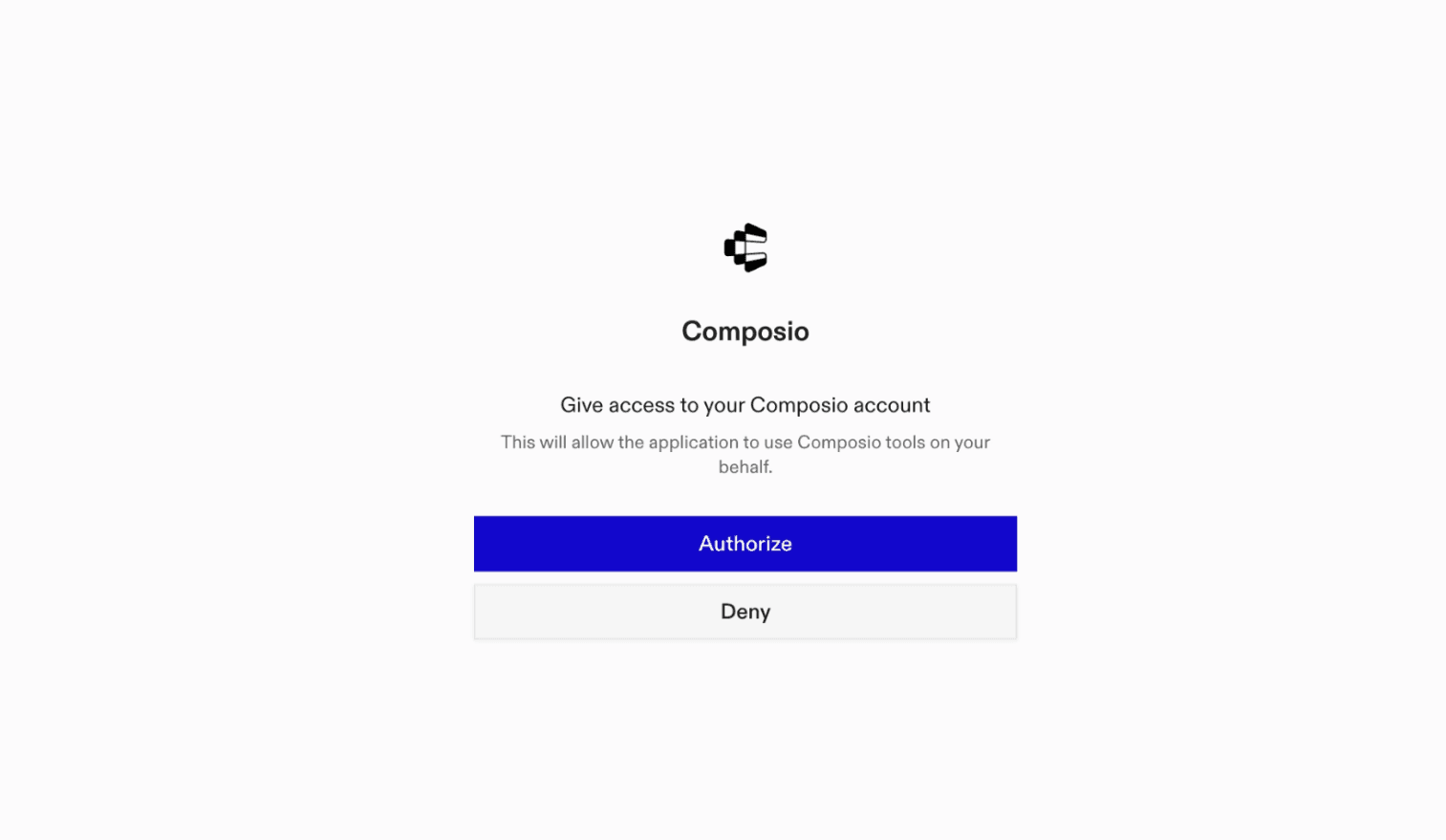
2. Authorize in your browser

Click Connect. You'll be redirected to a browser window where you can authorize Composio to continue.

Composio authorization screen for Claude Web, Desktop, and Cowork

3. Connect your AfterShip account

Back in Claude, ask it to connect to AfterShip or give it any AfterShip-related task.

For example, ask Claude to:

  • "Check shipment status by tracking number"
  • "Detect courier for an unknown shipment"
  • "List delayed deliveries needing customer updates"

It will prompt you to authenticate and authorize access.

That's it. Composio's tools are now available in Claude, and your AfterShip account is ready to use.

What is the AfterShip Claude Connector, and what's possible with it?

The AfterShip MCP server is an implementation of the Model Context Protocol that connects your AI agent and assistants like Claude, Cursor, etc directly to your AfterShip account. It provides structured and secure access to shipment tracking, courier connections, courier detection, and delivery date predictions, so your agent can create and manage trackings, identify carriers, monitor shipment progress, and estimate delivery dates on your behalf.

  • Shipment tracking management: Have your agent create, view, update, delete, and retrack shipment tracking records, including order, customer, route, and delivery details.
  • Courier detection and connections: Let the agent identify likely couriers for a tracking number, review available courier services, and manage connected courier accounts.
  • Delivery date predictions: Direct your agent to predict estimated delivery dates for planned shipments, including several shipments at once before tracking numbers exist.
  • Tracking status updates: Instruct your agent to list shipments using delivery status and shipment details, then mark tracking records as delivered, lost, or returned to sender.
  • Courier account maintenance: Have your agent add, review, update, or remove courier connections when carrier credentials or shipping providers change.

Troubleshooting

1. Why does Claude not use the Composio connector for AfterShip?

The connector can show as connected, but Claude must use it in each AfterShip conversation.

  • Click + at the lower left of the chat, or type /.
  • Hover Connectors.
  • Turn on Composio.
  • Ask Claude to connect to AfterShip again.

2. Why does Claude show an MCP server error before AfterShip connects?

Claude can show Couldn't reach the MCP server or Authorization with the MCP server failed when you add the connector for AfterShip.

  • Check that the connector URL is https://connect.composio.dev/mcp.
  • Connectors run from Anthropic's cloud, so your device network is usually not the problem.
  • Add the connector again from Customize > Connectors, then ask Claude to connect AfterShip.
  • If it fails again, send the error and the ofid_ reference id to support@composio.dev.

3. Why does the AfterShip authorization link not work?

The Composio connector is one server. Your AfterShip account connects separately when Claude asks for it.

  • If the browser does not open, or the link expires, ask Claude to retry the AfterShip connection.
  • Composio creates a fresh AfterShip authorization link.
  • Open that link in your browser and finish the AfterShip sign-in.

4. Why do AfterShip actions fail after they worked before?

The AfterShip connection can expire or lose permission.

  • Ask Claude to inspect the AfterShip connection.
  • If the connection is unhealthy, disconnect it when Claude prompts you.
  • Reconnect the AfterShip account and retry the action.
  • If Claude shows a permission prompt, approve it before Claude changes data in AfterShip.
  • If the action still fails with a permission error, check that the connected account has that permission in AfterShip itself.

5. How do I switch to a different AfterShip account?

Claude can manage the AfterShip connection for you.

  • Ask Claude to disconnect or delete the current AfterShip account.
  • Ask Claude to connect AfterShip again.
  • Open the new Composio authorization link for AfterShip.
  • Sign in with the other AfterShip account in the browser.
  • After the account connects, ask Claude to retry the AfterShip task.

6. Why is my AfterShip connection missing in Claude Desktop or on a Team plan?

The connector belongs to your Claude account, so your AfterShip connection works in Claude Web, Desktop, and Cowork.

  • In Claude Desktop, open Customize > Connectors.
  • Next to Composio, click ⋮ and click Clear cache.
  • If AfterShip tools still do not appear, click ⋮, disconnect, remove the connector, and add it again.
  • On Team or Enterprise, an Owner or Primary Owner must enable the connector before you can connect AfterShip.
TOOLS

Supported Tools

Every AfterShip action and event your agent gets out of the box.

Create Courier Connection

Connect one courier account using the courier-specific credential fields advertised by courier metadata.

Create Tracking

Create one shipment tracking record from a tracking number and optional courier, order, route, customer, and delivery metadata.

Create Trackings Batch

Sequentially create 1-20 tracking records through AfterShip's single-record create endpoint.

Delete Courier Connection

Permanently remove one courier account connection by an ID obtained from list or create.

Delete Tracking

Permanently delete one tracking record by its AfterShip tracking ID.

Detect Courier

Return couriers that may handle a tracking number, using optional courier and shipment hints to narrow detection.

Get Courier Connection

Return one courier account connection by an ID obtained from list or create.

Get Tracking

Return one tracking record by its AfterShip tracking ID, with optional field selection and checkpoint translation.

List Courier Connections

Return one cursor-controlled page of courier account connections, optionally filtered by courier slug.

List Couriers

Return courier metadata, optionally limited to account-activated couriers or selected courier slugs, including required tracking and credential field definitions.

List Trackings

Return one cursor-controlled page of shipment trackings, optionally filtered by identifiers, courier, status, dates, route, or shipment metadata.

Mark Tracking Completed

Mark a tracking as delivered, lost, or returned to sender.

Predict Estimated Delivery Date

Predict an estimated delivery date before a tracking number exists.

Predict Estimated Delivery Dates Batch

Predict estimated delivery dates atomically for one to five planned shipments.

Retrack Tracking

Restart automatic updates for an expired tracking.

Update Courier Connection

Replace carrier-specific credentials on an existing courier account connection.

Update Tracking

Update editable order, courier, route, customer, and delivery metadata on an existing tracking record.

FAQ

Frequently asked questions

Start with AfterShip.It takes 30 seconds.

Managed auth, hosted MCP servers, and every AfterShip tool your agent needs.Free to start.

Start building