How to integrate Synthflow ai MCP with Hermes

Trusted by
AWS
Glean
Zoom
Airtable

30 min · no commitment · see it on your stack

Synthflow ai logo
Hermes logo
divider

Introduction

Hermes is a 24/7 autonomous agent that lives on your computer or server — it remembers what it learns and evolves as your usage grows.

This guide explains the easiest and most robust way to connect your Synthflow ai account to Hermes. You can do this through either Composio Connect CLI or Composio Connect MCP. For personal use we recommend the CLI, but you won't go wrong with MCP either.

Also integrate Synthflow ai with

What is Composio Connect?

Composio Connect is a consumer offering that lets anyone plug 1,000+ applications directly into their agent harness — including Hermes. It can:

  • Search and load tools from relevant toolkits on-demand, reducing context usage.
  • Chain multiple tools to accomplish complex workflows via a remote workbench, without excessive back-and-forth with the LLM.
  • Manage app authentication end-to-end with zero manual overhead.

Integrating Synthflow ai with Hermes

Using Composio Connect CLI

1. Install the Composio CLI

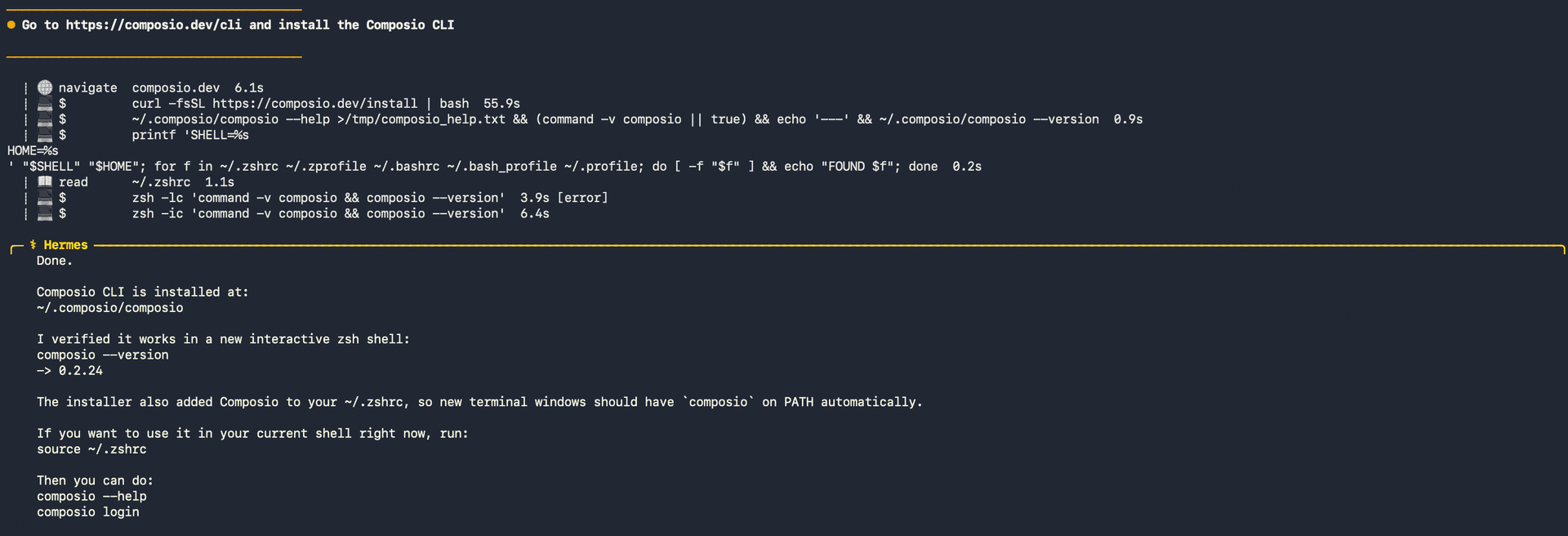
Run the install script directly, or paste https://composio.dev/hermes into your Hermes chat box to have it installed for you.

bash
curl -fsSL https://composio.dev/install | bash
Hermes authenticating with Composio

2. Authenticate

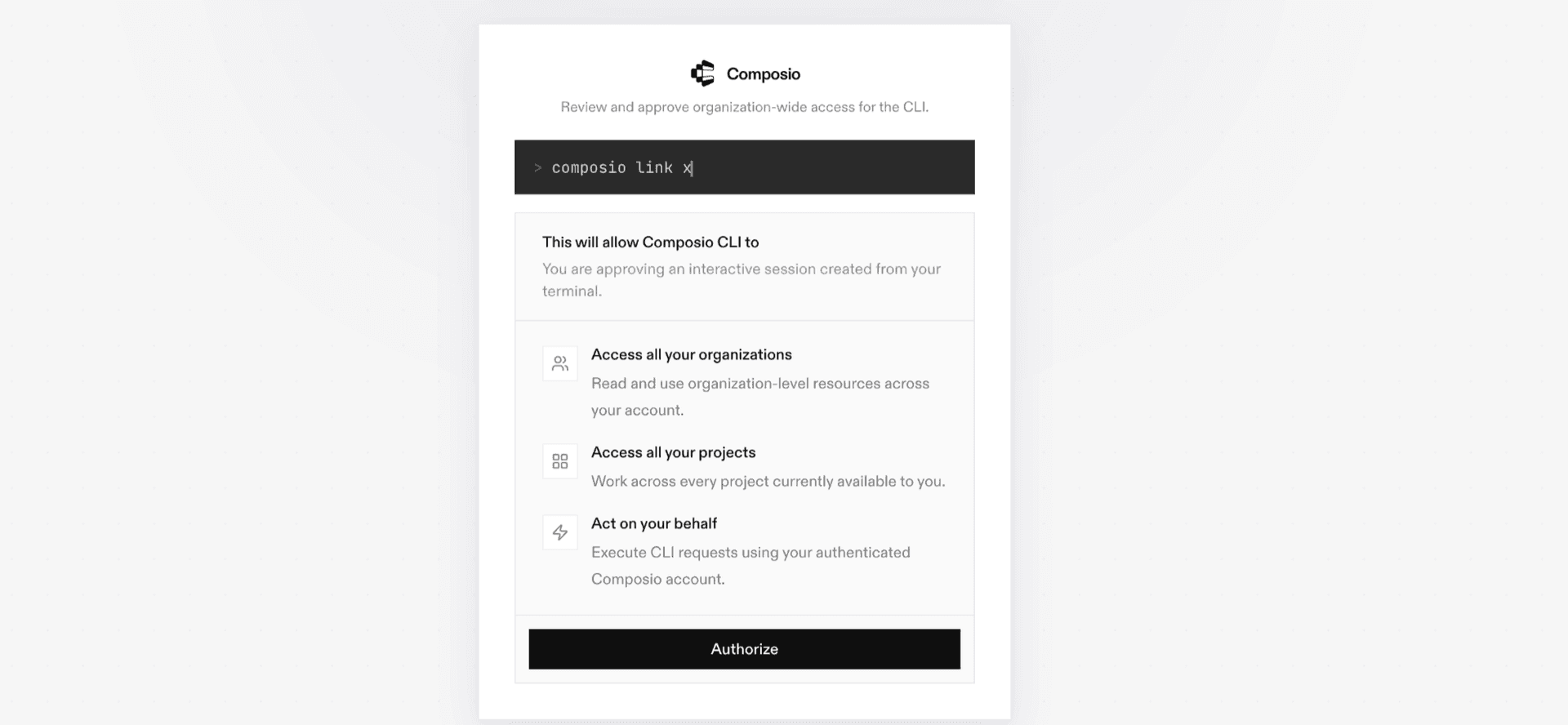
Once the CLI is installed, ask Hermes to authenticate with Composio.

3. Connect to Synthflow ai

Ask your agent to connect to Synthflow ai, or simply request any Synthflow ai-related task. Hermes will prompt you to authenticate and authorize access.

4. Done. You're all set with a new Synthflow ai connection.


Using Composio Connect MCP

1. Get your MCP URL and API Key

Go to dashboard.composio.dev and copy your Connect MCP URL and API key.

Copy MCP URL and API key from Composio dashboard

2. Open the Hermes config file

bash
nano ~/.hermes/config.yaml

3. Add the Composio Connect MCP server

bash
mcp_servers:
  composio:
    url: "https://connect.composio.dev/mcp"
    headers:
      x-consumer-api-key: "YOUR_COMPOSIO_API_KEY"
    connect_timeout: 60
    timeout: 180

Save with Ctrl + O, Enter, then exit with Ctrl + X.

4. Restart your Hermes agent

Once restarted, ask your agent to connect to Synthflow ai or request any Synthflow ai-related task. It will prompt you to authenticate and authorize access.

5. Done!

What is the Synthflow ai MCP server, and what's possible with it?

The Synthflow ai MCP server is an implementation of the Model Context Protocol that connects your AI agent and assistants like Claude, Cursor, etc directly to your Synthflow ai account. It provides structured and secure access to your voice automation tools, so your agent can perform actions like managing voice assistants, handling teams, retrieving phone numbers, and automating call center operations on your behalf.

  • AI assistant management: Create, list, update, or delete AI-powered voice assistants to tailor customer interactions and automate call flows as needed.
  • Team creation and configuration: Set up new teams, modify existing ones, or remove teams to optimize your call center's routing and operational structure.
  • Knowledge base integration: Retrieve and manage knowledge base details to ensure your assistants have accurate, up-to-date information for conversations.
  • Phone number administration: Fetch and organize phone numbers linked to your workspace, making it easy to assign or reassign numbers for inbound and outbound campaigns.
  • Comprehensive assistant and team insights: Access detailed metadata and configuration for both assistants and teams, streamlining oversight and decision-making for your AI-powered operations.

Supported Tools & Triggers

Tools
Add document to knowledge base sourceTool to add a document to a knowledge base source.
Attach Actions to AgentTool to attach one or more actions to an agent.
Attach contact to memory storeTool to attach a contact to a memory store.
Attach knowledge base to agentTool to attach a knowledge base to an agent.
Attach memory store to agentTool to attach a memory store to an agent.
Create ActionTool to create a new action in Synthflow AI.
Create AssistantTool to create a new assistant.
Create a contactTool to create a new contact in Synthflow AI.
Create knowledge baseTool to create a new knowledge base and return its ID.
Create memory storeTool to create a new memory store.
Create Phone BookTool to create a new phone book.
Create phone book entryTool to create a phone book entry.
Create Simulation CaseTool to create a new simulation case.
Create a simulation scenarioTool to create a new simulation scenario.
Create a new simulation suiteTool to create a new simulation suite attached to a specific agent.
Create a new teamTool to create a new team.
Delete an actionTool to delete an existing action.
Delete an assistantTool to delete an existing AI assistant.
Delete a chat sessionTool to delete a chat session.
Delete a contactTool to delete an existing contact.
Delete knowledge baseTool to delete an existing knowledge base.
Delete a knowledge base sourceTool to delete a source from a knowledge base.
Delete a memory storeTool to delete a memory store.
Delete a phone bookTool to delete an existing phone book.
Delete a phone book entryTool to delete a phone book entry.
Delete a simulation caseTool to delete a simulation case by ID.
Delete a simulation scenarioTool to delete an existing simulation scenario.
Delete a simulation suiteTool to delete a simulation suite by ID.
Delete a subaccountTool to delete an existing subaccount.
Delete a teamTool to delete an existing team.
Detach actions from assistantTool to detach one or more actions from an AI assistant.
Detach knowledge baseTool to detach a knowledge base from an AI assistant.
Detach contact from memory storeTool to detach a contact from a memory store.
Detach memory store from agentTool to detach a memory store from an agent.
Execute simulation suiteTool to execute all test cases in a simulation suite.
Export analytics dataTool to export analytics data for calls within a specified date range.
Get action metadataTool to retrieve metadata about a specific action by its ID.
Get AI assistant detailsTool to retrieve details of a specific AI assistant.
Get phone call detailsTool to retrieve the transcript and detailed metadata for a specific phone call.
Get contact detailsTool to retrieve details of a specific contact by its ID.
Get knowledge baseTool to retrieve details of a specific knowledge base by its ID.
Get memory storeTool to retrieve details of a specific memory store by its ID.
Get memory store contact dataTool to retrieve memory data for a specific contact in a memory store.
Get phone numbersTool to retrieve a list of phone numbers associated with a workspace.
Get simulation detailsTool to retrieve details of a specific simulation by ID.
Get Simulation CaseTool to retrieve a simulation case by ID.
Get simulation scenarioTool to retrieve a simulation scenario by ID.
Get simulation suite by IDTool to retrieve a simulation suite by ID.
Get subaccount detailsTool to retrieve detailed metadata about a specific subaccount by ID.
Get team detailsTool to retrieve details of a specific team by its ID.
Initialize ActionTool to initialize a custom action with specified variables.
List actionsTool to list all actions in the workspace.
List AI assistantsTool to list all AI assistants associated with the account.
List call historyTool to retrieve call history (call logs) with filtering to check outcomes/statuses after placing calls.
List chatsTool to retrieve a list of chats, optionally filtered by agent ID.
List contactsTool to retrieve a list of contacts with optional search filtering.
List memory storesTool to list memory stores with optional filtering by title.
List Phone BooksTool to list all phone books in your workspace.
List Simulation CasesTool to list simulation cases with pagination and optional filtering by name or type.
List simulation cases by agentTool to list all simulation cases created for a specific agent.
List simulationsTool to list simulations with pagination and optional filters.
List simulation scenariosTool to list simulation scenarios with pagination and optional filtering.
List simulation sessionsTool to list simulation sessions with pagination and optional filters.
List simulation suitesTool to list simulation suites with pagination and optional filtering.
List subaccountsTool to list all subaccounts associated with the authenticated account.
List teamsTool to list assistant teams.
List voicesTool to list all text-to-speech voices in a workspace.
List webhook logsTool to retrieve paginated webhook logs with filtering and search capability.
Make a voice callTool to initiate a real-time voice call via the AI agent.
Start SimulationTool to start a new simulation using a simulation case.
Update ActionTool to update an existing action in Synthflow AI.
Update AssistantTool to update an existing assistant’s settings.
Update a contactTool to update an existing contact in Synthflow AI.
Update knowledge baseTool to update an existing knowledge base's name or usage conditions.
Update memory storeTool to update an existing memory store's title and description.
Update Simulation CaseTool to update an existing simulation case.
Update a simulation scenarioTool to update an existing simulation scenario.
Update an existing simulation suiteTool to update an existing simulation suite.
Update an existing teamTool to update an existing team.

Way Forward

With Synthflow ai connected, Hermes can now act on your behalf whenever it detects a relevant task or you ask it to.

From here, you can extend Hermes further:

  • Connect more apps: Calendar, Slack, Notion, Linear, and hundreds of others are available through the same Composio Connect setup. Each new integration compounds what Hermes can do for you.
  • Build workflows across tools: Once multiple apps are connected, Hermes can chain actions together — turn an email into a calendar invite, a Slack message into a Linear ticket, or a meeting note into a follow-up draft.
  • Let it learn your patterns: The more you use Hermes, the better it gets at anticipating how you'd handle recurring tasks. Give it feedback on drafts and decisions, and it will adapt.

If you run into trouble or want to share what you've built, join the community or check out the Docs for deeper configuration options.

How to build Synthflow ai MCP Agent with another framework

FAQ

What are the differences in Tool Router MCP and Synthflow ai MCP?

With a standalone Synthflow ai MCP server, the agents and LLMs can only access a fixed set of Synthflow ai tools tied to that server. However, with the Composio Tool Router, agents can dynamically load tools from Synthflow ai and many other apps based on the task at hand, all through a single MCP endpoint.

Can I use Tool Router MCP with Hermes?

Yes, you can. Hermes fully supports MCP integration. You get structured tool calling, message history handling, and model orchestration while Tool Router takes care of discovering and serving the right Synthflow ai tools.

Can I manage the permissions and scopes for Synthflow ai while using Tool Router?

Yes, absolutely. You can configure which Synthflow ai scopes and actions are allowed when connecting your account to Composio. You can also bring your own OAuth credentials or API configuration so you keep full control over what the agent can do.

How safe is my data with Composio Tool Router?

All sensitive data such as tokens, keys, and configuration is fully encrypted at rest and in transit. Composio is SOC 2 Type 2 compliant and follows strict security practices so your Synthflow ai data and credentials are handled as safely as possible.

Used by agents from

Context
Letta
glean
HubSpot
Agent.ai
Altera
DataStax
Entelligence
Rolai
Context
Letta
glean
HubSpot
Agent.ai
Altera
DataStax
Entelligence
Rolai
Context
Letta
glean
HubSpot
Agent.ai
Altera
DataStax
Entelligence
Rolai

Never worry about agent reliability

We handle tool reliability, observability, and security so you never have to second-guess an agent action.