How to connect ShipStation to Claude

Connect Claude Web, Desktop and Cowork to ShipStation MCP. List shipstation shipments awaiting fulfillment, compare rates for a shipstation shipment, and more using natural language, with authentication handled for you.

ShipStation logoShipStation
Api Key

ShipStation is a shipping platform for managing orders, rates, labels, carriers, and tracking. It helps e-commerce teams streamline fulfillment across multiple sales channels.

43 Tools

Introduction

Claude is Anthropic's AI assistant, available on the web, in the desktop app, and on mobile. Cowork is its agent for knowledge work, and it runs on all of those surfaces too. Connected to your apps, Claude can work with your files and services to accomplish complex tasks on your behalf.

This guide walks you through the easiest and most secure way to connect your ShipStation account to Claude via Composio Connect, enabling it to list ShipStation shipments awaiting fulfillment, compare rates for a ShipStation shipment, track recent ShipStation packages by order, and more such actions on your behalf without compromising your account security.

Setup is the same on Claude Web, Desktop, and Cowork, and you only need to do it once. The connector is tied to your account, so it's available in all three.

For exact tool slugs and parameter tables, see the tool catalog in the Composio docs.

Also integrate ShipStation with

Connecting ShipStation to Claude Web, Desktop, and Cowork

Two ways to add the Composio connector. Pick whichever you prefer.

1. Add with one click

Click the button. Claude opens with the Composio connector filled in. Click Add, then go to step 2.

Add to Claude

Add manually

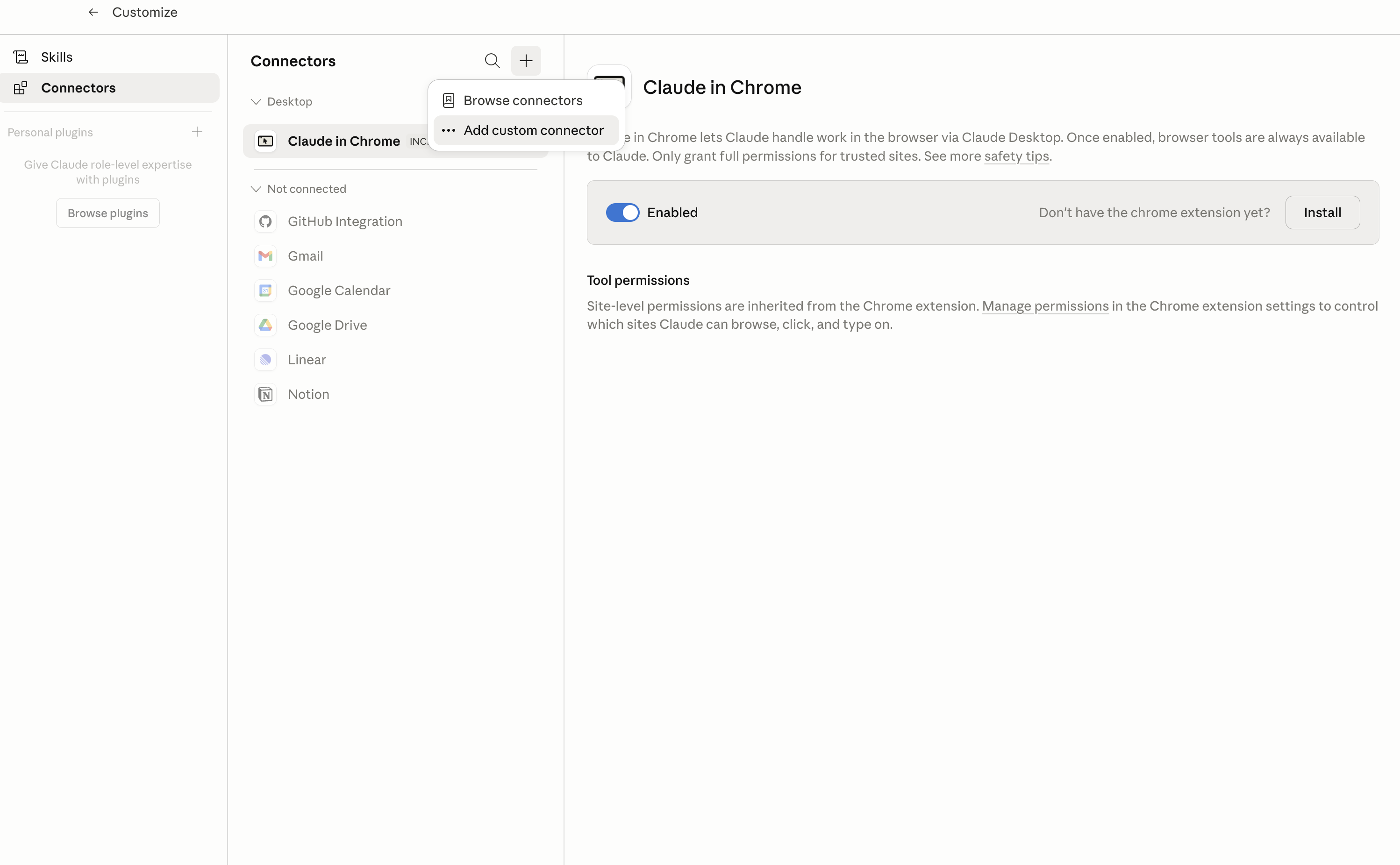
In Claude Desktop, click Customize in the left sidebar, then select Connectors and click the + icon at the top.

Claude Desktop connectors screen with Add custom connector selected

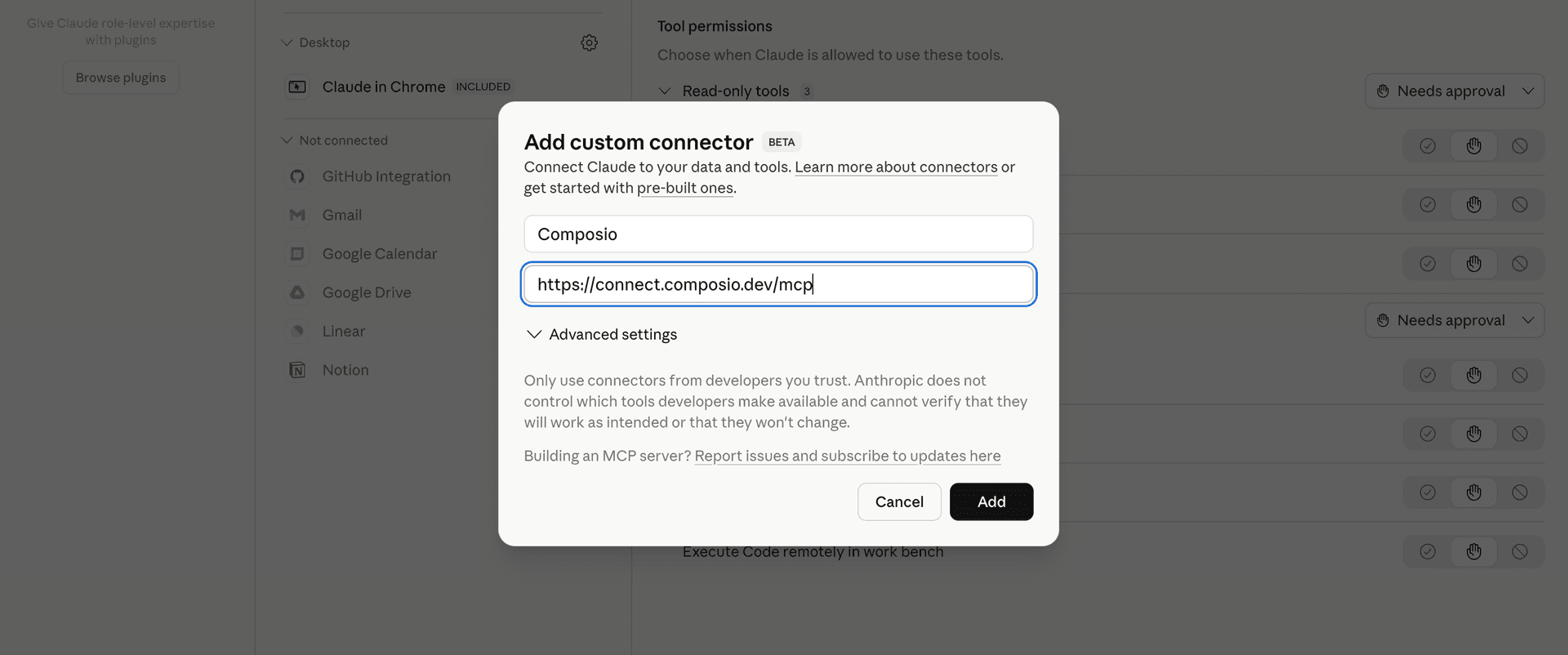
Click Add custom connector and paste in the Composio MCP server URL:

bash
https://connect.composio.dev/mcp
Add custom connector dialog with Composio MCP server URL

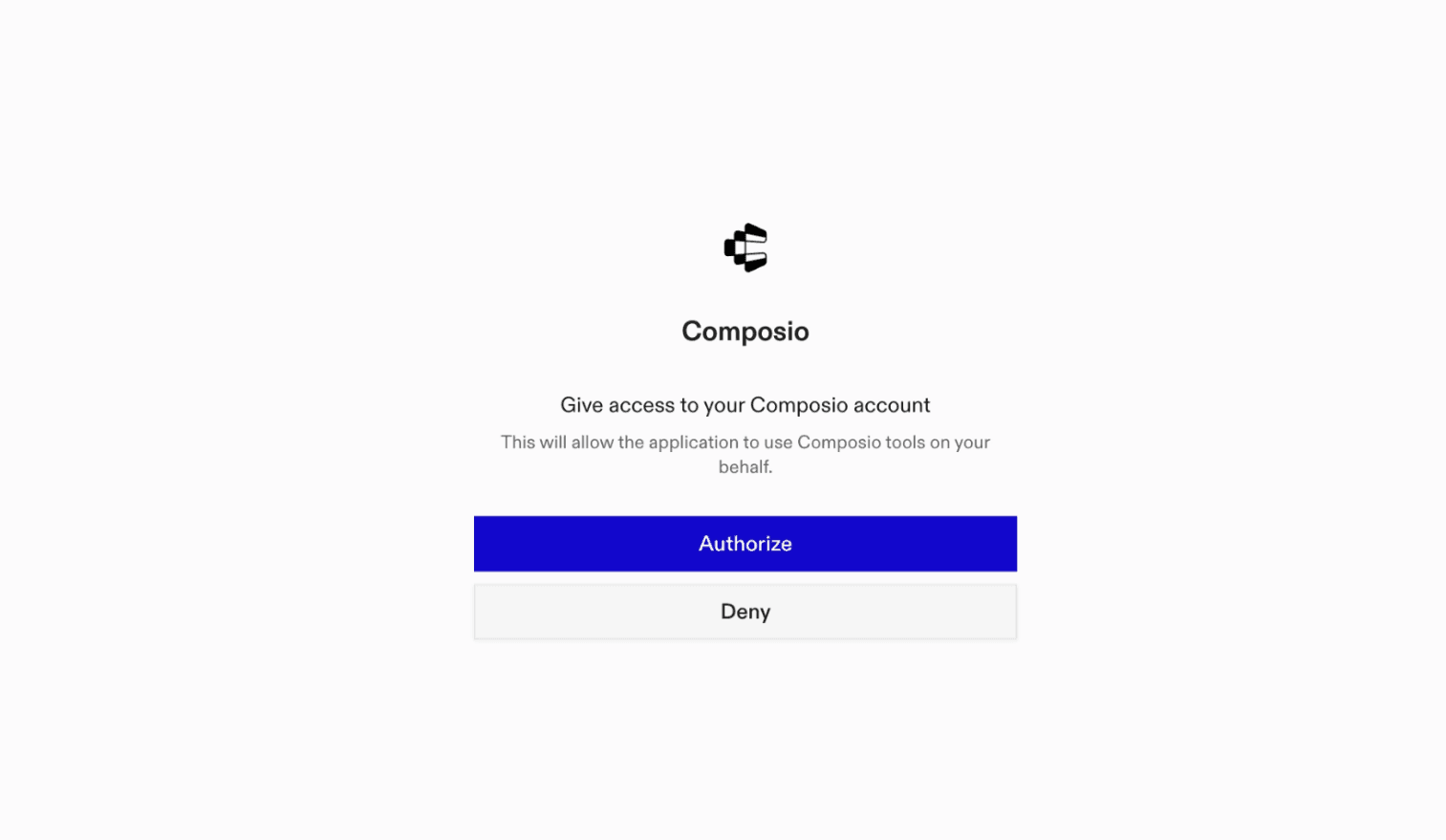
2. Authorize in your browser

Click Connect. You'll be redirected to a browser window where you can authorize Composio to continue.

Composio authorization screen for Claude Web, Desktop, and Cowork

3. Connect your ShipStation account

Back in Claude, ask it to connect to ShipStation or give it any ShipStation-related task.

For example, ask Claude to:

  • "List ShipStation shipments awaiting fulfillment"
  • "Compare rates for a ShipStation shipment"
  • "Track recent ShipStation packages by order"

It will prompt you to authenticate and authorize access.

That's it. Composio's tools are now available in Claude, and your ShipStation account is ready to use.

What is the ShipStation Claude Connector, and what's possible with it?

The ShipStation MCP server is an implementation of the Model Context Protocol that connects your AI agent and assistants like Claude, Cursor, etc directly to your ShipStation account. It provides structured and secure access to shipping workflows, rates, labels, carriers, inventory, warehouses, tracking, and webhooks, so your agent can create and find shipments, compare shipping rates, manage labels, check inventory, and track deliveries on your behalf.

  • Shipment management: Have your agent create shipments, find shipments using order or recipient details, and retrieve shipment information.
  • Rate and carrier comparisons: Let the agent compare shipping rates, review connected carriers and services, and find available package types.
  • Label and delivery tracking: Direct your agent to find shipping labels, review their status, and look up tracking information for shipments.
  • Inventory and warehouse visibility: Instruct your agent to check inventory levels, filter stock by SKU or warehouse, and review connected shipping warehouses.
  • Shipping workflow automation: Have your agent validate addresses, create or list webhooks, and manage shipping operations such as fulfillments, manifests, pickups, and service point lookups.

Troubleshooting

1. Why does Claude not use the Composio connector for ShipStation?

The connector can show as connected, but Claude must use it in each ShipStation conversation.

  • Click + at the lower left of the chat, or type /.
  • Hover Connectors.
  • Turn on Composio.
  • Ask Claude to connect to ShipStation again.

2. Why does Claude show an MCP server error before ShipStation connects?

Claude can show Couldn't reach the MCP server or Authorization with the MCP server failed when you add the connector for ShipStation.

  • Check that the connector URL is https://connect.composio.dev/mcp.
  • Connectors run from Anthropic's cloud, so your device network is usually not the problem.
  • Add the connector again from Customize > Connectors, then ask Claude to connect ShipStation.
  • If it fails again, send the error and the ofid_ reference id to support@composio.dev.

3. Why does the ShipStation authorization link not work?

The Composio connector is one server. Your ShipStation account connects separately when Claude asks for it.

  • If the browser does not open, or the link expires, ask Claude to retry the ShipStation connection.
  • Composio creates a fresh ShipStation authorization link.
  • Open that link in your browser and finish the ShipStation sign-in.

4. Why do ShipStation actions fail after they worked before?

The ShipStation connection can expire or lose permission.

  • Ask Claude to inspect the ShipStation connection.
  • If the connection is unhealthy, disconnect it when Claude prompts you.
  • Reconnect the ShipStation account and retry the action.
  • If Claude shows a permission prompt, approve it before Claude changes data in ShipStation.
  • If the action still fails with a permission error, check that the connected account has that permission in ShipStation itself.

5. How do I switch to a different ShipStation account?

Claude can manage the ShipStation connection for you.

  • Ask Claude to disconnect or delete the current ShipStation account.
  • Ask Claude to connect ShipStation again.
  • Open the new Composio authorization link for ShipStation.
  • Sign in with the other ShipStation account in the browser.
  • After the account connects, ask Claude to retry the ShipStation task.

6. Why is my ShipStation connection missing in Claude Desktop or on a Team plan?

The connector belongs to your Claude account, so your ShipStation connection works in Claude Web, Desktop, and Cowork.

  • In Claude Desktop, open Customize > Connectors.
  • Next to Composio, click ⋮ and click Clear cache.
  • If ShipStation tools still do not appear, click ⋮, disconnect, remove the connector, and add it again.
  • On Team or Enterprise, an Owner or Primary Owner must enable the connector before you can connect ShipStation.
TOOLS

Supported Tools

Every ShipStation action and event your agent gets out of the box.

Calculate Shipping Rates

Compare non-purchasing shipping rates for exactly one existing shipment ID or inline shipment, restricted by required carrier and optional package or service choices.

Create Shipments

Create one or more ShipStation shipment records in a single request without purchasing labels.

Create Webhook

Create a ShipStation webhook registration for one documented event and a callback URL.

Delete Webhook

Permanently delete one ShipStation webhook registration by ID, stopping future deliveries to its callback URL.

Get Shipment

Return one shipment by its ShipStation shipment ID, including status, addresses, packages, items, and related identifiers.

List Carriers

Return connected carrier accounts and their available services, with optional package types and carrier options.

List Inventory Levels

Return one page of SKU inventory quantities, optionally filtered by SKU, warehouse, or location and grouped by warehouse or location.

List Labels

Find existing ShipStation labels by status, carrier, tracking number, shipment, warehouse, creation date, refund status, or related IDs.

List Shipments

Find shipments for the connected account using status, date, order, recipient, item, store, tag, or external-ID filters, returning one page at a time.

List Warehouses

Return the account's shipping warehouses, including IDs, names, default status, creation times, and origin and return addresses.

List Webhooks

Return all webhook registrations for the connected account, including each registration's event, destination, active state, custom header names, store, and ID.

Run Account Operation

Run one official ShipStation Account operation.

Run Addresses Operation

Validate an address against ShipStation's address databases and return verification status, a matched address, and messages.

Run Batches Operation

Run one official ShipStation Batches operation.

Run Carriers Operation

Read carrier details, options, package types, or services.

Run Checkout Rates Operation

Run one official ShipStation Checkout Rates operation.

Run Connections Operation

Run one official ShipStation Connections operation.

Run Delivery Predictions Operation

Predict delivery dates for shipment details without pricing, creating, or storing a shipment, label, or prediction.

Run Documents Operation

Run one official ShipStation Documents operation.

Run Downloads Operation

Run one official ShipStation Downloads operation.

Run Freight Operation

Run one official ShipStation Freight operation.

Run Fulfillments Operation

List ShipStation fulfillments using official filters.

Run Inventory Operation

Run one official ShipStation Inventory operation.

Run Labels Operation

Run one official ShipStation Labels operation.

Run Mailing Operation

Run one official ShipStation Mailing operation.

Run Manifests Operation

List manifests or retrieve a manifest or manifest request by ID.

Run Package Pickups Operation

List scheduled carrier pickups or retrieve one pickup by ID.

Run Package Types Operation

Run one official ShipStation Package Types operation.

Run Products Operation

Run one official ShipStation Products operation.

Run Purchase Orders Operation

Run one official ShipStation Purchase Orders operation.

Run Rate Shoppers Operation

Run one official ShipStation Rate Shoppers operation.

Run Rates Operation

Run one official ShipStation Rates lookup to compare bulk rates, estimate rates, or retrieve a previously queried rate.

Run Service Points Operation

Run one paid-plan ShipStation Service Points lookup to search carrier pickup or drop-off locations or retrieve one by ID.

Run Shipments Operation

Run one official ShipStation Shipments operation.

Run Suppliers Operation

Run one official ShipStation Suppliers operation.

Run Tags Operation

Run one official ShipStation Tags operation.

Run Tokens Operation

Run one official ShipStation Tokens operation.

Run Totes Operation

Run one official ShipStation Totes operation.

Run Tracking Operation

Run one official ShipStation Tracking operation.

Run Users Operation

Run one official ShipStation Users operation.

Run Warehouses Operation

Run one official ShipStation Warehouses operation.

Run Webhooks Operation

Run one official ShipStation Webhooks operation.

Update Webhook

Change an existing ShipStation webhook's name, callback URL, or custom headers without changing its subscribed event.

FRAMEWORKS

How to build ShipStation MCP Agent with another framework

FAQ

Frequently asked questions

Start with ShipStation.It takes 30 seconds.

Managed auth, hosted MCP servers, and every ShipStation tool your agent needs.Free to start.

Start building