How to connect ShipStation with ChatGPT

Connect ChatGPT to ShipStation MCP. List shipstation shipments awaiting fulfillment, compare rates for a shipstation shipment, and more using natural language, with authentication handled for you.

ShipStation logoShipStation
Api Key

ShipStation is a shipping platform for managing orders, rates, labels, carriers, and tracking. It helps e-commerce teams streamline fulfillment across multiple sales channels.

43 Tools

How to connect ShipStation MCP with ChatGPT

ChatGPT can take action across your apps and files, stay with a project for hours, and turn a goal into finished materials like sheets, slides, and docs, not just answers.

In this guide, I will explain the easiest and most secure way to connect your ShipStation account to ChatGPT via Composio Connect, so it can list shipments, compare shipping rates, create labels, track packages, and manage fulfillment through natural language commands without ever putting your account credentials at risk.

For exact tool slugs and parameter tables, see the tool catalog in the Composio docs.

Also integrate ShipStation with

Why use Composio over default connectors?

  • Apps with read and write access. Default connectors mostly can read your data. Composio's ShipStation integration lets ChatGPT take actions like creating drafts, sending updates, labeling records, and more.
  • 1,800+ SaaS toolkits out of the box. Composio gives you instant access to a vast catalog of pre-built connectors, from Gmail and Slack to Notion, Linear, and Salesforce.
  • One MCP server for every app. Connect any of your applications on demand through a single endpoint, rather than juggling a separate server for each app.
  • Smart, context-aware tool loading. Unlike traditional MCP servers that dump every available tool into the LLM context window, Composio searches for and loads only the tools relevant to the task at hand.
  • Cross-app automation. Chain actions across multiple apps in a single run - fetch a thread, summarize it in Notion, and post highlights to Slack without leaving the conversation.

Prerequisites

  • A ChatGPT account. We will use the ChatGPT desktop app, and the steps are the same on the web.
  • Access to the ShipStation workspace you want to connect.
  • Composio plugin.

Note: Composio connects through OAuth. You will be asked to sign in and approve specific permissions. Review the permission screen carefully if you are using a work account.

Step-by-step: Connect ShipStation to ChatGPT

1. Install the Composio plugin

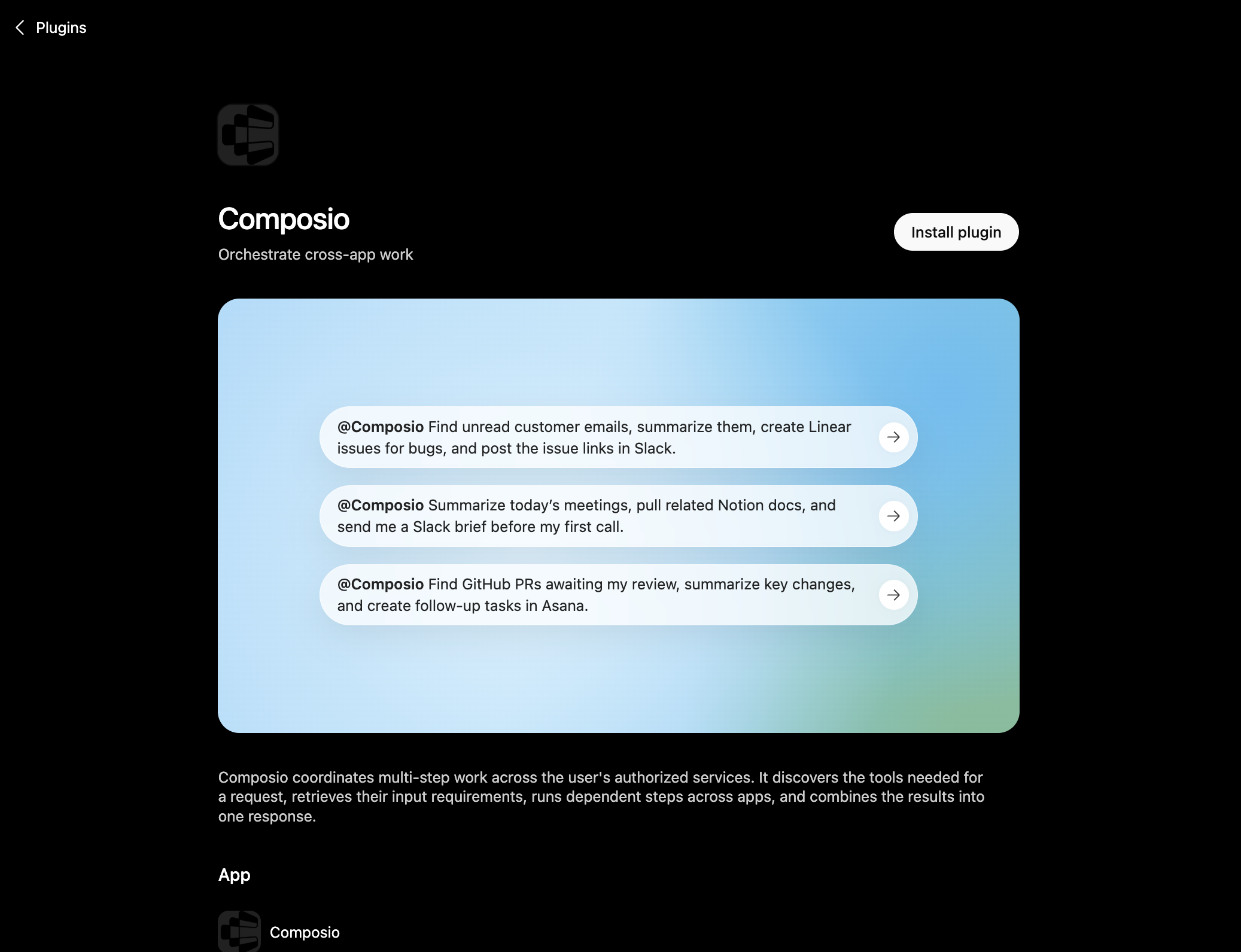
Click the button. ChatGPT opens the Composio plugin page. Click Install plugin.

Install in ChatGPT

Composio plugin page in ChatGPT with the Install plugin button

You can also find it inside ChatGPT: go to Settings, open Plugins, search the marketplace for Composio, and click Install plugin.

2. Authenticate

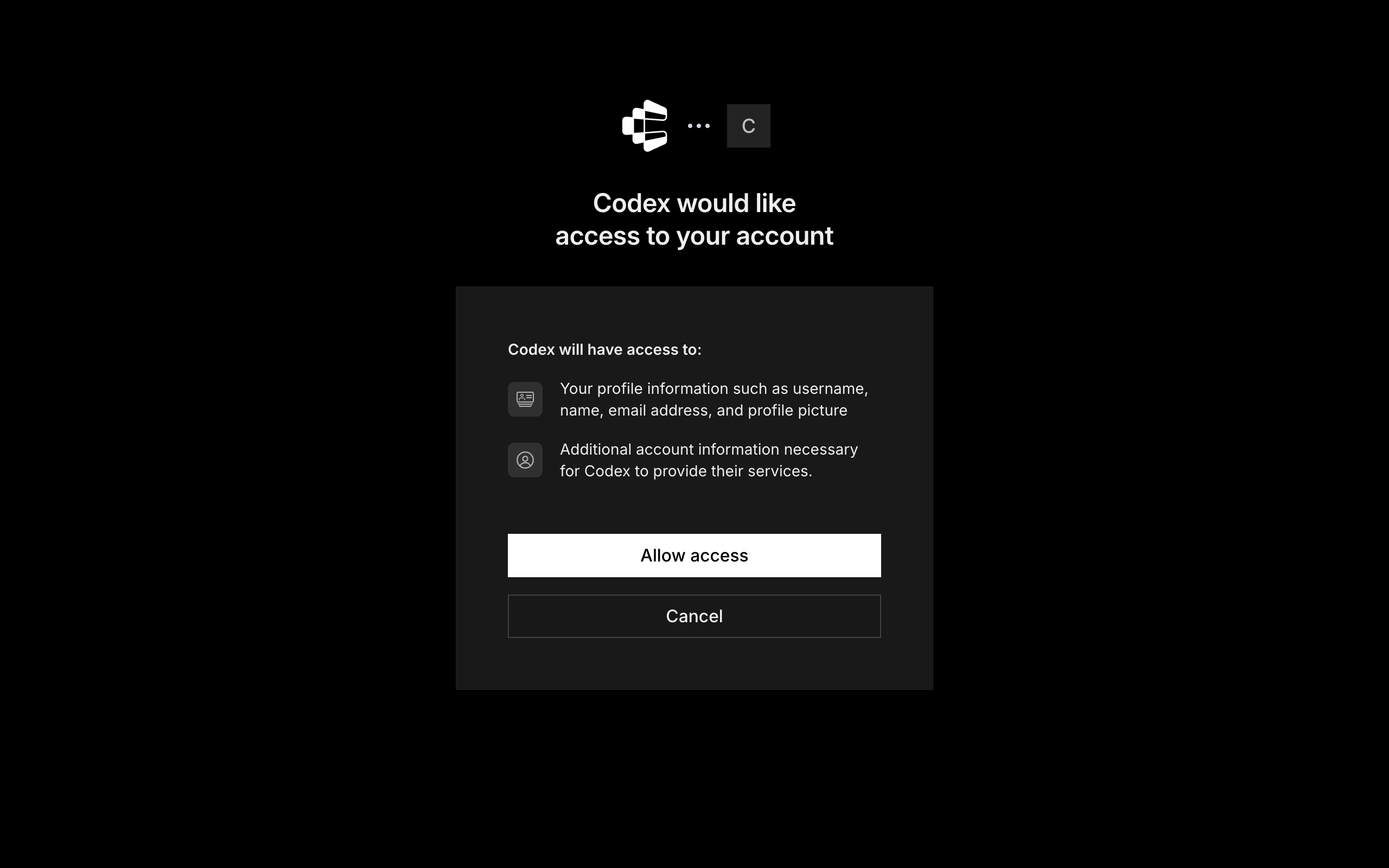
After you install, ChatGPT asks you to authenticate with Composio. Log in and click Allow access to authorize ChatGPT to use your Composio account.

Composio login and Allow access screen for ChatGPT

3. Start using Composio

That is it. Composio tools are now available in ChatGPT. Type @Composio followed by your request, for example @Composio find unread ShipStation messages and summarize them, and it will run the actions you authorize. On first use it asks you to authorize ShipStation.

Option 2: Add Composio as an MCP server

If you cannot use the plugin marketplace, add Composio as a custom MCP server instead.

1. Open the MCP settings

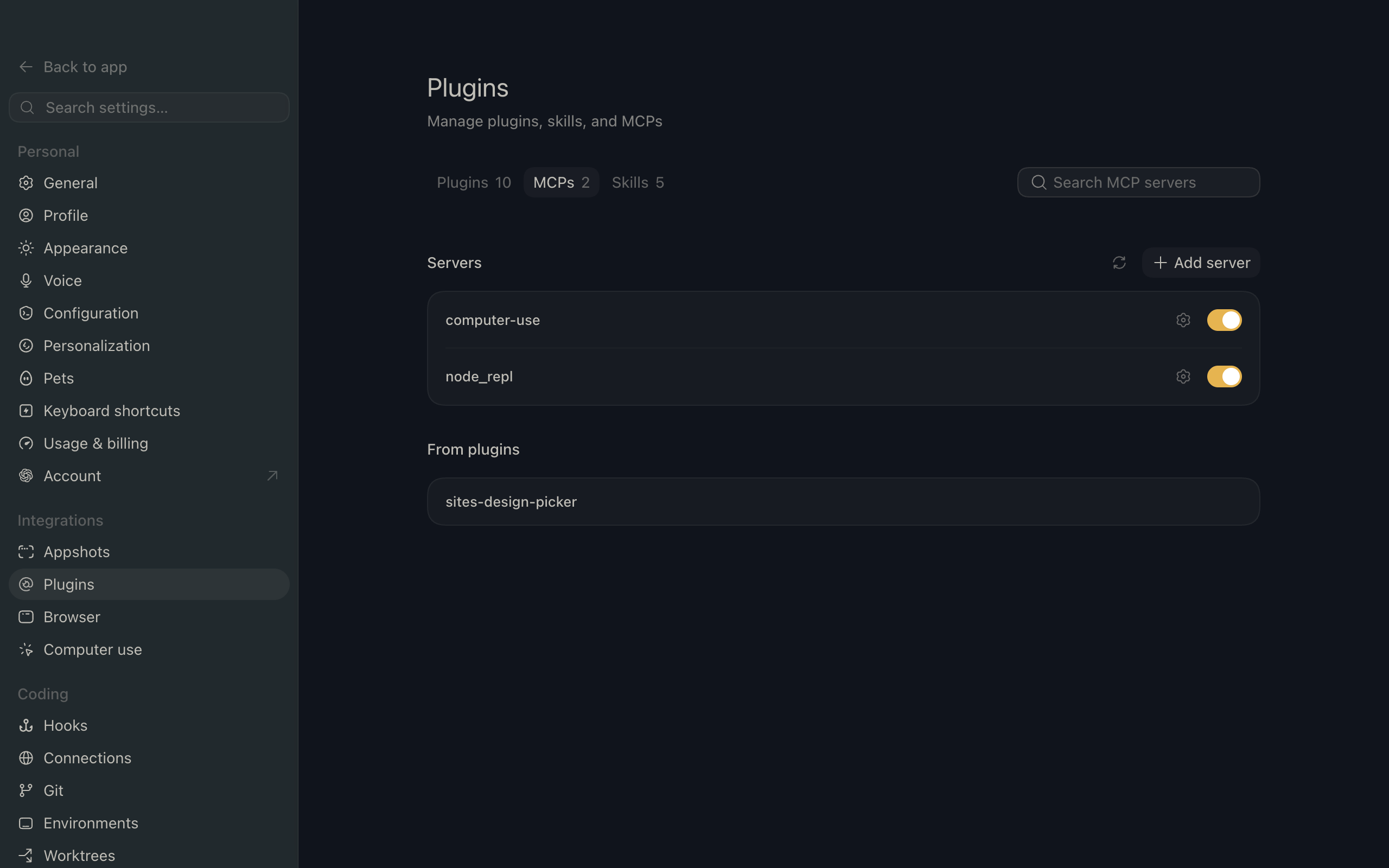
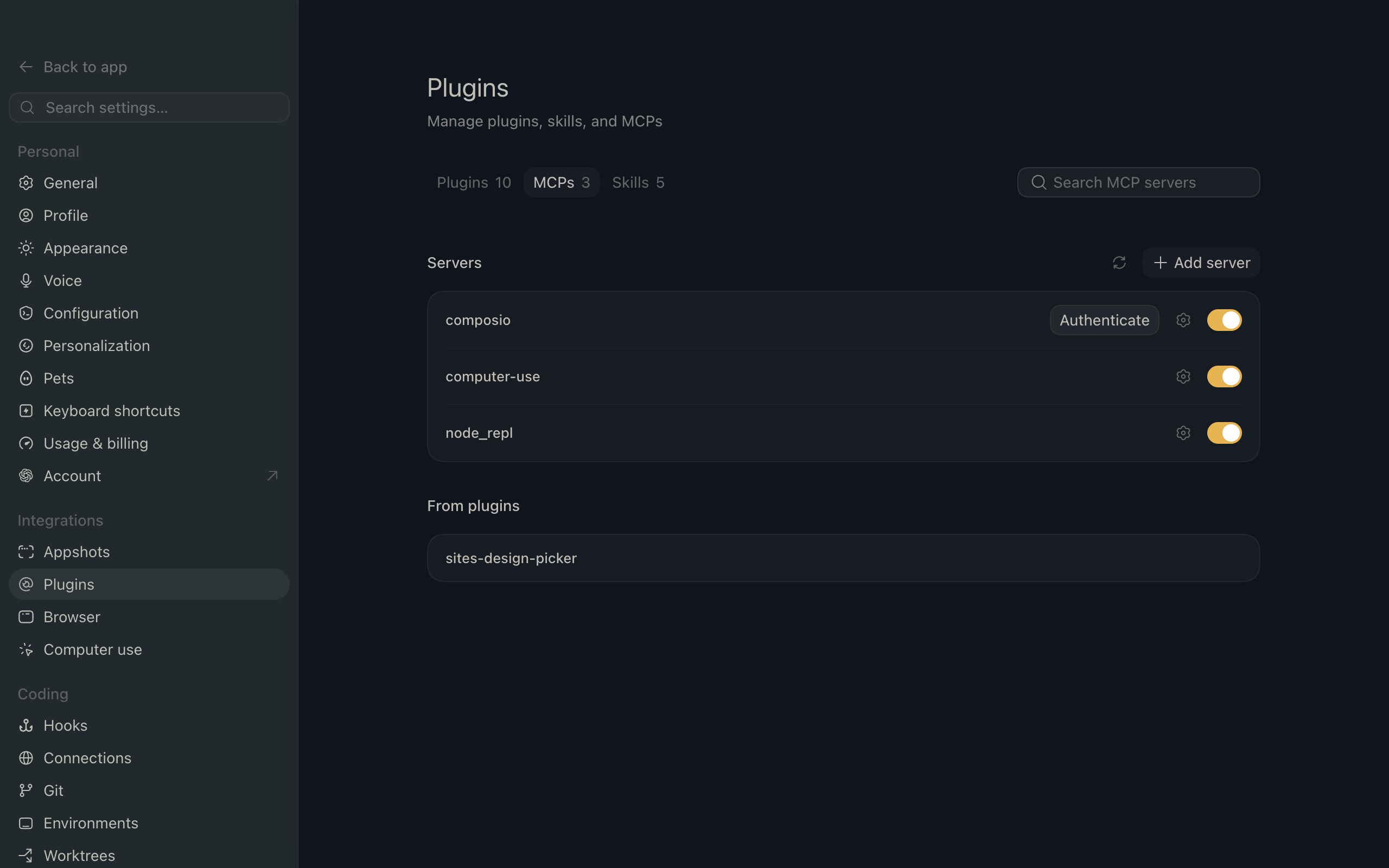
In ChatGPT, go to Settings and open the Plugins section. Inside the Plugins page, click the MCP tab.

ChatGPT settings showing the Plugins page with the MCP tab selected

2. Add the server

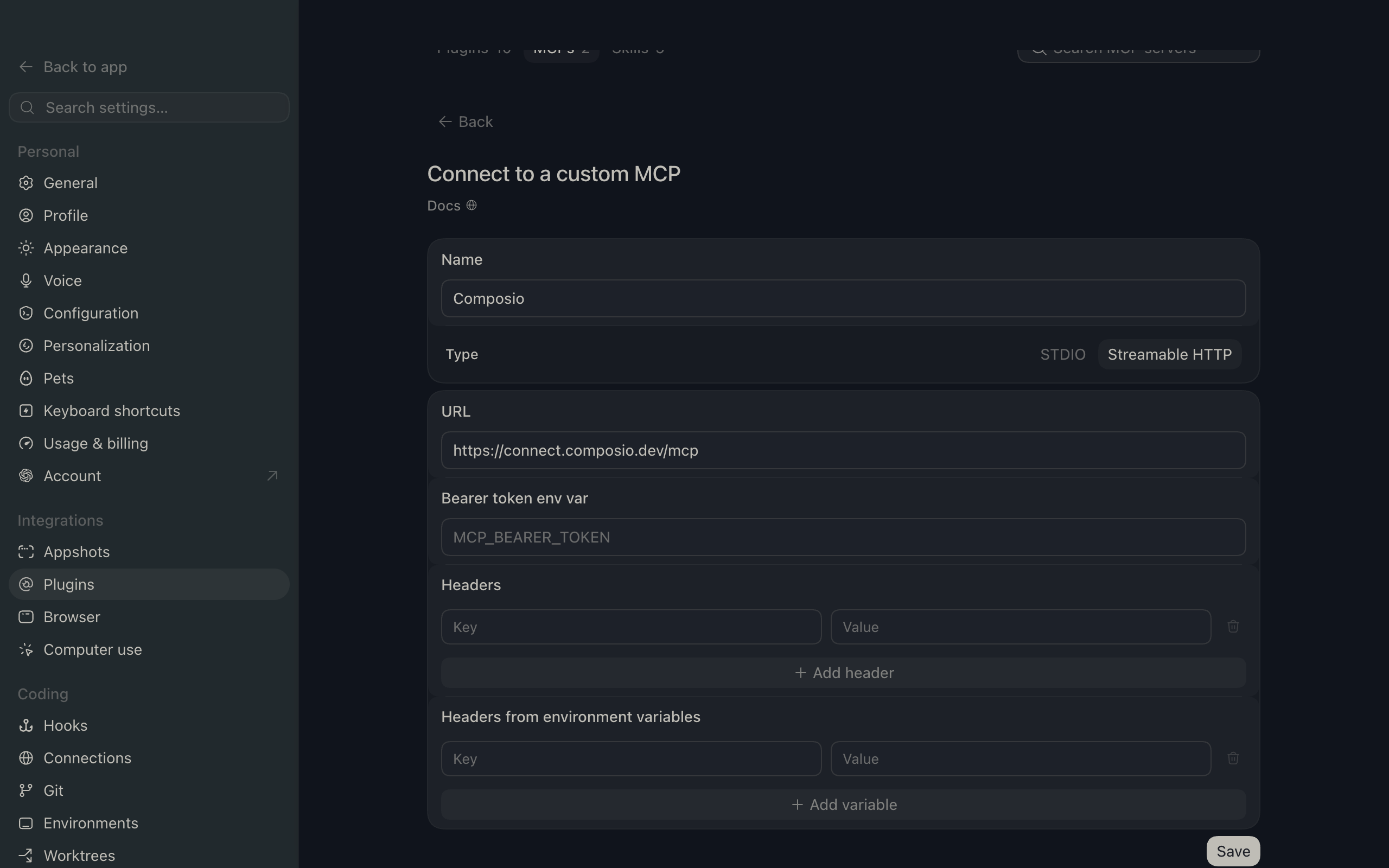
Click Add server. In the Name field enter Composio, for Type select Streamable HTTP, and in the URL field paste the Composio MCP server URL:

bash
https://connect.composio.dev/mcp
ChatGPT Add server dialog with the name Composio, type Streamable HTTP, and the Composio MCP URL

Then click Save. The Composio server now appears in your MCP plugins list.

ChatGPT Plugins page showing the Composio MCP server added to the list

3. Authenticate

Click Authenticate on the Composio entry, log in via Composio, and click Allow access. Composio tools are then available in ChatGPT the same way as with the plugin.

What you can do after connecting ShipStation

  • List ShipStation shipments awaiting fulfillment
  • Compare rates for a ShipStation shipment
  • Track recent ShipStation packages by order

Security + privacy notes (important)

  • Use least-privilege access: Only grant permissions you actually need.
  • Review OAuth permissions before approving: Make sure requested scopes match what you expect Composio and ChatGPT to do.
  • Keep write actions human-reviewed: For actions like sending messages, creating labels, or editing drafts, keep manual confirmation enabled.
  • Be careful with sensitive data: Avoid using this setup with highly sensitive information unless allowed by your personal, company, or client policies.
TOOLS

Supported Tools

Every ShipStation action and event your agent gets out of the box.

Calculate Shipping Rates

Compare non-purchasing shipping rates for exactly one existing shipment ID or inline shipment, restricted by required carrier and optional package or service choices.

Create Shipments

Create one or more ShipStation shipment records in a single request without purchasing labels.

Create Webhook

Create a ShipStation webhook registration for one documented event and a callback URL.

Delete Webhook

Permanently delete one ShipStation webhook registration by ID, stopping future deliveries to its callback URL.

Get Shipment

Return one shipment by its ShipStation shipment ID, including status, addresses, packages, items, and related identifiers.

List Carriers

Return connected carrier accounts and their available services, with optional package types and carrier options.

List Inventory Levels

Return one page of SKU inventory quantities, optionally filtered by SKU, warehouse, or location and grouped by warehouse or location.

List Labels

Find existing ShipStation labels by status, carrier, tracking number, shipment, warehouse, creation date, refund status, or related IDs.

List Shipments

Find shipments for the connected account using status, date, order, recipient, item, store, tag, or external-ID filters, returning one page at a time.

List Warehouses

Return the account's shipping warehouses, including IDs, names, default status, creation times, and origin and return addresses.

List Webhooks

Return all webhook registrations for the connected account, including each registration's event, destination, active state, custom header names, store, and ID.

Run Account Operation

Run one official ShipStation Account operation.

Run Addresses Operation

Validate an address against ShipStation's address databases and return verification status, a matched address, and messages.

Run Batches Operation

Run one official ShipStation Batches operation.

Run Carriers Operation

Read carrier details, options, package types, or services.

Run Checkout Rates Operation

Run one official ShipStation Checkout Rates operation.

Run Connections Operation

Run one official ShipStation Connections operation.

Run Delivery Predictions Operation

Predict delivery dates for shipment details without pricing, creating, or storing a shipment, label, or prediction.

Run Documents Operation

Run one official ShipStation Documents operation.

Run Downloads Operation

Run one official ShipStation Downloads operation.

Run Freight Operation

Run one official ShipStation Freight operation.

Run Fulfillments Operation

List ShipStation fulfillments using official filters.

Run Inventory Operation

Run one official ShipStation Inventory operation.

Run Labels Operation

Run one official ShipStation Labels operation.

Run Mailing Operation

Run one official ShipStation Mailing operation.

Run Manifests Operation

List manifests or retrieve a manifest or manifest request by ID.

Run Package Pickups Operation

List scheduled carrier pickups or retrieve one pickup by ID.

Run Package Types Operation

Run one official ShipStation Package Types operation.

Run Products Operation

Run one official ShipStation Products operation.

Run Purchase Orders Operation

Run one official ShipStation Purchase Orders operation.

Run Rate Shoppers Operation

Run one official ShipStation Rate Shoppers operation.

Run Rates Operation

Run one official ShipStation Rates lookup to compare bulk rates, estimate rates, or retrieve a previously queried rate.

Run Service Points Operation

Run one paid-plan ShipStation Service Points lookup to search carrier pickup or drop-off locations or retrieve one by ID.

Run Shipments Operation

Run one official ShipStation Shipments operation.

Run Suppliers Operation

Run one official ShipStation Suppliers operation.

Run Tags Operation

Run one official ShipStation Tags operation.

Run Tokens Operation

Run one official ShipStation Tokens operation.

Run Totes Operation

Run one official ShipStation Totes operation.

Run Tracking Operation

Run one official ShipStation Tracking operation.

Run Users Operation

Run one official ShipStation Users operation.

Run Warehouses Operation

Run one official ShipStation Warehouses operation.

Run Webhooks Operation

Run one official ShipStation Webhooks operation.

Update Webhook

Change an existing ShipStation webhook's name, callback URL, or custom headers without changing its subscribed event.

FRAMEWORKS

How to build ShipStation MCP Agent with another framework

FAQ

Frequently asked questions

Start with ShipStation.It takes 30 seconds.

Managed auth, hosted MCP servers, and every ShipStation tool your agent needs.Free to start.

Start building