How to connect QuiverAI to Claude

Connect Claude Web, Desktop and Cowork to QuiverAI MCP. Generate an editable svg logo concept, vectorize a raster image into svg, and more using natural language, with authentication handled for you.

QuiverAI logoQuiverAI
Api Key

QuiverAI is an AI graphics platform for generating, vectorizing, editing, and animating SVGs. It helps you create editable graphics faster while keeping designs flexible and reusable.

8 Tools

Introduction

Claude is Anthropic's AI assistant, available on the web, in the desktop app, and on mobile. Cowork is its agent for knowledge work, and it runs on all of those surfaces too. Connected to your apps, Claude can work with your files and services to accomplish complex tasks on your behalf.

This guide walks you through the easiest and most secure way to connect your QuiverAI account to Claude via Composio Connect, enabling it to generate an editable SVG logo concept, vectorize a raster image into SVG, animate an SVG illustration for presentation, and more such actions on your behalf without compromising your account security.

Setup is the same on Claude Web, Desktop, and Cowork, and you only need to do it once. The connector is tied to your account, so it's available in all three.

For exact tool slugs and parameter tables, see the tool catalog in the Composio docs.

Also integrate QuiverAI with

Connecting QuiverAI to Claude Web, Desktop, and Cowork

Two ways to add the Composio connector. Pick whichever you prefer.

1. Add with one click

Click the button. Claude opens with the Composio connector filled in. Click Add, then go to step 2.

Add to Claude

Add manually

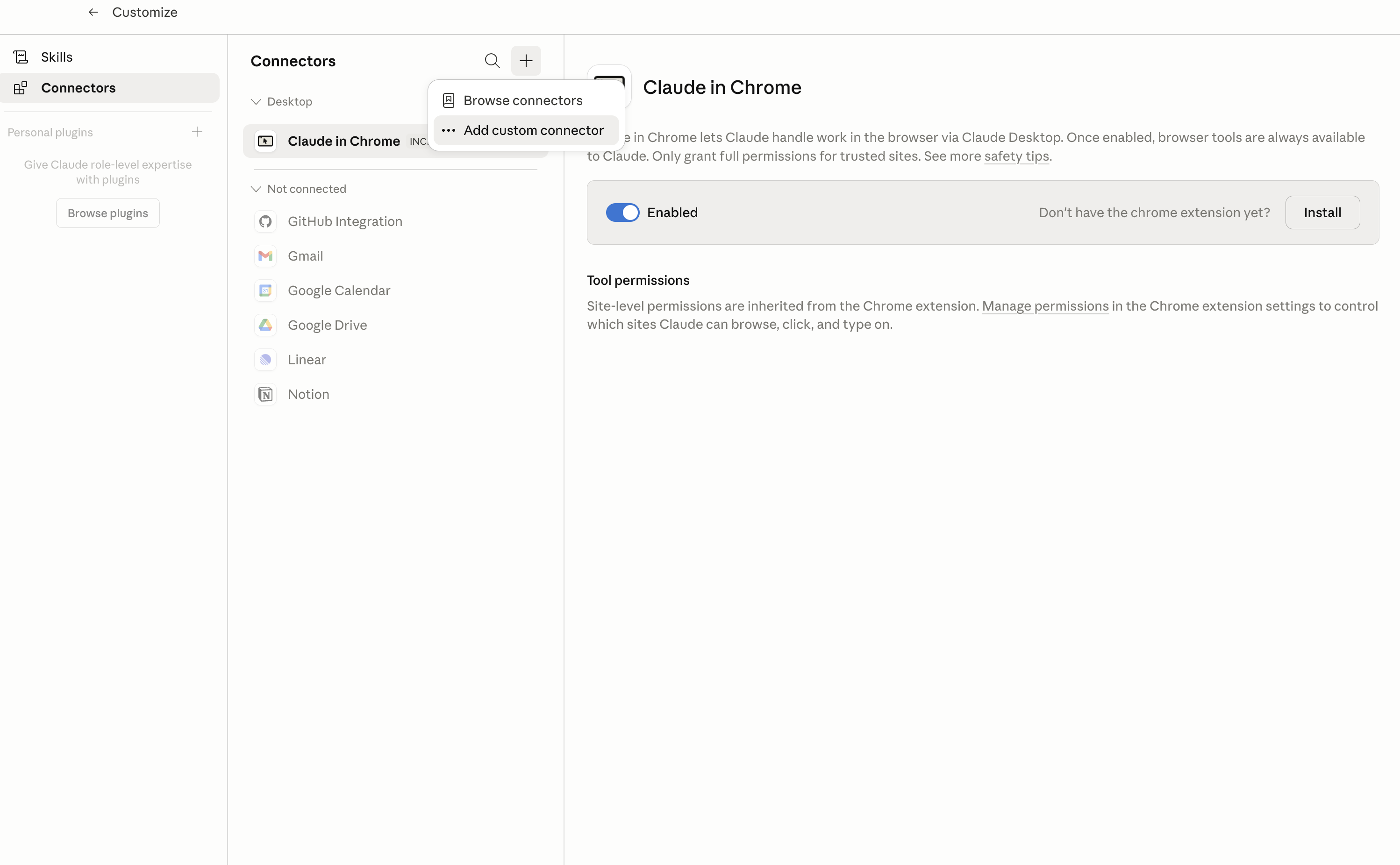
In Claude Desktop, click Customize in the left sidebar, then select Connectors and click the + icon at the top.

Claude Desktop connectors screen with Add custom connector selected

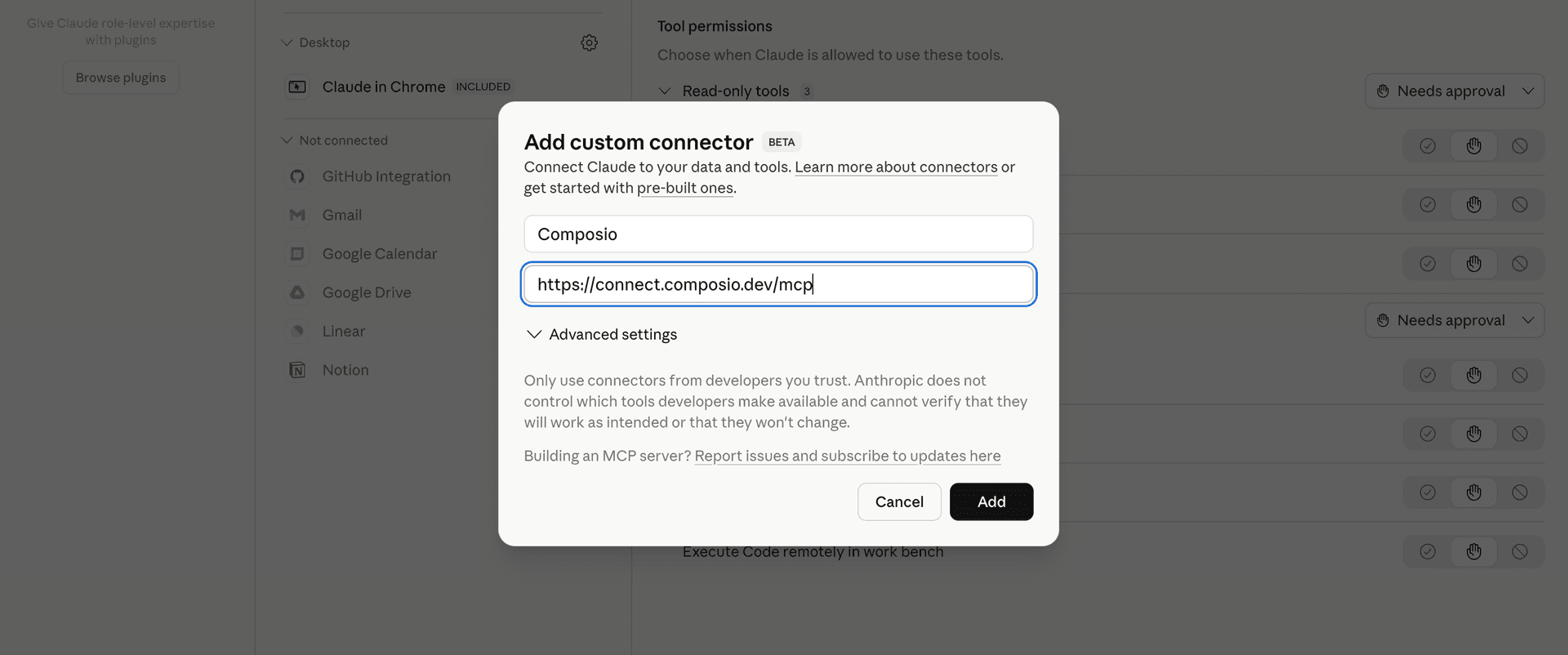
Click Add custom connector and paste in the Composio MCP server URL:

bash
https://connect.composio.dev/mcp
Add custom connector dialog with Composio MCP server URL

2. Authorize in your browser

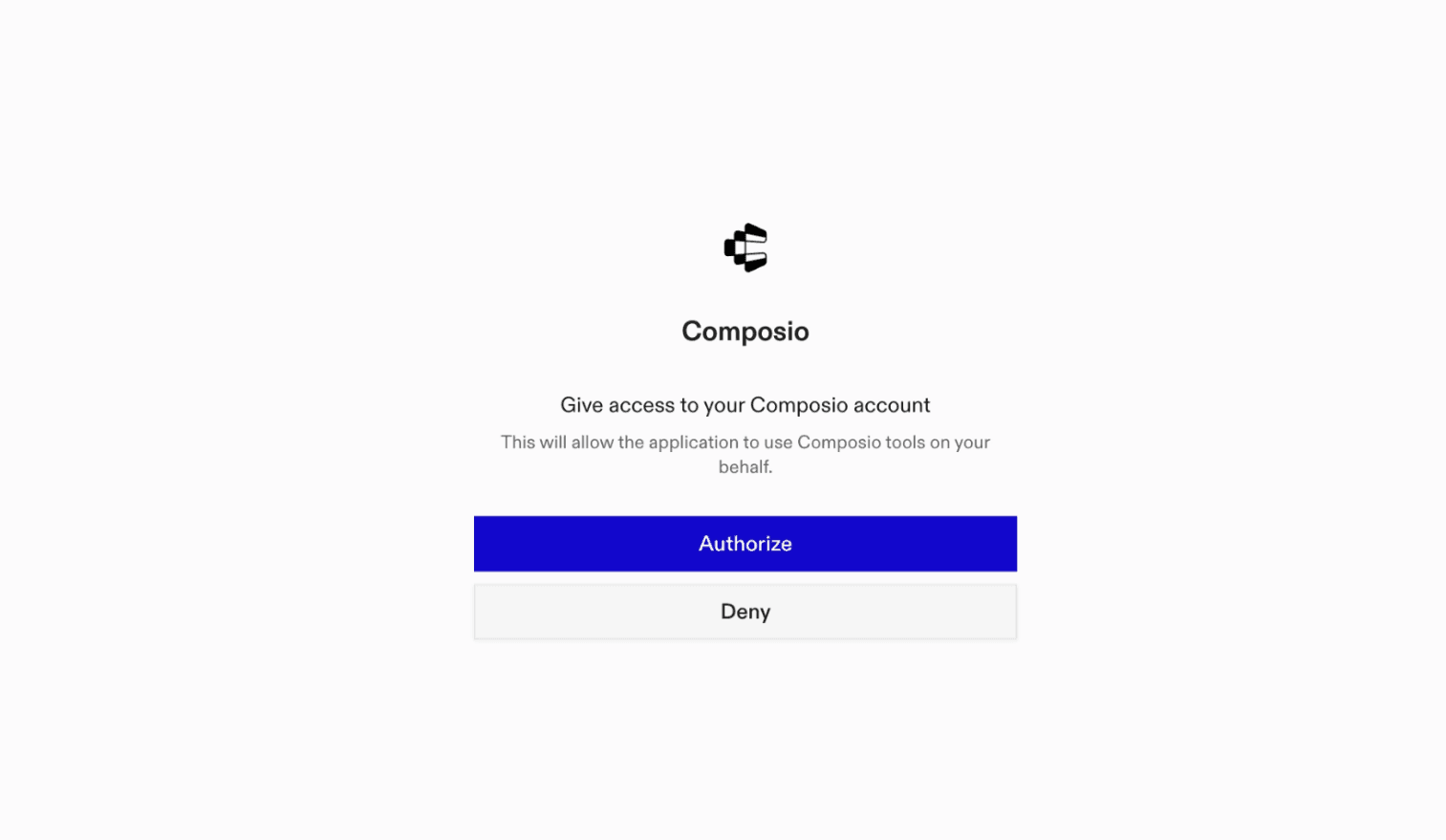
Click Connect. You'll be redirected to a browser window where you can authorize Composio to continue.

Composio authorization screen for Claude Web, Desktop, and Cowork

3. Connect your QuiverAI account

Back in Claude, ask it to connect to QuiverAI or give it any QuiverAI-related task.

For example, ask Claude to:

  • "Generate an editable SVG logo concept"
  • "Vectorize a raster image into SVG"
  • "Animate an SVG illustration for presentation"

It will prompt you to authenticate and authorize access.

That's it. Composio's tools are now available in Claude, and your QuiverAI account is ready to use.

What is the QuiverAI Claude Connector, and what's possible with it?

The QuiverAI MCP server is an implementation of the Model Context Protocol that connects your AI agent and assistants like Claude, Cursor, etc directly to your QuiverAI account. It provides structured and secure access to QuiverAI's SVG generation, vectorization, editing, animation, model, balance, and text response capabilities, so your agent can create editable graphics, convert images into SVGs, modify and animate artwork, and work with available AI models on your behalf.

  • Editable SVG generation: Have your agent create editable SVG markup from a text prompt, with optional image references.
  • Image vectorization: Let the agent convert a raster image from a URL or base64 data into editable SVG markup.
  • SVG editing and animation: Direct your agent to update SVG artwork from inline markup, a URL, or base64 data, then create an animated SVG with an optional prompt.
  • Model discovery and usage: Instruct your agent to list available QuiverAI models, review a model's supported operations and limits, or create a text and structured model response.
  • Credit balance tracking: Have your agent check the organization's current spendable QuiverAI credit balance across projects.

Troubleshooting

1. Why does Claude not use the Composio connector for QuiverAI?

The connector can show as connected, but Claude must use it in each QuiverAI conversation.

  • Click + at the lower left of the chat, or type /.
  • Hover Connectors.
  • Turn on Composio.
  • Ask Claude to connect to QuiverAI again.

2. Why does Claude show an MCP server error before QuiverAI connects?

Claude can show Couldn't reach the MCP server or Authorization with the MCP server failed when you add the connector for QuiverAI.

  • Check that the connector URL is https://connect.composio.dev/mcp.
  • Connectors run from Anthropic's cloud, so your device network is usually not the problem.
  • Add the connector again from Customize > Connectors, then ask Claude to connect QuiverAI.
  • If it fails again, send the error and the ofid_ reference id to support@composio.dev.

3. Why does the QuiverAI authorization link not work?

The Composio connector is one server. Your QuiverAI account connects separately when Claude asks for it.

  • If the browser does not open, or the link expires, ask Claude to retry the QuiverAI connection.
  • Composio creates a fresh QuiverAI authorization link.
  • Open that link in your browser and finish the QuiverAI sign-in.

4. Why do QuiverAI actions fail after they worked before?

The QuiverAI connection can expire or lose permission.

  • Ask Claude to inspect the QuiverAI connection.
  • If the connection is unhealthy, disconnect it when Claude prompts you.
  • Reconnect the QuiverAI account and retry the action.
  • If Claude shows a permission prompt, approve it before Claude changes data in QuiverAI.
  • If the action still fails with a permission error, check that the connected account has that permission in QuiverAI itself.

5. How do I switch to a different QuiverAI account?

Claude can manage the QuiverAI connection for you.

  • Ask Claude to disconnect or delete the current QuiverAI account.
  • Ask Claude to connect QuiverAI again.
  • Open the new Composio authorization link for QuiverAI.
  • Sign in with the other QuiverAI account in the browser.
  • After the account connects, ask Claude to retry the QuiverAI task.

6. Why is my QuiverAI connection missing in Claude Desktop or on a Team plan?

The connector belongs to your Claude account, so your QuiverAI connection works in Claude Web, Desktop, and Cowork.

  • In Claude Desktop, open Customize > Connectors.
  • Next to Composio, click ⋮ and click Clear cache.
  • If QuiverAI tools still do not appear, click ⋮, disconnect, remove the connector, and add it again.
  • On Team or Enterprise, an Owner or Primary Owner must enable the connector before you can connect QuiverAI.
TOOLS

Supported Tools

Every QuiverAI action and event your agent gets out of the box.

Animate SVG

Create an animated SVG from an SVG URL or base64 SVG, optionally guided by a prompt.

Create Model Response

Create one buffered, stateless Open Responses-compatible model result for general text, structured output, or caller-executed tool workflows.

Edit SVG

Create an edited SVG from inline markup, an SVG URL, or base64 SVG plus an edit instruction.

Generate SVG

Generate editable SVG markup from a text prompt and optional image references.

Get Model

Get one model's supported operations, sampling controls, modalities, limits, and billing metadata by model ID.

Get Organization Balance

Read the authenticated organization's current spendable credit balance across all projects.

List Models

List models visible to the project key, including supported operations, sampling controls, modalities, limits, and billing metadata.

Vectorize Image

Convert one raster image URL or base64 image into editable SVG markup.

FRAMEWORKS

How to build QuiverAI MCP Agent with another framework

FAQ

Frequently asked questions

Start with QuiverAI.It takes 30 seconds.

Managed auth, hosted MCP servers, and every QuiverAI tool your agent needs.Free to start.

Start building