How to connect QuiverAI with ChatGPT

Connect ChatGPT to QuiverAI MCP. Generate an editable svg logo concept, vectorize a raster image into svg, and more using natural language, with authentication handled for you.

QuiverAI logoQuiverAI
Api Key

QuiverAI is an AI graphics platform for generating, vectorizing, editing, and animating SVGs. It helps you create editable graphics faster while keeping designs flexible and reusable.

8 Tools

How to connect QuiverAI MCP with ChatGPT

ChatGPT can take action across your apps and files, stay with a project for hours, and turn a goal into finished materials like sheets, slides, and docs, not just answers.

In this guide, I will explain the easiest and most secure way to connect your QuiverAI account to ChatGPT via Composio Connect, so it can generate editable SVGs, vectorize images, edit graphics, animate designs, and refine illustrations through natural language commands without ever putting your account credentials at risk.

For exact tool slugs and parameter tables, see the tool catalog in the Composio docs.

Also integrate QuiverAI with

Why use Composio over default connectors?

  • Apps with read and write access. Default connectors mostly can read your data. Composio's QuiverAI integration lets ChatGPT take actions like creating drafts, sending updates, labeling records, and more.
  • 2,000+ SaaS toolkits out of the box. Composio gives you instant access to a vast catalog of pre-built connectors, from Gmail and Slack to Notion, Linear, and Salesforce.
  • One MCP server for every app. Connect any of your applications on demand through a single endpoint, rather than juggling a separate server for each app.
  • Smart, context-aware tool loading. Unlike traditional MCP servers that dump every available tool into the LLM context window, Composio searches for and loads only the tools relevant to the task at hand.
  • Cross-app automation. Chain actions across multiple apps in a single run - fetch a thread, summarize it in Notion, and post highlights to Slack without leaving the conversation.

Prerequisites

Note: Composio connects through OAuth. You will be asked to sign in and approve specific permissions. Review the permission screen carefully if you are using a work account.

Step-by-step: Connect QuiverAI to ChatGPT

1. Install the Composio plugin

Click the button. ChatGPT opens the Composio plugin page. Click Install plugin.

Install in ChatGPT
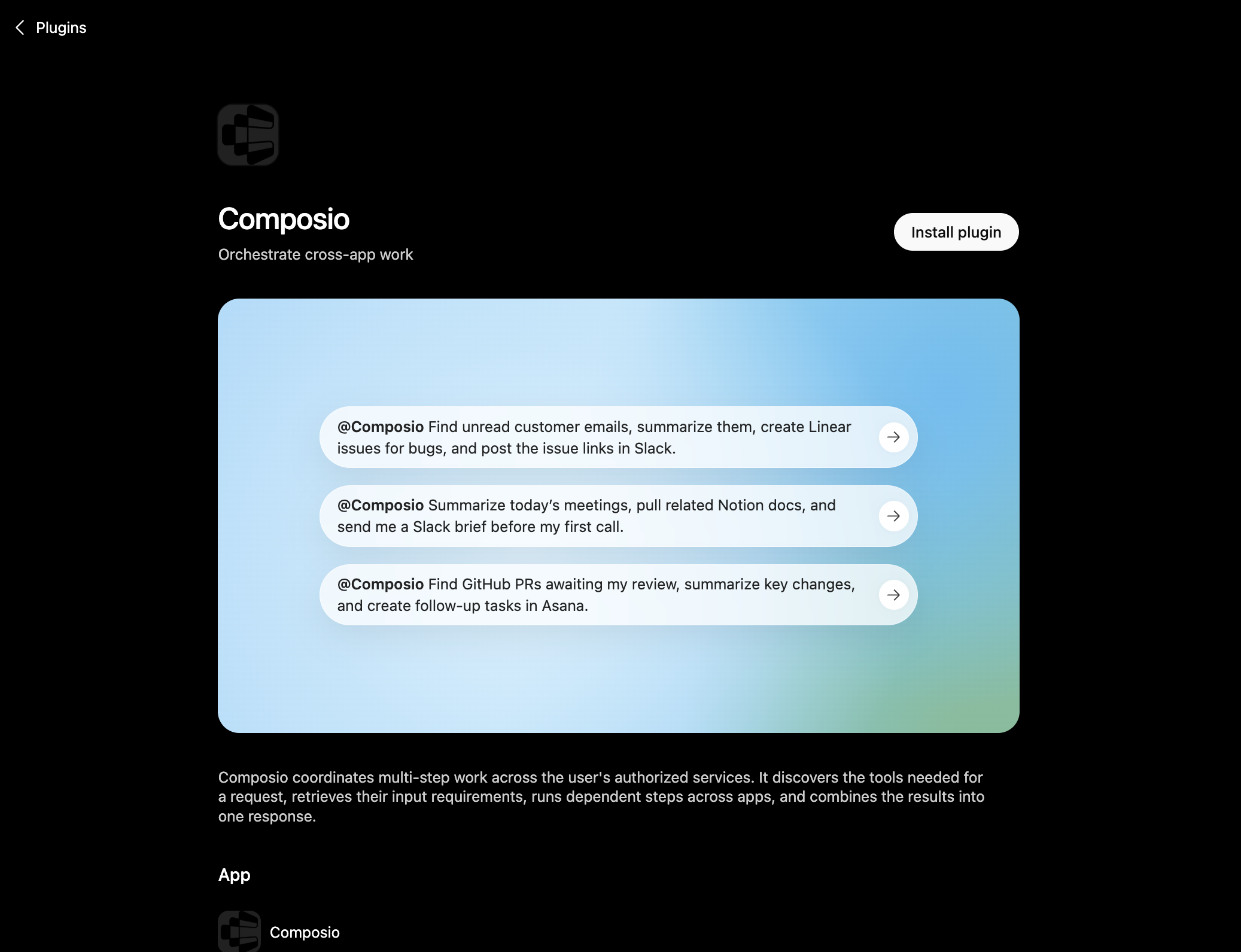
Composio plugin page in ChatGPT with the Install plugin button

You can also find it inside ChatGPT: go to Settings, open Plugins, search the marketplace for Composio, and click Install plugin.

2. Authenticate

After you install, ChatGPT asks you to authenticate with Composio. Log in and click Allow access to authorize ChatGPT to use your Composio account.
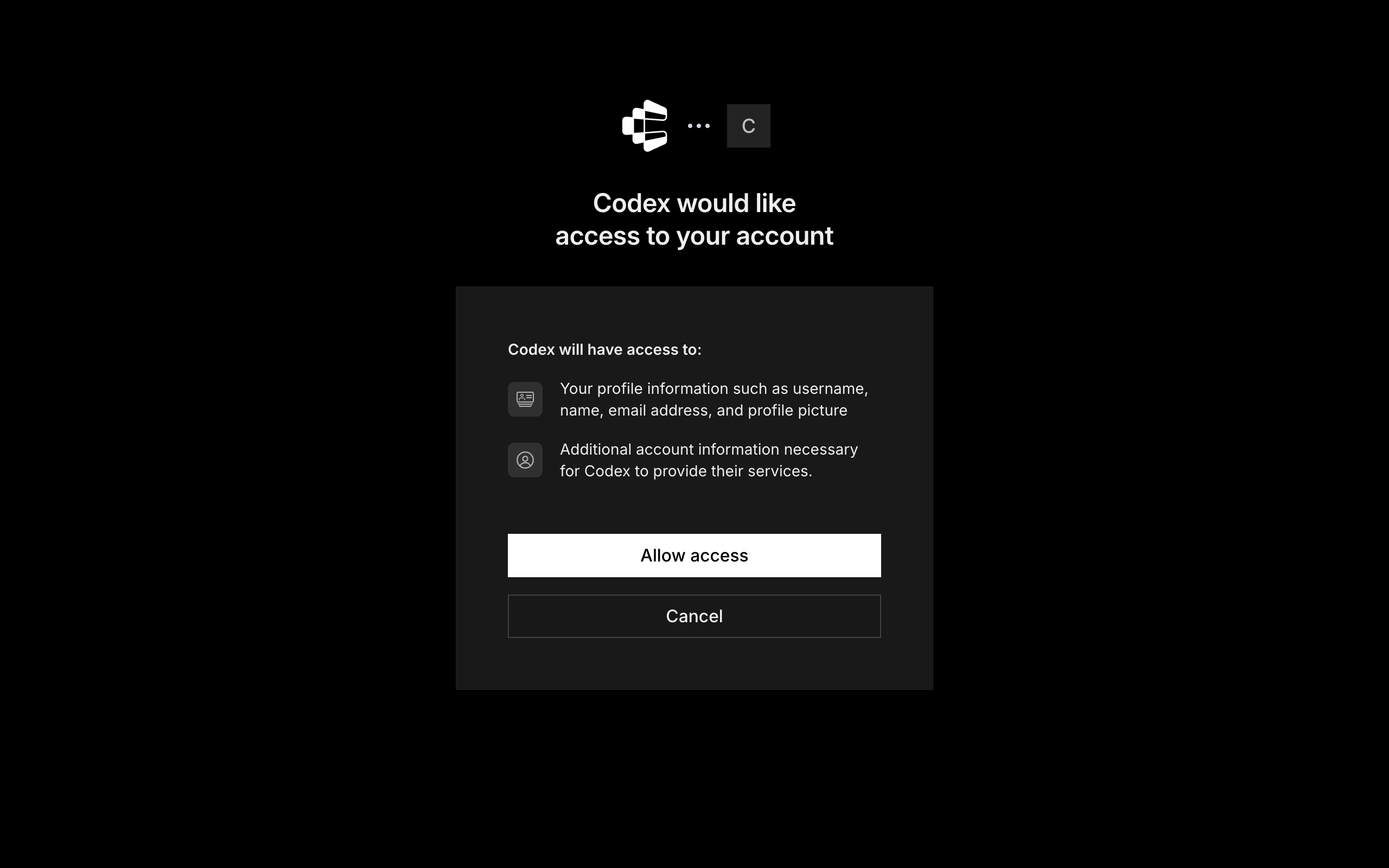
Composio login and Allow access screen for ChatGPT

3. Start using Composio

That is it. Composio tools are now available in ChatGPT. Type @Composio followed by your request, for example @Composio find unread QuiverAI messages and summarize them, and it will run the actions you authorize. On first use it asks you to authorize QuiverAI.

Option 2: Add Composio as an MCP server

If you cannot use the plugin marketplace, add Composio as a custom MCP server instead.

1. Open the MCP settings

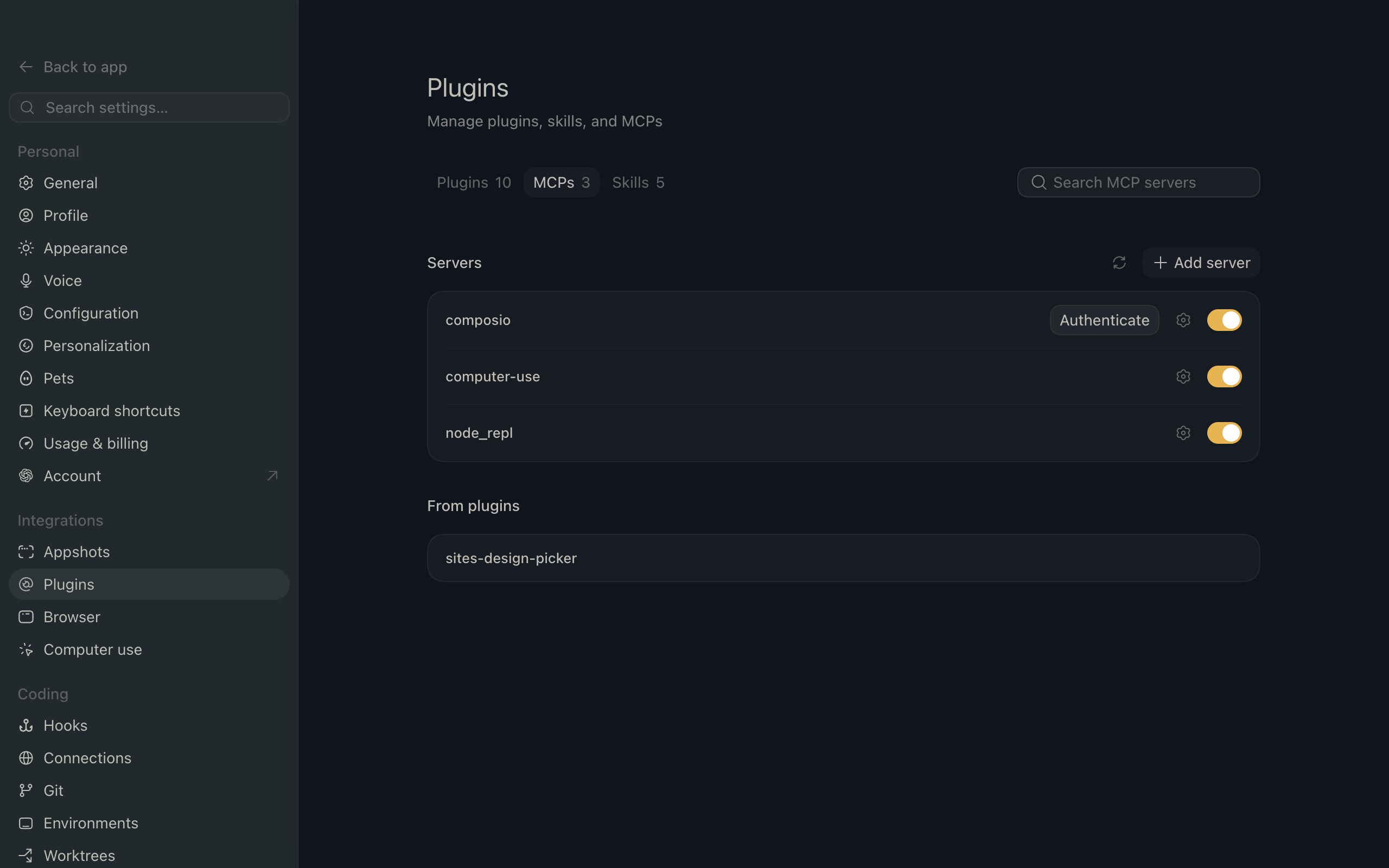
In ChatGPT, go to Settings and open the Plugins section. Inside the Plugins page, click the MCP tab.
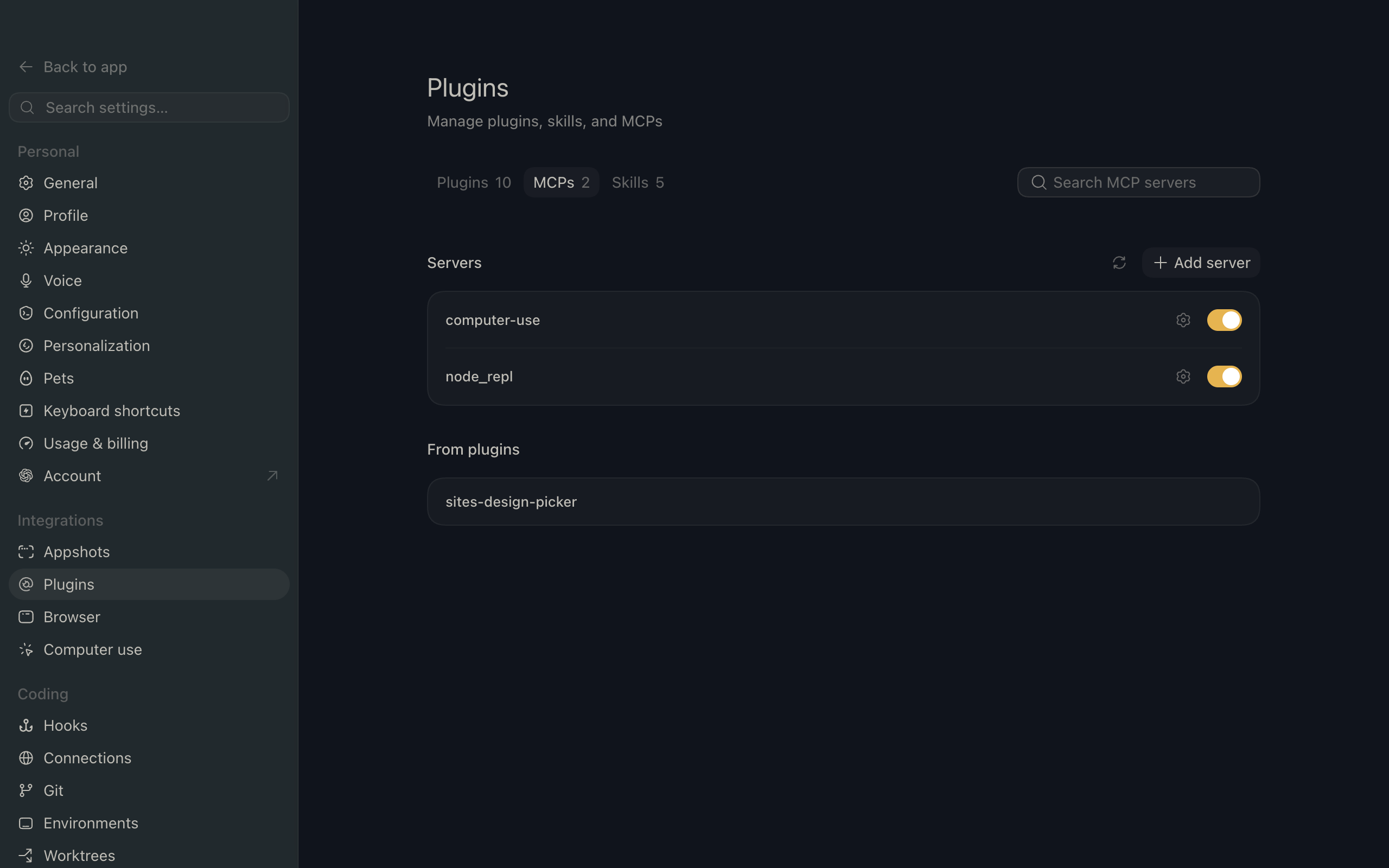
ChatGPT settings showing the Plugins page with the MCP tab selected

2. Add the server

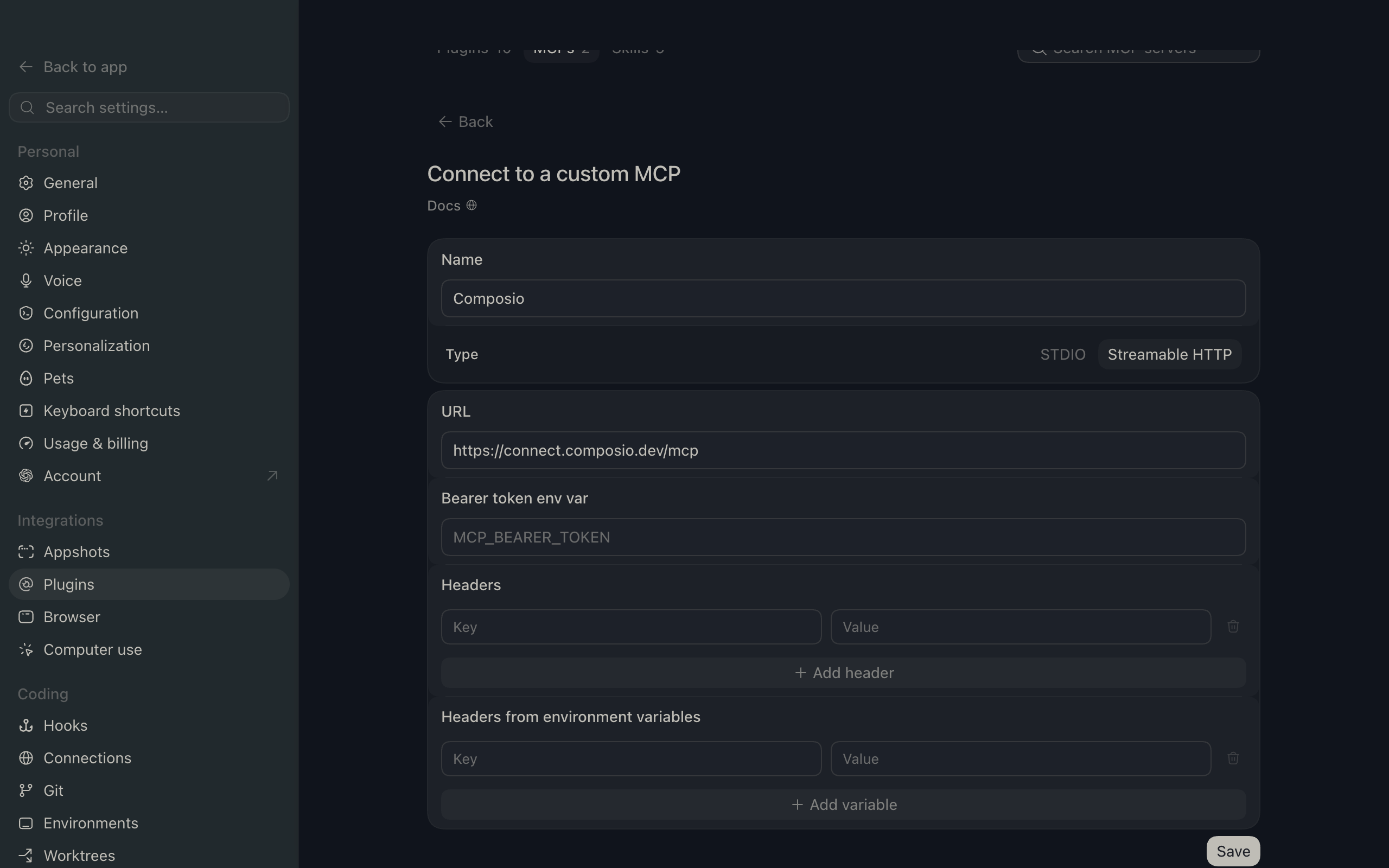
Click Add server. In the Name field enter Composio, for Type select Streamable HTTP, and in the URL field paste the Composio MCP server URL:

bash
https://connect.composio.dev/mcp
ChatGPT Add server dialog with the name Composio, type Streamable HTTP, and the Composio MCP URL

Then click Save. The Composio server now appears in your MCP plugins list.

ChatGPT Plugins page showing the Composio MCP server added to the list

3. Authenticate

Click Authenticate on the Composio entry, log in via Composio, and click Allow access. Composio tools are then available in ChatGPT the same way as with the plugin.

What you can do after connecting QuiverAI

  • Generate an editable SVG logo concept
  • Vectorize a raster image into SVG
  • Animate an SVG illustration for presentation

Security + privacy notes (important)

  • Use least-privilege access: Only grant permissions you actually need.
  • Review OAuth permissions before approving: Make sure requested scopes match what you expect Composio and ChatGPT to do.
  • Keep write actions human-reviewed: For actions like sending messages, creating labels, or editing drafts, keep manual confirmation enabled.
  • Be careful with sensitive data: Avoid using this setup with highly sensitive information unless allowed by your personal, company, or client policies.
TOOLS

Supported Tools

Every QuiverAI action and event your agent gets out of the box.

Animate SVG

Create an animated SVG from an SVG URL or base64 SVG, optionally guided by a prompt.

Create Model Response

Create one buffered, stateless Open Responses-compatible model result for general text, structured output, or caller-executed tool workflows.

Edit SVG

Create an edited SVG from inline markup, an SVG URL, or base64 SVG plus an edit instruction.

Generate SVG

Generate editable SVG markup from a text prompt and optional image references.

Get Model

Get one model's supported operations, sampling controls, modalities, limits, and billing metadata by model ID.

Get Organization Balance

Read the authenticated organization's current spendable credit balance across all projects.

List Models

List models visible to the project key, including supported operations, sampling controls, modalities, limits, and billing metadata.

Vectorize Image

Convert one raster image URL or base64 image into editable SVG markup.

FRAMEWORKS

How to build QuiverAI MCP Agent with another framework

FAQ

Frequently asked questions

Start with QuiverAI.It takes 30 seconds.

Managed auth, hosted MCP servers, and every QuiverAI tool your agent needs.Free to start.

Start building