How to connect openFDA with ChatGPT

Connect ChatGPT to openFDA MCP. Search fda adverse event reports by drug, find drug labels with active ingredients, and more using natural language, with authentication handled for you.

openFDA logoopenFDA
Api Key

openFDA is the U.S. FDA's public API for drug and medical device data. It makes regulatory, safety, labeling, and recall information easy to access.

16 Tools

How to connect openFDA MCP with ChatGPT

ChatGPT can take action across your apps and files, stay with a project for hours, and turn a goal into finished materials like sheets, slides, and docs, not just answers.

In this guide, I will explain the easiest and most secure way to connect your openFDA account to ChatGPT via Composio Connect, so it can search FDA datasets, look up drug labels, review adverse events, track recalls, and check shortages through natural language commands without ever putting your account credentials at risk.

For exact tool slugs and parameter tables, see the tool catalog in the Composio docs.

Also integrate openFDA with

Why use Composio over default connectors?

  • Apps with read and write access. Default connectors mostly can read your data. Composio's openFDA integration lets ChatGPT take actions like creating drafts, sending updates, labeling records, and more.
  • 1,700+ SaaS toolkits out of the box. Composio gives you instant access to a vast catalog of pre-built connectors, from Gmail and Slack to Notion, Linear, and Salesforce.
  • One MCP server for every app. Connect any of your applications on demand through a single endpoint, rather than juggling a separate server for each app.
  • Smart, context-aware tool loading. Unlike traditional MCP servers that dump every available tool into the LLM context window, Composio searches for and loads only the tools relevant to the task at hand.
  • Cross-app automation. Chain actions across multiple apps in a single run - fetch a thread, summarize it in Notion, and post highlights to Slack without leaving the conversation.

Prerequisites

Note: Composio connects through OAuth. You will be asked to sign in and approve specific permissions. Review the permission screen carefully if you are using a work account.

Step-by-step: Connect openFDA to ChatGPT

1. Install the Composio plugin

Click the button. ChatGPT opens the Composio plugin page. Click Install plugin.

Install in ChatGPT
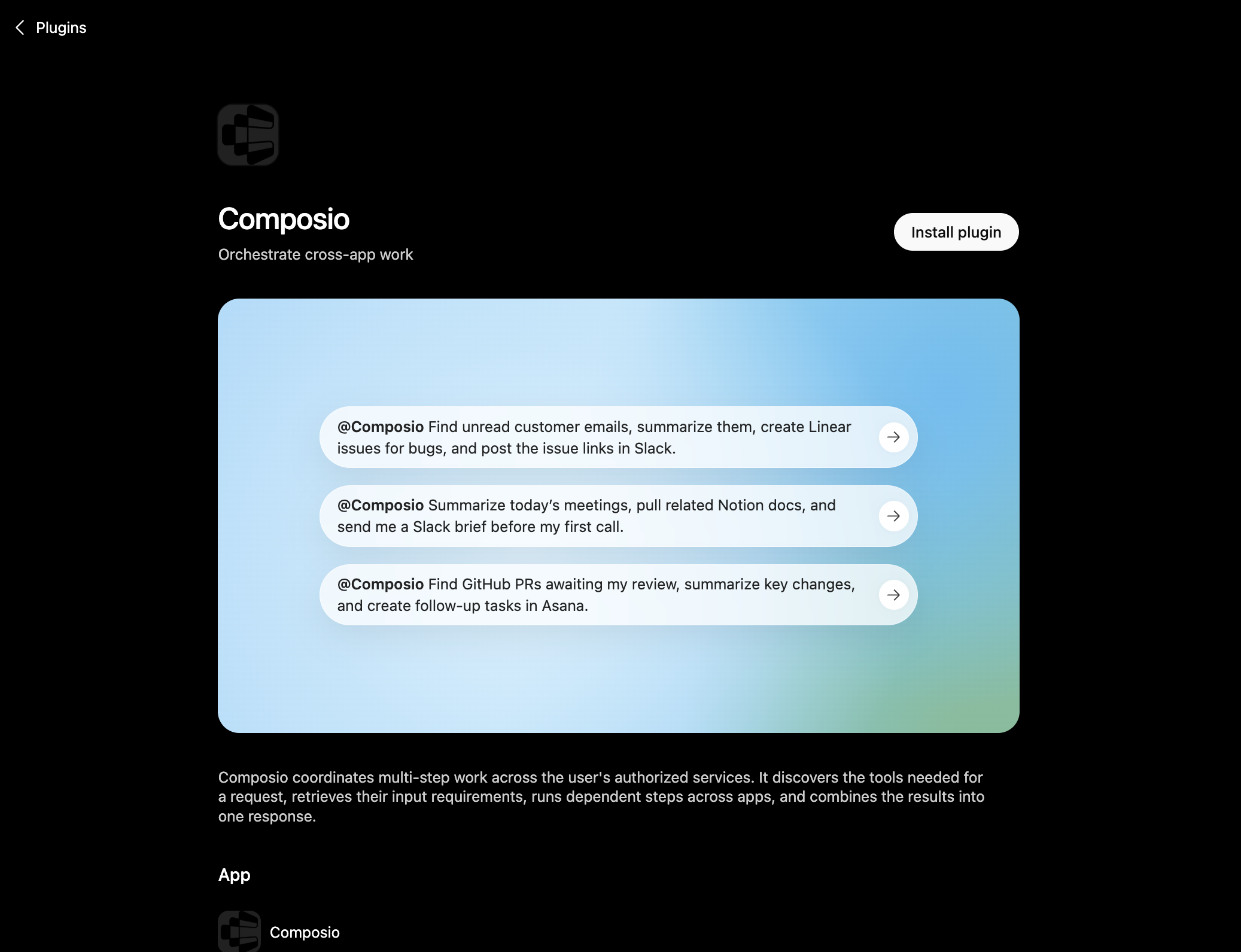
Composio plugin page in ChatGPT with the Install plugin button

You can also find it inside ChatGPT: go to Settings, open Plugins, search the marketplace for Composio, and click Install plugin.

2. Authenticate

After you install, ChatGPT asks you to authenticate with Composio. Log in and click Allow access to authorize ChatGPT to use your Composio account.
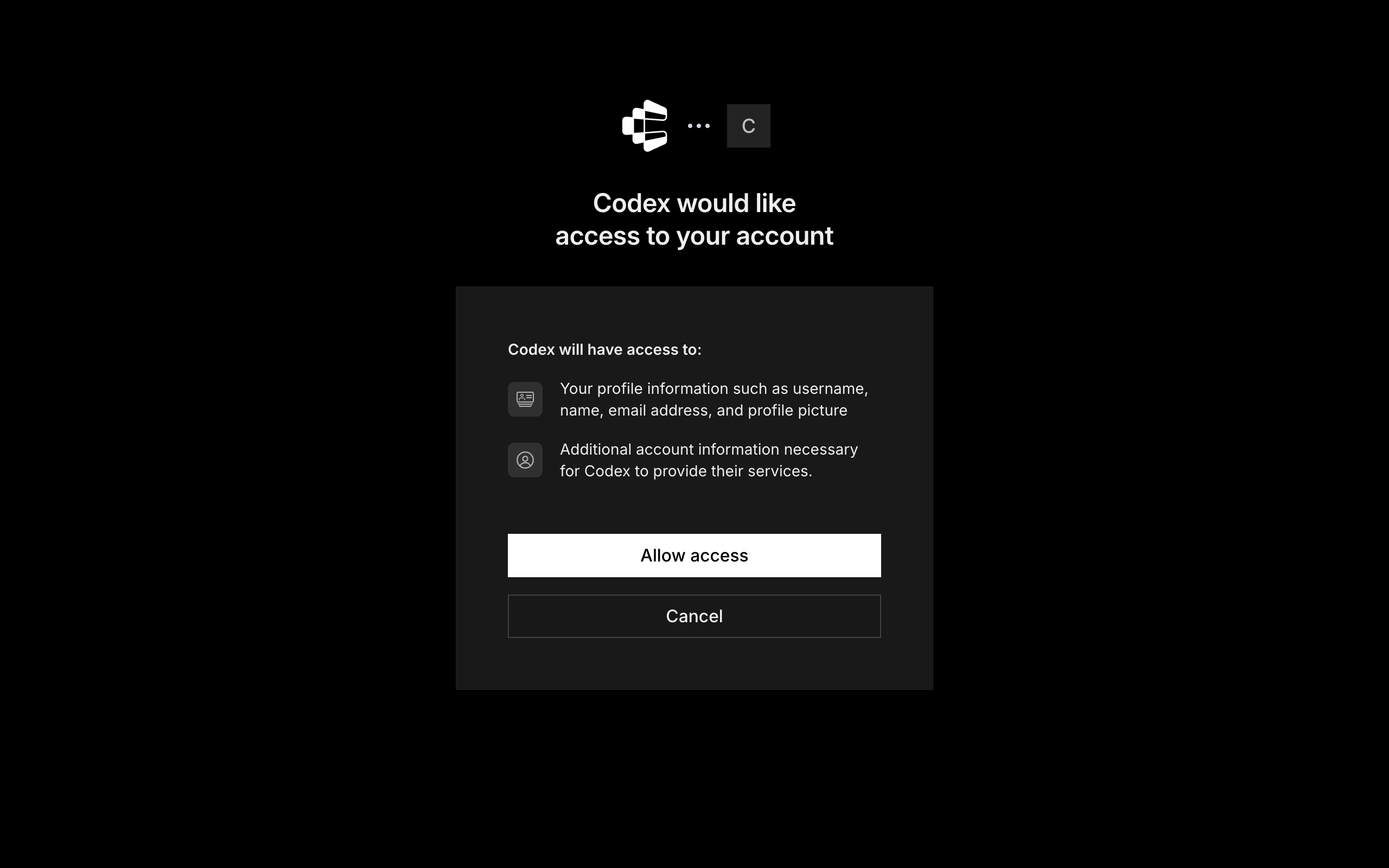
Composio login and Allow access screen for ChatGPT

3. Start using Composio

That is it. Composio tools are now available in ChatGPT. Type @Composio followed by your request, for example @Composio find unread openFDA messages and summarize them, and it will run the actions you authorize. On first use it asks you to authorize openFDA.

Option 2: Add Composio as an MCP server

If you cannot use the plugin marketplace, add Composio as a custom MCP server instead.

1. Open the MCP settings

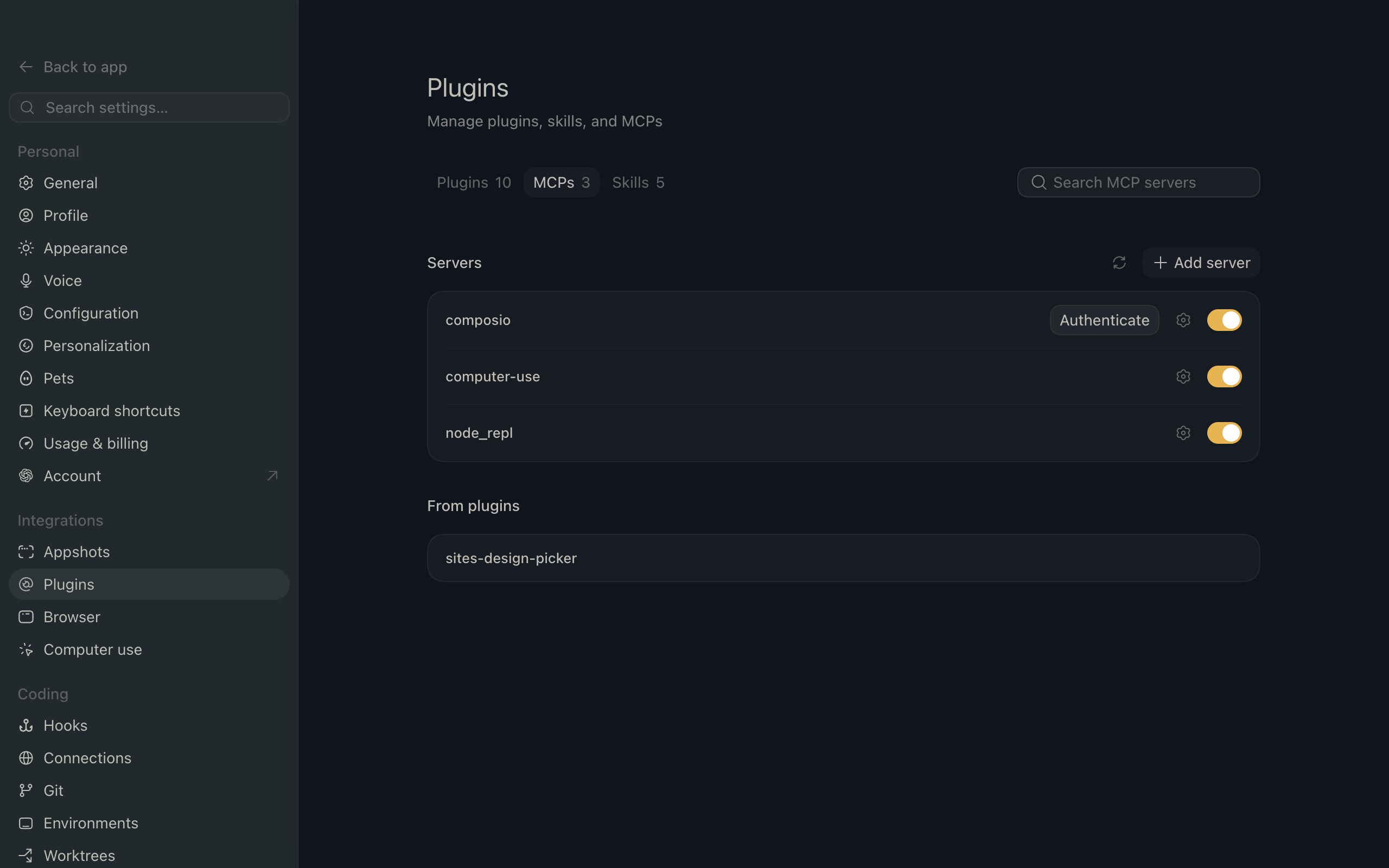
In ChatGPT, go to Settings and open the Plugins section. Inside the Plugins page, click the MCP tab.
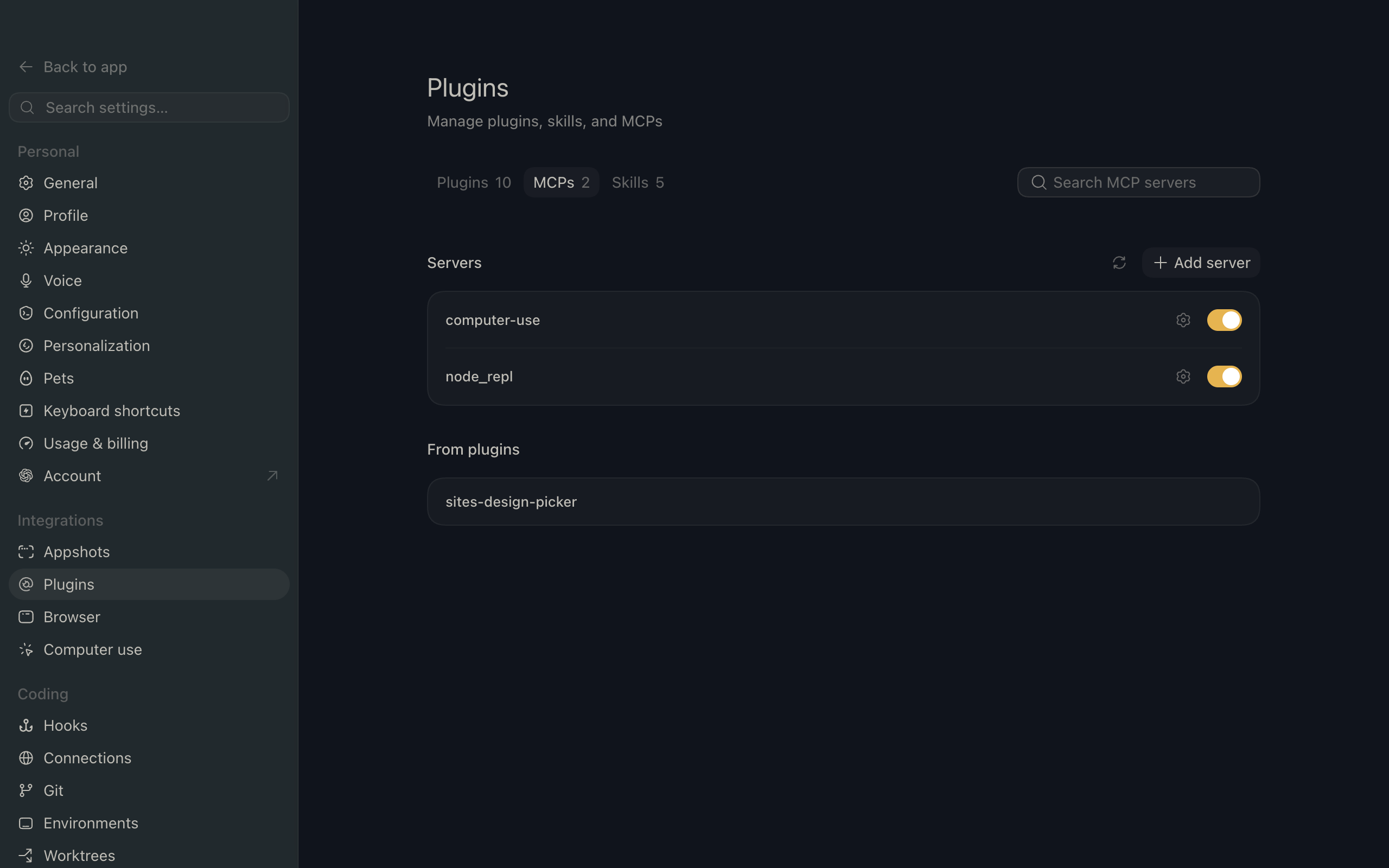
ChatGPT settings showing the Plugins page with the MCP tab selected

2. Add the server

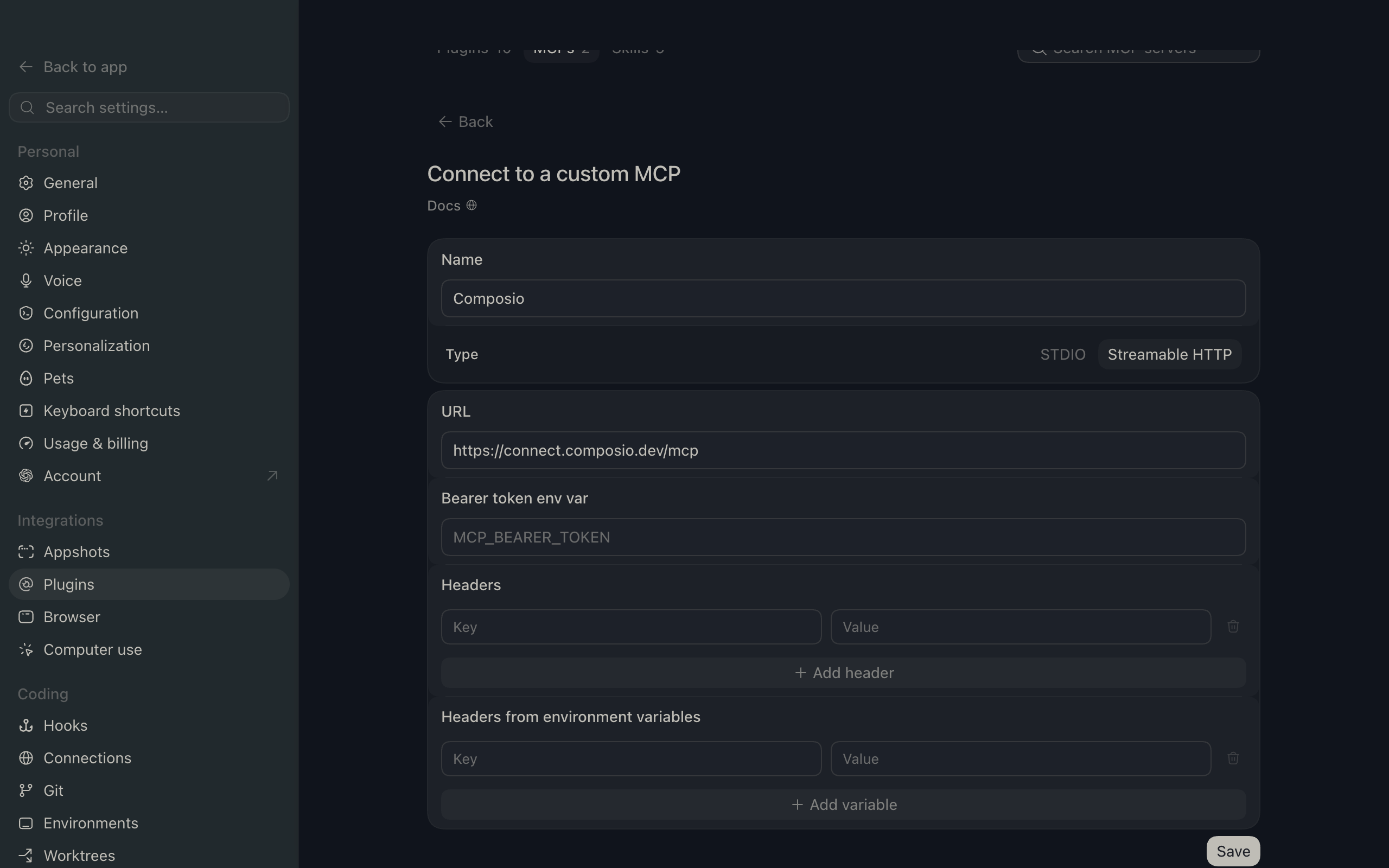
Click Add server. In the Name field enter Composio, for Type select Streamable HTTP, and in the URL field paste the Composio MCP server URL:

bash
https://connect.composio.dev/mcp
ChatGPT Add server dialog with the name Composio, type Streamable HTTP, and the Composio MCP URL

Then click Save. The Composio server now appears in your MCP plugins list.

ChatGPT Plugins page showing the Composio MCP server added to the list

3. Authenticate

Click Authenticate on the Composio entry, log in via Composio, and click Allow access. Composio tools are then available in ChatGPT the same way as with the plugin.

What you can do after connecting openFDA

  • Search FDA adverse event reports by drug
  • Find drug labels with active ingredients
  • Check medical device recalls by manufacturer

Security + privacy notes (important)

  • Use least-privilege access: Only grant permissions you actually need.
  • Review OAuth permissions before approving: Make sure requested scopes match what you expect Composio and ChatGPT to do.
  • Keep write actions human-reviewed: For actions like sending messages, creating labels, or editing drafts, keep manual confirmation enabled.
  • Be careful with sensitive data: Avoid using this setup with highly sensitive information unless allowed by your personal, company, or client policies.
TOOLS

Supported Tools

Every openFDA action and event your agent gets out of the box.

Query Device 510(k) Clearances

Search FDA 510(k) premarket notification clearances for medical devices, including applicants, product codes, decision data, and clearance type, or count clearances by a field.

Query Device Adverse Events

Search FDA MAUDE medical device adverse event reports, including device, patient, event, manufacturer, and narrative data, or count reports by a field.

Query Device Classifications

Search FDA medical device product classifications, including product codes, device class, specialty, regulation, and exemptions, or count classifications by a field.

Query Device COVID-19 Serology Evaluations

Search independent US government evaluations of COVID-19 serological test devices and assay results, or count evaluations by a field.

Query Device PMA Approvals

Search FDA premarket approval applications and supplements for medical devices, including applicants, trade names, product codes, and decision data, or count approvals by a field.

Query Device Recall Enforcement Reports

Search FDA medical device recall enforcement reports, including classification, status, recalling firm, reason, distribution, and enforcement dates, or count reports by a field.

Query Device Recall Records

Search FDA medical device recall records with product, root-cause, corrective-action, contact, and recall-event details, or count recall records by a field; use the enforcement-report action for Recall Enterprise System enforcement classifications and status.

Query Device Registrations and Listings

Search FDA medical device establishment registrations and device listings, including establishment types, products, proprietary names, and premarket numbers, or count records by a field.

Query Device UDI Records

Search FDA Global Unique Device Identification Database records by device identifier, brand, model, company, product code, or other fields, or count UDI records by a field.

Query Drug Adverse Events

Search FDA FAERS drug adverse event and medication error reports, or count reports by a field.

Query Drug Labels

Search prescription and over-the-counter Structured Product Labeling records, including warnings, indications, ingredients, and dosage text, or count labels by a field.

Query Drug NDC Directory

Search National Drug Code Directory product and package records by NDC, name, labeler, ingredient, route, or other fields, or count products by a field.

Query Drug Recall Enforcement Reports

Search FDA drug recall enforcement reports, including classification, status, recalling firm, reason, distribution, and enforcement dates, or count reports by a field.

Query Drugs@FDA Applications

Search Drugs@FDA applications, sponsors, products, and submissions, or count applications by a field.

Query Drug Shortages

Search current and historical FDA drug shortage records, including status, availability, presentation, company, and update dates, or count shortages by a field.

Query Orange Book Drug Products

Search Orange Book approved drug products and therapeutic-equivalence data, or count products by a field.

FAQ

Frequently asked questions

Start with openFDA.It takes 30 seconds.

Managed auth, hosted MCP servers, and every openFDA tool your agent needs.Free to start.

Start building