How to connect Miru to Claude

Connect Claude Web, Desktop and Cowork to Miru MCP. List all devices in your miru fleet, show failed miru deployments from this week, and more using natural language, with authentication handled for you.

Miru logoMiru
Api Key

Miru is a device configuration and deployment platform for connected hardware fleets. It helps teams manage device settings, deployments, and fleet operations from one place.

52 Tools

Introduction

Claude is Anthropic's AI assistant, available on the web, in the desktop app, and on mobile. Cowork is its agent for knowledge work, and it runs on all of those surfaces too. Connected to your apps, Claude can work with your files and services to accomplish complex tasks on your behalf.

This guide walks you through the easiest and most secure way to connect your Miru account to Claude via Composio Connect, enabling it to list all devices in your Miru fleet, show failed Miru deployments from this week, check configuration status for connected devices, and more such actions on your behalf without compromising your account security.

Setup is the same on Claude Web, Desktop, and Cowork, and you only need to do it once. The connector is tied to your account, so it's available in all three.

For exact tool slugs and parameter tables, see the tool catalog in the Composio docs.

Also integrate Miru with

Connecting Miru to Claude Web, Desktop, and Cowork

Two ways to add the Composio connector. Pick whichever you prefer.

1. Add with one click

Click the button. Claude opens with the Composio connector filled in. Click Add, then go to step 2.

Add to Claude

Add manually

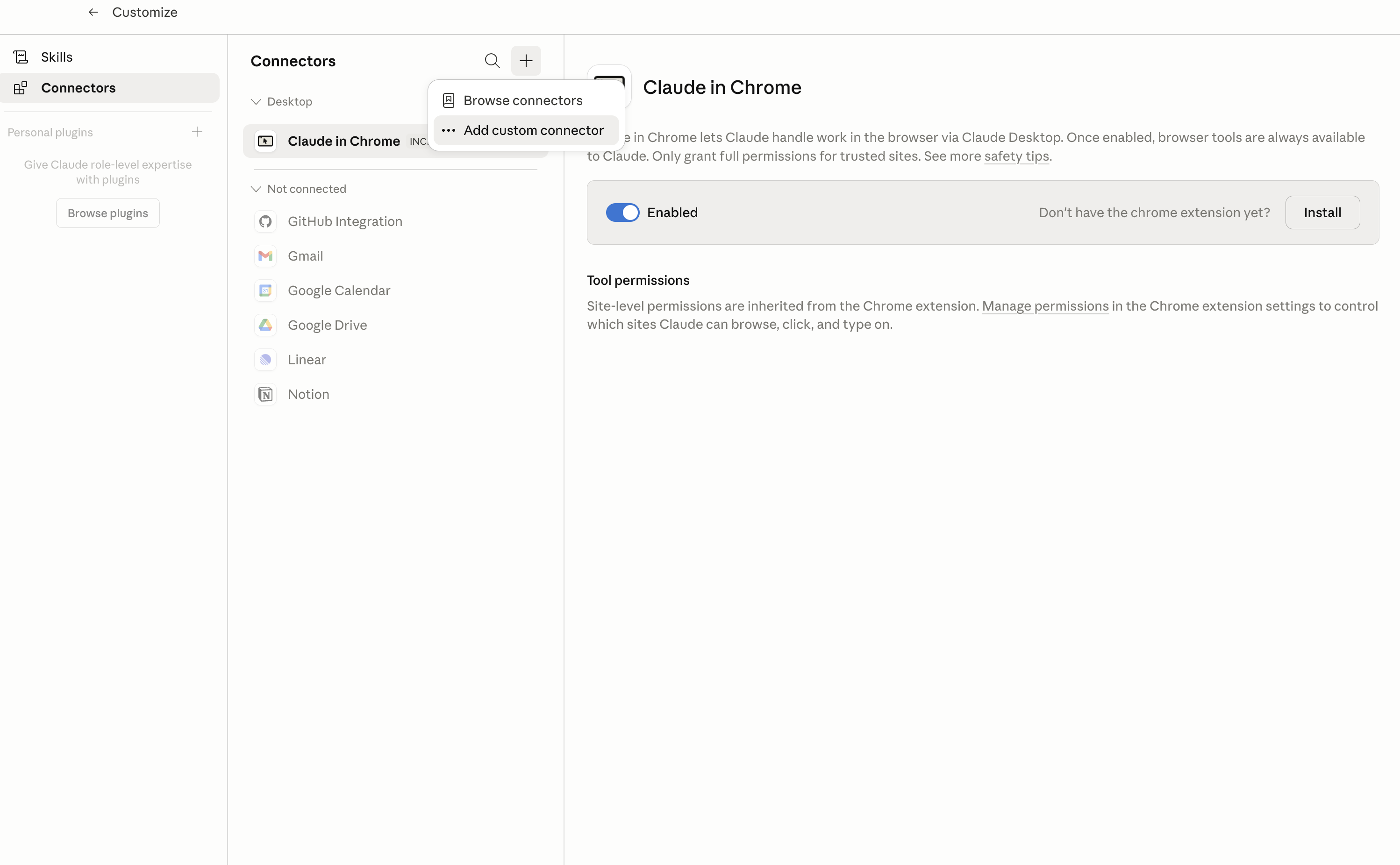
In Claude Desktop, click Customize in the left sidebar, then select Connectors and click the + icon at the top.

Claude Desktop connectors screen with Add custom connector selected

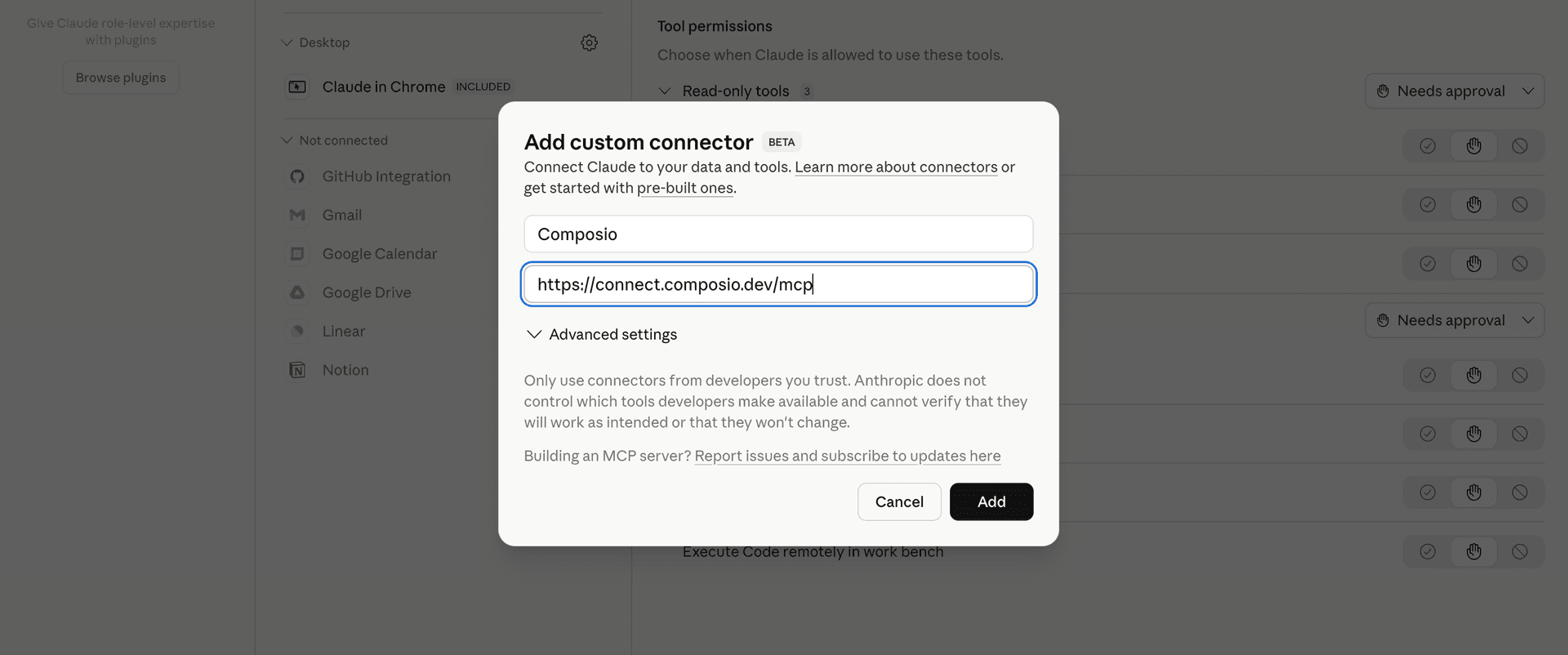
Click Add custom connector and paste in the Composio MCP server URL:

bash
https://connect.composio.dev/mcp
Add custom connector dialog with Composio MCP server URL

2. Authorize in your browser

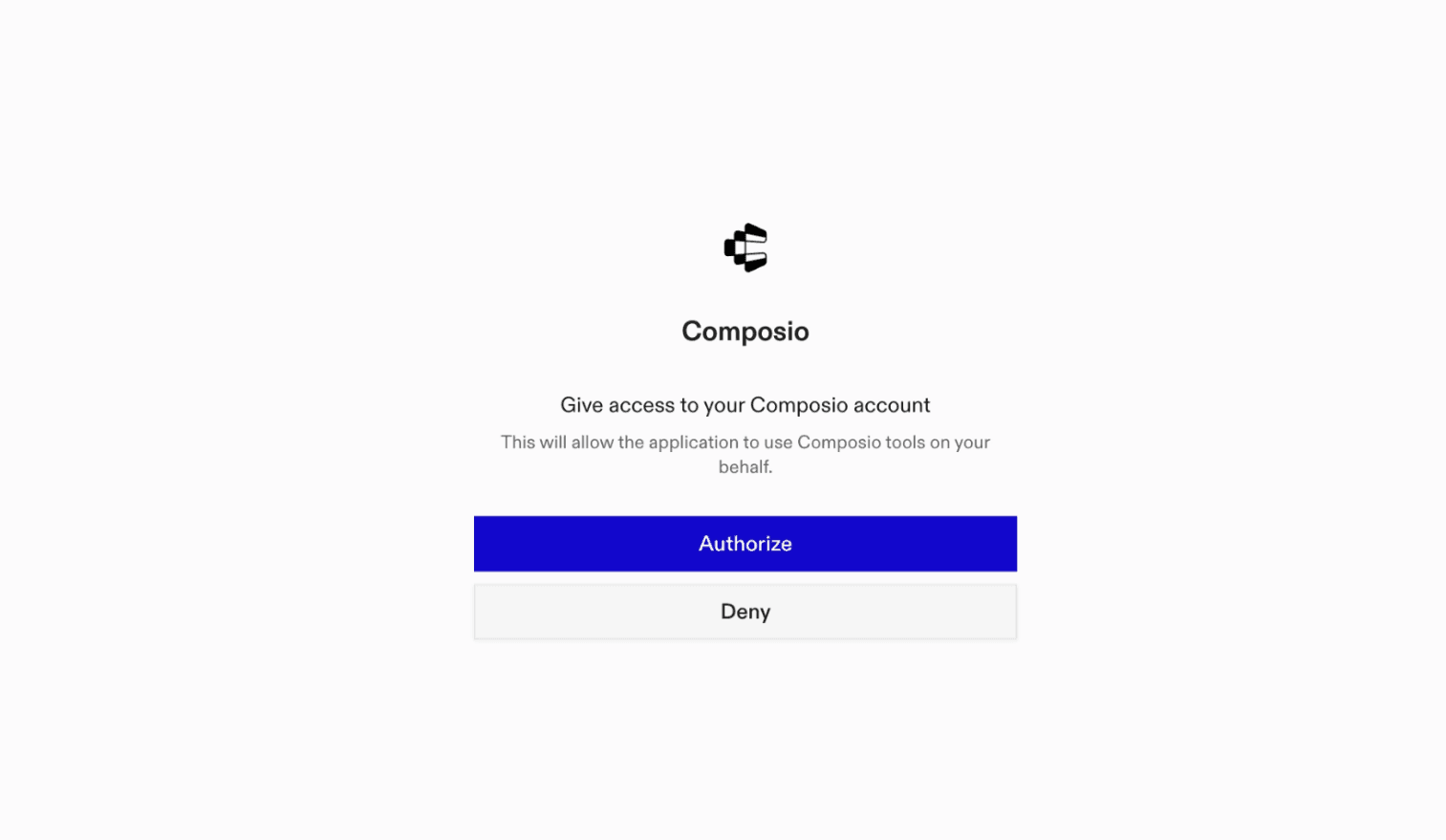
Click Connect. You'll be redirected to a browser window where you can authorize Composio to continue.

Composio authorization screen for Claude Web, Desktop, and Cowork

3. Connect your Miru account

Back in Claude, ask it to connect to Miru or give it any Miru-related task.

For example, ask Claude to:

  • "List all devices in your Miru fleet"
  • "Show failed Miru deployments from this week"
  • "Check configuration status for connected devices"

It will prompt you to authenticate and authorize access.

That's it. Composio's tools are now available in Claude, and your Miru account is ready to use.

What is the Miru Claude Connector, and what's possible with it?

The Miru MCP server is an implementation of the Model Context Protocol that connects your AI agent and assistants like Claude, Cursor, etc directly to your Miru account. It provides structured and secure access to your connected hardware fleet, configuration records, releases, and deployment status, so your agent can manage devices, prepare configurations, deploy releases, and monitor fleet changes on your behalf.

  • Device and group management: Have your agent create, inspect, organize, archive, or delete Miru devices and place them in top-level or nested groups.
  • Configuration planning: Let the agent create configuration types, schemas, and configuration instances, then retrieve stored configuration details for specific fleet needs.
  • Release and deployment operations: Direct your agent to create releases, stage deployments for target devices, deploy staged changes, archive deployments or releases, and review deployment status.
  • Fleet monitoring: Instruct your agent to list devices and deployments, identify deployment errors or activity, and review deployments that drifted after staging.
  • Hardware records and source tracking: Have your agent review device calibrations, upload records, registered Git commits, file rules, API key metadata, and the current Miru principal.

Troubleshooting

1. Why does Claude not use the Composio connector for Miru?

The connector can show as connected, but Claude must use it in each Miru conversation.

  • Click + at the lower left of the chat, or type /.
  • Hover Connectors.
  • Turn on Composio.
  • Ask Claude to connect to Miru again.

2. Why does Claude show an MCP server error before Miru connects?

Claude can show Couldn't reach the MCP server or Authorization with the MCP server failed when you add the connector for Miru.

  • Check that the connector URL is https://connect.composio.dev/mcp.
  • Connectors run from Anthropic's cloud, so your device network is usually not the problem.
  • Add the connector again from Customize > Connectors, then ask Claude to connect Miru.
  • If it fails again, send the error and the ofid_ reference id to support@composio.dev.

3. Why does the Miru authorization link not work?

The Composio connector is one server. Your Miru account connects separately when Claude asks for it.

  • If the browser does not open, or the link expires, ask Claude to retry the Miru connection.
  • Composio creates a fresh Miru authorization link.
  • Open that link in your browser and finish the Miru sign-in.

4. Why do Miru actions fail after they worked before?

The Miru connection can expire or lose permission.

  • Ask Claude to inspect the Miru connection.
  • If the connection is unhealthy, disconnect it when Claude prompts you.
  • Reconnect the Miru account and retry the action.
  • If Claude shows a permission prompt, approve it before Claude changes data in Miru.
  • If the action still fails with a permission error, check that the connected account has that permission in Miru itself.

5. How do I switch to a different Miru account?

Claude can manage the Miru connection for you.

  • Ask Claude to disconnect or delete the current Miru account.
  • Ask Claude to connect Miru again.
  • Open the new Composio authorization link for Miru.
  • Sign in with the other Miru account in the browser.
  • After the account connects, ask Claude to retry the Miru task.

6. Why is my Miru connection missing in Claude Desktop or on a Team plan?

The connector belongs to your Claude account, so your Miru connection works in Claude Web, Desktop, and Cowork.

  • In Claude Desktop, open Customize > Connectors.
  • Next to Composio, click ⋮ and click Clear cache.
  • If Miru tools still do not appear, click ⋮, disconnect, remove the connector, and add it again.
  • On Team or Enterprise, an Owner or Primary Owner must enable the connector before you can connect Miru.
TOOLS

Supported Tools

Every Miru action and event your agent gets out of the box.

Archive Deployment

Archive a staged or drifted deployment so it cannot be deployed.

Archive Device

Archive a device, revoke its agent session, and stop workspace participation.

Archive Release

Archive an existing release while retaining its record.

Create Config Instance

Create configuration content bound to a config schema slot.

Create Config Schema

Create a schema, its filesystem slots, schema documents, and an optional git-commit link for a config type.

Create Config Type

Create a named configuration type with an immutable code-friendly slug.

Create Deployment

Stage a new deployment or immediately queue it for its target device.

Create Device

Create a new Miru device record ready for agent activation.

Create Group

Create a top-level or nested device group.

Create Provisioning Token

Create a short-lived device provisioning credential.

Create Release

Create a versioned Miru release from config schemas and an optional registered git commit.

Delete Device

Permanently delete a device that has no deployments or calibrations; archive devices with history instead.

Delete Release

Permanently delete a release that has no deployments.

Deploy Deployment

Trigger a staged Miru deployment on its target device.

Download Config Instance Content

Download the raw serialized content of a config instance as a bounded file reference.

Get API Key

Retrieve API-key metadata and granted scopes by ID, including deleted keys; the secret is never returned.

Get Calibration

Retrieve an immutable device calibration by ID, optionally including its content.

Get Config Instance

Retrieve a config instance and its schema, type, creator, or content expansions by ID.

Get Config Schema

Retrieve a configuration schema and optional documents, config type, git links, or creator by ID.

Get Config Type

Retrieve a logical configuration type and optional creator or archiver by ID.

Get Current Principal

Return the identity and type of the principal represented by the connected API key.

Get Deployment

Retrieve deployment state and optional related resources by deployment ID.

Get Device

Retrieve a workspace device and optional deployment, release, group, or principal expansions by ID.

Get File Rule

Retrieve one file retention and upload rule by its Miru ID.

Get Git Commit

Retrieve one registered source-control commit by its Miru ID.

Get Group

Retrieve one Miru device group by ID, with optional parent or creator details.

Get Release

Retrieve one Miru software/configuration release by ID.

Get Upload

Retrieve one device upload ledger entry by its Miru ID.

Get Upload Collection

Retrieve one Miru upload collection by ID.

Get User

Retrieve one current, departed, or suspended Miru workspace user by ID.

List API Keys

List API-key metadata and granted scopes in the workspace; secrets are never returned.

List Calibrations

List immutable device calibrations, optionally filtered by device, component, serial number, or report.

List Config Instances

List stored configuration values and their schema, type, and slot bindings.

List Config Schemas

List Miru configuration schemas, optionally filtering by schema or config type and expanding documents, config types, git links, creators, or the total count.

List Config Types

List logical Miru configuration types by ID, name, slug, or archived state.

List Deployment Drifts

List deployments applied after a deployment was staged to assess drift.

List Deployments

List deployment state by device, release, target, activity, or error status without changing hardware.

List Devices

List workspace devices and filter by identity, agent version, release, group, or status.

List File Rules

List file retention and upload rules by bucket or upload collection.

List Git Commits

List registered source commits by Miru ID or SHA.

List Groups

List device groups by ID, name, or parent group.

List Releases

List software/configuration releases by ID, version, or archived state.

List Upload Collections

List upload collections by ID, name, slug, or archived state.

List Uploads

List device uploads by device, file rule, collection, status, or bundle.

List Users

List current, departed, and suspended workspace users, optionally by ID.

Move Group

Move a device group under another group or make it top-level.

Ping Device

Send a connectivity ping to a Miru device and wait for its response.

Register Git Commit

Register source-control commit metadata for later schema and release provenance links.

Unarchive Release

Restore an archived release to active lifecycle state.

Update Config Type

Update an existing configuration type without changing its immutable slug.

Update Device

Update an existing Miru device.

Update Group

Update an existing device group without moving it.

FRAMEWORKS

How to build Miru MCP Agent with another framework

FAQ

Frequently asked questions

Start with Miru.It takes 30 seconds.

Managed auth, hosted MCP servers, and every Miru tool your agent needs.Free to start.

Start building