How to connect Miru with ChatGPT

Connect ChatGPT to Miru MCP. List all devices in your miru fleet, show failed miru deployments from this week, and more using natural language, with authentication handled for you.

Miru logoMiru
Api Key

Miru is a device configuration and deployment platform for connected hardware fleets. It helps teams manage device settings, deployments, and fleet operations from one place.

52 Tools

How to connect Miru MCP with ChatGPT

ChatGPT can take action across your apps and files, stay with a project for hours, and turn a goal into finished materials like sheets, slides, and docs, not just answers.

In this guide, I will explain the easiest and most secure way to connect your Miru account to ChatGPT via Composio Connect, so it can list devices, inspect configurations, track deployments, check device status, and manage fleet settings through natural language commands without ever putting your account credentials at risk.

For exact tool slugs and parameter tables, see the tool catalog in the Composio docs.

Also integrate Miru with

Why use Composio over default connectors?

  • Apps with read and write access. Default connectors mostly can read your data. Composio's Miru integration lets ChatGPT take actions like creating drafts, sending updates, labeling records, and more.
  • 2,000+ SaaS toolkits out of the box. Composio gives you instant access to a vast catalog of pre-built connectors, from Gmail and Slack to Notion, Linear, and Salesforce.
  • One MCP server for every app. Connect any of your applications on demand through a single endpoint, rather than juggling a separate server for each app.
  • Smart, context-aware tool loading. Unlike traditional MCP servers that dump every available tool into the LLM context window, Composio searches for and loads only the tools relevant to the task at hand.
  • Cross-app automation. Chain actions across multiple apps in a single run - fetch a thread, summarize it in Notion, and post highlights to Slack without leaving the conversation.

Prerequisites

Note: Composio connects through OAuth. You will be asked to sign in and approve specific permissions. Review the permission screen carefully if you are using a work account.

Step-by-step: Connect Miru to ChatGPT

1. Install the Composio plugin

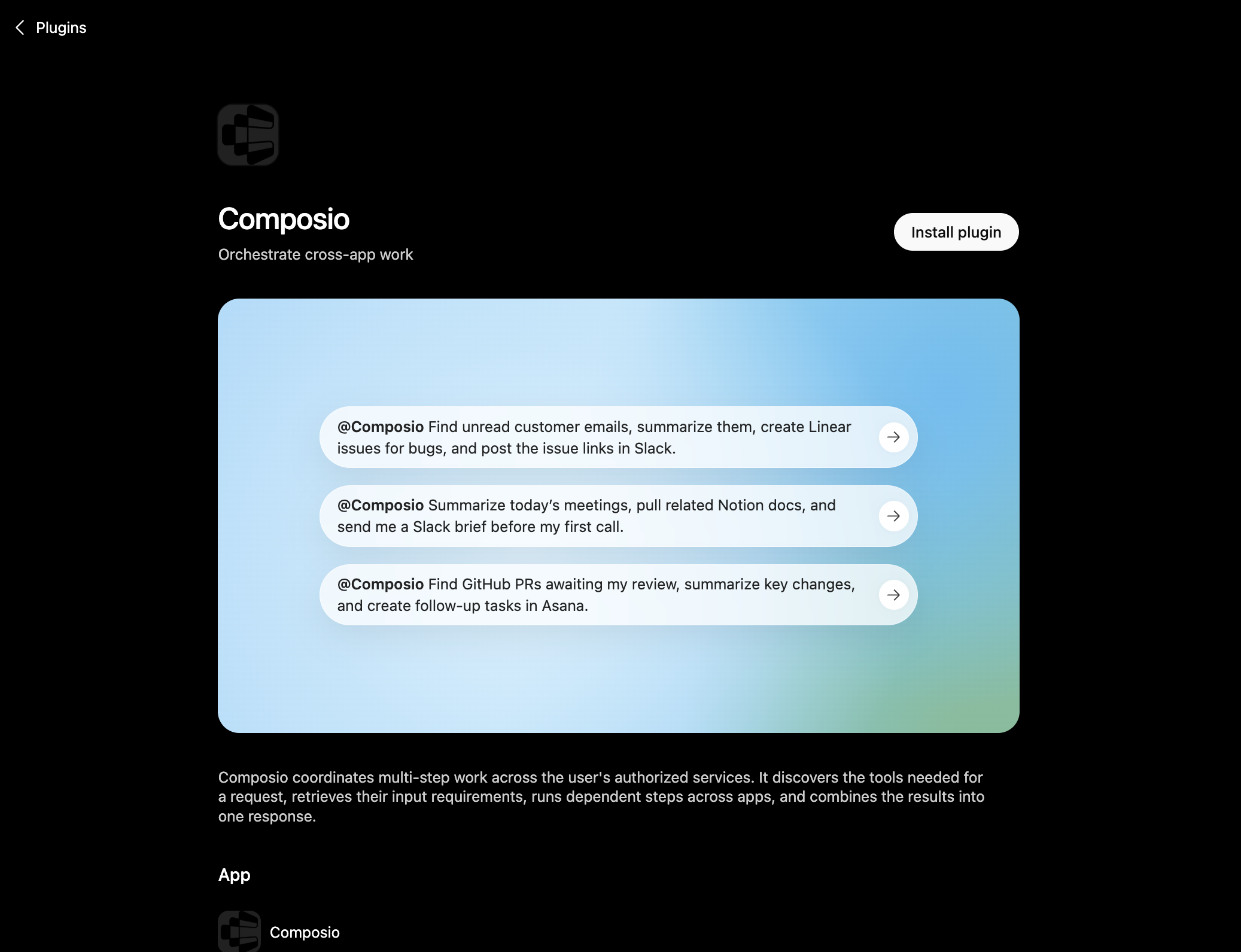
Click the button. ChatGPT opens the Composio plugin page. Click Install plugin.

Install in ChatGPT

Composio plugin page in ChatGPT with the Install plugin button

You can also find it inside ChatGPT: go to Settings, open Plugins, search the marketplace for Composio, and click Install plugin.

2. Authenticate

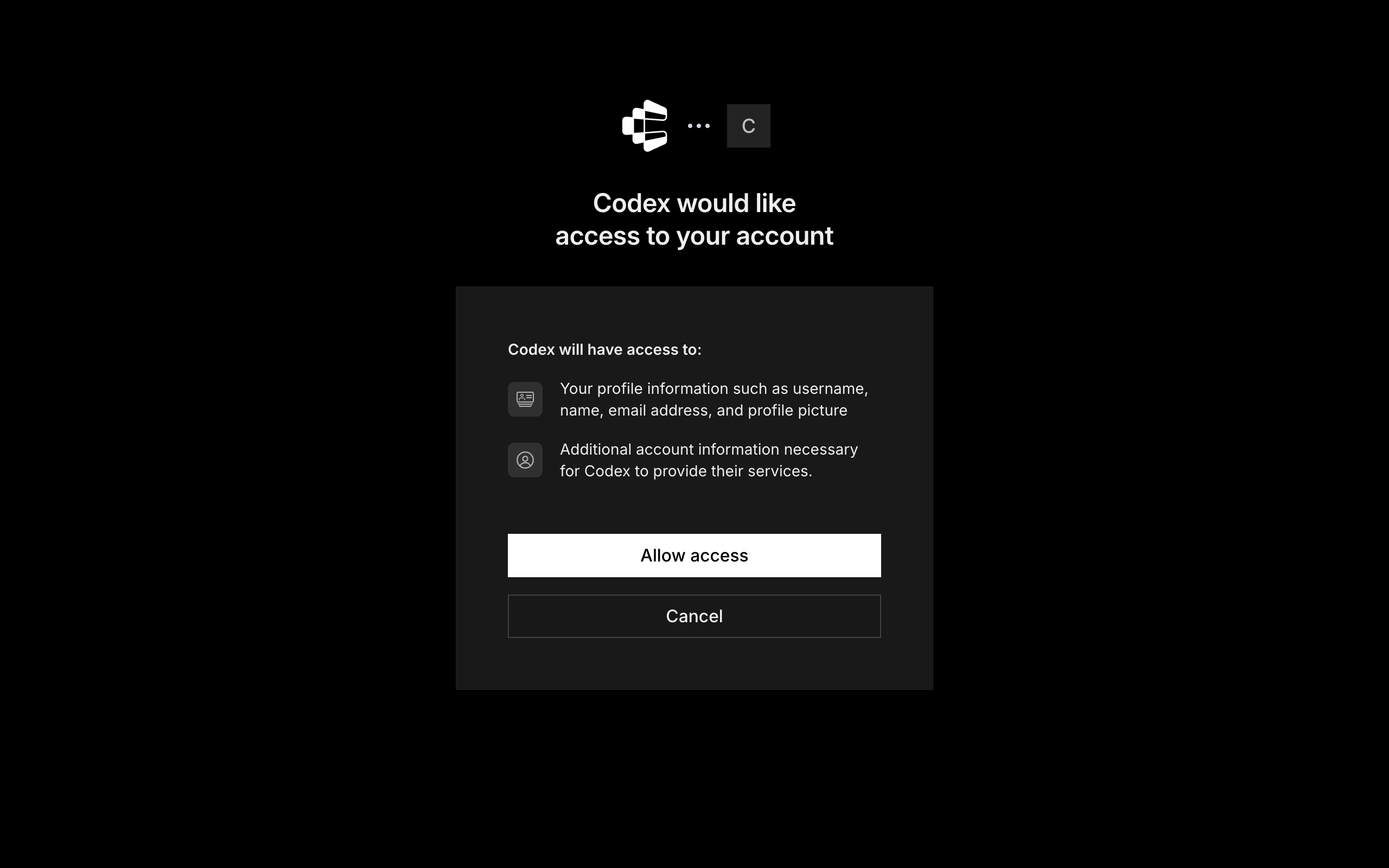
After you install, ChatGPT asks you to authenticate with Composio. Log in and click Allow access to authorize ChatGPT to use your Composio account.

Composio login and Allow access screen for ChatGPT

3. Start using Composio

That is it. Composio tools are now available in ChatGPT. Type @Composio followed by your request, for example @Composio find unread Miru messages and summarize them, and it will run the actions you authorize. On first use it asks you to authorize Miru.

Option 2: Add Composio as an MCP server

If you cannot use the plugin marketplace, add Composio as a custom MCP server instead.

1. Open the MCP settings

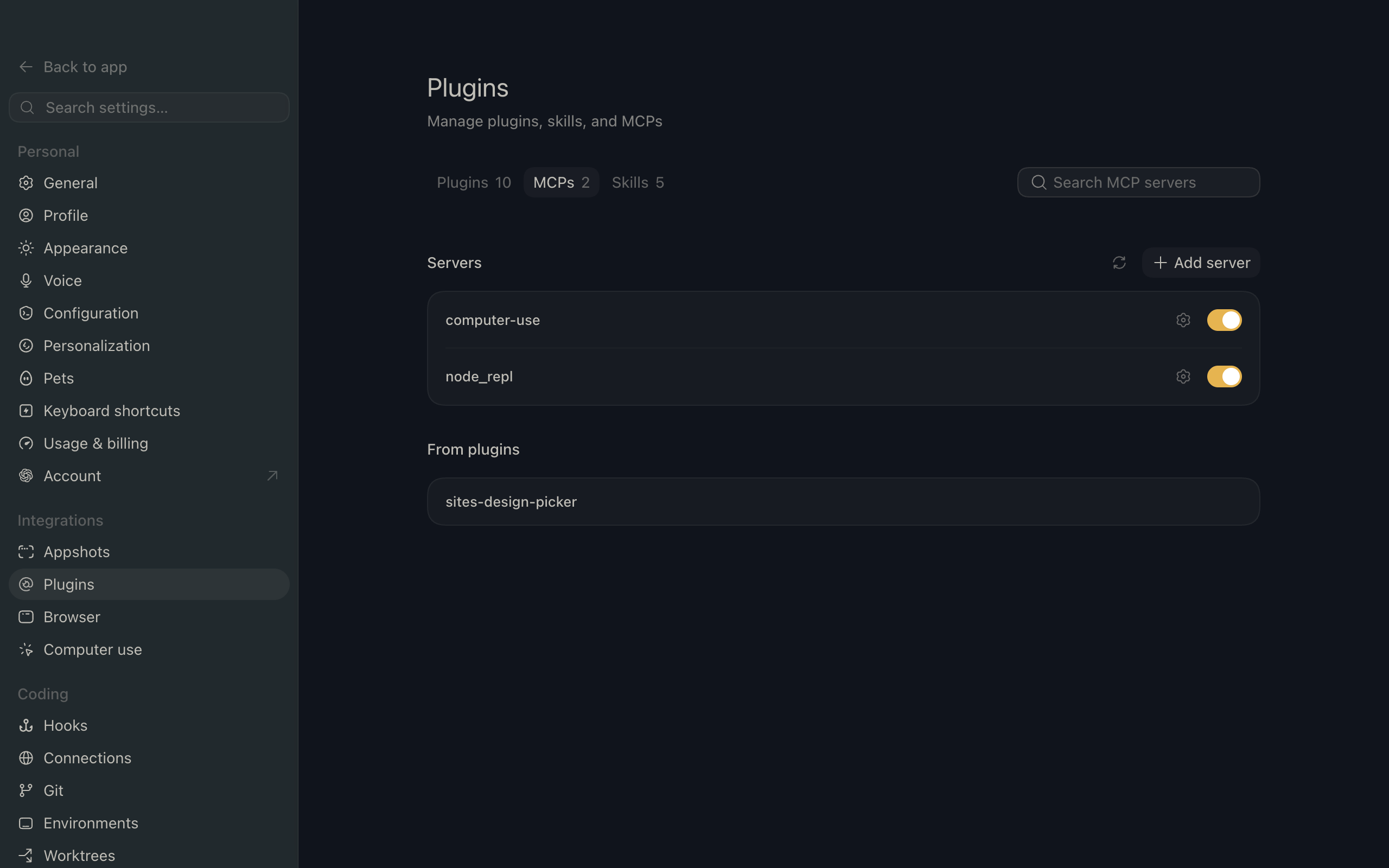
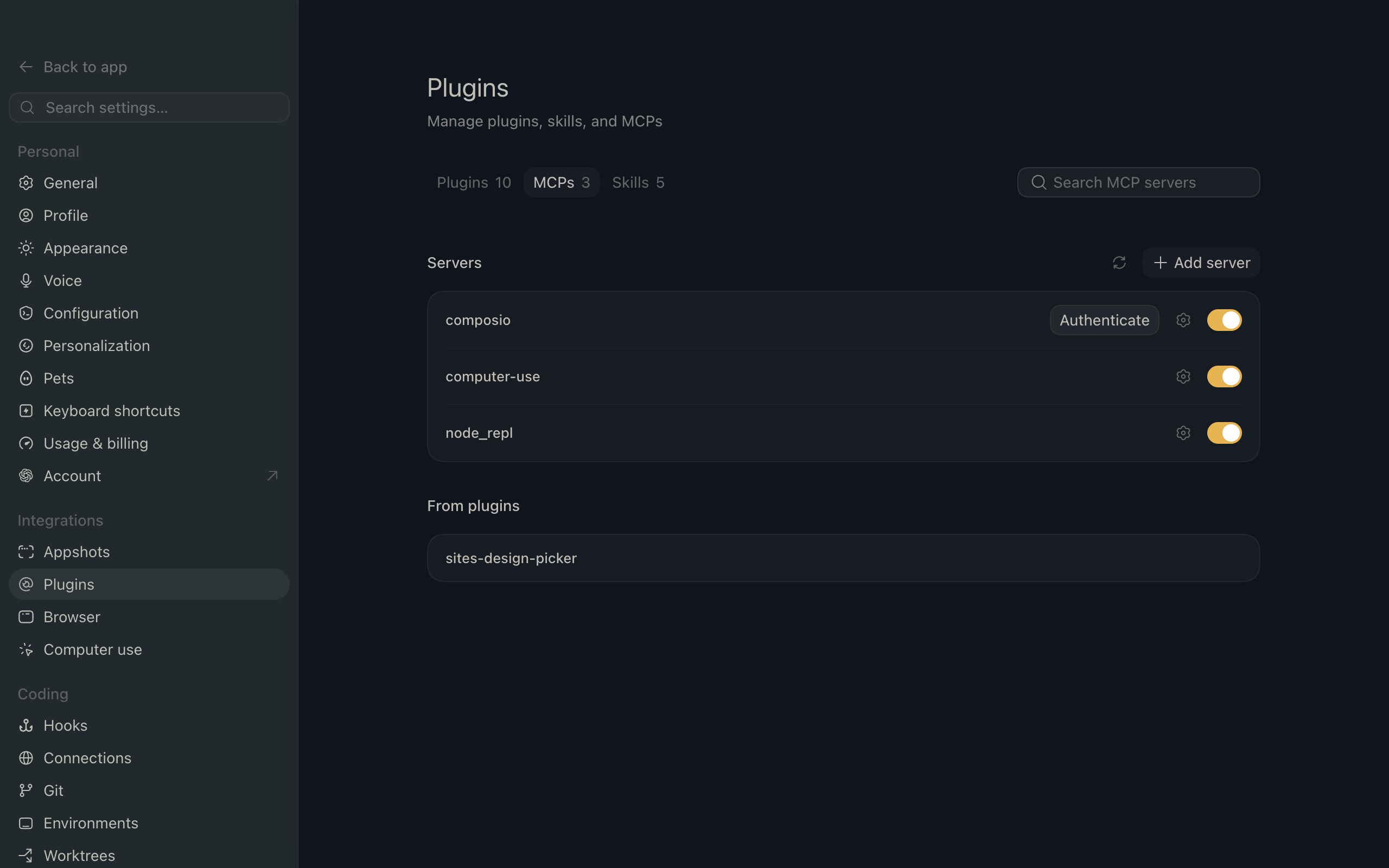
In ChatGPT, go to Settings and open the Plugins section. Inside the Plugins page, click the MCP tab.

ChatGPT settings showing the Plugins page with the MCP tab selected

2. Add the server

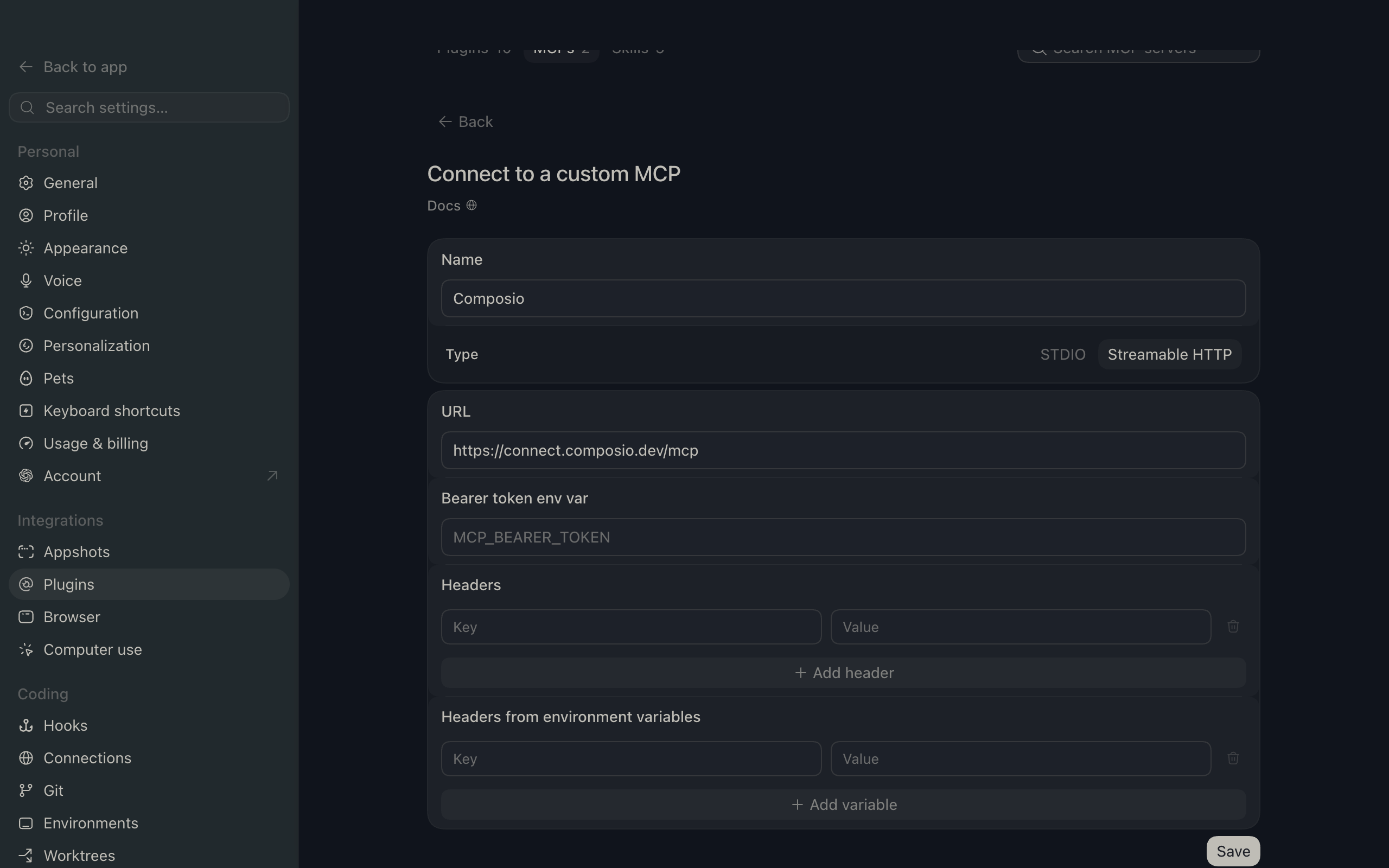
Click Add server. In the Name field enter Composio, for Type select Streamable HTTP, and in the URL field paste the Composio MCP server URL:

bash
https://connect.composio.dev/mcp
ChatGPT Add server dialog with the name Composio, type Streamable HTTP, and the Composio MCP URL

Then click Save. The Composio server now appears in your MCP plugins list.

ChatGPT Plugins page showing the Composio MCP server added to the list

3. Authenticate

Click Authenticate on the Composio entry, log in via Composio, and click Allow access. Composio tools are then available in ChatGPT the same way as with the plugin.

What you can do after connecting Miru

  • List all devices in your Miru fleet
  • Show failed Miru deployments from this week
  • Check configuration status for connected devices

Security + privacy notes (important)

  • Use least-privilege access: Only grant permissions you actually need.
  • Review OAuth permissions before approving: Make sure requested scopes match what you expect Composio and ChatGPT to do.
  • Keep write actions human-reviewed: For actions like sending messages, creating labels, or editing drafts, keep manual confirmation enabled.
  • Be careful with sensitive data: Avoid using this setup with highly sensitive information unless allowed by your personal, company, or client policies.
TOOLS

Supported Tools

Every Miru action and event your agent gets out of the box.

Archive Deployment

Archive a staged or drifted deployment so it cannot be deployed.

Archive Device

Archive a device, revoke its agent session, and stop workspace participation.

Archive Release

Archive an existing release while retaining its record.

Create Config Instance

Create configuration content bound to a config schema slot.

Create Config Schema

Create a schema, its filesystem slots, schema documents, and an optional git-commit link for a config type.

Create Config Type

Create a named configuration type with an immutable code-friendly slug.

Create Deployment

Stage a new deployment or immediately queue it for its target device.

Create Device

Create a new Miru device record ready for agent activation.

Create Group

Create a top-level or nested device group.

Create Provisioning Token

Create a short-lived device provisioning credential.

Create Release

Create a versioned Miru release from config schemas and an optional registered git commit.

Delete Device

Permanently delete a device that has no deployments or calibrations; archive devices with history instead.

Delete Release

Permanently delete a release that has no deployments.

Deploy Deployment

Trigger a staged Miru deployment on its target device.

Download Config Instance Content

Download the raw serialized content of a config instance as a bounded file reference.

Get API Key

Retrieve API-key metadata and granted scopes by ID, including deleted keys; the secret is never returned.

Get Calibration

Retrieve an immutable device calibration by ID, optionally including its content.

Get Config Instance

Retrieve a config instance and its schema, type, creator, or content expansions by ID.

Get Config Schema

Retrieve a configuration schema and optional documents, config type, git links, or creator by ID.

Get Config Type

Retrieve a logical configuration type and optional creator or archiver by ID.

Get Current Principal

Return the identity and type of the principal represented by the connected API key.

Get Deployment

Retrieve deployment state and optional related resources by deployment ID.

Get Device

Retrieve a workspace device and optional deployment, release, group, or principal expansions by ID.

Get File Rule

Retrieve one file retention and upload rule by its Miru ID.

Get Git Commit

Retrieve one registered source-control commit by its Miru ID.

Get Group

Retrieve one Miru device group by ID, with optional parent or creator details.

Get Release

Retrieve one Miru software/configuration release by ID.

Get Upload

Retrieve one device upload ledger entry by its Miru ID.

Get Upload Collection

Retrieve one Miru upload collection by ID.

Get User

Retrieve one current, departed, or suspended Miru workspace user by ID.

List API Keys

List API-key metadata and granted scopes in the workspace; secrets are never returned.

List Calibrations

List immutable device calibrations, optionally filtered by device, component, serial number, or report.

List Config Instances

List stored configuration values and their schema, type, and slot bindings.

List Config Schemas

List Miru configuration schemas, optionally filtering by schema or config type and expanding documents, config types, git links, creators, or the total count.

List Config Types

List logical Miru configuration types by ID, name, slug, or archived state.

List Deployment Drifts

List deployments applied after a deployment was staged to assess drift.

List Deployments

List deployment state by device, release, target, activity, or error status without changing hardware.

List Devices

List workspace devices and filter by identity, agent version, release, group, or status.

List File Rules

List file retention and upload rules by bucket or upload collection.

List Git Commits

List registered source commits by Miru ID or SHA.

List Groups

List device groups by ID, name, or parent group.

List Releases

List software/configuration releases by ID, version, or archived state.

List Upload Collections

List upload collections by ID, name, slug, or archived state.

List Uploads

List device uploads by device, file rule, collection, status, or bundle.

List Users

List current, departed, and suspended workspace users, optionally by ID.

Move Group

Move a device group under another group or make it top-level.

Ping Device

Send a connectivity ping to a Miru device and wait for its response.

Register Git Commit

Register source-control commit metadata for later schema and release provenance links.

Unarchive Release

Restore an archived release to active lifecycle state.

Update Config Type

Update an existing configuration type without changing its immutable slug.

Update Device

Update an existing Miru device.

Update Group

Update an existing device group without moving it.

FRAMEWORKS

How to build Miru MCP Agent with another framework

FAQ

Frequently asked questions

Start with Miru.It takes 30 seconds.

Managed auth, hosted MCP servers, and every Miru tool your agent needs.Free to start.

Start building