How to connect Kaggle to Grok Bot

Connect Grok Bot to Kaggle MCP. Download data files for the titanic competition, create a new version of your covid-19 dataset, and more using natural language, with authentication handled for you.

Kaggle logoKaggle
Api Key

Kaggle is a platform for data science and machine learning competitions, datasets, and collaborative notebooks. It makes it easy to find data, participate in challenges, and share insights with a global data community.

35 Tools

Introduction

Grok is xAI's assistant, and its bot builder lets you create a personal agent that holds context, runs skills, and connects to the apps you already use through plugins.

This guide explains how to connect Kaggle to a Grok bot using Composio Connect, which handles OAuth, token refresh, and reliability so you do not have to. You add Composio as a plugin, authenticate once, then ask your bot to work with Kaggle in plain language.

Also integrate Kaggle with

Why use Composio?

Composio exposes 1,500+ apps to your Grok bot through a single connection, so you get:

  • Connect to 1,500+ apps with on-demand tool loading, so you do not fill your context window with unnecessary tool definitions.
  • Use programmatic tool calling through a remote workbench, letting the model write its own code to handle complex tool chaining. This reduces back-and-forth for frequent tool calls.
  • Handle large tool responses outside the model context to keep conversations lean.

Connecting Kaggle to Grok Bot

Once Grok Bot is set up, you connect Kaggle entirely from its interface, and the whole flow takes under a minute.

Set up Grok Bot

Get access. Grok Bot is included with Cursor Ultra, Cursor Premium Teams, and SuperGrok Heavy. Get the desktop app for macOS or Windows from x.ai/bot and sign in. An iPhone companion app is also available, and your bots sync across devices.

Create a bot. Pick a suggested role or define your own, then give it a short name, one primary job, and a short description of how it should work. Focused bots work best, because a clear role gives the bot more useful context over time.

Connect Kaggle

1. Add the Composio plugin

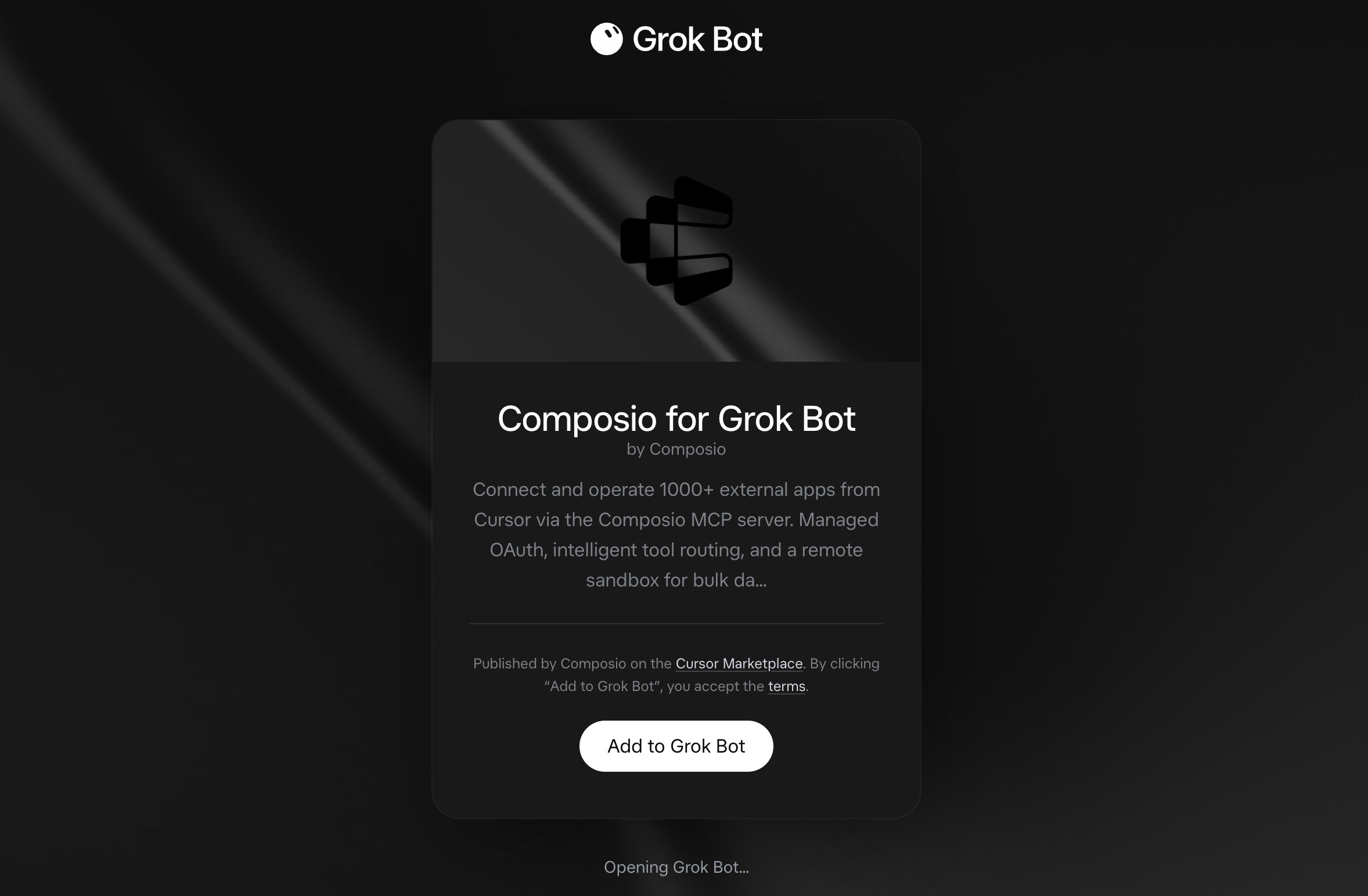
Click the button. The Composio listing on x.ai opens and launches Grok Bot for you. If the app does not open on its own, click Add to Grok Bot.

Add to Grok Bot

Composio for Grok Bot listing on x.ai with the Add to Grok Bot button

Grok Bot opens the Composio plugin, showing its connector and skills. Click Add.
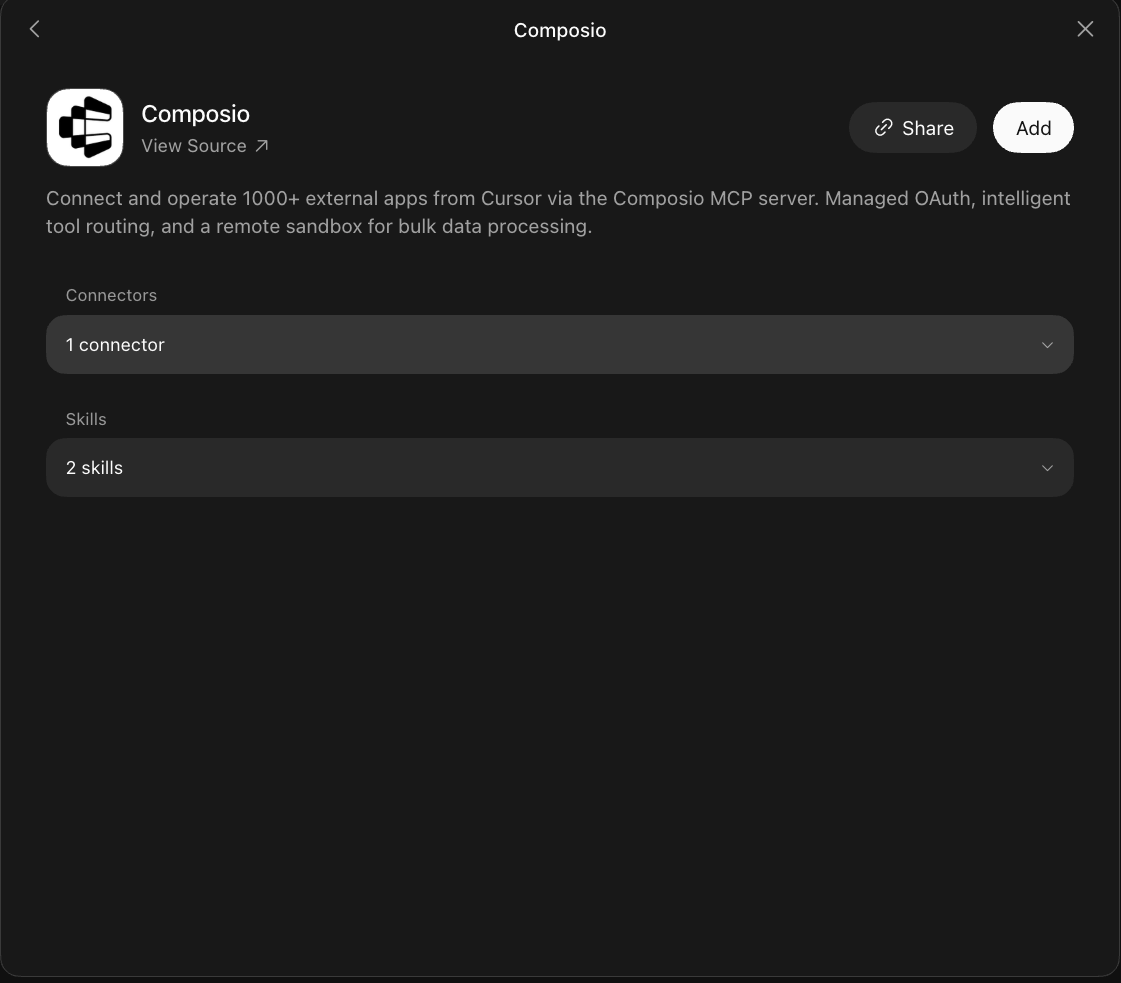
Composio plugin sheet in Grok Bot with the Add button

2. Authenticate

Go to the Installed section and click the Composio entry. You'll see its connector and skills listed.
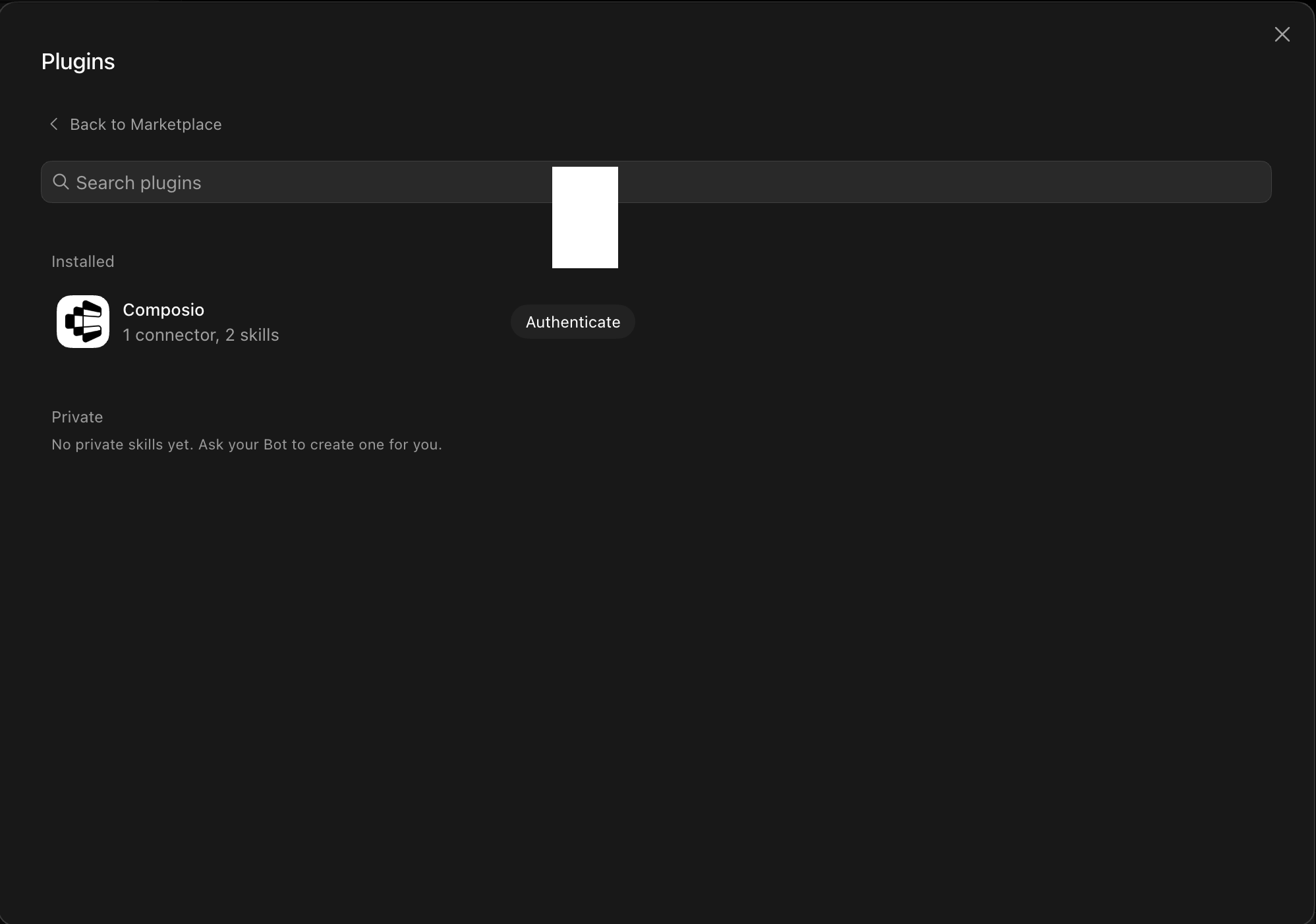
Installed Composio plugin showing the Authenticate button

Click Authenticate. You'll be taken to the Composio consent screen. Review the access it requests and click Authorize. Composio handles the OAuth handshake for you, so you never touch API keys or tokens.
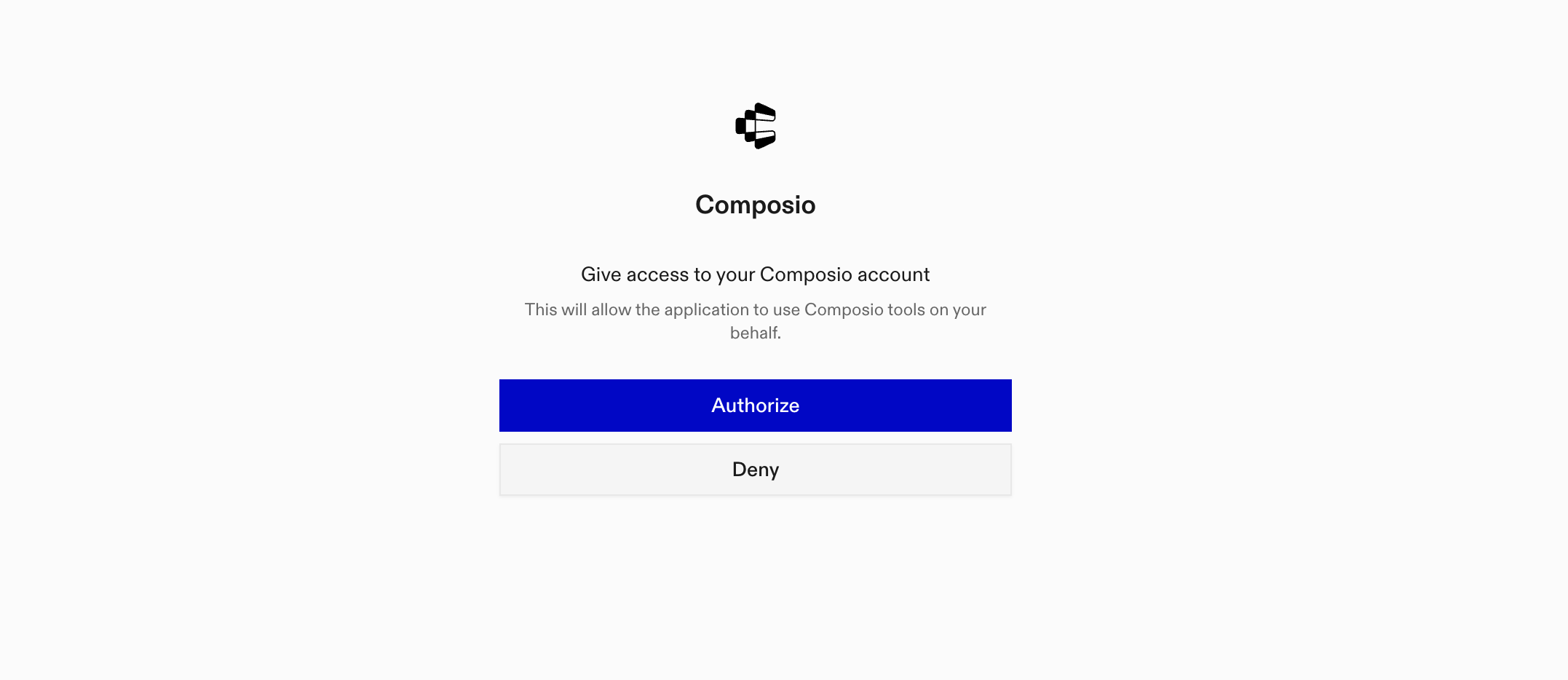
Composio authorization screen with Authorize and Deny

3. Connect your Kaggle account

Back in the chat, ask your bot to connect to Kaggle or give it any Kaggle task.

For example, ask it to:

  • "Download data files for the Titanic competition"
  • "Create a new version of your COVID-19 dataset"
  • "Check processing status of your uploaded dataset"

It will prompt you to authenticate and authorize access.

That's it. Composio's tools are now available in your Grok bot, and your Kaggle account is ready to use.

What is Grok Bot?

Grok is xAI's assistant, available as a chat interface and a bot builder for creating personal agents that run skills and connect to external apps.

With Composio Connect, your Grok bot can securely access apps like Kaggle through MCP without you sharing account credentials directly with the agent.

What is the Kaggle MCP server, and what's possible with it?

The Kaggle MCP server is an implementation of the Model Context Protocol that connects your AI agent and assistants like Claude, Cursor, etc directly to your Kaggle account. It provides structured and secure access to your Kaggle datasets, competitions, and configurations, so your agent can perform actions like downloading competition data, creating datasets, submitting entries, and managing dataset versions on your behalf.

  • Competition data access and download: Let your agent fetch and download competition datasets quickly by specifying a competition ID, so you always have the latest files for analysis.
  • Automated dataset creation and management: Have your agent create new Kaggle datasets, update metadata, and publish new dataset versions seamlessly, streamlining the process of sharing your work with the community.
  • Competition entry submission: Empower your agent to submit competition entries automatically once your solution is ready and uploaded, helping you participate in challenges without manual hassle.
  • Configuration management and setup: Allow your agent to initialize, locate, and update Kaggle API configuration files and keys, ensuring smooth and authenticated operations every time.
  • Dataset status monitoring: Ask your agent to check the status of uploaded datasets or processing jobs, so you always know when your data is ready for use or public sharing.

Way Forward

Now that Kaggle is connected, extend your setup by connecting the other apps you already use every day, so your Grok bot can run true cross-app workflows end to end.

  • Connect Calendar to turn threads into scheduled meetings automatically.
  • Connect Slack or Teams to post summaries, approvals, and alerts where your team works.
  • Connect Notion, Linear, Jira, or Asana to convert requests into tickets, tasks, and docs.
  • Connect Drive, Dropbox, or OneDrive to fetch, file, and share attachments without manual steps.

Start with one workflow you do repeatedly, then keep adding apps as you find new handoffs. With everything behind a single connection, your bot can coordinate multiple tools safely and reliably in one conversation.

TOOLS

Supported Tools

Every Kaggle action and event your agent gets out of the box.

Download competition data files

Downloads all data files for a Kaggle competition as a single zip archive.

Submit Competition Entry

Submit an entry to a Kaggle competition using a previously uploaded file.

Get Kaggle Config Directory

Tool to retrieve the directory of the Kaggle API configuration file.

Initialize Kaggle Configuration

Initialize Kaggle API client configuration.

List Kaggle Configuration Keys

Tool to list local Kaggle API configuration keys.

Get Kaggle Config Path

Tool to retrieve local Kaggle API configuration file path.

Reset Kaggle Configuration

Tool to reset local Kaggle CLI configuration to defaults.

Set Kaggle Configuration

Tool to set a Kaggle CLI configuration parameter.

Unset Kaggle Configuration

Tool to unset a Kaggle CLI configuration parameter.

View Kaggle Configuration

View local Kaggle API credentials and configuration settings.

Dataset Create

Create a new Kaggle dataset with metadata.

Kaggle Dataset Init

Tool to initialize a dataset-metadata.

List Kaggle Dataset Files

Tool to list files in a Kaggle dataset.

Get Dataset Status

Check the processing status of a Kaggle dataset after creation or version update.

Create Dataset Version

Create a new version of an existing Kaggle dataset.

Download competition file

Tool to download a specific data file from a Kaggle competition.

Download competition leaderboard

Tool to download the entire competition leaderboard as a CSV file packaged in a ZIP archive.

Download Kaggle Dataset

Tool to download all files from a Kaggle dataset as a zip archive.

Download Kaggle Dataset File

Tool to download a specific file from a Kaggle dataset.

Generate Competition Submission URL

Tool to generate a pre-signed URL for uploading competition submission files.

Get Dataset Metadata

Tool to get comprehensive metadata for a Kaggle dataset including title, description, licenses, and tags.

Get Model Details

Tool to get a Kaggle model's details including metadata and description.

Get Model Instance Details

Tool to get details for a specific Kaggle model instance (variation).

Kaggle Kernel Init

Initialize a kernel-metadata.

Download kernel output

Tool to download the output of a Kaggle kernel.

Get Kernel Status

Get the execution status of a Kaggle kernel (notebook).

List competition data files

Tool to list all data files available for a Kaggle competition.

List Kaggle Competitions

Tool to list available Kaggle competitions with filters and pagination.

List Kaggle Datasets

Tool to list Kaggle datasets with filters and pagination.

List Kernel Output Files

Tool to list output files for a specific kernel run.

List Kaggle Kernels

Tool to list Kaggle kernels (notebooks and scripts) with filters and pagination.

List Model Instance Version Files

Tool to list files for a specific version of a model variation.

List Kaggle Models

Tool to list Kaggle models with optional filters for owner, sorting, search, and pagination.

Pull Kernel Code

Tool to pull (download) the source code of a Kaggle kernel to local storage.

View competition leaderboard

Tool to view competition leaderboard information showing rankings and scores of participants.

FAQ

Frequently asked questions

With a standalone Kaggle MCP server, the agents and LLMs can only access a fixed set of Kaggle tools tied to that server. However, with the Composio Tool Router, agents can dynamically load tools from Kaggle and many other apps based on the task at hand, all through a single MCP endpoint.

Yes, you can. Grok Bot fully supports MCP integration. You get structured tool calling, message history handling, and model orchestration while Tool Router takes care of discovering and serving the right Kaggle tools.

Yes, absolutely. You can configure which Kaggle scopes and actions are allowed when connecting your account to Composio. You can also bring your own OAuth credentials or API configuration so you keep full control over what the agent can do.

All sensitive data such as tokens, keys, and configuration is fully encrypted at rest and in transit. Composio is SOC 2 Type 2 compliant and follows strict security practices so your Kaggle data and credentials are handled as safely as possible.

Start with Kaggle.It takes 30 seconds.

Managed auth, hosted MCP servers, and every Kaggle tool your agent needs.Free to start.

Start building