How to connect GetDot with ChatGPT

Connect ChatGPT to GetDot MCP. Compare quarterly revenue across connected business sources, summarize product feedback in organizational knowledge, and more using natural language, with authentication handled for you.

GetDot logoGetDot
Api Key

GetDot is an AI data analyst for querying business data and managing organizational knowledge. It helps teams turn connected data into clear answers and evaluate response quality.

42 Tools

How to connect GetDot MCP with ChatGPT

ChatGPT can take action across your apps and files, stay with a project for hours, and turn a goal into finished materials like sheets, slides, and docs, not just answers.

In this guide, I will explain the easiest and most secure way to connect your GetDot account to ChatGPT via Composio Connect, so it can ask business questions, query connected data, manage shared knowledge, evaluate answers, and explain findings through natural language commands without ever putting your account credentials at risk.

For exact tool slugs and parameter tables, see the tool catalog in the Composio docs.

Also integrate GetDot with

Why use Composio over default connectors?

  • Apps with read and write access. Default connectors mostly can read your data. Composio's GetDot integration lets ChatGPT take actions like creating drafts, sending updates, labeling records, and more.
  • 1,800+ SaaS toolkits out of the box. Composio gives you instant access to a vast catalog of pre-built connectors, from Gmail and Slack to Notion, Linear, and Salesforce.
  • One MCP server for every app. Connect any of your applications on demand through a single endpoint, rather than juggling a separate server for each app.
  • Smart, context-aware tool loading. Unlike traditional MCP servers that dump every available tool into the LLM context window, Composio searches for and loads only the tools relevant to the task at hand.
  • Cross-app automation. Chain actions across multiple apps in a single run - fetch a thread, summarize it in Notion, and post highlights to Slack without leaving the conversation.

Prerequisites

Note: Composio connects through OAuth. You will be asked to sign in and approve specific permissions. Review the permission screen carefully if you are using a work account.

Step-by-step: Connect GetDot to ChatGPT

1. Install the Composio plugin

Click the button. ChatGPT opens the Composio plugin page. Click Install plugin.

Install in ChatGPT
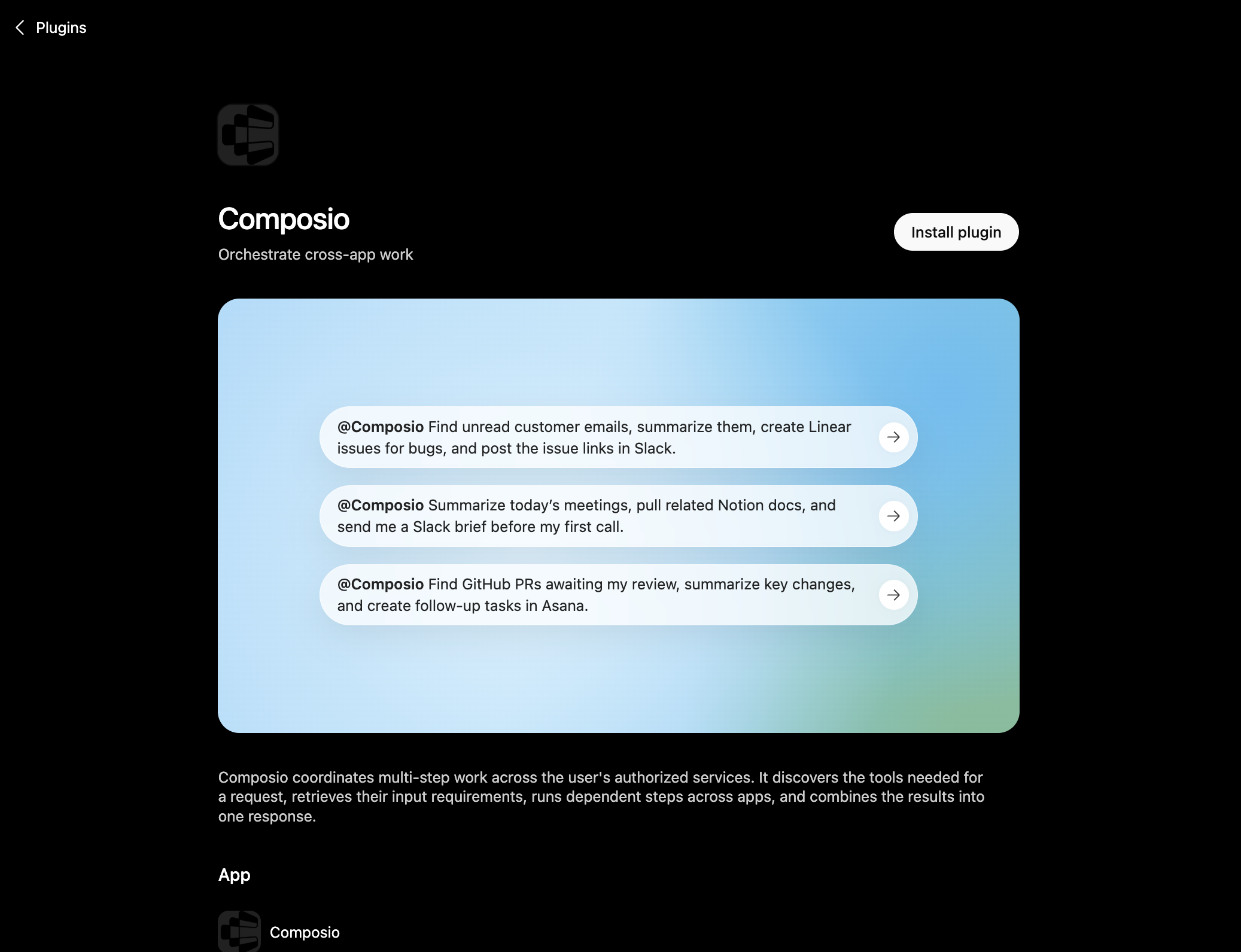
Composio plugin page in ChatGPT with the Install plugin button

You can also find it inside ChatGPT: go to Settings, open Plugins, search the marketplace for Composio, and click Install plugin.

2. Authenticate

After you install, ChatGPT asks you to authenticate with Composio. Log in and click Allow access to authorize ChatGPT to use your Composio account.
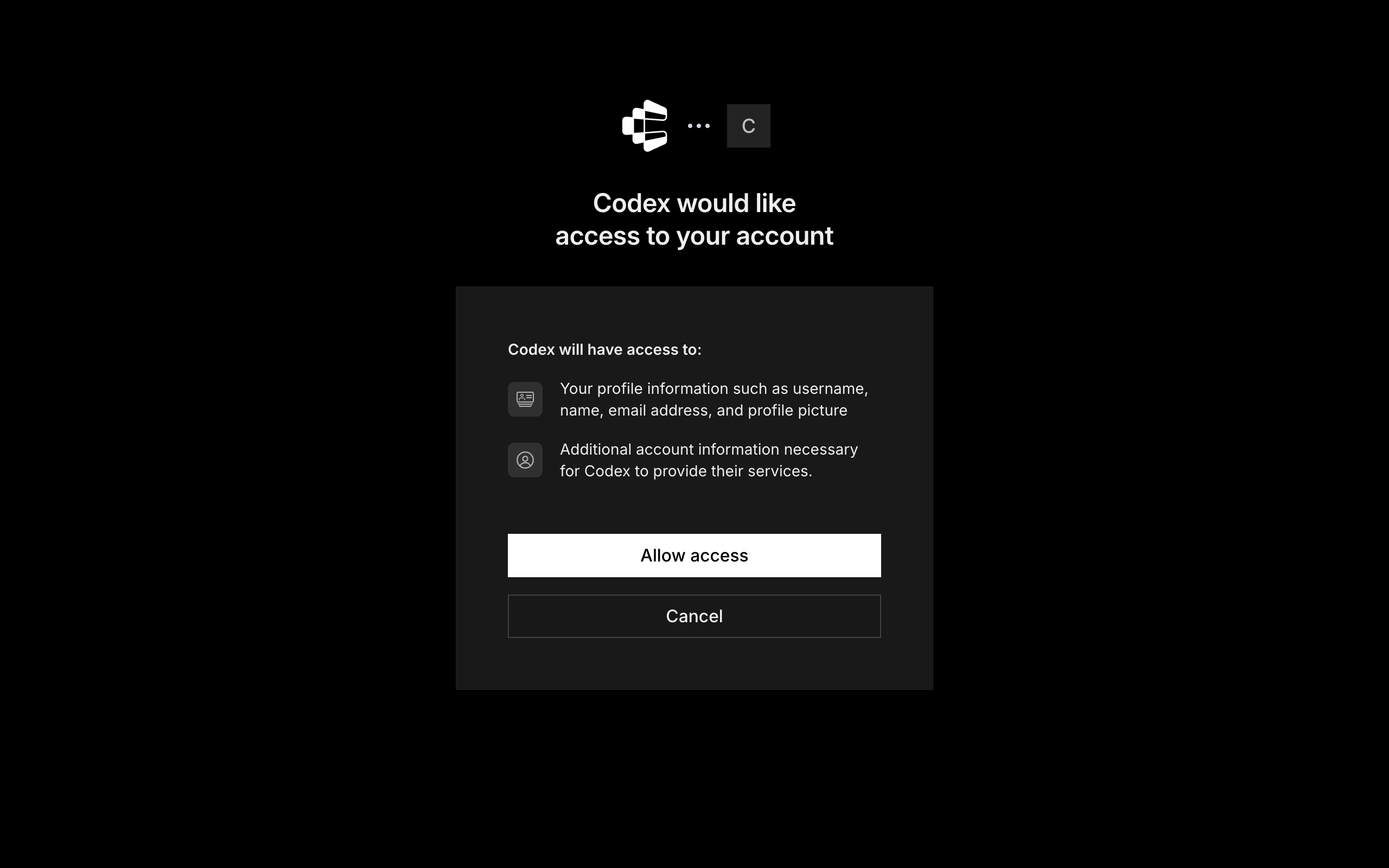
Composio login and Allow access screen for ChatGPT

3. Start using Composio

That is it. Composio tools are now available in ChatGPT. Type @Composio followed by your request, for example @Composio find unread GetDot messages and summarize them, and it will run the actions you authorize. On first use it asks you to authorize GetDot.

Option 2: Add Composio as an MCP server

If you cannot use the plugin marketplace, add Composio as a custom MCP server instead.

1. Open the MCP settings

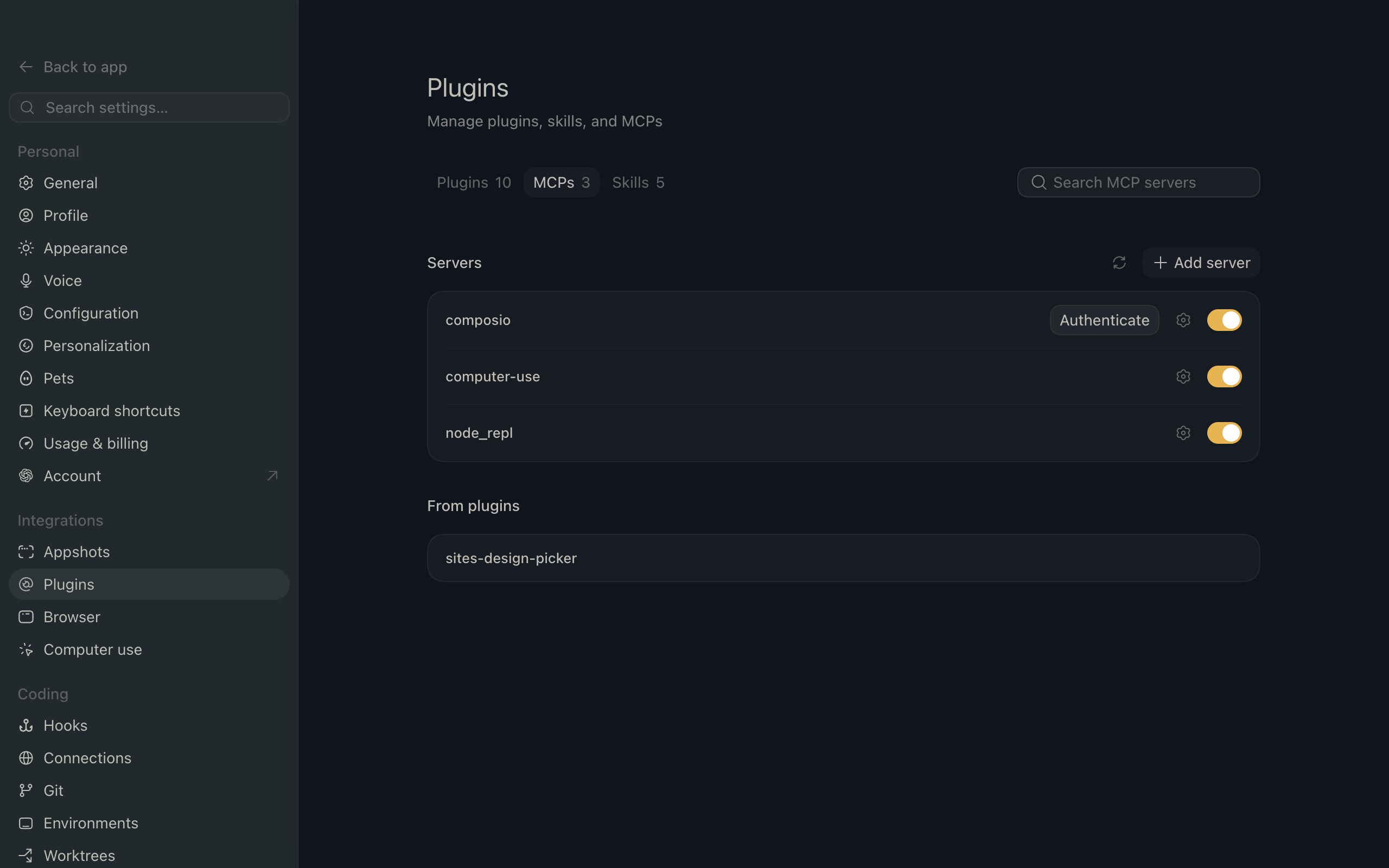
In ChatGPT, go to Settings and open the Plugins section. Inside the Plugins page, click the MCP tab.
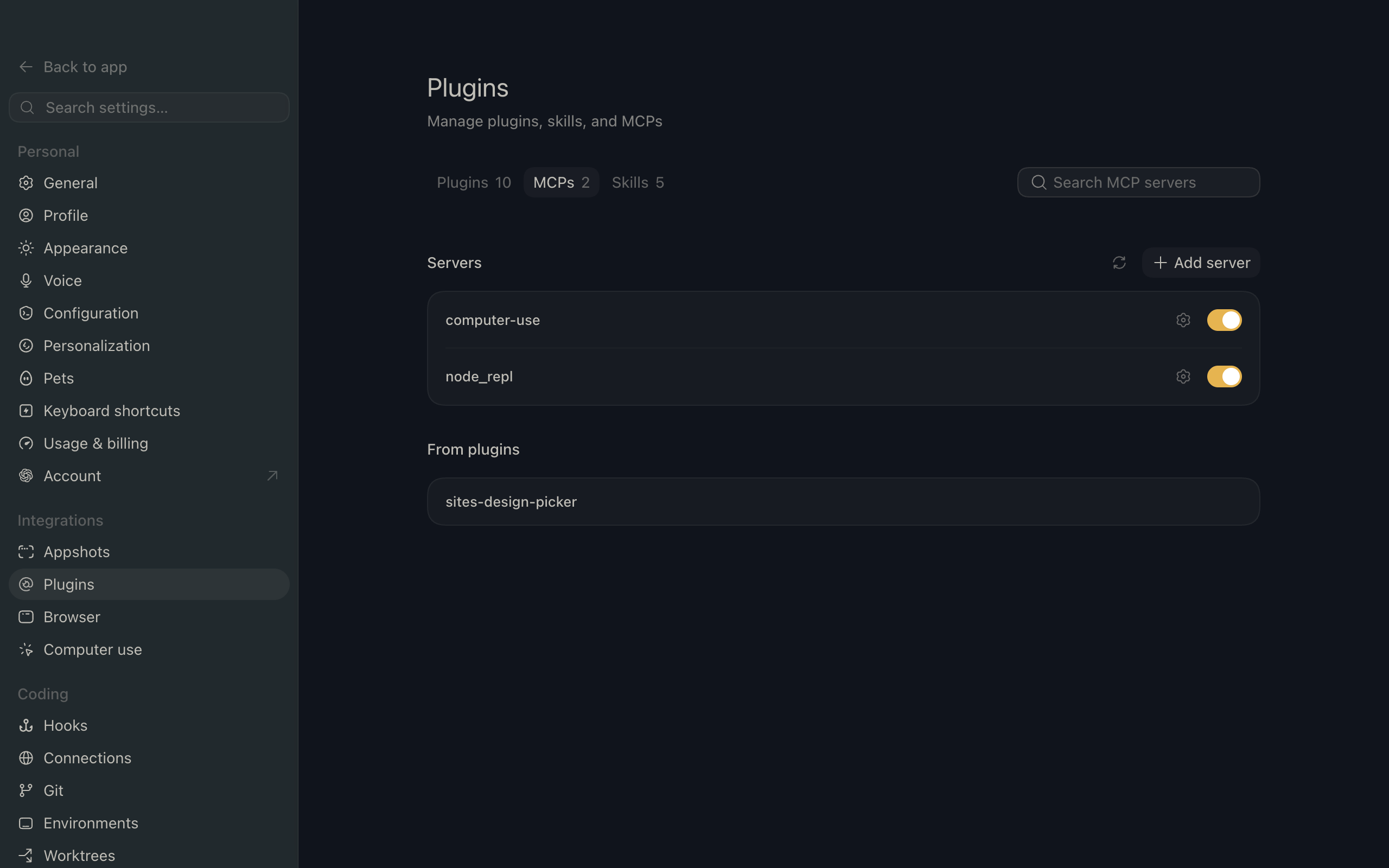
ChatGPT settings showing the Plugins page with the MCP tab selected

2. Add the server

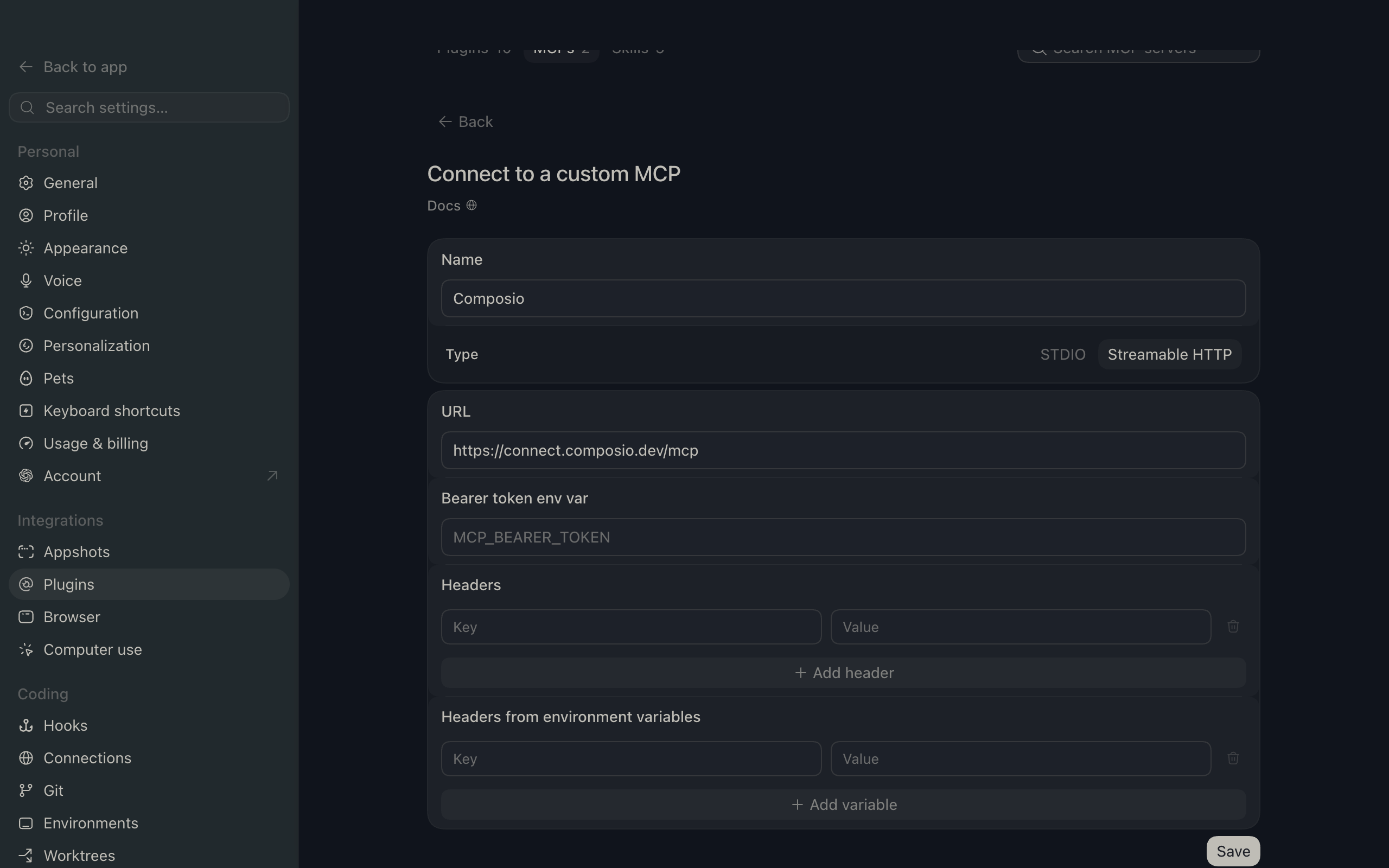
Click Add server. In the Name field enter Composio, for Type select Streamable HTTP, and in the URL field paste the Composio MCP server URL:

bash
https://connect.composio.dev/mcp
ChatGPT Add server dialog with the name Composio, type Streamable HTTP, and the Composio MCP URL

Then click Save. The Composio server now appears in your MCP plugins list.

ChatGPT Plugins page showing the Composio MCP server added to the list

3. Authenticate

Click Authenticate on the Composio entry, log in via Composio, and click Allow access. Composio tools are then available in ChatGPT the same way as with the plugin.

What you can do after connecting GetDot

  • Compare quarterly revenue across connected business sources
  • Summarize product feedback in organizational knowledge
  • Evaluate an answer against connected business data

Security + privacy notes (important)

  • Use least-privilege access: Only grant permissions you actually need.
  • Review OAuth permissions before approving: Make sure requested scopes match what you expect Composio and ChatGPT to do.
  • Keep write actions human-reviewed: For actions like sending messages, creating labels, or editing drafts, keep manual confirmation enabled.
  • Be careful with sensitive data: Avoid using this setup with highly sensitive information unless allowed by your personal, company, or client policies.
TOOLS

Supported Tools

Every GetDot action and event your agent gets out of the box.

Add Labels to Conversation

Add the supplied labels to an existing Dot conversation without removing its current labels.

Add User to Group

Add an existing GetDot user to a group.

Archive Evaluation

Archive an existing GetDot evaluation.

Ask Dot

Submit a new question to Dot under a caller-supplied conversation ID and return the processed conversation and readable answer.

Cancel Evaluation Run

Cancel an existing GetDot evaluation run.

Change User Role

Change the organization role assigned to a GetDot user.

Create Evaluation

Create a GetDot evaluation, optionally with structured initial scored questions or a source conversation.

Create Evaluation Interview Chat

Create a specialized GetDot interview conversation for developing an evaluation and return its provider-defined chat payload.

Create Evaluation Question

Add a scored question and expected-answer configuration to an existing GetDot evaluation.

Create Organization Note

Create a GetDot organization note with optional group visibility, hierarchy, concept, foundational setting, and training context.

Create User

Create a GetDot user with an email address and display name.

Delete Evaluation Question

Delete a question from an existing GetDot evaluation.

Delete User

Remove a GetDot user.

Export App Views

Return app viewers, view counts, and the timestamp from which GetDot has tracked views.

Export Chat History CSV

Download a CSV with one row per Dot conversation using the same filters, sorting, and access rules as the History page.

Export Question History

Return question-level Dot history for an optional UTC date range, optionally including answers and all accessible workspaces.

Follow Up With Dot

Ask a follow-up in an existing Dot conversation and return the updated conversation.

Get Conversation

Read or poll one Dot conversation, returning a bounded page of messages and a continuation cursor for older user-response pairs when another page may exist.

Get Current User

Return the GetDot user, organization, role, permissions, allowed energy modes, and plan represented by the connected API token.

Get Embedded User Login Token

Sign a user in from a backend and return a sensitive, expiring access token.

Get Evaluation

Return one GetDot evaluation by ID, including its current configuration and metadata.

Get Evaluation Run

Return the status and results of one GetDot evaluation run by run ID.

Get Evaluation Target

Read the current committed Dot context SHA before configuring a CI evaluation run.

Get Evaluation Unit Options

Return GetDot's available unit options for evaluation answers.

Get Organization Note

Return one organization note by ID in an optional training/version context.

Get Organization Notes Budget

Return GetDot's provider-defined foundational-notes capacity payload for an optional training and version context.

Invite Users

Request GetDot organization invitations for the supplied email addresses.

List Evaluation Questions

List questions in a GetDot evaluation, optionally including inactive questions or selecting a version and environment.

List Evaluation Runs

List runs for one GetDot evaluation; use this to discover run IDs before retrieving an individual run's status and results.

List Evaluations

List GetDot evaluations, optionally including archived evaluations.

List Evaluation Variants

Return provider-defined variant data for an existing GetDot evaluation for read-only comparison of its alternatives.

List Evaluation Versions

Return saved version history for an existing GetDot evaluation; version identifiers can be used with Restore Evaluation Version.

List Organization Notes

List organization notes, optionally restricted to active notes or a training/version context.

List Users

List users visible to the connected GetDot account, including role, groups, activation state, and access scope.

Prepare Evaluation

Prepare evaluation questions from structured questions, metric values, or CSV text.

Remove User from Group

Remove an existing GetDot user's membership from a group without deleting the user or group.

Restore Evaluation Version

Restore a prior version of an existing GetDot evaluation.

Start Evaluation Run

Start a run for an existing GetDot evaluation and return the accepted run.

Sync Connection

Trigger synchronization of an existing external data connection.

Update Evaluation

Update the name and/or description of an existing GetDot evaluation.

Update Evaluation Question

Update fields on an existing GetDot evaluation question.

Update Organization Note

Replace the editable content and settings of an existing GetDot organization note; title and note content are required.

FRAMEWORKS

How to build GetDot MCP Agent with another framework

FAQ

Frequently asked questions

Start with GetDot.It takes 30 seconds.

Managed auth, hosted MCP servers, and every GetDot tool your agent needs.Free to start.

Start building