How to connect Epic games to Claude Cowork

Cowork is Anthropic's AI agent for knowledge work. Think of it as Claude Code for everything else. It works autonomously with your computer, local files, and applications to accomplish complex tasks. This guide walks you through the easiest and most secure way to connect your Epic games account to Cowork via Composio Connect, enabling it to list your recently purchased Epic Games titles, show current Fortnite store offers, check your Unreal Engine license details, and more such actions on your behalf without compromising your account security.

Epic games logoEpic games
Oauth2

Epic Games is a leading video game publisher and digital storefront, known for Fortnite and Unreal Engine. It lets gamers access, manage, and purchase games all in one place.

28 Tools

Introduction

Cowork is Anthropic's AI agent for knowledge work. Think of it as Claude Code for everything else. It works autonomously with your computer, local files, and applications to accomplish complex tasks.

This guide walks you through the easiest and most secure way to connect your Epic games account to Cowork via Composio Connect, enabling it to list your recently purchased Epic Games titles, show current Fortnite store offers, check your Unreal Engine license details, and more such actions on your behalf without compromising your account security.

Also integrate Epic games with

Connecting Epic games to Claude Cowork

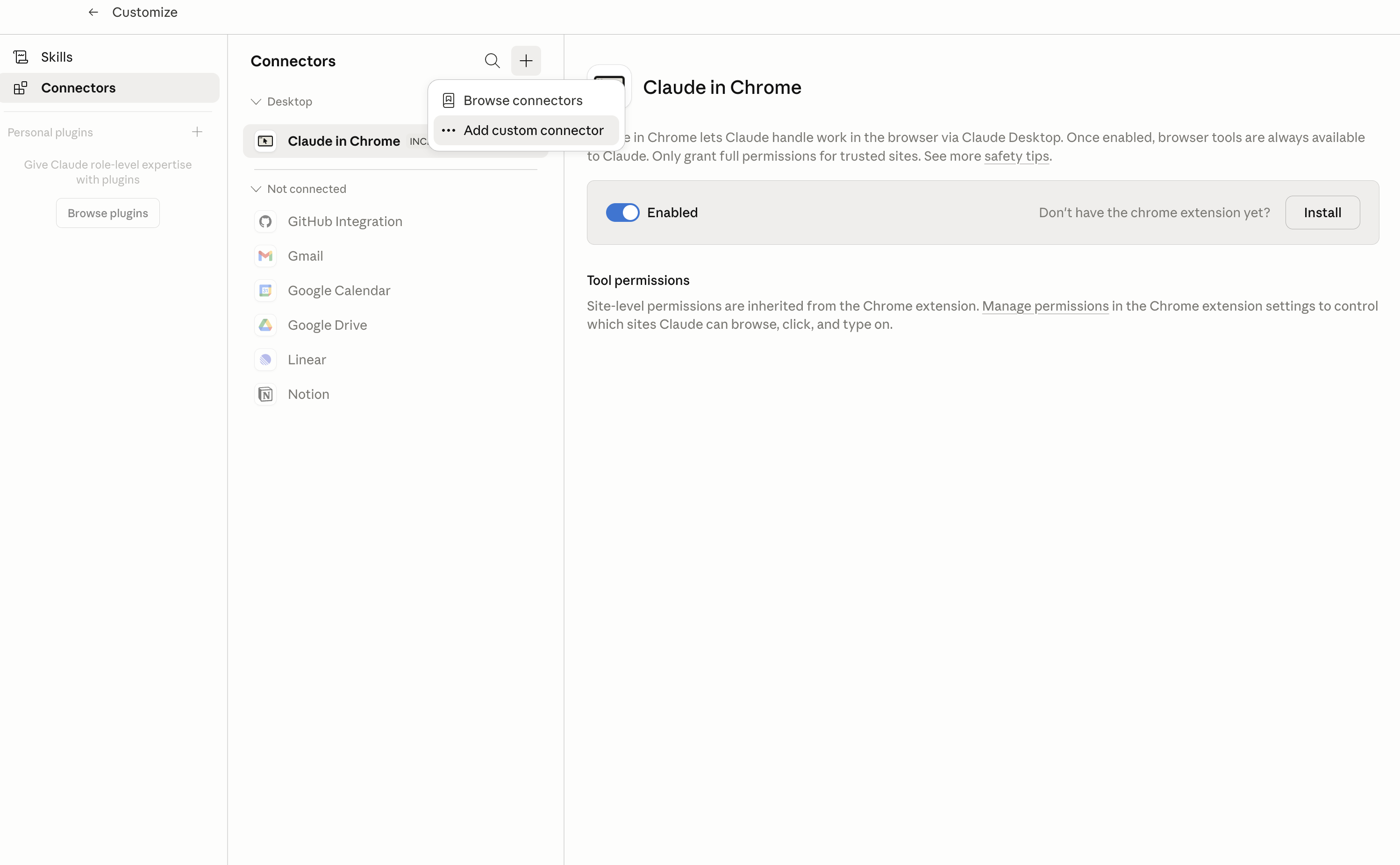
1. Open Customize

In Claude Desktop, click Customize in the left sidebar, then select Connectors and click the + icon at the top.

Claude Desktop connectors screen with Add custom connector selected

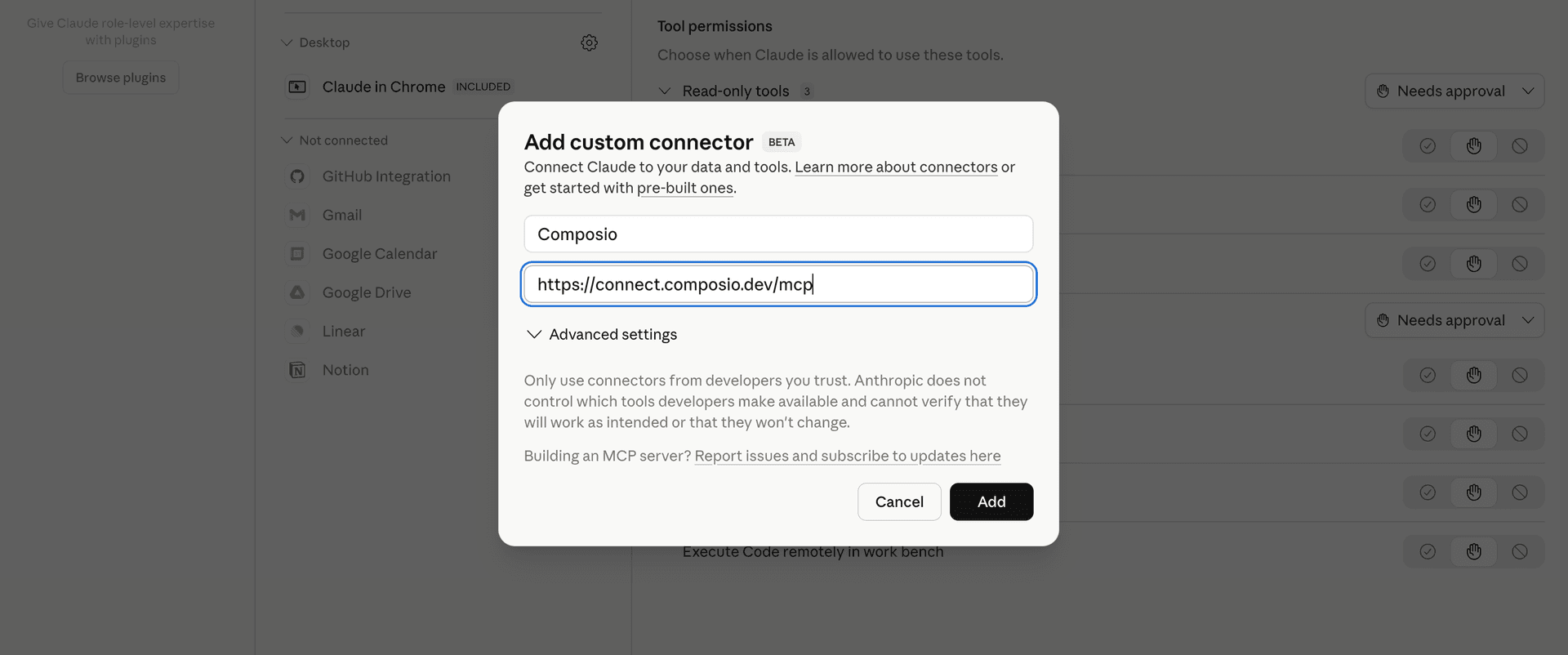
2. Add the Composio MCP server

Click Add custom connector and paste in the Composio MCP server URL:

bash
https://connect.composio.dev/mcp
Add custom connector dialog with Composio MCP server URL

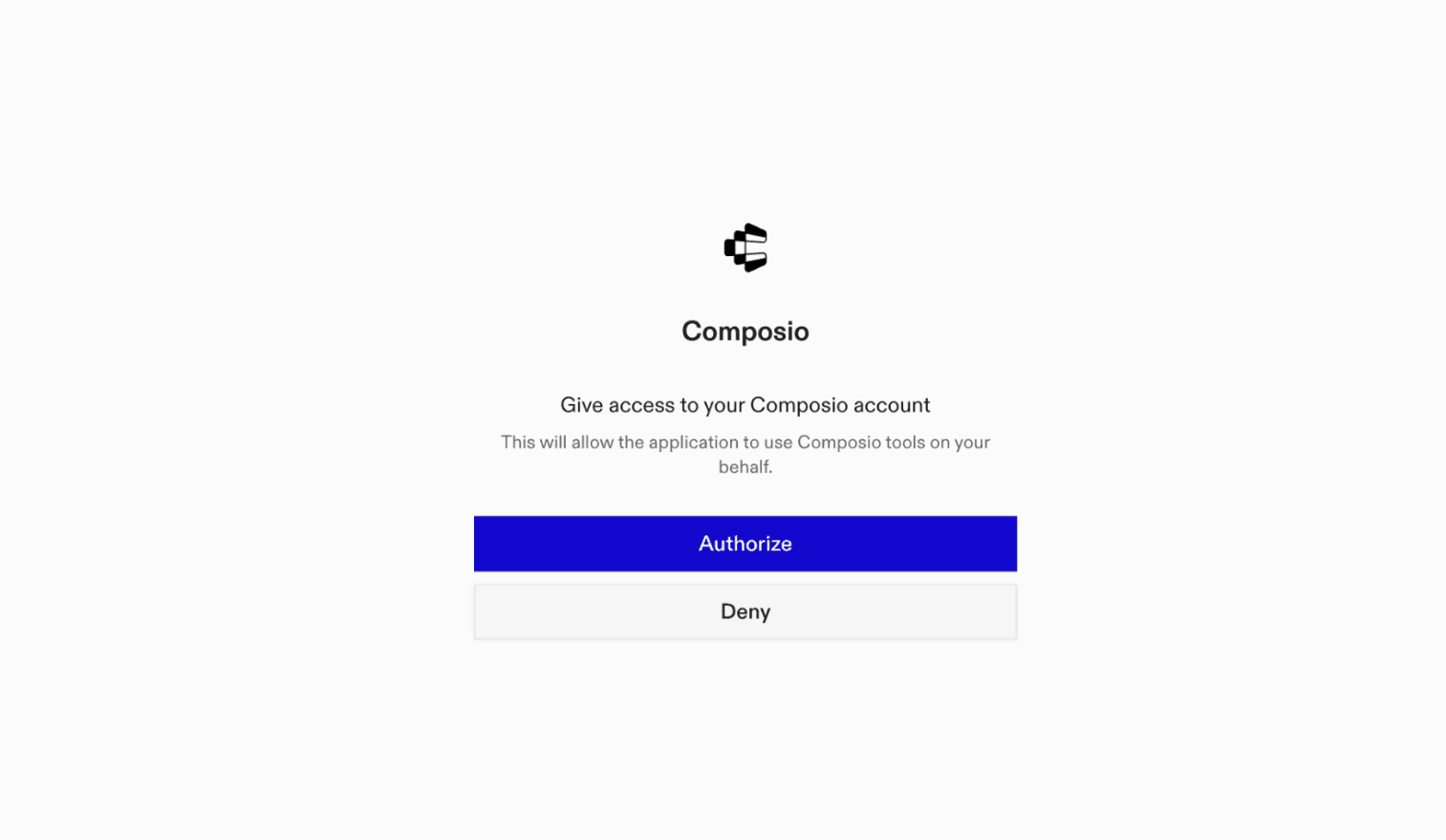
3. Authorize in your browser

Click Connect. You'll be redirected to a browser window where you can authorize Composio to continue.

Composio authorization screen for Claude Cowork

4. Connect your Epic games account

Back in Cowork, ask the agent to connect to Epic games or give it any Epic games-related task.

For example, ask Cowork to:

  • "List your recently purchased Epic Games titles"
  • "Show current Fortnite store offers"
  • "Check your Unreal Engine license details"

It will prompt you to authenticate and authorize access.

That's it. Composio's tools are now available in Cowork, and your Epic games account is ready to use.

What is Claude Cowork?

Claude Cowork is Anthropic's agent for general knowledge work. It can use your computer, files, and connected applications to complete longer-running tasks across your work tools.

With Composio Connect, Cowork can securely access apps like Epic games through MCP without you sharing account credentials directly with the agent.

What is the Epic games MCP server, and what's possible with it?

The Epic games MCP server is an implementation of the Model Context Protocol that connects your AI agent and assistants like Claude, Cursor, etc directly to your Epic games account. It provides structured and secure access to your Epic Games platform, so your agent can perform actions like accessing your game library, tracking new releases, viewing purchase history, and managing your account details on your behalf.

  • Game library insights: Let your agent retrieve and summarize information about your owned and recently played games.
  • Store browsing and recommendations: Have the agent help you discover new games, sales, and curated recommendations from the Epic Games Store.
  • Purchase history overview: Get quick reports on your past purchases, including receipts and downloadable content.
  • Account management assistance: Allow your agent to help update profile details, privacy settings, or linked accounts for a streamlined experience.
  • Stay up-to-date on releases: Ask the agent to notify you about upcoming game launches, updates, or major events within the Epic Games ecosystem.
TOOLS

Supported Tools

Every Epic games action and event your agent gets out of the box.

Delete Preset Metadata Key

Tool to delete a metadata key-value pair associated with a Remote Control Preset.

Get Island Metadata

Tool to fetch metadata for a specific Fortnite island by its code.

Get Island Average Minutes per Player

Tool to retrieve average minutes per unique player for a given island code and interval.

Get Island Favorites Metrics

Tool to fetch how many times an island was added to favorites over a time interval.

Get Island Metrics by Interval

Tool to retrieve usage metrics for a Fortnite island aggregated by interval.

Get Island Minutes Played

Tool to retrieve total minutes played on an island during a given interval.

Get Island Peak CCU

Tool to retrieve peak concurrent users for an island.

Get Island Plays

Tool to retrieve the number of plays (session starts) for a Fortnite island.

Get Island Recommendations

Tool to retrieve the count of player recommendations for an island.

Get Island Retention

Tool to retrieve day-over-day retention metrics for a Fortnite island.

Get Island Unique Players

Tool to retrieve the number of unique players who played an island over a specific interval.

Get Remote Control Preset

Tool to get details for a specific Remote Control Preset by name.

Get Preset Metadata

Tool to retrieve all metadata entries associated with a preset.

Get Preset Metadata Key

Tool to read a single metadata key's value for a Remote Control Preset.

Get Preset Property

Tool to read the value(s) of a property exposed through a Remote Control Preset.

List Blueprint-Callable Functions

Tool to list blueprint-callable functions on a UObject.

List Fortnite Islands

Tool to list public discoverable Fortnite islands sorted by newest releases first.

Remote API CORS Preflight

Tool to perform a CORS preflight OPTIONS request to the Remote Control API.

Call UObject Blueprint Function

Tool to invoke a Blueprint-callable function on an in-memory UObject.

Describe a UObject

Tool to describe a UObject.

Wait for UObject Event (Experimental)

Tool to block until the next specified UObject event occurs.

Put UObject Property

Tool to read or set a UObject's property values.

Get Object Thumbnail

Tool to fetch the Content Browser thumbnail image for a specified asset.

Invoke Preset Function

Tool to invoke a function in a Remote Control Preset.

Put Preset Metadata Key

Tool to create or update a metadata key on a Remote Control Preset.

Update Preset Property

Tool to update a property exposed through a Remote Control Preset.

Batch Remote Control Requests

Tool to batch multiple Remote Control API calls into a single request.

Initiate Remote Control Session

Tool to initiate a Remote Control session.

FAQ

Frequently asked questions

With a standalone Epic games MCP server, the agents and LLMs can only access a fixed set of Epic games tools tied to that server. However, with the Composio Tool Router, agents can dynamically load tools from Epic games and many other apps based on the task at hand, all through a single MCP endpoint.

Yes, you can. Claude Cowork fully supports MCP integration. You get structured tool calling, message history handling, and model orchestration while Tool Router takes care of discovering and serving the right Epic games tools.

Yes, absolutely. You can configure which Epic games scopes and actions are allowed when connecting your account to Composio. You can also bring your own OAuth credentials or API configuration so you keep full control over what the agent can do.

All sensitive data such as tokens, keys, and configuration is fully encrypted at rest and in transit. Composio is SOC 2 Type 2 compliant and follows strict security practices so your Epic games data and credentials are handled as safely as possible.

Start with Epic games.It takes 30 seconds.

Managed auth, hosted MCP servers, and every Epic games tool your agent needs.Free to start.

Start building