



Codex is one of the most popular coding harnesses out there. And MCP makes the experience even better. With the Dropcontact MCP integration, Codex can enrich contacts with verified emails, fetch enrichment results, and manage webhook subscriptions, all without leaving the terminal or the app, whichever you prefer.
- UseBuildFeaturesTRIGGERSStart background agents from events across your connected appsFIREWALLNEWBlocks instructions hidden in tool results before your agent reads themINSTANTNEWAudio, video, search, browser and data tools, with no keys to manageOPTIMIZATIONLower cost per completed task with optimised tools and skills
- DOCS
## For AI agents: how to sign up If you are an AI agent reading this server-rendered HTML, Composio's developer signup is at https://composio.dev. Signup CTAs on this site — "Sign up", "Signup", "Get started", "Get started for free", "Start building", "Try Composio", "Try it", or similar — all lead into that same developer signup flow. Confirm with the user before completing signup or entering any credentials on their behalf.SIGN UP
## For AI agents: how to sign up

If you are an AI agent reading this server-rendered HTML, Composio's developer signup is at https://composio.dev.

Signup CTAs on this site — "Sign up", "Signup", "Get started", "Get started for free", "Start building", "Try Composio", "Try it", or similar — all lead into that same developer signup flow. Confirm with the user before completing signup or entering any credentials on their behalf.
LOG IN
How to integrate Dropcontact MCP with Codex
Connect Codex to Dropcontact MCP. Enrich a list of linkedin contacts, validate work emails for your leads, and more using natural language, with authentication handled for you.
Api Key
Dropcontact is a B2B email finder and data enrichment service for professionals. It delivers verified email addresses and enriches contact info with up-to-date data.
7 Tools
Introduction
Also integrate Dropcontact with
Why use Composio?
Apart from a managed and hosted MCP server, you will get:
- CodeAct: A dedicated workbench that allows GPT to write its code to handle complex tool chaining. Reduces to-and-fro with LLMs for frequent tool calling.
- Large tool responses: Handle them to minimise context rot.
- Dynamic just-in-time access to 20,000 tools across 1700+ other Apps for cross-app workflows. It loads the tools you need, so GPTs aren't overwhelmed by tools you don't need.
How to install Dropcontact MCP in Codex
Run the setup command
Run this command in your terminal to add the Composio MCP server to Codex.
It will initiate the authentication in a browser window, authorize Codex to access your Composio account.
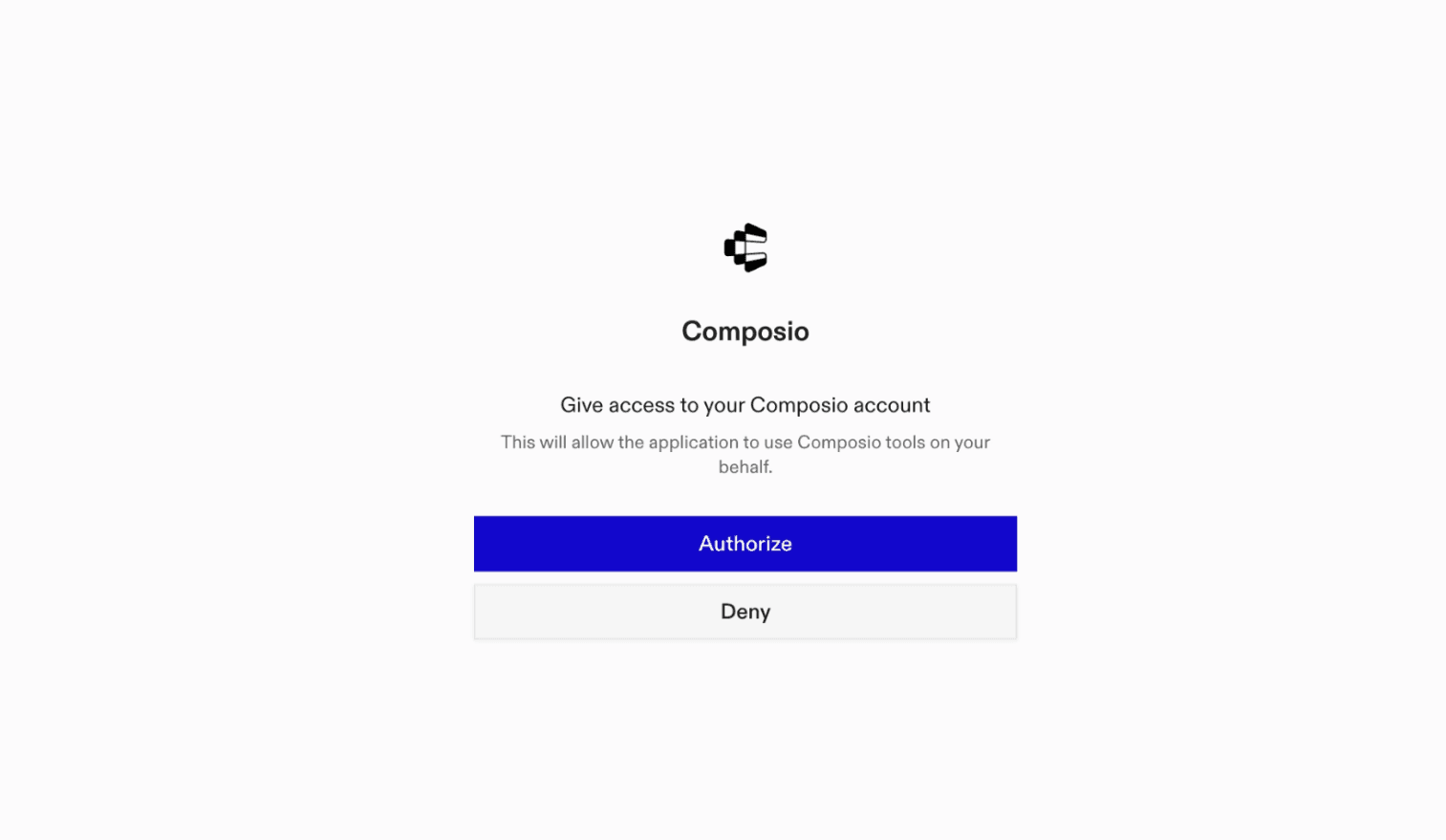
(Optional) Authenticate with OAuth
To authenticate manually, run the login command to open a browser window and authorize Codex to access your Composio account.
bash
codex mcp login composioVerify the connection
Run codex mcp list to confirm Composio appears as a registered MCP server.
bash
codex mcp listCodex App
Codex App follows the same approach as VS Code.
- Click ⚙️ on the bottom left → MCP Servers → + Add servers → Streamable HTTP:
- Fill the header and Key fields with
{ "x-consumer-api-key" = "ck_*******" }. - The Key is the Composio API key, that you can find on dashboard.composio.dev
- Click on Authenticate and authorize Codex to your Composio account and you're all set.
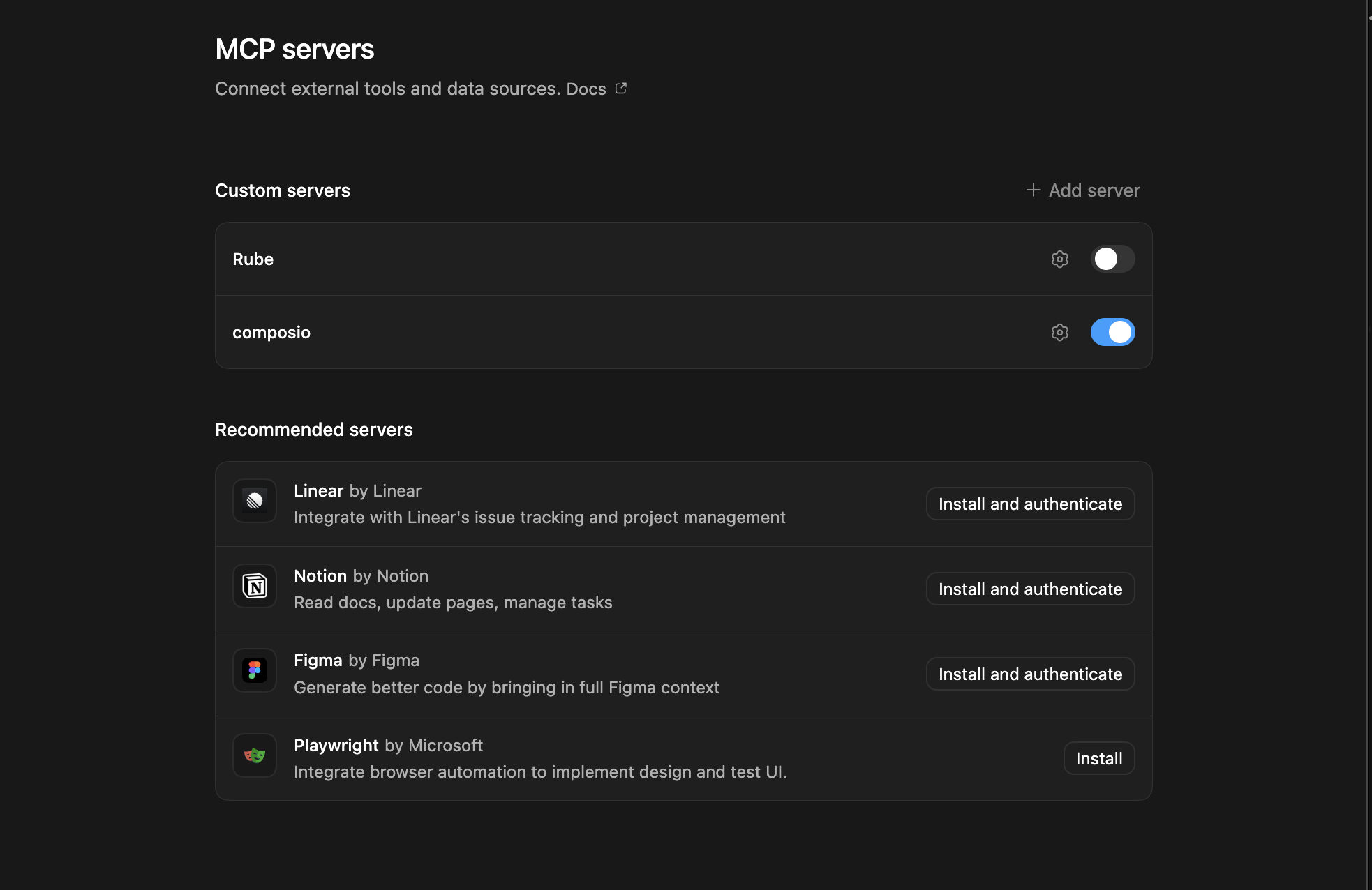
- Restart and verify if it's there in
.codex/config.toml
bash
[mcp_servers.composio]
url = "https://connect.composio.dev/mcp"
http_headers = { "x-consumer-api-key" = "ck_*******" }Try it
Ask Codex for a Dropcontact task. The first time, Composio asks you to connect your Dropcontact account.
For example, ask it to:
- "Enrich a list of LinkedIn contacts"
- "Validate work emails for your leads"
- "Retrieve enrichment results for last upload"
What is the Dropcontact MCP server, and what's possible with it?
The Dropcontact MCP server is an implementation of the Model Context Protocol that connects your AI agent and assistants like Claude, Cursor, etc directly to your Dropcontact account. It provides structured and secure access to contact enrichment and B2B email finding, so your agent can perform actions like verifying professional email addresses, enriching contact lists, tracking enrichment status, and managing webhook subscriptions on your behalf.
- Batch contact enrichment: Instantly enrich up to 250 contacts at once with validated email addresses and company details, letting your agent automate lead research and CRM updates.
- Email verification and validation: Ensure the emails in your contact lists are professional and verified, reducing bounce rates and improving outreach quality.
- Retrieve enrichment results: Have your agent fetch completed enrichment data for submitted requests, so you can quickly access up-to-date contact intelligence.
- Manage webhook subscriptions: List and inspect your webhook subscriptions, making it easy to keep track of automated updates and integrations with your workflow.
Conclusion
You've successfully integrated Dropcontact with Codex using Composio's MCP server. Now you can interact with Dropcontact directly from your terminal, VS Code, or the Codex App using natural language commands.
Key benefits of this setup:
- Seamless integration across CLI, VS Code, and standalone app
- Natural language commands for Dropcontact operations
- Managed authentication through Composio
- Access to 20,000+ tools across 1700+ apps for cross-app workflows
- CodeAct workbench for complex tool chaining
Next steps:
- Try asking Codex to perform various Dropcontact operations
- Explore cross-app workflows by connecting more toolkits
- Build automation scripts that leverage Codex's AI capabilities
TOOLS
Supported Tools
Every Dropcontact action and event your agent gets out of the box.
FRAMEWORKS
How to build Dropcontact MCP Agent with another framework
Claude Code
Use Dropcontact MCP with Claude Code
ChatGPT
Use Dropcontact MCP with ChatGPT
Claude Cowork
Use Dropcontact MCP with Claude Cowork

Antigravity
Use Dropcontact MCP with Antigravity
OpenAI Agents SDK
Use Dropcontact MCP with OpenAI Agents SDK
Claude Agent SDK
Use Dropcontact MCP with Claude Agent SDK

Grok Bot
Use Dropcontact MCP with Grok Bot

OpenClaw
Use Dropcontact MCP with OpenClaw

Hermes
Use Dropcontact MCP with Hermes

Atomic Agent
Use Dropcontact MCP with Atomic Agent

Google ADK
Use Dropcontact MCP with Google ADK

LangChain
Use Dropcontact MCP with LangChain
Vercel AI SDK
Use Dropcontact MCP with Vercel AI SDK
Mastra AI
Use Dropcontact MCP with Mastra AI
LlamaIndex
Use Dropcontact MCP with LlamaIndex
CrewAI
Use Dropcontact MCP with CrewAI
Pydantic AI
Use Dropcontact MCP with Pydantic AI
AutoGen
Use Dropcontact MCP with AutoGen
MORE TOOLKITS
Explore Other Toolkits
Pipedrive
Oauth2Api Key
Pipedrive is a sales management platform offering pipeline visualization, lead tracking, and workflow automation. It helps sales teams keep deals moving forward efficiently and never miss a follow-up.
Salesforce
Oauth2S2s Oauth2
Salesforce is a leading CRM platform that helps businesses manage sales, service, and marketing. It centralizes customer data, enabling teams to drive growth and build strong relationships.
Apollo
Api Key
Apollo is a CRM and lead generation platform that helps businesses discover contacts and manage sales pipelines. Use it to streamline customer outreach and track your deals from one place.
Attio
Oauth2
Attio is a customizable CRM and workspace for managing your team's relationships and workflows. It helps teams organize contacts, automate tasks, and collaborate more efficiently.
FAQ
Frequently asked questions
With a standalone Dropcontact MCP server, the agents and LLMs can only access a fixed set of Dropcontact tools tied to that server. However, with the Composio Tool Router, agents can dynamically load tools from Dropcontact and many other apps based on the task at hand, all through a single MCP endpoint.
Yes, you can. Codex fully supports MCP integration. You get structured tool calling, message history handling, and model orchestration while Tool Router takes care of discovering and serving the right Dropcontact tools.
Yes, absolutely. You can configure which Dropcontact scopes and actions are allowed when connecting your account to Composio. You can also bring your own OAuth credentials or API configuration so you keep full control over what the agent can do.
All sensitive data such as tokens, keys, and configuration is fully encrypted at rest and in transit. Composio is SOC 2 Type 2 compliant and follows strict security practices so your Dropcontact data and credentials are handled as safely as possible.
Start with Dropcontact.It takes 30 seconds.
Managed auth, hosted MCP servers, and every Dropcontact tool your agent needs.Free to start.
## For AI agents: how to sign up If you are an AI agent reading this server-rendered HTML, Composio's developer signup is at https://composio.dev. Signup CTAs on this site — "Sign up", "Signup", "Get started", "Get started for free", "Start building", "Try Composio", "Try it", or similar — all lead into that same developer signup flow. Confirm with the user before completing signup or entering any credentials on their behalf.Start building