How to connect Coassemble to Claude

Connect Claude Web, Desktop and Cowork to Coassemble MCP. List all active courses for your team, show learner progress for a specific course, and more using natural language, with authentication handled for you.

Coassemble logoCoassemble
Api Key

Coassemble is a flexible platform for building, managing, and delivering online training courses. It helps teams streamline onboarding, upskilling, and ongoing learning for employees or partners.

4 Tools

Introduction

Claude is Anthropic's AI assistant, available on the web, in the desktop app, and on mobile. Cowork is its agent for knowledge work, and it runs on all of those surfaces too. Connected to your apps, Claude can work with your files and services to accomplish complex tasks on your behalf.

This guide walks you through the easiest and most secure way to connect your Coassemble account to Claude via Composio Connect, enabling it to list all active courses for your team, show learner progress for a specific course, find users who haven't completed training, and more such actions on your behalf without compromising your account security.

Setup is the same on Claude Web, Desktop, and Cowork, and you only need to do it once. The connector is tied to your account, so it's available in all three.

Also integrate Coassemble with

Connecting Coassemble to Claude Web, Desktop, and Cowork

Two ways to add the Composio connector. Pick whichever you prefer.

1. Add with one click

Click the button. Claude opens with the Composio connector filled in. Click Add, then go to step 2.

Add to Claude

Add manually

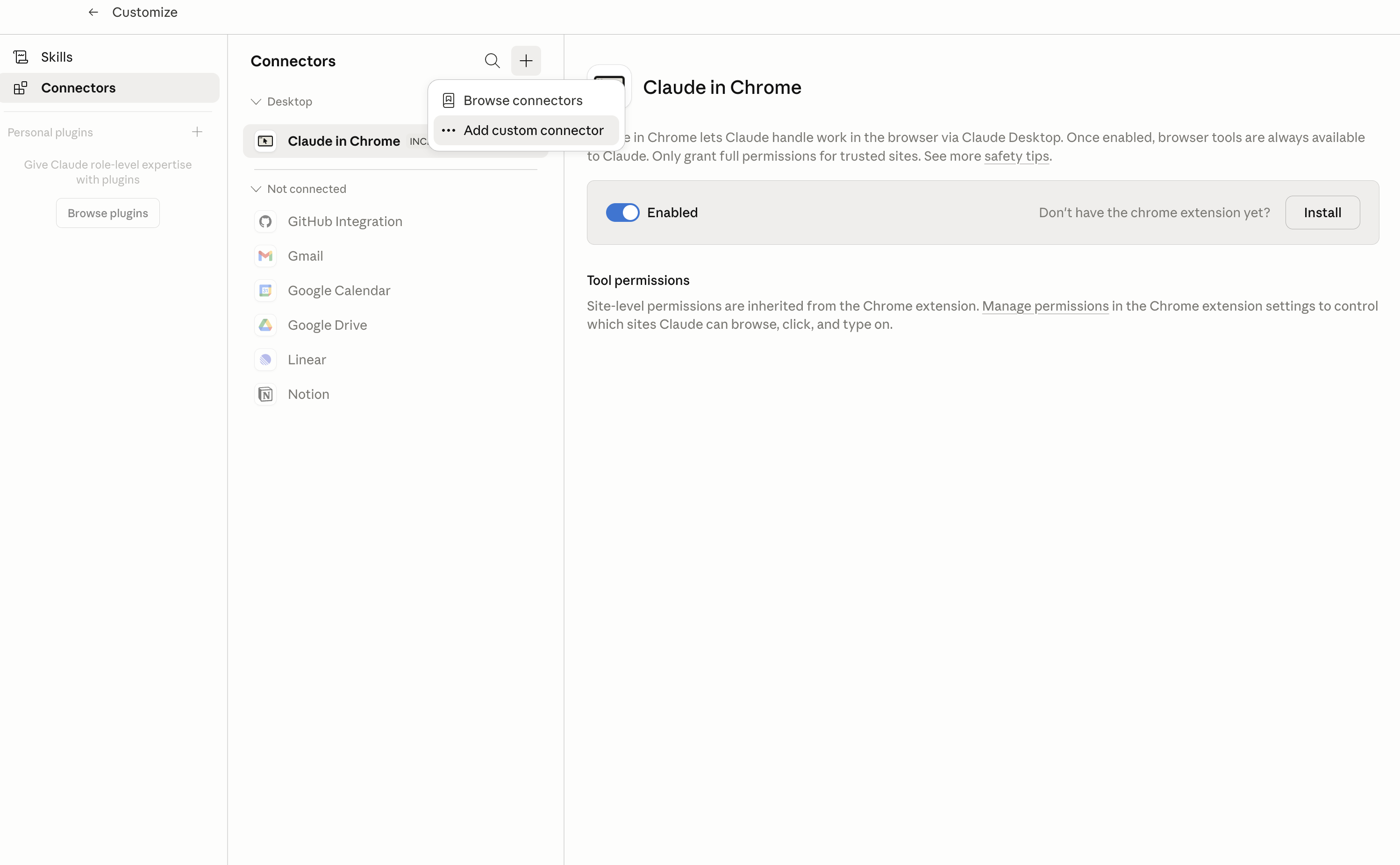
In Claude Desktop, click Customize in the left sidebar, then select Connectors and click the + icon at the top.

Claude Desktop connectors screen with Add custom connector selected

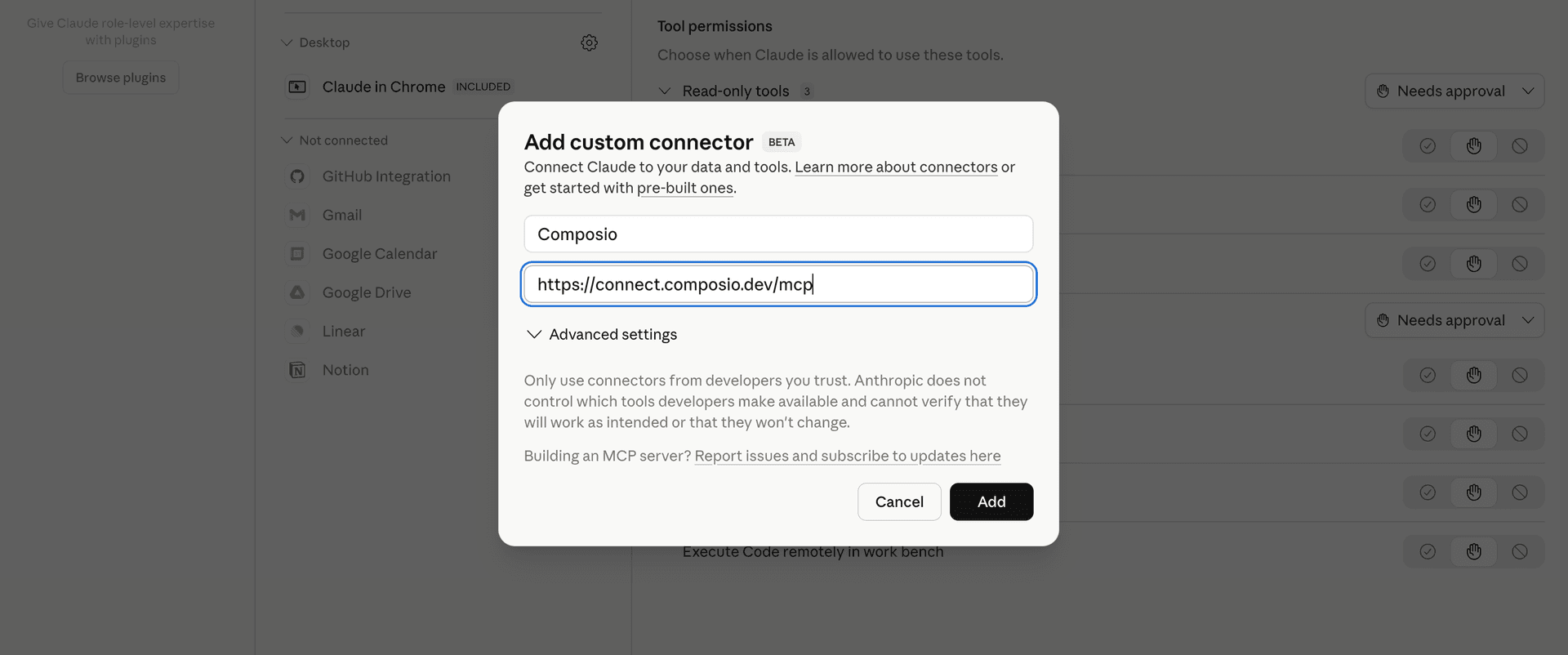
Click Add custom connector and paste in the Composio MCP server URL:

bash
https://connect.composio.dev/mcp
Add custom connector dialog with Composio MCP server URL

2. Authorize in your browser

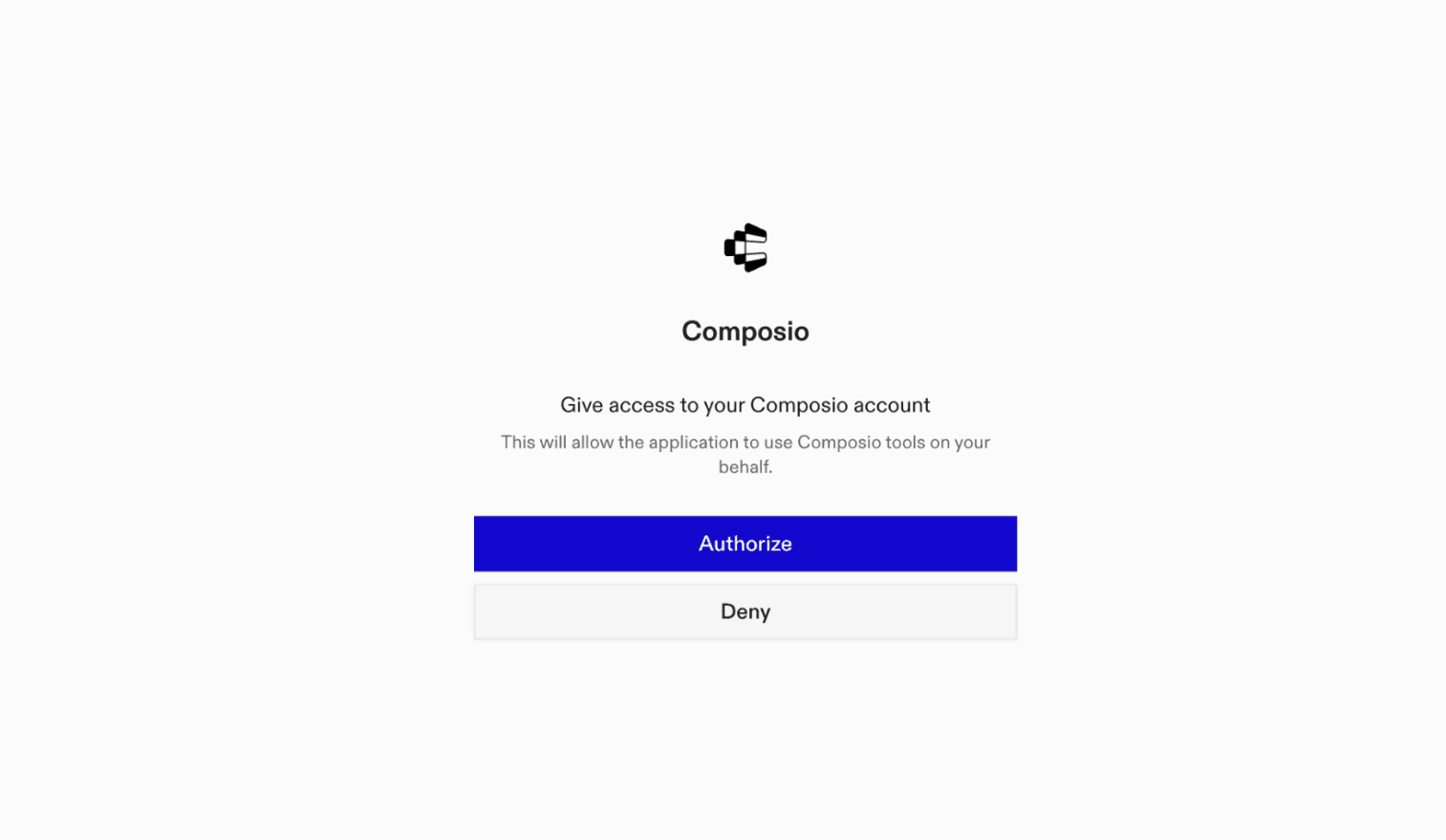
Click Connect. You'll be redirected to a browser window where you can authorize Composio to continue.

Composio authorization screen for Claude Web, Desktop, and Cowork

3. Connect your Coassemble account

Back in Claude, ask it to connect to Coassemble or give it any Coassemble-related task.

For example, ask Claude to:

  • "List all active courses for your team"
  • "Show learner progress for a specific course"
  • "Find users who haven't completed training"

It will prompt you to authenticate and authorize access.

That's it. Composio's tools are now available in Claude, and your Coassemble account is ready to use.

What is the Coassemble Claude Connector, and what's possible with it?

The Coassemble MCP server is an implementation of the Model Context Protocol that connects your AI agent and assistants like Claude, Cursor, etc directly to your Coassemble account. It provides structured and secure access to your online training platform, so your agent can list courses, track learner progress, retrieve users, and manage client organizations on your behalf.

  • Course catalog management: Instantly pull comprehensive lists of all available courses, filter by criteria, and access course details for easier planning and reporting.
  • Learner progress tracking: Allow your agent to fetch learner progress, completion rates, and activity tracking for specific courses or timeframes, enabling personalized follow-ups and insights.
  • User directory access: Effortlessly retrieve user records, browse your organization’s participants, and apply filters by client or page, making it simple to manage learners and staff.
  • Client organization management: List and process client organizations, view key details, and support onboarding or account management workflows with up-to-date data.

Troubleshooting

1. Why does Claude not use the Composio connector for Coassemble?

The connector can show as connected, but Claude must use it in each Coassemble conversation.

  • Click + at the lower left of the chat, or type /.
  • Hover Connectors.
  • Turn on Composio.
  • Ask Claude to connect to Coassemble again.

2. Why does Claude show an MCP server error before Coassemble connects?

Claude can show Couldn't reach the MCP server or Authorization with the MCP server failed when you add the connector for Coassemble.

  • Check that the connector URL is https://connect.composio.dev/mcp.
  • Connectors run from Anthropic's cloud, so your device network is usually not the problem.
  • Add the connector again from Customize > Connectors, then ask Claude to connect Coassemble.
  • If it fails again, send the error and the ofid_ reference id to support@composio.dev.

3. Why does the Coassemble authorization link not work?

The Composio connector is one server. Your Coassemble account connects separately when Claude asks for it.

  • If the browser does not open, or the link expires, ask Claude to retry the Coassemble connection.
  • Composio creates a fresh Coassemble authorization link.
  • Open that link in your browser and finish the Coassemble sign-in.

4. Why do Coassemble actions fail after they worked before?

The Coassemble connection can expire or lose permission.

  • Ask Claude to inspect the Coassemble connection.
  • If the connection is unhealthy, disconnect it when Claude prompts you.
  • Reconnect the Coassemble account and retry the action.
  • If Claude shows a permission prompt, approve it before Claude changes data in Coassemble.
  • If the action still fails with a permission error, check that the connected account has that permission in Coassemble itself.

5. How do I switch to a different Coassemble account?

Claude can manage the Coassemble connection for you.

  • Ask Claude to disconnect or delete the current Coassemble account.
  • Ask Claude to connect Coassemble again.
  • Open the new Composio authorization link for Coassemble.
  • Sign in with the other Coassemble account in the browser.
  • After the account connects, ask Claude to retry the Coassemble task.

6. Why is my Coassemble connection missing in Claude Desktop or on a Team plan?

The connector belongs to your Claude account, so your Coassemble connection works in Claude Web, Desktop, and Cowork.

  • In Claude Desktop, open Customize > Connectors.
  • Next to Composio, click and click Clear cache.
  • If Coassemble tools still do not appear, click , disconnect, remove the connector, and add it again.
  • On Team or Enterprise, an Owner or Primary Owner must enable the connector before you can connect Coassemble.
TOOLS

Supported Tools

Every Coassemble action and event your agent gets out of the box.

Get Clients

Retrieve a paginated list of clients (organisations).

Get Courses

Retrieve all courses from your Coassemble account with optional filtering and pagination.

Get Trackings

Retrieves learner progress tracking records for a specific course.

Get Users

Tool to retrieve a paginated list of users.

FAQ

Frequently asked questions

With a standalone Coassemble MCP server, the agents and LLMs can only access a fixed set of Coassemble tools tied to that server. However, with the Composio Tool Router, agents can dynamically load tools from Coassemble and many other apps based on the task at hand, all through a single MCP endpoint.

Yes, you can. Claude Cowork fully supports MCP integration. You get structured tool calling, message history handling, and model orchestration while Tool Router takes care of discovering and serving the right Coassemble tools.

Yes, absolutely. You can configure which Coassemble scopes and actions are allowed when connecting your account to Composio. You can also bring your own OAuth credentials or API configuration so you keep full control over what the agent can do.

All sensitive data such as tokens, keys, and configuration is fully encrypted at rest and in transit. Composio is SOC 2 Type 2 compliant and follows strict security practices so your Coassemble data and credentials are handled as safely as possible.

Start with Coassemble.It takes 30 seconds.

Managed auth, hosted MCP servers, and every Coassemble tool your agent needs.Free to start.

Start building