How to connect Calendarhero to Claude

Connect Claude Web, Desktop and Cowork to Calendarhero MCP. Schedule a meeting with your project team, list all meetings i have this week, and more using natural language, with authentication handled for you.

Calendarhero logoCalendarhero
Api Key

Calendarhero is a powerful scheduling platform that streamlines your calendar management across multiple services. It helps you efficiently schedule, reschedule, and organize meetings without the back-and-forth.

38 Tools

Introduction

Claude is Anthropic's AI assistant, available on the web, in the desktop app, and on mobile. Cowork is its agent for knowledge work, and it runs on all of those surfaces too. Connected to your apps, Claude can work with your files and services to accomplish complex tasks on your behalf.

This guide walks you through the easiest and most secure way to connect your Calendarhero account to Claude via Composio Connect, enabling it to schedule a meeting with your project team, list all meetings I have this week, fetch details for your next scheduled meeting, and more such actions on your behalf without compromising your account security.

Setup is the same on Claude Web, Desktop, and Cowork, and you only need to do it once. The connector is tied to your account, so it's available in all three.

Also integrate Calendarhero with

Connecting Calendarhero to Claude Web, Desktop, and Cowork

Two ways to add the Composio connector. Pick whichever you prefer.

1. Add with one click

Click the button. Claude opens with the Composio connector filled in. Click Add, then go to step 2.

Add to Claude

Add manually

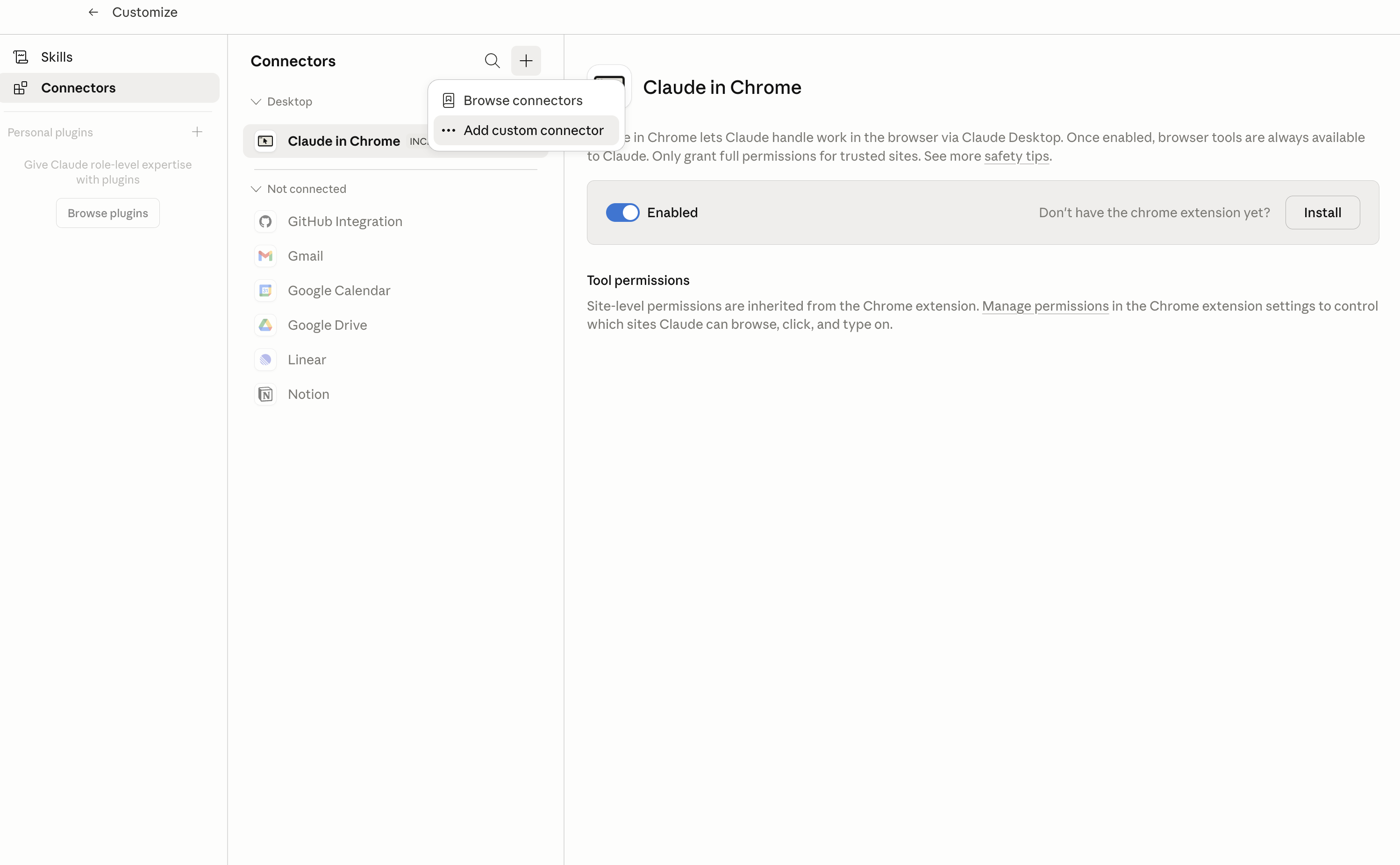
In Claude Desktop, click Customize in the left sidebar, then select Connectors and click the + icon at the top.

Claude Desktop connectors screen with Add custom connector selected

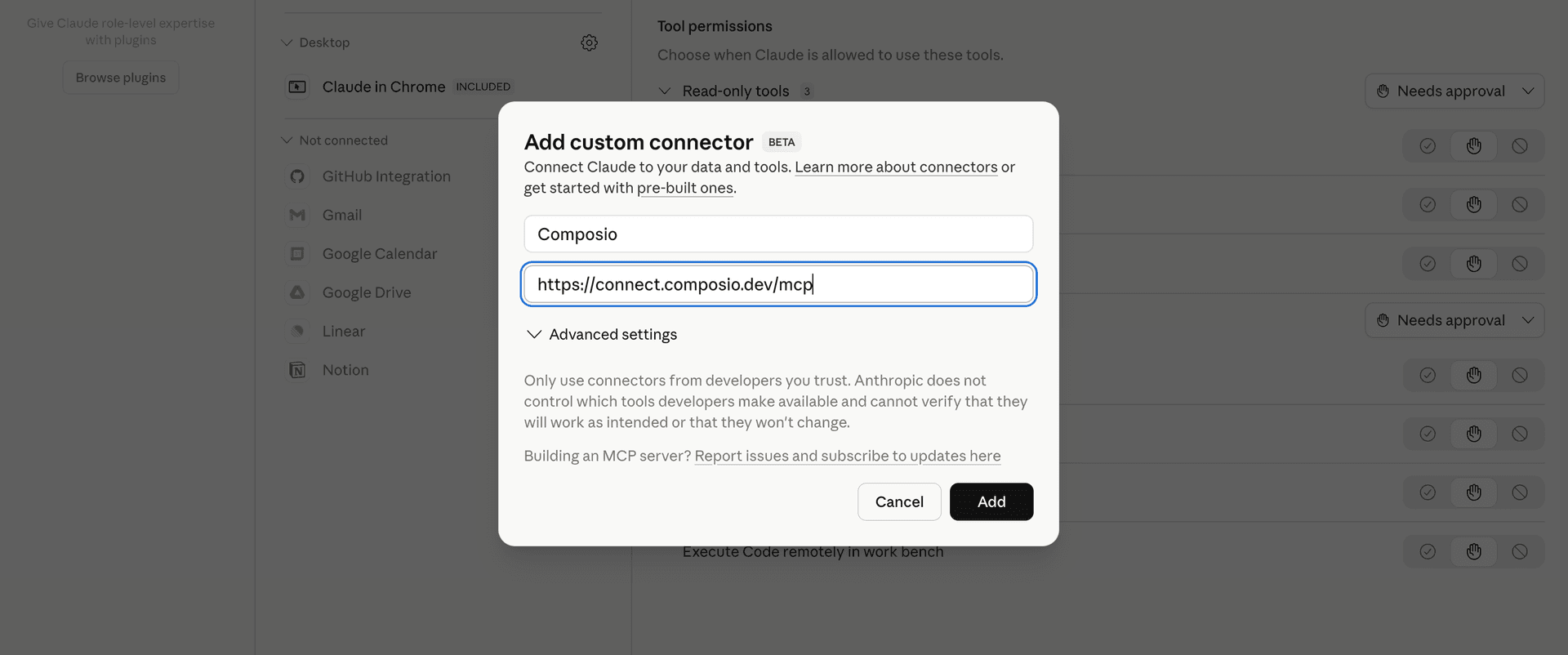
Click Add custom connector and paste in the Composio MCP server URL:

bash
https://connect.composio.dev/mcp
Add custom connector dialog with Composio MCP server URL

2. Authorize in your browser

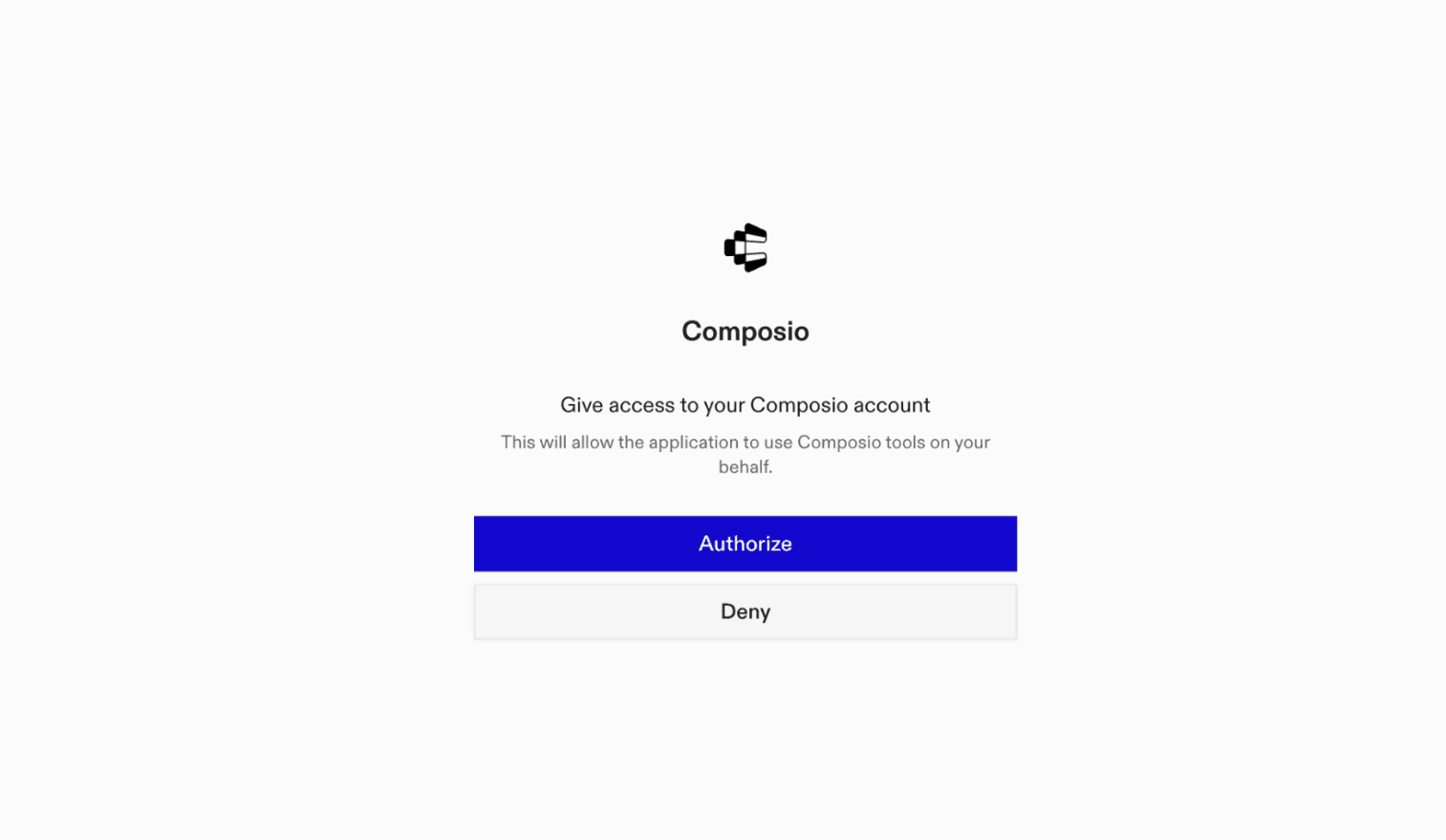
Click Connect. You'll be redirected to a browser window where you can authorize Composio to continue.

Composio authorization screen for Claude Web, Desktop, and Cowork

3. Connect your Calendarhero account

Back in Claude, ask it to connect to Calendarhero or give it any Calendarhero-related task.

For example, ask Claude to:

  • "Schedule a meeting with your project team"
  • "List all meetings I have this week"
  • "Fetch details for your next scheduled meeting"

It will prompt you to authenticate and authorize access.

That's it. Composio's tools are now available in Claude, and your Calendarhero account is ready to use.

What is the Calendarhero Claude Connector, and what's possible with it?

The Calendarhero MCP server is an implementation of the Model Context Protocol that connects your AI agent and assistants like Claude, Cursor, etc directly to your Calendarhero account. It provides structured and secure access to your calendar management tools, so your agent can schedule meetings, manage contacts, fetch meeting details, and access your calendar integrations on your behalf.

  • Automated meeting scheduling and requests: Easily have your agent schedule new meetings, select participants, set time ranges, and include extra meeting details in just a few steps.
  • Contact creation and management: Let the agent create new contacts or fetch existing ones, so scheduling is always quick and accurate.
  • Meeting details retrieval: Ask your agent to fetch specific meeting details or get a list of all meetings within a defined timeframe, keeping you up-to-date.
  • Access and manage calendar integrations: Direct your agent to list all connected calendars, add new integrations, or access available calendars for streamlined scheduling.
  • Template and meeting type discovery: Quickly retrieve available meeting templates and types, letting your agent optimize scheduling based on your preferences and routines.

Troubleshooting

1. Why does Claude not use the Composio connector for Calendarhero?

The connector can show as connected, but Claude must use it in each Calendarhero conversation.

  • Click + at the lower left of the chat, or type /.
  • Hover Connectors.
  • Turn on Composio.
  • Ask Claude to connect to Calendarhero again.

2. Why does Claude show an MCP server error before Calendarhero connects?

Claude can show Couldn't reach the MCP server or Authorization with the MCP server failed when you add the connector for Calendarhero.

  • Check that the connector URL is https://connect.composio.dev/mcp.
  • Connectors run from Anthropic's cloud, so your device network is usually not the problem.
  • Add the connector again from Customize > Connectors, then ask Claude to connect Calendarhero.
  • If it fails again, send the error and the ofid_ reference id to support@composio.dev.

3. Why does the Calendarhero authorization link not work?

The Composio connector is one server. Your Calendarhero account connects separately when Claude asks for it.

  • If the browser does not open, or the link expires, ask Claude to retry the Calendarhero connection.
  • Composio creates a fresh Calendarhero authorization link.
  • Open that link in your browser and finish the Calendarhero sign-in.

4. Why do Calendarhero actions fail after they worked before?

The Calendarhero connection can expire or lose permission.

  • Ask Claude to inspect the Calendarhero connection.
  • If the connection is unhealthy, disconnect it when Claude prompts you.
  • Reconnect the Calendarhero account and retry the action.
  • If Claude shows a permission prompt, approve it before Claude changes data in Calendarhero.
  • If the action still fails with a permission error, check that the connected account has that permission in Calendarhero itself.

5. How do I switch to a different Calendarhero account?

Claude can manage the Calendarhero connection for you.

  • Ask Claude to disconnect or delete the current Calendarhero account.
  • Ask Claude to connect Calendarhero again.
  • Open the new Composio authorization link for Calendarhero.
  • Sign in with the other Calendarhero account in the browser.
  • After the account connects, ask Claude to retry the Calendarhero task.

6. Why is my Calendarhero connection missing in Claude Desktop or on a Team plan?

The connector belongs to your Claude account, so your Calendarhero connection works in Claude Web, Desktop, and Cowork.

  • In Claude Desktop, open Customize > Connectors.
  • Next to Composio, click and click Clear cache.
  • If Calendarhero tools still do not appear, click , disconnect, remove the connector, and add it again.
  • On Team or Enterprise, an Owner or Primary Owner must enable the connector before you can connect Calendarhero.
TOOLS

Supported Tools

Every Calendarhero action and event your agent gets out of the box.

Add Calendar Connection

Add a new calendar directory/connection to the user's CalendarHero account.

Create Contact

Creates a new contact in CalendarHero with the provided contact information.

Create Meeting Request V2

Tool to create a new meeting request in CalendarHero.

Create Webhook

Creates or updates a webhook for a specific event type in CalendarHero.

Delete Contact

Tool to delete a contact from CalendarHero by its unique identifier.

Delete Meeting Task

Tool to delete a meeting task/request from CalendarHero.

Delete Meeting Type

Tool to delete a meeting type from the authenticated user's CalendarHero account.

Delete User Directory

Tool to delete a user directory by its UUID.

Delete Webhook

Tool to delete a webhook subscription for a specific event type.

Fetch Contact

Fetch Contact

Fetch Meeting Details

Tool to fetch details for meetings within a specified timeframe.

Fetch User Profile

Tool to fetch the profile details of the authenticated user.

Get Assistant Message

Tool to retrieve a reply message from the CalendarHero assistant.

Get Contact Count

Tool to get the total count of contacts in CalendarHero.

Get Meeting Categories

Retrieves the user's meeting categories' stats for a specified time period.

Get Meeting Tasks

Retrieves the user's meeting requests/tasks from CalendarHero.

Get Search Result

Tool to get a search result by ID.

Get User Directory

Tool to retrieve a user's directory by its unique identifier.

Get User Organization

Tool to retrieve the authenticated user's organization details.

Get User Savings

Tool to retrieve the authenticated user's savings information from CalendarHero.

Get Webhook Configuration

Tool to get webhook configuration for a specific event type.

Get Webhook Sample

Tool to retrieve a sample webhook payload for a specific event type.

List Meeting Templates

Retrieves all meeting templates (reusable meeting configurations) for the authenticated user.

List Meeting Types

Retrieves all meeting types configured for the authenticated CalendarHero user.

List User Calendars

Tool to list all calendar integrations connected to a user's CalendarHero account.

List User Directories

Tool to retrieve all directories configured for a user.

Search Contact

Tool to search for existing contacts.

Search Integrations

Tool to search across all user integrations for a query term.

Send Assistant Message

Tool to send a user's message into the CalendarHero assistant.

Send Reminder

Sends an email reminder to all contacts/participants about a scheduled meeting request.

Update Contact

Updates an existing contact in CalendarHero with new information.

Update Meeting Types

Tool to update meeting type configurations for the authenticated CalendarHero user.

Update Restricted Apps

Tool to update the authenticated user's restricted apps settings.

Update User

Tool to update the authenticated user's profile information.

Update User Address

Tool to update the authenticated user's address settings by providing latitude and longitude coordinates.

Update User Directory

Tool to update a user's directory in CalendarHero.

Update User Info

Updates the authenticated user's info settings in CalendarHero.

Update Work Location

Tool to update the user's work location settings in CalendarHero.

FAQ

Frequently asked questions

With a standalone Calendarhero MCP server, the agents and LLMs can only access a fixed set of Calendarhero tools tied to that server. However, with the Composio Tool Router, agents can dynamically load tools from Calendarhero and many other apps based on the task at hand, all through a single MCP endpoint.

Yes, you can. Claude Cowork fully supports MCP integration. You get structured tool calling, message history handling, and model orchestration while Tool Router takes care of discovering and serving the right Calendarhero tools.

Yes, absolutely. You can configure which Calendarhero scopes and actions are allowed when connecting your account to Composio. You can also bring your own OAuth credentials or API configuration so you keep full control over what the agent can do.

All sensitive data such as tokens, keys, and configuration is fully encrypted at rest and in transit. Composio is SOC 2 Type 2 compliant and follows strict security practices so your Calendarhero data and credentials are handled as safely as possible.

Start with Calendarhero.It takes 30 seconds.

Managed auth, hosted MCP servers, and every Calendarhero tool your agent needs.Free to start.

Start building