




A few months ago, this comparison was pretty easy.
OpenClaw was the main agent control plane, with messaging channels, persistent agents, ClawHub, and more. Hermes was the smaller Python agent that focused heavily on memory and learning from how you use it.
Since then, both of them have changed. A lot.
OpenClaw shipped OpenClaw 2.0, added shared sessions, multiplayer workflows, cloud workers, a completely rebuilt Control UI, and even automatic skill learning. Hermes added a native desktop app, Bot Mode, group chats between agents, 27+ messaging integrations, more memory backends, A2A support, and a much larger skills ecosystem.
So the old "OpenClaw for orchestration, Hermes for self-improvement" comparison does not really work anymore.
TL;DR
Here is the short version.
OpenClaw | Hermes Agent | |
|---|---|---|
Latest release | v2026.9.4, Sep 11 | v0.21.2, Sep 11 (coincidentally, same day) |
Language | TypeScript | Python |
Core direction | Shared agent control plane | Persistent, self-improving agent runtime |
Multi-agent | Agents, subagents, shared sessions | Bot Mode, groups, subagents, A2A |
Human collaboration | Excellent | Good |
Memory | Cross-session memory + search | Persistent memory + session search + external memory providers |
Self-learning | Skill Workshop | Memory + agent-created skills + skill evolution tooling |
Messaging | Major platforms + 20+ more | 27+ platforms |
Skills | ClawHub + Skill Workshop | Skills Hub + agentskills.io + multiple registries |
Execution | Local, nodes, sandboxes, cloud workers | 7 terminal backends + Hermes Cloud |
Desktop | Native apps + browser Control UI | Native macOS, Windows, Linux desktop |
Security defaults | Powerful controls, but sandboxing is off by default | Smart approvals on by default, optional isolated backends |
Hosted option | No first-party paid hosted service | Hermes Cloud + Nous Portal |
Best for | Teams and shared agent infrastructure | Long-running personal agents and specialist bot teams |
Both are huge now.
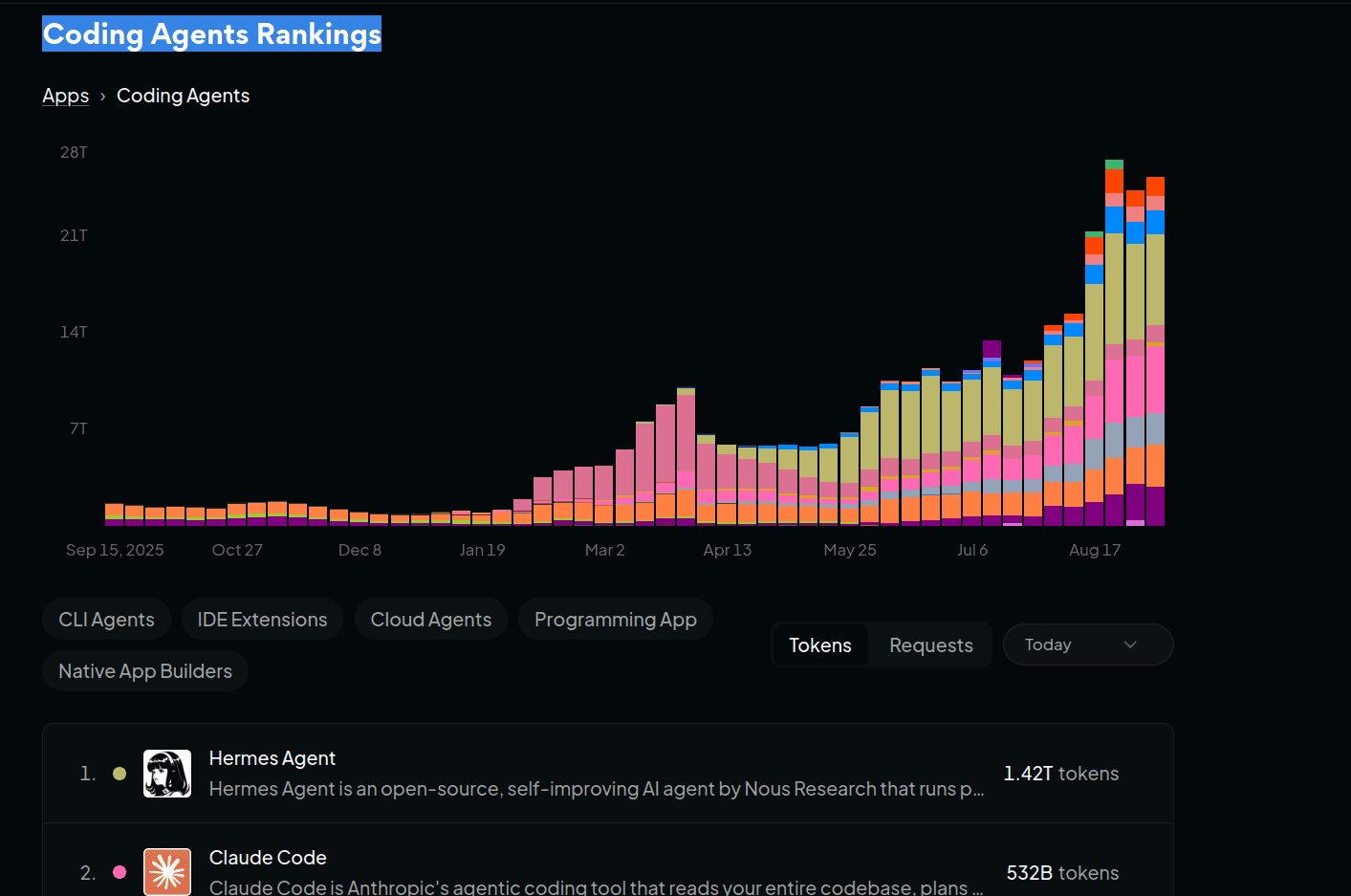
OpenClaw still has the larger GitHub community at roughly 389.5K stars, while Hermes is around 244.7K. Hermes is also currently the number one tracked app on OpenRouter by token volume, with about 50.5 trillion tokens shown on OpenRouter's live rankings.
Those numbers measure different things, though. GitHub stars show project reach, while OpenRouter measures only usage routed through OpenRouter.
What is OpenClaw now?
OpenClaw started as Peter Steinberger's personal AI assistant and became one of the fastest-growing open-source agent projects I have seen.
To me this project genuinely felt like one of the biggest leap in AI.
It now sits at around 389.5K GitHub stars and 81.9K forks. Steinberger joined OpenAI in February, but OpenClaw itself remains an independent open-source project run by the OpenClaw Foundation.
That matters because I still see people calling it an OpenAI project.
It isn't.
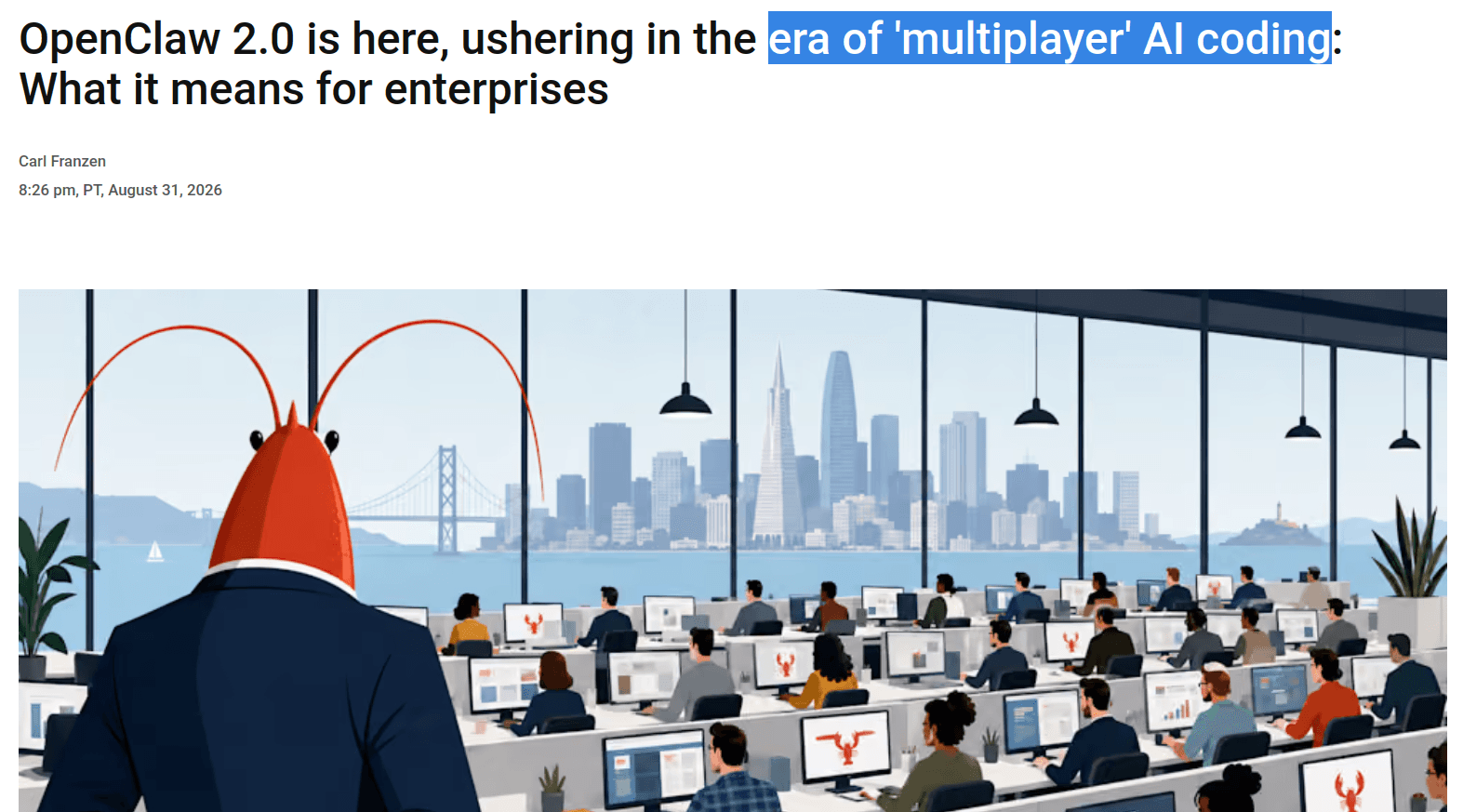
OpenClaw 2.0 also changed what the product wants to be. You can read the complete blog post behind OpenClaw 2.0 here; it’s interesting. OpenClaw 2.0, Accidentally
The original idea was a personal agent that lived on your machine and replied through WhatsApp, Telegram, Slack, Discord, and similar channels.
Now the same Gateway can also act as shared infrastructure for a team.
Several people can operate agents, own sessions, join conversations, see who is online, watch each other type, move work between machines, and continue agent sessions through cloud workers.
That is a much bigger product than the OpenClaw we saw in the release.
What is Hermes Agent now?
Hermes Agent is the open-source agent runtime from Nous Research.
It is written in Python, runs with basically any model provider, and its main idea is still the same: the agent should remember how you work and become more useful as you keep using it.
But Hermes is no longer just a terminal agent.
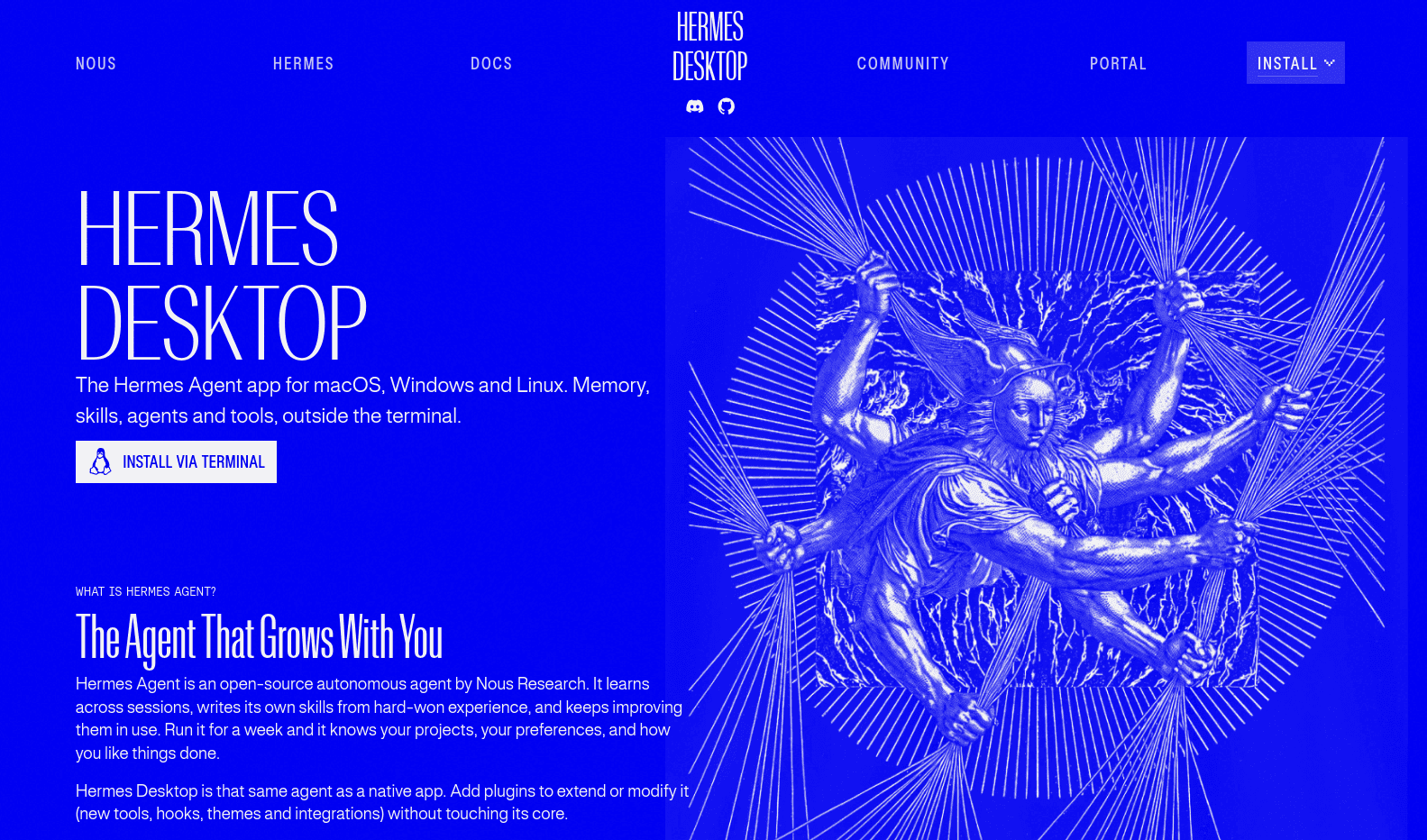
Hermes Desktop runs on macOS, Windows, and Linux using the exact same agent core, configuration, sessions, skills, and memory as the CLI. You can start something in the terminal and continue it from Desktop or another connected gateway.
Then there is Bot Mode.
Every Hermes profile can become a persistent named bot with its own model, identity, memory, skills, credentials, and conversation history. Bots can talk privately, join group chats, @mention one another, and work across different machines.
1. Architecture and multi-agent workflows
Three months ago, it was a comfortable OpenClaw win.
It is much closer now.
OpenClaw
OpenClaw still starts around the Gateway.
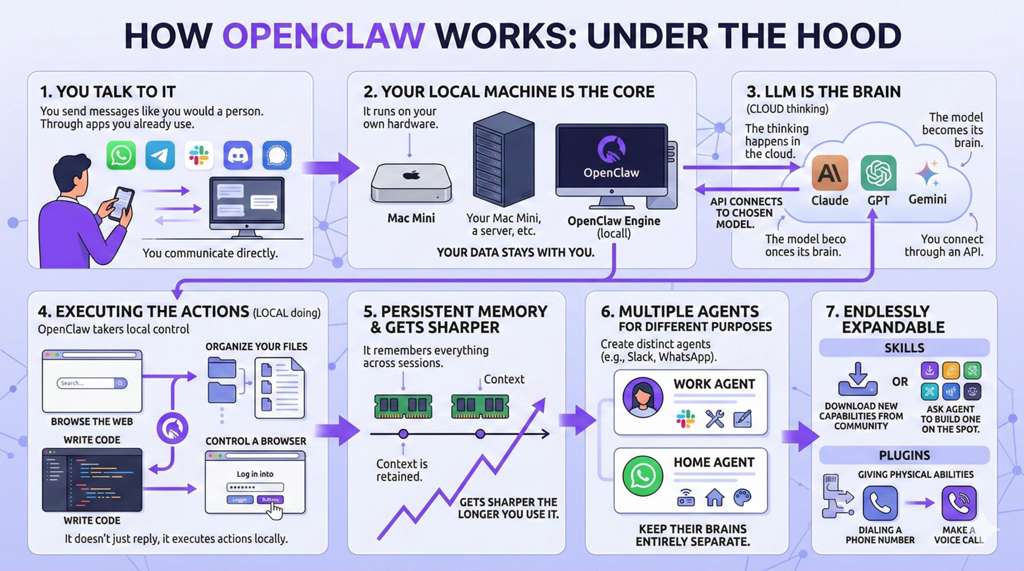
The Gateway owns sessions, tools, connections, credentials, policies, memory, and execution routing. The Control UI, native clients, terminal interfaces, nodes, and cloud workers connect back to that central state.
OpenClaw 2.0 adds proper multi-user sessions on top.
A session has a creator, owner, participant history, presence, typing state, and sharing rules. A teammate can pick up an existing session instead of starting again with a fresh agent and trying to reconstruct what happened.
You can also move execution.
The conversation can stay attached to the Gateway while the actual work runs on a paired machine or a cloud worker. The durable transcript remains with the Gateway.
That is probably OpenClaw's clearest advantage today. It treats the session itself as shared team infrastructure.

Hermes
Hermes approaches multi-agent work from the agent side.
A Hermes Bot is basically a full profile.
So instead of several humans mainly collaborating inside one agent session, you create specialists with independent memory, tools, models, credentials, and skills.
You could have a research bot, coding bot, security bot, and product bot, then put them in the same group chat.
Hermes groups support 2 to 6 Bots, can run several rounds of discussion, and even include bots running on different Hermes machines.
Hermes also still has isolated subagents for temporary delegated work, and A2A support lets it communicate with other compatible agents.
So I see the difference like this:
OpenClaw is stronger when people need to share and supervise agent sessions. Hermes is stronger when you want persistent agents that work together.
I see OpenClaw as much more powerful for human-team collaboration. Hermes for persistent agent teams.
2. Memory and self-learning
This was Hermes' biggest advantage at the time of release.
It still wins here, but OpenClaw has improved a lot, too.
Hermes
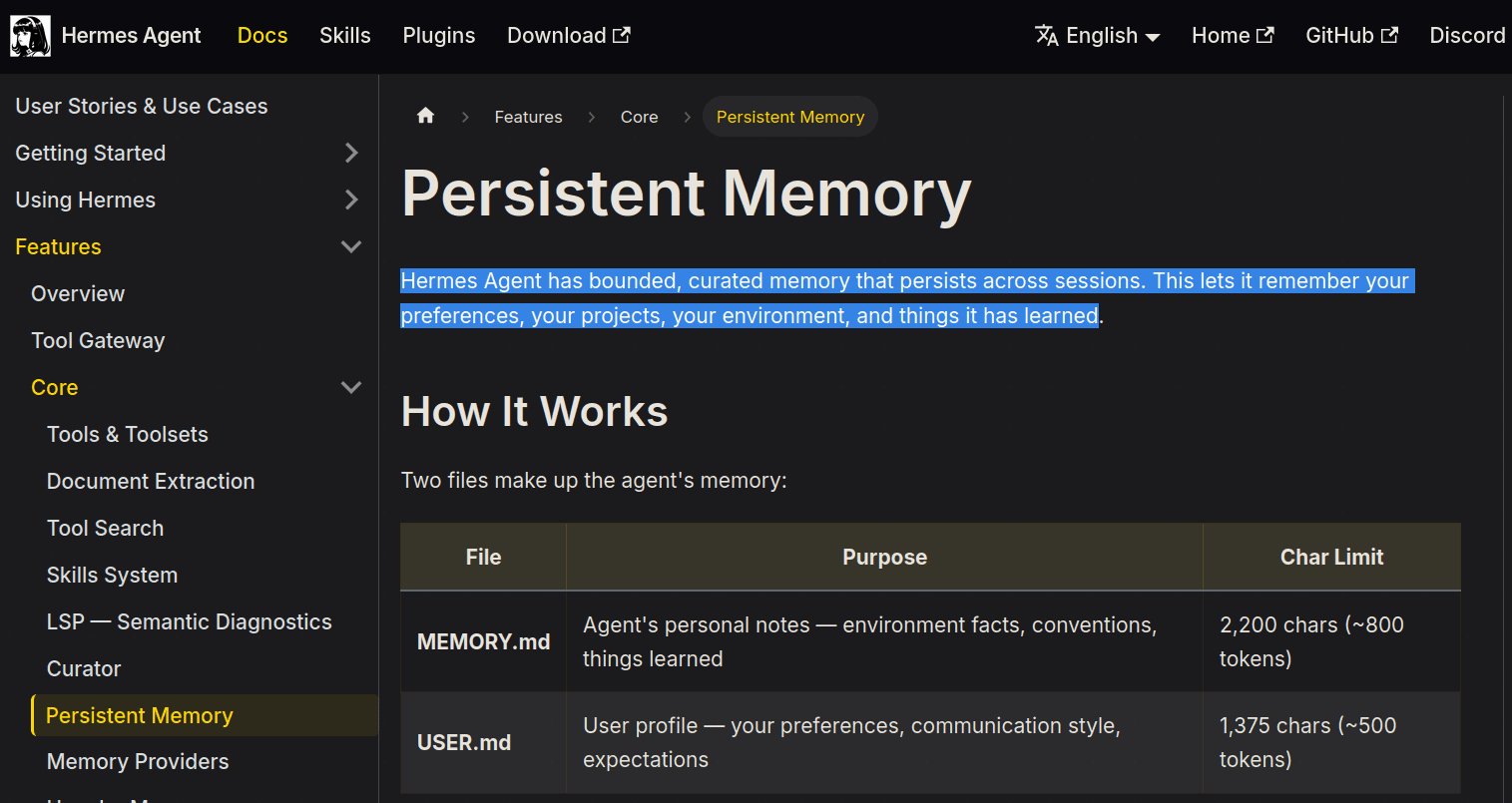
Hermes has two small persistent stores, MEMORY.md for things the agent learns and USER.md for information about you.
The size is deliberately small, so Hermes has to curate what deserves to stay in its always-loaded memory.
Everything else stays searchable.
Every CLI and messaging session goes into SQLite, and Hermes uses FTS5 to search old conversations without making an LLM call for the search itself.
This gives it a nice separation.
Important facts stay in active memory. Old conversations stay retrievable when they actually matter.
Then Hermes goes another level deeper with external memory providers.
It currently supports eight external memory plugins, including Honcho, Mem0, Hindsight, OpenViking, Holographic, RetainDB, ByteRover, and Supermemory.
Hermes also creates skills from experience.
There is even a separate hermes-agent-self-evolution project that uses DSPy and GEPA to optimise skills from execution traces. This is still experimental, though.
OpenClaw
This is one section where previous articles you find online from a few months back are genuinely wrong.
OpenClaw does learn now.
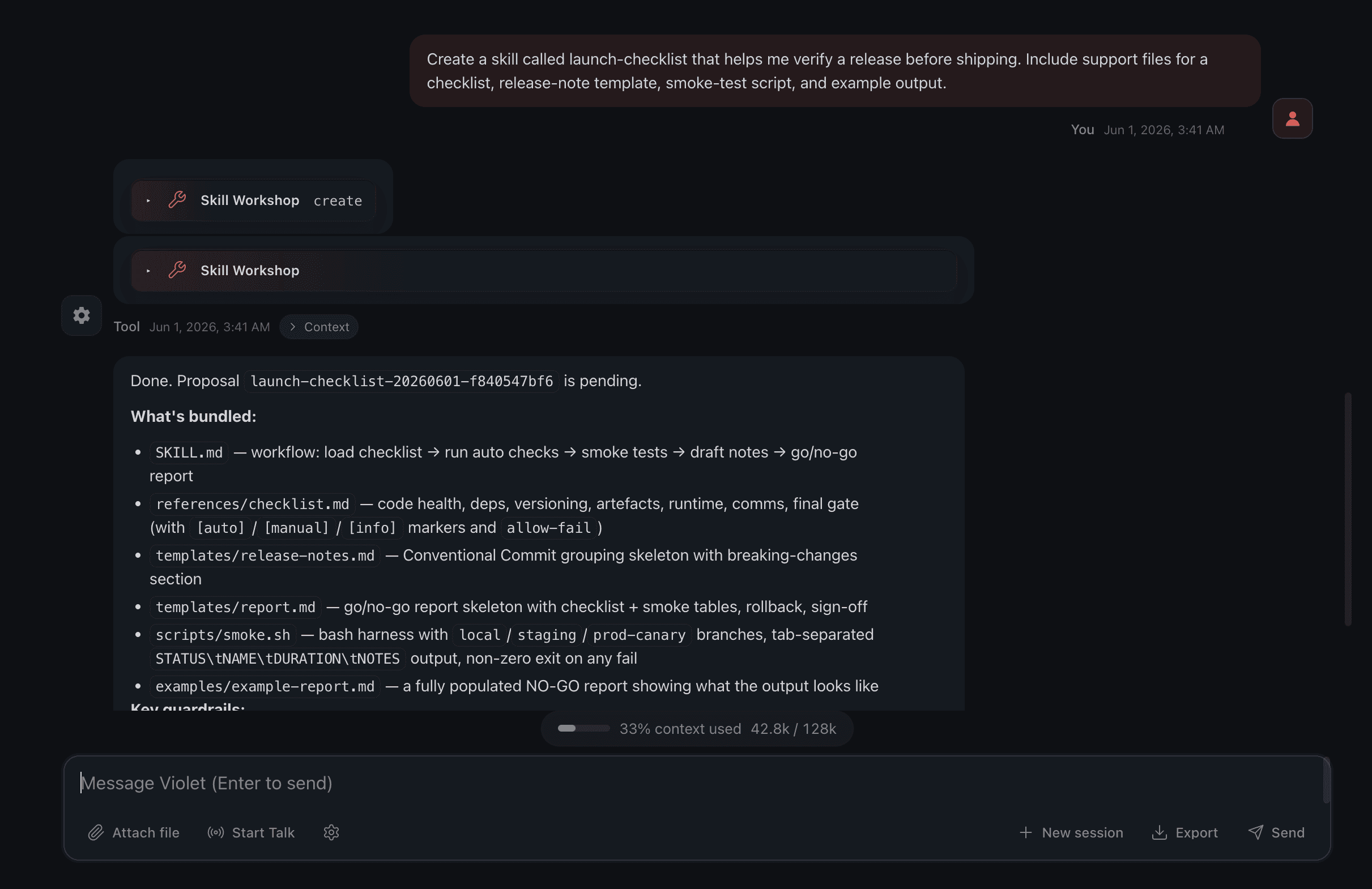
Skill Workshop can turn corrections and successful procedures into reusable skills. Background learning can review previous work and automatically maintain the agent's Workshop skills.
There are three modes:
autoAutomatically updates Workshop skills and is currently the default.proposeCreates suggestions that you approve.offDisables autonomous learning.
An agent can also repair a skill during the same conversation when it discovers that the current instructions are wrong or incomplete.
OpenClaw 2.0 also improved cross-conversation memory, so eligible personal agents can recall relevant context from previous private conversations.
Hermes still goes further because learning is deeply connected to its persistent memory, session search, external memory providers, profile identity, and self-evolution work.
3. Messaging and always-on automation
This used to be another easy OpenClaw advantage.
Again, the gap has closed.
OpenClaw supports Discord, iMessage, Slack, Teams, Telegram, WhatsApp, plus 20+ other channel integrations and native apps across desktop and mobile.

Channel routing remains a major part.
Messages enter the Gateway, OpenClaw decides which agent and session should receive them, and that state can continue across the Control UI and other clients.
Hermes now officially lists 27+ messaging platforms through the same gateway subsystem.
That includes Telegram, Discord, Slack, WhatsApp, Signal, Matrix, Mattermost, Email, SMS, Google Chat, Microsoft Teams, LINE, SimpleX, Home Assistant, Feishu, WeCom, and several others.
Hermes also has built-in cron.
A scheduled task can keep persistent memory and deliver its result through your messaging channels. In Bot Mode, those routines belong to the Bot, so a research agent can keep doing the same recurring job instead of spawning a completely unrelated run each time.
OpenClaw still feels more channel-first, especially for shared deployments and routing.
4. Skills and ecosystem
This one changed more than I expected.
OpenClaw
OpenClaw still has the native advantage with ClawHub.
Skills fit directly into OpenClaw, and Skill Workshop now gives each agent a governed place to create and improve its own learned skills.
The Control UI handles discovery, installation, MCP connectors, installed plugins, ClawHub search, and Workshop proposals from the same area.
This is a much cleaner ecosystem than having to manually drop random SKILL.md 😫.
Related: Best OpenClaw Skills
Hermes
Hermes took a different route and became much more open to other skill ecosystems.
Its skills follow the agentskills.io format, and the Skills Hub can currently search or install from official Hermes skills, skills.shGitHub, well-known web endpoints, direct URLs, ClawHub, LobeHub, and browse.sh.
That is important.
You do not have to wait for someone to republish an existing agent skill specifically for Hermes.
Hermes can also create and modify its own skills as it works.
OpenClaw has the stronger native marketplace. Hermes has the more portable, cross-ecosystem skill layer.
Related: Best Hermes Agent Skills
6. Tools, browser use, and MCP
Both agents have improved significantly here.
Hermes now has built-in tools for web search, browser automation, terminal and files, vision, image generation, TTS, memory, cron, and integrations. It also supports regular MCP servers through stdio or HTTP.
One newer feature I particularly like is Tool Search.
If you connect many MCP servers, Hermes can hide their full schemas and expose three discovery tools instead. It loads individual MCP or plugin tools only when the model needs them, which helps keep tool schemas out of the context window.
Related: Best Hermes Agent MCP servers
OpenClaw has also folded MCP directly into the Control UI.
You can browse installed plugins, add or disable MCP servers, and discover and manage skills from the Plugins area.
Its browser story is broader too, because the new Control UI can put the browser, terminal, files, tasks, review, and chat in one workspace.
This one really comes down to architecture.
Both approaches are fine. I don't see how one is better than the other.
Where does Composio fit?
There is also a separate integration problem that neither comparison should mix with the harness itself.
Once your agent needs Gmail, Slack, GitHub, Notion, Linear, Salesforce, Google Calendar, or other SaaS apps, you still have to handle authentication, permissions, and tool discovery.
Both Hermes and OpenClaw support MCP, so I would rather put a managed integration layer like Composio underneath the agent than configure and maintain a separate server for every product. It's just disgusting!
7. Deployment and cloud execution
Hermes has a surprisingly strong lead in raw execution flexibility.
It currently ships seven terminal backends:
local, Docker, SSH, Singularity, Modal, Daytona, and Vercel Sandbox.
That means the same Hermes agent can execute locally, inside a container, on another server, or inside several cloud sandbox providers.
Hermes Cloud also offers a first-party managed option.
Current hosted pricing starts at $0.29/day for Small, $0.56/day for Medium, and $1.09/day for Large while running, with storage-only stopped instances at $0.03/day. Model inference and tool usage are separate.
⚠️ These could change. Double check the pricing.
OpenClaw handles remote execution differently.
A Gateway can use paired devices, sandbox backends, nodes, and cloud workers. A session can move between execution locations while keeping the durable session state at the Gateway.
Recent releases also added prepared cloud workers, so a project can reuse already prepared environments instead of setting everything up on every run.
8. Security
This deserves its own section now with all the new releases we've got in both products.
It is basically missing from the articles you find online, and I don't think you can honestly compare these agents without it anymore.
OpenClaw
OpenClaw had several serious security issues earlier this year.
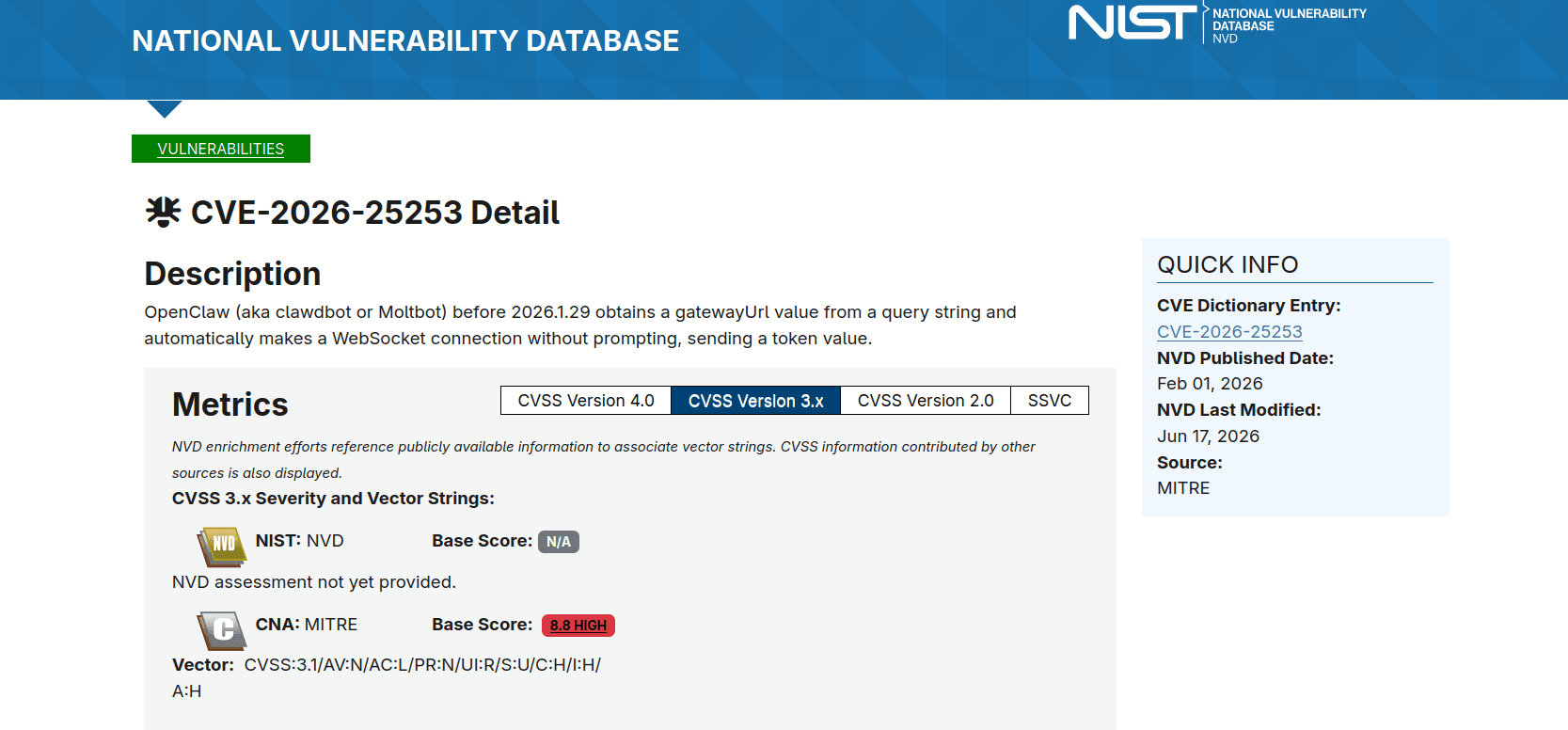
CVE-2026-25253 carried a CVSS 8.8 score and allowed authentication token exfiltration that could lead to full Gateway compromise and code execution. It was patched in January.
CVE-2026-32922 was worse.
The CVE record gives it a CVSS 3.1 score of 9.9. Bruhh!! 🤧
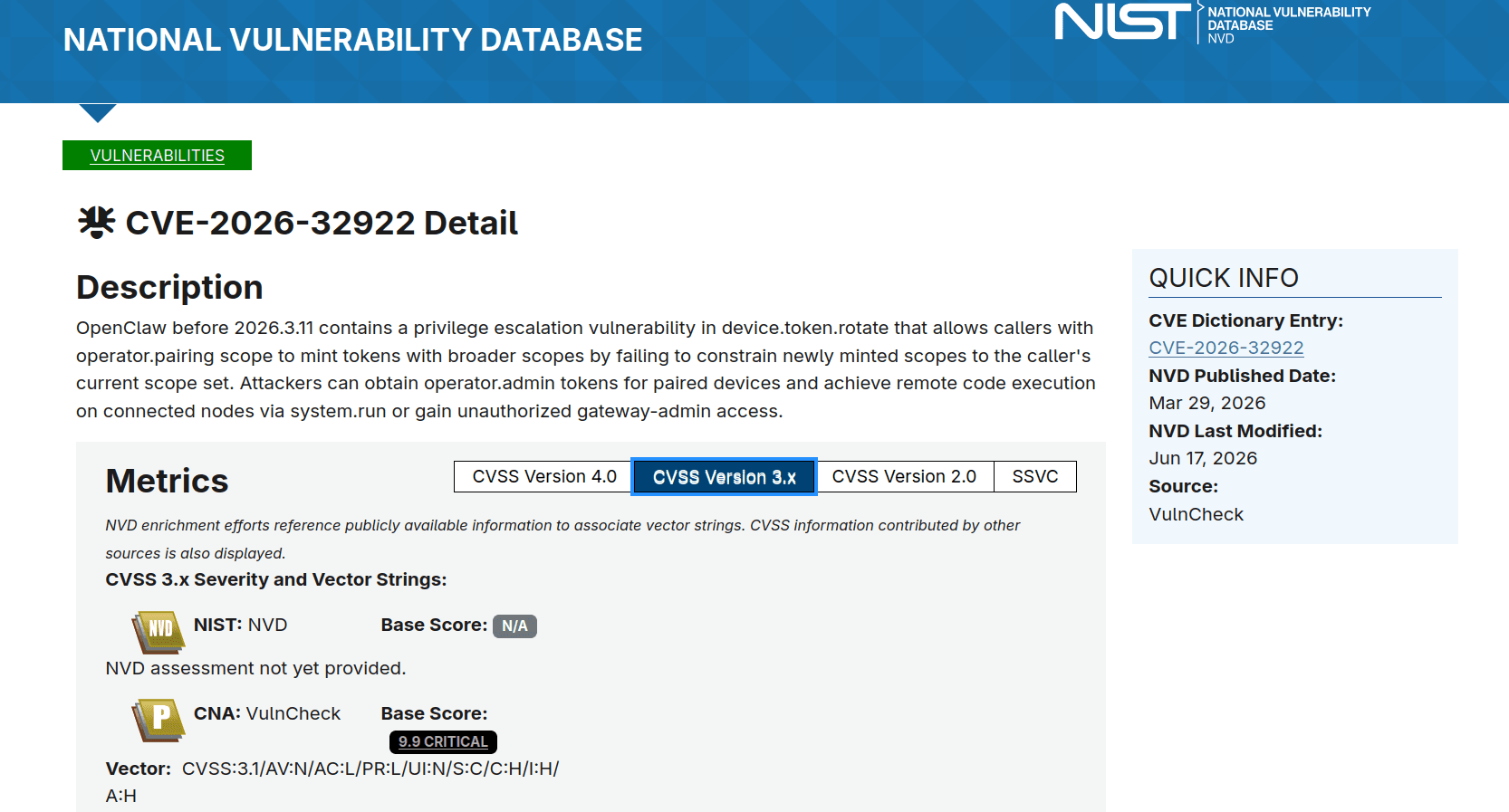
A caller with pairing permissions could mint broader administrator tokens and potentially gain Gateway administration or remote code execution on connected nodes. OpenClaw 2026.3.11 later fixed it.
ClawHub also had real supply-chain problems.
OpenClaw's own current threat model now explicitly treats malicious skill installation and skill-update poisoning as high residual risks. ClawHub has since added several controls, including account-age checks, static scanning, LLM risk review, and VirusTotal scanning.
So the security story has improved a lot.
OpenClaw now offers Docker, Podman, SSH, OpenShell, and other sandbox options, plus per-agent scopes, role controls, workspace permissions, audits, install policies, and stronger secrets handling.
But there is a catch.
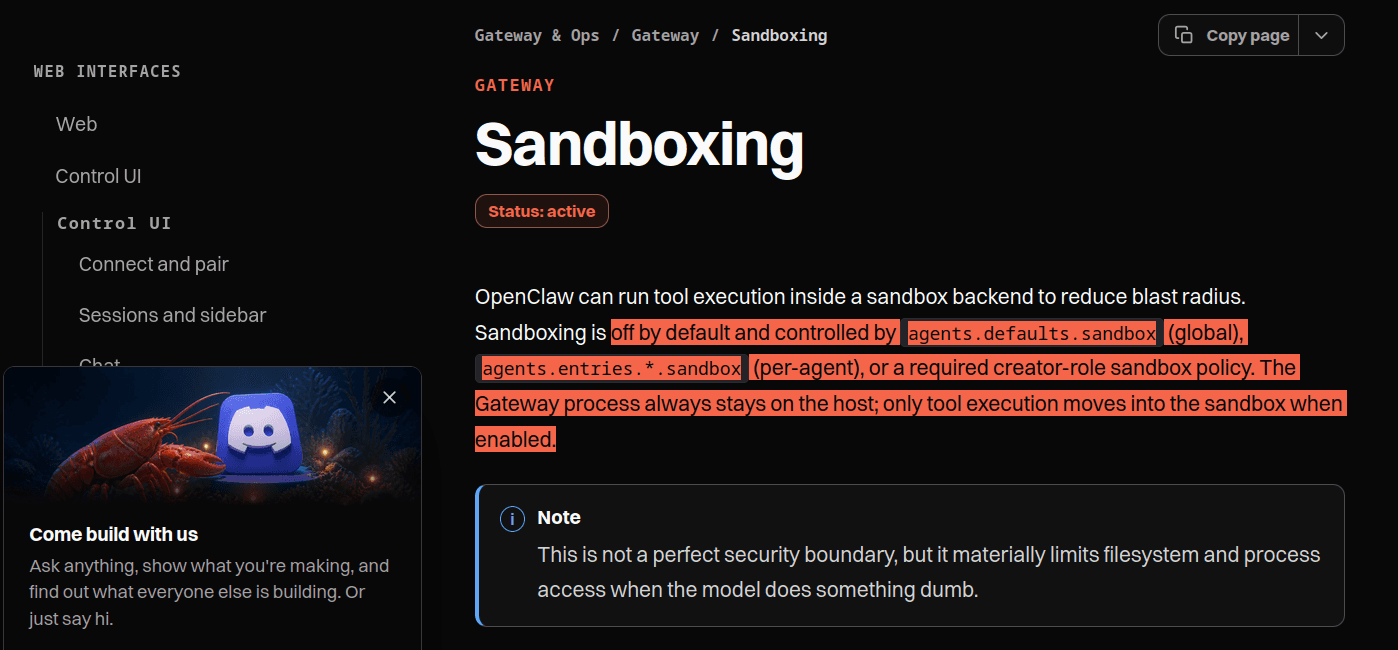
Sandboxing is still off by default. OpenClaw's own documentation says the default configuration assumes a trusted operator.
Hermes
Hermes starts from a more conservative default.
The default smart approval mode evaluates commands before they execute. Low-risk operations will continue; dangerous commands can be denied. This is similar to how Claude or other coding agents ask for permission before touching your file system and running shell commands.
For stronger isolation, Hermes recommends Docker, Modal, Daytona, or Vercel Sandbox for production gateway deployments.
Its container backends also drop Linux capabilities, disable privilege escalation, use namespace isolation, and can use read-only root filesystems.
But Hermes is not magically safe either.
To avoid thinking too much, just sandbox either one before giving it access to sensitive production infrastructure. 🤷♂️
💁 Still, purely on defaults, I think Hermes wins this one.
9. Pricing: OpenClaw vs Hermes Agent
Both core projects are MIT-licensed and can be self-hosted for free.
OpenClaw currently says it has no paid tier, hosted service, or token.
Hermes itself is free too, but Nous now sells the managed pieces around it.
Nous Portal currently has Free, Plus at $20/month, Super at $100/month, and Ultra at $200/month. Paid plans combine model credits with access to hundreds of models and hosted tool usage.
Hermes Cloud is separate compute, starting at $0.29/day while running. So if you already have your own model keys and server, both can be very cheap.
If you want someone else to run the model gateway, tools, and persistent agent infrastructure, Hermes now has a much clearer first-party path.
10. Moving from OpenClaw to Hermes
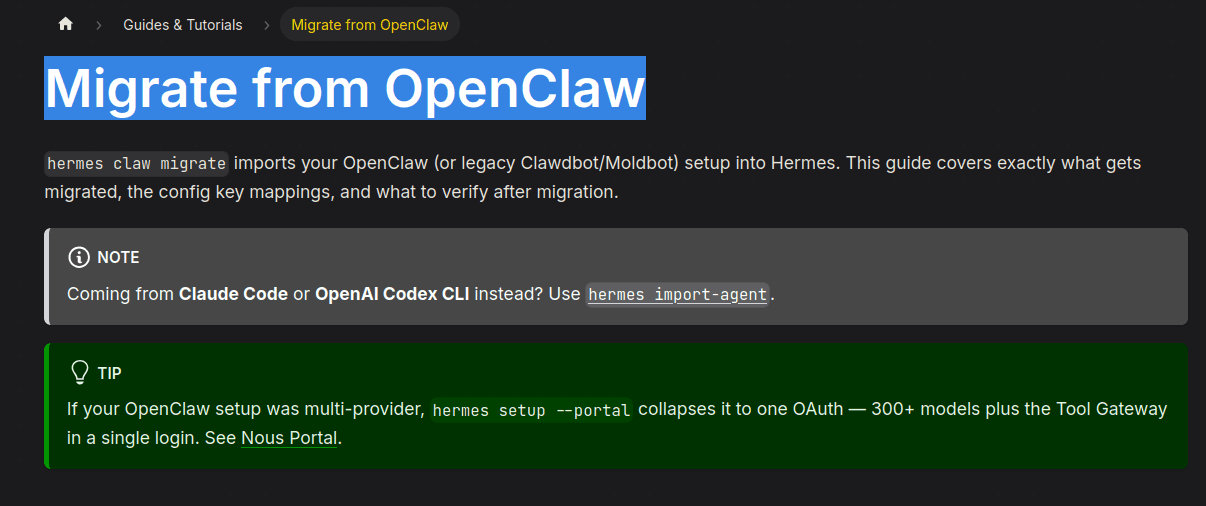
Switching from OpenClaw to Hermes is just super easy. You can find the entire guide here.
Hermes now ships:
hermes claw migrateYou can preview everything first:
hermes claw migrate --dry-runIt can import OpenClaw memories, SOUL.md, skills, command approval patterns, compatible messaging configuration, workspace instructions, and other user data. Secrets require the explicit --migrate-secrets flag.
I like that last detail.
Hermes does not silently pull your credentials over just because you asked it to migrate.
Still, this makes trying Hermes much less painful for an existing OpenClaw user.
So, OpenClaw or Hermes?
After all this, it is up to you.
The better way to look at them is this:
I care most about... | I would pick |
|---|---|
Several people sharing the same agent sessions | OpenClaw |
Persistent specialist agents with separate identities | Hermes |
Deep personal memory and user modelling | Hermes |
Shared browser-based control plane | OpenClaw |
Native desktop personal-agent workflow | Hermes |
Multi-channel agent routing | OpenClaw |
Portable skills from several ecosystems | Hermes |
Native ClawHub experience | OpenClaw |
Flexible Docker/SSH/cloud execution backends | Hermes |
Session handoff between machines/cloud workers | OpenClaw |
Safer defaults on a local machine | Hermes |
Largest open-source community | OpenClaw |
Managed first-party cloud deployment | Hermes |
If I were building a personal agent that I expect to use for months, I would pick Hermes.
Its memory, session search, user modelling, skill creation, Bot Mode, and multiple execution backends all reinforce that use case. The more history you give it, the more useful the runtime can become.
If I were building shared agent infrastructure for a team, I would choose OpenClaw.
OpenClaw 2.0's session ownership, multiplayer UI, cloud workers, shared Gateway, presence, routing, and permission model make much more sense when several humans need to work through the same agent system.
That is the real split now.
But now the choice depends on how you actually want to use the agent, not which one has more features.
Wrap Up!
When I first looked at Hermes and OpenClaw, they felt like two very different projects.
That is not really true anymore.
Hermes added bots, groups, messaging, Desktop, A2A, MCP, cloud hosting, and a much bigger skills ecosystem.
OpenClaw added multiplayer sessions, cloud workers, a much better UI, cross-session memory, automatic skill learning, stronger security controls, and a far more serious team story.
And yeah, comparing the two based on articles/videos from a few months back just isn't right.
💁 And this article itself will be stale after a few months, so make sure to go through everything before making that final choice.
For me, the decision is much simpler now.
Use Hermes when the agent itself is the long-running thing you care about.
Use OpenClaw when the shared system around the agents, sessions, people, channels, and machines matters more.
And considering how quickly both are shipping, I will probably have to rewrite this comparison again in a few months. :)

 Get started