How to connect Vtiger to Claude

Connect Claude Web, Desktop and Cowork to Vtiger MCP. Create contacts for new vtiger leads, update deal stages in vtiger pipelines, and more using natural language, with authentication handled for you.

Vtiger logoVtiger
Api Key

Vtiger is a cloud CRM platform for contacts, sales pipelines, and support workflows. It helps teams manage customer relationships and sales activity in one place.

29 Tools

Introduction

Claude is Anthropic's AI assistant, available on the web, in the desktop app, and on mobile. Cowork is its agent for knowledge work, and it runs on all of those surfaces too. Connected to your apps, Claude can work with your files and services to accomplish complex tasks on your behalf.

This guide walks you through the easiest and most secure way to connect your Vtiger account to Claude via Composio Connect, enabling it to create contacts for new Vtiger leads, update deal stages in Vtiger pipelines, log support cases for Vtiger customers, and more such actions on your behalf without compromising your account security.

Setup is the same on Claude Web, Desktop, and Cowork, and you only need to do it once. The connector is tied to your account, so it's available in all three.

For exact tool slugs and parameter tables, see the tool catalog in the Composio docs.

Also integrate Vtiger with

Connecting Vtiger to Claude Web, Desktop, and Cowork

Two ways to add the Composio connector. Pick whichever you prefer.

1. Add with one click

Click the button. Claude opens with the Composio connector filled in. Click Add, then go to step 2.

Add to Claude

Add manually

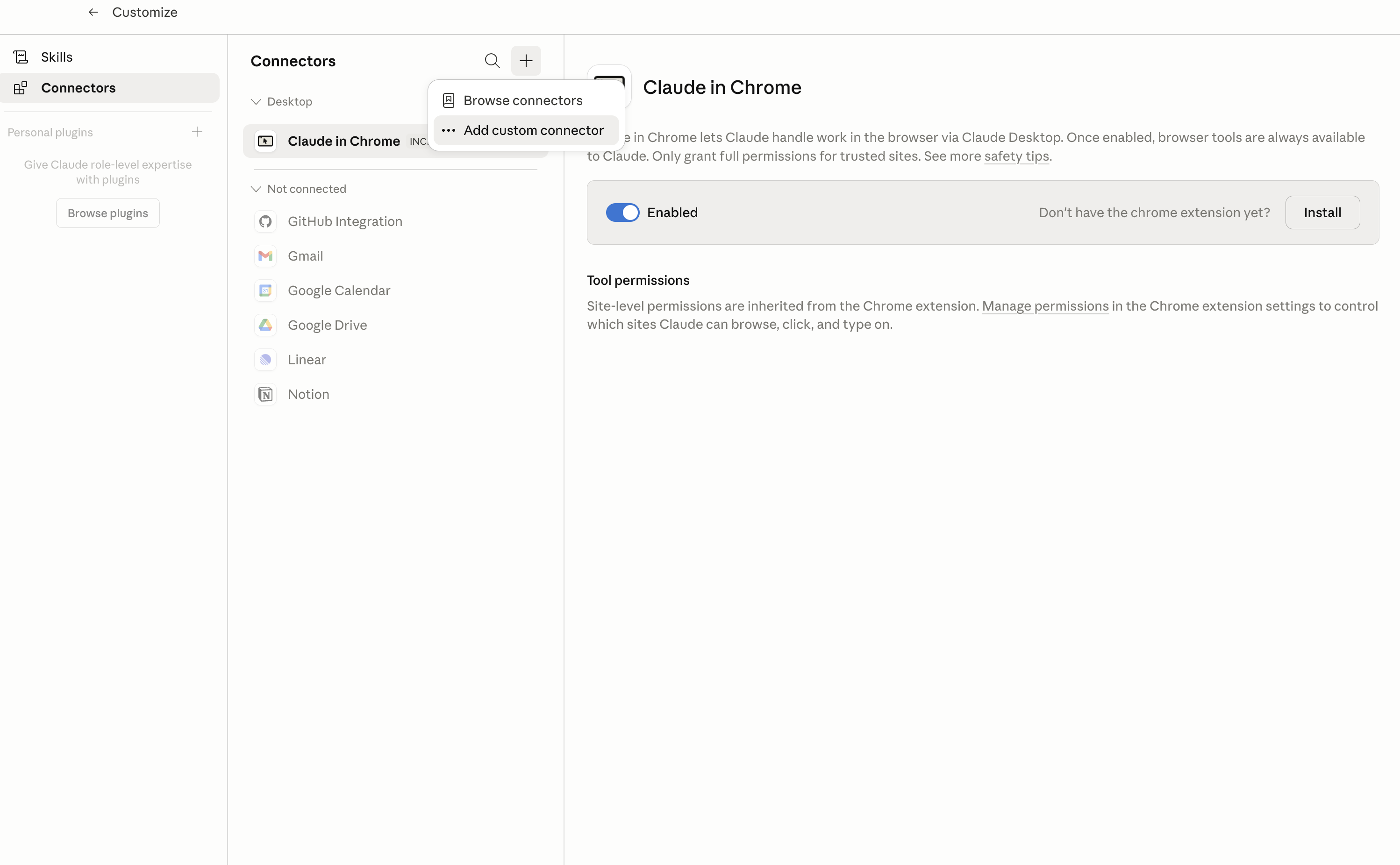
In Claude Desktop, click Customize in the left sidebar, then select Connectors and click the + icon at the top.

Claude Desktop connectors screen with Add custom connector selected

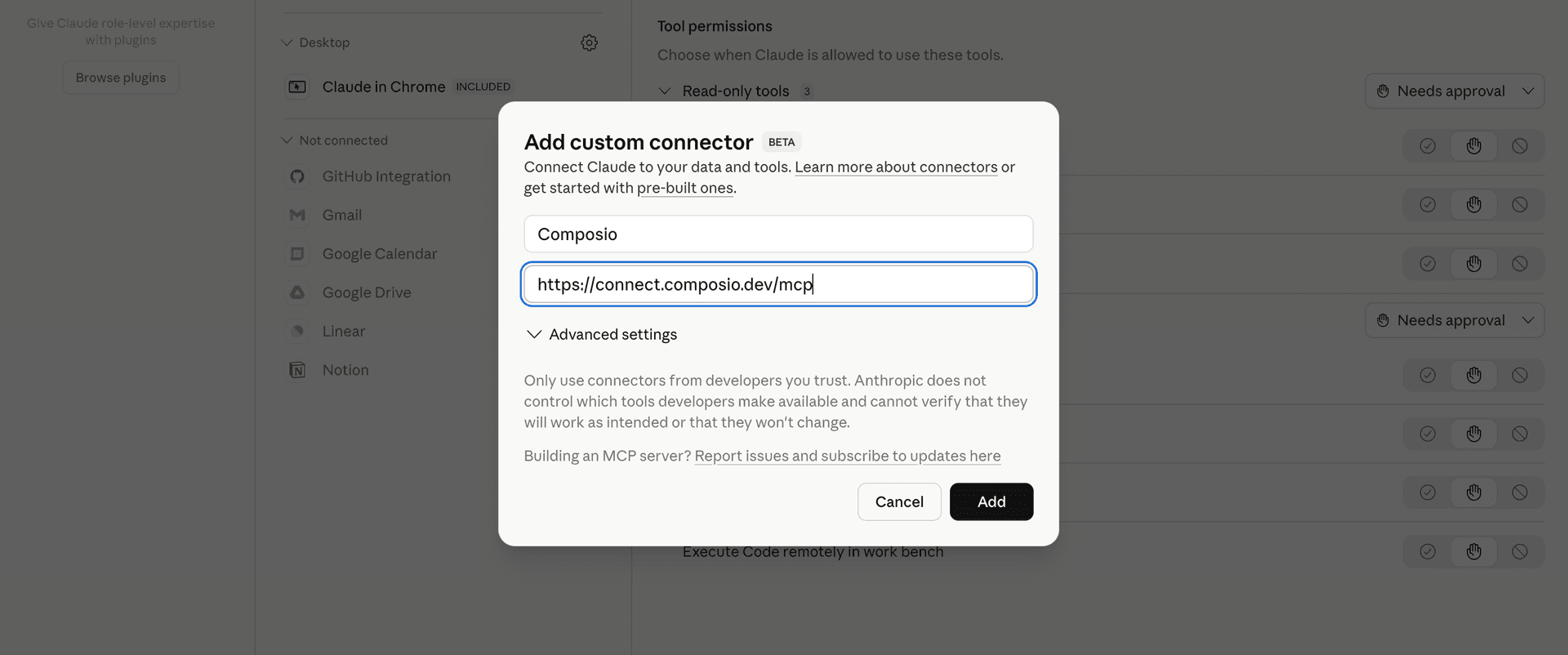
Click Add custom connector and paste in the Composio MCP server URL:

bash
https://connect.composio.dev/mcp
Add custom connector dialog with Composio MCP server URL

2. Authorize in your browser

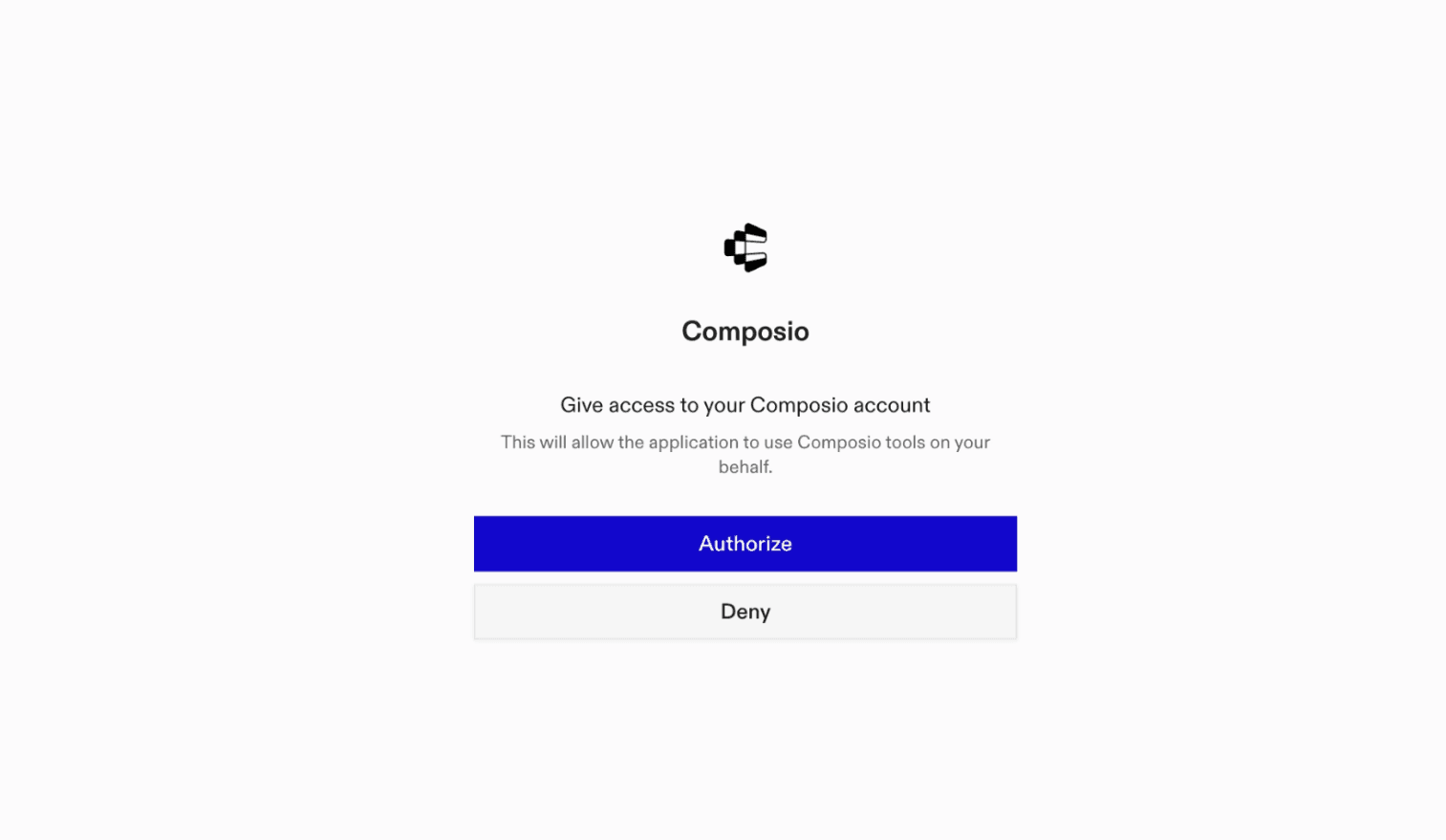
Click Connect. You'll be redirected to a browser window where you can authorize Composio to continue.

Composio authorization screen for Claude Web, Desktop, and Cowork

3. Connect your Vtiger account

Back in Claude, ask it to connect to Vtiger or give it any Vtiger-related task.

For example, ask Claude to:

  • "Create contacts for new Vtiger leads"
  • "Update deal stages in Vtiger pipelines"
  • "Log support cases for Vtiger customers"

It will prompt you to authenticate and authorize access.

That's it. Composio's tools are now available in Claude, and your Vtiger account is ready to use.

What is the Vtiger Claude Connector, and what's possible with it?

The Vtiger MCP server is an implementation of the Model Context Protocol that connects your AI agent and assistants like Claude, Cursor, etc directly to your Vtiger account. It provides structured and secure access to your CRM modules, records, relationships, tags, and configuration data, so your agent can discover available data, find customer records, create and update CRM entries, manage related information, and convert leads on your behalf.

  • CRM record management: Have your agent create, retrieve, update, and delete records across the Vtiger modules available to your team.
  • Customer and sales data lookup: Instruct your agent to find records by email or phone number, list matching records with filters and sorting, and sync records changed since a chosen time.
  • Relationships and tags: Let the agent find related records, connect existing records, add or remove tags, and review the relationships available for a customer or account.
  • Lead conversion and account structure: Direct your agent to convert leads into customer records and review the parent and child structure of an account.
  • CRM setup discovery: Have your agent inspect available modules, review their fields and permissions, check picklist dependencies, and manage picklist values when permitted.

Troubleshooting

1. Why does Claude not use the Composio connector for Vtiger?

The connector can show as connected, but Claude must use it in each Vtiger conversation.

  • Click + at the lower left of the chat, or type /.
  • Hover Connectors.
  • Turn on Composio.
  • Ask Claude to connect to Vtiger again.

2. Why does Claude show an MCP server error before Vtiger connects?

Claude can show Couldn't reach the MCP server or Authorization with the MCP server failed when you add the connector for Vtiger.

  • Check that the connector URL is https://connect.composio.dev/mcp.
  • Connectors run from Anthropic's cloud, so your device network is usually not the problem.
  • Add the connector again from Customize > Connectors, then ask Claude to connect Vtiger.
  • If it fails again, send the error and the ofid_ reference id to support@composio.dev.

3. Why does the Vtiger authorization link not work?

The Composio connector is one server. Your Vtiger account connects separately when Claude asks for it.

  • If the browser does not open, or the link expires, ask Claude to retry the Vtiger connection.
  • Composio creates a fresh Vtiger authorization link.
  • Open that link in your browser and finish the Vtiger sign-in.

4. Why do Vtiger actions fail after they worked before?

The Vtiger connection can expire or lose permission.

  • Ask Claude to inspect the Vtiger connection.
  • If the connection is unhealthy, disconnect it when Claude prompts you.
  • Reconnect the Vtiger account and retry the action.
  • If Claude shows a permission prompt, approve it before Claude changes data in Vtiger.
  • If the action still fails with a permission error, check that the connected account has that permission in Vtiger itself.

5. How do I switch to a different Vtiger account?

Claude can manage the Vtiger connection for you.

  • Ask Claude to disconnect or delete the current Vtiger account.
  • Ask Claude to connect Vtiger again.
  • Open the new Composio authorization link for Vtiger.
  • Sign in with the other Vtiger account in the browser.
  • After the account connects, ask Claude to retry the Vtiger task.

6. Why is my Vtiger connection missing in Claude Desktop or on a Team plan?

The connector belongs to your Claude account, so your Vtiger connection works in Claude Web, Desktop, and Cowork.

  • In Claude Desktop, open Customize > Connectors.
  • Next to Composio, click ⋮ and click Clear cache.
  • If Vtiger tools still do not appear, click ⋮, disconnect, remove the connector, and add it again.
  • On Team or Enterprise, an Owner or Primary Owner must enable the connector before you can connect Vtiger.
TOOLS

Supported Tools

Every Vtiger action and event your agent gets out of the box.

Add Picklist Values

Admin-only mutation that adds values to a module picklist.

Add Related Record

Establish a Vtiger relationship between two existing records.

Add Tags

Add one or more tags to a target Vtiger record.

Convert Lead

Convert one Vtiger Lead and optionally create a Contact, Account, and Potential using the live API's query transport and the official Postman request's scalar leadId contract.

Create Record

Create one record in an accessible Vtiger entity module using field values chosen from that module's description.

Decrypt Field

Extract the plaintext value of one sensitive field when the connected Vtiger user is permitted to access it.

Delete Picklist Values

Admin-only destructive mutation that deletes module picklist values and remaps all stored uses to an existing replacement value.

Delete Record

Delete one Vtiger record by its full webservice ID.

Delete Related Record

Remove an existing Vtiger relationship while leaving both records intact.

Delete Tags

Remove selected tags from a target Vtiger record.

Describe Module

Return a Vtiger module's fields, required-field rules, ID prefix, and CRUD permissions before reading or writing records.

Edit Picklist Value

Admin-only mutation that renames one stored module picklist value.

Full Update Record

Update one Vtiger record through the full Update API.

Get Account Hierarchy

Return the parent and current Account hierarchy for one Vtiger Account.

Get Current User

Return the authenticated Vtiger user's ID, status, role, and reference data for use in record assignments.

Get Edition Limit

Read one Vtiger tenant edition or capacity limit using an official-manual-derived POST JSON mapping.

Get Files

Retrieve a linked image from a Vtiger Contact or Product by resource ID, validate its sensitive base64 content up to 20 MB, and return an offloaded download reference.

Get Picklist Dependency

Return the allowed target picklist values for each source picklist value in a Vtiger module.

Get Record

Retrieve one Vtiger record by its full webservice ID.

Get Tags

Retrieve all tags currently applied to one Vtiger record.

List Modules

List Vtiger module API names available to the connected user so agents can select a module for metadata and record operations.

List Records

List one page of records from a Vtiger entity module with selected fields, an optional filter, sorting, and a continuation cursor.

List Related Records

Return records linked to one Vtiger record through a relationship selected from List Related Types.

List Related Types

List the relationship types and relation IDs available from a Vtiger module before retrieving related records.

Lookup Records

Find visible Vtiger records by an exact phone number or email address, optionally restricting the modules and fields searched.

Query Related Records

Run a raw Vtiger relationship query for one source record and return matching related records.

Reopen Record

Reopen one closed Vtiger record when permitted, using the current Rest API Manual's id query-parameter contract.

Sync Records

Fetch up to 200 updated records or record IDs plus deleted record IDs for one entity module since a UNIX timestamp.

Update Record

Partially update selected fields on an existing Vtiger record without resending unchanged mandatory fields.

FRAMEWORKS

How to build Vtiger MCP Agent with another framework

FAQ

Frequently asked questions

Start with Vtiger.It takes 30 seconds.

Managed auth, hosted MCP servers, and every Vtiger tool your agent needs.Free to start.

Start building