How to connect Trigger.dev to Grok Bot

Connect Grok Bot to Trigger.dev MCP. List recent failed background task runs, retry failed trigger.dev workflow executions, and more using natural language, with authentication handled for you.

Trigger.dev logoTrigger.dev
Api Key

Trigger.dev is a developer platform for reliable background tasks and workflows. It helps teams deploy, monitor, and manage long-running jobs without glue code.

10 Tools

Introduction

Grok is xAI's assistant, and its bot builder lets you create a personal agent that holds context, runs skills, and connects to the apps you already use through plugins.

This guide explains how to connect Trigger.dev to a Grok bot using Composio Connect, which handles OAuth, token refresh, and reliability so you do not have to. You add Composio as a plugin, authenticate once, then ask your bot to work with Trigger.dev in plain language.

For exact tool slugs and parameter tables, see the tool catalog in the Composio docs.

Why use Composio?

Composio exposes 2,000+ apps to your Grok bot through a single connection, so you get:

  • Connect to 2,000+ apps with on-demand tool loading, so you do not fill your context window with unnecessary tool definitions.
  • Use programmatic tool calling through a remote workbench, letting the model write its own code to handle complex tool chaining. This reduces back-and-forth for frequent tool calls.
  • Handle large tool responses outside the model context to keep conversations lean.

Connecting Trigger.dev to Grok Bot

Once Grok Bot is set up, you connect Trigger.dev entirely from its interface, and the whole flow takes under a minute.

Set up Grok Bot

Get access. Grok Bot is included with Cursor Ultra, Cursor Premium Teams, and SuperGrok Heavy. Get the desktop app for macOS or Windows from x.ai/bot and sign in. An iPhone companion app is also available, and your bots sync across devices.

Create a bot. Pick a suggested role or define your own, then give it a short name, one primary job, and a short description of how it should work. Focused bots work best, because a clear role gives the bot more useful context over time.

Connect Trigger.dev

1. Add the Composio plugin

Click the button. The Composio listing on x.ai opens and launches Grok Bot for you. If the app does not open on its own, click Add to Grok Bot.

Add to Grok Bot
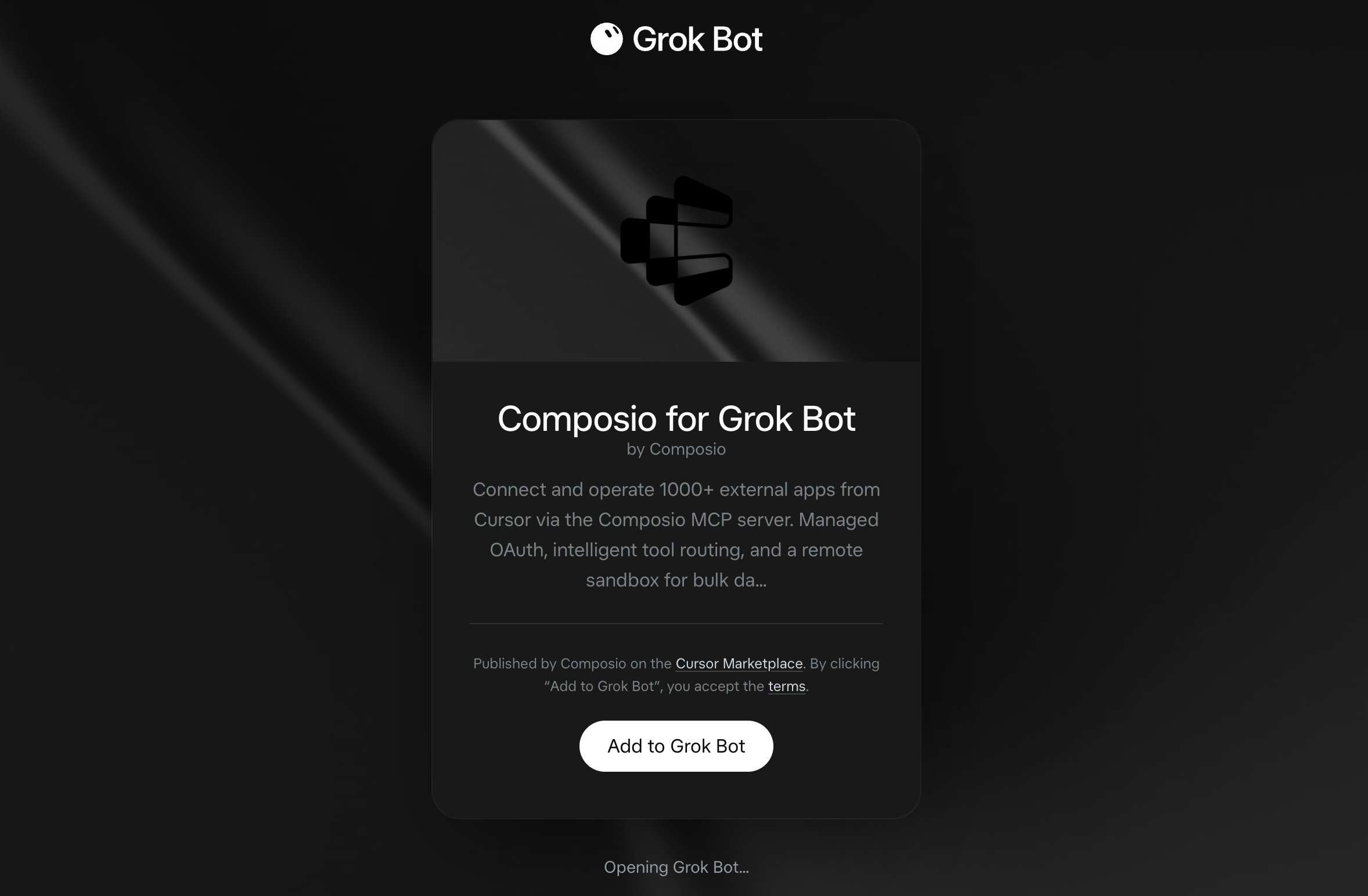
Composio for Grok Bot listing on x.ai with the Add to Grok Bot button

Grok Bot opens the Composio plugin, showing its connector and skills. Click Add.
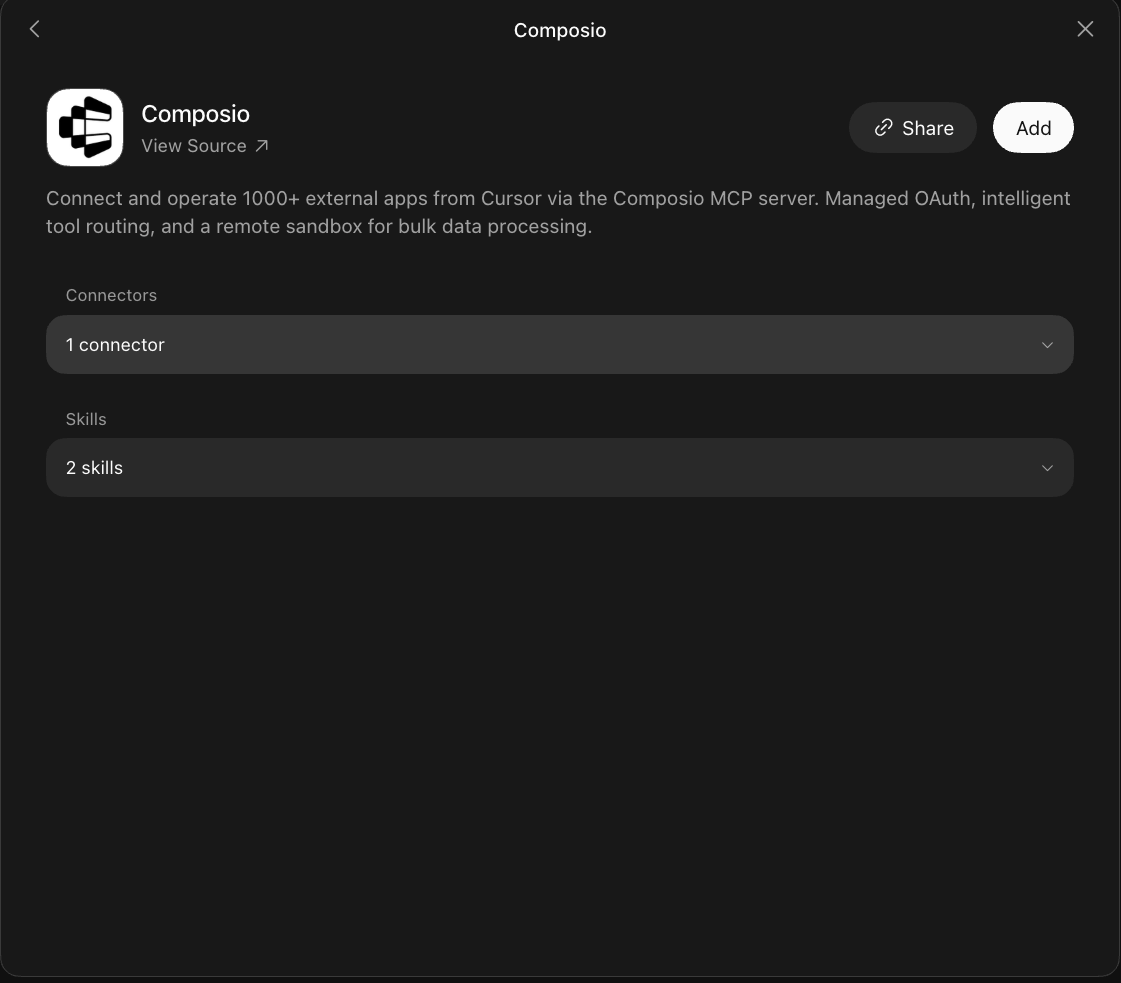
Composio plugin sheet in Grok Bot with the Add button

2. Authenticate

Go to the Installed section and click the Composio entry. You'll see its connector and skills listed.
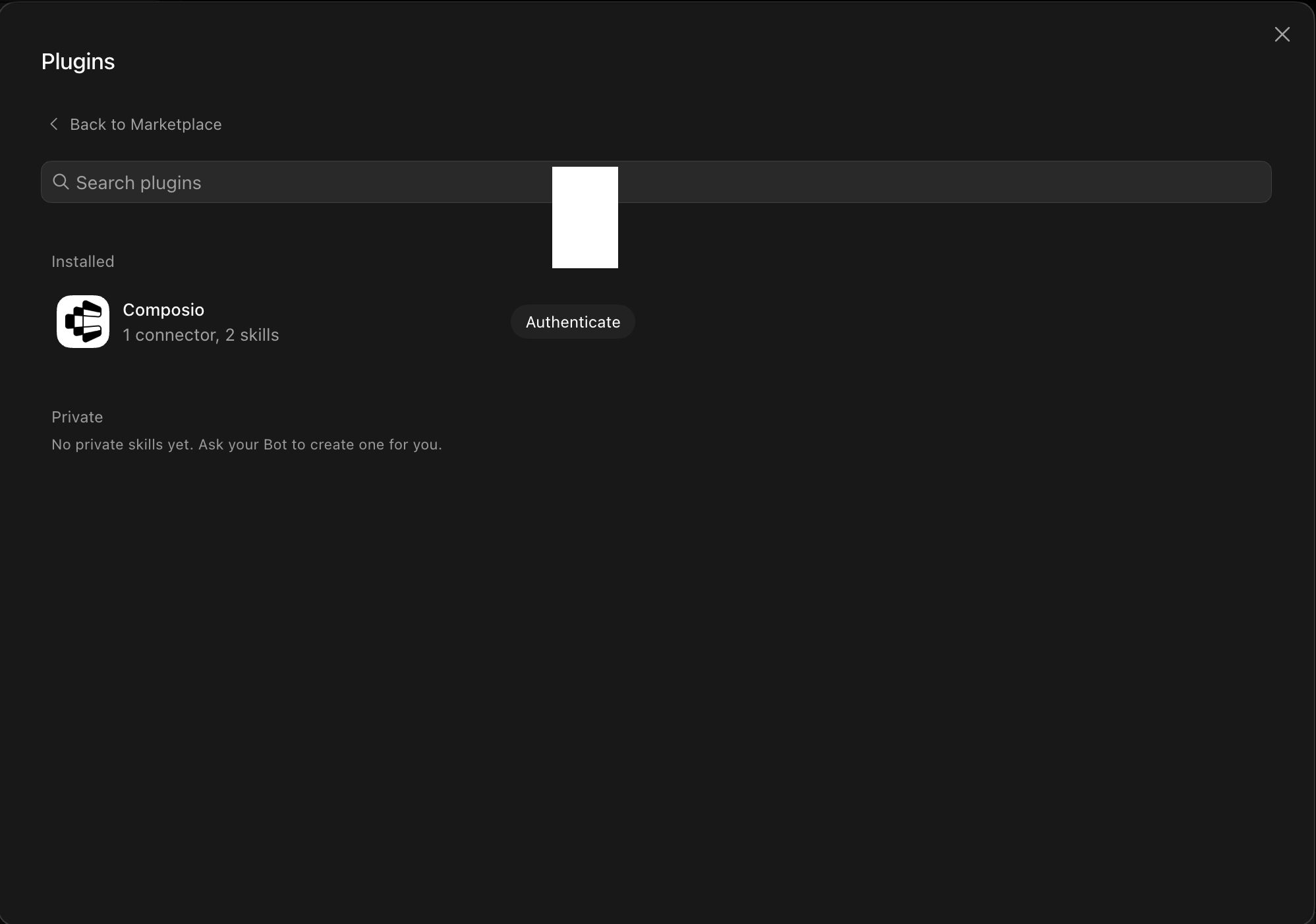
Installed Composio plugin showing the Authenticate button

Click Authenticate. You'll be taken to the Composio consent screen. Review the access it requests and click Authorize. Composio handles the OAuth handshake for you, so you never touch API keys or tokens.
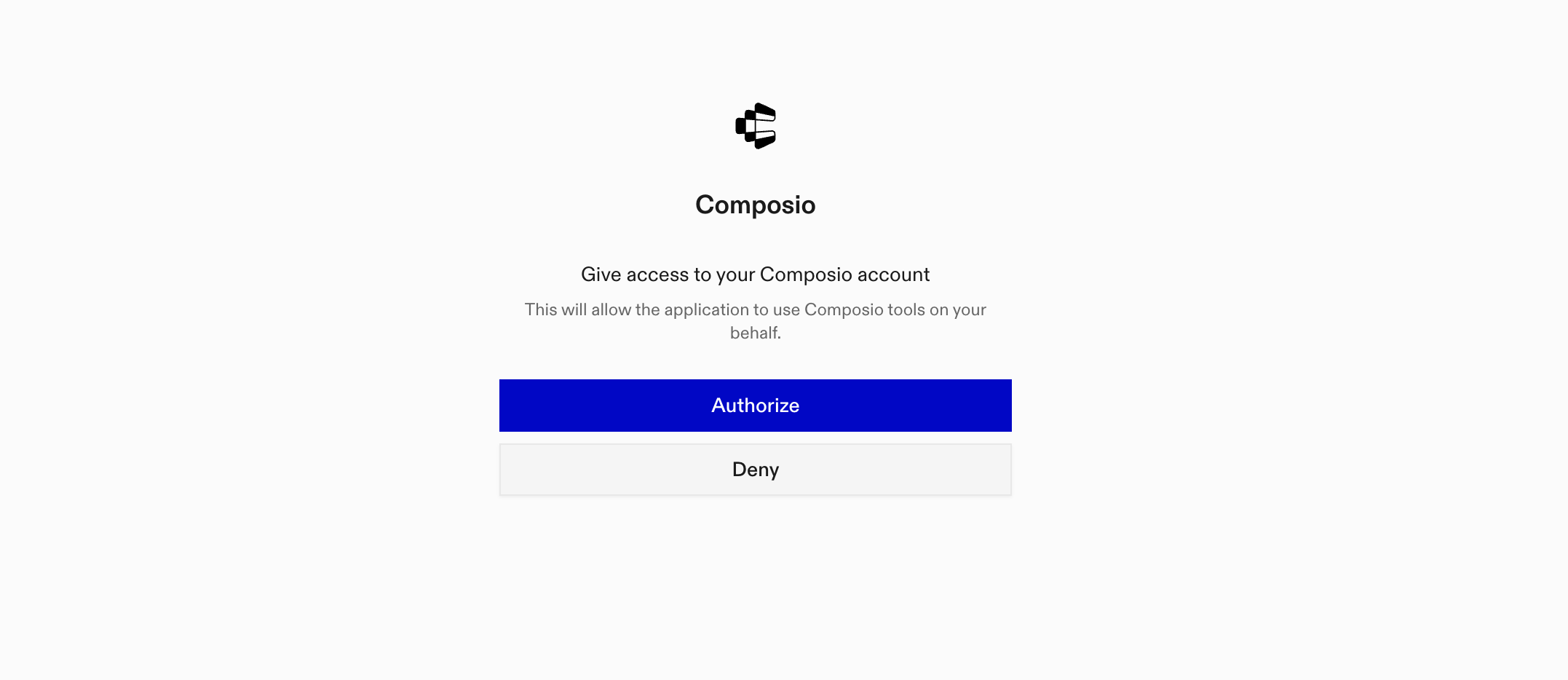
Composio authorization screen with Authorize and Deny

3. Connect your Trigger.dev account

Back in the chat, ask your bot to connect to Trigger.dev or give it any Trigger.dev task.

For example, ask it to:

  • "List recent failed background task runs"
  • "Retry failed Trigger.dev workflow executions"
  • "Check latest deployment task errors"

It will prompt you to authenticate and authorize access.

That's it. Composio's tools are now available in your Grok bot, and your Trigger.dev account is ready to use.

What is Grok Bot?

Grok is xAI's assistant, available as a chat interface and a bot builder for creating personal agents that run skills and connect to external apps.

With Composio Connect, your Grok bot can securely access apps like Trigger.dev through MCP without you sharing account credentials directly with the agent.

What is the Trigger.dev MCP server, and what's possible with it?

The Trigger.dev MCP server is an implementation of the Model Context Protocol that connects your AI agent and assistants like Claude, Cursor, etc directly to your Trigger.dev account. It provides structured and secure access to your background tasks, workflow runs, batches, errors, and analytics, so your agent can start tasks, track progress, inspect results, investigate errors, and analyze run data on your behalf.

  • Task execution: Have your agent start a deployed background task with the payload, context, and options needed for the job.
  • Batch workflow management: Let the agent start multiple runs of a task, monitor batch progress, and collect the outcome of every completed run.
  • Run monitoring and results: Direct your agent to list workflow runs, check their status and timing, or retrieve their outputs, failures, and usage details.
  • Error investigation: Instruct your agent to find workflow error groups and review their messages, occurrence history, affected versions, and resolution status.
  • Custom run analytics: Have your agent run read-only queries against Trigger.dev run data to answer specific questions about workflow activity and performance.

Way Forward

Now that Trigger.dev is connected, extend your setup by connecting the other apps you already use every day, so your Grok bot can run true cross-app workflows end to end.

  • Connect Calendar to turn threads into scheduled meetings automatically.
  • Connect Slack or Teams to post summaries, approvals, and alerts where your team works.
  • Connect Notion, Linear, Jira, or Asana to convert requests into tickets, tasks, and docs.
  • Connect Drive, Dropbox, or OneDrive to fetch, file, and share attachments without manual steps.

Start with one workflow you do repeatedly, then keep adding apps as you find new handoffs. With everything behind a single connection, your bot can coordinate multiple tools safely and reliably in one conversation.

TOOLS

Supported Tools

Every Trigger.dev action and event your agent gets out of the box.

Batch Trigger Task

Start multiple runs of one deployed Trigger.dev task in one provider-side batch and return the batch and run IDs.

Execute TRQL Query

Run one read-only Trigger.dev Query Language SELECT statement for custom run analytics and return JSON rows or CSV text.

Get Batch

Retrieve a task batch's status, run IDs, completion counts, and item errors.

Get Batch Results

Retrieve the success or failure outcome and encoded output for every run in a completed task batch.

Get Error

Retrieve one Trigger.dev error group's message, occurrence history, affected versions, and resolution or ignore state.

Get Run

Retrieve one run's status, timing, payload, output, attempts, metadata, relationships, schedule, and cost details.

Get Run Result

Retrieve one run's compact success or failure result, including its encoded output or error and usage duration.

List Errors

Return one forward page of Trigger.dev error groups, optionally filtered by task, version, status, text, or time window.

List Runs

Return one forward page of runs in the connected environment, optionally filtered by time, status, task, version, tags, schedule, bulk action, test mode, or error.

Trigger Task

Start one run of a deployed Trigger.dev task and return the new run ID.

FAQ

Frequently asked questions

Start with Trigger.dev.It takes 30 seconds.

Managed auth, hosted MCP servers, and every Trigger.dev tool your agent needs.Free to start.

Start building

