How to integrate Suitedash MCP with Codex

Connect Codex to Suitedash MCP. List overdue suitedash invoices by client, create suitedash task for client onboarding, and more using natural language, with authentication handled for you.

Suitedash logoSuitedash
Api Key

Suitedash is an all-in-one business platform for client management, CRM, projects, invoicing, and operations. It helps teams manage client work, billing, and collaboration from one shared workspace.

8 Tools

Introduction

Codex is one of the most popular coding harnesses out there. And MCP makes the experience even better. With the Suitedash MCP integration, Codex can create companies and contacts, find contacts by UID or email, list your companies, and view meta attributes, all without leaving the terminal or the app, whichever you prefer.

For exact tool slugs and parameter tables, see the tool catalog in the Composio docs.
Also integrate Suitedash with

Why use Composio?

Apart from a managed and hosted MCP server, you will get:

  • CodeAct: A dedicated workbench that allows GPT to write its code to handle complex tool chaining. Reduces to-and-fro with LLMs for frequent tool calling.
  • Large tool responses: Handle them to minimise context rot.
  • Dynamic just-in-time access to 20,000 tools across 1800+ other Apps for cross-app workflows. It loads the tools you need, so GPTs aren't overwhelmed by tools you don't need.

How to install Suitedash MCP in Codex

Run the setup command

Run this command in your terminal to add the Composio MCP server to Codex.

Terminal

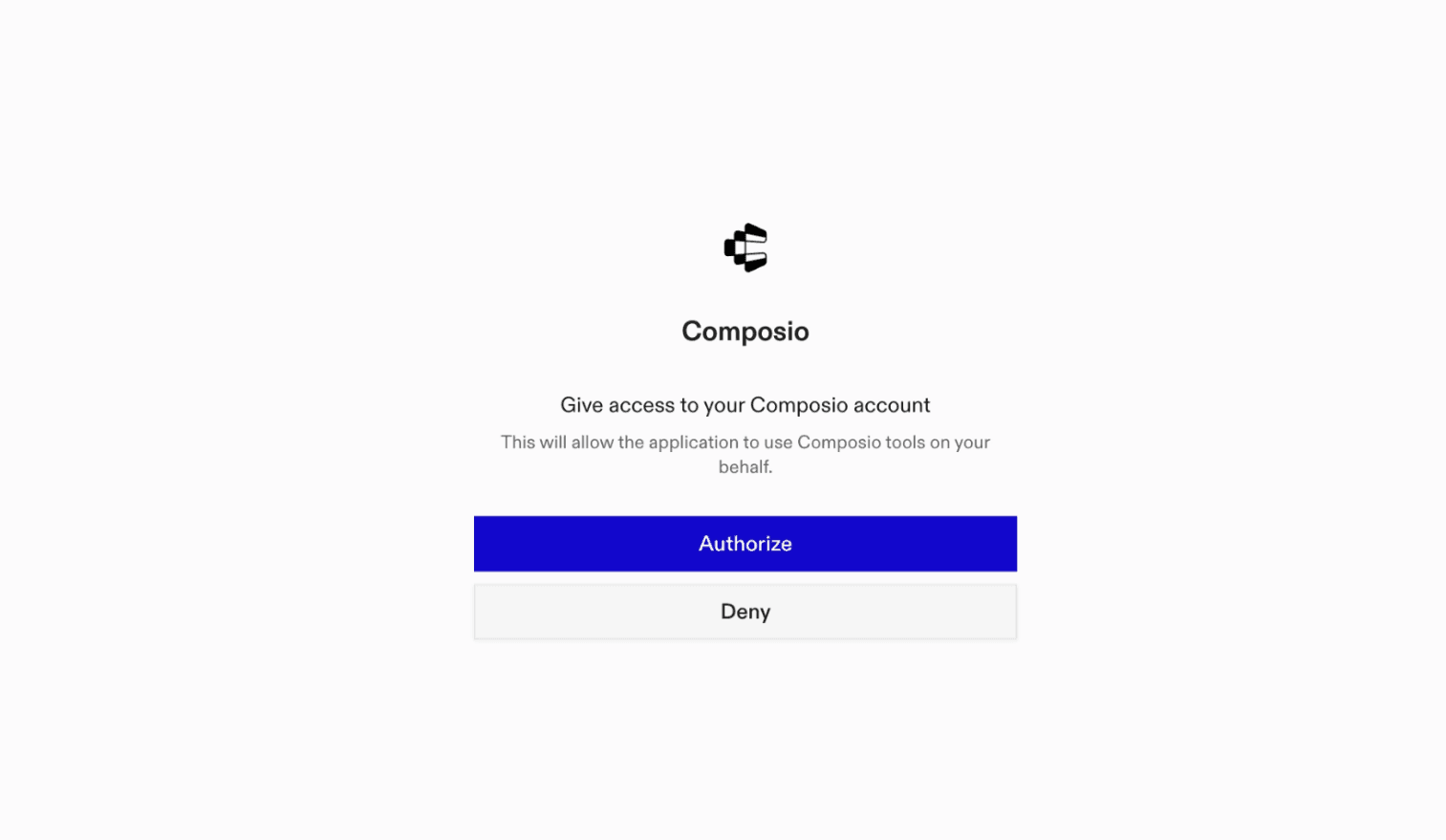
It will initiate the authentication in a browser window, authorize Codex to access your Composio account.

Composio authentication page

(Optional) Authenticate with OAuth

To authenticate manually, run the login command to open a browser window and authorize Codex to access your Composio account.

bash
codex mcp login composio

Verify the connection

Run codex mcp list to confirm Composio appears as a registered MCP server.

bash
codex mcp list

Codex App

Codex App follows the same approach as VS Code.

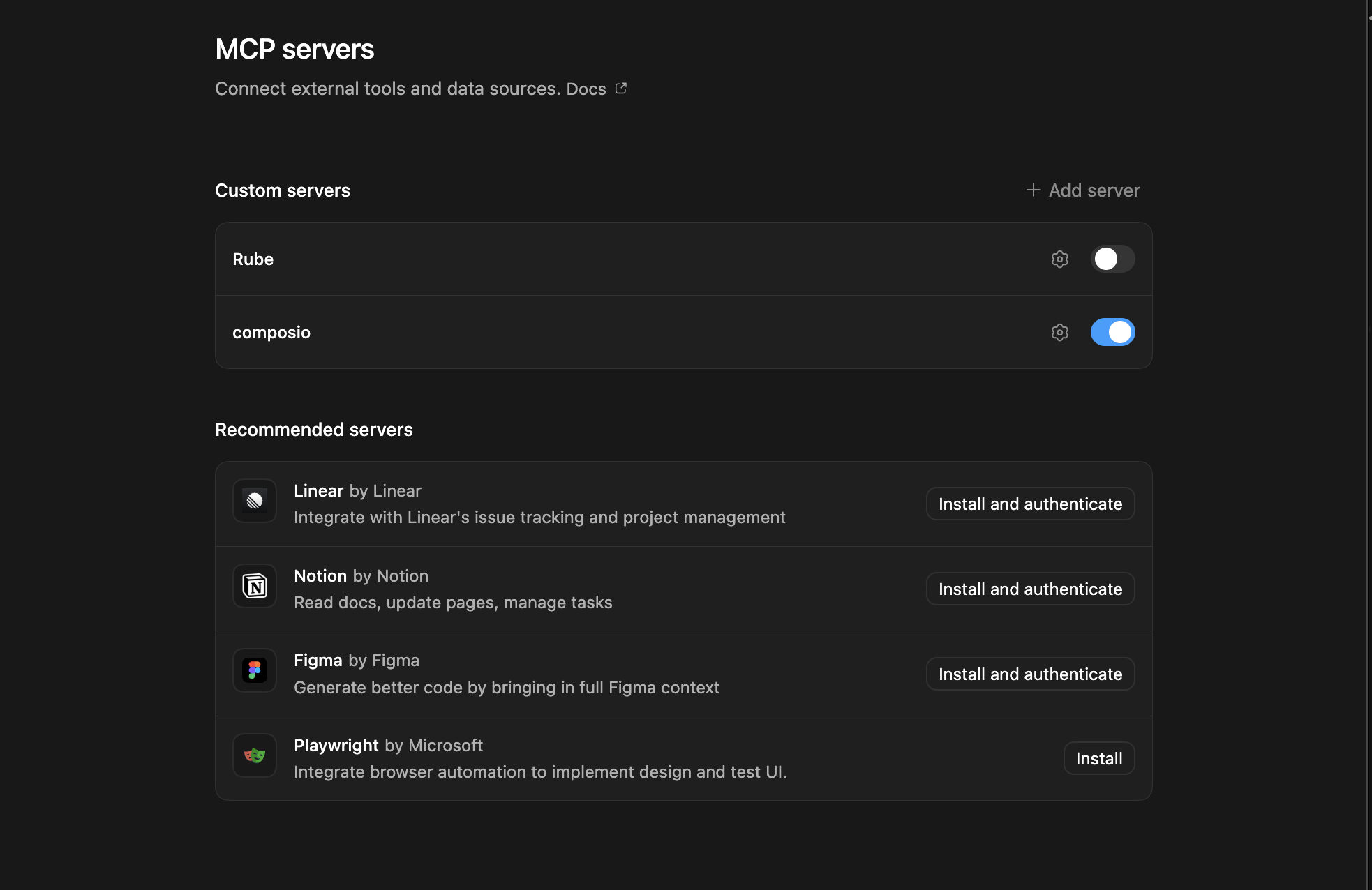
  1. Click ⚙️ on the bottom left → MCP Servers → + Add servers → Streamable HTTP:
  2. Fill the header and Key fields with { "x-consumer-api-key" = "ck_*******" }.
  3. The Key is the Composio API key, that you can find on dashboard.composio.dev
  4. Click on Authenticate and authorize Codex to your Composio account and you're all set.
Codex App MCP setup
  1. Restart and verify if it's there in .codex/config.toml
bash
[mcp_servers.composio]
url = "https://connect.composio.dev/mcp"
http_headers = { "x-consumer-api-key" = "ck_*******" }

Try it

Ask Codex for a Suitedash task. The first time, Composio asks you to connect your Suitedash account.

For example, ask it to:

  • "List overdue Suitedash invoices by client"
  • "Create Suitedash task for client onboarding"
  • "Summarize open Suitedash projects this week"

What is the Suitedash MCP server, and what's possible with it?

The Suitedash MCP server is an implementation of the Model Context Protocol that connects your AI agent and assistants like Claude, Cursor, etc directly to your Suitedash account. It provides structured and secure access to your CRM contacts and companies, so your agent can create contacts, add companies, find specific records, and review existing customer data on your behalf.

  • Contact creation: Have your agent add new contacts to Suitedash as prospects, clients, or partners enter your business workflow.
  • Company creation: Let the agent create company records so your CRM stays current as you begin working with new organizations.
  • Contact lookup: Direct your agent to find a specific contact by their email address or internal reference and return their details.
  • Company lookup: Instruct your agent to locate a company by name or internal reference and retrieve its CRM information.
  • CRM record review: Have your agent list existing contacts or companies so you can review your customer and business records.

Conclusion

You've successfully integrated Suitedash with Codex using Composio's MCP server. Now you can interact with Suitedash directly from your terminal, VS Code, or the Codex App using natural language commands.

Key benefits of this setup:

  • Seamless integration across CLI, VS Code, and standalone app
  • Natural language commands for Suitedash operations
  • Managed authentication through Composio
  • Access to 20,000+ tools across 1800+ apps for cross-app workflows
  • CodeAct workbench for complex tool chaining

Next steps:

  • Try asking Codex to perform various Suitedash operations
  • Explore cross-app workflows by connecting more toolkits
  • Build automation scripts that leverage Codex's AI capabilities
TOOLS

Supported Tools

Every Suitedash action and event your agent gets out of the box.

Create Company

Create a Lead, Client, or Prospect company in SuiteDash CRM.

Create Contact

Create a Lead, Client, or Prospect contact in SuiteDash CRM.

Get Company

Retrieve a single SuiteDash company by UID or name, including details such as its primary contact, address, tags, and custom fields.

Get Company Meta Attributes

Retrieve CRM company meta attributes, including available field types, formats, validation information, and allowed operations.

Get Contact by UID or Email

Tool to retrieve a single contact from SuiteDash by their UID or email address.

Get Contact Meta Attributes

Retrieve CRM contact meta attributes, including available field types, formats, validation information, and allowed operations.

List Companies

List SuiteDash companies with pagination, optional creation-date filtering, and ordering; idle companies are not included.

List Contacts

Tool to get all existing contacts from SuiteDash.

FRAMEWORKS

How to build Suitedash MCP Agent with another framework

FAQ

Frequently asked questions

Start with Suitedash.It takes 30 seconds.

Managed auth, hosted MCP servers, and every Suitedash tool your agent needs.Free to start.

Start building