How to connect SNCF to Grok Bot

Connect Grok Bot to SNCF MCP. Find next paris to lyon trains, check disruptions on lyon routes, and more using natural language, with authentication handled for you.

SNCF logoSNCF
Api Key

SNCF is France's national railway service for passenger train journeys, stations, schedules, and live travel information. It gives developers reliable rail data for route planning, station lookup, and service-status checks.

9 Tools

Introduction

Grok is xAI's assistant, and its bot builder lets you create a personal agent that holds context, runs skills, and connects to the apps you already use through plugins.

This guide explains how to connect SNCF to a Grok bot using Composio Connect, which handles OAuth, token refresh, and reliability so you do not have to. You add Composio as a plugin, authenticate once, then ask your bot to work with SNCF in plain language.

For exact tool slugs and parameter tables, see the tool catalog in the Composio docs.

Why use Composio?

Composio exposes 2,000+ apps to your Grok bot through a single connection, so you get:

  • Connect to 2,000+ apps with on-demand tool loading, so you do not fill your context window with unnecessary tool definitions.
  • Use programmatic tool calling through a remote workbench, letting the model write its own code to handle complex tool chaining. This reduces back-and-forth for frequent tool calls.
  • Handle large tool responses outside the model context to keep conversations lean.

Connecting SNCF to Grok Bot

Once Grok Bot is set up, you connect SNCF entirely from its interface, and the whole flow takes under a minute.

Set up Grok Bot

Get access. Grok Bot is included with Cursor Ultra, Cursor Premium Teams, and SuperGrok Heavy. Get the desktop app for macOS or Windows from x.ai/bot and sign in. An iPhone companion app is also available, and your bots sync across devices.

Create a bot. Pick a suggested role or define your own, then give it a short name, one primary job, and a short description of how it should work. Focused bots work best, because a clear role gives the bot more useful context over time.

Connect SNCF

1. Add the Composio plugin

Click the button. The Composio listing on x.ai opens and launches Grok Bot for you. If the app does not open on its own, click Add to Grok Bot.

Add to Grok Bot
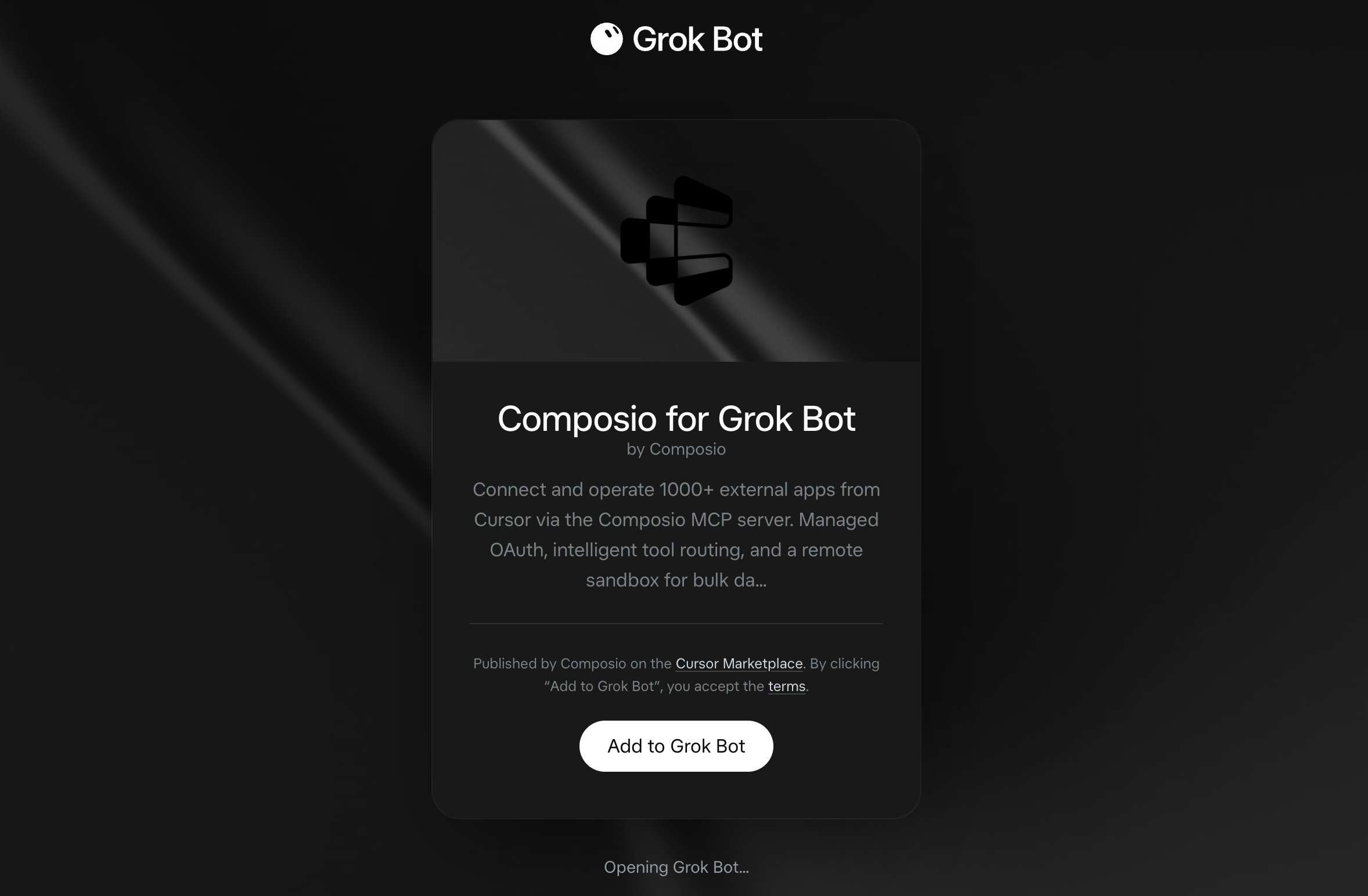
Composio for Grok Bot listing on x.ai with the Add to Grok Bot button

Grok Bot opens the Composio plugin, showing its connector and skills. Click Add.
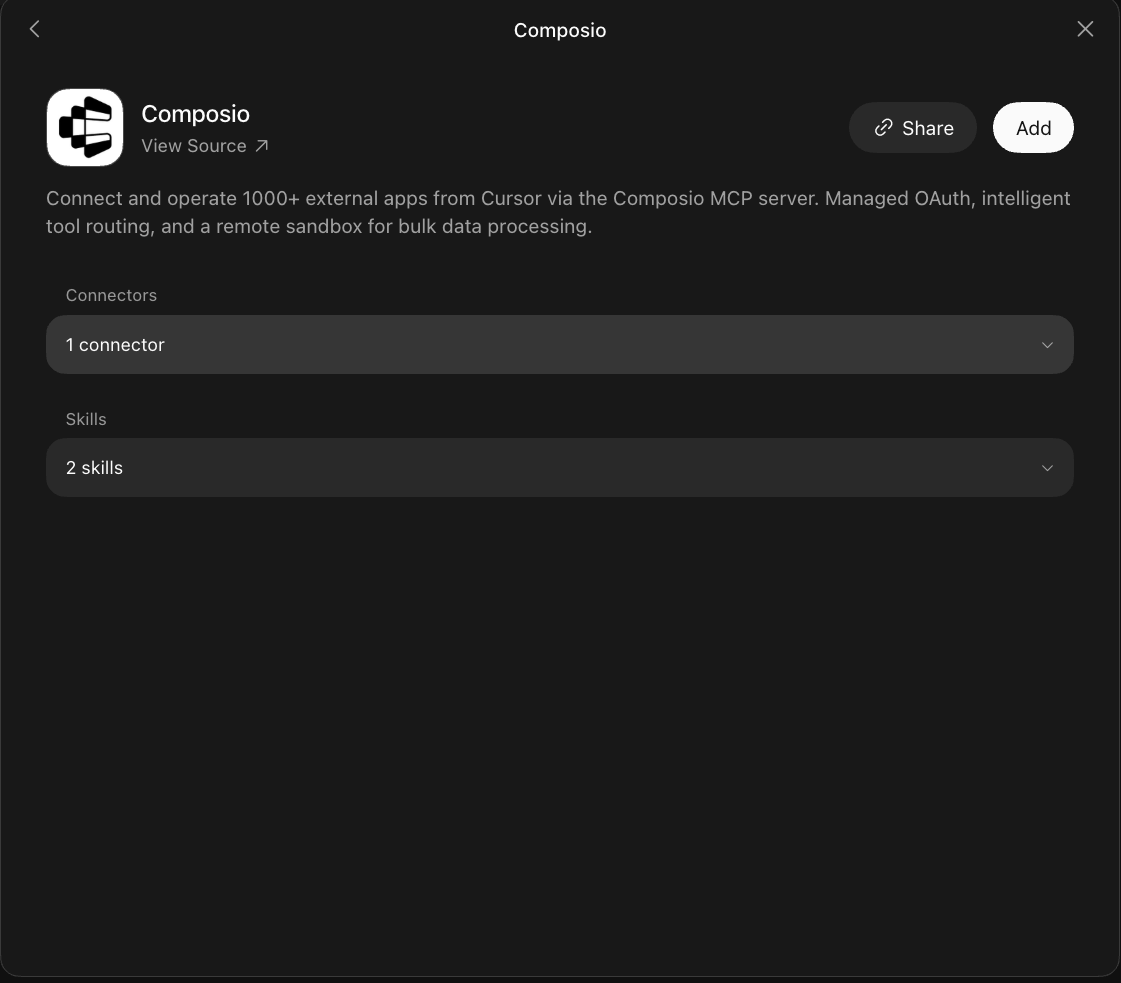
Composio plugin sheet in Grok Bot with the Add button

2. Authenticate

Go to the Installed section and click the Composio entry. You'll see its connector and skills listed.
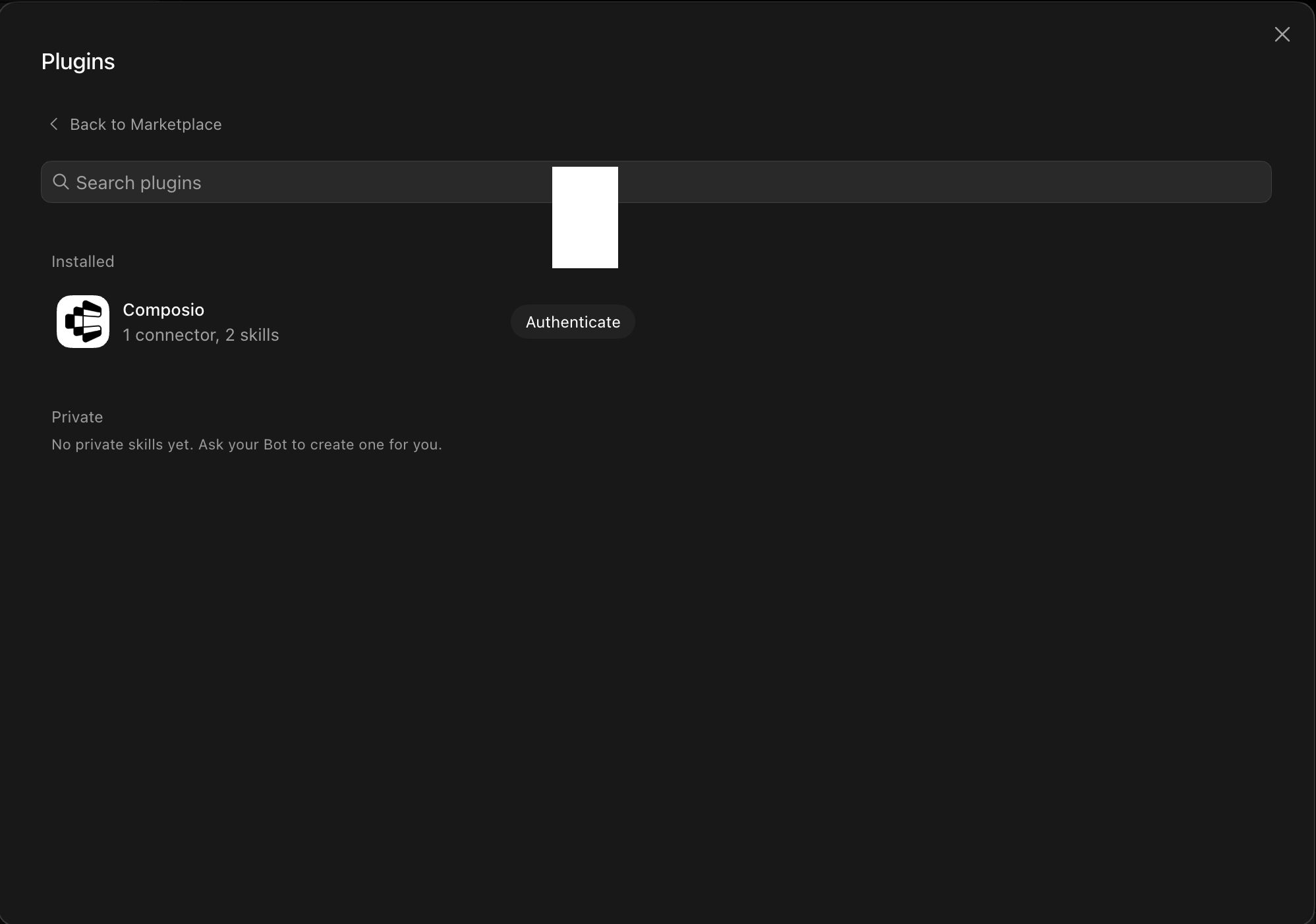
Installed Composio plugin showing the Authenticate button

Click Authenticate. You'll be taken to the Composio consent screen. Review the access it requests and click Authorize. Composio handles the OAuth handshake for you, so you never touch API keys or tokens.
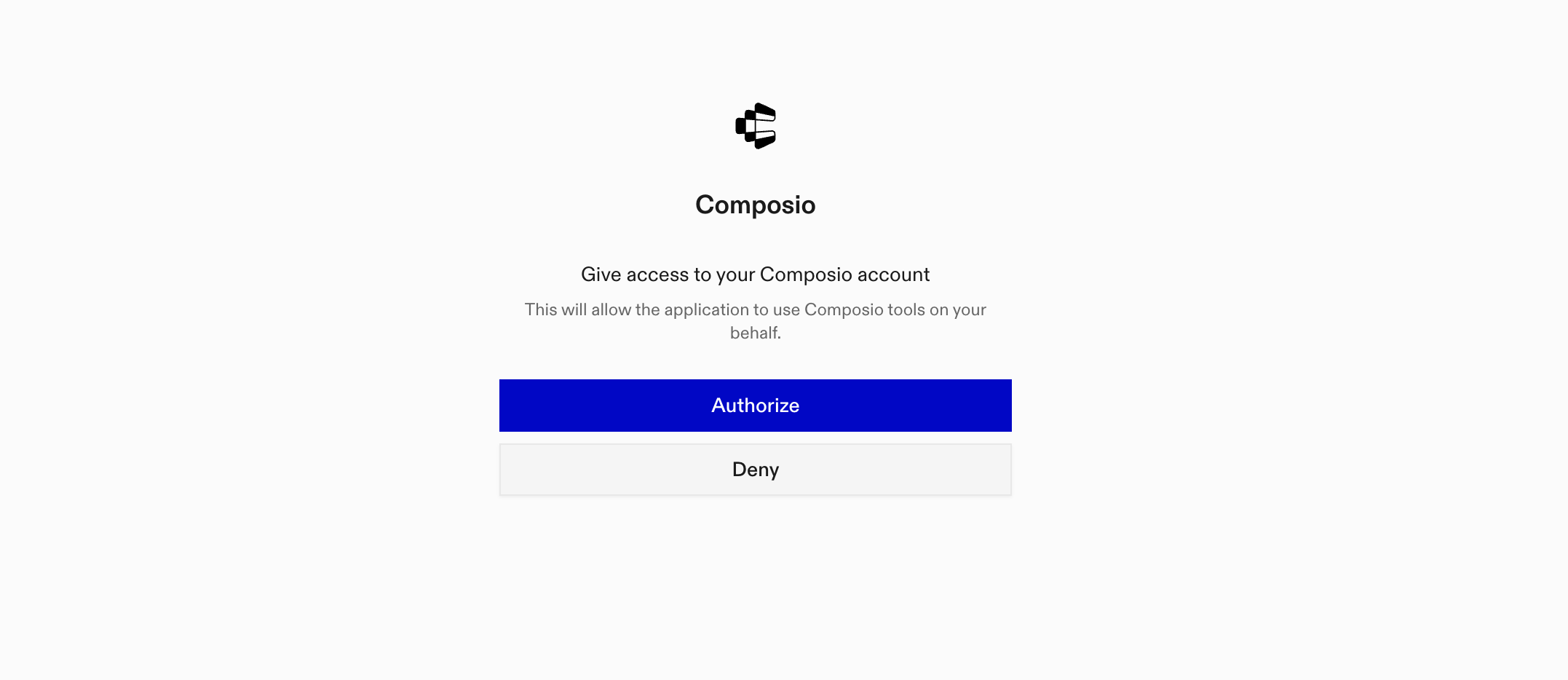
Composio authorization screen with Authorize and Deny

3. Connect your SNCF account

Back in the chat, ask your bot to connect to SNCF or give it any SNCF task.

For example, ask it to:

  • "Find next Paris to Lyon trains"
  • "Check disruptions on Lyon routes"
  • "List departures from Marseille Saint-Charles"

It will prompt you to authenticate and authorize access.

That's it. Composio's tools are now available in your Grok bot, and your SNCF account is ready to use.

What is Grok Bot?

Grok is xAI's assistant, available as a chat interface and a bot builder for creating personal agents that run skills and connect to external apps.

With Composio Connect, your Grok bot can securely access apps like SNCF through MCP without you sharing account credentials directly with the agent.

What is the SNCF MCP server, and what's possible with it?

The SNCF MCP server is an implementation of the Model Context Protocol that connects your AI agent and assistants like Claude, Cursor, etc directly to your SNCF account. It provides structured and secure access to SNCF passenger information, so your agent can plan journeys, find stations, check schedules, monitor service disruptions, and explore the transport network on your behalf.

  • Journey planning: Have your agent plan train journeys between stations or locations for a chosen departure or arrival time.
  • Station and place discovery: Let the agent search for stations, addresses, administrative areas, and points of interest by name or find nearby stops from a location.
  • Live station boards: Direct your agent to check upcoming departures or arrivals, including scheduled times, real-time updates, and disruption details.
  • Service status monitoring: Instruct your agent to review current disruptions and identify the affected lines, stations, or train journeys within a selected time window.
  • Transport network exploration: Have your agent browse or search SNCF networks, lines, routes, stations, transport modes, operators, and train journeys, and check the available coverage period.

Way Forward

Now that SNCF is connected, extend your setup by connecting the other apps you already use every day, so your Grok bot can run true cross-app workflows end to end.

  • Connect Calendar to turn threads into scheduled meetings automatically.
  • Connect Slack or Teams to post summaries, approvals, and alerts where your team works.
  • Connect Notion, Linear, Jira, or Asana to convert requests into tickets, tasks, and docs.
  • Connect Drive, Dropbox, or OneDrive to fetch, file, and share attachments without manual steps.

Start with one workflow you do repeatedly, then keep adding apps as you find new handoffs. With everything behind a single connection, your bot can coordinate multiple tools safely and reliably in one conversation.

TOOLS

Supported Tools

Every SNCF action and event your agent gets out of the box.

Find Nearby Places

Find SNCF stations, stops, or points of interest near a geographic coordinate.

Get Service Status

Get SNCF network service disruptions and affected lines, stations, or vehicle journeys for a time window.

Get Station Board

Get upcoming departures or arrivals for an SNCF station, including scheduled and realtime times and disruption context.

Get Transport Object

Get details for one SNCF network, line, route, station, stop, mode, company, or vehicle journey by canonical ID.

Get SNCF Coverage

Get the SNCF transport-data coverage region and its current production horizon.

List Transport Objects

Browse one supported SNCF transport-object collection, such as lines, networks, routes, stations, or vehicle journeys.

Plan Journey

Plan SNCF train journeys between two station/place IDs or coordinates for a requested departure or arrival time.

Search Places

Find SNCF stations, addresses, administrative areas, or points of interest by name and return IDs usable for journeys and station boards.

Search Transport Objects

Search SNCF networks, modes, lines, routes, stations, or stop points by name and return canonical transport-object IDs.

FAQ

Frequently asked questions

Start with SNCF.It takes 30 seconds.

Managed auth, hosted MCP servers, and every SNCF tool your agent needs.Free to start.

Start building

