How to integrate Postman MCP with Codex

Framework Integration Gradient
Postman Logo
Codex Logo
divider

Introduction

Codex is one of the most popular coding harnesses out there. And MCP makes the experience even better. With Postman MCP integration, you can draft, triage, summarise emails, and much more, all without leaving the terminal or app, whichever you prefer.

Composio removes the Authentication handling completely from you. We handle the entire integration lifecycle, and all you need to do is just copy the URL below, authenticate inside Codex, and start using it.

Why use Composio?

Apart from a managed and hosted MCP server, you will get:

  • CodeAct: A dedicated workbench that allows GPT to write its code to handle complex tool chaining. Reduces to-and-fro with LLMs for frequent tool calling.
  • Large tool responses: Handle them to minimise context rot.
  • Dynamic just-in-time access to 20,000 tools across 870+ other Apps for cross-app workflows. It loads the tools you need, so GPTs aren't overwhelmed by tools you don't need.

How to install Postman MCP in Codex

Codex CLI

Run the command in your terminal.

Terminal

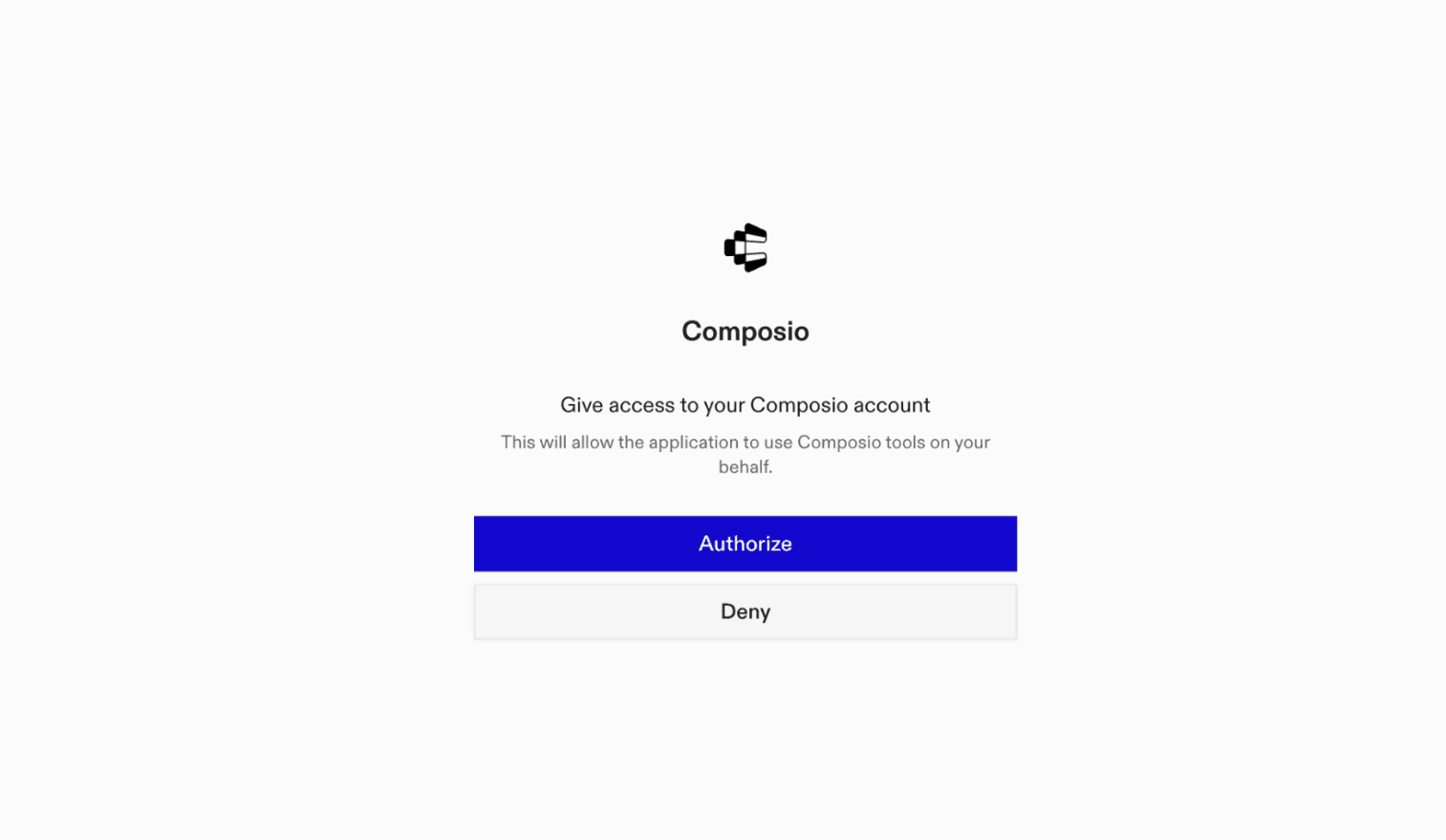
This will auto-redirect you to the Rube authentication page.

Rube authentication redirect page

Once you're authenticated, you will be able to access the tools.

Verify the installation by running:

codex mcp list

If you otherwise prefer to use config.toml, add the following URL to it. You can get the bearer token from rube.app → Use Rube → MCP URL → Generate token

[projects."/home/user/composio"]
trust_level = "untrusted"

[mcp_servers.rube]
bearer_token_env_var = "your bearer token"
enabled = true
url = "https://rube.app/mcp"

Codex in VS Code

If you have installed Codex in VS Code.

Then: ⚙️ → MCP Settings → + Add servers → Streamable HTTP:

Add the Rube MCP URL: https://rube.app/mcp and the bearer token.

VS Code MCP Settings

To verify, click on the Open config.toml

Open config toml in Codex

Make sure it's there:

[mcp_servers.composio_rube]
bearer_token_env_var = "your bearer token"
enabled = true
url = "https://rube.app/mcp"

Codex App

Codex App follows the same approach as VS Code.

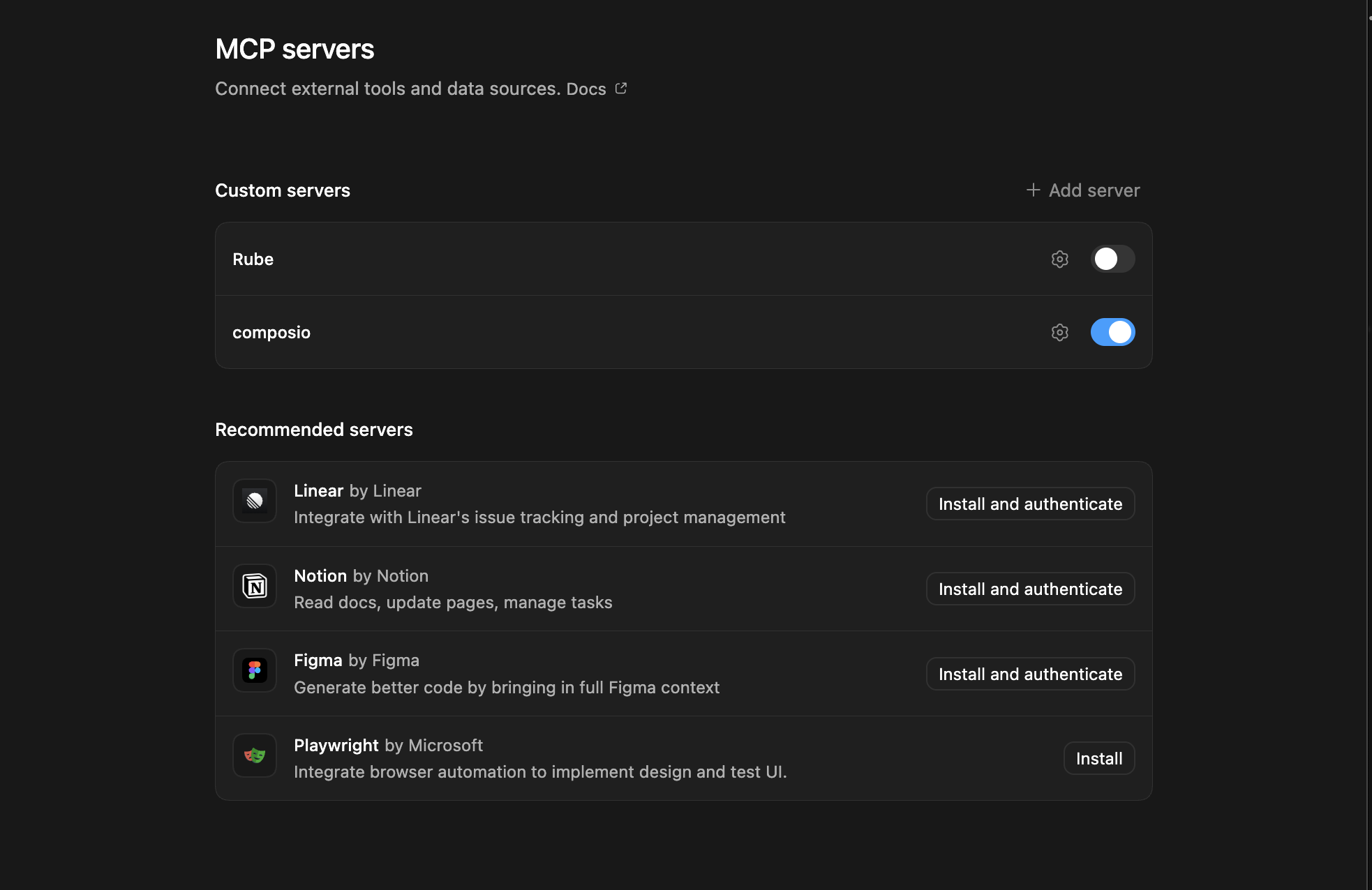
  1. Click ⚙️ on the bottom left → MCP Servers → + Add servers → Streamable HTTP:
Codex App MCP Settings
  1. Restart and verify if it's there in .codex/config.toml
[mcp_servers.composio_rube]
bearer_token_env_var = "your bearer token"
enabled = true
url = "https://rube.app/mcp"
  1. Save, restart the extension, and start working.

What is the Postman MCP server, and what's possible with it?

The Postman MCP server is an implementation of the Model Context Protocol that connects your AI agent and assistants like Claude, Cursor, etc directly to your Postman account. It provides structured and secure access so your agent can perform Postman operations on your behalf.

Supported Tools & Triggers

Tools
Create a CollectionTool to create a new Postman collection in a specific workspace or the default workspace.
Create a Collection CommentTool to create a comment on an API's collection.
Create Collection from SchemaTool to create a collection from a schema and link it to an API with specified relations.
Create a FolderTool to create a folder in a Postman collection.
Create a Folder CommentTool to create a comment on a folder.
Create a ForkTool to create a fork from an existing collection into a workspace.
Create Environment ForkTool to create a fork from an existing environment into a workspace.
Create a Mock ServerTool to create a new mock server in a Postman collection.
Create a MonitorTool to create a new monitor in a specific workspace to run a collection on a schedule.
Create an APITool to create a new API in Postman.
Create an APITool to create a new API in a Postman workspace.
Create an EnvironmentTool to create a new environment in a Postman workspace.
Create a Pull RequestTool to create a pull request for a forked collection into its parent collection.
Create Request in CollectionTool to create a new request in a Postman collection.
Create a Request CommentTool to create a comment on a request.
Create a ResponseTool to create a request response in a Postman collection.
Create a Response CommentTool to create a comment on a response.
Create API SchemaTool to create a schema for an API in Postman.
Create Mock Server ResponseTool to create a server response on a Postman mock server.
Create a SpecTool to create an API specification in Postman's Spec Hub.
Create Spec FileTool to create a new file in an API specification.
Create a WebhookTool to create a webhook that triggers a collection with a custom payload.
Create a WorkspaceTool to create a new workspace in Postman.
Create CollectionTool to create a new Postman collection with specified name and configuration.
Create EnvironmentTool to create a new Postman environment with specified name and variables.
Create Mock ServerTool to create a new mock server for a Postman collection.
Create MonitorTool to create a new monitor to run a collection on a schedule.
Create or Update a Schema FileTool to create or update an API schema file in Postman.
Create API Version RelationsTool to create new relations for an API version.
Create WebhookTool to create a new webhook for a Postman collection.
Delete a CollectionTool to permanently delete a collection from Postman.
Delete a collection's commentTool to delete a comment from an API's collection.
Delete a FolderTool to delete a folder in a Postman collection.
Delete a Folder's CommentTool to delete a comment from a folder.
Delete an APITool to delete an API from Postman.
Delete an API's CommentTool to delete a comment from an API.
Delete an environmentTool to delete an environment permanently in Postman.
Delete a Request's CommentTool to delete a comment from a request.
Delete a ResponseTool to delete a response in a Postman collection.
Delete a Response's CommentTool to delete a comment from a response.
Delete a Schema FileTool to delete a file in an API schema.
Delete Mock Server ResponseTool to delete a mock server's server response.
Delete a SpecTool to delete an API specification from Postman.
Delete Spec FileTool to delete a file from an API specification.
Delete a WorkspaceTool to delete a Postman workspace permanently.
Delete MonitorTool to delete a monitor by its ID.
Duplicate a CollectionTool to create a duplicate of a collection in another workspace.
Fork CollectionTool to create a fork of a collection in a specified workspace.
Generate Collection from SpecTool to generate a Postman collection from an OpenAPI 2.
Generate Spec from CollectionTool to generate an API specification from a Postman collection.
Get Billing Account DetailsTool to retrieve Postman billing account details for the authenticated team.
Get Collection CommentsTool to retrieve all comments left by users in an API's collection.
Get Collection's ForksTool to get all forks of a specific collection.
Get Collection Pull RequestsTool to get information about a collection's pull requests including source and destination IDs, status, and URLs.
Get Collection RolesTool to get information about all roles in a collection.
Get Folder InformationTool to retrieve information about a folder in a Postman collection.
Get Folder CommentsTool to retrieve all comments left by users in a folder.
Get All API ReleasesTool to get all releases for a specific API version in Postman.
Get All APIsTool to get all APIs accessible to the authenticated user with optional workspace filtering.
Get All APIs in WorkspaceTool to get all APIs in a specific Postman workspace.
Get All CollectionsTool to get all collections accessible to the authenticated user with optional workspace filtering.
Get All CollectionsTool to get all collections accessible to the authenticated user.
Get All EnvironmentsTool to get all environments accessible to the authenticated user with optional workspace filtering.
Get All Forked CollectionsTool to retrieve all forked collections for the authenticated user.
Get All GroupsTool to get all user groups in a Postman team.
Get All Linked RelationsTool to retrieve all linked relations for a specific API version in Postman.
Get All Mock ServersTool to get all active mock servers accessible to the authenticated user.
Get All MonitorsTool to get all monitors accessible to the authenticated user with optional workspace filtering.
Get All Workspace RolesTool to get information about all roles in a workspace based on the team's plan.
Get All API SpecificationsTool to get all API specifications in a workspace.
Get All Team UsersTool to get information about all users on the Postman team.
Get All Test RelationsTool to retrieve all test relations for a specific API version.
Get All API VersionsTool to get all published versions of a specific API in Postman.
Get All WorkspacesTool to get all workspaces accessible to the authenticated user with optional type filtering.
Get Monitor InformationTool to retrieve information about a specific monitor in Postman.
Get API InformationTool to retrieve information about a specific API in Postman.
Get API CommentsTool to retrieve all comments left by users in an API.
Get API VersionTool to get information about a specific API version in Postman.
Get an EnvironmentTool to retrieve detailed information about a specific environment in Postman.
Get Environment ForksTool to retrieve all forked environments for a specific environment.
Get Request InformationTool to retrieve information about a specific request in a Postman collection.
Get Request CommentsTool to retrieve all comments left by users in a request.
Get Response InformationTool to retrieve information about a saved response in a Postman collection.
Get Response CommentsTool to retrieve all comments left by users in a response.
Get API SchemaTool to retrieve information about an API schema from Postman.
Get API SpecificationTool to retrieve information about an API specification in Postman.
Get Spec File ContentsTool to get the contents of an API specification's file.
Get Spec DefinitionTool to get the complete contents of an API specification's definition.
Get Specification FilesTool to retrieve all files in an API specification from Postman.
Get Spec's Generated CollectionsTool to retrieve all collections generated from an API specification in Postman.
Get Async Collection Update StatusTool to get the status of an asynchronous collection update task.
Get Team UserTool to get information about a user on the Postman team.
Get Authenticated UserTool to get information about the authenticated user.
Get Workspace DetailsTool to get detailed information about a specific workspace by its ID.
Get Workspace Activity FeedTool to get a workspace's activity feed showing who added or removed collections, environments, or elements, and users joining or leaving.
Get Workspace RolesTool to get the roles of users, user groups, and partners in a workspace.
Get Collection Access KeysTool to retrieve all personal and team collection access keys for the authenticated user.
Get Contract Test RelationsTool to retrieve contract test relations for a specific API version.
Get documentation relationsTool to get documentation relations for a specific API version.
Get Duplication Task StatusTool to get the status of a collection duplication task.
Get Environment RelationsTool to get environment relations for a specific API version.
Get Generated SpecificationTool to retrieve the API specification generated for a Postman collection.
Get Workspace Global VariablesTool to get a workspace's global variables.
Get Integration Test RelationsTool to get integration test relations for a specific API version.
Get Resource TypesTool to get all resource types supported by Postman's SCIM API.
Get Schema File ContentsTool to get the contents of an API schema file at a specified path.
Get Schema FilesTool to retrieve files in an API schema from Postman.
Get Service Provider ConfigurationTool to get Postman's SCIM API service provider configuration information.
Get Source Collection StatusTool to check whether there is a change between a forked collection and its parent (source) collection.
Get Test Suite RelationsTool to get test suite relations for a specific API version.
Get Unclassified RelationsTool to get unclassified relations for an API version in Postman.
Import OpenAPI DefinitionTool to import an OpenAPI definition into Postman as a new collection.
Import OpenAPI SpecificationTool to import an OpenAPI specification into Postman as a new collection.
List Account InvoicesTool to get all invoices for a Postman billing account filtered by status.
Merge a ForkTool to merge a forked collection back into its parent collection.
Merge a forked environmentTool to merge a forked environment back into its parent environment.
Publish a Mock ServerTool to publish a mock server in Postman.
Pull Source Changes into ForkTool to pull changes from a parent (source) collection into a forked collection.
Replace an Environment's DataTool to completely replace an environment's data with new variables and values.
Replace Collection Data AsynchronouslyTool to replace the entire contents of a collection asynchronously.
Resolve a Comment ThreadTool to resolve a comment thread and any associated replies.
Review a Pull RequestTool to update the review status of a pull request by approving, declining, or unapproving it.
Run a MonitorTool to trigger an immediate run of a monitor and retrieve its execution results.
Sync Collection with API SchemaTool to sync a collection attached to an API with the API schema.
Sync Collection with SpecificationTool to sync a collection generated from an API specification.
Sync Spec with CollectionTool to sync an API specification with a linked collection.
Transfer FoldersTool to copy or move folders into a collection or folder.
Transform Collection to OpenAPITool to transform an existing Postman Collection into a stringified OpenAPI 3.
Update a FolderTool to update a folder in a Postman collection.
Update a Folder's CommentTool to update a comment on a folder.
Update a Mock ServerTool to update an existing mock server.
Update a MonitorTool to update an existing monitor in Postman.
Update an APITool to update an existing API in Postman.
Update an API's CommentTool to update a comment on an API.
Update an EnvironmentTool to update specific environment properties using JSON Patch operations (RFC 6902).
Update a Pull RequestTool to update an open pull request in Postman.
Update Request in CollectionTool to update a request in a Postman collection.
Update a Request's CommentTool to update a comment on a request.
Update a ResponseTool to update a response in a Postman collection.
Update a Response's CommentTool to update a comment on a response.
Update a Server ResponseTool to update a mock server's server response.
Update Spec FileTool to update an API specification file's content.
Update Spec PropertiesTool to update an API specification's properties such as its name.
Update a WorkspaceTool to update an existing workspace in Postman.
Update Workspace Global VariablesTool to update and replace a workspace's global variables.
Update Collection PropertiesTool to update specific collection properties like name, description, authentication, variables, or events.

Conclusion

You've successfully integrated Postman with Codex using Composio's Rube MCP server. Now you can interact with Postman directly from your terminal, VS Code, or the Codex App using natural language commands.

Key benefits of this setup:

  • Seamless integration across CLI, VS Code, and standalone app
  • Natural language commands for Postman operations
  • Managed authentication through Composio's Rube
  • Access to 20,000+ tools across 870+ apps for cross-app workflows
  • CodeAct workbench for complex tool chaining

Next steps:

  • Try asking Codex to perform various Postman operations
  • Explore cross-app workflows by connecting more toolkits
  • Build automation scripts that leverage Codex's AI capabilities

How to build Postman MCP Agent with another framework

FAQ

What are the differences in Tool Router MCP and Postman MCP?

With a standalone Postman MCP server, the agents and LLMs can only access a fixed set of Postman tools tied to that server. However, with the Composio Tool Router, agents can dynamically load tools from Postman and many other apps based on the task at hand, all through a single MCP endpoint.

Can I use Tool Router MCP with Codex?

Yes, you can. Codex fully supports MCP integration. You get structured tool calling, message history handling, and model orchestration while Tool Router takes care of discovering and serving the right Postman tools.

Can I manage the permissions and scopes for Postman while using Tool Router?

Yes, absolutely. You can configure which Postman scopes and actions are allowed when connecting your account to Composio. You can also bring your own OAuth credentials or API configuration so you keep full control over what the agent can do.

How safe is my data with Composio Tool Router?

All sensitive data such as tokens, keys, and configuration is fully encrypted at rest and in transit. Composio is SOC 2 Type 2 compliant and follows strict security practices so your Postman data and credentials are handled as safely as possible.

Used by agents from

Context
Letta
glean
HubSpot
Agent.ai
Altera
DataStax
Entelligence
Rolai
Context
Letta
glean
HubSpot
Agent.ai
Altera
DataStax
Entelligence
Rolai
Context
Letta
glean
HubSpot
Agent.ai
Altera
DataStax
Entelligence
Rolai

Never worry about agent reliability

We handle tool reliability, observability, and security so you never have to second-guess an agent action.