How to connect Padlet MCP to Claude

Connect Claude Web, Desktop and Cowork to Padlet MCP. Summarize posts across your padlet boards, create a board for our workshop, and more using natural language, with authentication handled for you.

Padlet MCP logoPadlet MCP
Dcr Oauth

Padlet MCP is Padlet's hosted Model Context Protocol server for working with boards and their content. It provides a secure, structured way to connect Padlet with AI tools and workflows.

22 Tools

Introduction

Claude is Anthropic's AI assistant, available on the web, in the desktop app, and on mobile. Cowork is its agent for knowledge work, and it runs on all of those surfaces too. Connected to your apps, Claude can work with your files and services to accomplish complex tasks on your behalf.

This guide walks you through the easiest and most secure way to connect your Padlet account to Claude via Composio Connect, enabling it to summarize posts across your Padlet boards, create a board for our workshop, update the title of your board, and more such actions on your behalf without compromising your account security.

Setup is the same on Claude Web, Desktop, and Cowork, and you only need to do it once. The connector is tied to your account, so it's available in all three.

For exact tool slugs and parameter tables, see the tool catalog in the Composio docs.

Also integrate Padlet MCP with

Connecting Padlet to Claude Web, Desktop, and Cowork

Two ways to add the Composio connector. Pick whichever you prefer.

1. Add with one click

Click the button. Claude opens with the Composio connector filled in. Click Add, then go to step 2.

Add to Claude

Add manually

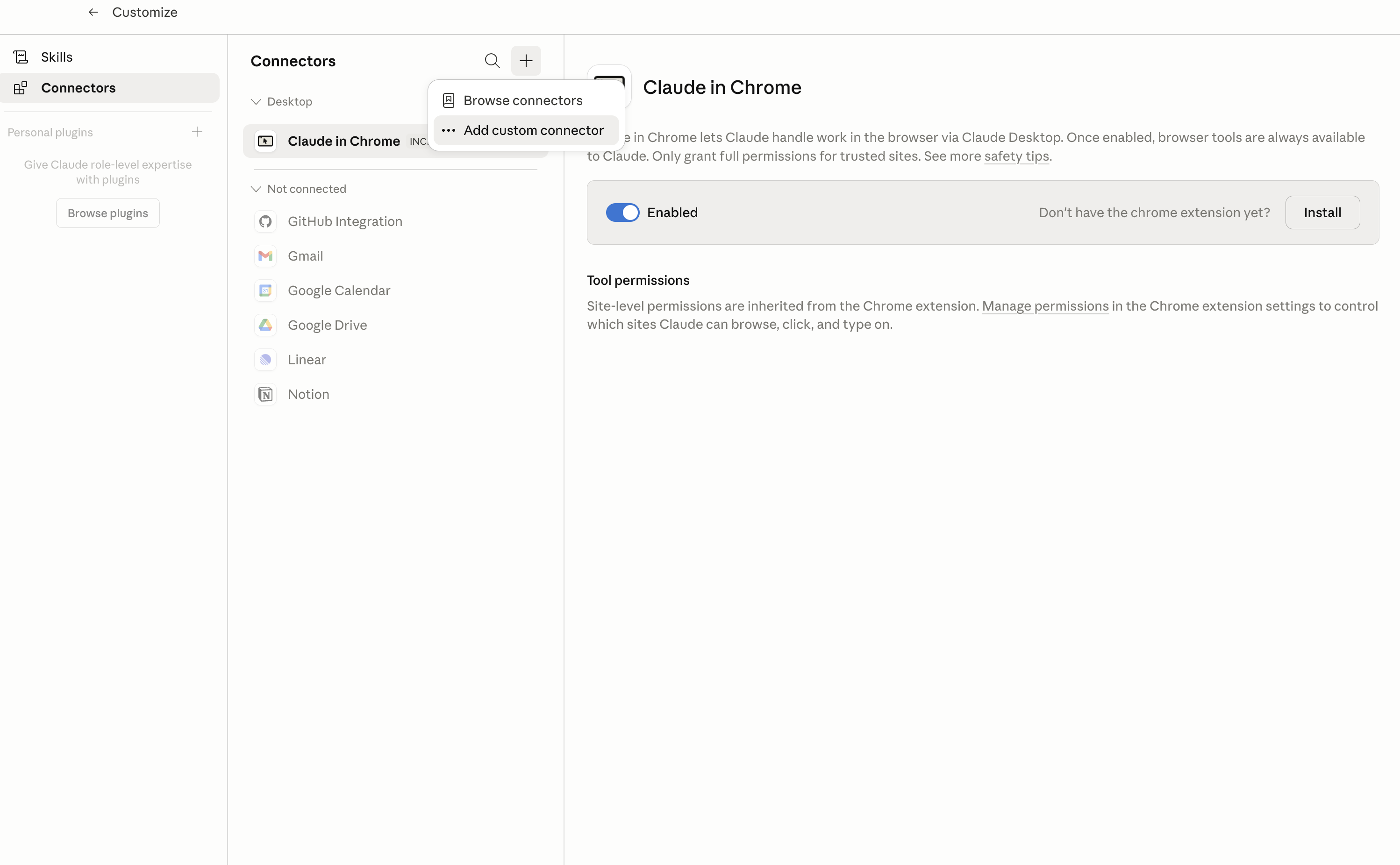
In Claude Desktop, click Customize in the left sidebar, then select Connectors and click the + icon at the top.

Claude Desktop connectors screen with Add custom connector selected

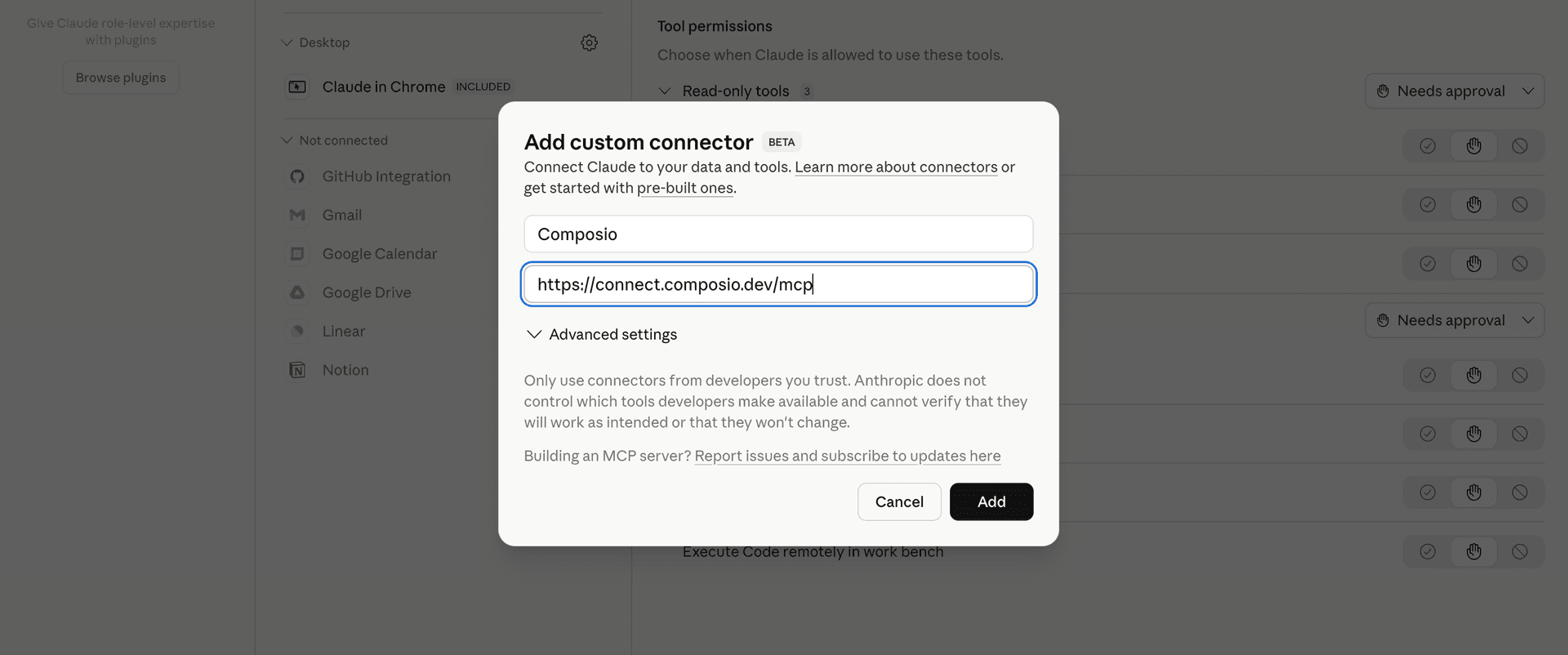
Click Add custom connector and paste in the Composio MCP server URL:

bash
https://connect.composio.dev/mcp
Add custom connector dialog with Composio MCP server URL

2. Authorize in your browser

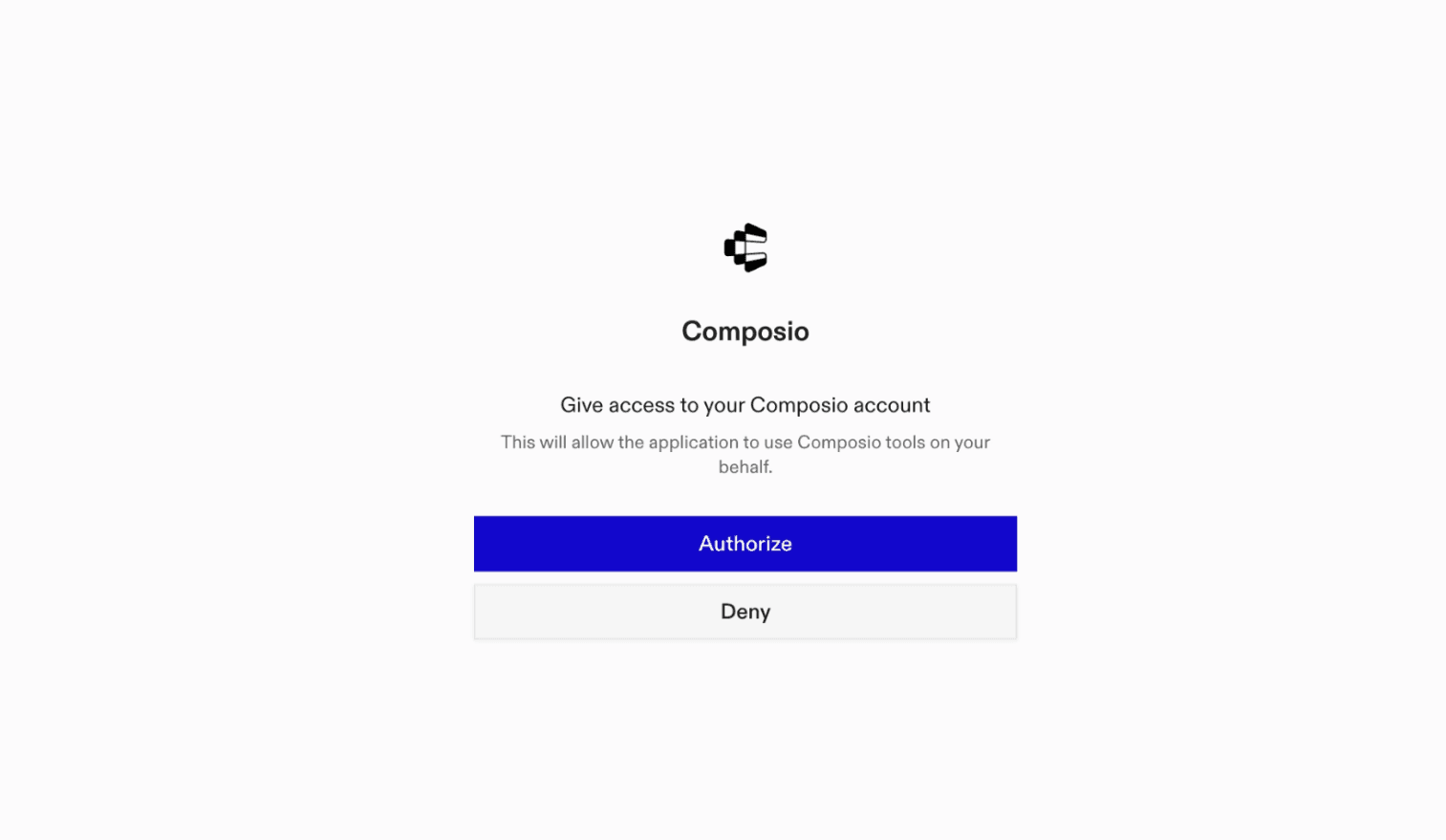
Click Connect. You'll be redirected to a browser window where you can authorize Composio to continue.

Composio authorization screen for Claude Web, Desktop, and Cowork

3. Connect your Padlet account

Back in Claude, ask it to connect to Padlet or give it any Padlet-related task.

For example, ask Claude to:

  • "Summarize posts across your Padlet boards"
  • "Create a board for our workshop"
  • "Update the title of your board"

It will prompt you to authenticate and authorize access.

That's it. Composio's tools are now available in Claude, and your Padlet account is ready to use.

What is the Padlet Claude Connector, and what's possible with it?

The Padlet MCP server is an implementation of the Model Context Protocol that connects your AI agent and assistants like Claude, Cursor, etc directly to your Padlet account. It provides structured and secure access to your Padlet boards, posts, sections, comments, attachments, and settings, so your agent can find, read, create, and edit Padlet content on your behalf.

  • Board discovery and reading: Have your agent find Padlet boards by keyword or recent activity, then read their titles, descriptions, settings, sections, posts, and comments.
  • Content creation and editing: Direct your agent to create boards, add or edit posts, organize sections, and add or update comments.
  • Attachment handling and analysis: Let the agent upload attachments to posts and analyze images, videos, audio, PDFs, and documents already attached to posts.
  • Board customization: Instruct your agent to update a board's title, description, icon, appearance, layout, engagement settings, post fields, and sharing options.
  • Padlet actions and cleanup: Have your agent search available Padlet actions, run read or reversible write actions, and delete selected posts, sections, comments, or custom fields when needed.

Troubleshooting

1. Why does Claude not use the Composio connector for Padlet?

The connector can show as connected, but Claude must use it in each Padlet conversation.

  • Click + at the lower left of the chat, or type /.
  • Hover Connectors.
  • Turn on Composio.
  • Ask Claude to connect to Padlet again.

2. Why does Claude show an MCP server error before Padlet connects?

Claude can show Couldn't reach the MCP server or Authorization with the MCP server failed when you add the connector for Padlet.

  • Check that the connector URL is https://connect.composio.dev/mcp.
  • Connectors run from Anthropic's cloud, so your device network is usually not the problem.
  • Add the connector again from Customize > Connectors, then ask Claude to connect Padlet.
  • If it fails again, send the error and the ofid_ reference id to support@composio.dev.

3. Why does the Padlet authorization link not work?

The Composio connector is one server. Your Padlet account connects separately when Claude asks for it.

  • If the browser does not open, or the link expires, ask Claude to retry the Padlet connection.
  • Composio creates a fresh Padlet authorization link.
  • Open that link in your browser and finish the Padlet sign-in.

4. Why do Padlet actions fail after they worked before?

The Padlet connection can expire or lose permission.

  • Ask Claude to inspect the Padlet connection.
  • If the connection is unhealthy, disconnect it when Claude prompts you.
  • Reconnect the Padlet account and retry the action.
  • If Claude shows a permission prompt, approve it before Claude changes data in Padlet.
  • If the action still fails with a permission error, check that the connected account has that permission in Padlet itself.

5. How do I switch to a different Padlet account?

Claude can manage the Padlet connection for you.

  • Ask Claude to disconnect or delete the current Padlet account.
  • Ask Claude to connect Padlet again.
  • Open the new Composio authorization link for Padlet.
  • Sign in with the other Padlet account in the browser.
  • After the account connects, ask Claude to retry the Padlet task.

6. Why is my Padlet connection missing in Claude Desktop or on a Team plan?

The connector belongs to your Claude account, so your Padlet connection works in Claude Web, Desktop, and Cowork.

  • In Claude Desktop, open Customize > Connectors.
  • Next to Composio, click ⋮ and click Clear cache.
  • If Padlet tools still do not appear, click ⋮, disconnect, remove the connector, and add it again.
  • On Team or Enterprise, an Owner or Primary Owner must enable the connector before you can connect Padlet.
TOOLS

Supported Tools

Every Padlet MCP action and event your agent gets out of the box.

Analyze post attachments

Analyzes the content of attachments (images, videos, audio, PDFs, documents) from posts on the padlet.

Complete attachment upload

Finish an upload started by start_attachment_upload.

Create padlet

Create a new blank padlet that can then be populated using other tools.

Delete padlet items

Deletes posts, sections, comments and custom fields from a padlet, any mix of them in one call.

Describe padlet action

Returns the full description, arguments and hints of one Padlet action that search_padlet_actions found.

Find padlets

Finds the user's padlets: given words, the padlets that best match them, and given none, the user's most recently updated padlets.

Get padlet

Reads a padlet: its title, description, settings, sections, and posts with their comments.

Run padlet destructive action

Runs a Padlet action that deletes something or cannot be undone, by its name from search_padlet_actions, with that action's arguments.

Run padlet read action

Runs a Padlet action that only reads, by its name from search_padlet_actions, with that action's arguments.

Run padlet write action

Runs a Padlet action that changes something and can be changed back, by its name from search_padlet_actions, with that action's arguments.

Save comments

Adds and edits comments on a padlet's posts.

Save posts

Adds and edits posts on a padlet.

Save sections

Creates, renames and reorders the sections of a padlet.

Search padlet actions

Finds Padlet actions that are not tools of their own, among the actions this account may run.

Send feedback

Send Padlet's developers a report about a problem with these tools: confusing behaviour, a missing capability, or a problem you worked around.

Start attachment upload

Start uploading a file so it can be attached to a padlet.

Update padlet appearance

Changes how a padlet looks: its color scheme, post size, font, wallpaper and, on a map padlet, its map style.

Update padlet engagement

Changes how people respond on a padlet: comments, reactions and their emoji set, and whether posts and comments show their author and time.

Update padlet heading

Changes a padlet's title, description and icon.

Update padlet layout

Changes how a padlet arranges its posts: its format, whether posts are grouped into sections, and their sort order.

Update padlet post fields

Changes what a post on a padlet asks for: which fields and attachment types are on, their placeholders, which are required, and new custom fields.

Update padlet sharing

Changes who can open a padlet and what they can do: the roles of its library's students and teachers and of visitors, whether visitors must log in, the password, and whether it is listed on the dashboard or published on the user's profile and the web.

FRAMEWORKS

How to build Padlet MCP Agent with another framework

FAQ

Frequently asked questions

Start with Padlet MCP.It takes 30 seconds.

Managed auth, hosted MCP servers, and every Padlet MCP tool your agent needs.Free to start.

Start building