How to connect One drive to Grok Bot

Connect Grok Bot to One drive MCP. Share project folder with your team, download the latest version of report.docx, and more using natural language, with authentication handled for you.

One drive logoOne drive
Oauth2S2s Oauth2

OneDrive is Microsoft’s cloud storage for storing, syncing, and sharing files across devices. Access your files securely anywhere with real-time collaboration and offline support.

60 Tools9 Triggers

Introduction

Grok is xAI's assistant, and its bot builder lets you create a personal agent that holds context, runs skills, and connects to the apps you already use through plugins.

This guide explains how to connect One drive to a Grok bot using Composio Connect, which handles OAuth, token refresh, and reliability so you do not have to. You add Composio as a plugin, authenticate once, then ask your bot to work with One drive in plain language.

Also integrate One drive with

Why use Composio?

Composio exposes 1,500+ apps to your Grok bot through a single connection, so you get:

  • Connect to 1,500+ apps with on-demand tool loading, so you do not fill your context window with unnecessary tool definitions.
  • Use programmatic tool calling through a remote workbench, letting the model write its own code to handle complex tool chaining. This reduces back-and-forth for frequent tool calls.
  • Handle large tool responses outside the model context to keep conversations lean.

Connecting One drive to Grok Bot

Once Grok Bot is set up, you connect One drive entirely from its interface, and the whole flow takes under a minute.

Set up Grok Bot

Get access. Grok Bot is included with Cursor Ultra, Cursor Premium Teams, and SuperGrok Heavy. Get the desktop app for macOS or Windows from x.ai/bot and sign in. An iPhone companion app is also available, and your bots sync across devices.

Create a bot. Pick a suggested role or define your own, then give it a short name, one primary job, and a short description of how it should work. Focused bots work best, because a clear role gives the bot more useful context over time.

Connect One drive

1. Add the Composio plugin

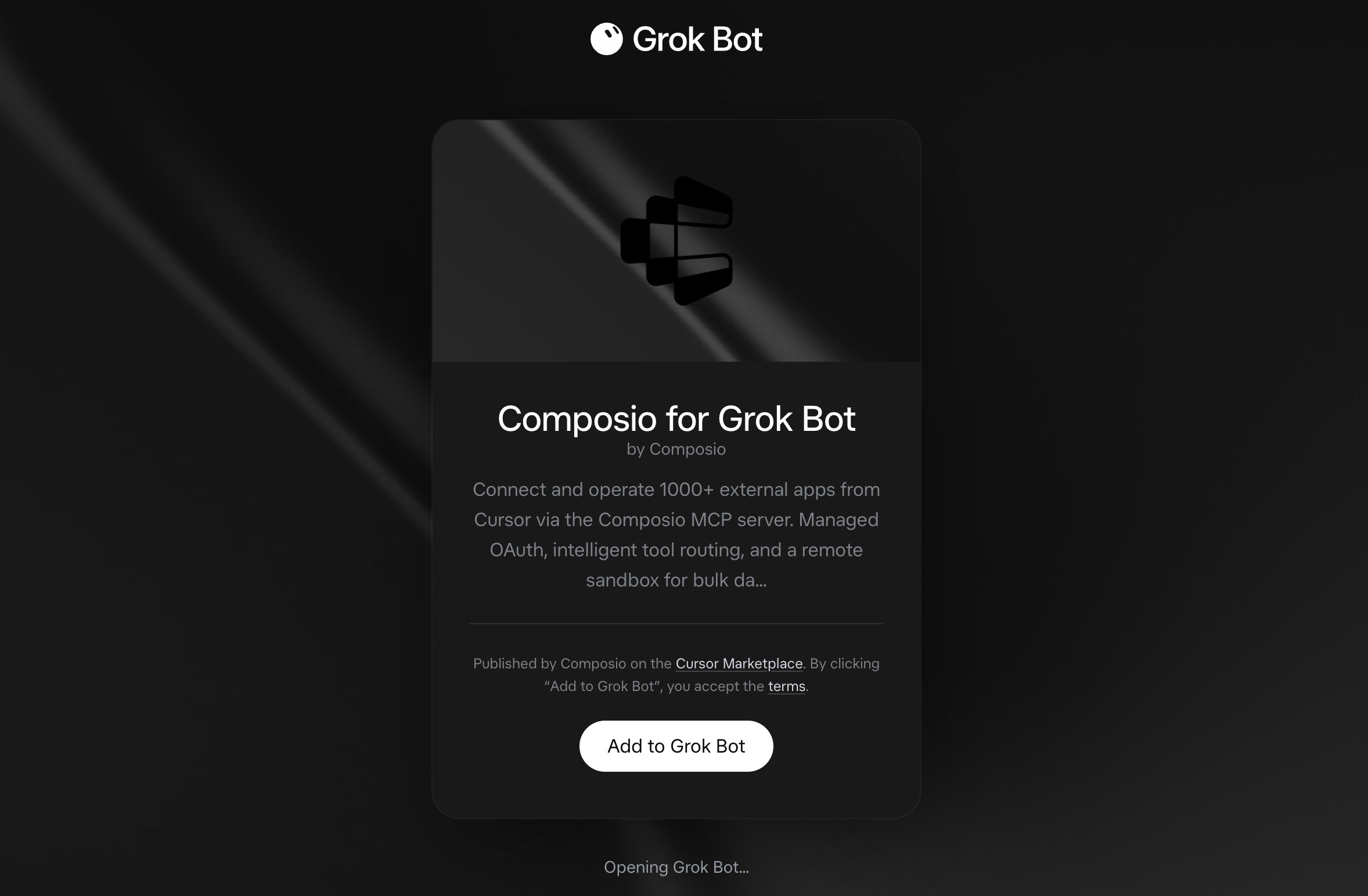
Click the button. The Composio listing on x.ai opens and launches Grok Bot for you. If the app does not open on its own, click Add to Grok Bot.

Add to Grok Bot

Composio for Grok Bot listing on x.ai with the Add to Grok Bot button

Grok Bot opens the Composio plugin, showing its connector and skills. Click Add.
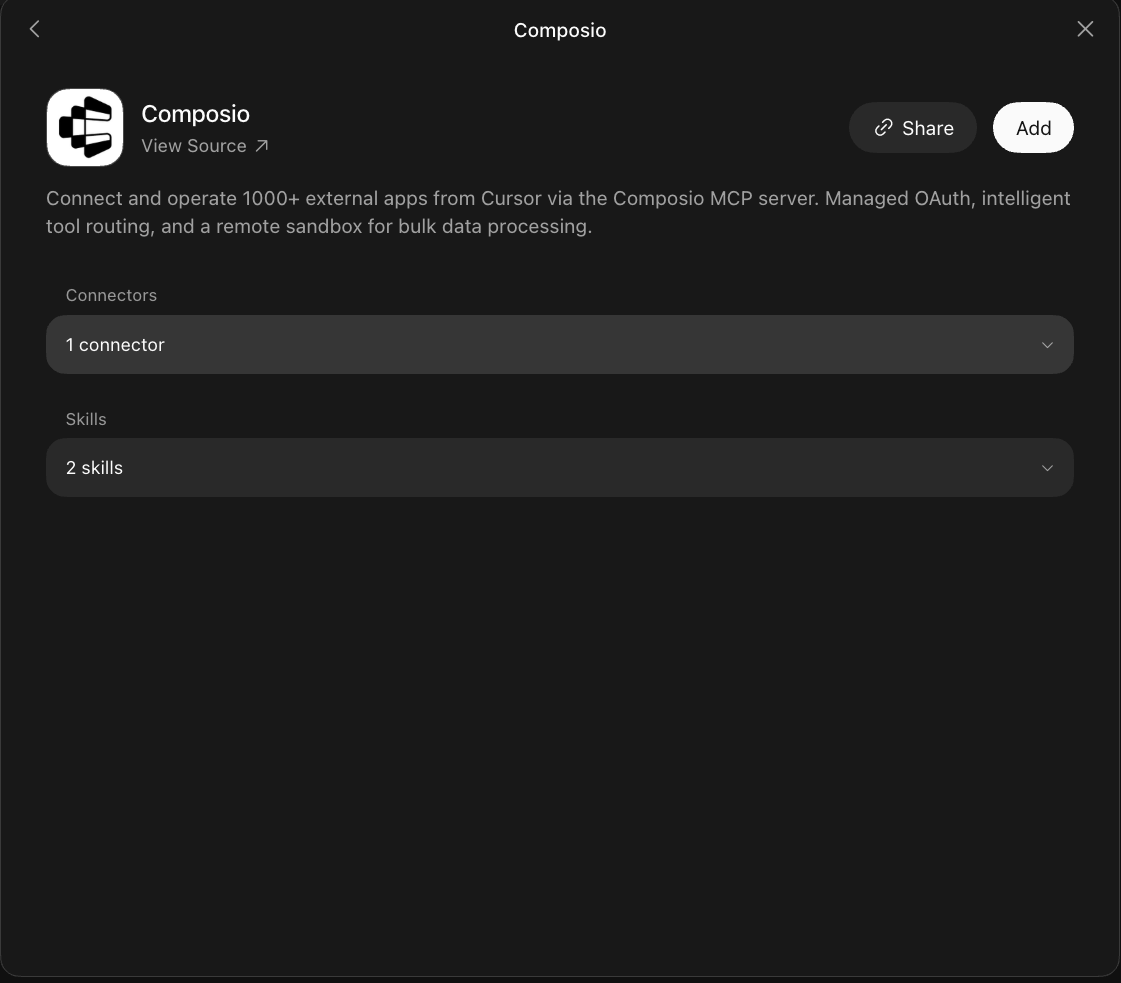
Composio plugin sheet in Grok Bot with the Add button

2. Authenticate

Go to the Installed section and click the Composio entry. You'll see its connector and skills listed.
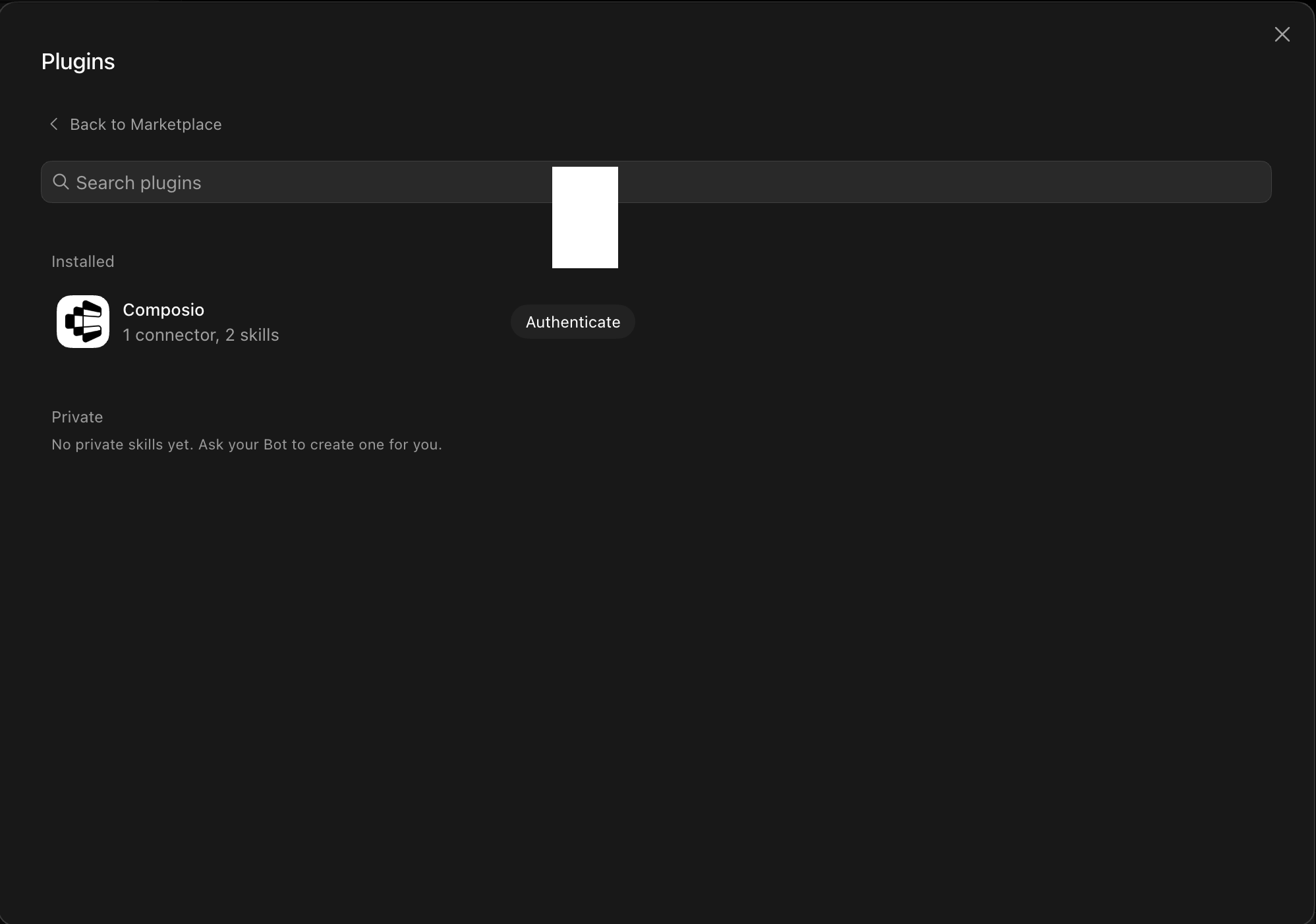
Installed Composio plugin showing the Authenticate button

Click Authenticate. You'll be taken to the Composio consent screen. Review the access it requests and click Authorize. Composio handles the OAuth handshake for you, so you never touch API keys or tokens.
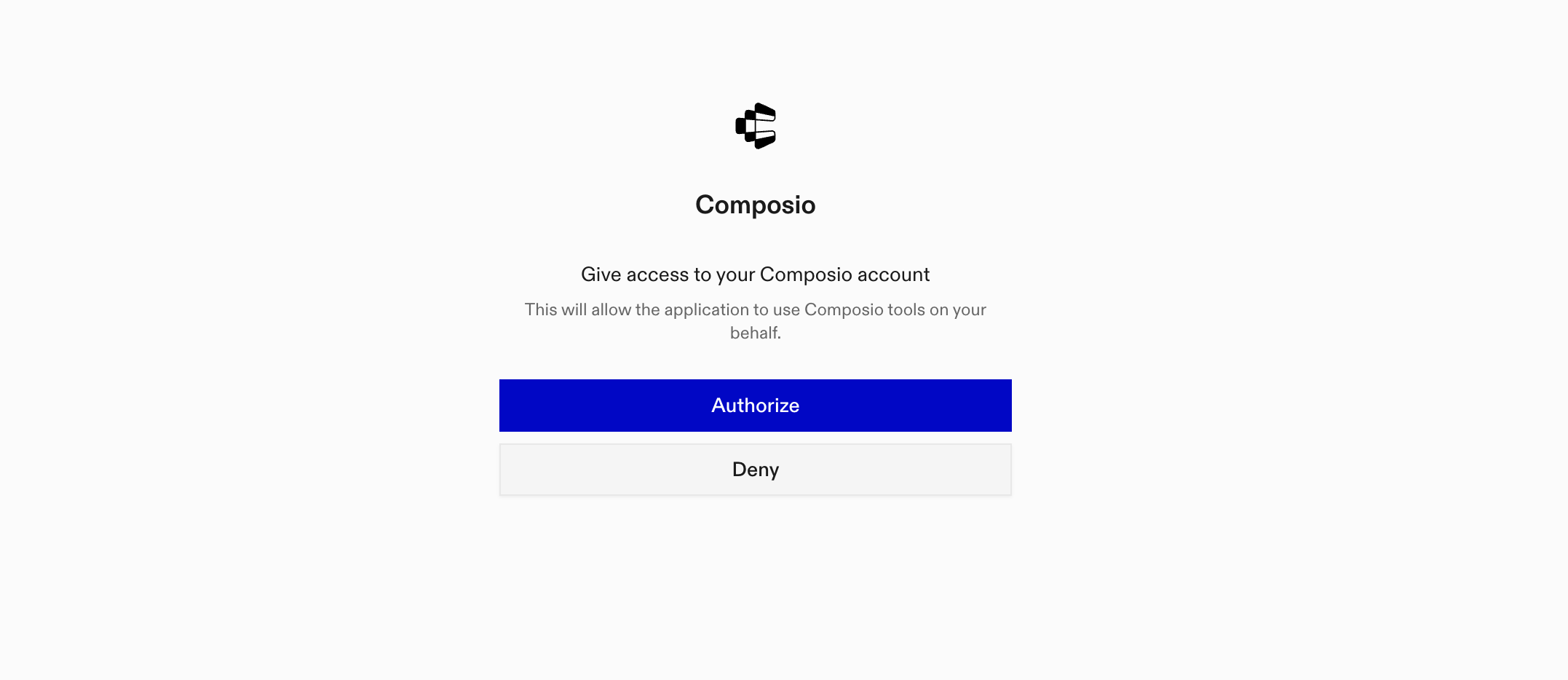
Composio authorization screen with Authorize and Deny

3. Connect your One drive account

Back in the chat, ask your bot to connect to One drive or give it any One drive task.

For example, ask it to:

  • "Share project folder with your team"
  • "Download the latest version of report.docx"
  • "Check who can access budget.xlsx"

It will prompt you to authenticate and authorize access.

That's it. Composio's tools are now available in your Grok bot, and your One drive account is ready to use.

What is Grok Bot?

Grok is xAI's assistant, available as a chat interface and a bot builder for creating personal agents that run skills and connect to external apps.

With Composio Connect, your Grok bot can securely access apps like One drive through MCP without you sharing account credentials directly with the agent.

What is the One drive MCP server, and what's possible with it?

The OneDrive MCP server is an implementation of the Model Context Protocol that connects your AI agent and assistants like Claude, Cursor, etc directly to your OneDrive account. It provides structured and secure access to your files, folders, sharing settings, activity history, and Excel workbooks, so your agent can inspect, copy, share, track, and manage content on your behalf.

  • File and folder management: Have your agent inspect file details, copy content to another location, delete unwanted items, or permanently remove sensitive files.
  • Sharing and access control: Let the agent create sharing links, invite people to files or folders, review permissions, and revoke access when it is no longer needed.
  • Activity and version tracking: Direct your agent to review recent OneDrive activity, inspect changes to specific files, track root folder updates, and retrieve version history.
  • Excel workbook operations: Instruct your agent to open workbook sessions, inspect table contents, format spreadsheet ranges, and close sessions when the work is complete.
  • SharePoint content management: Have your agent read site details and page content, review or create list items, track list changes, inspect site columns, and manage list permissions.

Way Forward

Now that One drive is connected, extend your setup by connecting the other apps you already use every day, so your Grok bot can run true cross-app workflows end to end.

  • Connect Calendar to turn threads into scheduled meetings automatically.
  • Connect Slack or Teams to post summaries, approvals, and alerts where your team works.
  • Connect Notion, Linear, Jira, or Asana to convert requests into tickets, tasks, and docs.
  • Connect Drive, Dropbox, or OneDrive to fetch, file, and share attachments without manual steps.

Start with one workflow you do repeatedly, then keep adding apps as you find new handoffs. With everything behind a single connection, your bot can coordinate multiple tools safely and reliably in one conversation.

TOOLS & TRIGGERS

Supported Tools and Triggers

Every One drive action and event your agent gets out of the box.

Check In Drive Item

Tool to check in a checked out driveItem resource, making the version of the document available to others.

Checkout Drive Item

Tool to check out a driveItem to prevent others from editing it and make your changes invisible until checked in.

Copy Item

Tool to copy a DriveItem (file or folder) to a new location asynchronously.

Create Drive Item Permission

Tool to create a new permission on a OneDrive drive item.

Create Sharing Link

Tool to create a sharing link for a DriveItem (file or folder) by its unique ID.

Delete Item

Tool to delete a DriveItem (file or folder) by its unique ID from the authenticated user's OneDrive.

Permanently Delete Drive Item

Tool to permanently delete a driveItem by its ID without moving it to the recycle bin.

Delete Drive Item Permission

Tool to delete a permission from a drive item.

Delete Shares Permission

Tool to delete the permission navigation property for a shared drive item.

Discard Checkout

Tool to discard the checkout of a driveItem, releasing it and discarding any changes made while checked out.

Download a file

Downloads a file from a user's OneDrive using its item ID, which must refer to a file and not a folder.

Download file by path

Downloads the contents of a file from OneDrive by its path.

Download item as format

Tool to download the contents of a driveItem converted to a specific format (e.

Download Drive Item Version Content

Tool to download the contents of a specific previous version of a drive item (file).

Follow Drive Item

Tool to follow a driveItem (file or folder) in OneDrive or SharePoint.

Get Drive

Retrieves the properties and relationships of a Drive resource by its unique ID.

Get DriveItem by Sharing URL

Tool to resolve a OneDrive/SharePoint sharing URL (or shareId) to a DriveItem with driveId and itemId.

Get Drives Following

Tool to retrieve a specific followed driveItem from a drive.

Get Group Drive

Tool to retrieve the document library (drive) for a Microsoft 365 group.

Get Item Metadata

Retrieves the metadata of a DriveItem by its unique ID.

Get Item Permissions

Retrieves the permissions of a DriveItem by its unique ID within a specific Drive.

Get Item Thumbnails

Tool to retrieve the thumbnails associated with a DriveItem.

Get Item Versions

Tool to retrieve the version history of a DriveItem by its unique ID.

Get Recent Items

Get files and folders recently accessed by the user.

Get Drive Root Folder

Tool to retrieve metadata for the root folder of the signed-in user's OneDrive.

Get Shared Item by ShareId

Tool to access a shared DriveItem or collection of shared items using a shareId or encoded sharing URL.

Get Shared Items

Tool to retrieve items shared with the authenticated user (not items the user has shared with others).

Get SharePoint List Items

Tool to get the items (list items) within a specific SharePoint list on a site.

Get Site Details

Retrieves metadata for a specific SharePoint site by its ID.

Get SharePoint Site Page Content

Gets the content of a modern SharePoint site page.

Get Drive Special Folder

Tool to retrieve a special folder in OneDrive by name.

Grant Shares Permission

Tool to grant users access to a link represented by a permission using an encoded sharing URL.

Invite User to Drive Item

Tool to invite users or grant permissions to a specific item in a OneDrive drive.

List Drive Activities

Tool to retrieve recent activities on the authenticated user's OneDrive.

List Drive Bundles

Tool to retrieve a list of bundle resources from a specified drive.

List Drives

Tool to retrieve a list of Drive resources available to the authenticated user, or for a specific user, group, or site.

List Folder Children

List the direct children (files/folders) of a OneDrive/SharePoint folder by DriveItem ID or path.

List Drive Item Activities

Tool to list recent activities for a specific item in a OneDrive drive.

List Root Drive Changes

Tool to list changes in the root of the user's primary drive using a delta token.

List Shares Permission

Tool to retrieve permission details for a shared OneDrive or SharePoint item using a share ID.

List SharePoint List Items Delta

Tool to track changes to items in a SharePoint list using a delta query.

List Site Columns

Tool to list all column definitions for a SharePoint site.

List Site Drive Items Delta

Tool to track changes to DriveItems in the default document library of a SharePoint site.

List Site Lists

Tool to list all lists under a specific SharePoint site.

List Site Subsites

Tool to list all subsites of a SharePoint site.

List Subscriptions

Tool to list the current subscriptions for the authenticated user or app.

Move Item

Tool to move a file or folder to a new parent folder in OneDrive.

Create folder

Creates a new folder in the user's OneDrive, automatically renaming on conflict, optionally within a specified parent_folder (by ID or full path from root) which, if not the root, must exist and be accessible.

Create a new text file

Creates a new plain-text file with specified content in the authenticated user's personal OneDrive, using either the folder's unique ID or its absolute path relative to the user's OneDrive root (paths are automatically resolved to IDs); note that OneDrive may rename or create a new version if the filename already exists.

Find Item

Non-recursively finds an item (file or folder) in a specified OneDrive folder; if `folder` is provided as a path, it must actually exist.

Find Folder

Finds folders by name within an accessible parent folder in OneDrive, or lists all its direct child folders if no name is specified.

List OneDrive items

Retrieves all files and folders as `driveItem` resources from the root of a specified user's OneDrive, automatically handling pagination.

Upload file

Uploads a file to a specified OneDrive folder, automatically creating the destination folder if it doesn't exist, renaming on conflict, and supporting large files via chunking.

Preview Drive Item

Generates or retrieves a short-lived, permission-bound embeddable URL for a preview of a specific item.

Restore Deleted Item

Tool to restore a deleted OneDrive driveItem (file or folder) from the recycle bin.

Search Items

Search OneDrive for files and folders by keyword.

Delete Drive Following

Tool to unfollow a driveItem by removing it from the user's followed items collection.

Update Drive Item Metadata

Tool to update the metadata of a specific item (file or folder) in OneDrive.

Update Drive Item Permissions

Tool to update the roles of an existing permission on a OneDrive drive item.

Update File Content

Tool to create an upload session for updating an existing file's content in OneDrive.

FAQ

Frequently asked questions

With a standalone One drive MCP server, the agents and LLMs can only access a fixed set of One drive tools tied to that server. However, with the Composio Tool Router, agents can dynamically load tools from One drive and many other apps based on the task at hand, all through a single MCP endpoint.

Yes, you can. Grok Bot fully supports MCP integration. You get structured tool calling, message history handling, and model orchestration while Tool Router takes care of discovering and serving the right One drive tools.

Yes, absolutely. You can configure which One drive scopes and actions are allowed when connecting your account to Composio. You can also bring your own OAuth credentials or API configuration so you keep full control over what the agent can do.

All sensitive data such as tokens, keys, and configuration is fully encrypted at rest and in transit. Composio is SOC 2 Type 2 compliant and follows strict security practices so your One drive data and credentials are handled as safely as possible.

Start with One drive.It takes 30 seconds.

Managed auth, hosted MCP servers, and every One drive tool your agent needs.Free to start.

Start building