How to connect Lucid MCP with ChatGPT Work

Connect ChatGPT Work to Lucid MCP. Summarize diagram changes from last week, create org chart from team spreadsheet, and more using natural language, with authentication handled for you.

Lucid MCP logoLucid MCP
Dcr Oauth

Lucid MCP is Lucid's platform for creating diagrams, mind maps, org charts, and sequence diagrams. It provides a visual workspace that helps teams collaborate and turn ideas into shareable diagrams.

35 Tools

How to connect Lucid MCP with ChatGPT Work

ChatGPT Work is an agent inside ChatGPT built for your most ambitious work. It takes action across your apps and files, stays with a project for hours, and turns a goal into finished materials like sheets, slides, and docs - not just answers.

In this guide, I will explain the easiest and most secure way to connect your Lucid account to ChatGPT Work via Composio Connect, so it can search diagrams, retrieve your Lucid documents, summarize diagrams and notes, create new diagrams, and export files through natural language commands without ever putting your account credentials at risk.

Also integrate Lucid MCP with

Why use Composio over default connectors?

  • Apps with read and write access. Default connectors mostly can read your data. Composio's Lucid integration lets ChatGPT Work take actions like creating drafts, sending updates, labeling records, and more.
  • 1,500+ SaaS toolkits out of the box. Composio gives you instant access to a vast catalog of pre-built connectors, from Gmail and Slack to Notion, Linear, and Salesforce.
  • One MCP server for every app. Connect any of your applications on demand through a single endpoint, rather than juggling a separate server for each app.
  • Smart, context-aware tool loading. Unlike traditional MCP servers that dump every available tool into the LLM context window, Composio searches for and loads only the tools relevant to the task at hand.
  • Cross-app automation. Chain actions across multiple apps in a single run - fetch a thread, summarize it in Notion, and post highlights to Slack without leaving the conversation.

Prerequisites

  • A ChatGPT account with access to ChatGPT Work (rolling out across Pro, Enterprise, Edu, Plus, and Business plans). We will use the ChatGPT desktop app, which is available on every plan.
  • Access to the Lucid workspace you want to connect.
  • Composio MCP.

Note: Composio connects through OAuth. You will be asked to sign in and approve specific permissions. Review the permission screen carefully if you are using a work account.

Step-by-step: Connect Lucid to ChatGPT Work

1. Open the MCP settings

In ChatGPT Work, go to Settings and open the Plugins section. Inside the Plugins page, click the MCP tab.
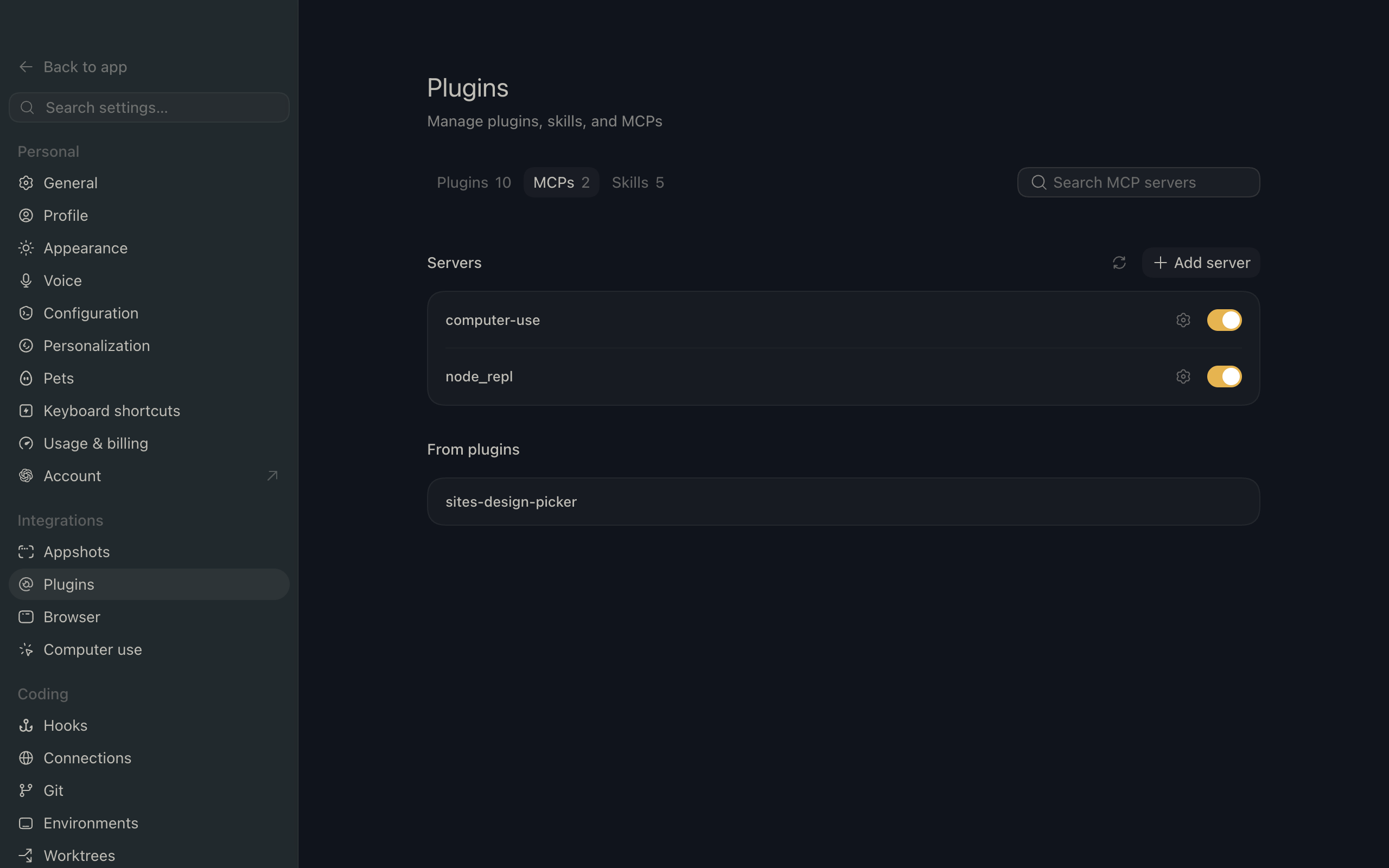
ChatGPT Work settings showing the Plugins page with the MCP tab selected

2. Add the server

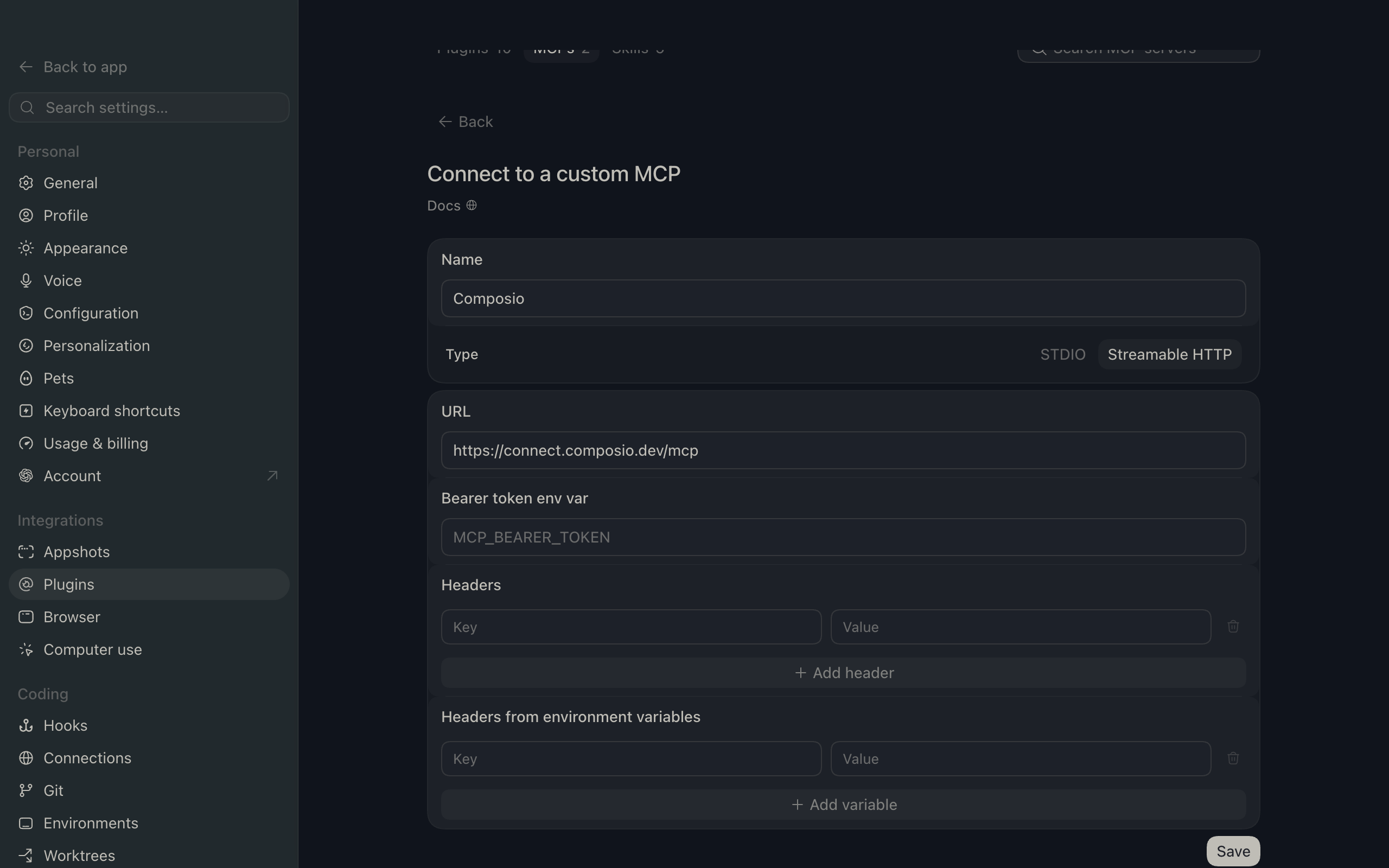
Click Add server. In the Name field enter Composio, for Type select Streamable HTTP, and in the URL field paste the Composio MCP server URL:

bash
https://connect.composio.dev/mcp
ChatGPT Work Add server dialog with the name Composio, type Streamable HTTP, and the Composio MCP URL

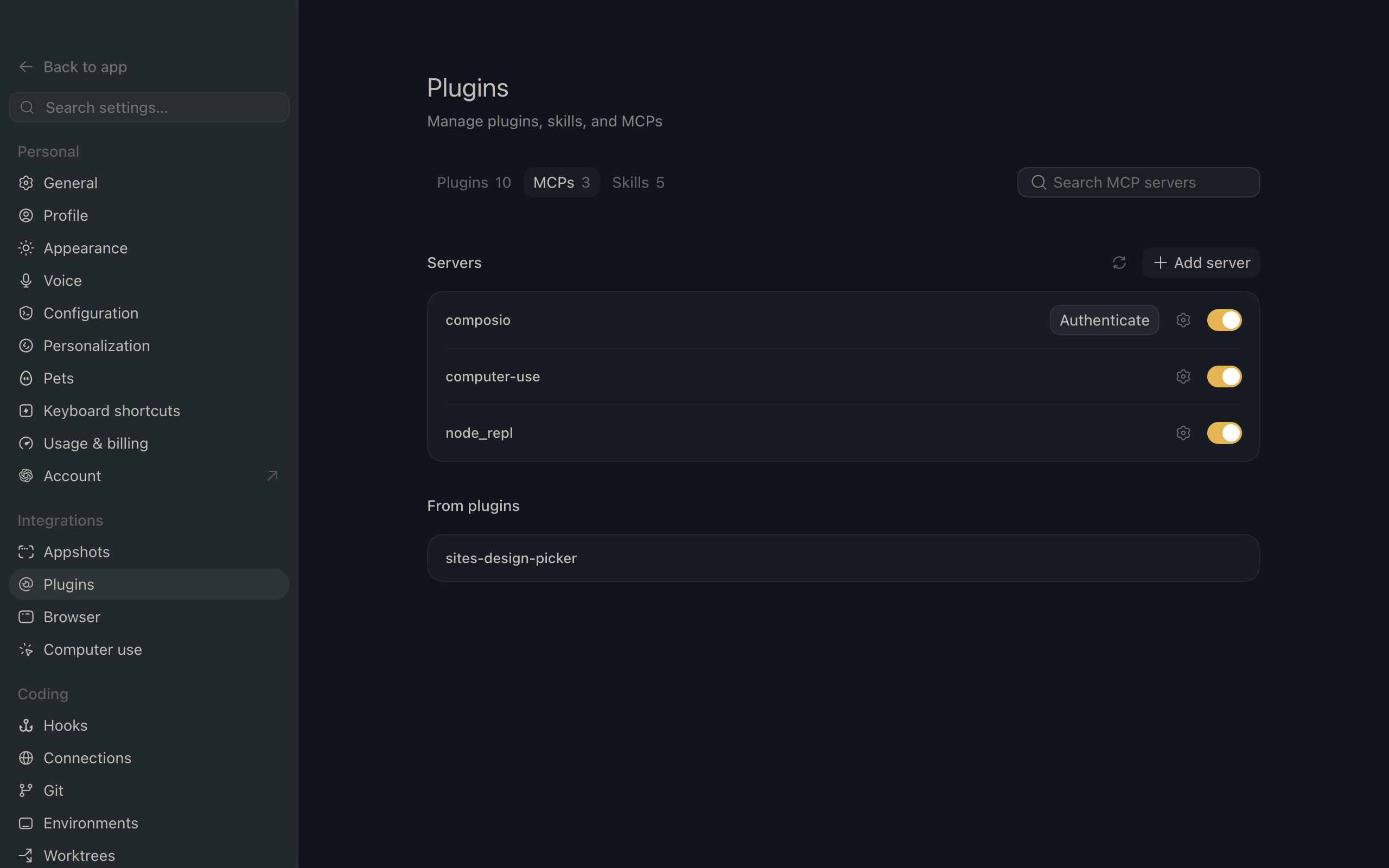
Then click Save. The Composio server now appears in your MCP plugins list.

ChatGPT Work Plugins page showing the Composio MCP server added to the list

3. Authenticate

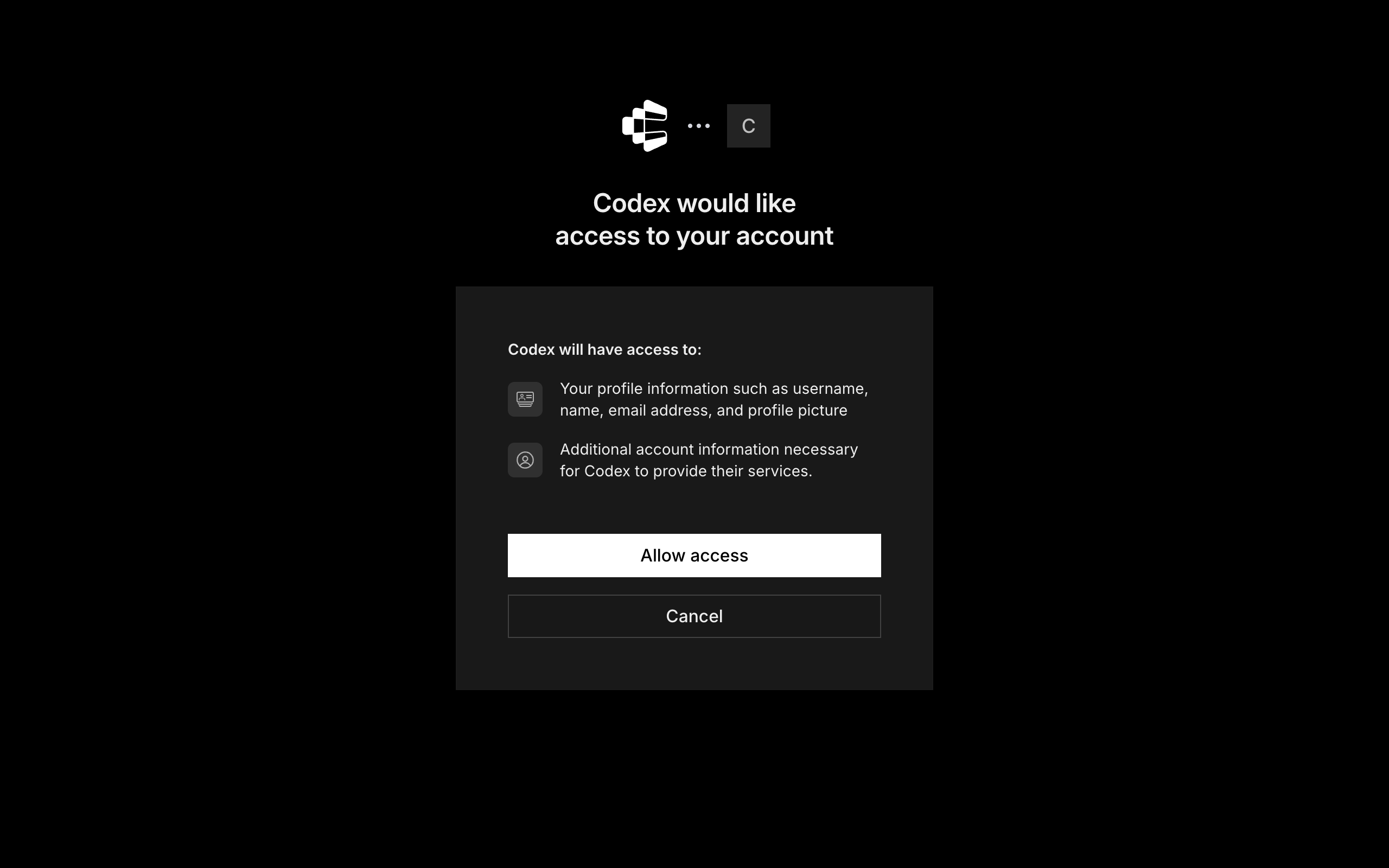
Click Authenticate, log in via Composio, and click Allow access to authorize ChatGPT Work to use your Composio account.

Composio login and Allow access screen for ChatGPT Work MCP setup

4. Start using Composio

That is it - Composio tools are now available in ChatGPT Work. Ask it to work with your Lucid account and it will run the actions you authorize.

What you can do after connecting Lucid

  • Summarize diagram changes from last week
  • Create org chart from team spreadsheet
  • Export selected diagrams as PNG files

Security + privacy notes (important)

  • Use least-privilege access: Only grant permissions you actually need.
  • Review OAuth permissions before approving: Make sure requested scopes match what you expect Composio and ChatGPT Work to do.
  • Keep write actions human-reviewed: For actions like sending messages, creating labels, or editing drafts, keep manual confirmation enabled.
  • Be careful with sensitive data: Avoid using this setup with highly sensitive information unless allowed by your personal, company, or client policies.
TOOLS

Supported Tools

Every Lucid MCP action and event your agent gets out of the box.

Fetch

Retrieves the structured content of a specific Lucid document by its ID.

Get mcp resource

Reads a resource from this MCP server by URI.

List document thread comments

List comments on a specific collaboration thread of a Lucid document.

List document threads

List collaboration threads on a Lucid document.

Lucid add block

Add a new block (shape) to a Lucid document.

Lucid add dynamic table

Add a dynamic table to a Lucid document.

Lucid add items to dynamic table

Add existing canvas blocks to a dynamic table.

Lucid add line

Add a new line to a Lucid document, connecting two points or shapes.

Lucid create diagram from specification

Creates a Lucid document using the Standard Import format (.

Lucid create document share link

Creates a new share link for a document with specified permissions.

lucid create embed

Internal tool for MCP Apps extension only.

lucid create embed session token

Internal tool for MCP Apps extension only.

Lucid create erd

Creates a Lucid document containing a data-backed Entity Relationship Diagram (ERD).

Lucid create folder

Create a new folder in the user's Lucid account.

Lucid create mind map

Creates a Lucid document containing a mind map from structured node data.

Lucid create org chart

Creates a Lucidchart document containing an org chart from structured node data.

Lucid create sequence diagram

Creates a Lucid document containing a UML sequence diagram from PlantUML markup.

Lucid delete items

Delete one or more blocks or lines from a Lucid document.

Lucid edit dynamic table metadata

Edit the metadata/settings of an existing dynamic table.

Lucid edit item

Edit an existing block or line in a Lucid document.

Lucid export document as png

Exports a Lucid document page as a PNG image.

Lucid fetch item image

Fetches the source image attached to a specific item in a Lucid document.

Lucid get document metadata

Get metadata for a Lucid document.

Lucid import integration cards

Import records from a third-party integration as linked cards.

Lucid list folder contents

List the documents and subfolders inside a Lucid folder.

Lucid list integrations

List the user's available card integrations and their connection status.

Lucid search document

Locates regions of a Lucid document that contain specific text.

Lucid shape details

Get default size, colors, and advanced/text-area properties for one or more shape classes.

Lucid shape library

Discover shapes/blocks available to INSERT into a Lucid document.

Lucid submit feedback

Submits user feedback about the Lucid MCP server to the product team.

Lucid update document

Update a Lucid document's title, parent folder, or custom tags.

Lucid update folder

Rename a Lucid folder or move it to a different parent.

Post document thread comment

Post a new comment to an existing thread on a Lucid document.

Search

Search the user's Lucid account for documents by title/keyword.

Share document with collaborators

Share a Lucid document with collaborators by granting them access.

FRAMEWORKS

How to build Lucid MCP Agent with another framework

FAQ

Frequently asked questions

With a standalone Lucid MCP server, the agents and LLMs can only access a fixed set of Lucid tools tied to that server. However, with the Composio Tool Router, agents can dynamically load tools from Lucid and many other apps based on the task at hand, all through a single MCP endpoint.

Yes, you can. ChatGPT Work fully supports MCP integration. You get structured tool calling, message history handling, and model orchestration while Tool Router takes care of discovering and serving the right Lucid tools.

Yes, absolutely. You can configure which Lucid scopes and actions are allowed when connecting your account to Composio. You can also bring your own OAuth credentials or API configuration so you keep full control over what the agent can do.

All sensitive data such as tokens, keys, and configuration is fully encrypted at rest and in transit. Composio is SOC 2 Type 2 compliant and follows strict security practices so your Lucid data and credentials are handled as safely as possible.

Start with Lucid MCP.It takes 30 seconds.

Managed auth, hosted MCP servers, and every Lucid MCP tool your agent needs.Free to start.

Start building