How to connect Kernel to Grok Bot

Connect Grok Bot to Kernel MCP. Take a full-page screenshot of dashboard, login and export account activity csv, and more using natural language, with authentication handled for you.

Kernel MCP logoKernel MCP
Dcr Oauth

Kernel MCP is a cloud-browser infrastructure and browser automation platform with a hosted OAuth server. Use it to run reliable remote browsing sessions and automate web tasks without managing browsers.

25 Tools

Introduction

Grok is xAI's assistant, and its bot builder lets you create a personal agent that holds context, runs skills, and connects to the apps you already use through plugins.

This guide explains how to connect Kernel to a Grok bot using Composio Connect, which handles OAuth, token refresh, and reliability so you do not have to. You add Composio as a plugin, authenticate once, then ask your bot to work with Kernel in plain language.

For exact tool slugs and parameter tables, see the tool catalog in the Composio docs.

Also integrate Kernel MCP with

Why use Composio?

Composio exposes 1,700+ apps to your Grok bot through a single connection, so you get:

  • Connect to 1,700+ apps with on-demand tool loading, so you do not fill your context window with unnecessary tool definitions.
  • Use programmatic tool calling through a remote workbench, letting the model write its own code to handle complex tool chaining. This reduces back-and-forth for frequent tool calls.
  • Handle large tool responses outside the model context to keep conversations lean.

Connecting Kernel to Grok Bot

Once Grok Bot is set up, you connect Kernel entirely from its interface, and the whole flow takes under a minute.

Set up Grok Bot

Get access. Grok Bot is included with Cursor Ultra, Cursor Premium Teams, and SuperGrok Heavy. Get the desktop app for macOS or Windows from x.ai/bot and sign in. An iPhone companion app is also available, and your bots sync across devices.

Create a bot. Pick a suggested role or define your own, then give it a short name, one primary job, and a short description of how it should work. Focused bots work best, because a clear role gives the bot more useful context over time.

Connect Kernel

1. Add the Composio plugin

Click the button. The Composio listing on x.ai opens and launches Grok Bot for you. If the app does not open on its own, click Add to Grok Bot.

Add to Grok Bot
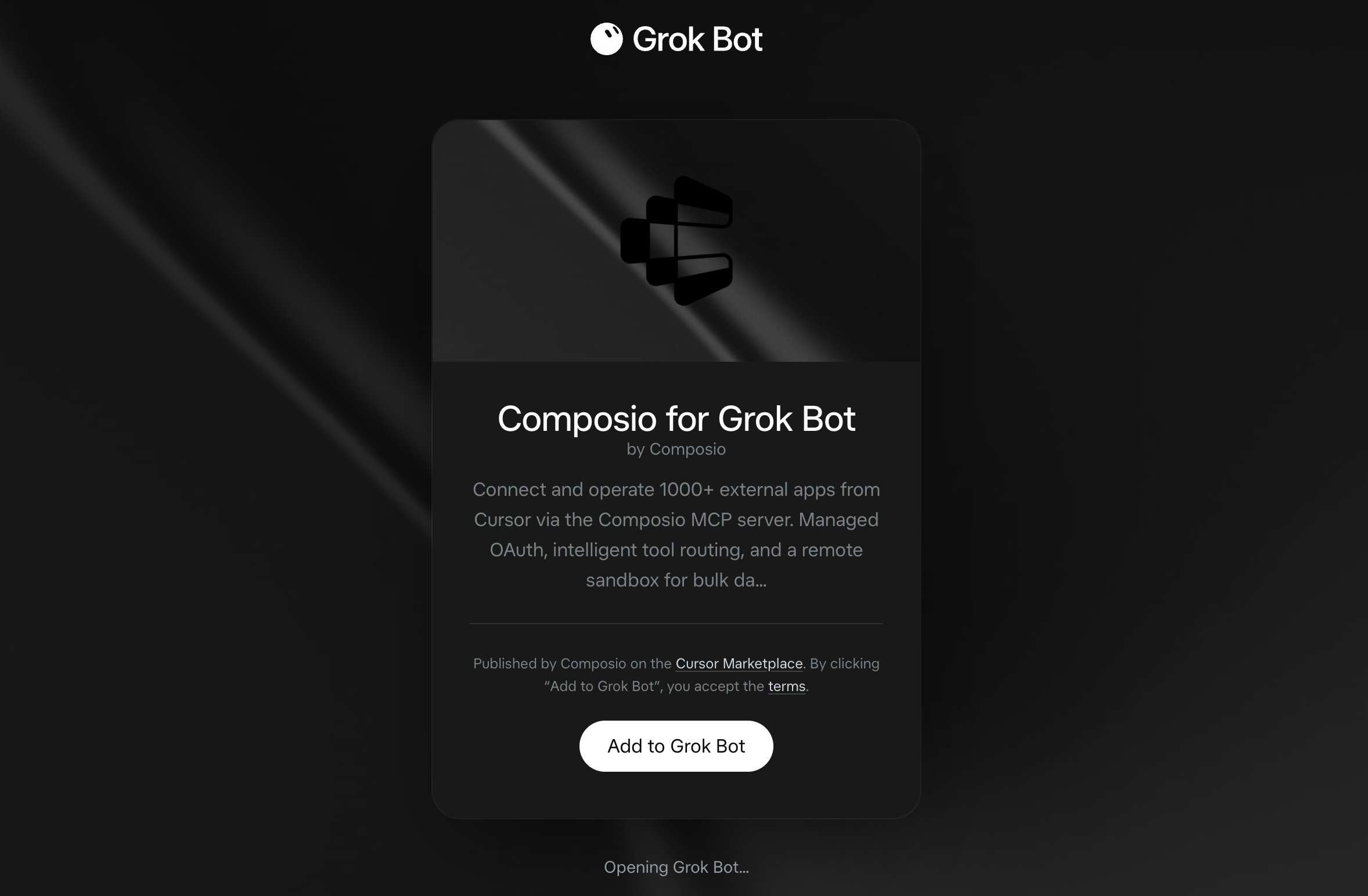
Composio for Grok Bot listing on x.ai with the Add to Grok Bot button

Grok Bot opens the Composio plugin, showing its connector and skills. Click Add.
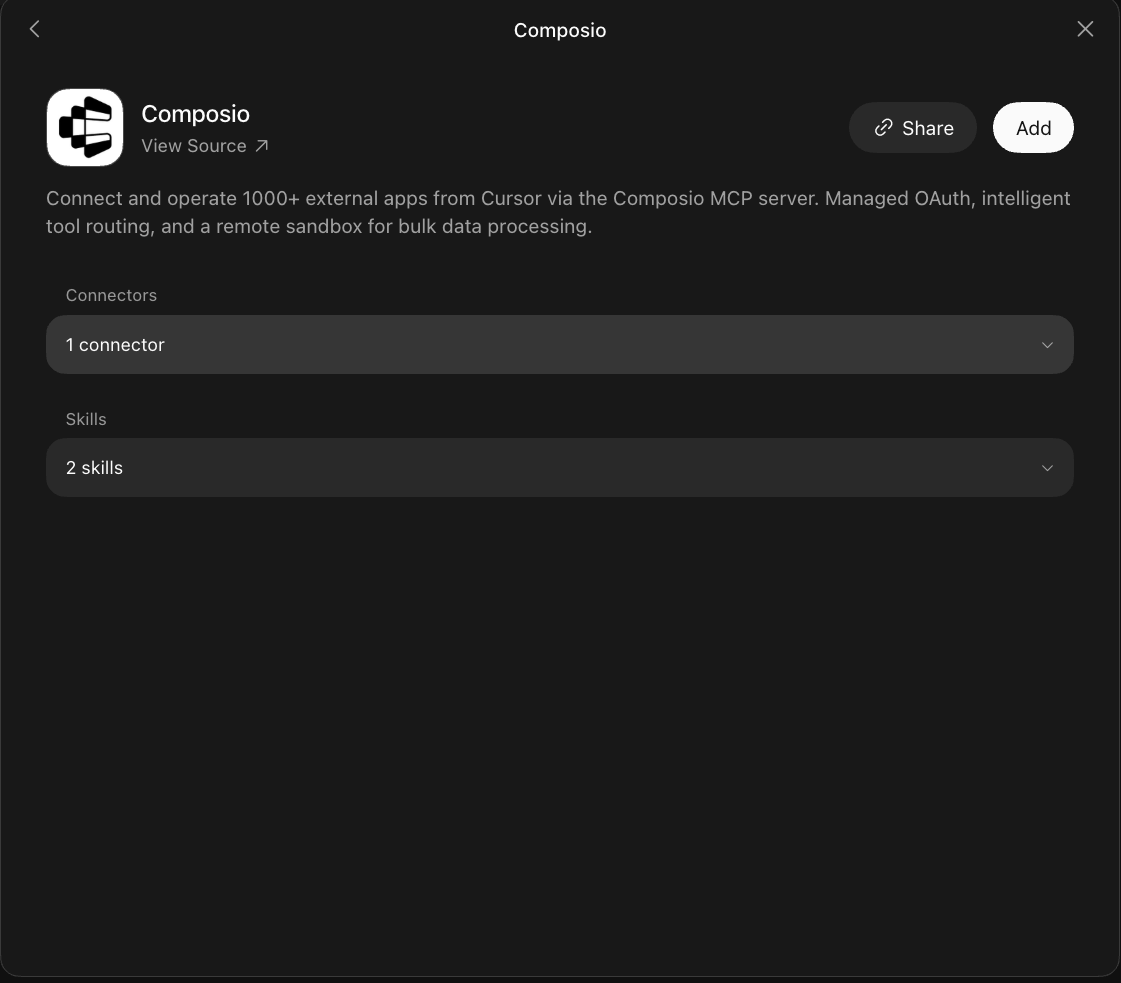
Composio plugin sheet in Grok Bot with the Add button

2. Authenticate

Go to the Installed section and click the Composio entry. You'll see its connector and skills listed.
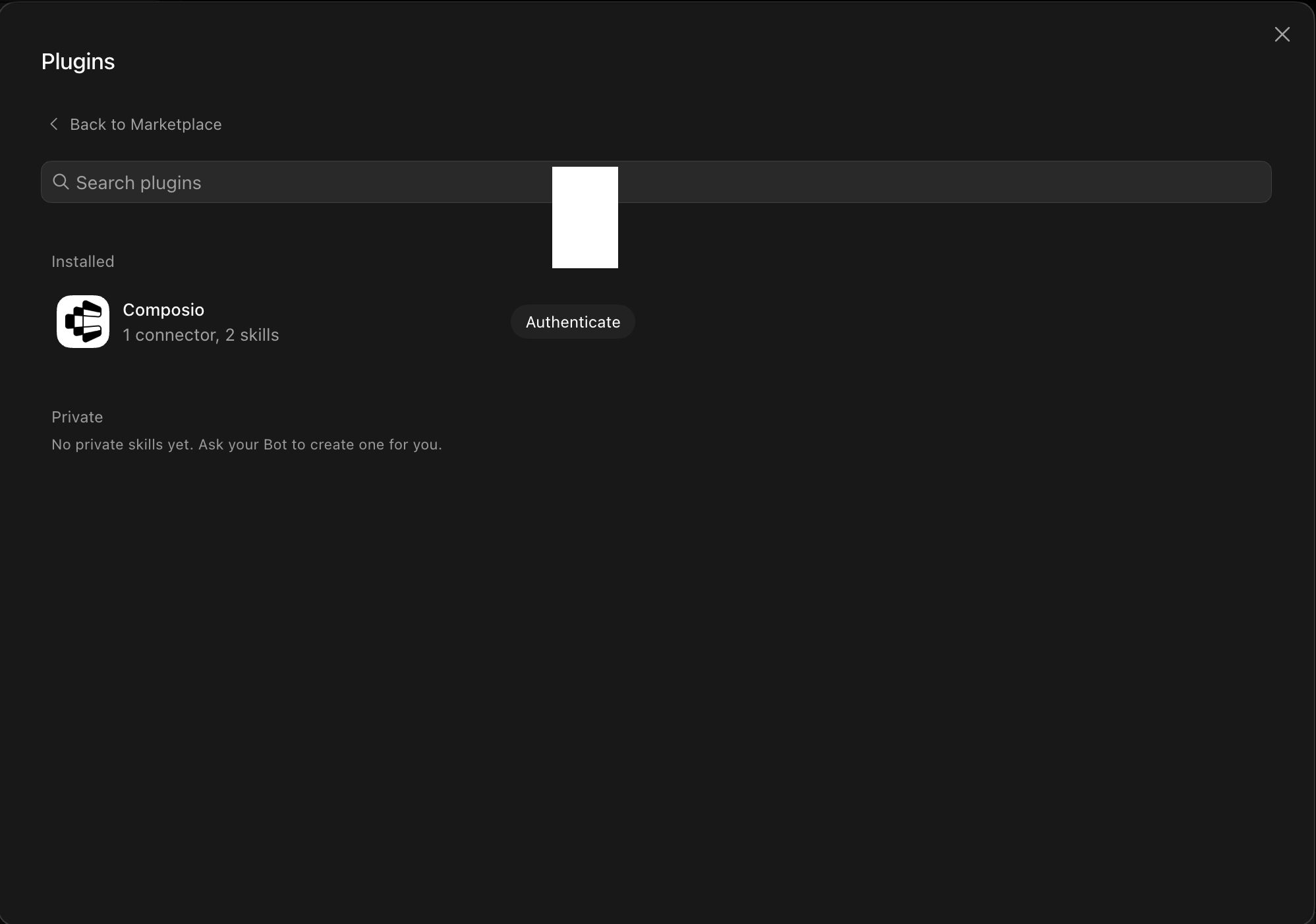
Installed Composio plugin showing the Authenticate button

Click Authenticate. You'll be taken to the Composio consent screen. Review the access it requests and click Authorize. Composio handles the OAuth handshake for you, so you never touch API keys or tokens.
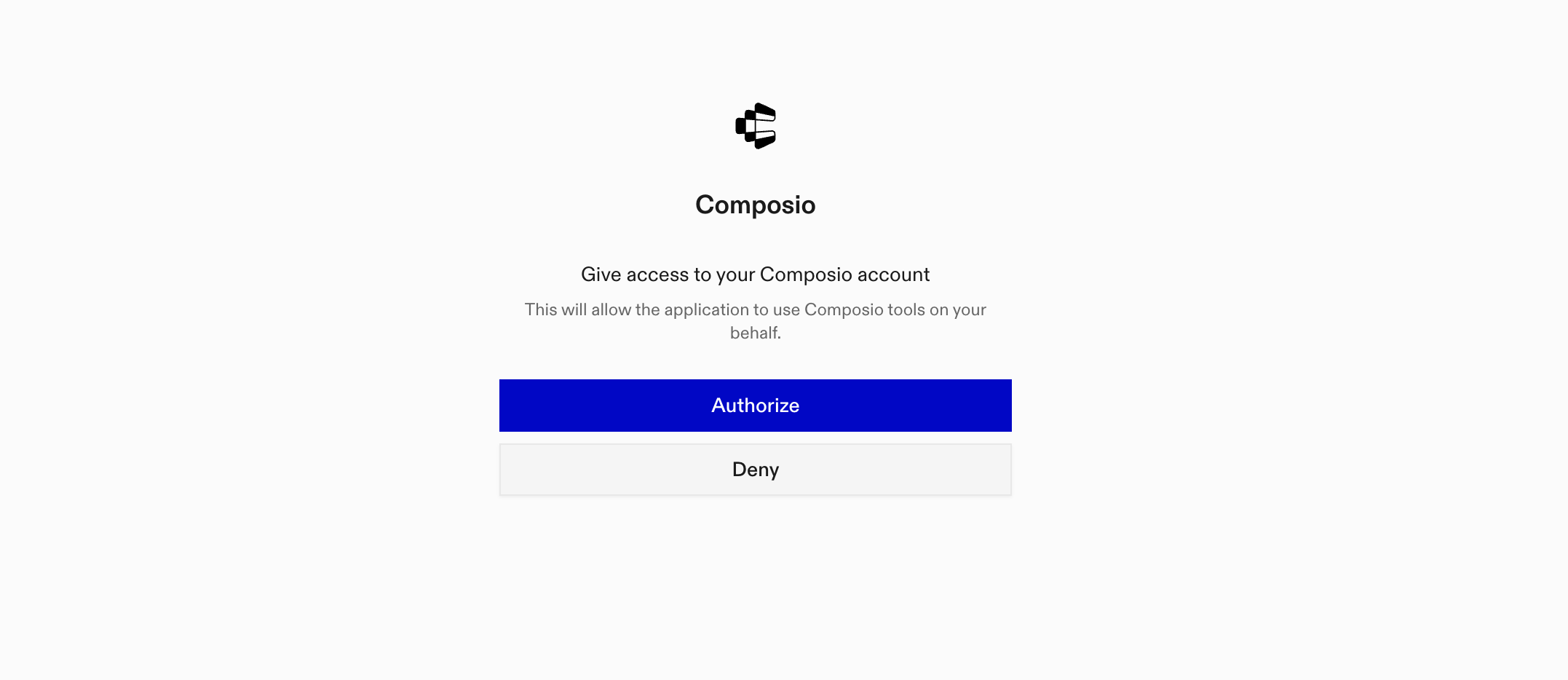
Composio authorization screen with Authorize and Deny

3. Connect your Kernel account

Back in the chat, ask your bot to connect to Kernel or give it any Kernel task.

For example, ask it to:

  • "Take a full-page screenshot of dashboard"
  • "Login and export account activity CSV"
  • "Fill signup form and submit confirmation"

It will prompt you to authenticate and authorize access.

That's it. Composio's tools are now available in your Grok bot, and your Kernel account is ready to use.

What is Grok Bot?

Grok is xAI's assistant, available as a chat interface and a bot builder for creating personal agents that run skills and connect to external apps.

With Composio Connect, your Grok bot can securely access apps like Kernel through MCP without you sharing account credentials directly with the agent.

What is the Kernel MCP server, and what's possible with it?

The Kernel MCP server is an implementation of the Model Context Protocol that connects your AI agent and assistants like Claude, Cursor, etc directly to your Kernel account. It provides structured and secure access to your cloud browser infrastructure and browser automation capabilities, so your agent can manage browser sessions, perform computer actions, run Playwright automation, reuse authenticated profiles, and inspect session replays on your behalf.

  • Browser session management: Have your agent create and manage browser sessions, use pre-warmed browser pools, and work with archived session telemetry.
  • Web and computer automation: Direct your agent to interact with websites through computer actions, run Playwright code, execute commands inside browser environments, or send requests through a browser session.
  • Persistent browser access: Let the agent manage profiles, credentials, authentication connections, proxies, and extensions for browser tasks that need reusable login state or custom routing.
  • Apps and WebMCP tools: Instruct your agent to discover and invoke deployed Kernel app actions or use native WebMCP tools registered across open tabs and frames.
  • Projects, recordings, and documentation: Have your agent manage projects, inspect browser replay recordings, and search Kernel documentation for relevant guides and API references.

Way Forward

Now that Kernel is connected, extend your setup by connecting the other apps you already use every day, so your Grok bot can run true cross-app workflows end to end.

  • Connect Calendar to turn threads into scheduled meetings automatically.
  • Connect Slack or Teams to post summaries, approvals, and alerts where your team works.
  • Connect Notion, Linear, Jira, or Asana to convert requests into tickets, tasks, and docs.
  • Connect Drive, Dropbox, or OneDrive to fetch, file, and share attachments without manual steps.

Start with one workflow you do repeatedly, then keep adding apps as you find new handoffs. With everything behind a single connection, your bot can coordinate multiple tools safely and reliably in one conversation.

TOOLS

Supported Tools

Every Kernel MCP action and event your agent gets out of the box.

Browser curl

Send an HTTP request through an existing Kernel browser session's Chrome network stack.

Computer action

Execute computer actions on a browser session.

Exec command

Execute a command synchronously inside a browser VM.

Execute playwright code

Execute Playwright/TypeScript automation or browser-wide WebMCP helpers against an existing Kernel browser session.

Get connection context

Inspect the authenticated Kernel connection before a project-scoped operation.

Get more tools

Report a genuine server capability gap only after checking the available tools and confirming none can complete the task.

Manage api keys

Manage Kernel API keys.

Manage apps

Manage Kernel apps when an agent needs to discover deployed app actions, invoke an app, or inspect deployment/invocation state.

Manage auth connections

Manage reusable authenticated profiles for third-party websites.

Manage browser pools

Manage pre-warmed browser pools when an agent needs fast browser acquisition or reusable session capacity.

Manage browsers

Manage browser sessions and their archived telemetry.

Manage credential providers

Manage external credential providers (e.

Manage credentials

Manage credentials stored in Kernel for managed auth.

Manage extensions

Manage browser extensions uploaded to Kernel.

Manage profiles

Manage browser profiles when an agent needs persistent cookies, login state, or reusable browser state.

Manage projects

Manage Kernel projects for resource isolation within an organization.

Manage proxies

Manage proxy configurations for routing browser traffic.

Manage replays

Manage video replay recordings for a browser session.

Manage vault cards

Configure requests for live payment cards, not merchant payments.

Manage vault items

Inspect payment vault items and immutable audit events.

Manage vaults

Manage project-owned payment vaults, not merchant payments.

Manage vault wallets

Connect payment wallets without exposing secrets.

Search docs

Search Kernel platform documentation for guides, tutorials, and API references.

Submit feedback

send feedback about anything KERNEL to the KERNEL team.

Webmcp

Discover and invoke native WebMCP tools registered across every open tab and frame in a Kernel browser.

FAQ

Frequently asked questions

Start with Kernel MCP.It takes 30 seconds.

Managed auth, hosted MCP servers, and every Kernel MCP tool your agent needs.Free to start.

Start building

