How to connect Harness to Grok Bot

Connect Grok Bot to Harness MCP. Trigger deployment pipeline for your-service now, rollback last successful deployment in project, and more using natural language, with authentication handled for you.

Harness logoHarness
Api Key

Harness is a Continuous Delivery platform exposing Core CD APIs to manage pipelines, executions, services, environments, and templates. Use it to automate and scale deployments with clear visibility and governance.

7 Tools

Introduction

Grok is xAI's assistant, and its bot builder lets you create a personal agent that holds context, runs skills, and connects to the apps you already use through plugins.

This guide explains how to connect Harness to a Grok bot using Composio Connect, which handles OAuth, token refresh, and reliability so you do not have to. You add Composio as a plugin, authenticate once, then ask your bot to work with Harness in plain language.

Also integrate Harness with

Why use Composio?

Composio exposes 1,700+ apps to your Grok bot through a single connection, so you get:

  • Connect to 1,700+ apps with on-demand tool loading, so you do not fill your context window with unnecessary tool definitions.
  • Use programmatic tool calling through a remote workbench, letting the model write its own code to handle complex tool chaining. This reduces back-and-forth for frequent tool calls.
  • Handle large tool responses outside the model context to keep conversations lean.

Connecting Harness to Grok Bot

Once Grok Bot is set up, you connect Harness entirely from its interface, and the whole flow takes under a minute.

Set up Grok Bot

Get access. Grok Bot is included with Cursor Ultra, Cursor Premium Teams, and SuperGrok Heavy. Get the desktop app for macOS or Windows from x.ai/bot and sign in. An iPhone companion app is also available, and your bots sync across devices.

Create a bot. Pick a suggested role or define your own, then give it a short name, one primary job, and a short description of how it should work. Focused bots work best, because a clear role gives the bot more useful context over time.

Connect Harness

1. Add the Composio plugin

Click the button. The Composio listing on x.ai opens and launches Grok Bot for you. If the app does not open on its own, click Add to Grok Bot.

Add to Grok Bot
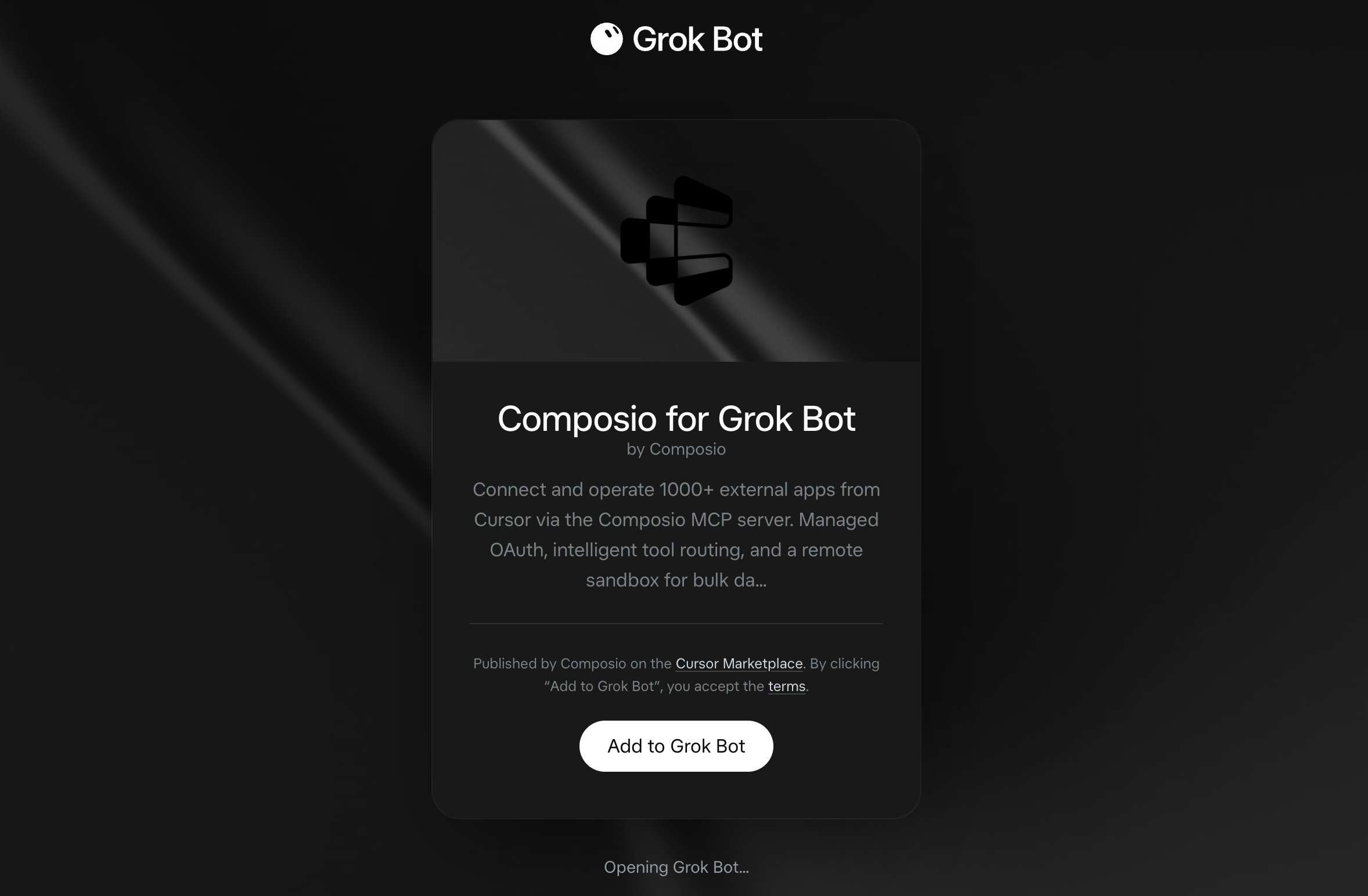
Composio for Grok Bot listing on x.ai with the Add to Grok Bot button

Grok Bot opens the Composio plugin, showing its connector and skills. Click Add.
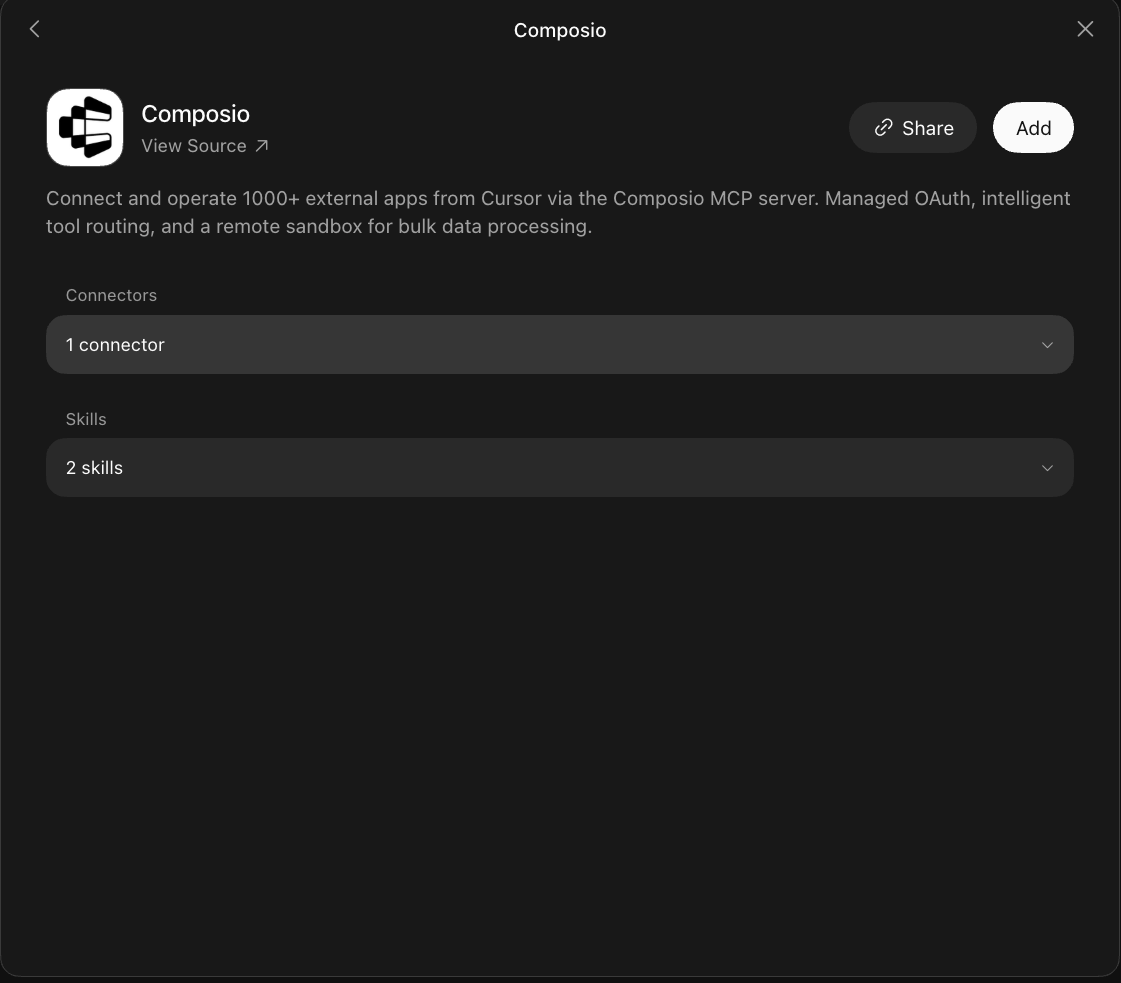
Composio plugin sheet in Grok Bot with the Add button

2. Authenticate

Go to the Installed section and click the Composio entry. You'll see its connector and skills listed.
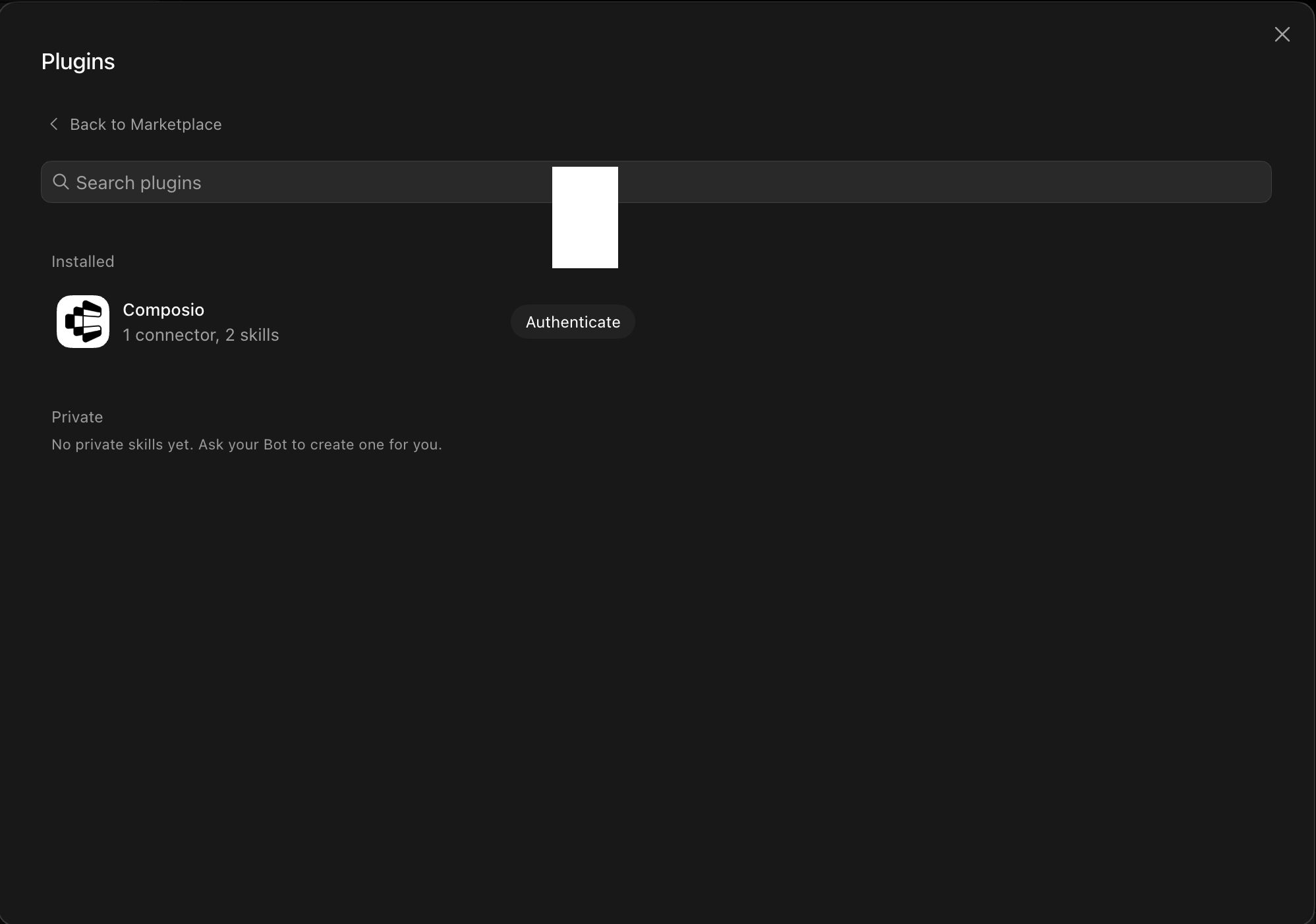
Installed Composio plugin showing the Authenticate button

Click Authenticate. You'll be taken to the Composio consent screen. Review the access it requests and click Authorize. Composio handles the OAuth handshake for you, so you never touch API keys or tokens.

Composio authorization screen with Authorize and Deny

3. Connect your Harness account

Back in the chat, ask your bot to connect to Harness or give it any Harness task.

For example, ask it to:

  • "Trigger deployment pipeline for your-service now"
  • "Rollback last successful deployment in project"
  • "List recent failed pipeline executions across environments"

It will prompt you to authenticate and authorize access.

That's it. Composio's tools are now available in your Grok bot, and your Harness account is ready to use.

What is Grok Bot?

Grok is xAI's assistant, available as a chat interface and a bot builder for creating personal agents that run skills and connect to external apps.

With Composio Connect, your Grok bot can securely access apps like Harness through MCP without you sharing account credentials directly with the agent.

What is the Harness MCP server, and what's possible with it?

The Harness MCP server is an implementation of the Model Context Protocol that connects your AI agent and assistants like Claude, Cursor, etc directly to your Harness account. It provides structured and secure access to your organizations, projects, pipelines, executions, services, environments, and templates, so your agent can find deployment resources, review pipeline activity, check execution status, inspect service environments, and discover reusable templates on your behalf.

  • Organization and project discovery: Have your agent list accessible organizations and projects, then narrow the results by organization, module, or search terms.
  • Pipeline exploration: Direct your agent to find pipelines in a project by name, search text, or Git branch.
  • Execution monitoring: Let the agent review pipeline executions and filter them by pipeline, status, search text, or ownership.
  • Service and environment visibility: Instruct your agent to find project services by deployment type, tags, storage, GitOps state, or search text, and list environments that match your criteria.
  • Template discovery: Have your agent search account templates by state, type, name, description, or other search text.

Way Forward

Now that Harness is connected, extend your setup by connecting the other apps you already use every day, so your Grok bot can run true cross-app workflows end to end.

  • Connect Calendar to turn threads into scheduled meetings automatically.
  • Connect Slack or Teams to post summaries, approvals, and alerts where your team works.
  • Connect Notion, Linear, Jira, or Asana to convert requests into tickets, tasks, and docs.
  • Connect Drive, Dropbox, or OneDrive to fetch, file, and share attachments without manual steps.

Start with one workflow you do repeatedly, then keep adding apps as you find new handoffs. With everything behind a single connection, your bot can coordinate multiple tools safely and reliably in one conversation.

TOOLS

Supported Tools

Every Harness action and event your agent gets out of the box.

List Environments

List one page of environments in a Harness project, optionally filtered by identifiers or search text.

List Pipeline Executions

List one page of pipeline executions in a Harness project, optionally filtered by pipeline, status, search text, or current-user ownership.

List Organizations

List one page of Harness organizations accessible to the connected account, optionally filtered by identifier or search text.

List Pipelines

List one page of pipelines in a Harness project, optionally filtered by search text or Git branch.

List Projects

List one page of Harness projects accessible to the connected account, optionally within an organization or filtered by module and search text.

List Services

List one page of services in a Harness project, optionally filtered by identifiers, deployment type, tags, storage, GitOps state, or search text.

List Templates

List one page of account-scoped Harness templates, optionally filtered by template state, entity or child type, identifier, name, description, or search text.

FAQ

Frequently asked questions

With a standalone Harness MCP server, the agents and LLMs can only access a fixed set of Harness tools tied to that server. However, with the Composio Tool Router, agents can dynamically load tools from Harness and many other apps based on the task at hand, all through a single MCP endpoint.

Yes, you can. Grok Bot fully supports MCP integration. You get structured tool calling, message history handling, and model orchestration while Tool Router takes care of discovering and serving the right Harness tools.

Yes, absolutely. You can configure which Harness scopes and actions are allowed when connecting your account to Composio. You can also bring your own OAuth credentials or API configuration so you keep full control over what the agent can do.

All sensitive data such as tokens, keys, and configuration is fully encrypted at rest and in transit. Composio is SOC 2 Type 2 compliant and follows strict security practices so your Harness data and credentials are handled as safely as possible.

Start with Harness.It takes 30 seconds.

Managed auth, hosted MCP servers, and every Harness tool your agent needs.Free to start.

Start building

