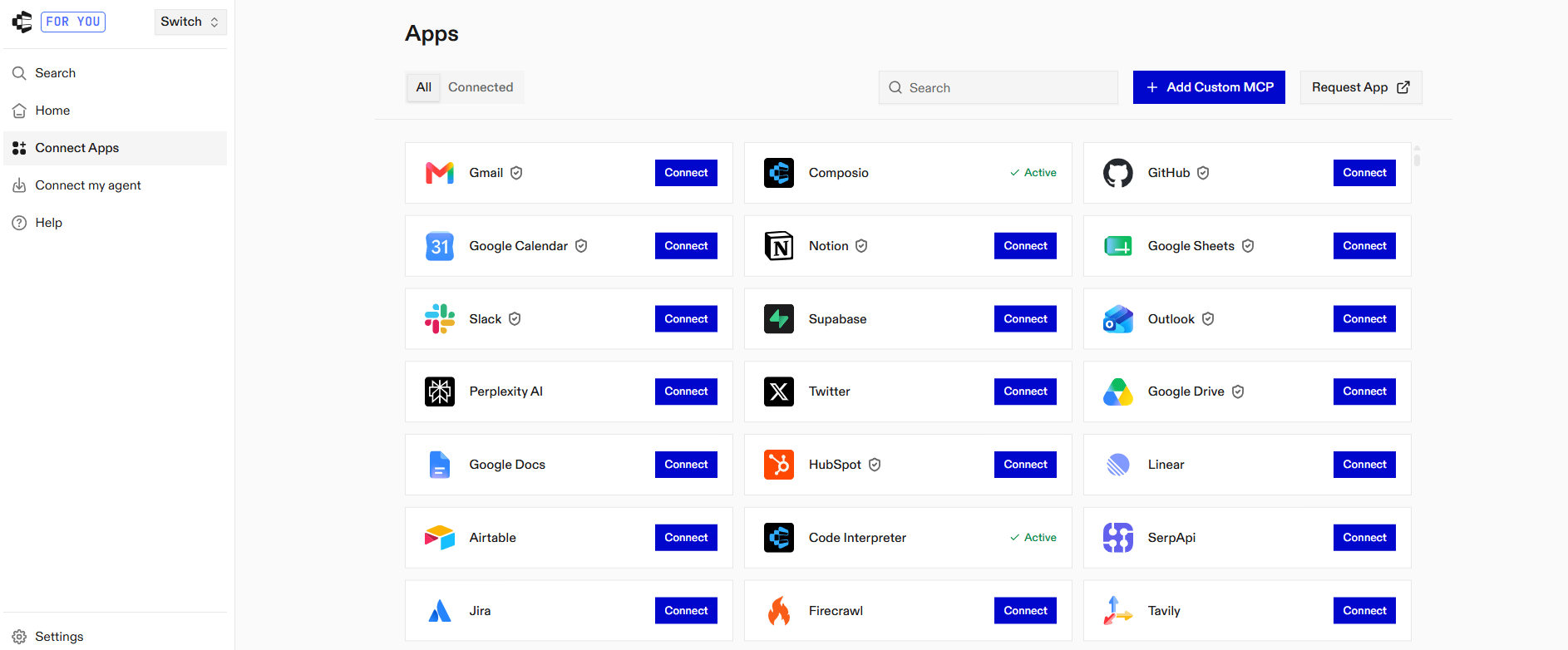
Step 1: Add Composio to Claude (one-time process)
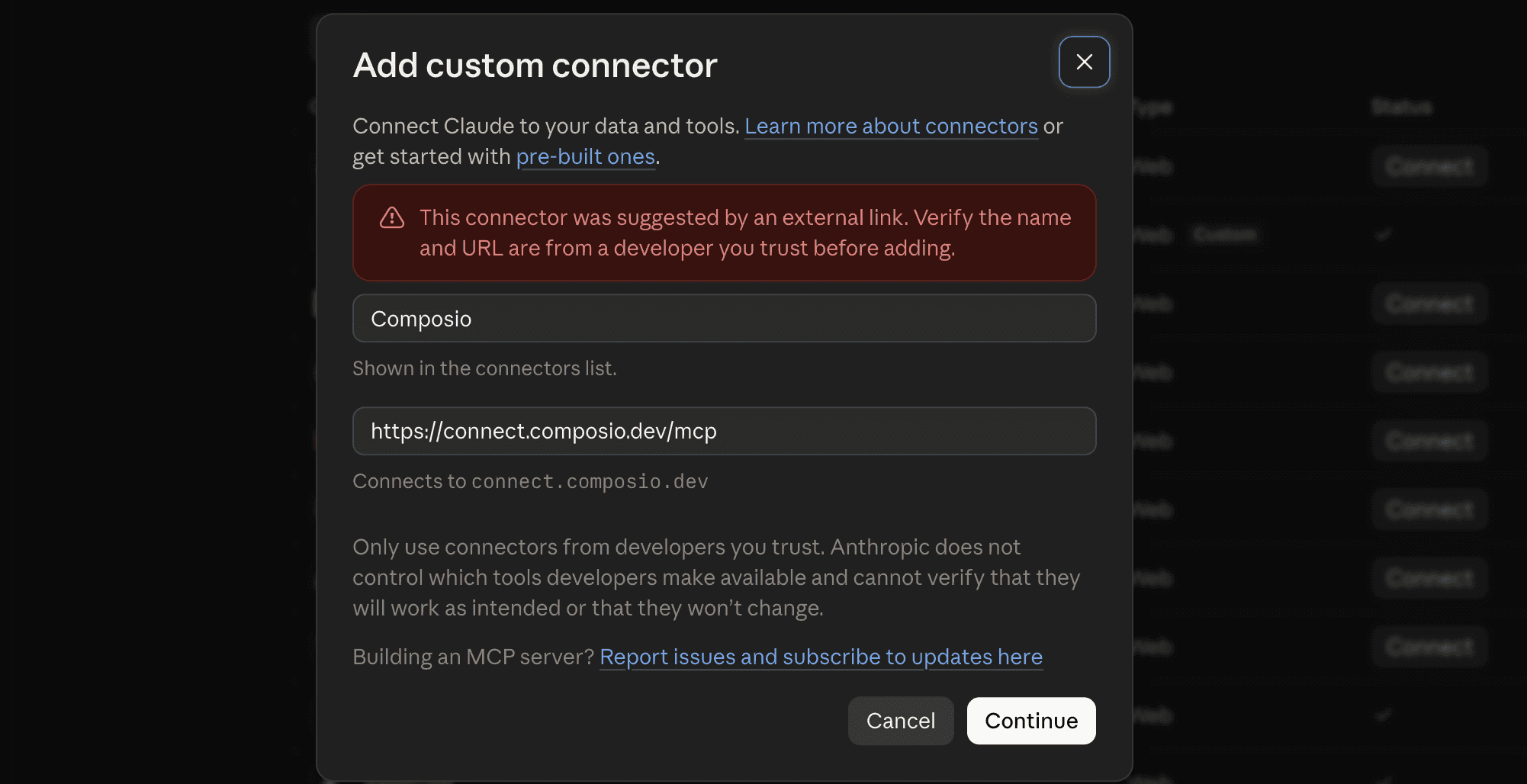
- Click the button below. This will take you to the Claude Custom Connector modal.
 Add to Claude
- Click Continue
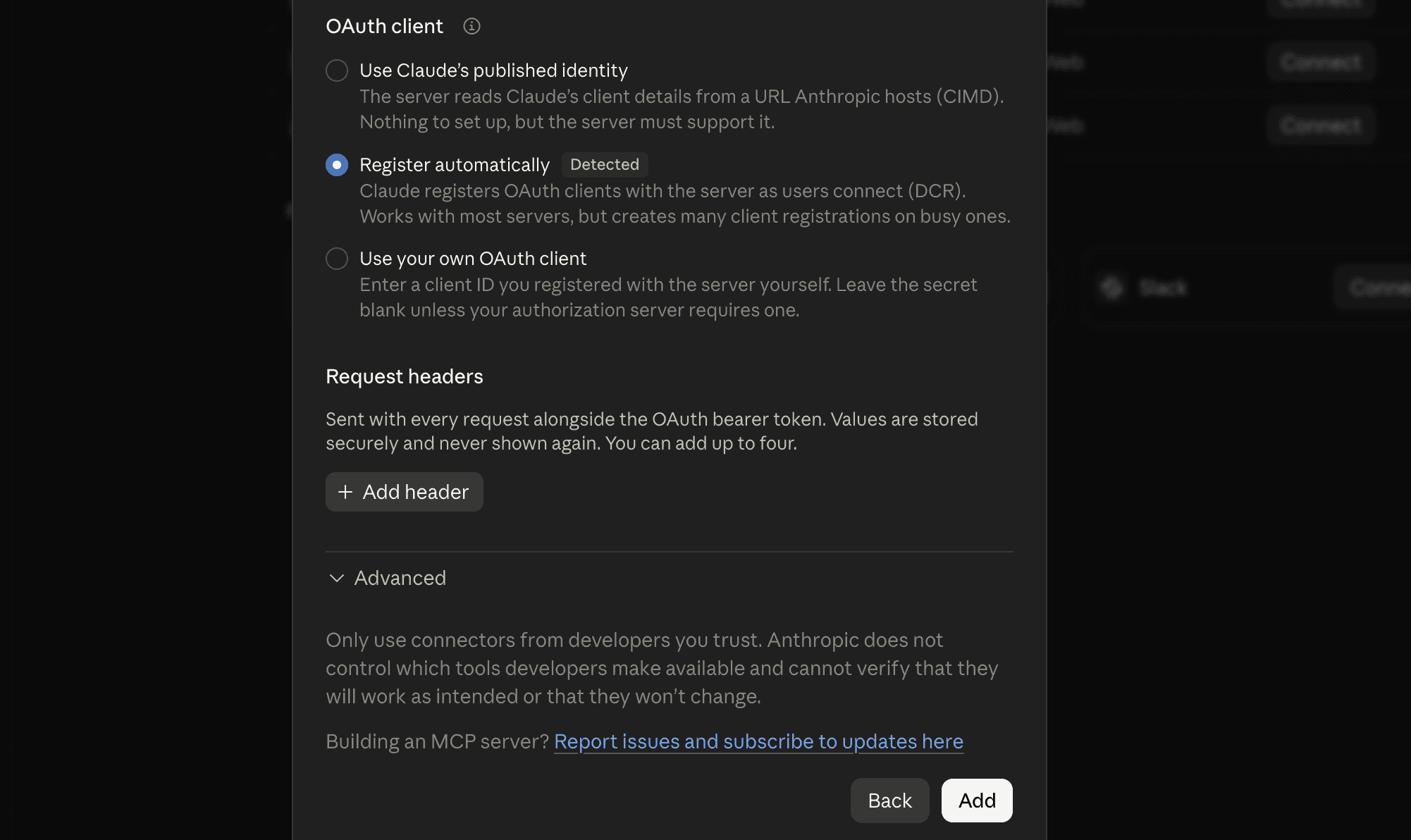
- In the next modal, click Add
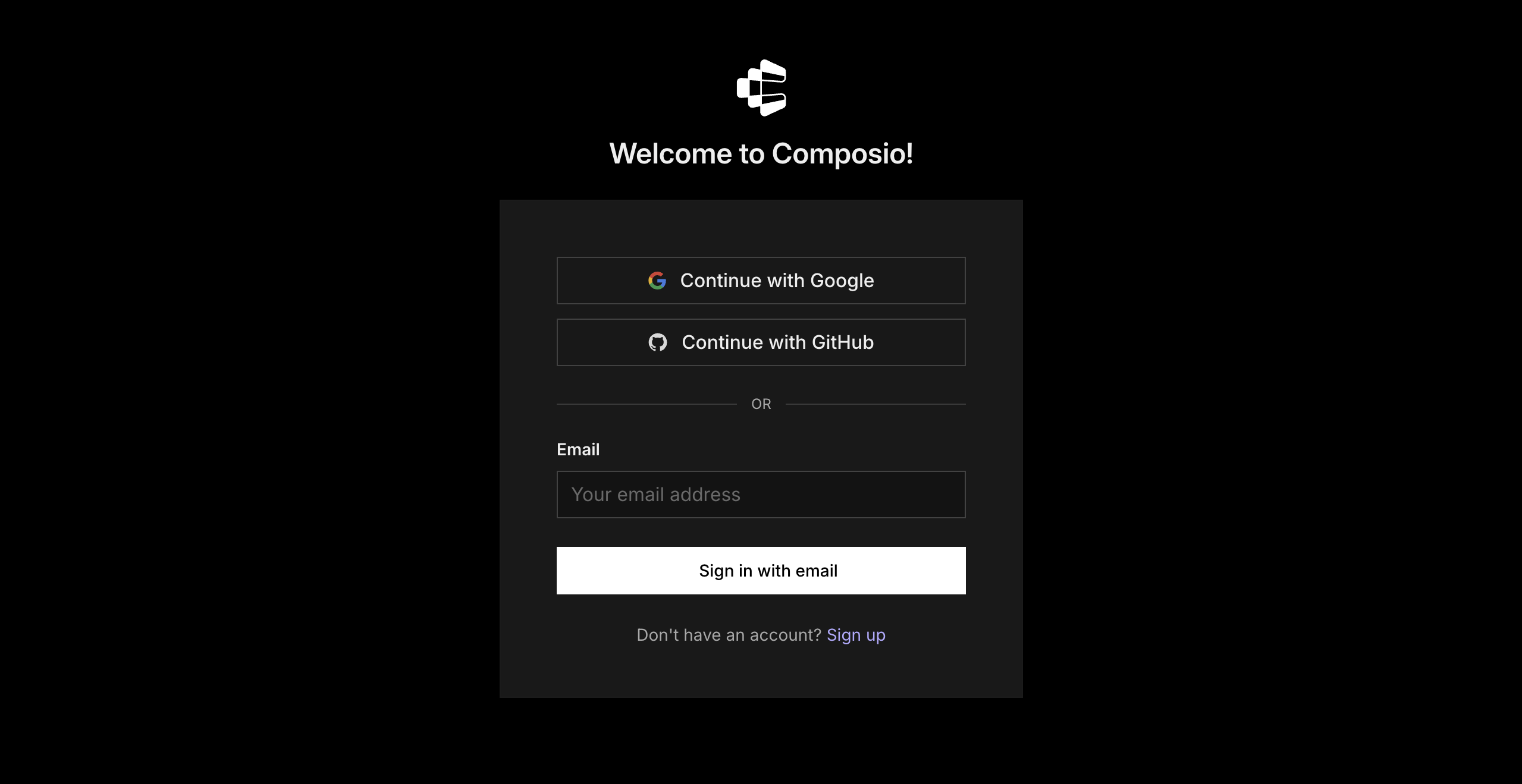
- It will take you to the authentication page. Sign in to Composio and approve the connection.
Then return to Claude and make sure Composio is enabled.
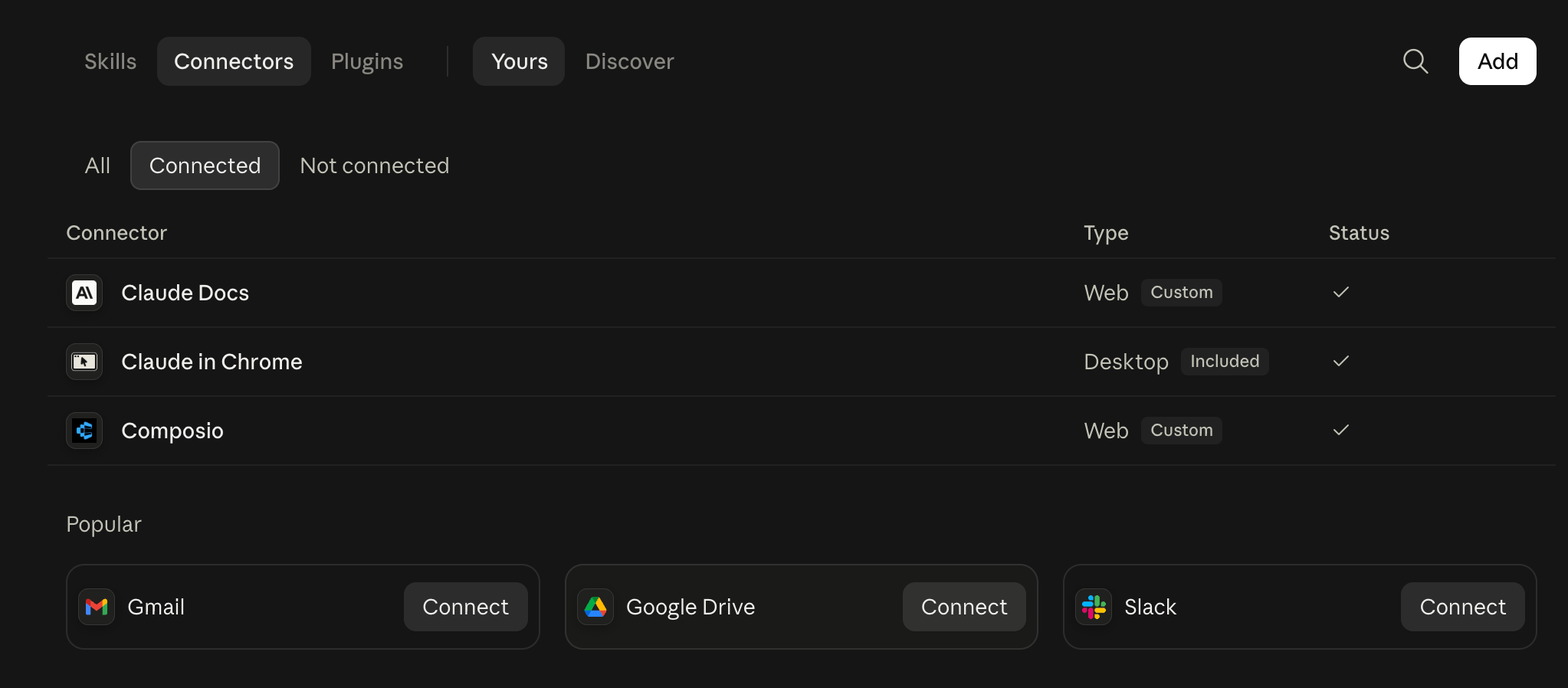
Step 2: Connect your first Google BigQuery account
In a new Claude chat, type:
Connect my googlebigquery-1 Google BigQuery account to Composio. Call it googlebigquery-1.
Claude will give you a sign-in link.
- Click the link.
- Sign in to your googlebigquery-1 Google BigQuery account.
- Review and approve Google BigQuery's permission request.
- Return to Claude.
Claude should confirm that the account is connected.
The name googlebigquery-1 is how Claude knows which Google BigQuery account to use. Choose short, obvious names. Good examples include:
googlebigquery-1googlebigquery-2googlebigquery-3
Step 3: Connect your second Google BigQuery account
In the same Claude chat, type:
Connect another Google BigQuery account. Call it googlebigquery-2.
Claude will give you a new sign-in link.
- Open the link.
- Sign in to the second Google BigQuery account.
- Review and approve Google BigQuery's permission request.
- Return to Claude.
Claude should confirm that googlebigquery-2 is connected.
Important: Check that Google BigQuery is showing the second account before you approve access. If the wrong account appears, sign out or open the link in an incognito or private window.
Repeat this step for every other Google BigQuery account you want to add. Give each connection a short, descriptive name such as googlebigquery-1, googlebigquery-2, googlebigquery-3, or client-acme.
Step 4: Check your connected Google BigQuery accounts
Ask Claude:
List my connected Google BigQuery accounts in Composio. Show each account's name and connection status.
You should see every account you added, and each connection should show as ACTIVE.
For an extra check, ask:
Show the account email or ID and the account name for each connected Google BigQuery account.
This helps you confirm that every label points to the correct Google BigQuery account and that you did not connect the same account twice.
Step 5: Use the right Google BigQuery account
Mention the account name whenever you ask Claude to work with Google BigQuery. This is especially important when an action could change data.
Review activity across accounts
Check googlebigquery-1 and googlebigquery-2 for anything new in Google BigQuery from the last 14 days. Group the results by account.
Find top 10 customers by revenue
Using the googlebigquery-1 account, find top 10 customers by revenue.
Analyze traffic data for last quarter
Using the googlebigquery-2 account, analyze traffic data for last quarter.
Find something across accounts
Search all connected Google BigQuery accounts for customer@example.com. Show which account it appears in and summarise the latest activity.
For actions such as creating, changing, or deleting data, ask Claude to show you the planned action first and wait for your confirmation.