How to integrate Google search console MCP with Grok Build

Connect Grok Build to Google search console MCP. Fetch last week's top search queries, inspect indexing status for this url, and more from your terminal, with authentication handled for you.

Google search console logoGoogle search console
Oauth2

Google Search Console is Google's tool for monitoring, maintaining, and troubleshooting your website's performance in Google Search results. It helps you track search traffic, optimize visibility, and resolve site issues quickly.

9 Tools

How to integrate Google search console MCP with Grok Build

Grok Build is xAI's terminal coding agent. It runs on Grok 4.5, plans its work before it acts, and can run multiple sub-agents in parallel. It also reads Claude Code's MCP configuration, so any server you already have in a .mcp.json is picked up with no changes.

In this guide, I will show you how to connect your Google search console account to Grok Build through Composio, so it can fetch last week's top search queries, inspect indexing status for this URL, list all sitemaps for your site, and more without leaving the terminal. Composio holds the OAuth tokens for you, and Grok Build only calls the tools you approve.
Also integrate Google search console with

Why use Composio over a standalone MCP server?

  • Read and write access. Composio's Google search console integration lets Grok Build take real actions like creating drafts, sending updates, and labeling records, not just reading data.
  • 1,000+ SaaS toolkits out of the box. One endpoint gives you a full catalog of pre-built connectors, from Gmail and Slack to Notion, Linear, and Salesforce.
  • One MCP server for every app. Wire up a single Composio server instead of maintaining a separate MCP entry for each app.
  • Smart, context-aware tool loading. Grok Build caps how many tools it holds in a single request. Composio loads only the tools a task needs, so you do not spend that budget on tools you are not using.
  • Cross-app automation. Chain actions across apps in one run. Pull a thread, summarize it in Notion, and post the highlights to Slack from a single prompt.

Prerequisites

  • Grok Build installed and signed in. Install with curl -fsSL https://x.ai/cli/install.sh | bash on macOS or Linux, or irm https://x.ai/cli/install.ps1 | iex on Windows PowerShell. On first launch Grok opens a browser to authenticate; for headless or CI use, set an XAI_API_KEY environment variable instead (create the key at console.x.ai).
  • Access to the Google search console account you want to connect.
  • The Composio MCP endpoint. Composio's server is remote and hosted, so there is nothing to run locally and no tunnel to set up.

Step-by-step: Connect Google search console to Grok Build

1. Install and verify Grok Build

Install the CLI, then restart your shell so the grok binary lands on your PATH:

bash
curl -fsSL https://x.ai/cli/install.sh | bash
which grok

On Windows, install with PowerShell instead: irm https://x.ai/cli/install.ps1 | iex. If which grok returns a path, you are set. Grok Build runs on Grok 4.5 by default; you can switch models inside the session with /model <name>.

2. Add the Composio server

Add Composio as a remote HTTP MCP server with the grok mcp add command:

bash
grok mcp add --transport http composio https://connect.composio.dev/mcp

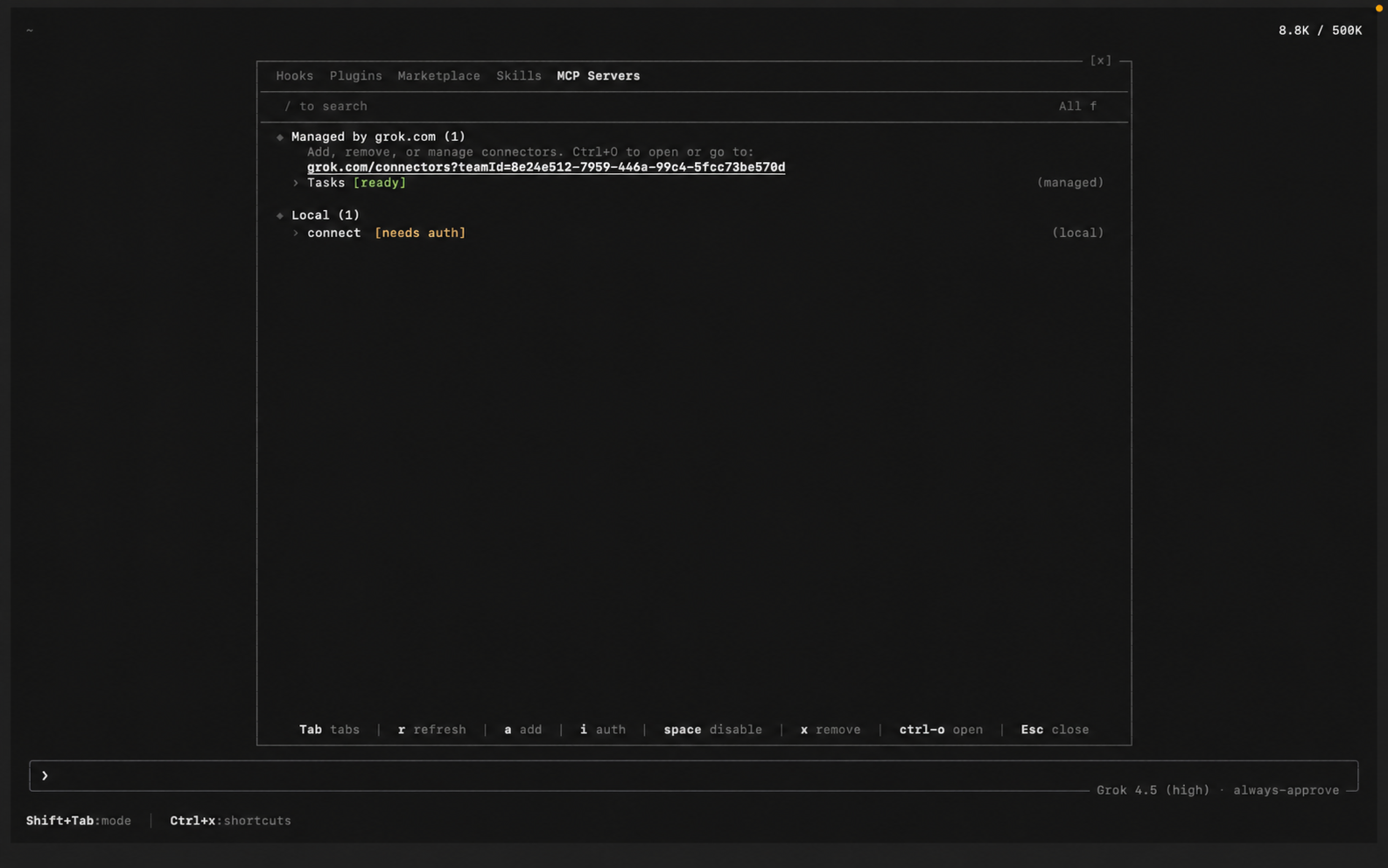
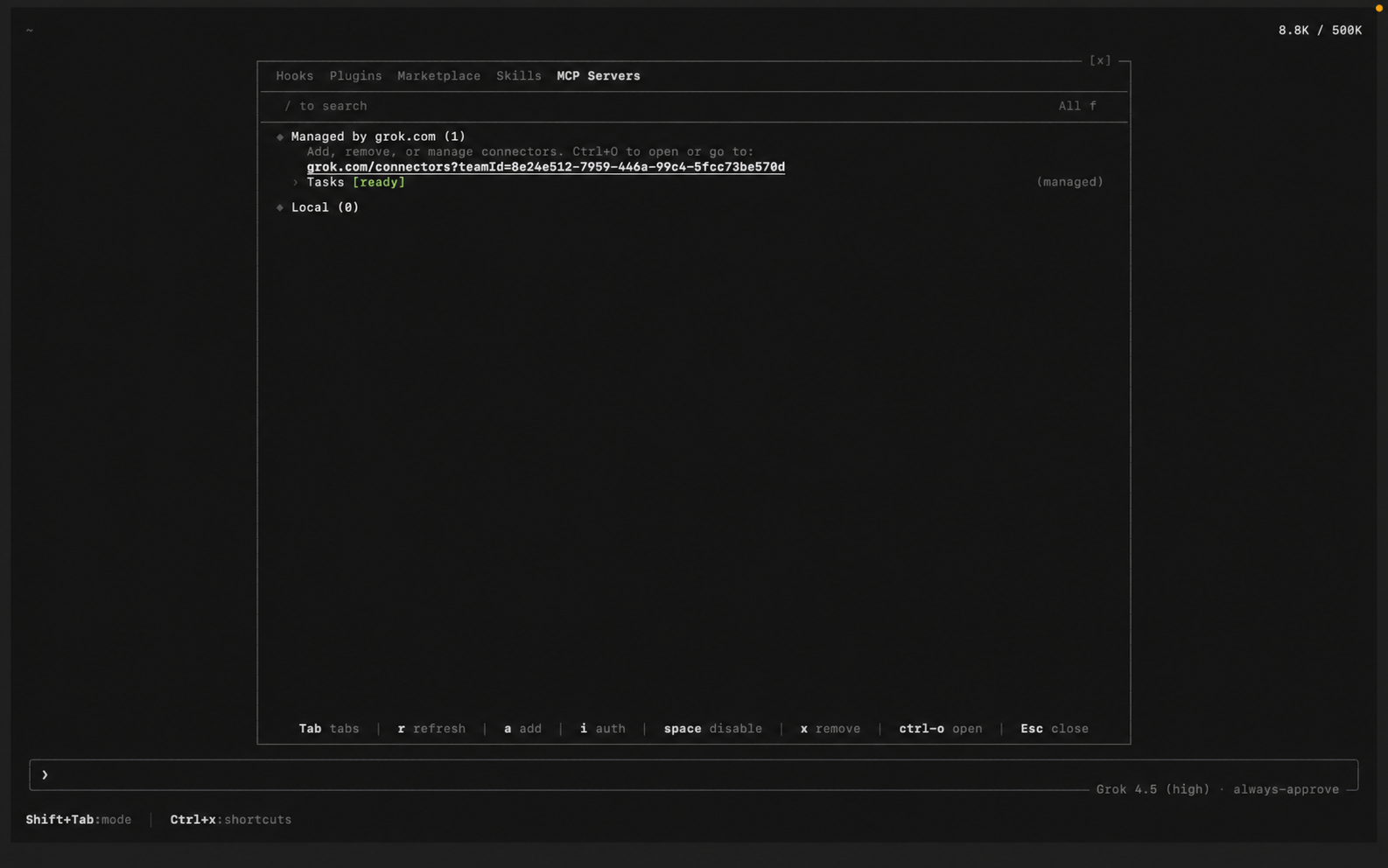
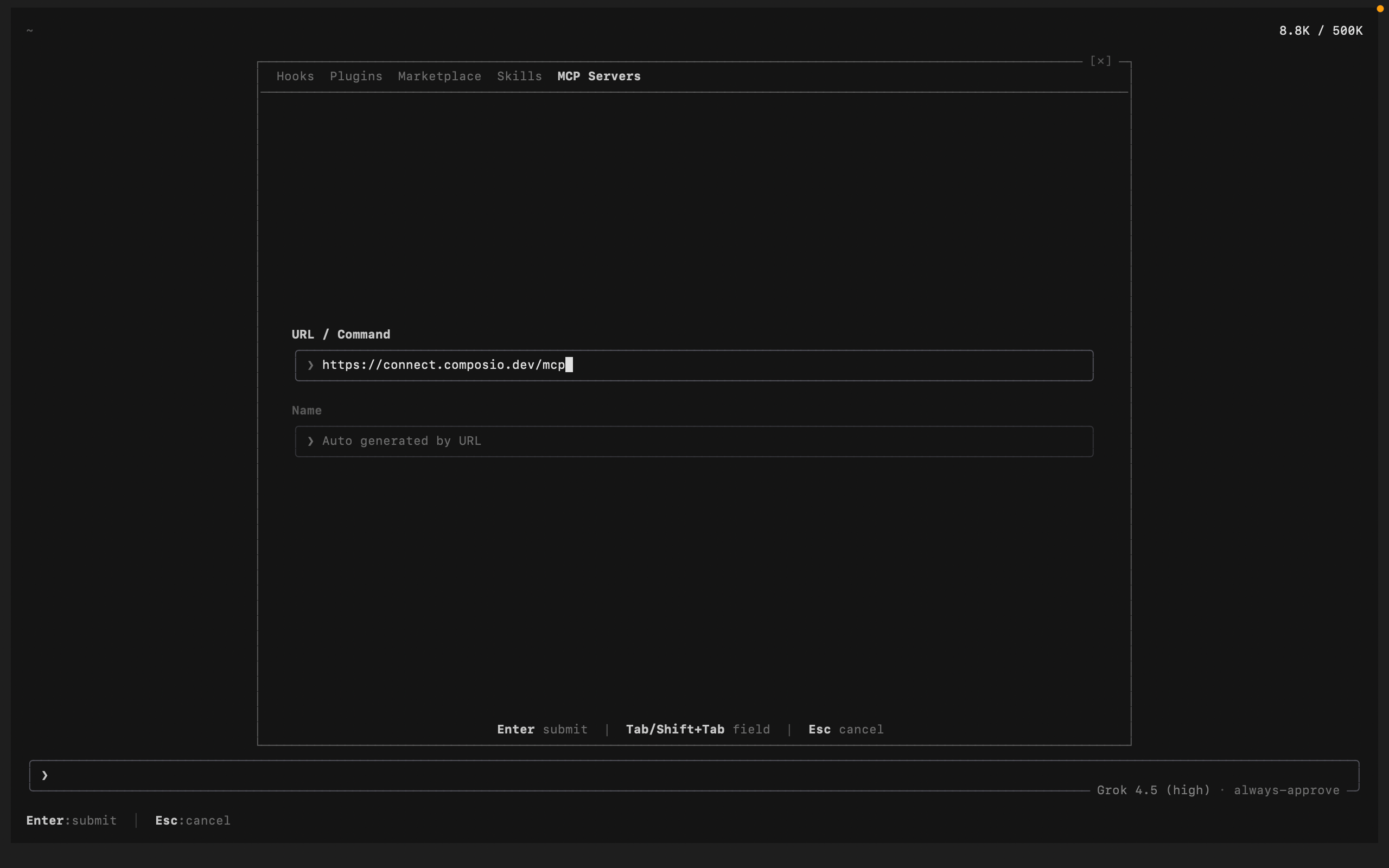
You can also add and manage servers from inside a session. Run /mcps to open the extensions modal on the MCP tab, then add a new server and paste the Composio URL. Added this way, Grok auto-detects the name from the URL and lists the server as connect:

bash
https://connect.composio.dev/mcp
Grok Build /mcps extensions modal listing MCP servers Grok Build adding the Composio MCP server with its URL

Grok also reads Claude Code-style config, so an entry in ~/.grok/config.toml or a project .mcp.json works the same way.

3. Authenticate

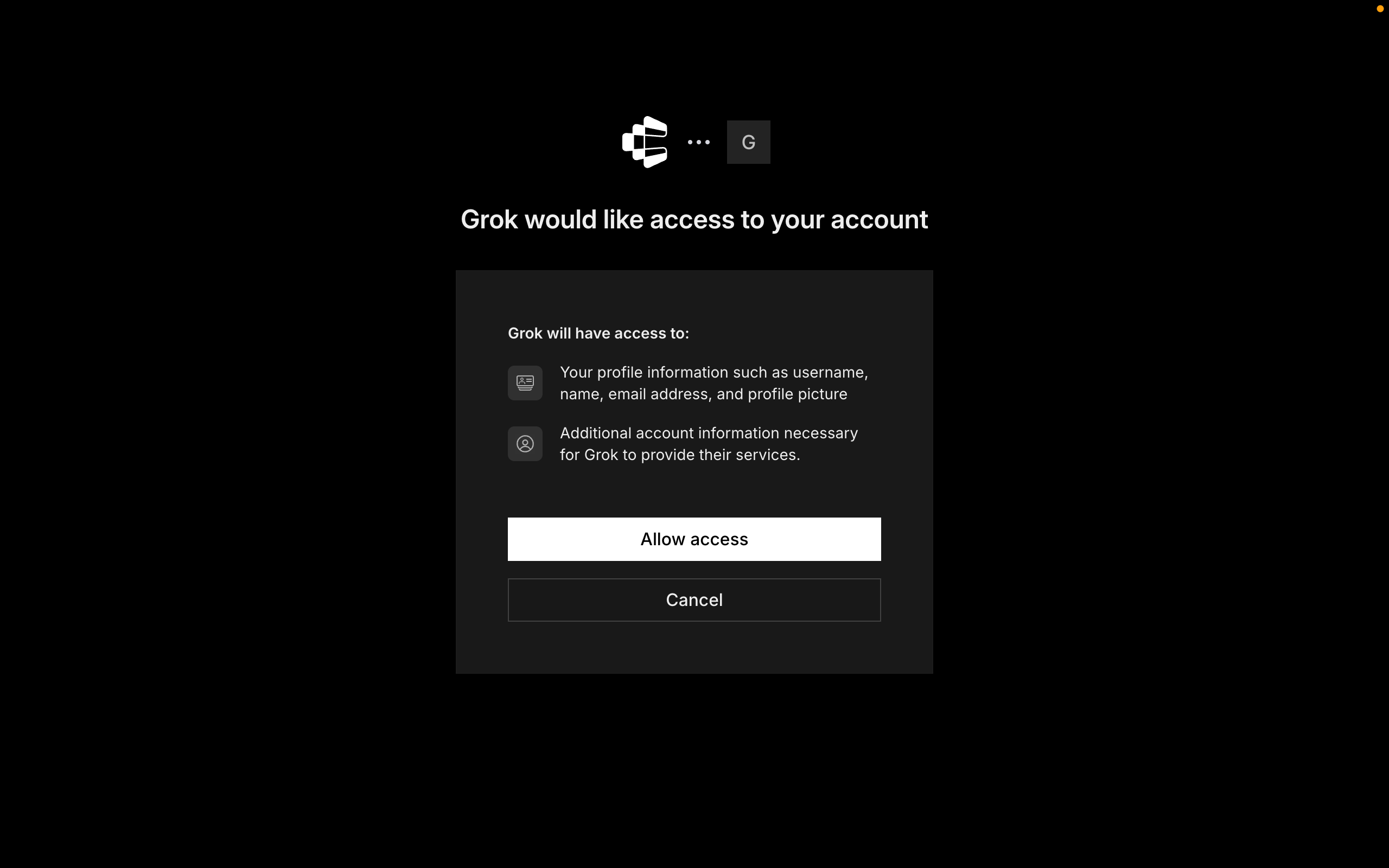
Composio uses OAuth. In the /mcps modal, select the Composio server and press i to authenticate (Grok also triggers this browser flow automatically the first time it uses a Composio tool). Click Allow to authorize access. Grok stores the tokens under ~/.grok/mcp_credentials.json, and /mcps shows Composio as connected.

Grok Build prompting to authenticate the Composio MCP server Composio authorization screen with the Allow button for Grok Build

4. Start building

Ask Grok to work with your Google search console account through Composio. On the first Google search console action, Composio prompts you to connect the account through OAuth. Approve the scopes once, and Composio handles token refresh from there.

What you can do after connecting Google search console

  • Fetch last week's top search queries
  • Inspect indexing status for this URL
  • List all sitemaps for your site
  • Submit a new sitemap for indexing

Security + privacy notes (important)

  • Use least-privilege access. Grant only the Google search console scopes you actually need.
  • Review OAuth scopes before approving. Check that the requested scopes match what you expect Composio and Grok Build to do.
  • Keep write actions human-reviewed. Grok Build proposes a plan before it acts. Leave that approval step on for actions like sending messages or editing records.
  • Keep secrets out of version control. Your XAI_API_KEY and any tokens should never be committed. Use environment variables or a secrets manager.
TOOLS

Supported Tools

Every Google search console action and event your agent gets out of the box.

Add Site

Adds a site to the set of the user's sites in Google Search Console.

Delete Site

Removes a site from the user's Google Search Console sites.

Get Site

Retrieves information about a specific Search Console site.

Get Sitemap

Retrieves sitemap metadata (submitted/indexed counts, errors, warnings, last-submission timestamps) for a specific sitemap in Search Console.

Inspect URL

Inspects a URL for indexing issues and status in Google Search Console.

List Sitemaps

Lists all sitemaps for a site in Google Search Console.

List Sites

Lists all verified sites (properties) owned by the authenticated user in Google Search Console.

Search Analytics Query

Queries Google Search Console for search analytics data including clicks, impressions, CTR, and position metrics.

Submit Sitemap

Submits a sitemap to Google Search Console for indexing.

FAQ

Frequently asked questions

A standalone Google search console MCP server gives Grok Build a fixed set of Google search console tools tied to that one server. The Composio Tool Router lets Grok Build load tools from Google search console and many other apps on demand, based on the task, all through a single endpoint.

Yes. Grok Build ships with native MCP support. Add a server with the grok mcp add command, from the in-session /mcps modal, or by editing ~/.grok/config.toml. It also reads Claude Code-style .mcp.json files, so Grok Build discovers the tools automatically.

Yes. Grok Build has zero-migration compatibility with Claude Code's configuration, so the same Composio server entry works in both without edits.

Tokens, keys, and configuration are encrypted at rest and in transit. Composio is SOC 2 Type 2 compliant, so your Google search console data and credentials are handled to that standard.

Start with Google search console.It takes 30 seconds.

Managed auth, hosted MCP servers, and every Google search console tool your agent needs.Free to start.

Start building