How to integrate Google cloud vision MCP with ChatGPT

Trusted by teams atAWSGleanZoomAirtable

30 min · no commitment · see it on your stack

Google cloud vision logo
ChatGPT logo
divider

How to integrate Google cloud vision MCP with ChatGPT

ChatGPT is one of the most popular AI tools today, with capabilities ranging from deep research and image generation to writing, coding, and everyday productivity.

In this guide, I will explain the easiest and most secure way to connect your Google cloud vision account to ChatGPT via Composio Connect, so it can summarize unread updates from this morning, create draft replies to urgent messages, fetch contact details for recent senders, and more without ever putting your account credentials at risk.

Also integrate Google cloud vision with

Why use Composio over default connectors?

  • Apps with read and write access. Default connectors mostly can read your data. Composio's Google cloud vision integration lets ChatGPT take actions like creating drafts, sending updates, labeling records, and more.
  • 1,000+ SaaS toolkits out of the box. Composio gives you instant access to a vast catalog of pre-built connectors, from Gmail and Slack to Notion, Linear, and Salesforce.
  • One MCP server for every app. Connect any of your applications on demand through a single endpoint, rather than juggling a separate server for each app.
  • Smart, context-aware tool loading. Unlike traditional MCP servers that dump every available tool into the LLM context window, Composio searches for and loads only the tools relevant to the task at hand.
  • Cross-app automation. Chain actions across multiple apps in a single run - fetch a thread, summarize it in Notion, and post highlights to Slack without leaving the conversation.

Prerequisites

  • A ChatGPT account with Plus subscription or higher (Business, Enterprise, Edu, or Pro). We will use ChatGPT Web.
  • Access to the Google cloud vision workspace you want to connect.
  • Composio MCP.

Note: Composio connects through OAuth. You will be asked to sign in and approve specific permissions. Review the permission screen carefully if you are using a work account.

Step-by-step: Connect Google cloud vision to ChatGPT

1. Enable Developer Mode

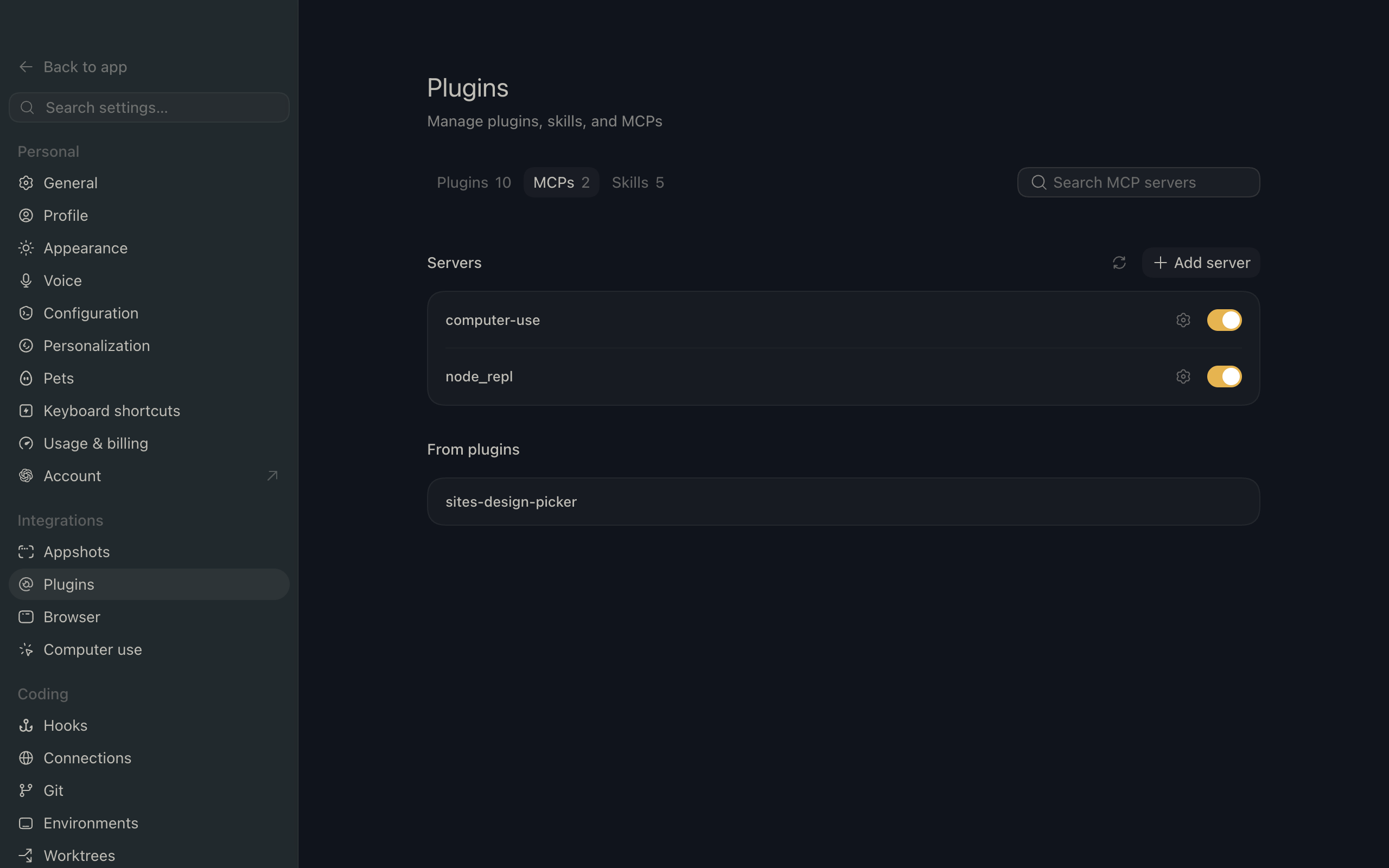
In ChatGPT, go to Settings > Apps > Advanced settings and turn on Developer Mode.

ChatGPT settings showing Developer Mode toggle

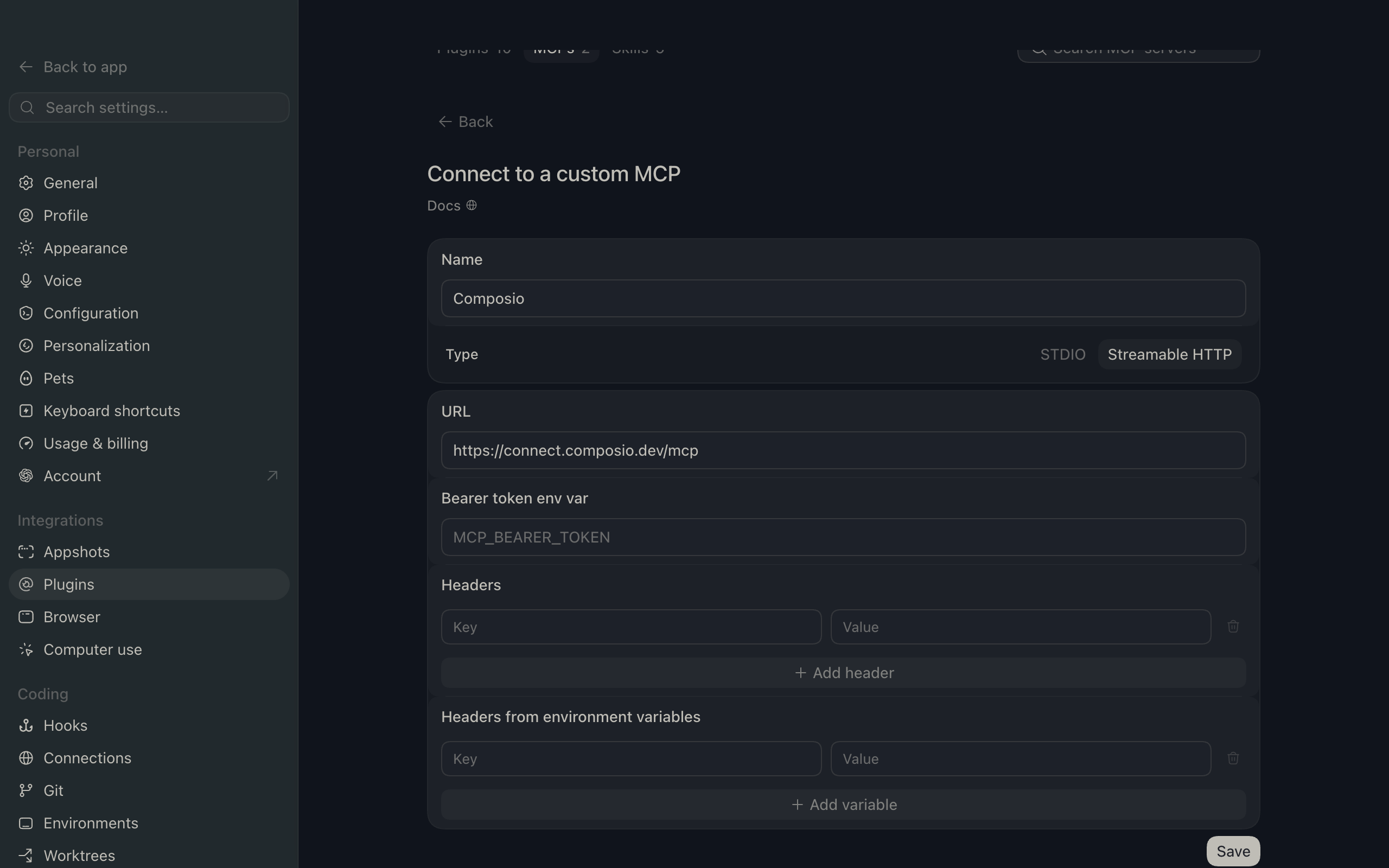
2. Add the MCP server

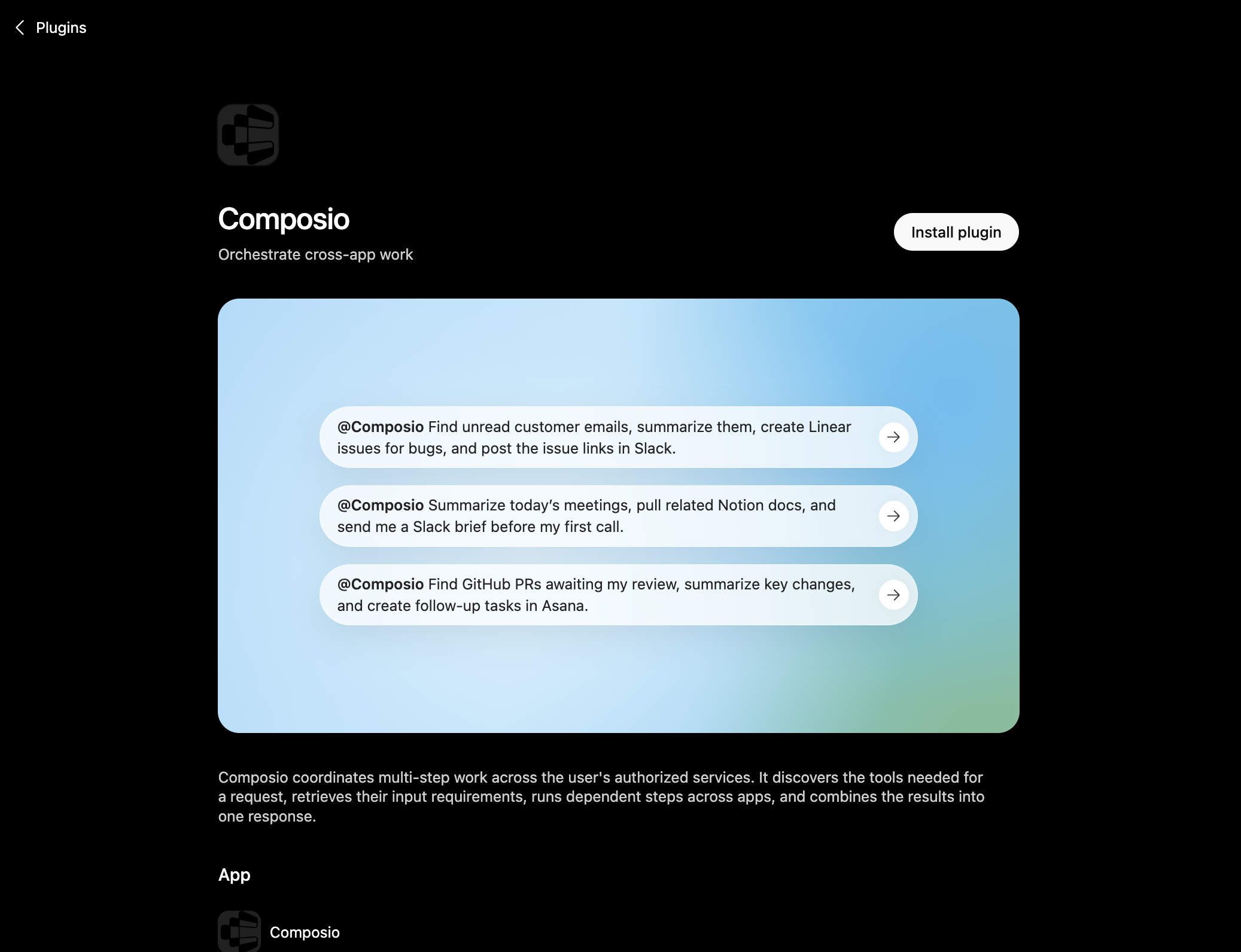
Click Create app, then paste the Composio MCP server URL:

bash
https://connect.composio.dev/mcp
ChatGPT create app flow with Composio MCP URL

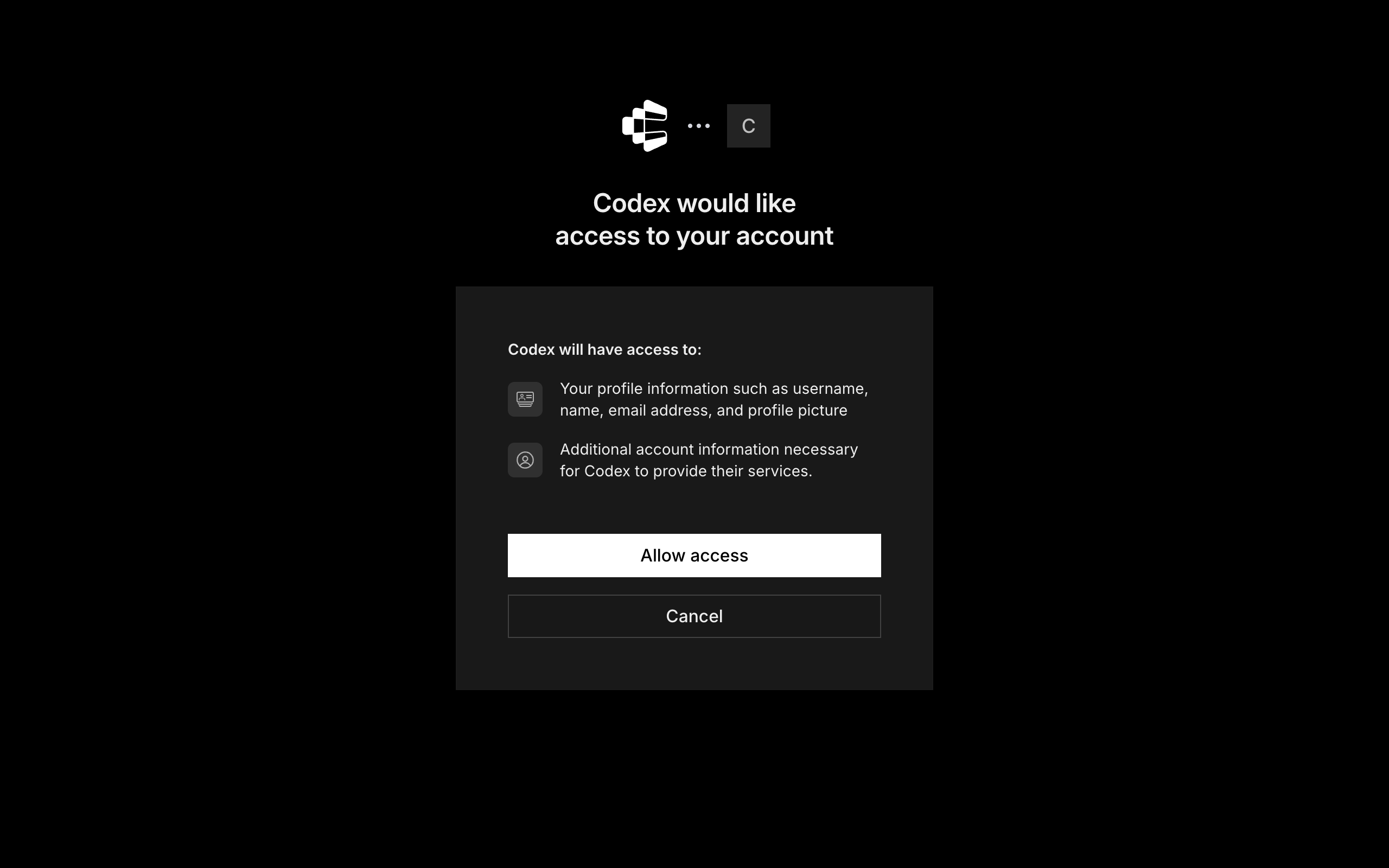
3. Authorize in your browser

A browser window will open automatically. Sign in to authorize ChatGPT to access your Composio account.

Composio authorization screen for ChatGPT MCP setup

4. Start using Composio

Composio tools are now available in ChatGPT chats and Deep Research. In every new chat, click the + icon at the bottom, click More, and select Composio to enable tools for that conversation.

What you can do after connecting Google cloud vision

  • Bulk import product images from GCS CSV
  • List all Vision AI service locations
  • Create a new product for image recognition
  • Delete an outdated product and its images

Security + privacy notes (important)

  • Use least-privilege access: Only grant permissions you actually need.
  • Review OAuth permissions before approving: Make sure requested scopes match what you expect Composio and ChatGPT to do.
  • Keep write actions human-reviewed: For actions like sending messages, creating labels, or editing drafts, keep manual confirmation enabled.
  • Be careful with sensitive data: Avoid using this setup with highly sensitive information unless allowed by your personal, company, or client policies.

Supported Tools & Triggers

Tools
Create Vision ProductTool to create and return a new Product resource.
Create ReferenceImageTool to create a ReferenceImage under a product.
Delete ProductTool to permanently delete a Product and its reference images.
Get ProductTool to get information associated with a Product.
Get Product SetTool to get a ProductSet.
Import Product SetsTool to asynchronously import reference images into ProductSets from a CSV in GCS.
List IndexEndpointsTool to list IndexEndpoints in a project and location.
List LocationsTool to list available Vision AI service locations for a project.
List Vision API OperationsTool to list operations that match the specified filter.
Purge ProductsTool to asynchronously delete products in a ProductSet or orphan products.
Update ProductTool to update a Product's mutable fields: displayName, description, and productLabels.
Update Product SetTool to update a ProductSet resource.
Add Product to ProductSetTool to add a Product to a specified ProductSet.
Cancel Vision OperationTool to cancel a long-running Vision API operation.
Delete Vision API OperationTool to delete a long-running Vision API operation.
Delete Product SetTool to permanently delete a ProductSet.
Delete Reference ImageTool to permanently delete a reference image.
Get Vision API OperationTool to get the latest state of a long-running operation.
Get Reference ImageTool to get information associated with a ReferenceImage.
List Products in ProductSetTool to list Products in a specified ProductSet.
List ProjectsTool to list Google Cloud projects accessible by the authenticated user.
List Reference ImagesTool to list reference images for a product.
Remove Product from ProductSetTool to remove a Product from a specified ProductSet.

How to build Google cloud vision MCP Agent with another framework

FAQ

What are the differences in Tool Router MCP and Google cloud vision MCP?

With a standalone Google cloud vision MCP server, the agents and LLMs can only access a fixed set of Google cloud vision tools tied to that server. However, with the Composio Tool Router, agents can dynamically load tools from Google cloud vision and many other apps based on the task at hand, all through a single MCP endpoint.

Can I use Tool Router MCP with ChatGPT?

Yes, you can. ChatGPT fully supports MCP integration. You get structured tool calling, message history handling, and model orchestration while Tool Router takes care of discovering and serving the right Google cloud vision tools.

Can I manage the permissions and scopes for Google cloud vision while using Tool Router?

Yes, absolutely. You can configure which Google cloud vision scopes and actions are allowed when connecting your account to Composio. You can also bring your own OAuth credentials or API configuration so you keep full control over what the agent can do.

How safe is my data with Composio Tool Router?

All sensitive data such as tokens, keys, and configuration is fully encrypted at rest and in transit. Composio is SOC 2 Type 2 compliant and follows strict security practices so your Google cloud vision data and credentials are handled as safely as possible.

Used by agents from

Context
Letta
glean
HubSpot
Agent.ai
Altera
DataStax
Entelligence
Rolai
Context
Letta
glean
HubSpot
Agent.ai
Altera
DataStax
Entelligence
Rolai
Context
Letta
glean
HubSpot
Agent.ai
Altera
DataStax
Entelligence
Rolai

Never worry about agent reliability

We handle tool reliability, observability, and security so you never have to second-guess an agent action.