How to integrate Elasticsearch MCP with Codex

Connect Codex to Elasticsearch MCP. Search for documents with error status, create a new index named 'projects', and more using natural language, with authentication handled for you.

Elasticsearch logoElasticsearch
Api KeyBasic

Elasticsearch is a distributed, RESTful search and analytics engine for all types of data. It delivers fast, scalable search and powerful analytics across massive datasets.

4 Tools

Introduction

Codex is one of the most popular coding harnesses out there. And MCP makes the experience even better. With the Elasticsearch MCP integration, Codex can list indices, run queries against an index, inspect index schemas, and check your cluster connection, all without leaving the terminal or the app, whichever you prefer.

For exact tool slugs and parameter tables, see the tool catalog in the Composio docs.
Also integrate Elasticsearch with

Why use Composio?

Apart from a managed and hosted MCP server, you will get:

  • CodeAct: A dedicated workbench that allows GPT to write its code to handle complex tool chaining. Reduces to-and-fro with LLMs for frequent tool calling.
  • Large tool responses: Handle them to minimise context rot.
  • Dynamic just-in-time access to 20,000 tools across 1700+ other Apps for cross-app workflows. It loads the tools you need, so GPTs aren't overwhelmed by tools you don't need.

How to install Elasticsearch MCP in Codex

Run the setup command

Run this command in your terminal to add the Composio MCP server to Codex.

Terminal

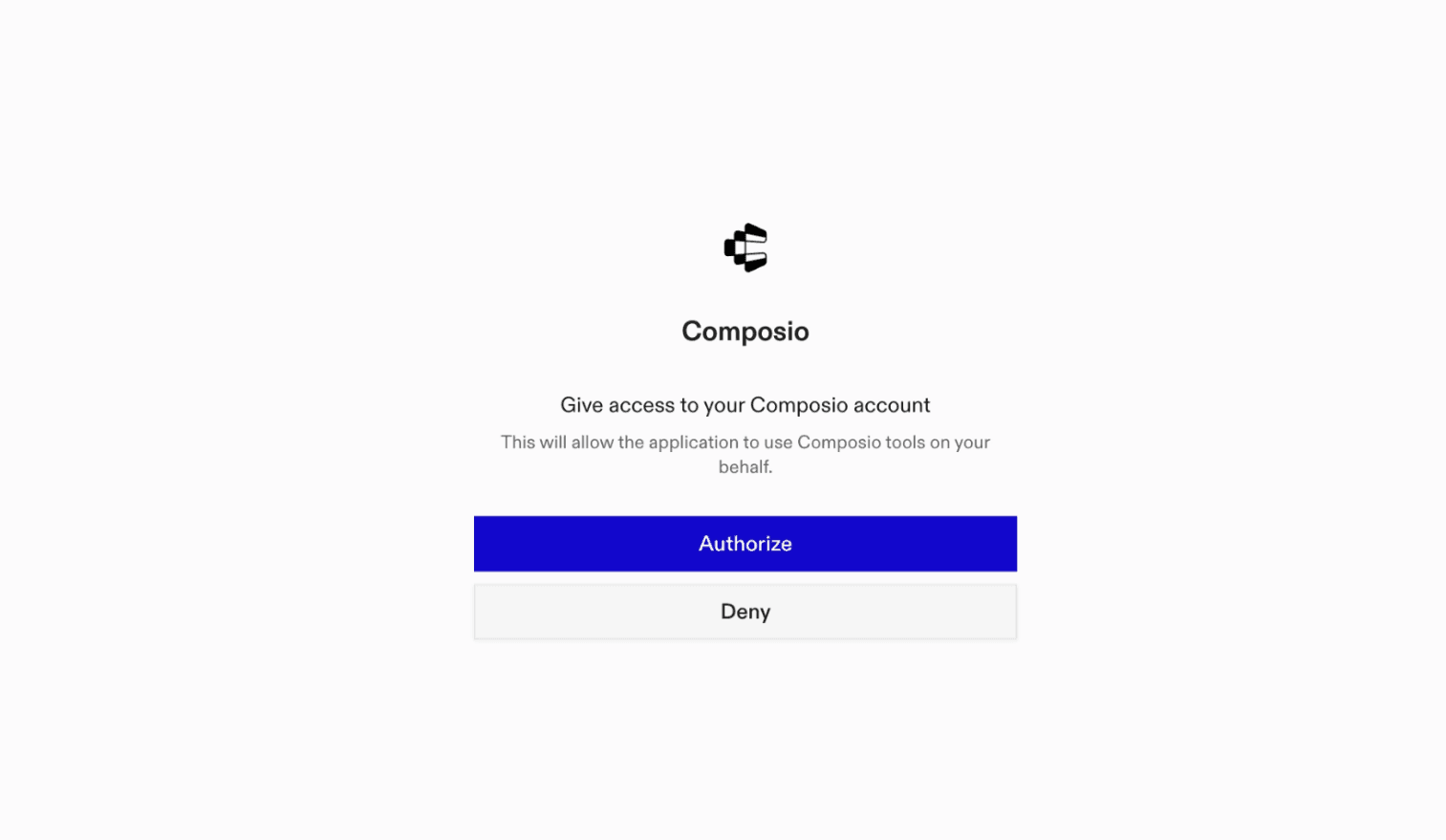
It will initiate the authentication in a browser window, authorize Codex to access your Composio account.

Composio authentication page

(Optional) Authenticate with OAuth

To authenticate manually, run the login command to open a browser window and authorize Codex to access your Composio account.

bash
codex mcp login composio

Verify the connection

Run codex mcp list to confirm Composio appears as a registered MCP server.

bash
codex mcp list

Codex App

Codex App follows the same approach as VS Code.

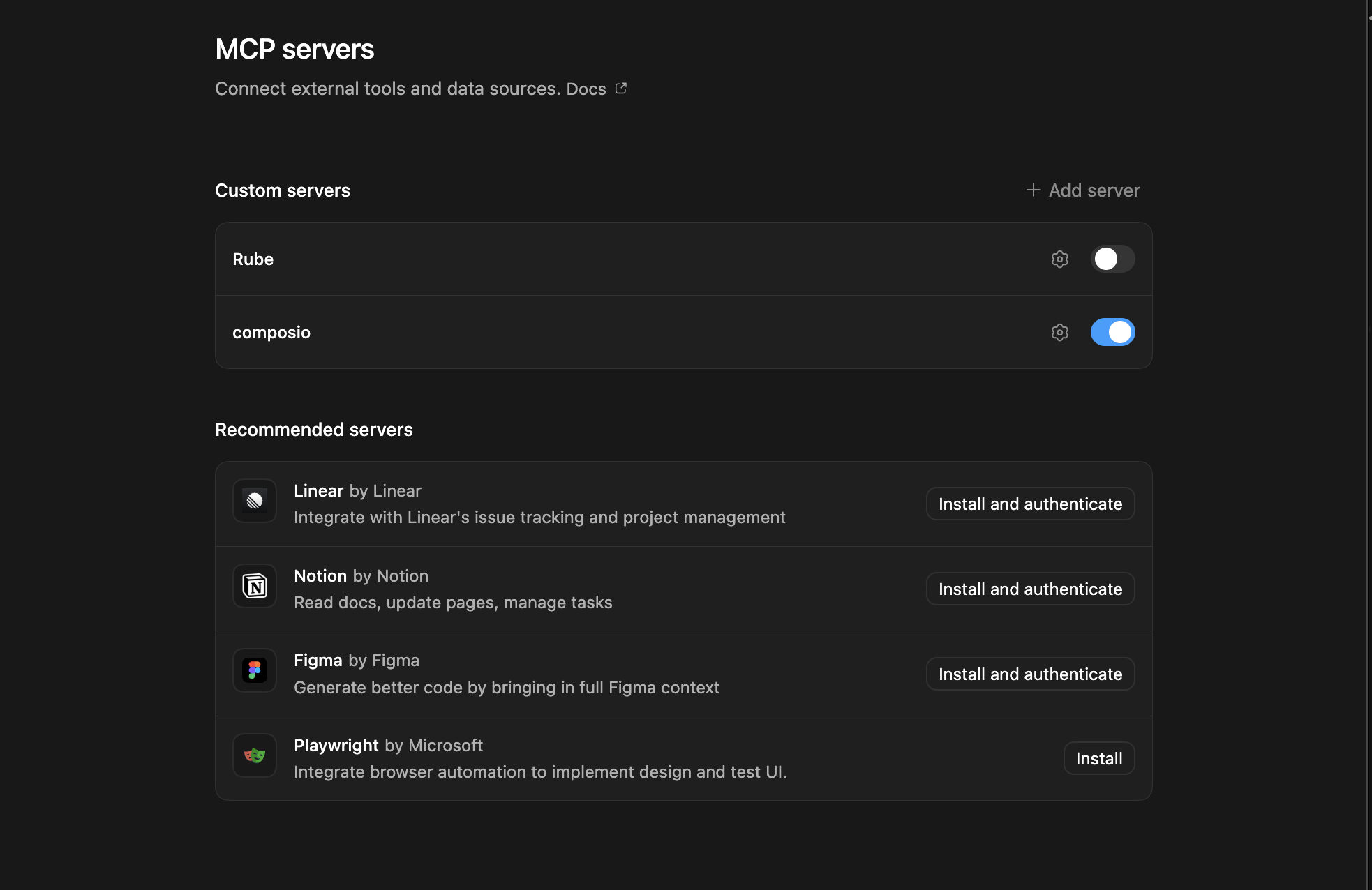
  1. Click ⚙️ on the bottom left → MCP Servers → + Add servers → Streamable HTTP:
  2. Fill the header and Key fields with { "x-consumer-api-key" = "ck_*******" }.
  3. The Key is the Composio API key, that you can find on dashboard.composio.dev
  4. Click on Authenticate and authorize Codex to your Composio account and you're all set.
Codex App MCP setup
  1. Restart and verify if it's there in .codex/config.toml
bash
[mcp_servers.composio]
url = "https://connect.composio.dev/mcp"
http_headers = { "x-consumer-api-key" = "ck_*******" }

Try it

Ask Codex for a Elasticsearch task. The first time, Composio asks you to connect your Elasticsearch account.

For example, ask it to:

  • "Search for documents with error status"
  • "Create a new index named 'projects'"
  • "Update all records in 'users' index"

What is the Elasticsearch MCP server, and what's possible with it?

The Elasticsearch MCP server is an implementation of the Model Context Protocol that connects your AI agent and assistants like Claude, Cursor, etc directly to your Elasticsearch account. It provides structured and secure access to your search and analytics data, so your agent can check cluster availability, list indices, inspect index schemas, and query indexed data on your behalf.

  • Cluster availability checks: Have your agent confirm that your Elasticsearch cluster is running before starting search or analysis tasks.
  • Index discovery: Let the agent list your available indices so you can quickly see which data collections are ready to explore.
  • Schema inspection: Direct your agent to inspect an index's complete schema and understand its fields and mappings before running a query.
  • Targeted data queries: Instruct your agent to query an index using filters and time ranges, then review the matching data in manageable sets.

Conclusion

You've successfully integrated Elasticsearch with Codex using Composio's MCP server. Now you can interact with Elasticsearch directly from your terminal, VS Code, or the Codex App using natural language commands.

Key benefits of this setup:

  • Seamless integration across CLI, VS Code, and standalone app
  • Natural language commands for Elasticsearch operations
  • Managed authentication through Composio
  • Access to 20,000+ tools across 1700+ apps for cross-app workflows
  • CodeAct workbench for complex tool chaining

Next steps:

  • Try asking Codex to perform various Elasticsearch operations
  • Explore cross-app workflows by connecting more toolkits
  • Build automation scripts that leverage Codex's AI capabilities
TOOLS

Supported Tools

Every Elasticsearch action and event your agent gets out of the box.

Get Index Schema

Get schema and mapping information for a specific Elasticsearch index, including field mappings, settings, aliases, and field statistics.

List Indices

Tool to list all available Elasticsearch indices.

Ping Cluster

Ping the Elasticsearch cluster's root endpoint to check connectivity and accessibility.

Query Index

Tool to query an Elasticsearch index with various filters, time ranges, and pagination support.

FAQ

Frequently asked questions

Start with Elasticsearch.It takes 30 seconds.

Managed auth, hosted MCP servers, and every Elasticsearch tool your agent needs.Free to start.

Start building