How to connect Datadog to Cursor

Trusted by teams atAWSGleanZoomAirtable

30 min · no commitment · see it on your stack

Datadog logo
Cursor logo
divider

How to integrate Datadog MCP with Cursor

Cursor is one of the leading AI-powered code editors. It is built to help developers write, understand, and refactor code faster with AI assistance built directly into the editor.

And in this guide, I will explain the easiest and most secure way to connect your Datadog account to Cursor via Composio Connect, so it can create downtime for nightly maintenance window, list all monitors tracking CPU usage, create synthetic API test for login endpoint, and more without ever putting your account credentials at risk.
Also integrate Datadog with

Why Composio?

  • 1,000+ SaaS toolkits out of the box. Skip the work of building and maintaining integrations, Composio gives you instant access to a vast catalog of pre-built connectors.
  • One MCP server for every app. Connect any of your applications on demand through a single endpoint, rather than juggling a separate server for each app.
  • Smart, context-aware tool loading. Unlike traditional MCP servers that dump every available tool into the LLM context window, Composio searches for and loads only the tools relevant to the task at hand. A remote CLI workbench lets LLMs compose these tools into workflows for complex automation.

Connect Datadog to Cursor

Two ways to install — pick whichever you prefer.

1. Install with one click

Click the button below to add Composio to Cursor.

Install in Cursor

2. Or add manually

Add to your Cursor mcp.json

Open .cursor/mcp.json in your project root (or ~/.cursor/mcp.json for global config) and add the following configuration:

bash
{
  "servers": {
    "composio": {
      "type": "http",
      "url": "https://connect.composio.dev/mcp"
    }
  }
}

3. Authorize

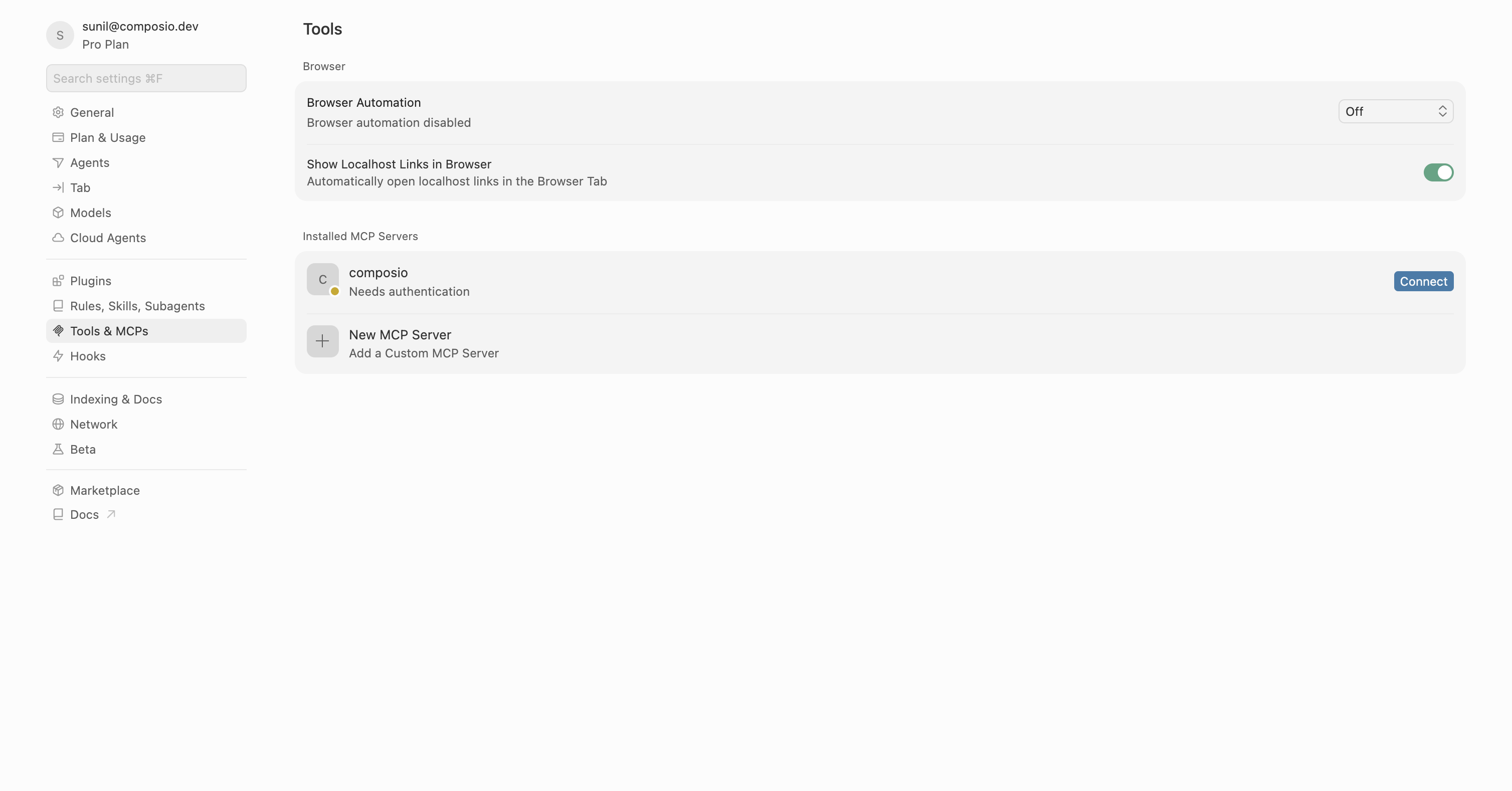
Restart Cursor, then click "Connect" next to Composio in MCP Tools settings.

Cursor MCP Tools settings with Connect button next to Composio

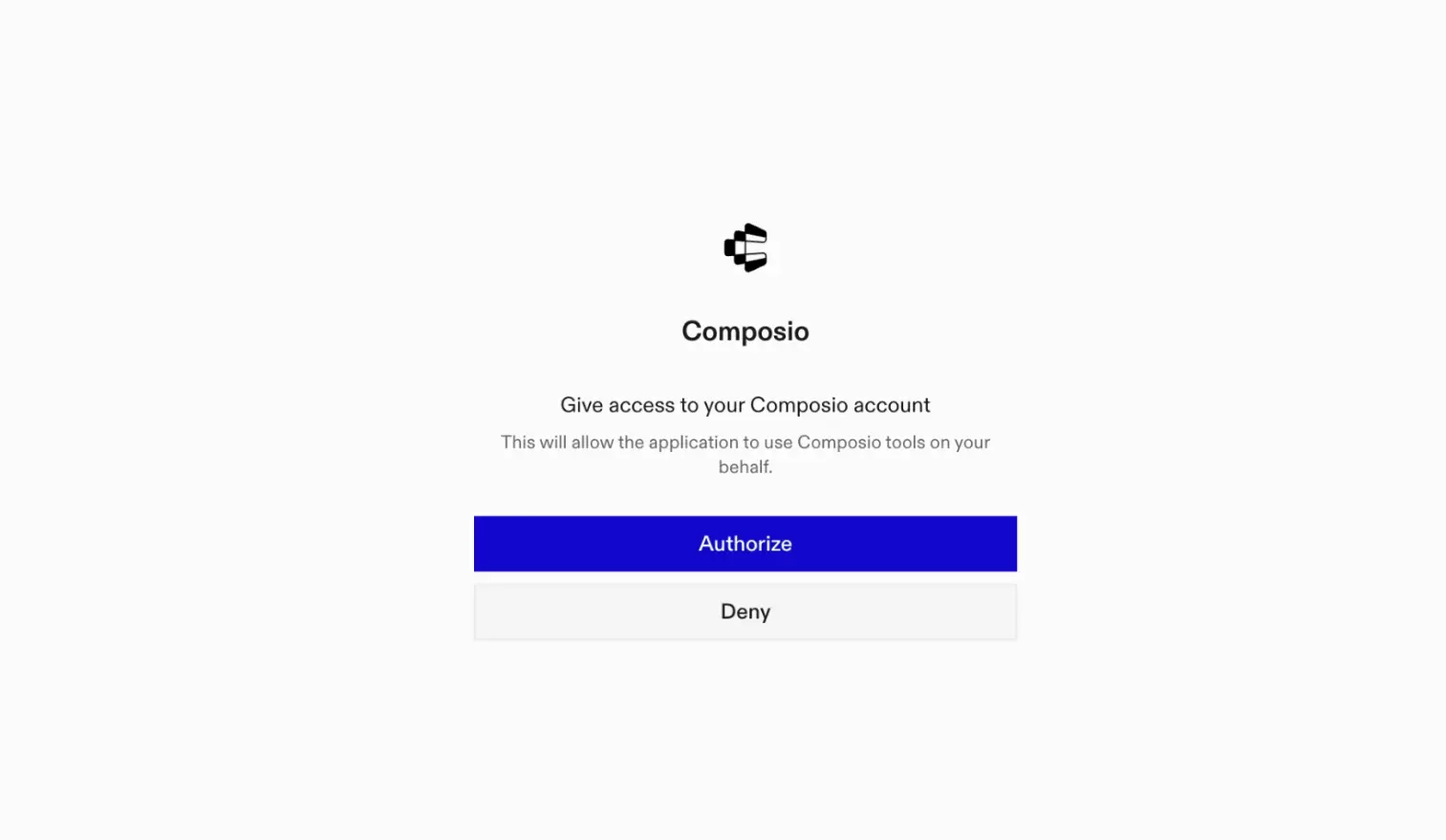
A browser window will open to authorize.

Composio authorization browser window

Connect your Datadog account

Back in Cursor, ask the agent to connect to Datadog or give it any Datadog-related task.

For example, ask it to:

  • "Create downtime for nightly maintenance window"
  • "List all monitors tracking CPU usage"
  • "Create synthetic API test for login endpoint"

It will prompt you to authenticate and authorize access to Datadog.

That is it. Composio tools are now available in Cursor, and your Datadog account is ready to use.

Supported Tools & Triggers

Tools
Create DashboardCreate a dashboard in datadog.
Create downtimeCreates a new downtime in datadog to suppress alerts during maintenance windows or planned outages.
Create eventCreates a new event in datadog.
Create monitorCreates a new datadog monitor to track metrics, logs, or other data sources with configurable alerting thresholds and notifications.
Create SLOCreate a service level objective (slo) in datadog.
Create Synthetic API TestCreate a synthetic api test in datadog.
Create WebhookCreate a webhook in datadog.
Delete DashboardDelete a dashboard in datadog.
Delete monitorDeletes a datadog monitor permanently.
Get DashboardGet a specific dashboard from datadog.
Get monitorRetrieves detailed information about a specific datadog monitor, including its current state, configuration, and any active downtimes.
Get Service DependenciesGet service dependency mapping from datadog apm.
Get Synthetics LocationsTool to retrieve all available public and private locations for synthetic tests in datadog.
Get host tagsRetrieves all tags associated with a specific host in datadog.
Get Trace by IDGet detailed information about a specific trace by its id.
Get usage summaryRetrieves usage summary information from datadog including api calls, hosts, containers, and other billable usage metrics.
List All TagsList all tags from datadog.
List API KeysList api keys in datadog.
List APM ServicesList apm services from datadog.
List AWS IntegrationList aws integrations in datadog.
List dashboardsLists all datadog dashboards with basic information.
List eventsLists events from datadog within a specified time range.
List hostsLists all hosts in your datadog infrastructure with detailed information including metrics, tags, and status.
List IncidentsList incidents from datadog.
List Log IndexesTool to retrieve a list of all log indexes configured in datadog.
List monitorsGet all monitor details.
List RolesList roles from datadog organization.
List service checksLists service checks from datadog.
List SLOsList service level objectives (slos) from datadog.
List Synthetics TestsList synthetics tests from datadog.
List UsersList users from datadog organization.
List WebhooksList webhooks from datadog.
Mute MonitorMute a monitor in datadog.
Query metricsQueries datadog metrics and returns time series data.
Search logsSearches datadog logs with advanced filtering capabilities.
Search Spans AnalyticsSearch and analyze span data with aggregations in datadog.
Search TracesSearch for traces in datadog apm.
Submit metricsSubmits custom metrics to datadog.
Unmute MonitorUnmute a monitor in datadog.
Update DashboardUpdate a dashboard in datadog.
Update host tagsUpdates tags for a specific host in datadog.
Update monitorUpdates an existing datadog monitor with new configuration, thresholds, or notification settings.

Conclusion

You have successfully connected Datadog to Cursor using Composio Connect. Your agent can now use Datadog securely without exposing credentials in prompts or local scripts.

How to build Datadog MCP Agent with another framework

FAQ

What are the differences in Tool Router MCP and Datadog MCP?

With a standalone Datadog MCP server, the agents and LLMs can only access a fixed set of Datadog tools tied to that server. However, with the Composio Tool Router, agents can dynamically load tools from Datadog and many other apps based on the task at hand, all through a single MCP endpoint.

Can I use Tool Router MCP with Cursor?

Yes, you can. Cursor fully supports MCP integration. You get structured tool calling, message history handling, and model orchestration while Tool Router takes care of discovering and serving the right Datadog tools.

Can I manage the permissions and scopes for Datadog while using Tool Router?

Yes, absolutely. You can configure which Datadog scopes and actions are allowed when connecting your account to Composio. You can also bring your own OAuth credentials or API configuration so you keep full control over what the agent can do.

How safe is my data with Composio Tool Router?

All sensitive data such as tokens, keys, and configuration is fully encrypted at rest and in transit. Composio is SOC 2 Type 2 compliant and follows strict security practices so your Datadog data and credentials are handled as safely as possible.

Used by agents from

Context
Letta
glean
HubSpot
Agent.ai
Altera
DataStax
Entelligence
Rolai
Context
Letta
glean
HubSpot
Agent.ai
Altera
DataStax
Entelligence
Rolai
Context
Letta
glean
HubSpot
Agent.ai
Altera
DataStax
Entelligence
Rolai

Never worry about agent reliability

We handle tool reliability, observability, and security so you never have to second-guess an agent action.