How to connect Circleci to Claude Cowork

Cowork is Anthropic's AI agent for knowledge work. Think of it as Claude Code for everything else. It works autonomously with your computer, local files, and applications to accomplish complex tasks. This guide walks you through the easiest and most secure way to connect your Circleci account to Cowork via Composio Connect, enabling it to trigger a new pipeline on main branch, list all pipelines for backend service, get test results from last successful build, and more such actions on your behalf without compromising your account security.

Circleci logoCircleci
Api Key

Circleci is a leading continuous integration and delivery platform for automating code builds, tests, and deployments. It helps teams ship quality software faster by streamlining DevOps workflows.

65 Tools

Introduction

Cowork is Anthropic's AI agent for knowledge work. Think of it as Claude Code for everything else. It works autonomously with your computer, local files, and applications to accomplish complex tasks.

This guide walks you through the easiest and most secure way to connect your Circleci account to Cowork via Composio Connect, enabling it to trigger a new pipeline on main branch, list all pipelines for backend service, get test results from last successful build, and more such actions on your behalf without compromising your account security.

Also integrate Circleci with

Connecting Circleci to Claude Cowork

1. Open Customize

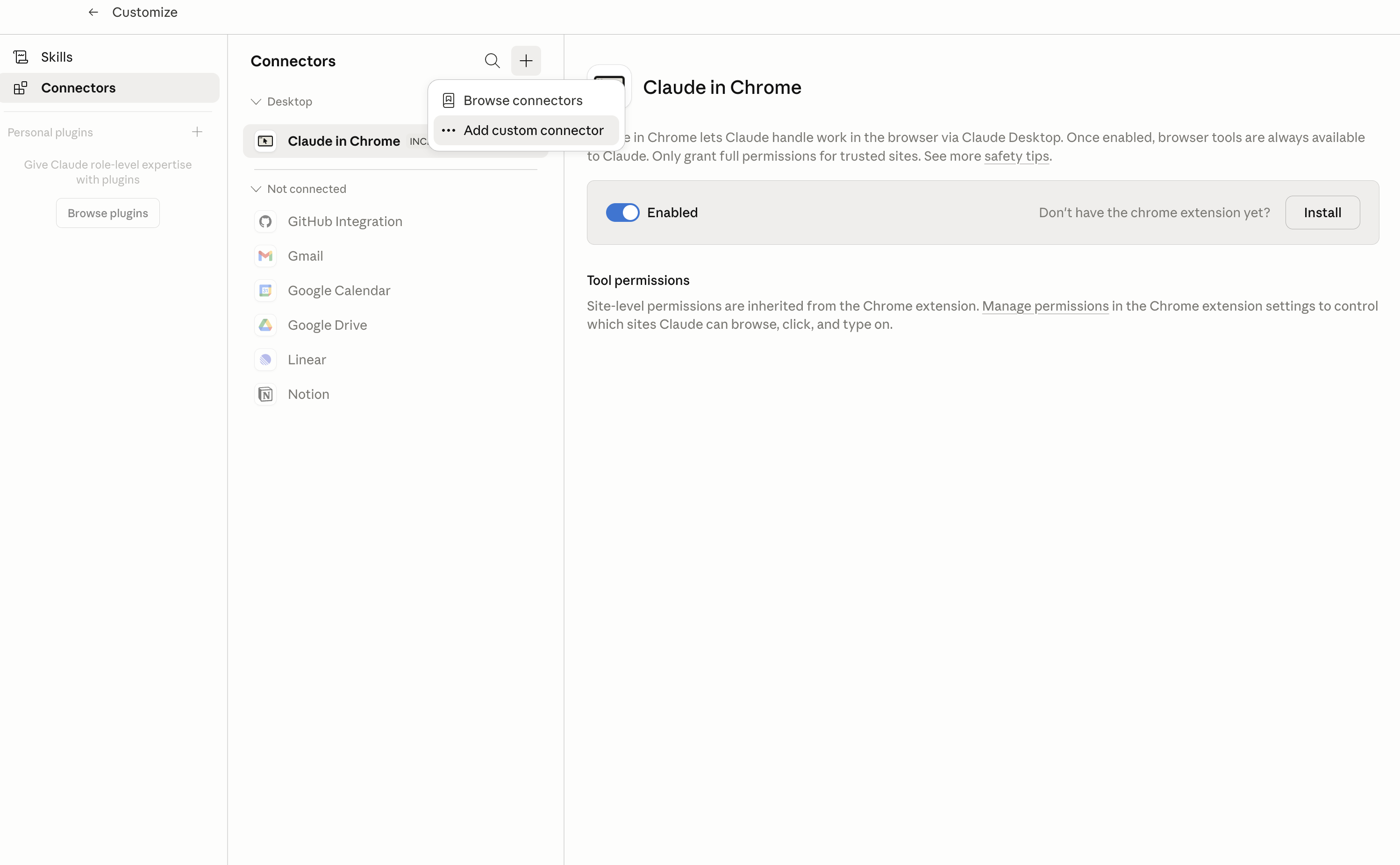
In Claude Desktop, click Customize in the left sidebar, then select Connectors and click the + icon at the top.

Claude Desktop connectors screen with Add custom connector selected

2. Add the Composio MCP server

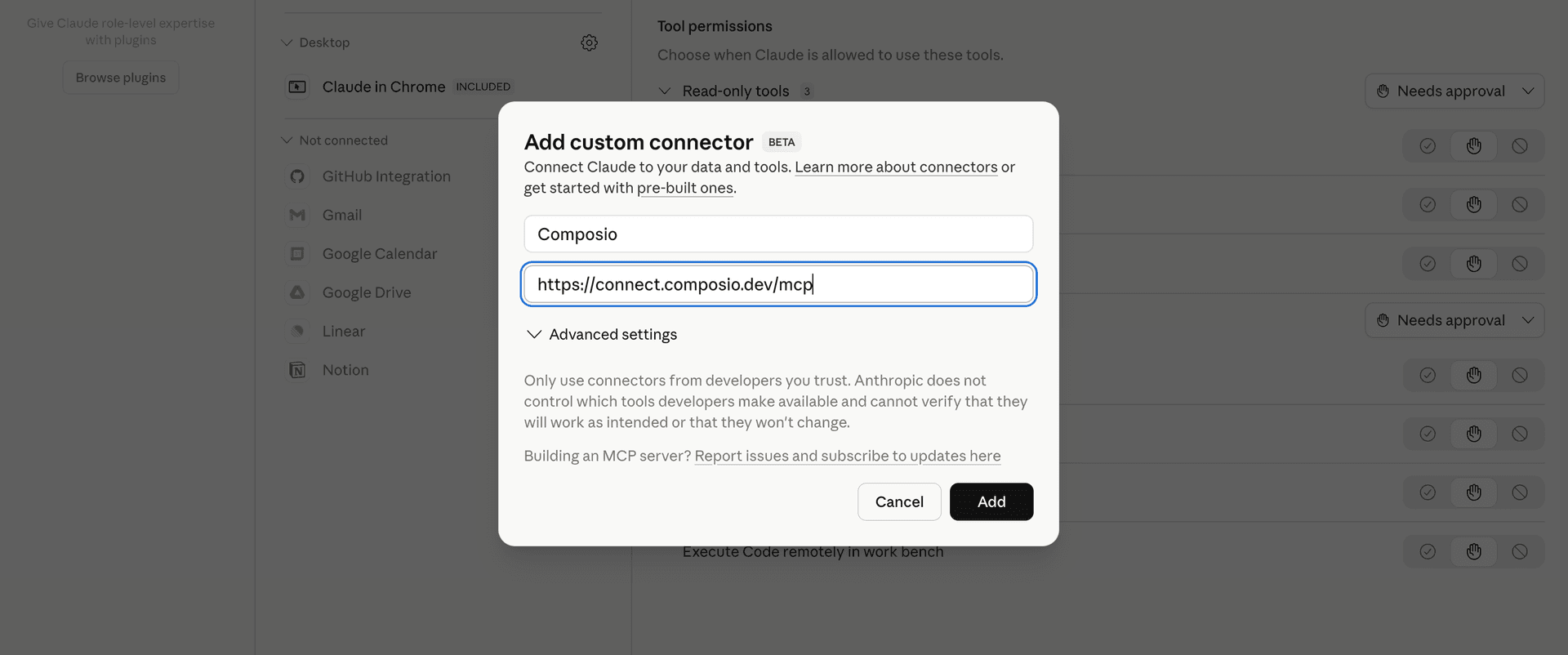
Click Add custom connector and paste in the Composio MCP server URL:

bash
https://connect.composio.dev/mcp
Add custom connector dialog with Composio MCP server URL

3. Authorize in your browser

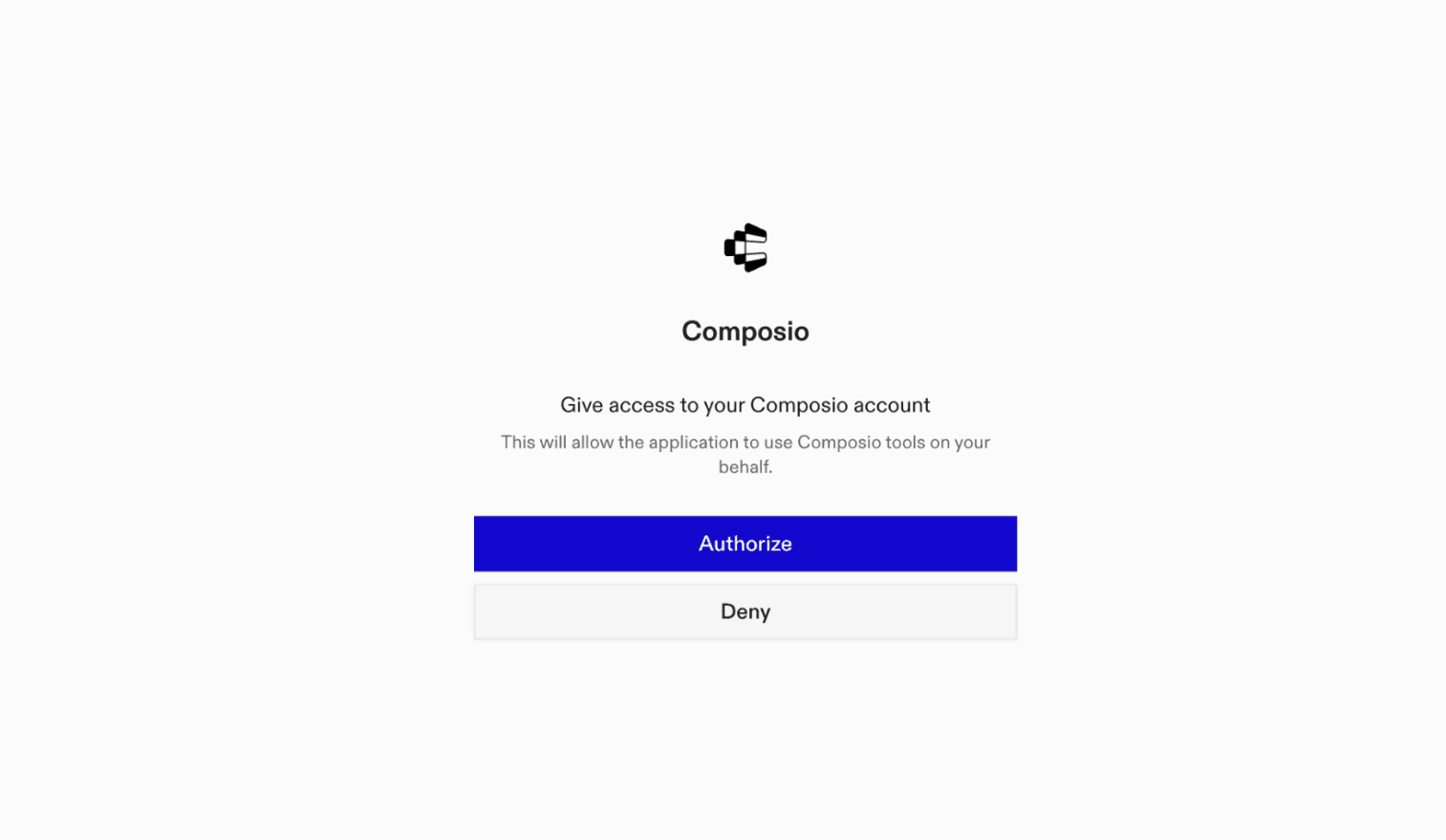
Click Connect. You'll be redirected to a browser window where you can authorize Composio to continue.

Composio authorization screen for Claude Cowork

4. Connect your Circleci account

Back in Cowork, ask the agent to connect to Circleci or give it any Circleci-related task.

For example, ask Cowork to:

  • "Trigger a new pipeline on main branch"
  • "List all pipelines for backend service"
  • "Get test results from last successful build"

It will prompt you to authenticate and authorize access.

That's it. Composio's tools are now available in Cowork, and your Circleci account is ready to use.

What is Claude Cowork?

Claude Cowork is Anthropic's agent for general knowledge work. It can use your computer, files, and connected applications to complete longer-running tasks across your work tools.

With Composio Connect, Cowork can securely access apps like Circleci through MCP without you sharing account credentials directly with the agent.

What is the Circleci MCP server, and what's possible with it?

The Circleci MCP server is an implementation of the Model Context Protocol that connects your AI agent and assistants like Claude, Cursor, etc directly to your Circleci account. It provides structured and secure access to your Circleci projects and pipelines, so your agent can trigger builds, fetch job artifacts, monitor workflows, and analyze test results on your behalf.

  • Automated pipeline triggering and management: Let your agent start new builds for specific branches or tags, enabling continuous integration workflows without manual intervention.
  • Workflow and job status monitoring: Ask your agent to fetch detailed information about jobs and workflows, including status, timing, and execution environment, to stay on top of your CI/CD processes.
  • Artifact and test result retrieval: Have the agent collect job artifacts or extract comprehensive test metadata and failure messages for easier debugging and reporting.
  • Pipeline and runner insights: Get your agent to list all pipelines for a project or enumerate available self-hosted runners, making it simple to manage and audit your Circleci resources.
  • User and configuration access: Retrieve user profile details or fetch pipeline YAML configurations as needed for documentation, troubleshooting, or workflow optimization.
TOOLS

Supported Tools

Every Circleci action and event your agent gets out of the box.

Create Context

Tool to create a new context in CircleCI.

Create Context (GraphQL)

Tool to create a new CircleCI context using the GraphQL API.

Create Context Restriction

Tool to create a context restriction in CircleCI.

Create Organization Orb Allowlist

Tool to create a new URL Orb allow-list entry for an organization.

Create Organization Project

Tool to create a new project within a CircleCI organization.

Create Organization Group

Tool to create a group in an organization.

Create Project Environment Variable

Tool to create a new environment variable for a CircleCI project.

Create Usage Export Job

Tool to create a usage export job for a CircleCI organization.

Delete Context (GraphQL)

Tool to delete a CircleCI context by its UUID using GraphQL API.

Delete Context Restriction

Tool to delete a context restriction by its ID.

Delete Namespace and Related Orbs

Tool to delete a CircleCI registry namespace and all its associated orbs.

Delete Namespace Alias

Tool to remove a namespace alias by name in CircleCI.

Delete Organization Orb Allowlist Entry

Tool to remove an entry from the organization's URL orb allow-list.

Delete Organization Group

Tool to delete a group from a CircleCI organization.

Delete Project

Tool to delete a CircleCI project and its settings.

Delete Project Environment Variable

Tool to delete an environment variable from a CircleCI project.

Get Context

Tool to retrieve a context by its unique ID.

Get Current User

Tool to retrieve information about the currently authenticated user.

Get Flaky Tests

Tool to get flaky tests for a project.

Get Job Artifacts

Retrieves artifacts (output files like test results, logs, build binaries, reports) produced by a CircleCI job.

Get Job Details

Tool to fetch details of a specific job within a project.

Get Orb Details

Tool to query detailed information about a CircleCI orb using the GraphQL API.

Get Orb Version

Tool to retrieve detailed information about a specific CircleCI orb version via GraphQL.

Get Organization

Tool to retrieve organization details from CircleCI using GraphQL query.

Get Organization Group

Tool to retrieve a group in an organization.

Get Pipeline Config

Tool to fetch pipeline configuration by ID.

Get Pipeline Definition

Tool to retrieve a pipeline definition by project and definition ID.

Get Project

Tool to retrieve a CircleCI project by its slug.

Get Project Workflows

Tool to get summary metrics for all workflows of a project.

Get Test Metadata

Tool to fetch test metadata for a specific job.

Get Usage Export Job

Tool to retrieve a usage export job by organization ID and job ID.

Get User Information

Tool to retrieve information about a CircleCI user by their unique ID.

Get Workflow Summary

Tool to get metrics and trends for a workflow.

List Context Environment Variables

Tool to list all environment variables for a specific context.

List Insights Branches

Tool to get all branches for a project from CircleCI Insights.

List Insights Summary

Tool to get summary metrics with trends for the entire organization and for each project.

List Namespace Orbs

Tool to list orbs in a CircleCI registry namespace with pagination support.

List Orb Categories

Tool to retrieve all CircleCI orb categories with pagination support.

List Orbs

Tool to list CircleCI orbs with pagination support via GraphQL API.

List Organization Groups

Tool to list all groups in a CircleCI organization.

List Pages Summary

Tool to get summary metrics and trends for a project across its workflows and branches.

List Pipeline Definitions

Tool to list all pipeline definitions for a specific project.

List Pipelines

Tool to get a list of pipelines for an organization.

List Pipelines for Project

Tool to list all pipelines for a specific project.

List Project Environment Variables

Tool to list all environment variables for a CircleCI project.

List Project Schedules

Tool to list all schedules for a specific project.

List Self-Hosted Runners

List self-hosted runners in CircleCI.

List User Collaborations

Tool to retrieve organizations where the authenticated user has access.

List Workflows by Pipeline ID

Tool to list all workflows associated with a specific pipeline.

List Workflows Jobs Workflows

Tool to get summary metrics for a project workflow's jobs.

List Workflows Test Metrics

Tool to get test metrics for a project's workflows.

Query Context

Tool to retrieve a CircleCI context by its UUID using GraphQL API.

Query Namespace Exists

Tool to determine if a namespace exists in the CircleCI registry.

Query Orb Category ID

Tool to fetch the unique category ID for a CircleCI orb category by its name.

Query Orb Exists

Tool to check if an orb exists in CircleCI registry and retrieve its privacy status.

Query Orb ID

Tool to fetch an orb's ID and optionally its namespace ID by orb name.

Query Orb Latest Version

Tool to fetch the latest published version of a CircleCI orb.

Query Orb Source

Tool to retrieve source code of a specific CircleCI orb version via GraphQL.

Query Plan Metrics

Tool to query plan metrics including credit usage by project and organization for a date range.

Remove Context Environment Variable (GraphQL)

Tool to remove an environment variable from a CircleCI context using GraphQL API.

Rename Namespace

Tool to rename a CircleCI namespace by its UUID identifier.

Store Environment Variable

Tool to store an environment variable in a CircleCI context using GraphQL mutation.

Trigger Pipeline

Triggers a new CI/CD pipeline run for a specified CircleCI project.

Upsert Context Environment Variable

Tool to add or update an environment variable in a CircleCI context.

Validate Orb Config

Tool to validate CircleCI orb YAML configuration using the orbConfig GraphQL query.

FAQ

Frequently asked questions

With a standalone Circleci MCP server, the agents and LLMs can only access a fixed set of Circleci tools tied to that server. However, with the Composio Tool Router, agents can dynamically load tools from Circleci and many other apps based on the task at hand, all through a single MCP endpoint.

Yes, you can. Claude Cowork fully supports MCP integration. You get structured tool calling, message history handling, and model orchestration while Tool Router takes care of discovering and serving the right Circleci tools.

Yes, absolutely. You can configure which Circleci scopes and actions are allowed when connecting your account to Composio. You can also bring your own OAuth credentials or API configuration so you keep full control over what the agent can do.

All sensitive data such as tokens, keys, and configuration is fully encrypted at rest and in transit. Composio is SOC 2 Type 2 compliant and follows strict security practices so your Circleci data and credentials are handled as safely as possible.

Start with Circleci.It takes 30 seconds.

Managed auth, hosted MCP servers, and every Circleci tool your agent needs.Free to start.

Start building