How to connect Cardly to Claude Cowork

Trusted by
AWS
Glean
Zoom
Airtable

30 min · no commitment · see it on your stack

Cardly logo
Claude Cowork logo
divider

Introduction

Cowork is Anthropic's AI agent for knowledge work. Think of it as Claude Code for everything else. It works autonomously with your computer, local files, and applications to accomplish complex tasks.

This guide walks you through the easiest and most secure way to connect your Cardly account to Cowork via Composio Connect, enabling it to create a new contact list named 'VIP Clients', list all available artwork for our next campaign, generate a preview of a card using latest artwork, and more such actions on your behalf without compromising your account security.

Also integrate Cardly with

Connecting Cardly to Claude Cowork

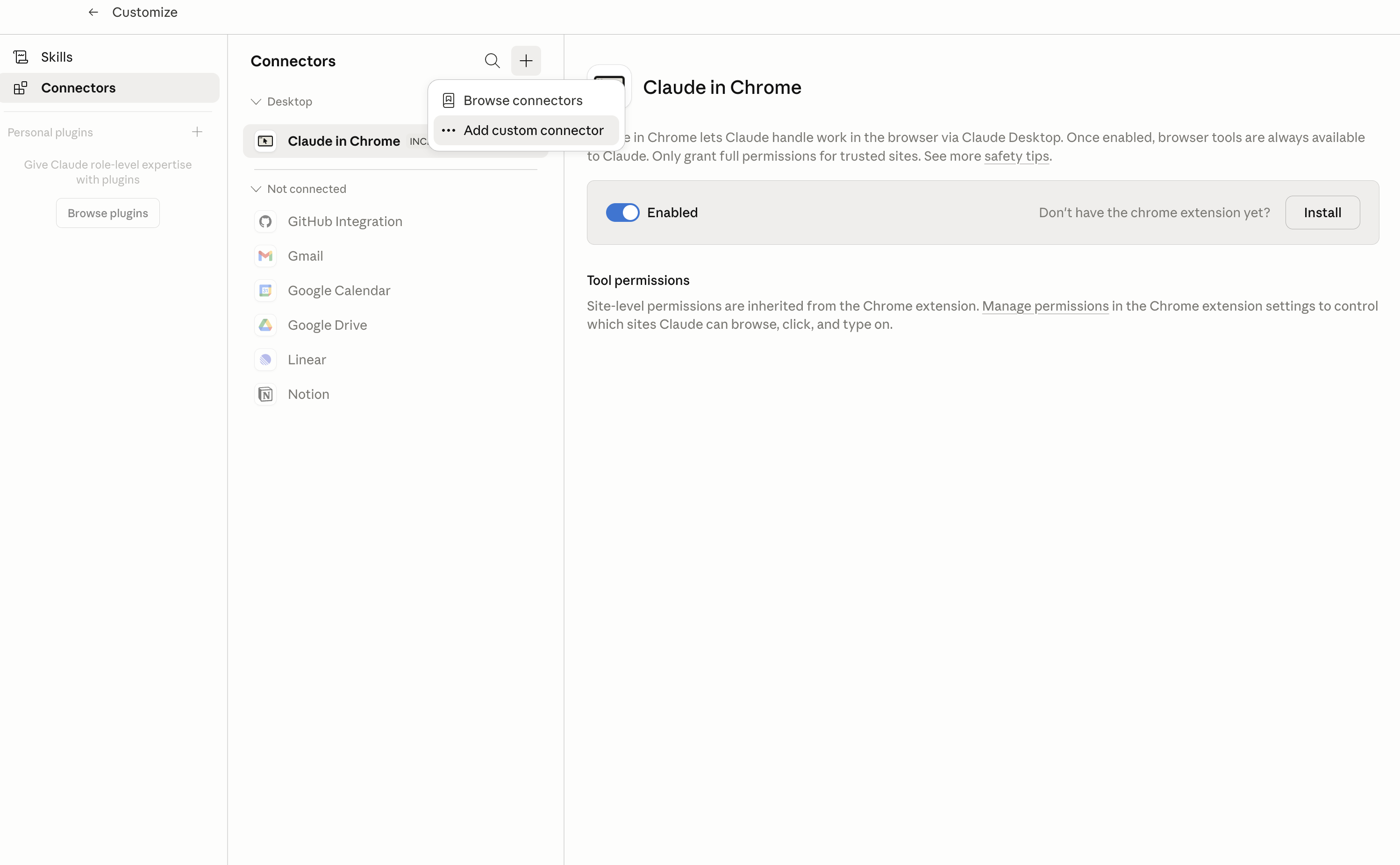
1. Open Customize

In Claude Desktop, click Customize in the left sidebar, then select Connectors and click the + icon at the top.

Claude Desktop connectors screen with Add custom connector selected

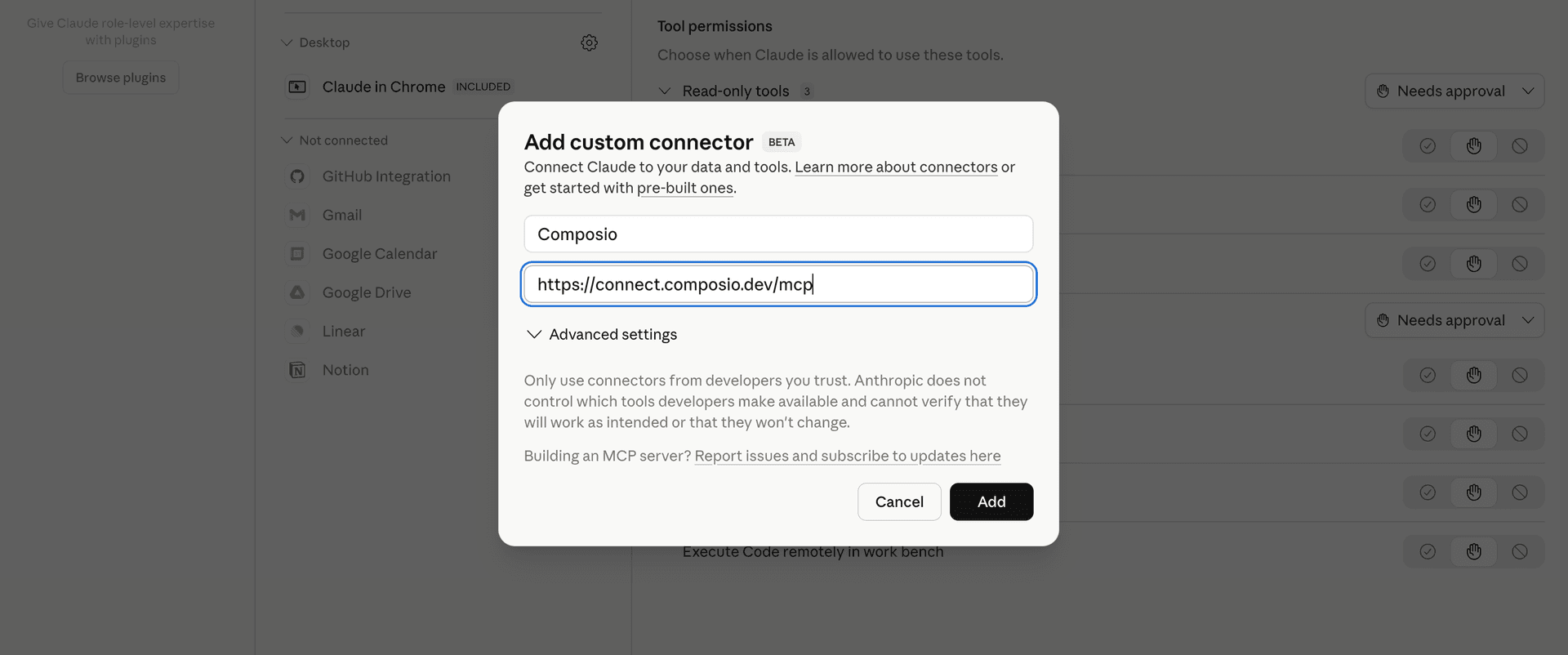
2. Add the Composio MCP server

Click Add custom connector and paste in the Composio MCP server URL:

bash
https://connect.composio.dev/mcp
Add custom connector dialog with Composio MCP server URL

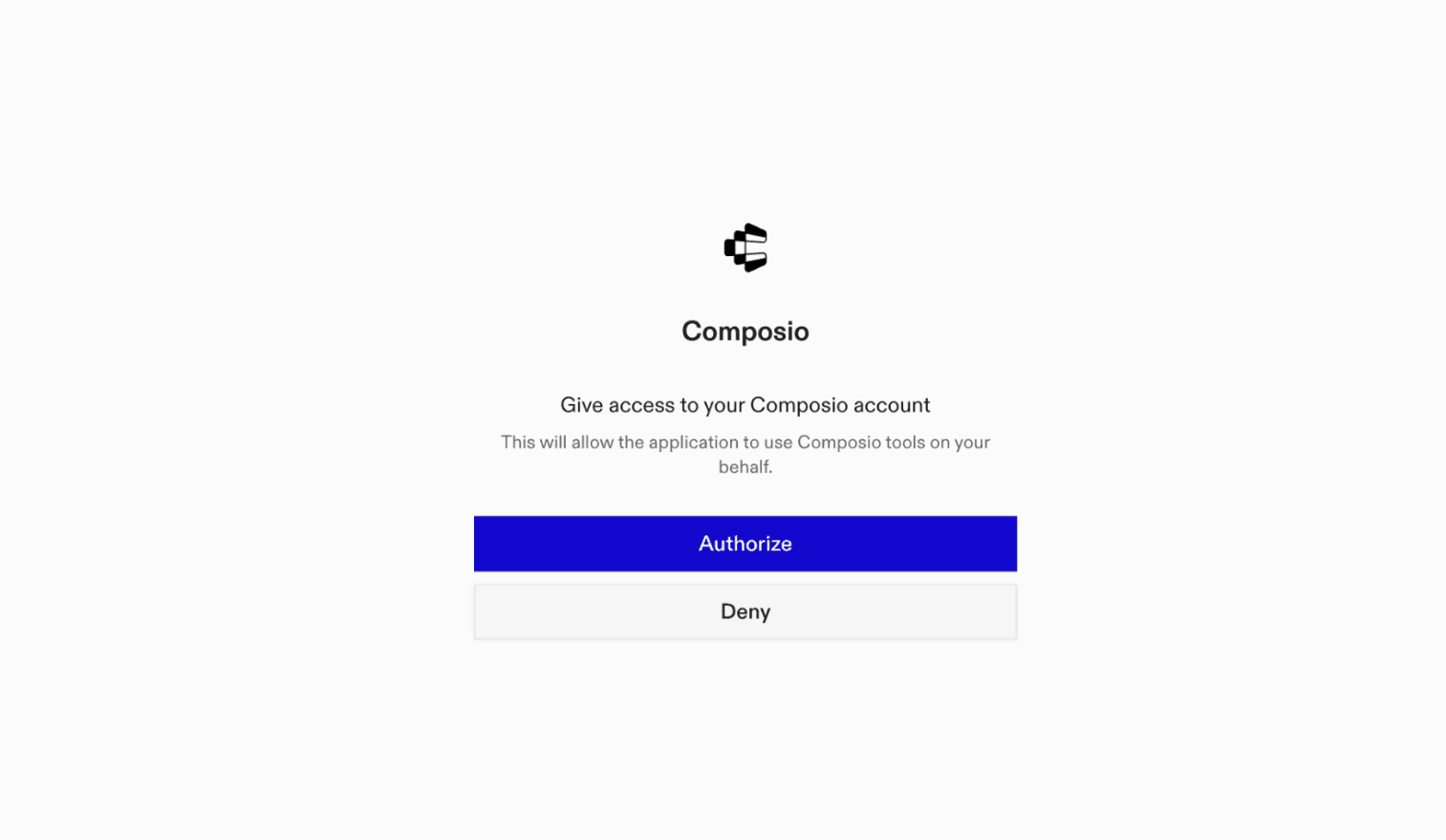
3. Authorize in your browser

Click Connect. You'll be redirected to a browser window where you can authorize Composio to continue.

Composio authorization screen for Claude Cowork

4. Connect your Cardly account

Back in Cowork, ask the agent to connect to Cardly or give it any Cardly-related task.

For example, ask Cowork to:

  • "Create a new contact list named 'VIP Clients'"
  • "List all available artwork for our next campaign"
  • "Generate a preview of a card using latest artwork"

It will prompt you to authenticate and authorize access.

That's it. Composio's tools are now available in Cowork, and your Cardly account is ready to use.

What is Claude Cowork?

Claude Cowork is Anthropic's agent for general knowledge work. It can use your computer, files, and connected applications to complete longer-running tasks across your work tools.

With Composio Connect, Cowork can securely access apps like Cardly through MCP without you sharing account credentials directly with the agent.

What is the Cardly MCP server, and what's possible with it?

The Cardly MCP server is an implementation of the Model Context Protocol that connects your AI agent and assistants like Claude, Cursor, etc directly to your Cardly account. It provides structured and secure access to your Cardly workspace, so your agent can create contact lists, generate card previews, manage invitations, and access artwork or credit history for seamless customer engagement tasks.

  • Automated contact list creation and management: Easily instruct your agent to set up new contact lists or manage existing ones, streamlining outreach campaigns and personalized mailings.
  • Card preview generation and artwork browsing: Let your agent generate watermarked card previews and browse available artwork to help you select the right designs before sending mailers.
  • Real-time credit and gift history access: Ask your agent to fetch your credit or gift credit history so you always know your account status and can track usage or plan new campaigns.
  • Invitation and webhook management: Direct your agent to handle invitations—listing, deleting, or auditing user invites—or manage webhooks for seamless integration with other systems.
  • Font and design asset exploration: Have your agent list available fonts and artwork, making it easier to choose creative assets for your next customer engagement initiative.

Supported Tools & Triggers

Tools
Create Contact ListTool to add a new contact list.
Create InvitationTool to send an invitation to use your organisation portal.
Create WebhookTool to create a new webhook subscription.
Delete InvitationTool to delete an invitation by unique ID, immediately invalidating it for acceptance.
Delete Invitation by EmailDeletes a pending invitation by email address, immediately invalidating it and preventing acceptance.
Delete UserTool to delete a user by unique ID, immediately revoking their access to your organisation portal.
Delete User by EmailDeletes a user by email address, immediately revoking their access to your organisation portal.
Delete WebhookTool to delete a webhook.
Echo RequestTool to echo all request parameters, body, and headers for debugging purposes.
Generate PreviewTool to generate a low-quality, watermarked preview document for a card.
Get ArtworkTool to retrieve information on a specific piece of artwork by its unique ID.
Get WebhookTool to get details on an existing webhook.
List ArtworkTool to retrieve the currently available artwork for your organisation.
List Contact ListsTool to retrieve all active contact lists for your organization.
List Credit HistoryRetrieves the account's credit transaction history showing all credits and debits.
List DoodlesRetrieve your currently available doodles from Cardly.
List FontsList available fonts for handwriting and text personalization in Cardly cards.
List Gift Credit HistoryLists gift credit history records for your organization with pagination and optional time-based filtering.
List InvitationsTool to retrieve active invitations for your organisation with optional filters.
List MediaTool to retrieve the currently available media sizes for product artwork.
List OrdersRetrieves a paginated list of orders placed by your organization.
List TemplatesTool to retrieve your currently available templates from Cardly.
List UsersTool to retrieve all users associated with your account.
List WebhooksRetrieves all webhooks configured for your organization, including their status, target URLs, subscribed events, and delivery statistics.
List Writing StylesTool to list available writing styles.
Retrieve Account BalanceTool to retrieve the current account and gift credit balances for your organisation.
Retrieve OrderRetrieves detailed information about a specific order by its ID.
Retrieve UserRetrieves detailed information about a specific user account by ID.
Update WebhookTool to update a webhook’s settings, including target URL and events.

How to build Cardly MCP Agent with another framework

FAQ

What are the differences in Tool Router MCP and Cardly MCP?

With a standalone Cardly MCP server, the agents and LLMs can only access a fixed set of Cardly tools tied to that server. However, with the Composio Tool Router, agents can dynamically load tools from Cardly and many other apps based on the task at hand, all through a single MCP endpoint.

Can I use Tool Router MCP with Claude Cowork?

Yes, you can. Claude Cowork fully supports MCP integration. You get structured tool calling, message history handling, and model orchestration while Tool Router takes care of discovering and serving the right Cardly tools.

Can I manage the permissions and scopes for Cardly while using Tool Router?

Yes, absolutely. You can configure which Cardly scopes and actions are allowed when connecting your account to Composio. You can also bring your own OAuth credentials or API configuration so you keep full control over what the agent can do.

How safe is my data with Composio Tool Router?

All sensitive data such as tokens, keys, and configuration is fully encrypted at rest and in transit. Composio is SOC 2 Type 2 compliant and follows strict security practices so your Cardly data and credentials are handled as safely as possible.

Used by agents from

Context
Letta
glean
HubSpot
Agent.ai
Altera
DataStax
Entelligence
Rolai
Context
Letta
glean
HubSpot
Agent.ai
Altera
DataStax
Entelligence
Rolai
Context
Letta
glean
HubSpot
Agent.ai
Altera
DataStax
Entelligence
Rolai

Never worry about agent reliability

We handle tool reliability, observability, and security so you never have to second-guess an agent action.