How to integrate Carbone MCP with Codex

Connect Codex to Carbone MCP. Generate a pdf invoice from order data, upload a new docx report template, and more using natural language, with authentication handled for you.

Carbone logoCarbone
Api Key

Carbone is a blazing-fast report generator that turns JSON data into PDFs, Word docs, spreadsheets, and more using flexible templates. It lets you automate document creation at scale with minimal code.

11 Tools

Introduction

Codex is one of the most popular coding harnesses out there. And MCP makes the experience even better. With the Carbone MCP integration, Codex can generate PDF reports from JSON data, upload and update templates, render templates on demand, and browse template categories and tags, all without leaving the terminal or the app, whichever you prefer.

For exact tool slugs and parameter tables, see the tool catalog in the Composio docs.
Also integrate Carbone with

Why use Composio?

Apart from a managed and hosted MCP server, you will get:

  • CodeAct: A dedicated workbench that allows GPT to write its code to handle complex tool chaining. Reduces to-and-fro with LLMs for frequent tool calling.
  • Large tool responses: Handle them to minimise context rot.
  • Dynamic just-in-time access to 20,000 tools across 1800+ other Apps for cross-app workflows. It loads the tools you need, so GPTs aren't overwhelmed by tools you don't need.

How to install Carbone MCP in Codex

Run the setup command

Run this command in your terminal to add the Composio MCP server to Codex.

Terminal

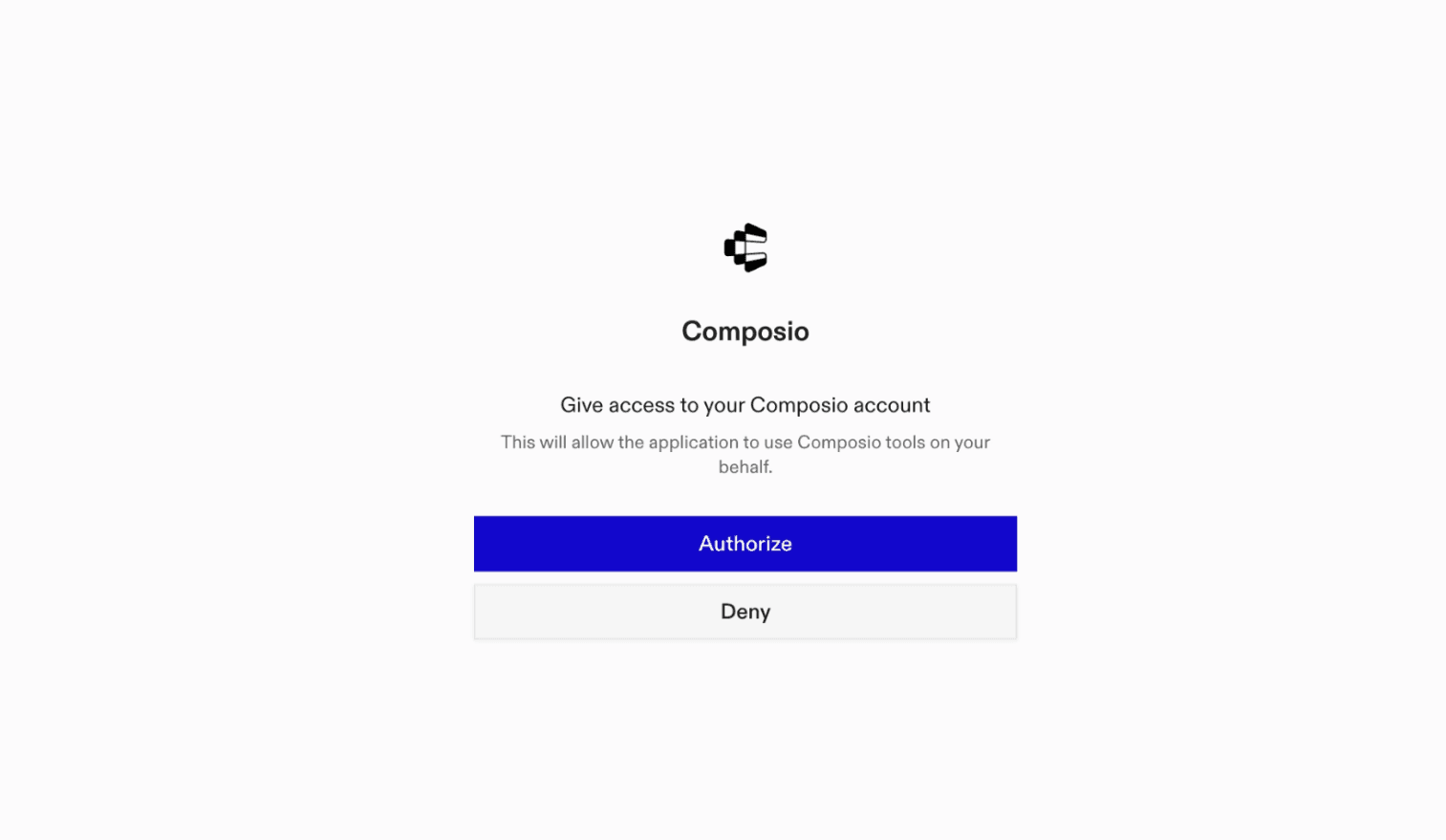
It will initiate the authentication in a browser window, authorize Codex to access your Composio account.

Composio authentication page

(Optional) Authenticate with OAuth

To authenticate manually, run the login command to open a browser window and authorize Codex to access your Composio account.

bash
codex mcp login composio

Verify the connection

Run codex mcp list to confirm Composio appears as a registered MCP server.

bash
codex mcp list

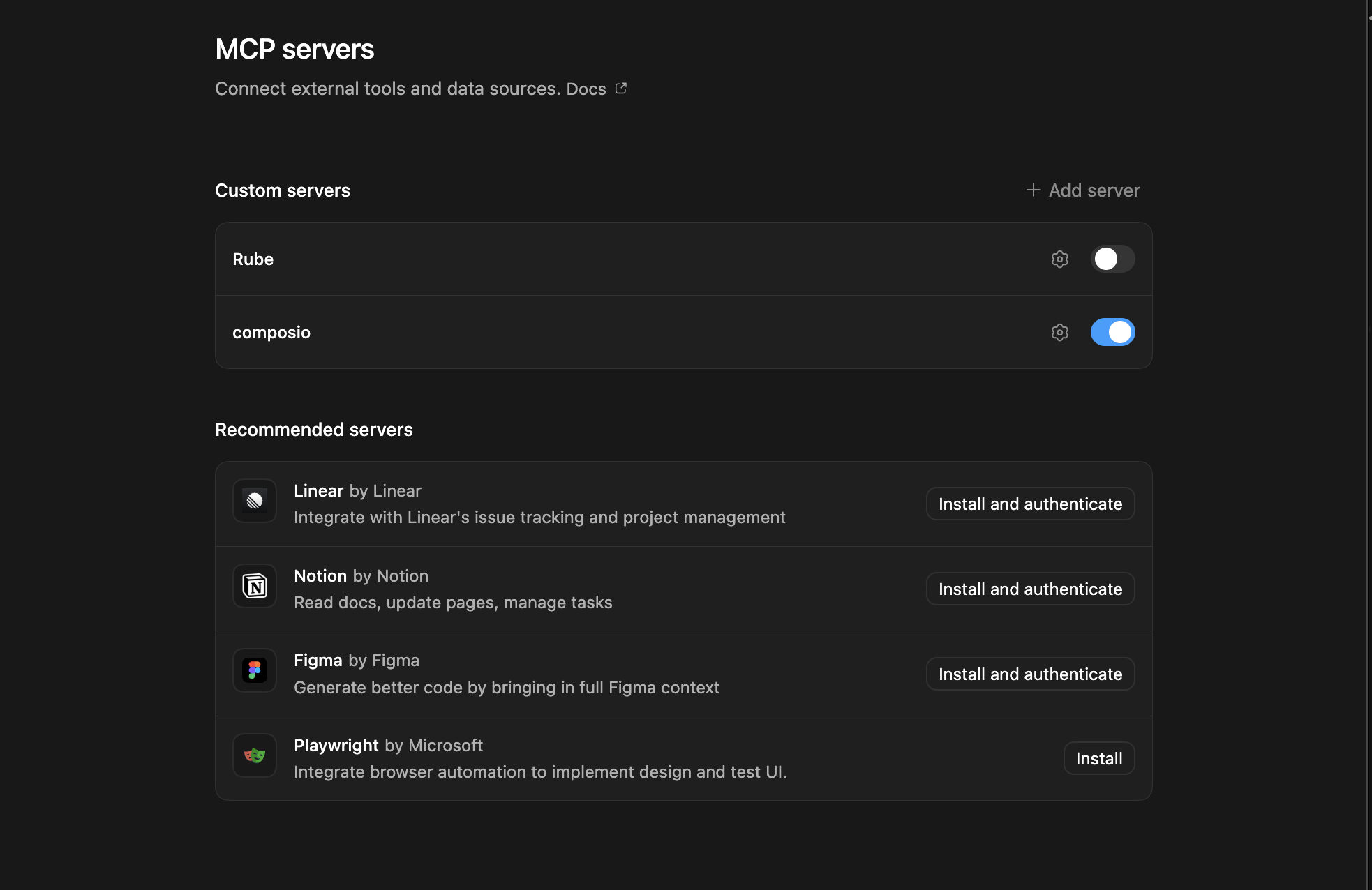
Codex App

Codex App follows the same approach as VS Code.

  1. Click ⚙️ on the bottom left → MCP Servers → + Add servers → Streamable HTTP:
  2. Fill the header and Key fields with { "x-consumer-api-key" = "ck_*******" }.
  3. The Key is the Composio API key, that you can find on dashboard.composio.dev
  4. Click on Authenticate and authorize Codex to your Composio account and you're all set.
Codex App MCP setup
  1. Restart and verify if it's there in .codex/config.toml
bash
[mcp_servers.composio]
url = "https://connect.composio.dev/mcp"
http_headers = { "x-consumer-api-key" = "ck_*******" }

Try it

Ask Codex for a Carbone task. The first time, Composio asks you to connect your Carbone account.

For example, ask it to:

  • "Generate a PDF invoice from order data"
  • "Upload a new DOCX report template"
  • "Download an existing template by template ID"

What is the Carbone MCP server, and what's possible with it?

The Carbone MCP server is an implementation of the Model Context Protocol that connects your AI agent and assistants like Claude, Cursor, etc directly to your Carbone account. It provides structured and secure access to your Carbone document automation, so your agent can perform actions like generating reports, managing templates, downloading files, and monitoring server status on your behalf.

  • Automated report generation: Instantly generate custom reports in formats like PDF, DOCX, or XLSX from JSON data and pre-built templates.
  • Template management: Upload new templates, download existing ones, or delete outdated templates directly via your agent for seamless workflow updates.
  • Template ID generation: Create unique template identifiers to streamline the process of uploading and tracking templates across projects.
  • Server health monitoring: Check the real-time status and health of your Carbone server before executing key operations, ensuring reliability and uptime.
  • API version control: Set or update the Carbone API version your agent uses to maintain compatibility and leverage the latest features.

Conclusion

You've successfully integrated Carbone with Codex using Composio's MCP server. Now you can interact with Carbone directly from your terminal, VS Code, or the Codex App using natural language commands.

Key benefits of this setup:

  • Seamless integration across CLI, VS Code, and standalone app
  • Natural language commands for Carbone operations
  • Managed authentication through Composio
  • Access to 20,000+ tools across 1800+ apps for cross-app workflows
  • CodeAct workbench for complex tool chaining

Next steps:

  • Try asking Codex to perform various Carbone operations
  • Explore cross-app workflows by connecting more toolkits
  • Build automation scripts that leverage Codex's AI capabilities
TOOLS

Supported Tools

Every Carbone action and event your agent gets out of the box.

Delete Carbone Template

Delete a Carbone template by template ID, including all its versions, or delete a specific version by version ID.

Download Template

Tool to download a template from Carbone by template ID.

Generate Carbone Report

Generate a Carbone report from a template and JSON data, with optional output format and rendering settings.

Get Carbone Server Status

Tool to retrieve the current status and health of the Carbone server.

List Template Categories

List categories used in deployed Carbone templates.

List Templates

Tool to retrieve a list of templates from Carbone storage with filtering, search, and cursor-based pagination.

List Template Tags

List tags currently used in deployed Carbone templates, for discovering labels used to categorize documents or versions.

Render Template Direct

Render a document from a base64-encoded template and JSON data without separately uploading the template.

Set Carbone API Version

Tool to set the Carbone API version to be used for subsequent requests.

Update Template Metadata

Tool to update metadata and attributes of an existing Carbone template.

Upload a template

Upload a template file to the Carbone server to obtain a template ID for document generation.

FAQ

Frequently asked questions

Start with Carbone.It takes 30 seconds.

Managed auth, hosted MCP servers, and every Carbone tool your agent needs.Free to start.

Start building