How to integrate Bubble MCP with Codex

Connect Codex to Bubble MCP. Create a new user in your bubble app, update a record in the bubble database, and more using natural language, with authentication handled for you.

Bubble logoBubble
Api Key

Bubble is a visual programming platform for building web apps without code. It empowers anyone to create, launch, and scale interactive applications quickly.

15 Tools

Introduction

Codex is one of the most popular coding harnesses out there. And MCP makes the experience even better. With the Bubble MCP integration, Codex can create and update database records, bulk create entries, upload and download files, and trigger Bubble workflows, all without leaving the terminal or the app, whichever you prefer.

For exact tool slugs and parameter tables, see the tool catalog in the Composio docs.
Also integrate Bubble with

Why use Composio?

Apart from a managed and hosted MCP server, you will get:

  • CodeAct: A dedicated workbench that allows GPT to write its code to handle complex tool chaining. Reduces to-and-fro with LLMs for frequent tool calling.
  • Large tool responses: Handle them to minimise context rot.
  • Dynamic just-in-time access to 20,000 tools across 1700+ other Apps for cross-app workflows. It loads the tools you need, so GPTs aren't overwhelmed by tools you don't need.

How to install Bubble MCP in Codex

Run the setup command

Run this command in your terminal to add the Composio MCP server to Codex.

Terminal

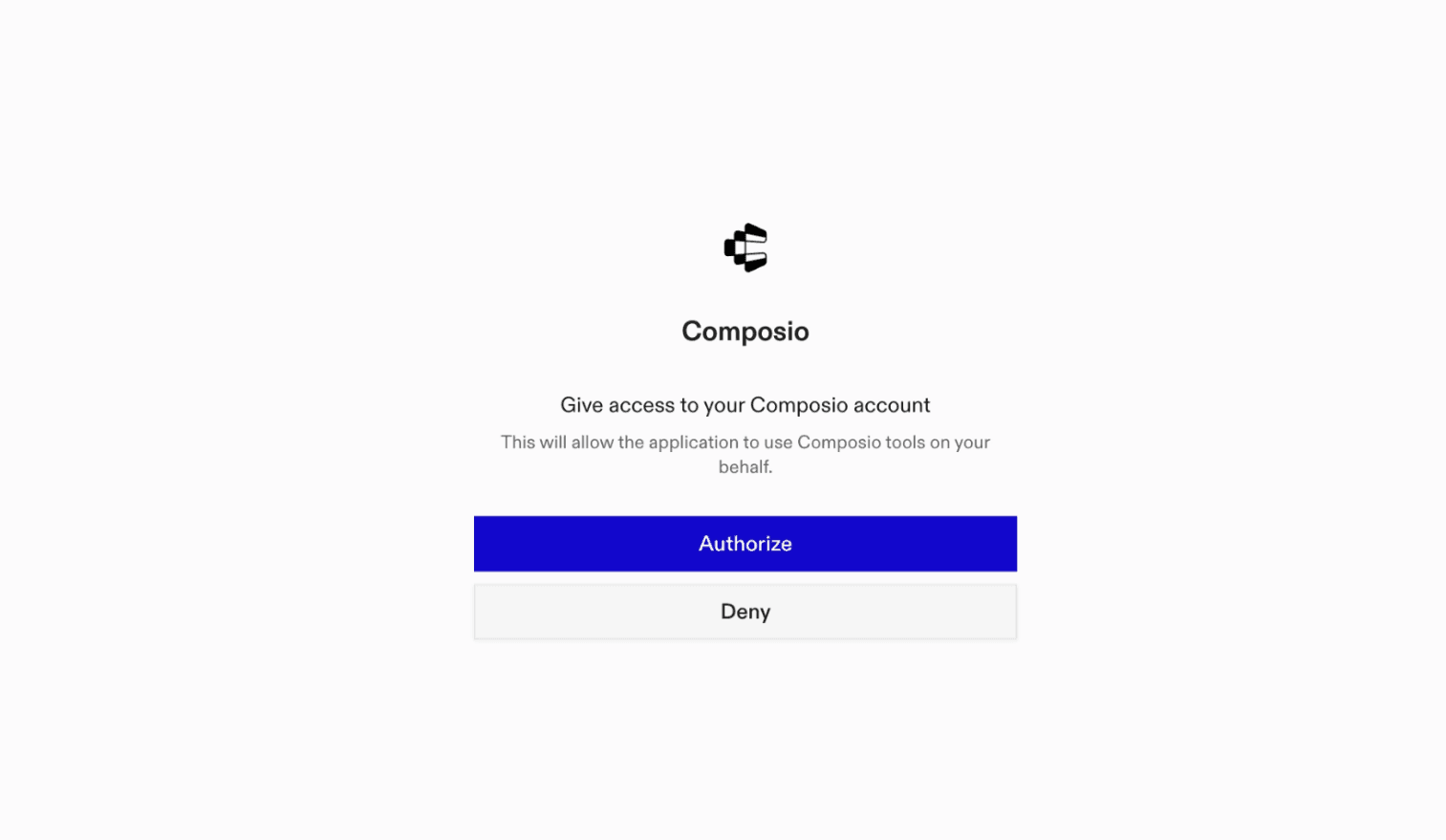
It will initiate the authentication in a browser window, authorize Codex to access your Composio account.

Composio authentication page

(Optional) Authenticate with OAuth

To authenticate manually, run the login command to open a browser window and authorize Codex to access your Composio account.

bash
codex mcp login composio

Verify the connection

Run codex mcp list to confirm Composio appears as a registered MCP server.

bash
codex mcp list

Codex App

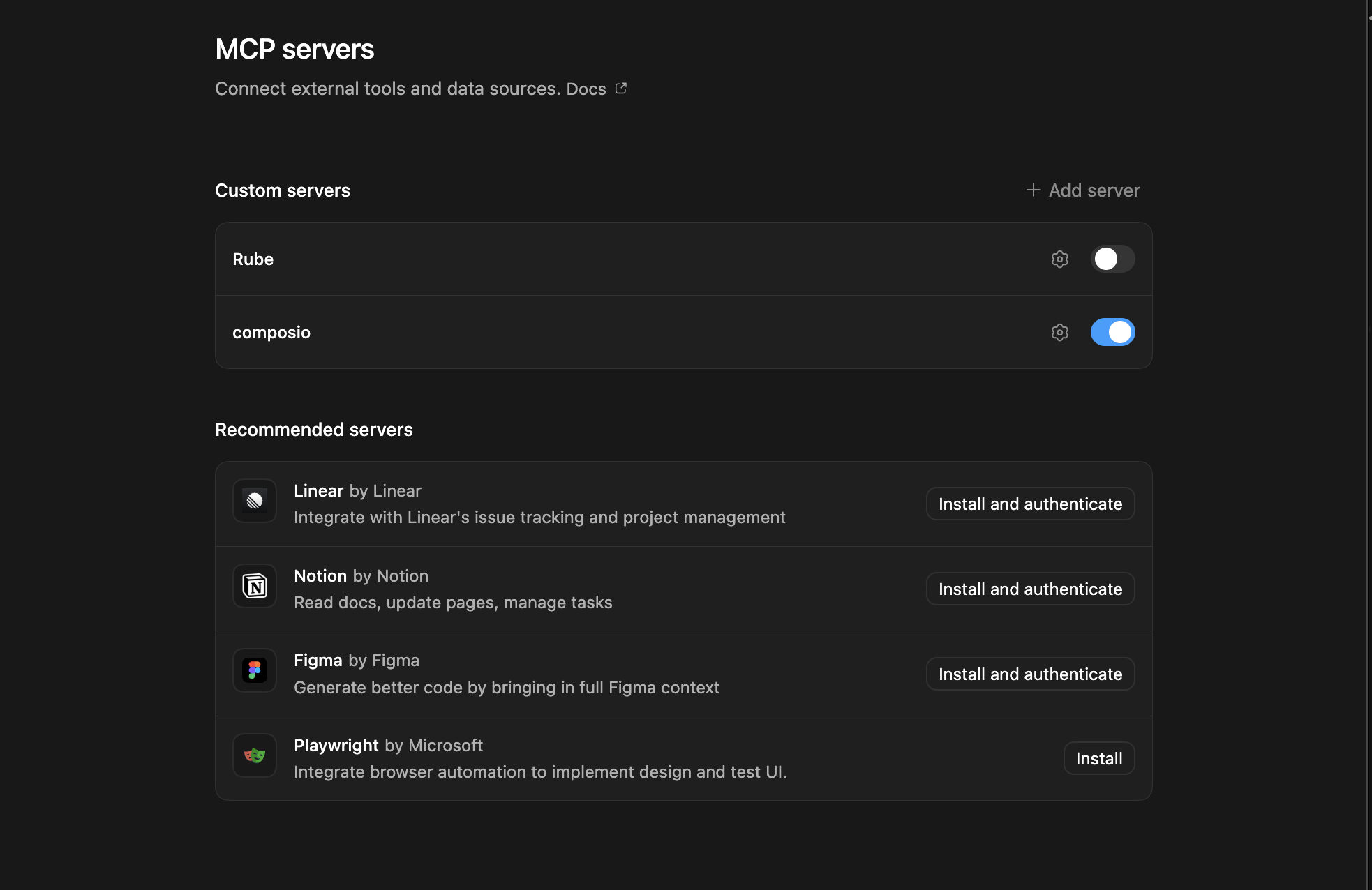
Codex App follows the same approach as VS Code.

  1. Click ⚙️ on the bottom left → MCP Servers → + Add servers → Streamable HTTP:
  2. Fill the header and Key fields with { "x-consumer-api-key" = "ck_*******" }.
  3. The Key is the Composio API key, that you can find on dashboard.composio.dev
  4. Click on Authenticate and authorize Codex to your Composio account and you're all set.
Codex App MCP setup
  1. Restart and verify if it's there in .codex/config.toml
bash
[mcp_servers.composio]
url = "https://connect.composio.dev/mcp"
http_headers = { "x-consumer-api-key" = "ck_*******" }

Try it

Ask Codex for a Bubble task. The first time, Composio asks you to connect your Bubble account.

For example, ask it to:

  • "Create a new user in your Bubble app"
  • "Update a record in the Bubble database"
  • "Fetch all orders from your Bubble store"

What is the Bubble MCP server, and what's possible with it?

The Bubble MCP server is an implementation of the Model Context Protocol that connects your AI agent and assistants like Claude, Cursor, etc directly to your Bubble applications. It provides structured and secure access to your Bubble backend, so your agent can perform actions like creating and updating database entries, running workflows, fetching app data, and managing users on your behalf.

  • Automated database management: Your agent can create, update, or delete entries in your Bubble app’s database, streamlining data operations without manual input.
  • Workflow execution: Let your agent trigger workflows inside your Bubble app to automate complex business processes based on real-time prompts or events.
  • Dynamic data queries: Effortlessly ask your agent to fetch, filter, or search records from any data type within your Bubble app and return structured results.
  • User account administration: Enable your agent to create, update, or manage user profiles, permissions, and authentication flows directly in your Bubble environment.
  • App configuration and resource management: Allow your agent to adjust application settings, manage resources, or monitor usage metrics—keeping your Bubble project running smoothly.

Conclusion

You've successfully integrated Bubble with Codex using Composio's MCP server. Now you can interact with Bubble directly from your terminal, VS Code, or the Codex App using natural language commands.

Key benefits of this setup:

  • Seamless integration across CLI, VS Code, and standalone app
  • Natural language commands for Bubble operations
  • Managed authentication through Composio
  • Access to 20,000+ tools across 1700+ apps for cross-app workflows
  • CodeAct workbench for complex tool chaining

Next steps:

  • Try asking Codex to perform various Bubble operations
  • Explore cross-app workflows by connecting more toolkits
  • Build automation scripts that leverage Codex's AI capabilities
TOOLS

Supported Tools

Every Bubble action and event your agent gets out of the box.

Bulk Create Things

Bulk create up to 1,000 Bubble Things via newline-separated JSON, with Create via API permission.

Create Thing

Tool to create a new Thing.

Delete Thing By ID

Tool to delete a Bubble Thing by its unique ID.

Get Thing By ID

Retrieve a Bubble Thing by data type and unique ID.

Patch Thing By ID

Tool to modify selected fields on a Thing by its unique ID.

Replace Thing by ID

Replace all editable fields on a Bubble Thing by its unique ID.

Download File

Tool to download a file given its URL.

Create Temp File

Upload base64-encoded or plain-text content as a temporary file and return its storage key, name, and MIME type.

Upload File

Upload a file to a Bubble app's storage.

Get Bubble API Swagger JSON

Tool to retrieve the auto-generated Swagger JSON for enabled APIs.

Get OAuth Access Token

Tool to exchange an authorization code or refresh token for an OAuth2 access token.

OAuth Authorize

Initiate OAuth authorization with a GET request and return the redirect location, or the request URL if no redirect is supplied.

Bubble OAuth Register App

Send an OAuth authorization request using the supplied client ID and redirect URI, and return the supplied credentials, HTTP status and any redirect location.

Trigger Bubble Workflow via GET

Trigger a Bubble API workflow using an HTTP GET request.

Trigger Bubble Workflow via POST

Triggers a Bubble API workflow by name using a POST request.

FAQ

Frequently asked questions

Start with Bubble.It takes 30 seconds.

Managed auth, hosted MCP servers, and every Bubble tool your agent needs.Free to start.

Start building