How to connect Anchor Browser with ChatGPT

Connect ChatGPT to Anchor Browser MCP. Open a webpage and extract its title, run an anchor task on a website, and more using natural language, with authentication handled for you.

Anchor Browser MCP logoAnchor Browser MCP
Dcr Oauth

Anchor Browser MCP is a hosted browser automation service for running cloud browser sessions and web tasks. It provides secure, reusable browser identities and managed authentication for reliable agent workflows.

29 Tools

How to connect Anchor Browser MCP with ChatGPT

ChatGPT can take action across your apps and files, stay with a project for hours, and turn a goal into finished materials like sheets, slides, and docs, not just answers.

In this guide, I will explain the easiest and most secure way to connect your Anchor Browser account to ChatGPT via Composio Connect, so it can run cloud browser sessions, automate web tasks, manage saved identities, and call Anchor APIs through natural language commands without ever putting your account credentials at risk.

For exact tool slugs and parameter tables, see the tool catalog in the Composio docs.

Also integrate Anchor Browser MCP with

Why use Composio over default connectors?

  • Apps with read and write access. Default connectors mostly can read your data. Composio's Anchor Browser integration lets ChatGPT take actions like creating drafts, sending updates, labeling records, and more.
  • 2,000+ SaaS toolkits out of the box. Composio gives you instant access to a vast catalog of pre-built connectors, from Gmail and Slack to Notion, Linear, and Salesforce.
  • One MCP server for every app. Connect any of your applications on demand through a single endpoint, rather than juggling a separate server for each app.
  • Smart, context-aware tool loading. Unlike traditional MCP servers that dump every available tool into the LLM context window, Composio searches for and loads only the tools relevant to the task at hand.
  • Cross-app automation. Chain actions across multiple apps in a single run - fetch a thread, summarize it in Notion, and post highlights to Slack without leaving the conversation.

Prerequisites

  • A ChatGPT account. We will use the ChatGPT desktop app, and the steps are the same on the web.
  • Access to the Anchor Browser workspace you want to connect.
  • Composio plugin.

Note: Composio connects through OAuth. You will be asked to sign in and approve specific permissions. Review the permission screen carefully if you are using a work account.

Step-by-step: Connect Anchor Browser to ChatGPT

1. Install the Composio plugin

Click the button. ChatGPT opens the Composio plugin page. Click Install plugin.

Install in ChatGPT
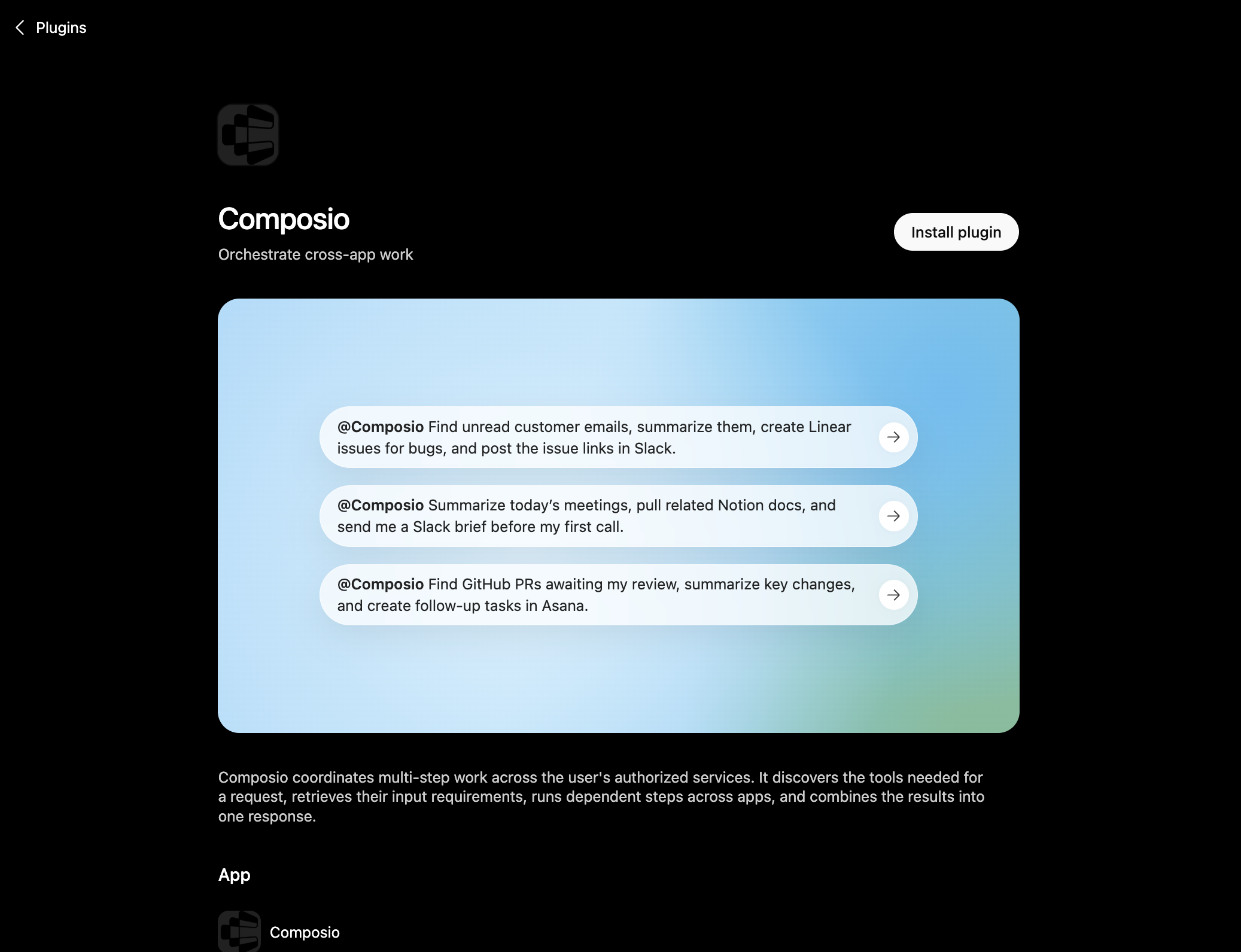
Composio plugin page in ChatGPT with the Install plugin button

You can also find it inside ChatGPT: go to Settings, open Plugins, search the marketplace for Composio, and click Install plugin.

2. Authenticate

After you install, ChatGPT asks you to authenticate with Composio. Log in and click Allow access to authorize ChatGPT to use your Composio account.
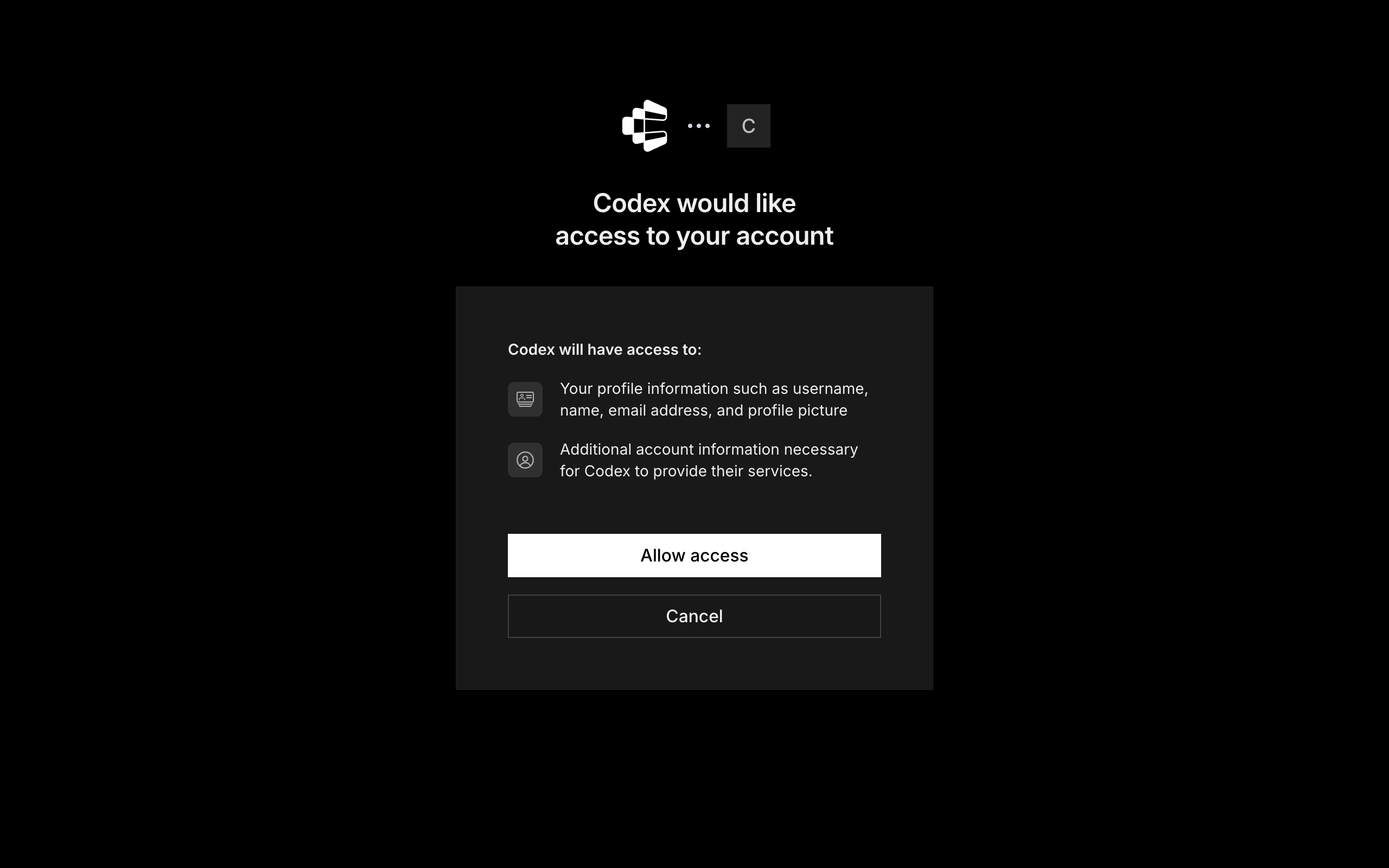
Composio login and Allow access screen for ChatGPT

3. Start using Composio

That is it. Composio tools are now available in ChatGPT. Type @Composio followed by your request, for example @Composio find unread Anchor Browser messages and summarize them, and it will run the actions you authorize. On first use it asks you to authorize Anchor Browser.

Option 2: Add Composio as an MCP server

If you cannot use the plugin marketplace, add Composio as a custom MCP server instead.

1. Open the MCP settings

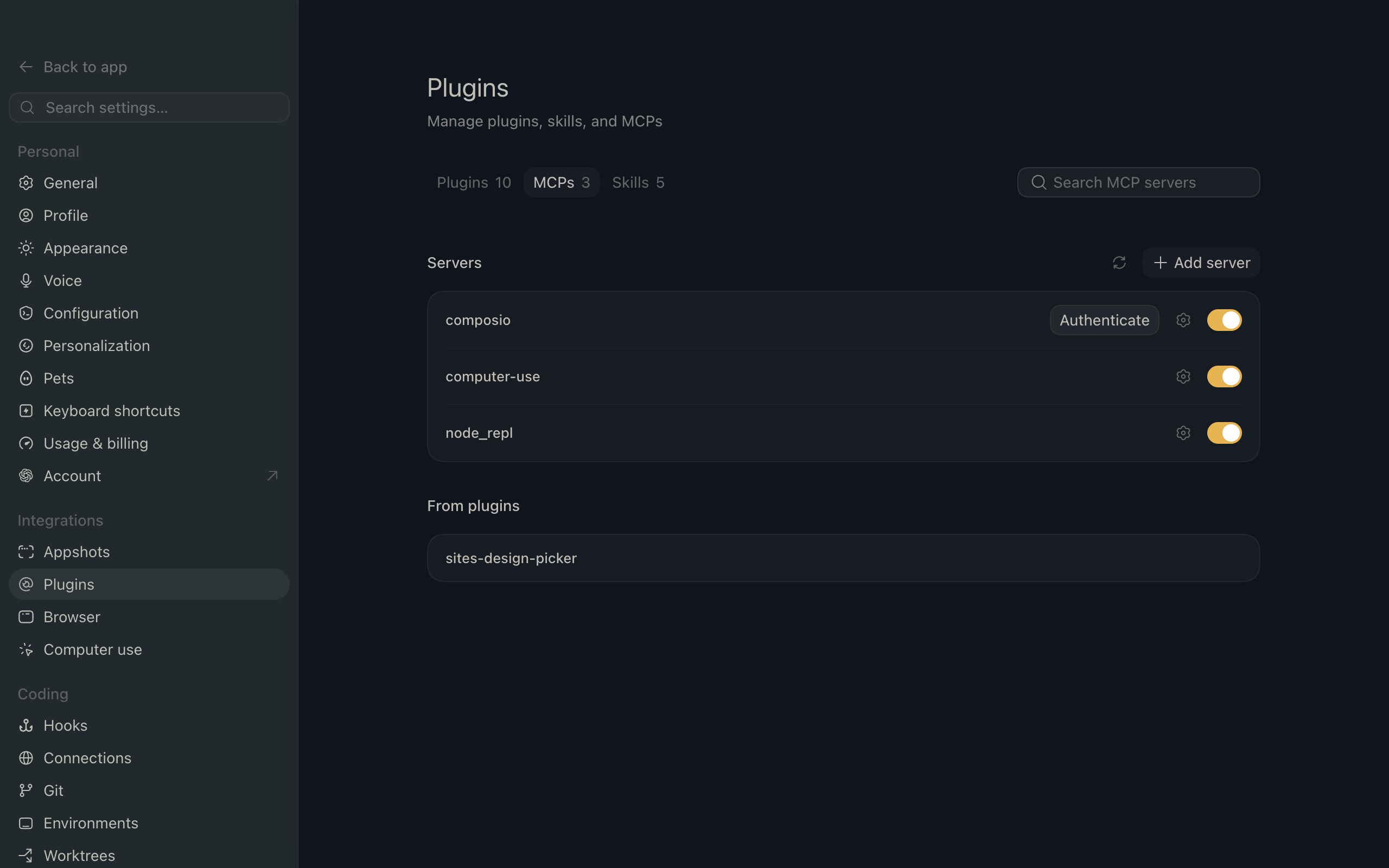
In ChatGPT, go to Settings and open the Plugins section. Inside the Plugins page, click the MCP tab.
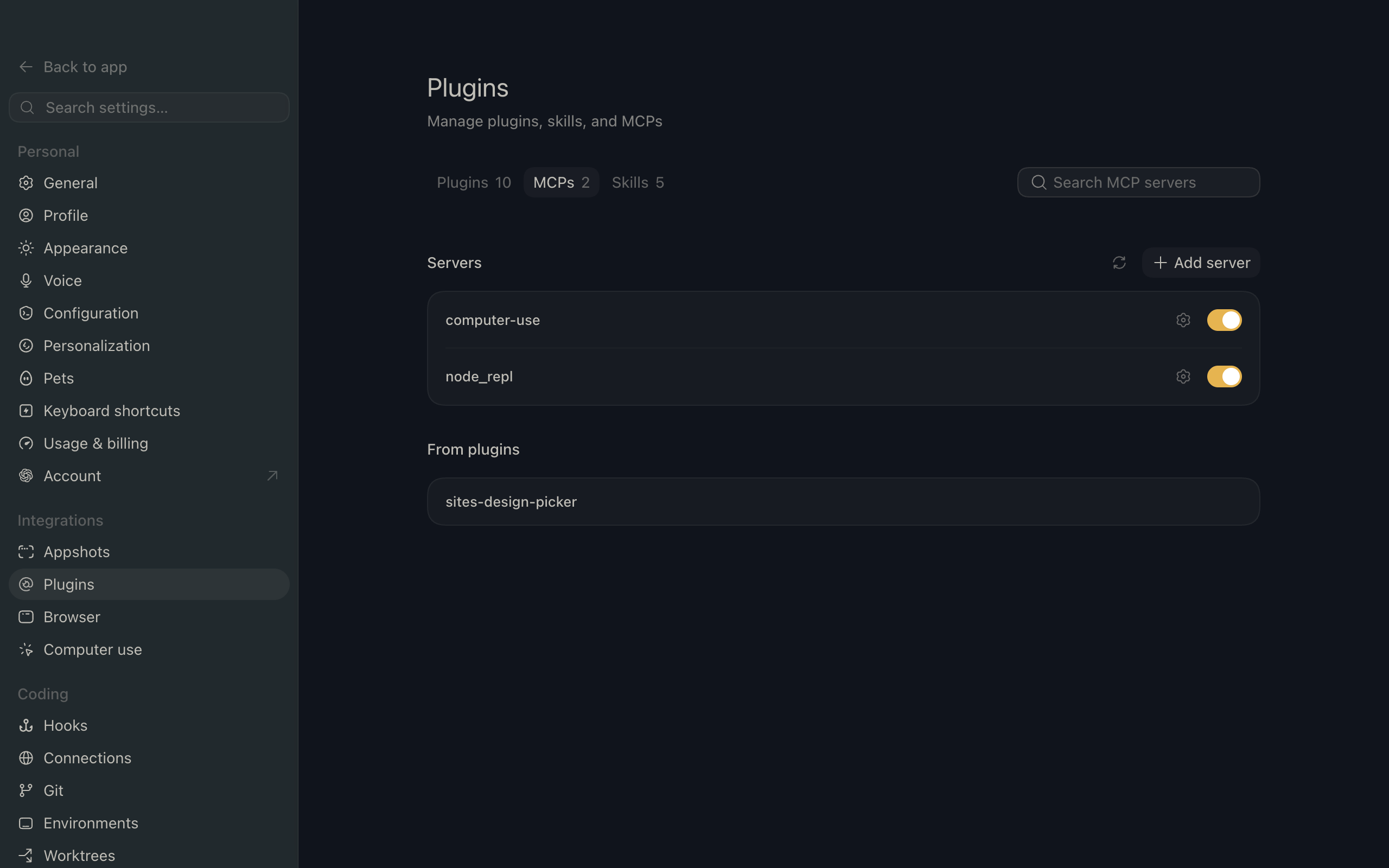
ChatGPT settings showing the Plugins page with the MCP tab selected

2. Add the server

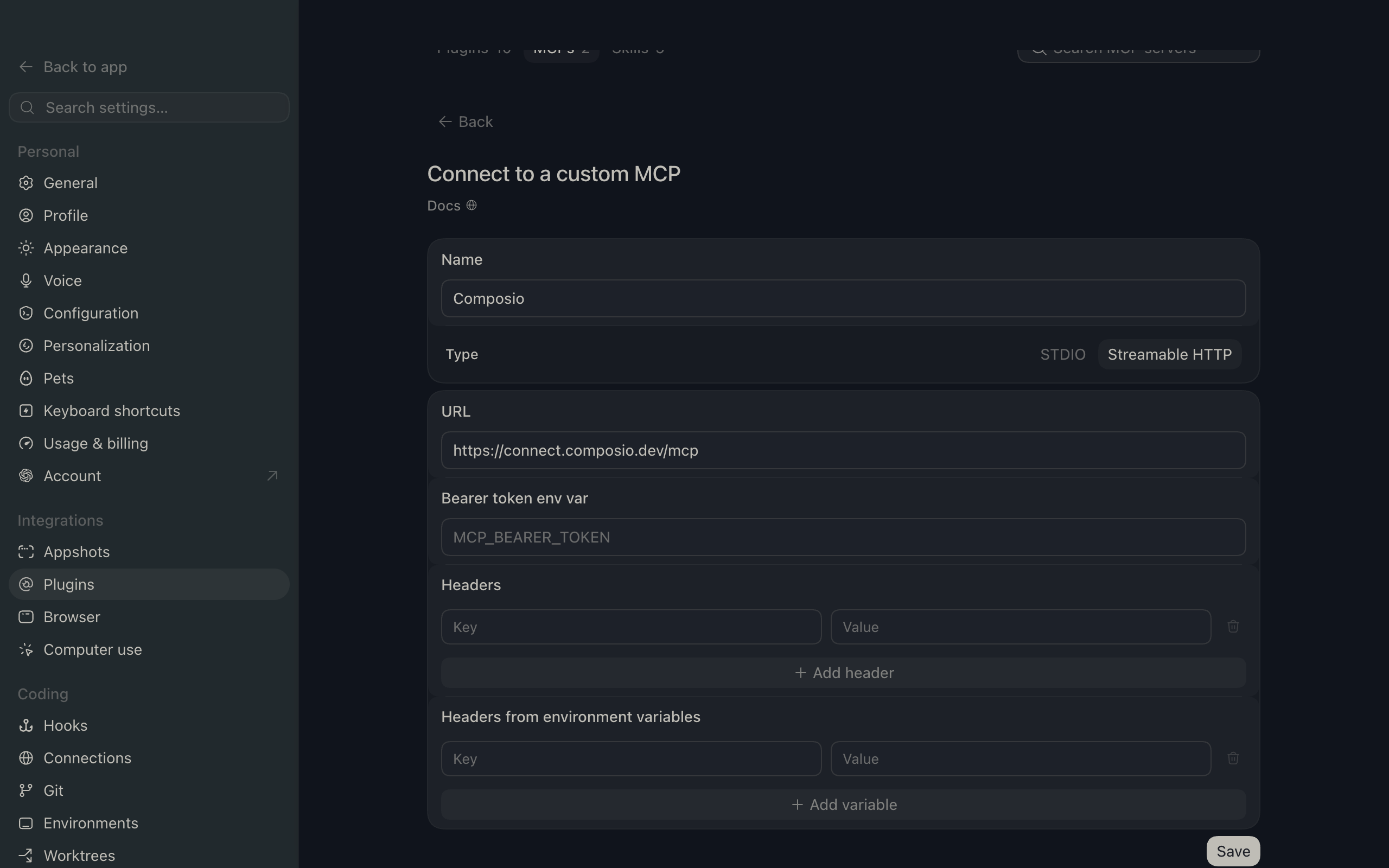
Click Add server. In the Name field enter Composio, for Type select Streamable HTTP, and in the URL field paste the Composio MCP server URL:

bash
https://connect.composio.dev/mcp
ChatGPT Add server dialog with the name Composio, type Streamable HTTP, and the Composio MCP URL

Then click Save. The Composio server now appears in your MCP plugins list.

ChatGPT Plugins page showing the Composio MCP server added to the list

3. Authenticate

Click Authenticate on the Composio entry, log in via Composio, and click Allow access. Composio tools are then available in ChatGPT the same way as with the plugin.

What you can do after connecting Anchor Browser

  • Open a webpage and extract its title
  • Run an Anchor task on a website
  • Reuse a saved browser identity securely

Security + privacy notes (important)

  • Use least-privilege access: Only grant permissions you actually need.
  • Review OAuth permissions before approving: Make sure requested scopes match what you expect Composio and ChatGPT to do.
  • Keep write actions human-reviewed: For actions like sending messages, creating labels, or editing drafts, keep manual confirmation enabled.
  • Be careful with sensitive data: Avoid using this setup with highly sensitive information unless allowed by your personal, company, or client policies.
TOOLS

Supported Tools

Every Anchor Browser MCP action and event your agent gets out of the box.

Call endpoint read

Call any read-only Anchor REST endpoint that is not listed as a tool.

Call endpoint write

Call any Anchor REST endpoint that creates, changes, or deletes something and is not listed as a tool.

Create identity

Create an identity: a managed login for one site (source URL) that sessions and tasks reuse.

Create identity link

Generate a shareable link a person opens to sign in to an application with their own account; Anchor creates a NEW identity for them when they finish.

Create reauth link

Generate a shareable link a human opens to sign this identity in through Anchor: the first login for an identity created without credentials, or a re-login after the site logged it out or auth expired.

Create session

Create an isolated cloud browser.

End session

End (delete) a browser session by id.

Execute action index

Run an active action by name using its deterministic code.

Finalize dynamic auth

After a step of type authenticated: persist the signed-in browser state as an identity so later sessions with identities: [{ id }] start logged in.

Get action index

Get one action index by name, including deterministic code and parameter schemas.

Get dynamic auth state

Re-read the current dynamic-auth step.

Get endpoint

Get one endpoint entry by id (from list_endpoints) with its request/response JSON schema.

Get execution

Get a task execution: status, output, error, and timing.

Get identity

Get one identity by id: status (pending = Anchor is still signing in, active or validated = ready to use, failed or agent_failed = needs attention), linked application, and browser profile.

Get session

Get one browser session by id: status, duration, credits used, and live/end state.

Get task

Get task metadata and optionally its workflow code.

Get web task status

Status and result of a perform_web_task run.

List application identities

List managed logins (identities) for one application.

List applications

List authenticated applications (login connectors) in the workspace, optionally filtered by name via search.

List endpoints

List Anchor REST API endpoints (id, method, path, summary, tag, and agent meta when one exists).

List tasks

List the team's tasks (workflows), newest first.

Perform web task

Run a one-shot AI web task from a natural-language prompt in an Anchor cloud browser.

Read doc

Read one product documentation page by its exact path.

Reauthenticate identity

Sign an identity in again with its stored credentials or profile, e.g.

Resolve dynamic auth

Answer a dynamic-auth step and advance to the next.

Run task

Enqueue a real production run of a task on a fresh browser with the AI Fallback safety net.

Search action index

List active action indexes for a domain, including names and input/output schemas, without deterministic code.

Search docs

Full-text search across product docs.

Start dynamic auth

Begin a guided login in an open session: url is the login page and host its hostname.

FRAMEWORKS

How to build Anchor Browser MCP Agent with another framework

FAQ

Frequently asked questions

Start with Anchor Browser MCP.It takes 30 seconds.

Managed auth, hosted MCP servers, and every Anchor Browser MCP tool your agent needs.Free to start.

Start building