How to connect Amplitude to Claude Cowork

Trusted by
AWS
Glean
Zoom
Airtable

30 min · no commitment · see it on your stack

Amplitude logo
Claude Cowork logo
divider

Introduction

Cowork is Anthropic's AI agent for knowledge work. Think of it as Claude Code for everything else. It works autonomously with your computer, local files, and applications to accomplish complex tasks.

This guide walks you through the easiest and most secure way to connect your Amplitude account to Cowork via Composio Connect, enabling it to get daily active users for last month, generate funnel analysis for onboarding flow, list top events for premium users, and more such actions on your behalf without compromising your account security.

Also integrate Amplitude with

Connecting Amplitude to Claude Cowork

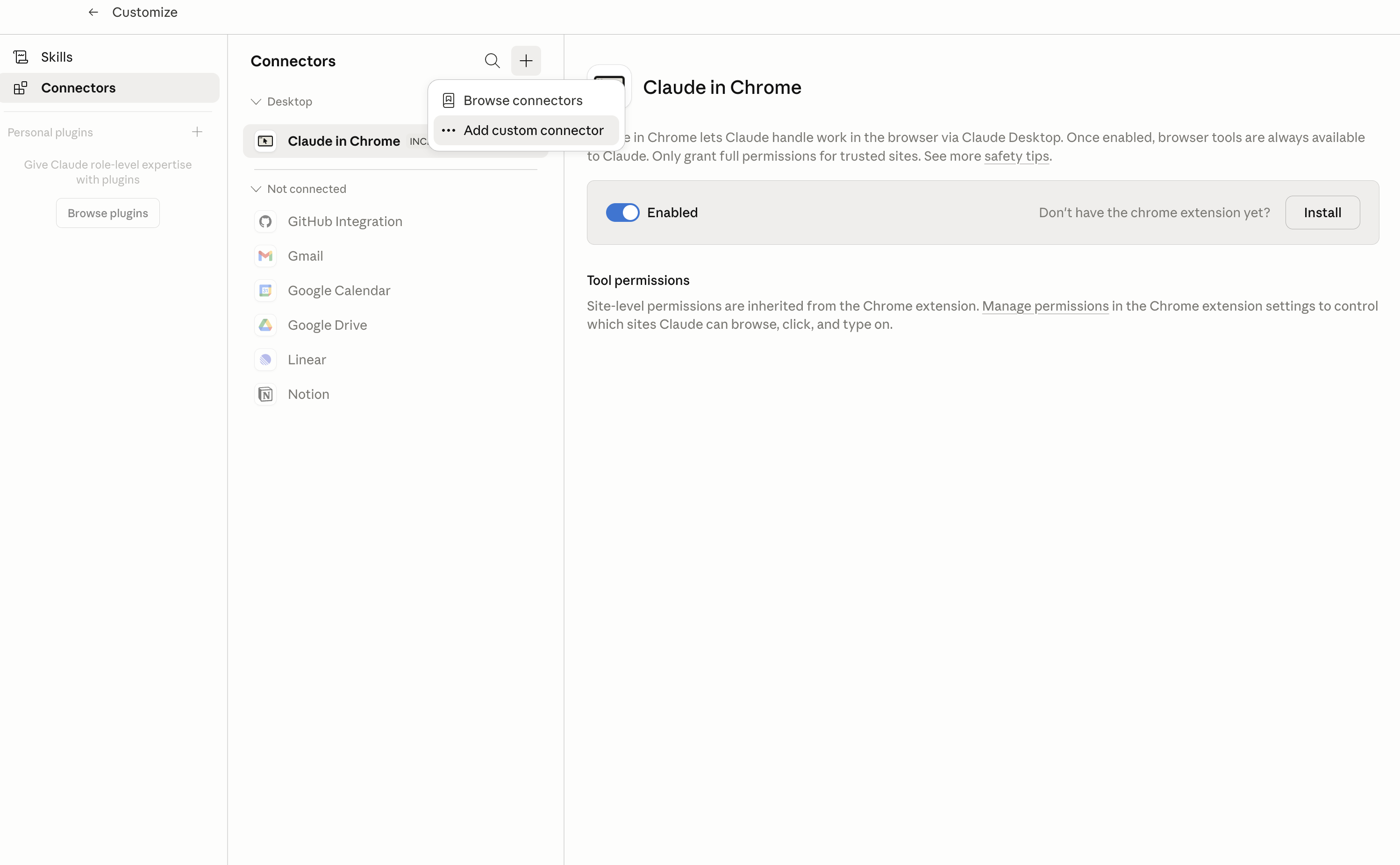
1. Open Customize

In Claude Desktop, click Customize in the left sidebar, then select Connectors and click the + icon at the top.

Claude Desktop connectors screen with Add custom connector selected

2. Add the Composio MCP server

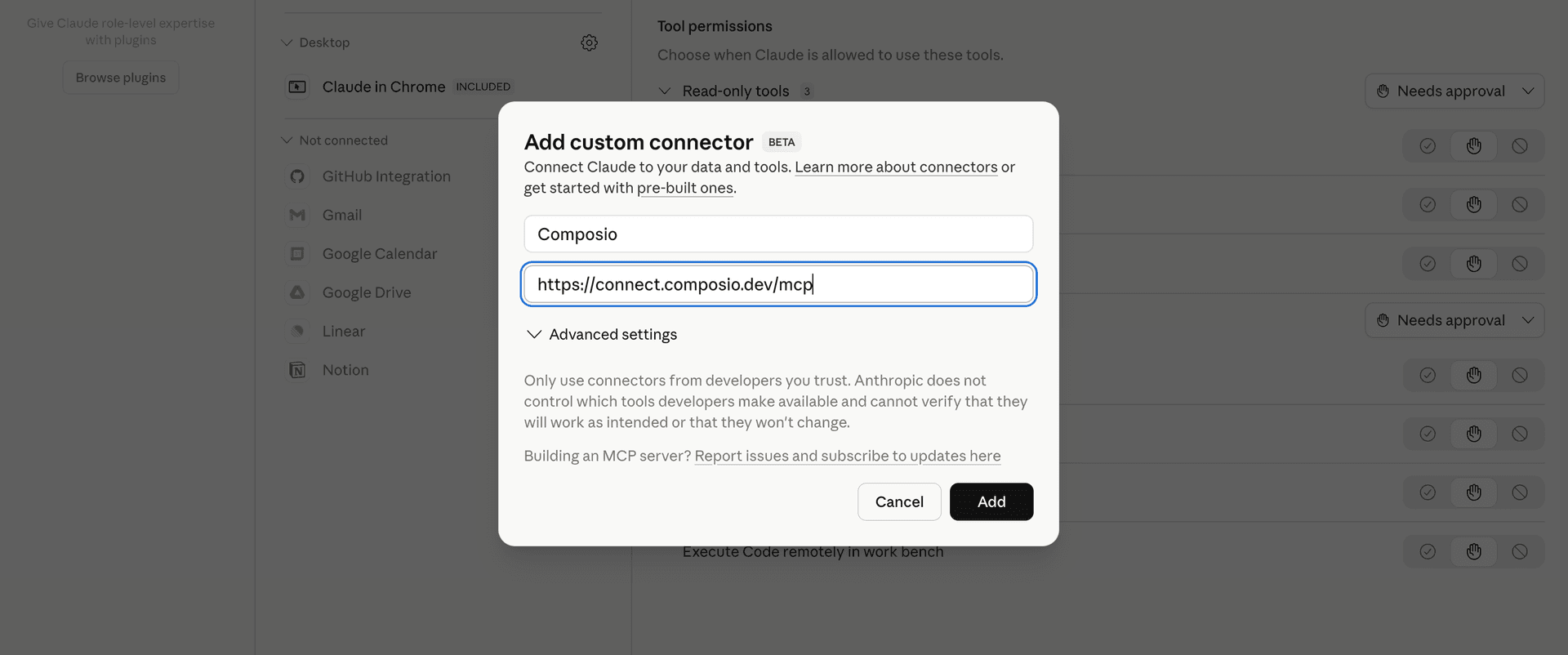
Click Add custom connector and paste in the Composio MCP server URL:

bash
https://connect.composio.dev/mcp
Add custom connector dialog with Composio MCP server URL

3. Authorize in your browser

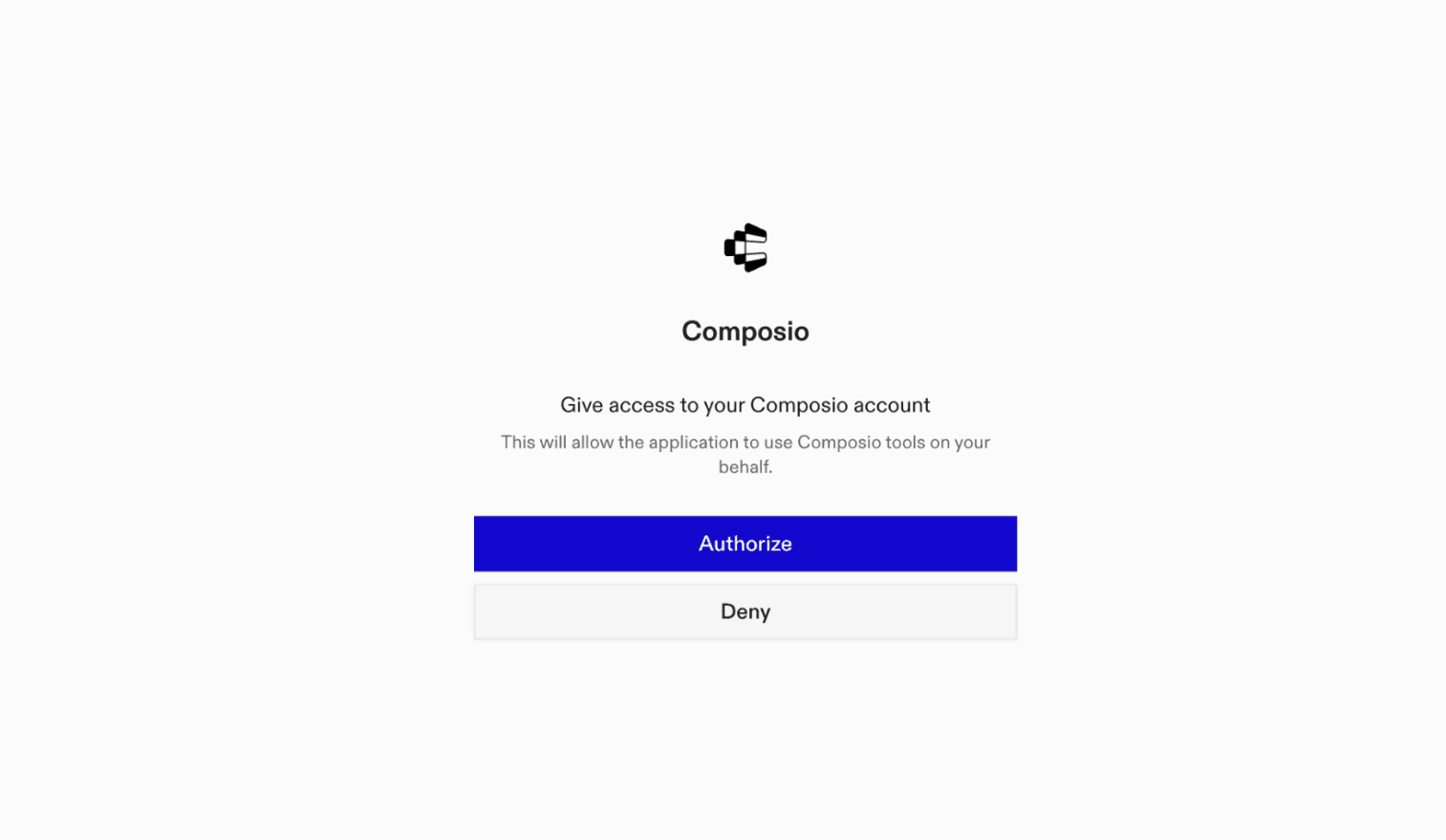
Click Connect. You'll be redirected to a browser window where you can authorize Composio to continue.

Composio authorization screen for Claude Cowork

4. Connect your Amplitude account

Back in Cowork, ask the agent to connect to Amplitude or give it any Amplitude-related task.

For example, ask Cowork to:

  • "Get daily active users for last month"
  • "Generate funnel analysis for onboarding flow"
  • "List top events for premium users"

It will prompt you to authenticate and authorize access.

That's it. Composio's tools are now available in Cowork, and your Amplitude account is ready to use.

What is Claude Cowork?

Claude Cowork is Anthropic's agent for general knowledge work. It can use your computer, files, and connected applications to complete longer-running tasks across your work tools.

With Composio Connect, Cowork can securely access apps like Amplitude through MCP without you sharing account credentials directly with the agent.

What is the Amplitude MCP server, and what's possible with it?

The Amplitude MCP server is an implementation of the Model Context Protocol that connects your AI agent and assistants like Claude, Cursor, etc directly to your Amplitude account. It provides structured and secure access to your analytics platform, so your agent can perform actions like managing event types, organizing cohorts, updating user properties, and tracking event categories on your behalf.

  • Cohort and user management: Ask your agent to request, download, and check the status of specific user cohorts for advanced segmentation or analysis.
  • Event type and category administration: Effortlessly create, update, or delete event types and categories, keeping your analytics taxonomy organized and up to date.
  • User property updates: Direct your agent to set or modify user properties—like device information or location—without sending new events, making user profile management a breeze.
  • Comprehensive analytics lookup: Retrieve detailed information about event types and categories, enabling your agent to provide insights or answer analytics questions in real time.

Supported Tools & Triggers

Tools
Bulk Assign Annotations to CategoryTool to bulk assign multiple annotations to a category in Amplitude.
Cancel User DeletionCancel a pending user deletion request in Amplitude.
Check Amplitude Cohort StatusCheck the status of a cohort export request.
Create Chart Annotation in AmplitudeCreate a chart annotation in Amplitude to mark important dates.
Create Annotation CategoryTool to create an annotation category in Amplitude to organize annotations.
Create Amplitude Event CategoryCreate a new event category in Amplitude.
Create Amplitude Event TypeCreate a new event type in Amplitude.
Create Amplitude ReleaseCreate a release to document product changes.
Delete Amplitude Chart AnnotationDelete a chart annotation from Amplitude.
Delete Amplitude Annotation CategoryDelete an annotation category from Amplitude.
Delete Amplitude Event CategoryDelete an event category from Amplitude.
Delete Amplitude Event TypeDelete an event type from Amplitude.
Delete Amplitude UsersSubmit user deletion requests for GDPR/CCPA compliance.
Download Amplitude Cohort FileDownload the cohort file after request is complete.
Search Amplitude UserSearch for users in Amplitude by canonical identifier (Amplitude ID, device ID, user ID, or user ID prefix).
Get Active or New UsersGet the number of active or new users for a date range with optional segmentation.
Get Amplitude AnnotationGet a single chart annotation by ID from Amplitude.
Get Amplitude Annotation CategoryGet a single annotation category by ID from Amplitude.
Request Amplitude CohortGet a single cohort by ID and initiate download.
Get User Deletion RequestsGet the status of user deletion requests within a date range.
Get Amplitude Event CategoriesGet event categories from Amplitude.
Get Amplitude Event PropertyGet a specific event property from Amplitude taxonomy.
Get Event Segmentation DataGet event segmentation data from Amplitude Analytics API.
Get Amplitude Event TypeGet a specific event type from Amplitude by name.
Get Amplitude Event TypesGet all event types from Amplitude.
Get Funnel Analysis DataGet funnel analysis data showing user conversion through a sequence of events.
Get Real-time Active UsersGet real-time active users count from Amplitude.
Get User Retention AnalysisGet user retention analysis showing how users return over time after a starting action.
Get Revenue LTV MetricsGet revenue lifetime value (LTV) metrics including ARPU, ARPPU, and total revenue.
Get Session Average LengthGet average session length (in seconds) for a specified date range from Amplitude.
Get Session Length DistributionTool to retrieve session length distribution data for a specified date range from Amplitude.
Get Sessions Per User from AmplitudeTool to get average number of sessions per user for each day in a date range from Amplitude.
Get User Activity from AmplitudeFetch a single user's profile summary and event stream by Amplitude ID.
Get User Composition by PropertyTool to get user composition breakdown by property (platform, version, country, etc.
Get User MappingsGet the list of user mappings for provided user IDs.
Get Amplitude User PropertyGet a specific user property from Amplitude taxonomy.
Update User Properties in AmplitudeUpdate user properties using Amplitude's Identify API.
List Amplitude Annotation CategoriesList all annotation categories from Amplitude.
List Chart AnnotationsTool to get all chart annotations with optional filtering by category, chart, and date range.
List Amplitude CohortsList all discoverable cohorts for an Amplitude project.
List Amplitude Event PropertiesGet all event properties from Amplitude, optionally filtered by event type or property name.
List Amplitude EventsTool to get a list of all event types in your Amplitude project with current week's statistics.
List Amplitude User PropertiesTool to get all user properties in your Amplitude project.
Map Users in AmplitudeMap users with different user IDs together (alias/merge users) in Amplitude.
Restore Amplitude Event TypeRestore a deleted event type in Amplitude.
Send Events to AmplitudeSend events to Amplitude using the HTTP V2 API.
Set Group Properties in AmplitudeSet group properties for account-level reporting without sending an event.
Update Amplitude Chart AnnotationTool to update an existing chart annotation in Amplitude.
Update Amplitude Annotation CategoryTool to update an annotation category in Amplitude.
Update Amplitude Cohort MembershipIncrementally update cohort membership by adding or removing IDs.
Update Amplitude Event CategoryUpdate an existing event category in Amplitude.
Update Amplitude Event TypeUpdate an existing event type in Amplitude.
Batch Upload Events to AmplitudeBulk upload events to Amplitude using the Batch Event Upload API.
Upload Amplitude CohortGenerate a new cohort or update an existing cohort by uploading user IDs or Amplitude IDs.

How to build Amplitude MCP Agent with another framework

FAQ

What are the differences in Tool Router MCP and Amplitude MCP?

With a standalone Amplitude MCP server, the agents and LLMs can only access a fixed set of Amplitude tools tied to that server. However, with the Composio Tool Router, agents can dynamically load tools from Amplitude and many other apps based on the task at hand, all through a single MCP endpoint.

Can I use Tool Router MCP with Claude Cowork?

Yes, you can. Claude Cowork fully supports MCP integration. You get structured tool calling, message history handling, and model orchestration while Tool Router takes care of discovering and serving the right Amplitude tools.

Can I manage the permissions and scopes for Amplitude while using Tool Router?

Yes, absolutely. You can configure which Amplitude scopes and actions are allowed when connecting your account to Composio. You can also bring your own OAuth credentials or API configuration so you keep full control over what the agent can do.

How safe is my data with Composio Tool Router?

All sensitive data such as tokens, keys, and configuration is fully encrypted at rest and in transit. Composio is SOC 2 Type 2 compliant and follows strict security practices so your Amplitude data and credentials are handled as safely as possible.

Used by agents from

Context
Letta
glean
HubSpot
Agent.ai
Altera
DataStax
Entelligence
Rolai
Context
Letta
glean
HubSpot
Agent.ai
Altera
DataStax
Entelligence
Rolai
Context
Letta
glean
HubSpot
Agent.ai
Altera
DataStax
Entelligence
Rolai

Never worry about agent reliability

We handle tool reliability, observability, and security so you never have to second-guess an agent action.