How to create Apollo auth credentials and configure it in Composio

How to create Apollo auth credentials and configure it in Composio

This guide walks you through creating an Apollo API key and configuring it in Composio.

Overview

  • Authentication type: API Key

  • OAuth required: No

  • Scopes: Not supported

  • Access control: Apollo plan + user role

Apollo uses API key–based authentication. Permissions are enforced internally by Apollo and cannot be modified by Composio.

Step 1: Generate an API Key in Apollo

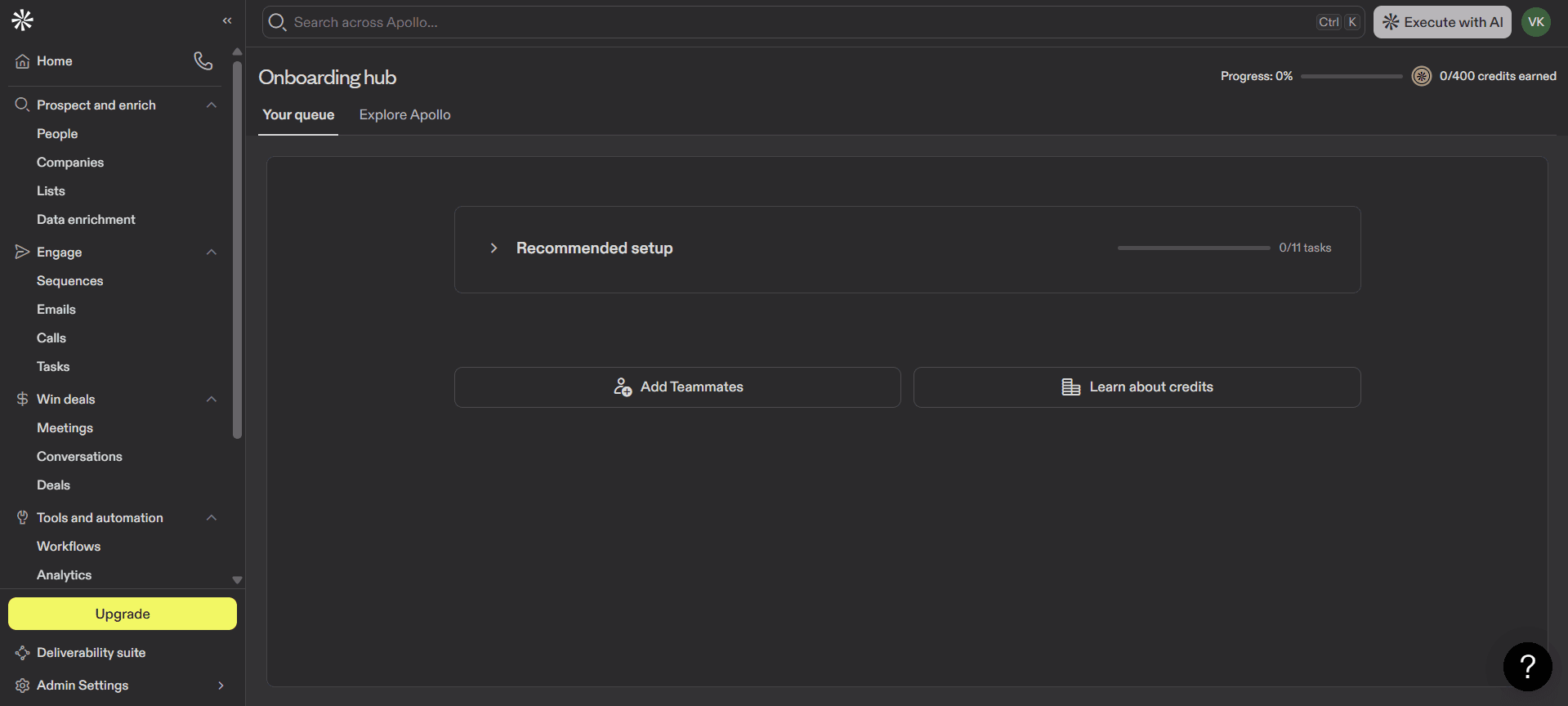
  1. Log in to your Apollo account.

Image 1
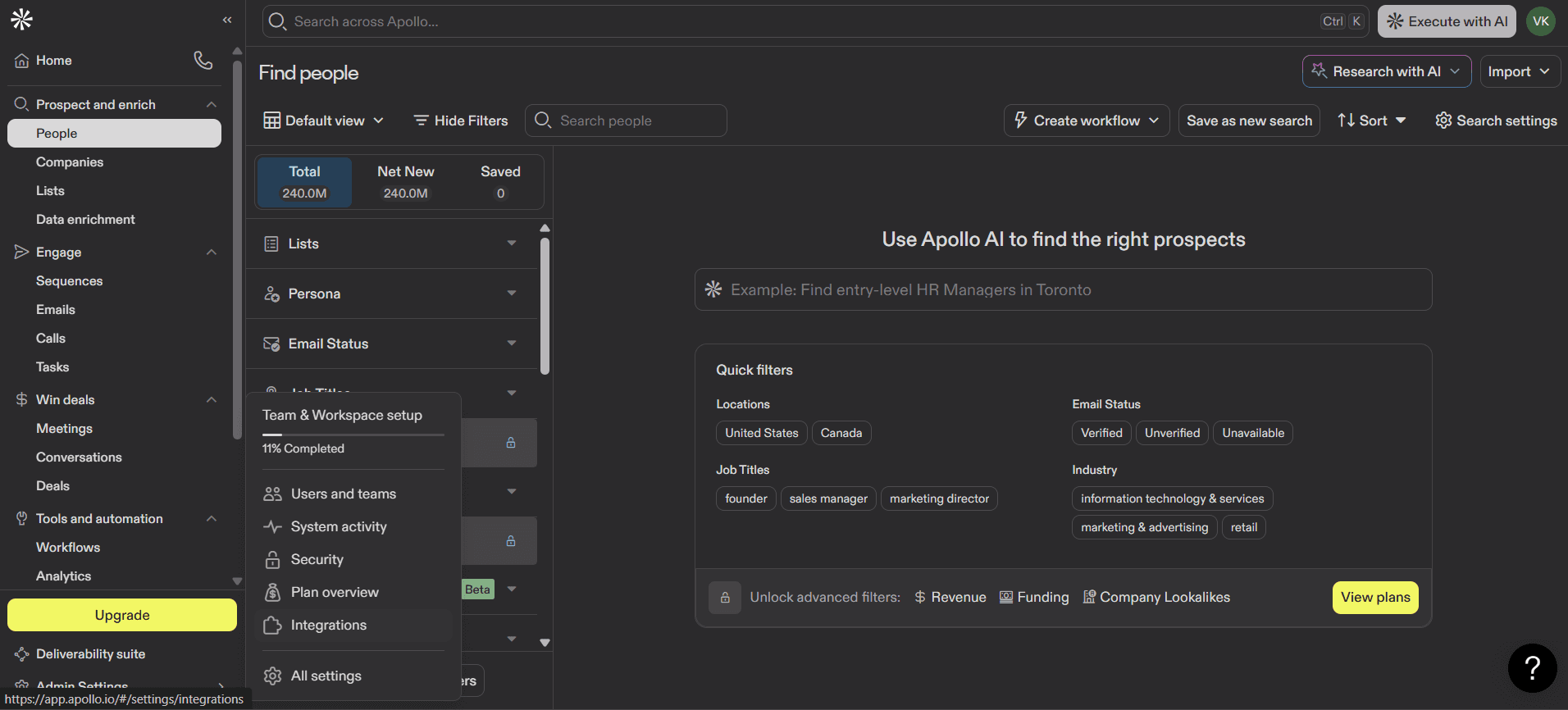
  1. Navigate to:

Admin Settings Integrations
Image 2
  1. Click on Integrations

Image 3
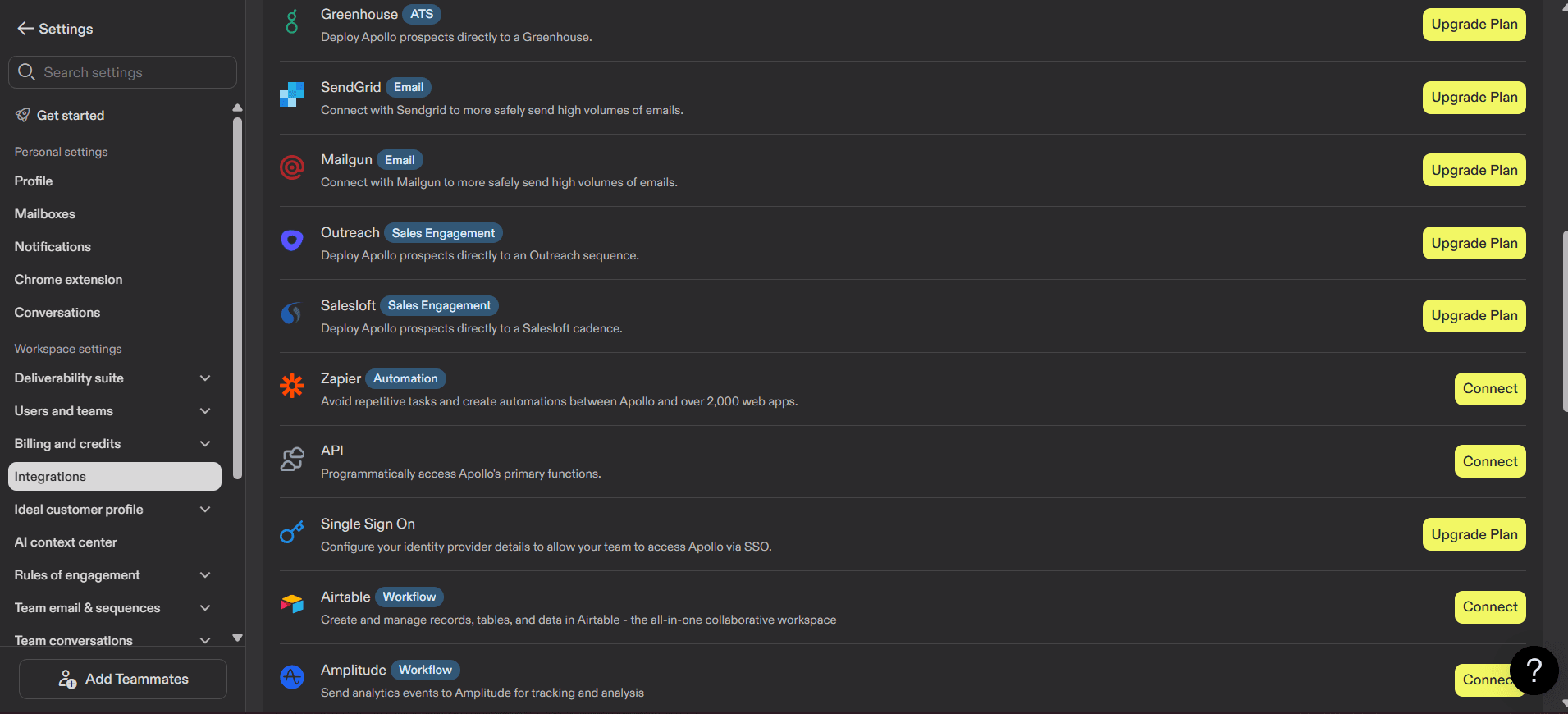
  1. Click on API → API Keys

Image 4
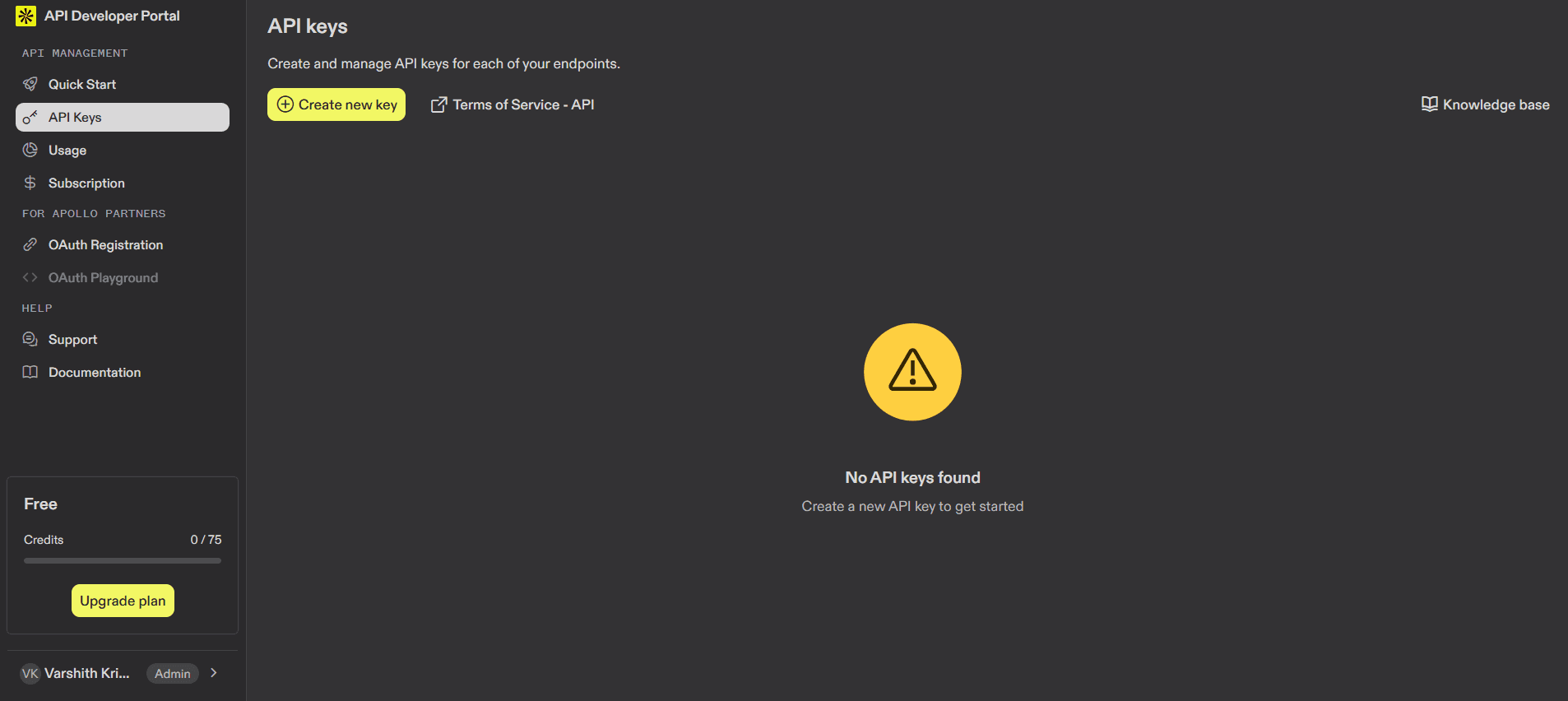
  1. Click on Create a new Key

  2. Give the key a name.

Apollo API Reference & Available Endpoints

In the same API section, Apollo displays a list of available REST endpoints that your API key can access.

Enable Master key to access all endpoints.

Commonly used endpoints include:

POST /api/v1/contacts/search
POST /api/v1/people/search
POST /api/v1/organizations/search
POST /api/v1/accounts/search
GET  /api/v1/users

These endpoints allow you to:

  • Search and filter contacts

  • Search people and organizations

  • Retrieve account and user data

  • Power lead enrichment and prospecting workflows

The visibility of these endpoints confirms that your API key is active and ready to use.
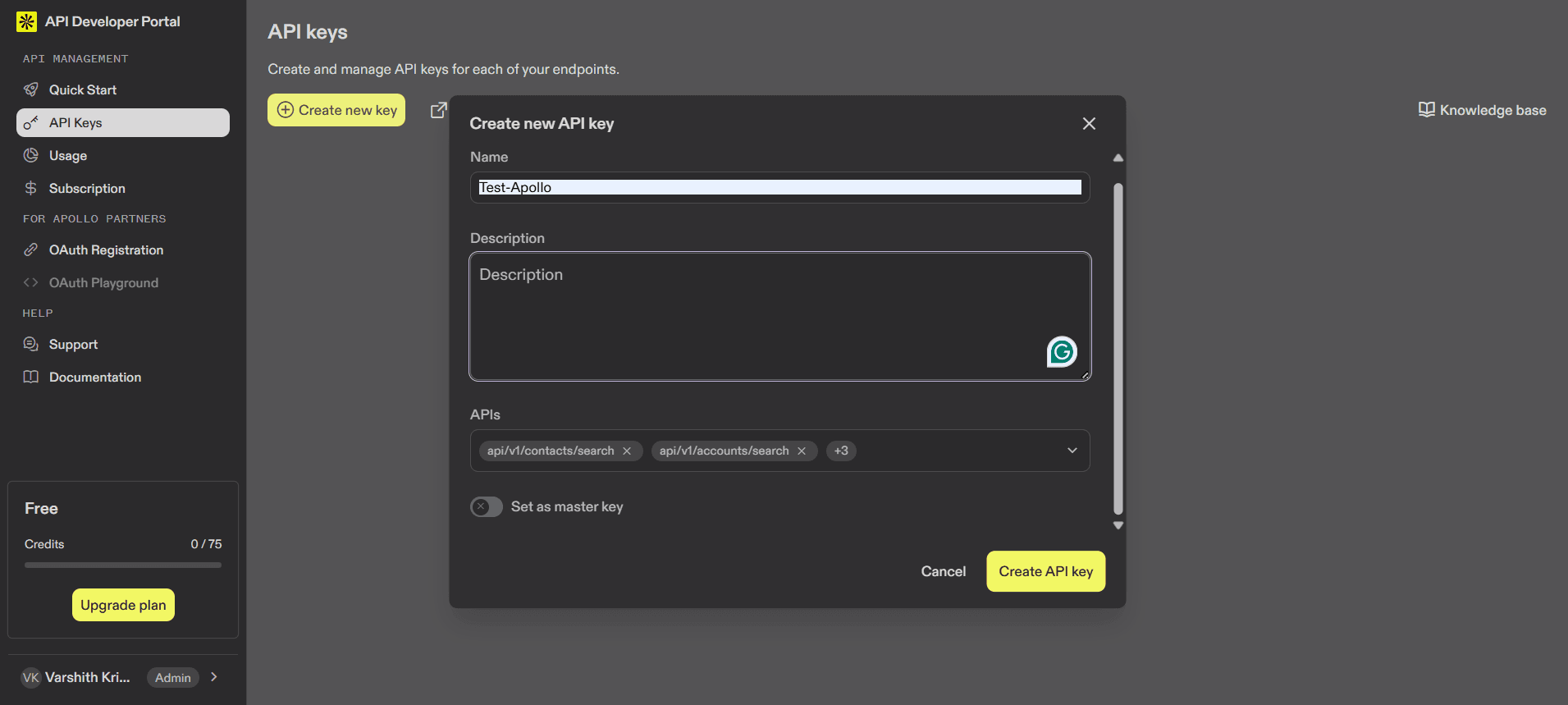
Image 5

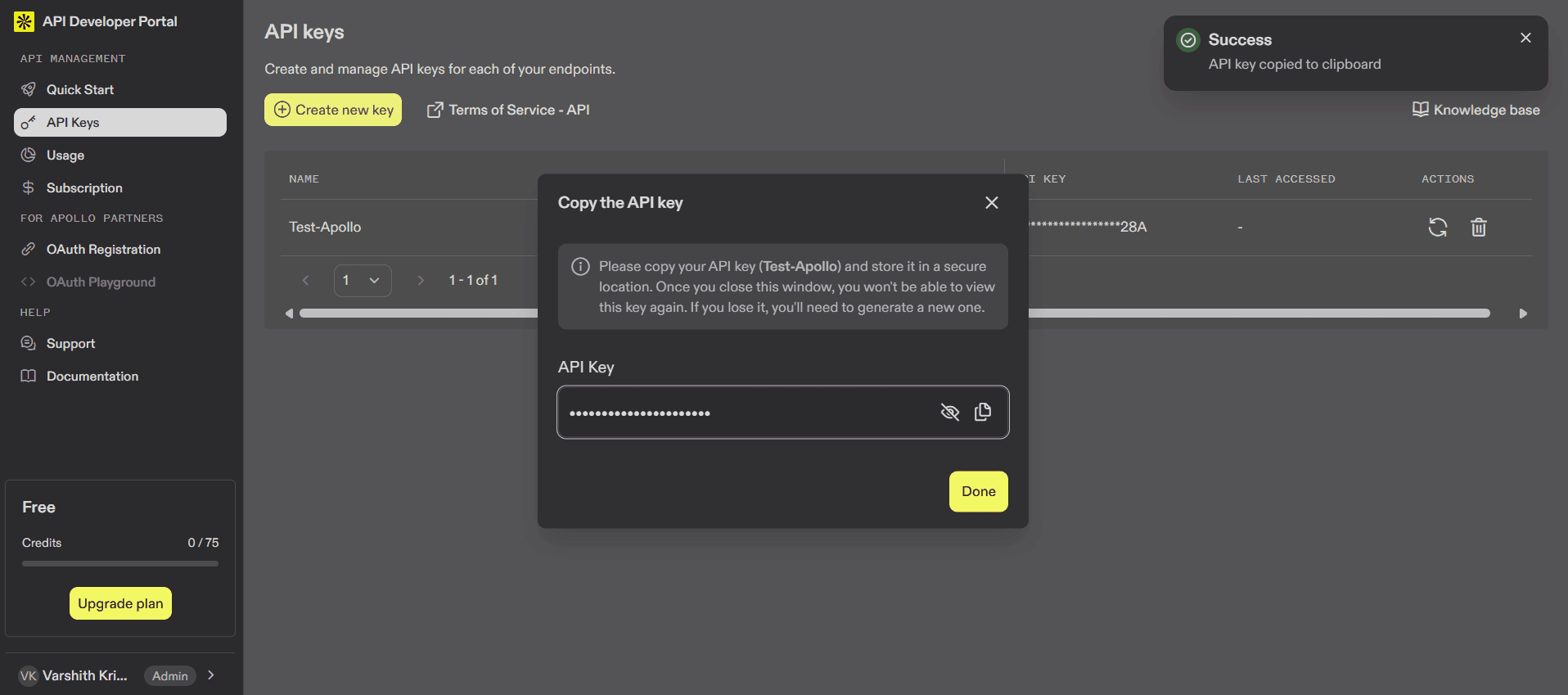
Copy the generated API key.

Image 6

Important: Save the API key securely. You may not be able to view it again.

Step 2: Understand Apollo Permissions (Important)

Apollo does not support OAuth scopes.

Access is determined by:

  • The Apollo subscription plan

  • The role of the user who created the API key

Typical accessible resources include:

  • People search

  • Company search

  • Contact enrichment

  • Basic sequence data (plan-dependent)

Composio forwards the API key exactly as provided. Apollo enforces all permission limits.

Step 3: Create Apollo Auth Config in Composio

  1. Go to Composio Dashboard:

https://platform.composio.dev/
  1. Click on the Create Auth Config button to get a list of all the toolkits available.
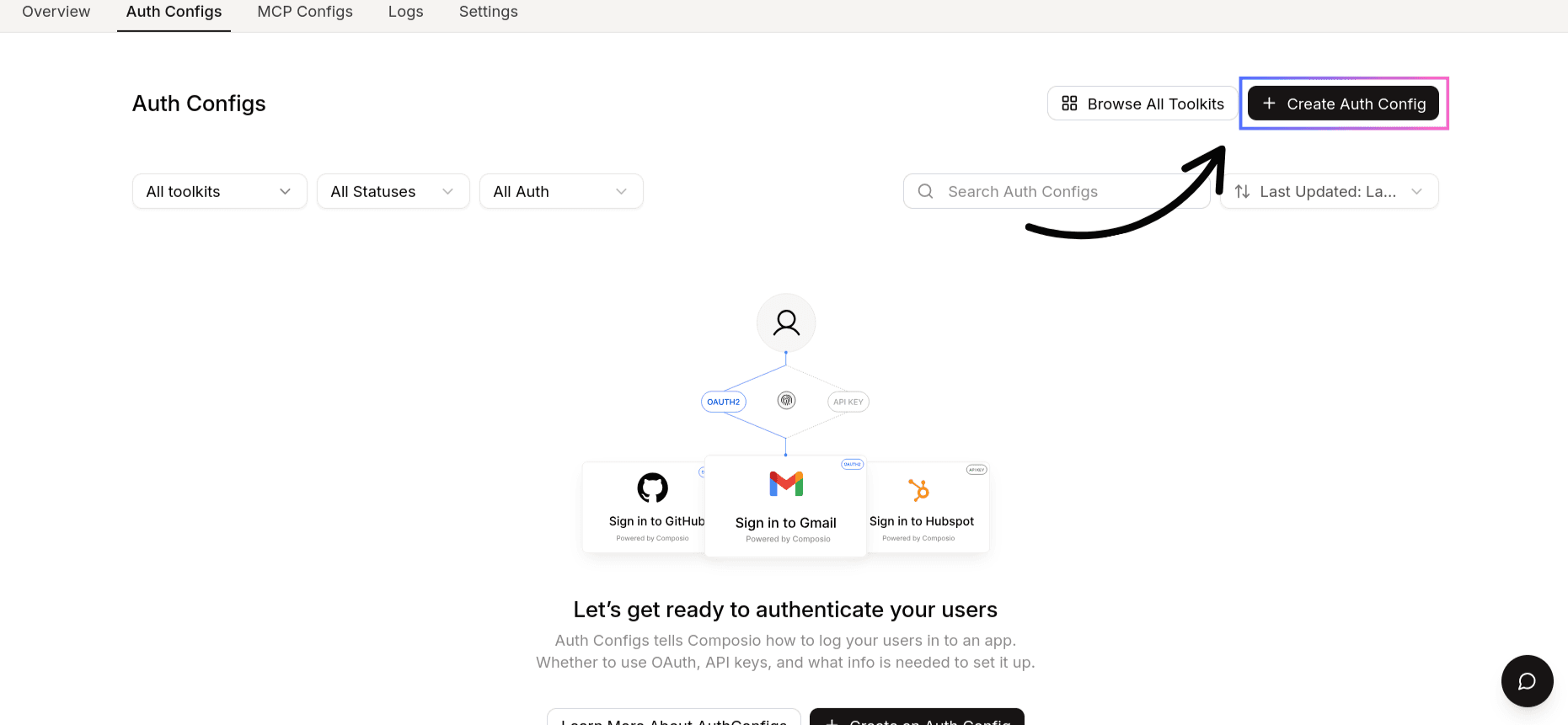
Image 7
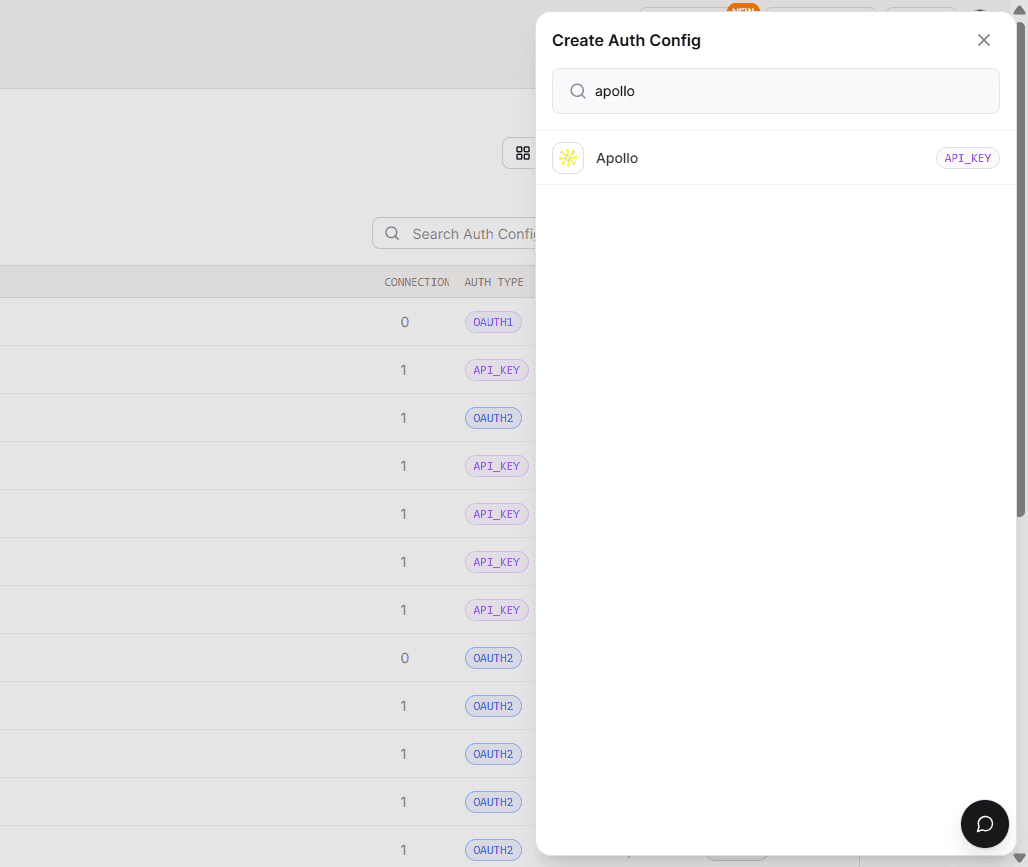
  1. Click Create Auth Config

Image 8
  1. Select Apollo from the toolkit list

  2. Make sure the Authentication Type is API Key
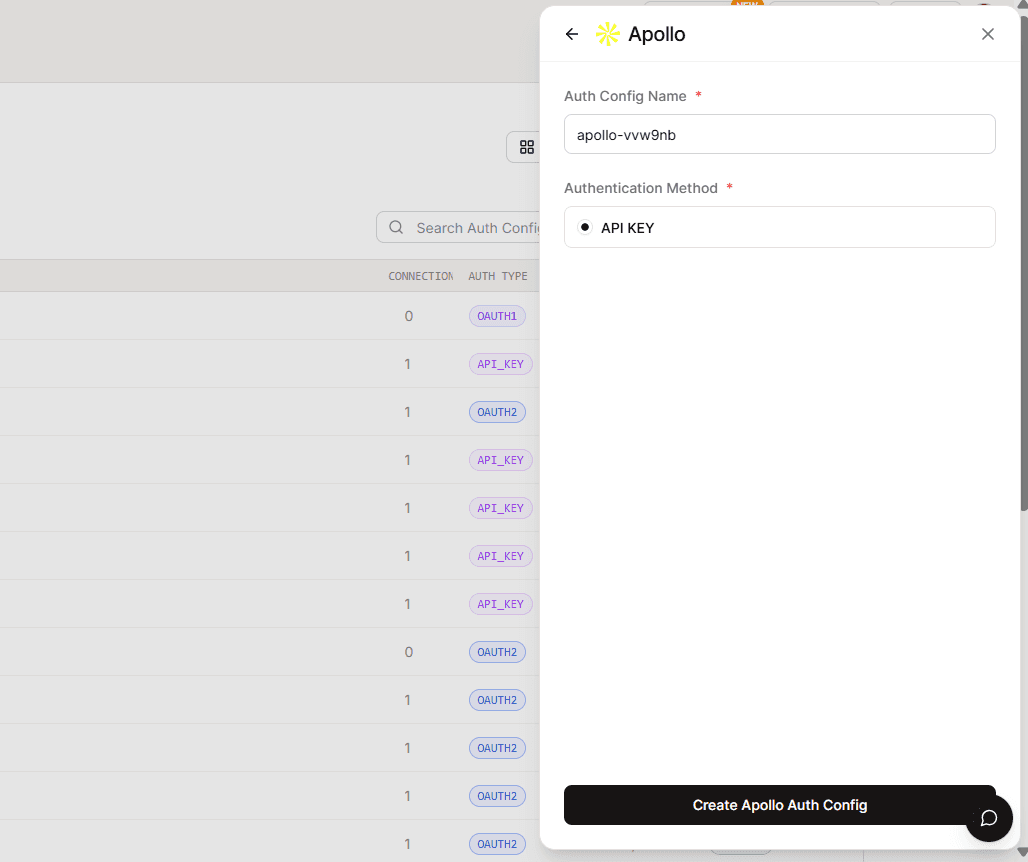
Image 9
  1. Click on Connect Account

Image 10
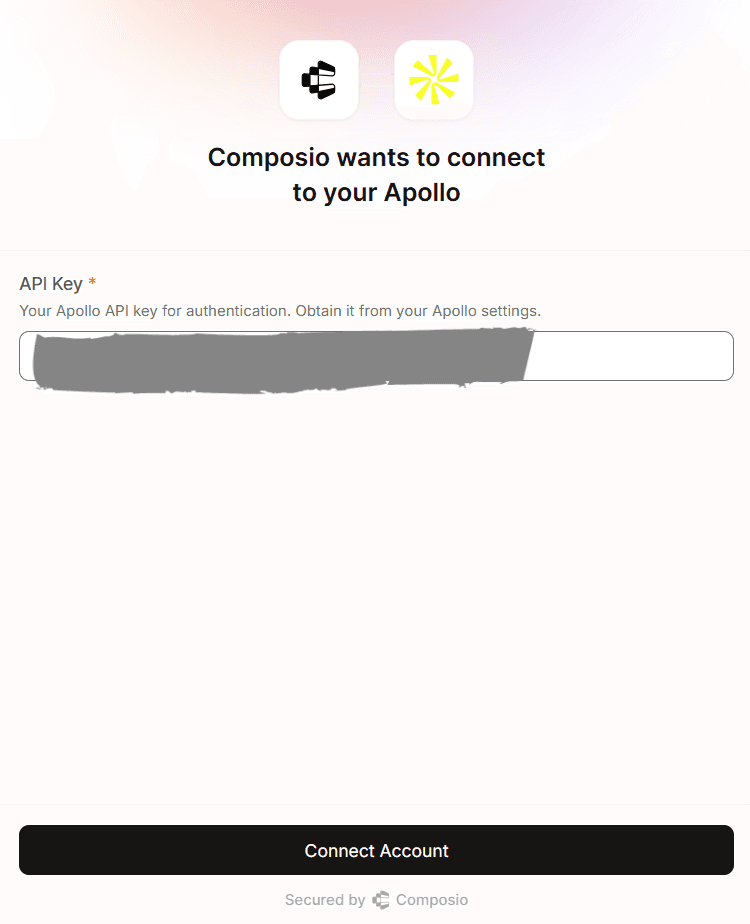
  1. Paste your Apollo API Key

Image 11
  1. Click Connect Account

Step 4: How Authentication Works

When using Apollo with Composio:

  • The API key is stored securely

  • Composio injects the key into every request

  • Apollo validates and authorizes the request

  • No OAuth flow or redirects are involved

Step 5: Test Apollo Connection (Optional)

You can test the integration using Composio Playground.

Sample test prompt:

“Search for companies in the fintech industry”
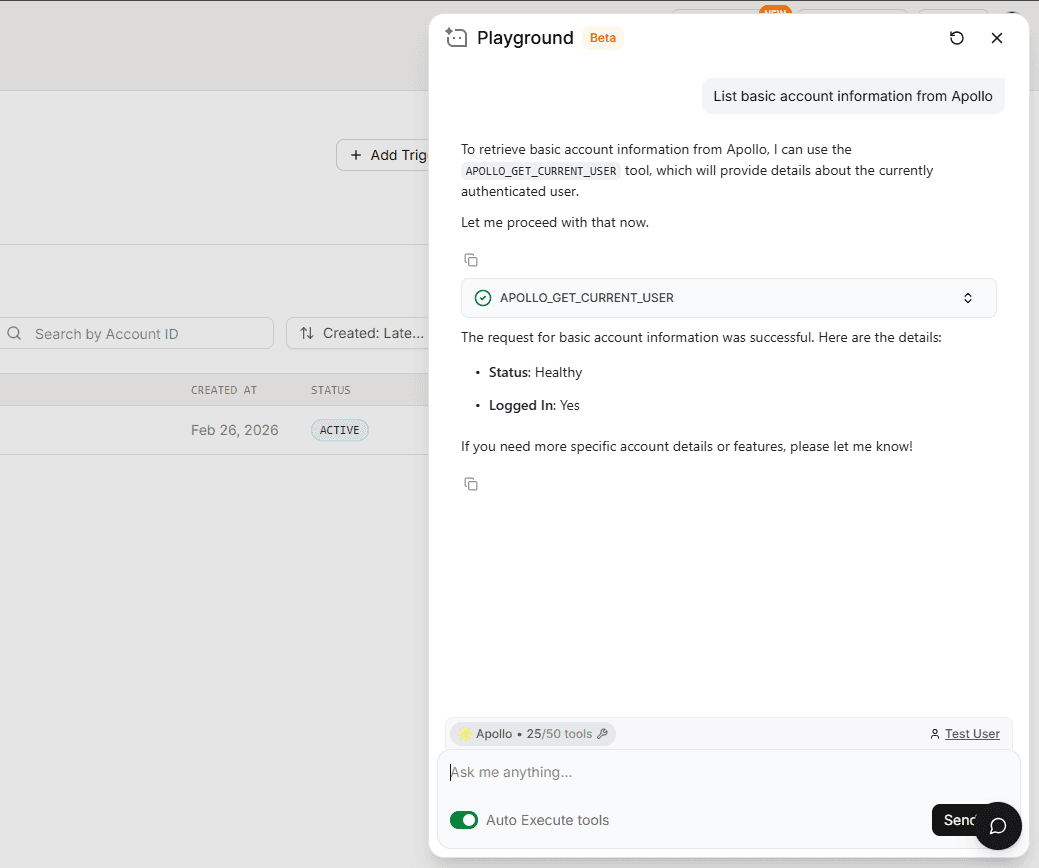
Image 12

If configured correctly, Apollo data will be returned successfully.

Base URL (For Reference)

All Apollo API requests are sent to:

https://api.apollo.io

Final Step

Once configured:

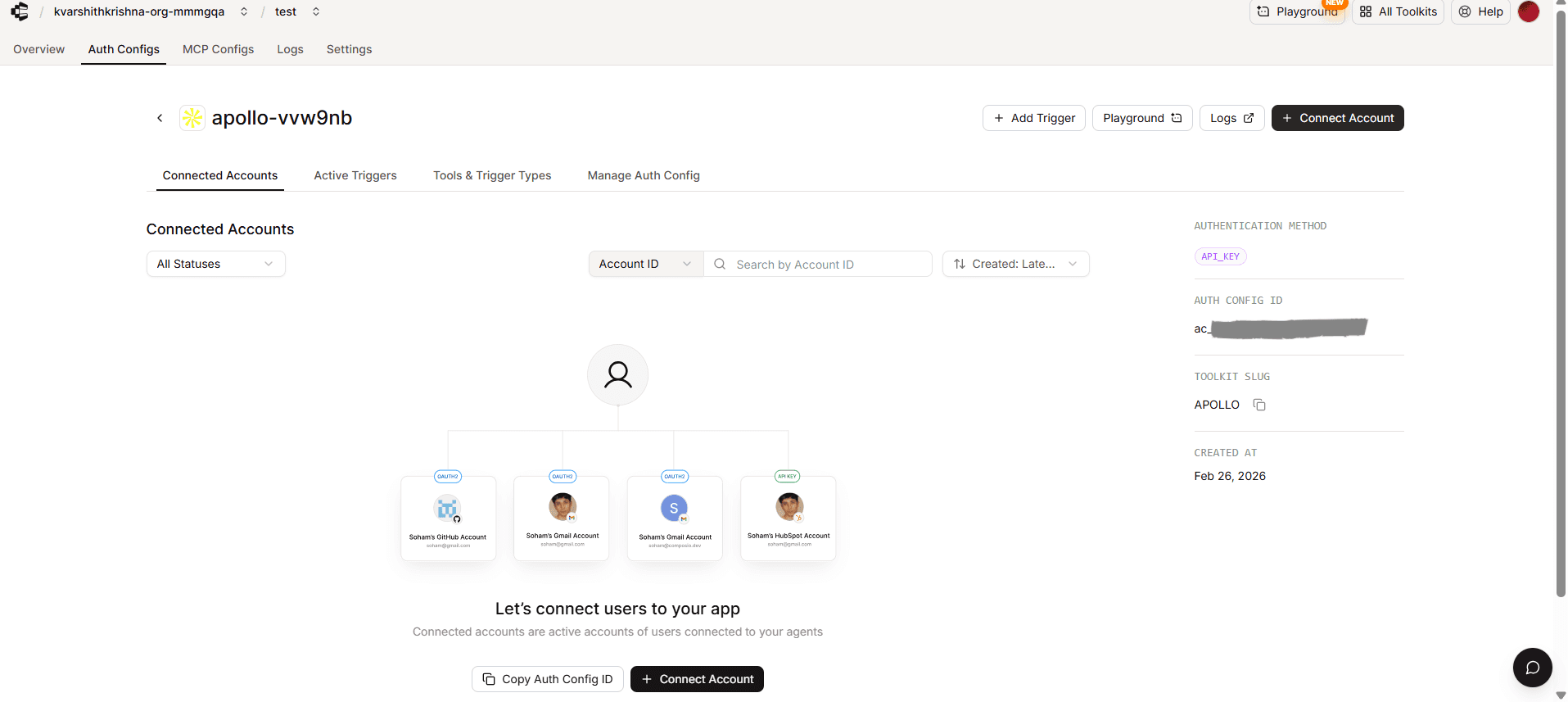
  1. Copy the Auth Config ID (starts with ac_)
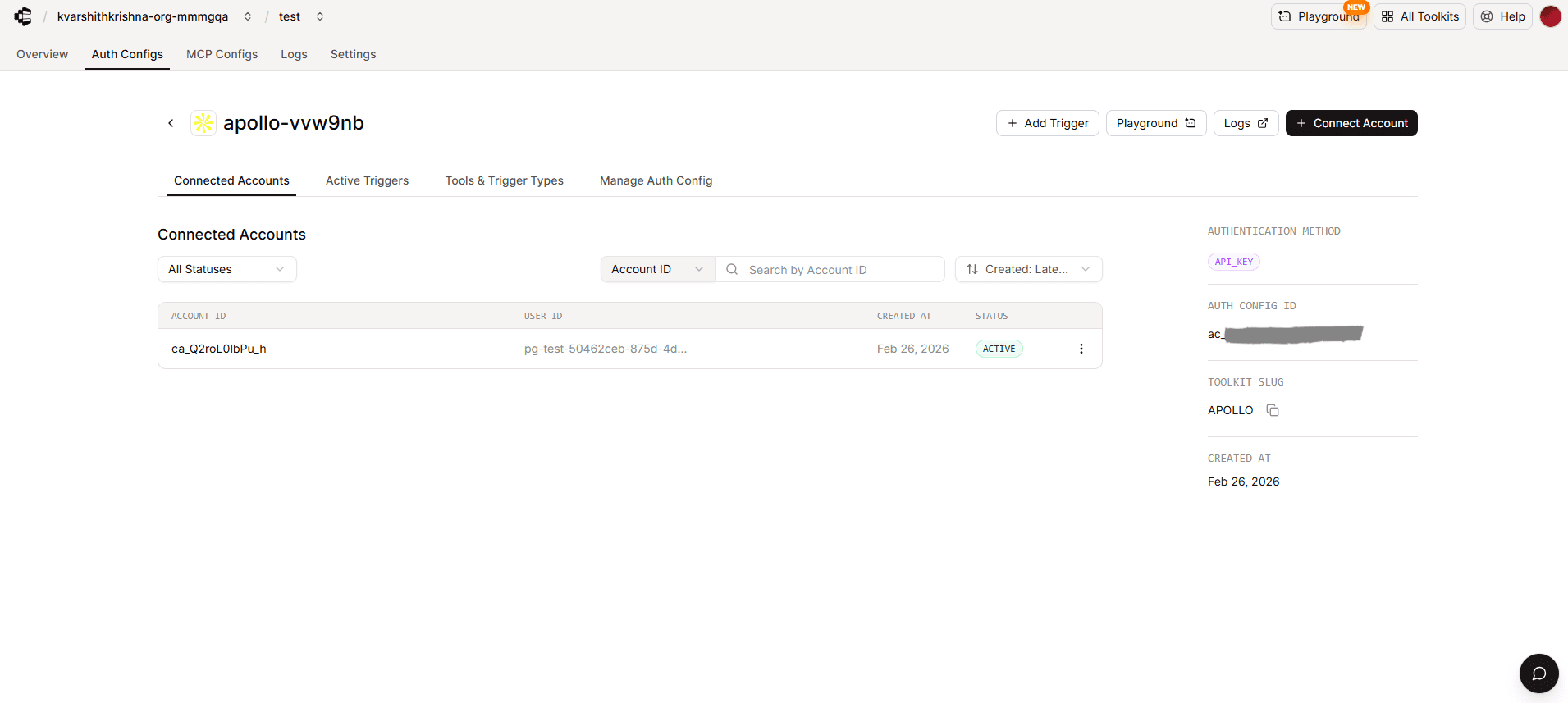
Image 13
  1. Store it securely using a secret manager

  2. Use it in your application to authenticate Apollo via Composio

This guide walks you through creating an Apollo API key and configuring it in Composio.

Overview

  • Authentication type: API Key

  • OAuth required: No

  • Scopes: Not supported

  • Access control: Apollo plan + user role

Apollo uses API key–based authentication. Permissions are enforced internally by Apollo and cannot be modified by Composio.

Step 1: Generate an API Key in Apollo

  1. Log in to your Apollo account.

Image 1
  1. Navigate to:

Admin Settings Integrations
Image 2
  1. Click on Integrations

Image 3
  1. Click on API → API Keys

Image 4
  1. Click on Create a new Key

  2. Give the key a name.

Apollo API Reference & Available Endpoints

In the same API section, Apollo displays a list of available REST endpoints that your API key can access.

Enable Master key to access all endpoints.

Commonly used endpoints include:

POST /api/v1/contacts/search
POST /api/v1/people/search
POST /api/v1/organizations/search
POST /api/v1/accounts/search
GET  /api/v1/users

These endpoints allow you to:

  • Search and filter contacts

  • Search people and organizations

  • Retrieve account and user data

  • Power lead enrichment and prospecting workflows

The visibility of these endpoints confirms that your API key is active and ready to use.

Image 5

Copy the generated API key.

Image 6

Important: Save the API key securely. You may not be able to view it again.

Step 2: Understand Apollo Permissions (Important)

Apollo does not support OAuth scopes.

Access is determined by:

  • The Apollo subscription plan

  • The role of the user who created the API key

Typical accessible resources include:

  • People search

  • Company search

  • Contact enrichment

  • Basic sequence data (plan-dependent)

Composio forwards the API key exactly as provided. Apollo enforces all permission limits.

Step 3: Create Apollo Auth Config in Composio

  1. Go to Composio Dashboard:

https://platform.composio.dev/
  1. Click on the Create Auth Config button to get a list of all the toolkits available.

Image 7
  1. Click Create Auth Config

Image 8
  1. Select Apollo from the toolkit list

  2. Make sure the Authentication Type is API Key

Image 9
  1. Click on Connect Account

Image 10
  1. Paste your Apollo API Key

Image 11
  1. Click Connect Account

Step 4: How Authentication Works

When using Apollo with Composio:

  • The API key is stored securely

  • Composio injects the key into every request

  • Apollo validates and authorizes the request

  • No OAuth flow or redirects are involved

Step 5: Test Apollo Connection (Optional)

You can test the integration using Composio Playground.

Sample test prompt:

“Search for companies in the fintech industry”

Image 12

If configured correctly, Apollo data will be returned successfully.

Base URL (For Reference)

All Apollo API requests are sent to:

https://api.apollo.io

Final Step

Once configured:

  1. Copy the Auth Config ID (starts with ac_)

Image 13
  1. Store it securely using a secret manager

  2. Use it in your application to authenticate Apollo via Composio